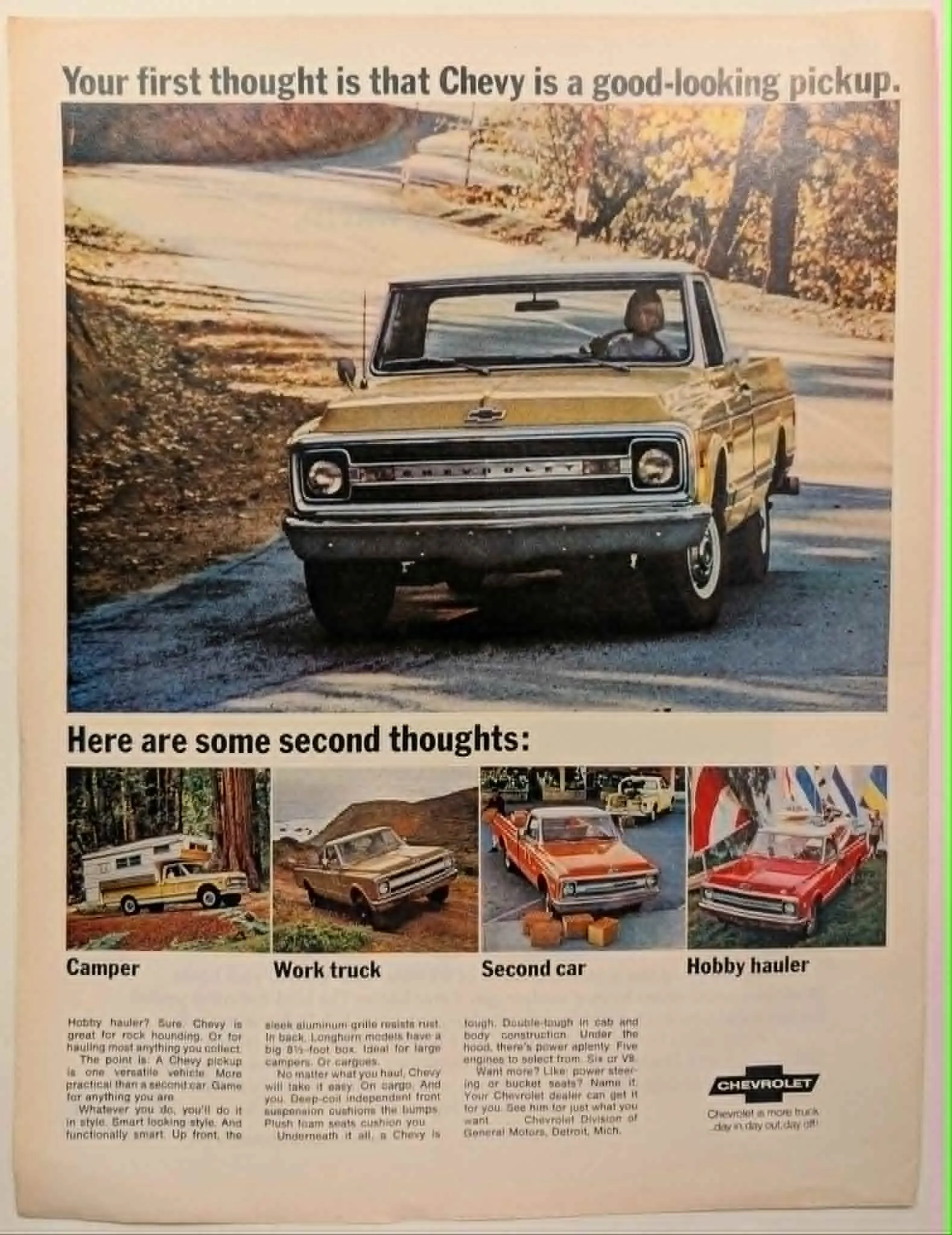
1969 Chevrolet C/K Pickup Truck: "First Thought... Second Thoughts" Vintage Advertisement
In the late 1960s, the American automotive landscape experienced a profound shift as the pickup truck evolved beyond its agricultural and industrial roots. This quintessential Chevrolet advertisement perfectly encapsulates this cultural pivot. The headline, "Your first thought is that Chevy is a good-looking pickup. Here are some second thoughts," strategically repositions the vehicle from a mere tool of labor to an indispensable component of the active, modern suburban lifestyle. The advertisement’s layout is a masterful study in the targeted consumer psychology of the era. The dominant upper image anchors the piece with immediate aesthetic appeal—a meticulously composed photograph of a gold-toned Chevrolet cruising down a scenic, sun-dappled road. Below, a neatly organized, grid-based la
Category: Cars
Year: 1969
Rarity Class: B
Paper & Print Condition
The artifact demonstrates a remarkably preserved aged paper texture that perfectly encapsulates the tactile history of late-1960s magazine stock. The surface exhibits a natural, even patina, free from severe foxing or structural degradation. Crucially, the color halftone printing retains the authentic period color palette, showcasing the warm, flat illustration style inherent to the era's offset lithography. The vibrant yellows and reds of the vehicle models showcased in the lower grid remain di
Provenance & Rarity
Sourced from a high-circulation American periodical of the late 1960s, this artifact was part of a major national advertising campaign orchestrated by the Campbell-Ewald agency for General Motors. Given the massive original print run of these publications, the inherent scarcity of the piece places it firmly in Rarity Class B. However, as decades pass, discovering specimens that have survived without the common detriments of moisture damage, severe UV fading, or center-fold degradation has become
Rarity & Condition Summary
This advertisement is a well-preserved artifact of late-1960s American automotive marketing. Its status as a Class B rarity reflects its origin from a high-circulation periodical, yet it retains significant value due to its excellent physical condition and clear historical documentation of shifting consumer trends.