1987 Leica R5 Camera Vintage Advertisement
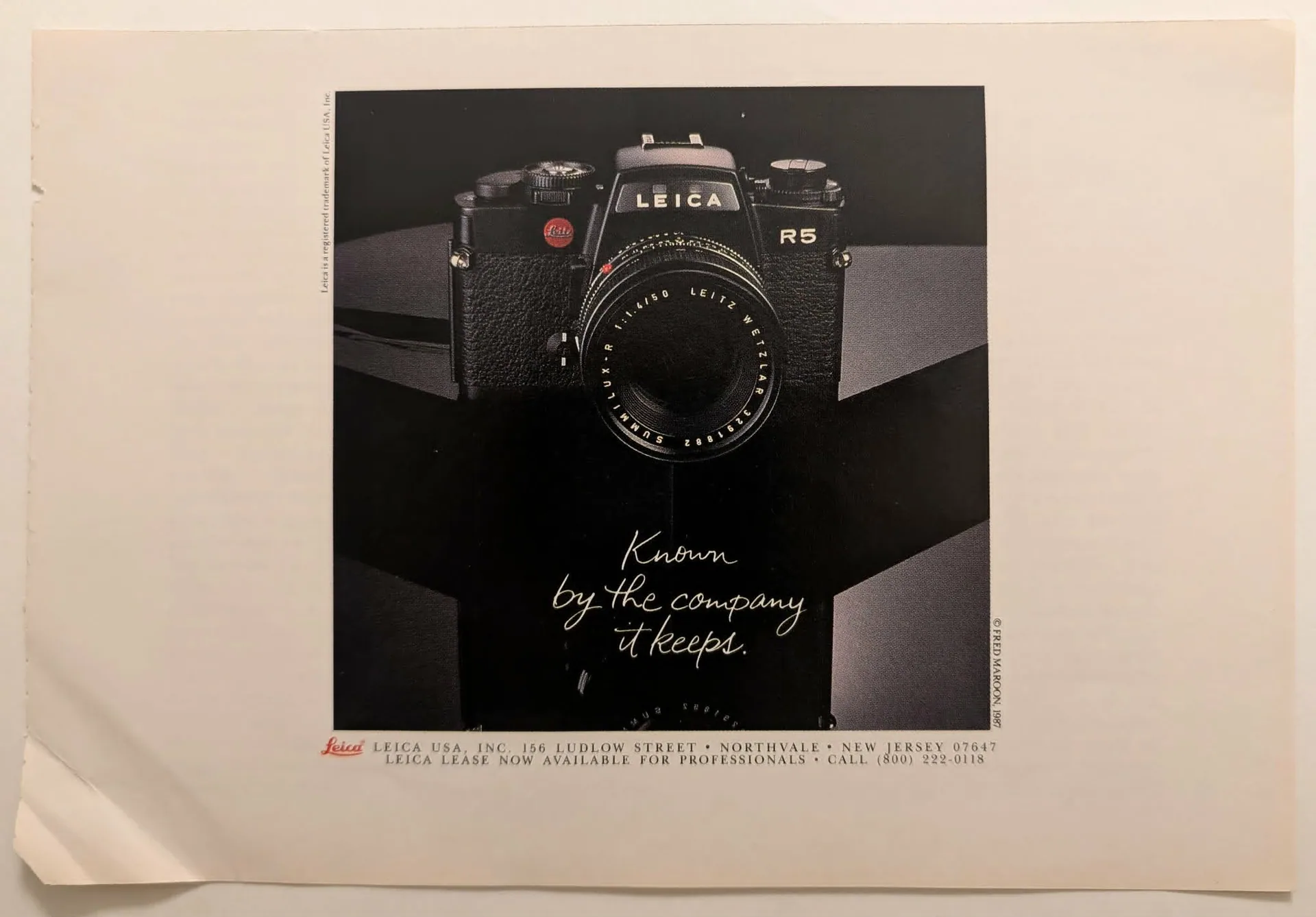
The 1980s represented a pivotal juncture in the history of photographic technology. As major manufacturers aggressively pushed the boundaries of electronic automation and early autofocus systems, the German marque Leica maintained its unwavering commitment to mechanical supremacy and peerless optical quality. This 1987 print advertisement for the Leica R5 single-lens reflex (SLR) camera stands as a testament to the brand's deliberate positioning above the fray of mass-market consumer trends. Visually, the advertisement is a masterclass in minimalist luxury. Set against a deep, enveloping black background, the Leica R5 emerges with dramatic chiaroscuro lighting, highlighting the utilitarian elegance of its matte black body and the iconic red Leica roundel. Mounted to the camera is the legen
Category: Cameras & Optics
Year: 1987
Rarity Class: B
Paper & Print Condition
Printed on medium-weight coated magazine stock typical of premium 1980s photographic publications. The artifact exhibits exceptional ink coverage, most notably in the deep, unblemished black background that dramatically frames the camera. The color registration is remarkably precise, ensuring the signature red Leica roundel and the delicate, fine white typography on the lens barrel remain crisp and highly legible. This piece demonstrates the high-quality offset lithography techniques used by lux
Provenance & Rarity
Sourced from a high-end 1987 consumer and photography publication. While 1980s camera advertisements are relatively common in the archival market, this specific campaign is notable for its commissioned artwork by the renowned photographer Fred Maroon, complete with explicit copyright attribution. Advertisements from this era that deliberately eschew cluttered technical specifications in favor of the minimalist prestige of the brand are highly sought after by photographic historians and Leica col
Rarity & Condition Summary
A highly pristine Class B artifact. Its flawless retention of the heavy black ink and the stark contrast of the elegant script make it an exceptional piece for studying the marketing aesthetics of luxury optical brands during the late analog era. The exceptional preservation of Fred Maroon's photographic work within this print format ensures its value as both a cultural artifact and an archival reference point.