The Time Traveller’s Dossier: 1978 Camel Lights Vintage Advertisement — 减少伤害的金色幻象
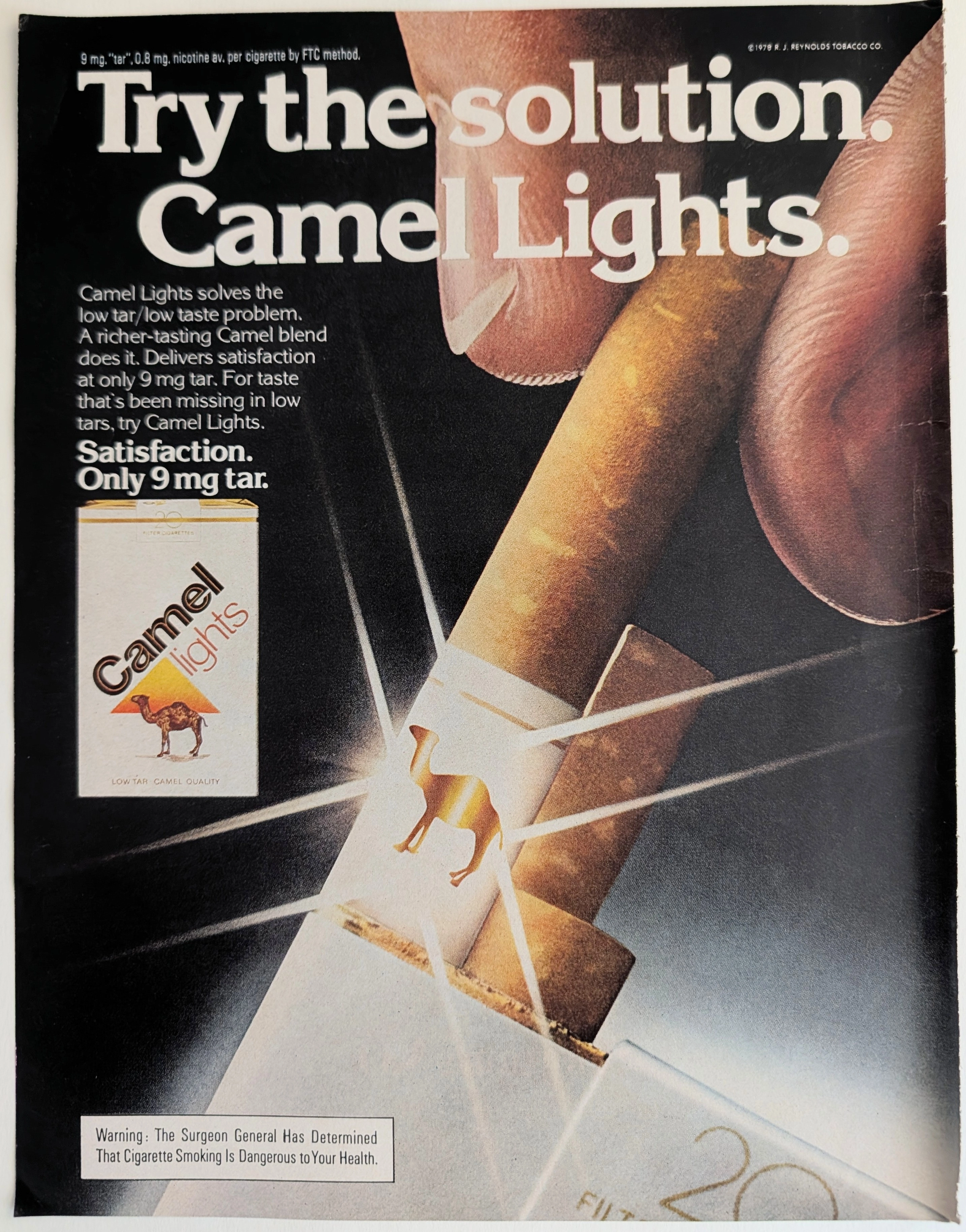
这份档案记录全面审视了 1978 Camel Lights vintage advertisement(1978年骆驼特醇复古广告),这是全球烟草行业为应对不断升级的公共卫生要求,激烈转向“低焦油”替代品时代的一个决定性文物。随着二十世纪末医学共识改变了消费者的习惯,R.J.雷诺兹(R.J. Reynolds)推出了骆驼特醇(Camel Lights),作为所谓低焦油和低口感问题的“解决方案”。这份文件是 classic print ads(经典平面广告)的杰出范例,它利用高对比度微距摄影和粗犷的男性化美学来保持强烈的品牌忠诚度,同时应对日益严格的监管环境。对于档案管理员、文化历史学家以及 vintage ads(复古广告)和 old advertisements(老广告)的收藏家来说,这件文物为20世纪70年代的心理营销策略提供了深刻的见解。视觉的中心——在火柴光芒下闪耀的金色骆驼——展示了卓越的商业印刷执行力和艺术指导,巩固了其在更广泛的商业广告历史分类中作为重要文化文献的地位。
Category: Tobacco
Brand: Camel
The History
20世纪70年代烟草卡特尔的生存危机 要理解1978年这场骆驼特醇(Camel Lights)营销活动的深远意义,首先必须了解20世纪70年代末美国烟草行业的社会政治时代精神。继1964年具有里程碑意义的《美国卫生局局长关于吸烟与健康的报告》(Surgeon General’s Report on Smoking and Health)发布之后,该行业面临着生存威胁。曾经被浪漫化的吸烟时代正在迅速瓦解,取而代之的是风险管理和健康焦虑的时代。到1978年,美国联邦贸易委员会(FTC)不仅强制要求在包装上印制健康警告,还在积极推行“焦油”和尼古丁含量的标准化测量与公布。这引发了所谓的“焦油德比”(The Tar Derby)——一场全行业范围内的激烈竞争,旨在开发低焦油香烟,以留住那些感到焦虑但尚未准备好戒烟的消费者。 骆驼品牌遗产的重担 对于R.J.雷诺兹烟草公司(RJR)而言,向“特醇/淡味”(Light)香烟的转型带来了独特且危险的品牌困境。骆驼品牌创立于1913年,其基础是毫不妥协的强劲口感。它是融合了土耳其和美国本土烟叶的初代“美国混合型”(American Blend),以无过滤嘴、劲道十足以及与工人阶级男子气概和军事传统的深度绑定而闻名。推出“淡味”版本,意味着要冒着削弱品牌男子气概的风险,并可能疏远那些极度忠诚、将低焦油等同于“抽纸”的消费群体。 作为心理工程学的营销 这则1978年特定广告的绝妙之处在于其语义框架。RJR并没有将骆驼特醇包装成向卫生当局屈服的产物,而是将其营销为一项“工程学上的胜利”。其标题具有攻击性、直接且充满权威感:“Try the solution.”(试试这个解决方案。) 这立即建立了一种“问题-解决”的二元对立。正文进一步阐述:“Camel Lights solves the low tar/low taste problem.”(骆驼特醇解决了低焦油/低口感的问题。) 通过使用机械化和决定性的语言(如“解决”、“提供”、“方法”),该品牌成功绕过了健康风险带来的情感焦虑,直接迎合了消费者对效率和满足感的渴望。这则广告本质上是在告诉消费者:你无需妥协。我们已经通过科学工程找到了一种方法,在仅有9毫克焦油的情况下,依然能为你提供骆驼标志性的强劲体验。 这是一个利用“认知失调”(Cognitive dissonance)的杰作——让吸烟者感到自己是在负责任地消费,同时又能继续沉浸在一个具有历史叛逆色彩的品牌中。
The Paper
承印物与物理特性 该文件提取自1978年发行的大众消费期刊,印制于当时标准的商业轮转胶版纸(web-offset paper stock)上。纸张呈现出轻薄的半光泽涂层效果(可能是涂布机械纸)。由于70年代杂志纸张固有的高木质素(lignin)含量,页面边缘显示出轻微的氧化和酸诱导泛黄迹象(在档案学术语中通常称为狐斑或黄化,foxing)。这种化学降解是该文物真实性的自然证明,代表了其数十年暴露于环境大气湿度和紫外线下的历史痕迹。 印刷技术与平版印刷执行 这则广告的技术执行力令人惊叹,采用了四色(CMYK)轮转胶印技术。这项特定印刷工作中最具挑战性的部分是那深邃的、深渊般的黑色背景。要在不使纸张过度饱和并导致墨水晕染的情况下,实现如此丰富、均匀的黑暗,需要高密度的油墨涂布和极其细致的印刷机校准。 此外,半色调网点结构(halftone dot structure,仅在放大镜下可见)揭示了完美的套印技术(registration),不仅体现在从纯黑背景到纯白排版元素的过渡,更体现在火柴点燃时的白炽眩光上。要保持从骆驼标志辐射出的光线的锐利度,确保它们不会与周围的黑色油墨混浊,这凸显了70年代末模拟商业印刷能力的巅峰水准。
The Rarity
印刷品的短暂性 1978年的消费类杂志(如《生活》、《花花公子》或《时代》)印量高达数百万册,其设计初衷就是在几周或一个月内被消费并丢弃。因此,这些期刊能够以未被剪裁的、博物馆级状态保存下来的存活率极低。大多数幸存的副本都因存放不当而遭受了严重的酸性腐蚀、结构脆化或褪色。 文化与市场估值 除了物理上的稀缺性之外,这件作品的档案价值更是由围绕烟草的文化叙事的转变所驱动的。随着现代立法在许多全球司法管辖区内彻底禁止在印刷和广播媒体上投放可燃烟草产品广告,此类文物已经从普通的商业废弃物转变为备受追捧的历史文献。它们被商业艺术史学家、排版学者以及研究二十世纪宣传和心理营销的社会学家热切收藏。一个能够展现出如此色彩保真度和结构完整性的标本,在世纪中叶美国文化(Mid-century Americana)收藏家市场中占据着极高的地位。
引用本文
- MLA
- Naodhinsuk, Ronin. “The Time Traveller’s Dossier: 1978 Camel Lights Vintage Advertisement — 减少伤害的金色幻象.” The Record Institute, 2 April 2026, https://therecord.institute/cn/journal/the-time-travellers-dossier-1978-camel-lights-vintage-advertisement-the-golden-illusion-of-diminished-harm.
- APA
- Naodhinsuk, R. (2026, April 2). The Time Traveller’s Dossier: 1978 Camel Lights Vintage Advertisement — 减少伤害的金色幻象. The Record Institute. https://therecord.institute/cn/journal/the-time-travellers-dossier-1978-camel-lights-vintage-advertisement-the-golden-illusion-of-diminished-harm
- CHICAGO
- Naodhinsuk, Ronin. 2026. “The Time Traveller’s Dossier: 1978 Camel Lights Vintage Advertisement — 减少伤害的金色幻象.” The Record Institute, April 2, 2026. https://therecord.institute/cn/journal/the-time-travellers-dossier-1978-camel-lights-vintage-advertisement-the-golden-illusion-of-diminished-harm.