The Time Traveller's Dossier : 梵高版画 - 胶印的幻象
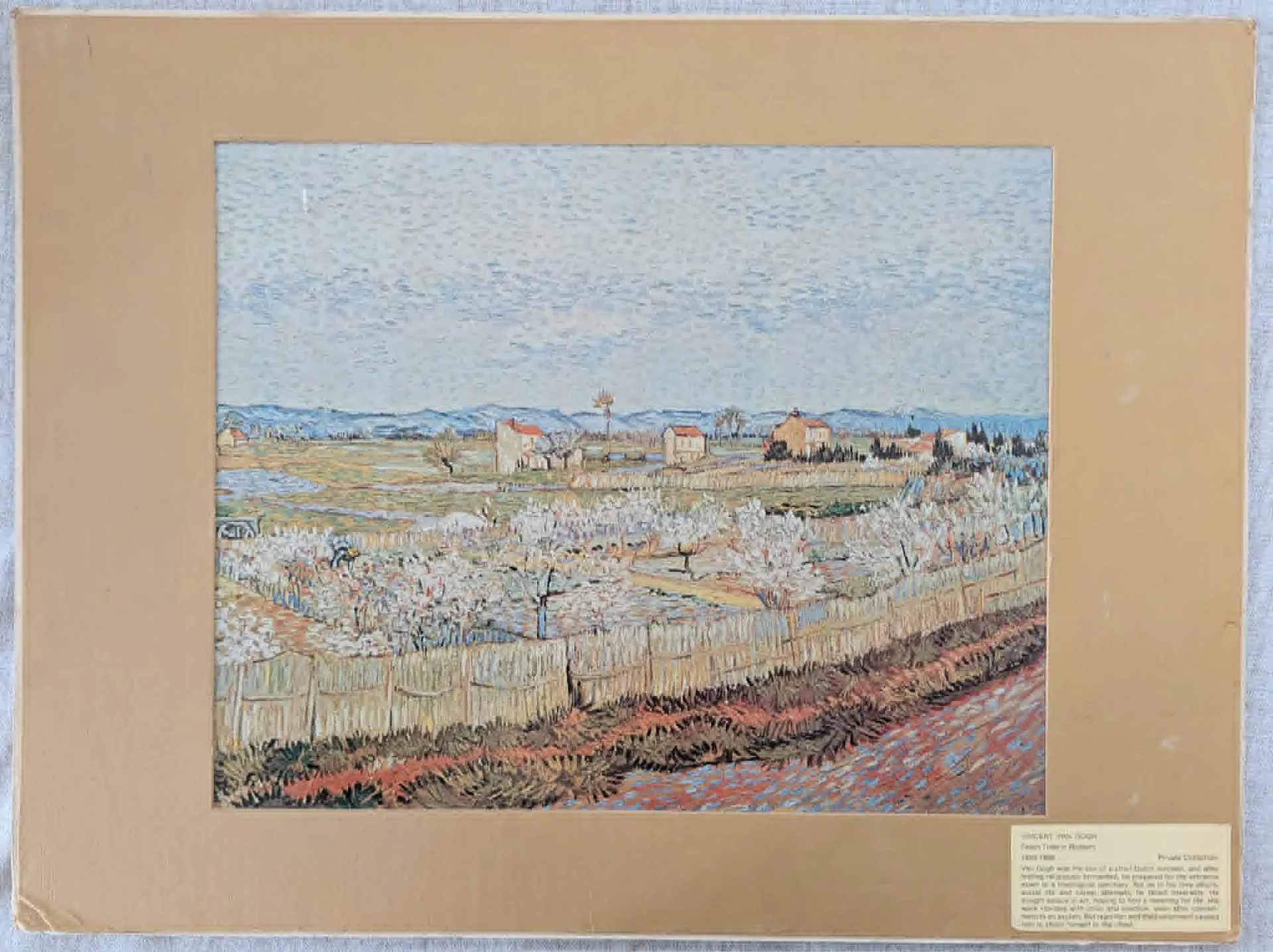
摆在我们面前的这件物品,呈现出一种深刻的复制悖论。 它是20世纪中叶的一幅胶印平版印刷品,复制了文森特·梵高1889年的杰作《盛开的桃花》。 在未经训练的现代人眼中,它只是一张贴在破旧硬纸板上的旧画。 但在档案学家的眼中,它代表了人类历史上一次至关重要的社会政治与技术变迁。 在过去,艺术是一种排他性、受地域严格限制的体验。 要目睹梵高的质感,人们必须亲自站在阿尔勒或私人画廊的真实画布前。 经济与空间的壁垒将天才的灵光与普通大众彻底隔绝。 而今天,这件文物精确记录了工业印刷技术将前卫艺术民主化的那一刻。 它捕捉到了高级文化与大规模生产正面碰撞的确切瞬间。 它是一个视觉模拟引擎,旨在将艺术家的光环直接打包,送入普通家庭的客厅与公立学校的教室。
Category: Other
The History
战后文化爆炸与阶级新需求 20世纪中叶,西方社会经历了一场空前深刻的社会学与文化转型。 全球冲突带来的严重创伤,让位于经济的激进扩张与社会结构的重组。 一个庞大而稳固的新兴中产阶级从战时的紧缩灰烬中崛起,他们不仅拥有了可支配的收入,更对阶级晋升与智识启蒙产生了贪婪的渴望。 文化资本突然成为一种基本必需品。 拥有、理解并展示艺术,不再是富有的工业大亨、没落贵族或封闭学院的专属领域。 然而,艺术品稀缺的物理现实依然不可撼动。 欧洲大师们的真实油画原作不仅难觅踪迹,在财务上更是普通公民遥不可及的奢望。 解决这一文化赤字的方案,并不在于创作新的画作,而在于高保真复制技术的爆炸性演进。 艺术出版商、大都会博物馆以及教育机构,绝望地试图填补封闭的博物馆与渴望学习的大众之间那道深不可测的鸿沟。 他们开始大规模生产西方正典杰作的大型作品集。 这些绝不是印在廉价纸张上的劣质明信片;它们是带着明确的制度性与学术性意图被设计出来的。 它们注定要被镶框、被严谨地研究,并作为启蒙的管道受到尊重。 我们在此分析的这件文物,正是这种商业与教育意志的直接产物,它被赋予了提升整整一代人集体意识的使命。 技术的较量:将厚涂颜料转化为平面幻象 文森特·梵高的艺术语言,几乎完全建立在“厚涂法”(Impasto)的技术之上。 他的笔触从来不是对颜料平淡而顺从的涂抹。 它们是具有暴力美学的三维油彩雕塑,以一种狂热的心理强度被施加于画布之上。 这些颜料的隆起捕捉着环境光,在画布表面投下微小的阴影,创造出一种不断呼吸、栩栩如生的地形图。 对于20世纪早期的印刷工来说,复制这种物理与空间上的侵略性,代表着一个不可逾越的技术障碍。 传统的木刻、钢板雕刻以及基础的凸版印刷操作,总是不可避免地将他极具表现力的印记,削弱为平坦、死气沉沉且浑浊的色块。 然而,在20世纪50和60年代,商业胶印平版印刷达到了一个非凡的技术顶峰。 印刷大师们利用复杂的多色摄影分色技术,煞费苦心地分离出最细微的色调、色相以及光线折射的变化。 请极其仔细地观察背景中白色房屋与红色屋顶的细节。 印刷工并没有天真地试图复制原始油画的化学色彩。 相反,机器操作员试图以数学般的精确度,映射出梵高原始画笔的隆起所投射出的阴影。 这种机械过程迫使发生了一种彻底的转变:它将油画暴力的三维立体感,转化为一种原始的平面插画风格。 它通过极其复杂的网点光学错觉,奇迹般地保留了手绘笔触质感。 这是一项色彩工程的壮举,它将笨重、油腻的工业印刷机,变成了一台细腻的人类心理翻译机。 时代的竞争者与家庭生态系统 在这个关键时期,各种复制方法为了主导日益增长的教育市场,展开了激烈的商业战争。 在经济光谱的顶端,高级美术出版商使用珂罗版印刷(Collotype)。 珂罗版提供了完美的连续色调,没有可见的网点,呈现出极其精致的视觉柔和度。 但这种古老的工艺慢得令人难以忍受,极其昂贵,且天生受限于微小的产量。 在另一个极端,廉价的轮转凹版印刷充斥着流行报纸和杂志,为了惊人的印刷速度而彻底牺牲了色彩的完整性。 印在厚重卡纸上的胶印平版印刷,找到了完美的平衡。 它允许了史无前例的大规模发行,同时保持了足够强大的视觉完整性,以满足严苛的学术审查。 但至关重要的是理解这个物品所生存的生态系统。 这幅画是被设计用来挂在家庭或教室的墙壁上的。 想象一下这幅被镶框的印刷品,它作为一个智识的窗口,在心理上阻挡了窗外熙熙攘攘的20世纪50年代街道的噪音。 它是被设计在这样一个房间里被凝视的:一台发出噼啪声的收音机播放着冷战的新闻或悠扬的爵士乐,整个空间弥漫着一种温暖、怀旧且符合时代特征的背景氛围。它是一个躲避现代焦虑的避难所。 这幅特定的印刷品在纸板衬垫的底部,包含了一个机械印刷的机构策展标签。 文本提供了一种冷酷而临床的传记叙事:详细描述了梵高的苦难、他严厉的荷兰牧师父亲、他职业与社交的失败,以及他最终开枪击中自己胸部自杀的宿命。 这种苛刻的编辑选择证明了,这件物品并没有被当作单纯的欢快装饰品来推销。 它是作为一种严厉的教育工具被出售的:人类天才的残酷现实,被有条不紊地包装起来,供家庭消费。 哲学转变:机械光晕 在1935年的开创性论文《机械复制时代的艺术作品》中,杰出的哲学家沃尔特·本雅明提出,大规模的复制不可避免地剥夺了艺术作品的“光晕”(Aura)——即它在时间和空间中独特、神秘且不可重复的存在。 这件文物证明了本雅明既是对的,但矛盾的是,他也是错的。 不可否认,这幅胶印印刷品缺乏在阿尔勒烈日下绘制的画布那种压倒性的物理存在感。 它不包含艺术家的肉身性。 然而,今天审视它,我们意识到它构建了一种新型的、次生的工业光晕。 对于数以百万计的工人阶级个体来说——他们可能永远不会横跨大西洋,也永远不会踏上欧洲大都会博物馆的大理石地板——这张印着颜色的硬纸板,就是文森特·梵高。 正是通过这种精确的、机械复制的媒介,现代艺术的集体理解被锻造出来。 它所代表的历史巨变是绝对且不可逆转的:艺术从一个奇异、神圣的客体,突变为一个分布式的、可获取的、无处不在且民主化的智识概念。
The Paper
这件文物的物理表现,讲述了一个工业结构意图与无情的自然有机降解交织的故事。 印刷是在极其厚重、坚硬的卡纸支撑物上进行的,克重可能在250到300 GSM之间。 这种巨大的结构厚度,是印刷工程师故意选择的,以防止它被学生粗暴操作或暴露在没有气候控制的室内湿度变化中时,发生翘曲或变形。 其方法是高保真胶印平版印刷。 在强烈的光学放大下,梵高笔触的虚假幻象,猛烈地解体为一个冷酷的数学CMYK玫瑰半色调图案。 与现代喷吐不规则墨滴的技术不同,这种20世纪中叶的光刻过程,使用了坚固的、化学蚀刻的金属板,以巨大的机械压力压印墨水。 如今,它的物质性引人注目。 这件物品展现出一种不可否认的岁月侵蚀的纸张纹理。 酸性烧伤的痕迹和边缘极度的泛黄,表明卡纸的木浆纤维中木质素浓度极高。 数十年暴露在大气氧气和紫外线辐射下,催化了缓慢的化学燃烧(氧化)。 背面显示了干燥的粘性安装胶带残留物以及手写的草书签名“Lindgren”,将该物品牢牢锚定在真实的人类世界中。 为了抵御时间的进一步侵蚀,在我们气候控制的档案室中,它目前被小心翼翼地以垂直/肖像方向存放在档案架中,以防止重力弯曲对脆弱的水平纤维造成致命压力,从而严格保持其几何结构的完整。
The Rarity
在“The Record Institute”(记录研究所)严格的保存分类法中,该文物被正式归类为 Class A。 在膨胀的当代艺术市场上,这幅印刷品并不具备巨大的金钱财富。 它不是限量版版画,也没有现代大师的铅笔签名。 它极其罕见的稀有性,完全存在于它的语境价值和其显著的制度完整度之中。 战后那个时代,绝大多数教育印刷材料都已被销毁:被人类双手的无情摩擦所磨损,在学校布告栏上被撕裂,或者在向数字媒体技术大规模过渡的狂热中,被当作无关紧要的垃圾直接丢弃。 找到一个完好无损的标本——保留其原始的印刷垫板、清晰可辨的策展标签,以及未经修复的有机历史包浆——已经变得越来越不可能。 它今天之所以矗立,不是作为一件首要的艺术品,而是作为20世纪庞大而雄心勃勃的大众教育与启蒙项目的一座纯粹的物理纪念碑。
引用本文
- MLA
- Naodhinsuk, Ronin. “The Time Traveller's Dossier : 梵高版画 - 胶印的幻象.” The Record Institute, 4 July 2026, https://therecord.institute/cn/journal/the-time-travellers-dossier-van-gogh-print-the-offset-illusion.
- APA
- Naodhinsuk, R. (2026, July 4). The Time Traveller's Dossier : 梵高版画 - 胶印的幻象. The Record Institute. https://therecord.institute/cn/journal/the-time-travellers-dossier-van-gogh-print-the-offset-illusion
- CHICAGO
- Naodhinsuk, Ronin. 2026. “The Time Traveller's Dossier : 梵高版画 - 胶印的幻象.” The Record Institute, July 4, 2026. https://therecord.institute/cn/journal/the-time-travellers-dossier-van-gogh-print-the-offset-illusion.