The Time Traveller's Dossier : Victor Red Seal - 天才的商品化
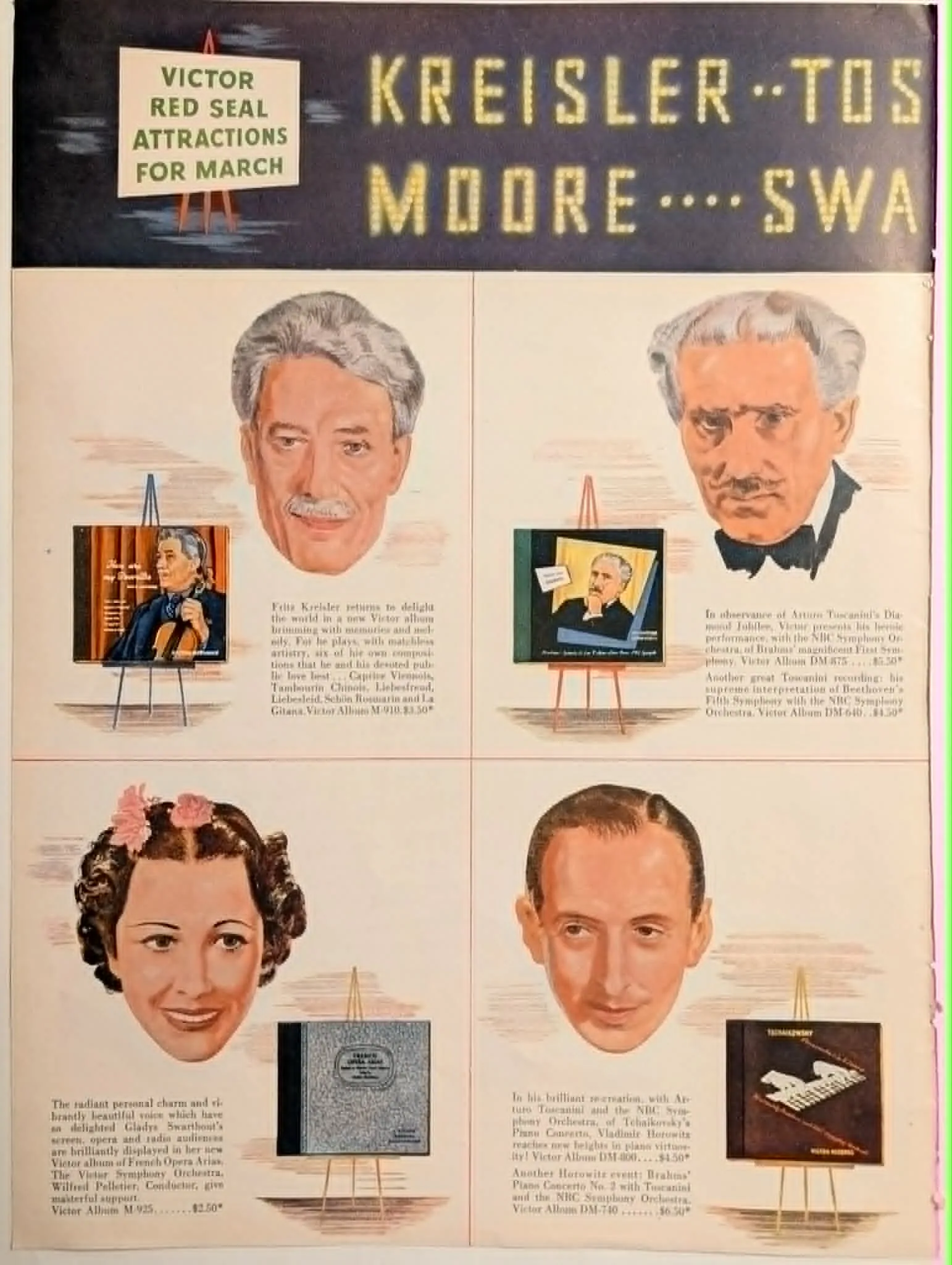
在音轨出现之前。在虫胶唱片诞生之前。天才的技艺不过是一抹幻影。 它仅仅存活于被演奏的那一瞬间。 你必须身临其境。在金碧辉煌的大厅里。在正确的城市中。带着足够的财富。 随后,捕获的时代来临了。压制。Victor Red Seal(维克多红印)的诞生。 这份调查询问档案审视了1942年3月这个特定的时间节点。 这是一本关于被捕获的时间的目录。 舞台上的四位巨人。被冻结。被包装。被明码标价。 这不仅仅是商业行为。这是崇高艺术的工业化。 这种转变是绝对的,也是不可逆转的。 庞大的音乐厅坍缩,被折叠进了家庭的客厅。 艺术不再是转瞬即逝的事件。它变成了物理形态的库存。 这件来自RCA Victor(RCA维克多)的文物,是一扇通往确切历史瞬间的窗户,展示了世界上最伟大的才华是如何被转化为家庭消费品的。 转瞬即逝,就此成为了永恒。
Category: Entertainment
The History
声音的地理学与虚无 在音频录制大规模普及之前,我们必须首先理解那种“虚无”。几个世纪以来,人类的音乐与物理空间密不可分。要聆听阿图罗·托斯卡尼尼(Arturo Toscanini)指挥交响乐,绝对需要地理位置上的接近。你需要一张实体的门票。你需要量身定制的西装。你需要特定的社会地位才能进入礼堂。只要声学振动还悬浮在音乐厅的空气中,音乐就存在。然后,它便回归沉寂。这是一种极其精英化、局域化的现象。留声机的发明开始打破这种现实,但早期的原声录音微弱且单薄。它们只是真实表演的暗淡影子。 当这则广告在1942年付梓印刷——为了庆祝托斯卡尼尼的钻石禧年(Diamond Jubilee)时——世界已经发生了根本性的转变。1920年代中期引入的电气录音,已经成熟为一门复杂的科学。麦克风取代了原声喇叭。动态范围呈指数级扩大。弗里茨·克莱斯勒(Fritz Kreisler)的琴弓与羊肠弦摩擦时那种微妙的、充满松香质感的摩擦声,终于能够被捕捉下来。弗拉基米尔·霍洛维茨(Vladimir Horowitz)敲击施坦威三角钢琴时那种雷鸣般的、打击乐般的重量,可以被压制到音轨的沟槽中。Victor Red Seal厂牌的诞生,正是为了标志这项技术的绝对巅峰。它不仅仅是一个唱片厂牌。它是一个文化机构。它是正在崛起的中产阶级对于精致智力的徽章。中心的深红色标签宣告着你不仅仅是在听一首曲子;你正在见证一场历史性的大师课。 专辑的建筑学 请观察文案中嵌入的价格结构。2.50美元。4.50美元。6.50美元。在1942年第二次世界大战严峻的经济阵痛中,这些绝不是随意的或冲动性的消费。根据通货膨胀进行调整,以6.50美元标价的Victor Album DM-740(霍洛维茨演奏勃拉姆斯)在今天将花费远超一百美元。这是一项重大的资本投资。 此外,“专辑(Album)”这个词本身就源于这个特定的时代和格式。因为一张沉重的、以78转/分运行的虫胶唱片每一面只能容纳大约四到五分钟的音频,一首完整的古典交响乐需要多张唱片。这些脆弱的圆盘被装订在一起,拥有类似皮革的厚重书脊。它们是装满厚纸套的空白书本,在视觉上与家庭的“照片相册(Photo Album)”完全相同。“唱片专辑”由此得名。Victor不仅仅是在销售塑料和虫胶;他们是在销售高级文化的物理重量。广告中描绘的木制画架绝非偶然的设计选择。微型专辑被展示得仿佛它们是经典的油画。Victor在教导消费者:你买的不是快消品。你是在策展一个汇聚人类终极成就的私人家庭画廊。物理对象要求深深的敬意。它需要被小心翼翼地对待。将钢针放入沟槽的动作,成为了一种神圣的家庭仪式。 大师的类型学 这则广告精心挑选了四种特定的人类原型,以覆盖整个文化市场。 首先,弗里茨·克莱斯勒(Fritz Kreisler)。他是温暖、怀旧的浪漫主义者。他的M-910专辑收录了他自己的作品:《维也纳随想曲》(Caprice Viennois)、《中国花鼓》(Tambourin Chinois)、《爱之欢乐》(Liebesfreud)、《爱之悲伤》(Liebesleid)、《美丽的罗斯玛琳》(Schön Rosmarin)和《吉普赛女郎》(La Gitana)。这些是旧欧洲的声音签名。那个精致的欧洲,在1942年的春天,正于全球冲突的烈火中燃烧、碎裂。克莱斯勒提供了一种心理逃避,将人们带回那个已经不复存在的维也纳咖啡馆世界。 接着,我们看到了阿图罗·托斯卡尼尼(Arturo Toscanini)。严厉的纪律维护者。大师。在这幅渲染图中,他的脸庞被投射在强烈、戏剧性的阴影中。他直勾勾地盯着观众。他代表着绝对的权威。不屈不挠的完美。他的钻石禧年——他的第75个年头——被文案策划者武器化为一个具有无上历史分量的事件。拥有他演绎的勃拉姆斯宏伟的第一交响曲(DM-875),或者贝多芬的第五交响曲(DM-640),就意味着拥有了人类斗争与胜利的终极文本。 格拉迪斯·斯沃索特(Gladys Swarthout)提供了平易近人、光芒四射的魅力。她凭借充满个人魅力的光彩和震颤人心的美丽嗓音,取悦了银幕、歌剧院和广播听众。她弥合了僵化、传统的音乐厅与现代电影屏幕之间日益扩大的鸿沟。她的“法国歌剧咏叹调”(French Opera Arias)提供了人声的温暖与人性。她代表着生物学乐器的顶峰。 最后,弗拉基米尔·霍洛维茨(Vladimir Horowitz)。技术大师。原始而令人恐惧的自然之力。他在托斯卡尼尼和NBC交响乐团的支持下,对柴可夫斯基钢琴协奏曲的辉煌再造,已经达到了钢琴精湛技艺的新高度。Victor有效地捕获了听众心理的四个象限:怀旧、权威、美丽和力量。 诠释的标准化 这件文物记录了人类历史中一次根本性的认知转变。在Red Seal唱片大规模发行之前,每一场交响乐的演出都是局域性的、独一无二的,并受制于有机的变化。纽约的听众听到的勃拉姆斯第一交响曲,与伦敦或柏林的听众听到的截然不同。 大规模生产的录音永远地改变了这种动态。它标准化了诠释。托斯卡尼尼特定的速度选择、他激进的起音、他对NBC交响乐团极其精确的声部平衡,被永久地蚀刻在主盘的漆面上。对于全球数百万听众而言,这张特定的录音不仅仅代表了贝多芬第五交响曲的一场“演出”。它成为了决定性的基准。它成为了未来所有演出不可避免地要与之对标的唯一真理。这突显了RCA Victor企业帝国庞大而无形的权力。他们不仅仅是在记录音乐历史;他们是在发号施令,设定其未来的参数。他们将音乐完美的定义中央集权化了。现场表演的幽灵不再是转瞬即逝的。它被困在一个螺旋形的沟槽中,以精确的每分钟78转的速度旋转,在成千上万个不同的客厅里同时发出完全相同的声音。 机械前缀与艺术的自动化 一个关键的技术细节隐藏在专辑的前缀中:“M”和“DM”。克莱斯勒和斯沃索特的专辑被列为M-910和M-925。托斯卡尼尼和霍洛维茨则带有DM前缀(DM-875, DM-640, DM-800, DM-740)。 这代表了消费技术的显著演变。“M”代表手动顺序(Manual sequence)。第1面和第2面在第一张光盘上,第3面和第4面在第二张上。听众必须每隔四分钟手动翻转每张沉重的唱片。“DM”代表掉落自动(Drop-Automatic)。这个顺序是专门为自动换碟机压制的(第1面和第8面在第一张光盘上,第2面和第7面在第二张上)。你可以将整部交响乐堆叠在一个高耸的主轴上,机器会按顺序将它们放下。 “DM”格式允许听众获得长达二十分钟不间断的古典沉浸体验。这是被动聆听时代的黎明。机器接管了体力劳动,让听众可以向后倚靠。这则广告中隐藏的技术细微差别,标志着从主动的音乐参与向自动化的、连续消费的过渡。 虫胶战争的经济学 我们还必须透过宏观经济学和全球供应链的残酷视角来审视这件文物。1942年是现代历史的一个关键枢纽。美国刚刚卷入第二次世界大战。用于压制这些78转唱片的主要原材料——虫胶,是一种由紫胶虫分泌的树脂,主要产自东南亚。随着太平洋战区切断了关键的海上补给线,虫胶变成了一种受到高度限制、严密配给的物资。唱片公司最终被迫停止生产,或者要求平民捐献旧唱片,以便将它们熔化制成新唱片。 因此,这些沉重的、包含多张唱片的RCA专辑,是在一种极端、迫在眉睫的短缺时代生产出的极度奢侈品。然而,广告文案刻意地对战争只字不提。它无视了配给制。它呈现出一副坚忍的、未受干扰的文化至上的假象。在一个以大规模毁灭为特征的时代,它贩卖的是一种“永恒感”。Red Seal成为了消费者的心理锚点。当外部的地缘政治世界混乱且不可预测时,内部世界——被真空管放大器温暖的琥珀色光芒照亮的家庭客厅——必须保持有序、美丽和永恒。这张单薄的印刷纸页,承载着所有这些交错力量的无形重量。它是人类欲望、技术能力和企业战略的精密地图。
The Paper
这件文物通过其自身的物理衰变深刻地发声。它印在标准的20世纪中期杂志纸上,可能是一种80到90 GSM的涂布纸。粘土涂层是一种工程必然,是承载半色调印刷(halftone printing)过程中致密的墨水而不致晕染的必需品。 在放大镜下观察CMYK的网点阵列。在那个远远早于数字色彩校正和自动化印前处理的时代,青色、品红色、黄色和黑色的分离需要熟练的平版印刷工人付出巨大的手工精度。托斯卡尼尼和霍洛维茨的肤色,是由细致入微、微观层面的品红色和黄色网格构建而成的。 在八十多年的岁月里,纸张不可避免地发生了氧化。边缘变成了脆弱的黄色。木浆中嵌入的木质素与周围的紫外线和大气中的氧气发生了缓慢的反应。然而,墨水依然坚挺且色彩饱和度极高。这一页纸的触觉性质——触摸时发脆,略带纹理,携带着干燥灰尘和旧装订胶水那微弱的嗅觉签名——强化了它作为20世纪幸存者的地位。这是一层极其脆弱的薄膜,却成功地携带着复杂的商业和文化信息,跨越了八十四年动荡的历史。物理介质正在老化和降解,但它所保存的结构性数据却依然被完美地冻结着。
The Rarity
分类:Class A - 文化时间胶囊 (The Cultural Time Capsule)。 虽然1940年代初期的复古杂志广告在绝对数量上并不算罕见,但这几个特定主题的同时出现,极大地提升了其作为档案的地位。找到一份完好无损、在虫胶时代绝对巅峰时期同时推广克莱斯勒、托斯卡尼尼、斯沃索特和霍洛维茨的单一文件实属不易。 它的核心价值不是金钱上的;它是深度的语境价值。它可以作为严肃研究20世纪音乐学、音频工程营销以及RCA Victor帝国经济结构的主要一手来源文件。这是一份清晰的记录,记录了唱片工业的黄金时代——就在微距黑胶LP的发明彻底改变这个领域的版图之前。
引用本文
- MLA
- Naodhinsuk, Ronin. “The Time Traveller's Dossier : Victor Red Seal - 天才的商品化.” The Record Institute, 5 July 2026, https://therecord.institute/cn/journal/the-time-travellers-dossier-victor-red-seal-the-commodification-of-genius.
- APA
- Naodhinsuk, R. (2026, July 5). The Time Traveller's Dossier : Victor Red Seal - 天才的商品化. The Record Institute. https://therecord.institute/cn/journal/the-time-travellers-dossier-victor-red-seal-the-commodification-of-genius
- CHICAGO
- Naodhinsuk, Ronin. 2026. “The Time Traveller's Dossier : Victor Red Seal - 天才的商品化.” The Record Institute, July 5, 2026. https://therecord.institute/cn/journal/the-time-travellers-dossier-victor-red-seal-the-commodification-of-genius.