El Expediente del Viajero en el Tiempo : WHAT FATHERS KNOW BEST - La Arquitectura del Legado Paternal
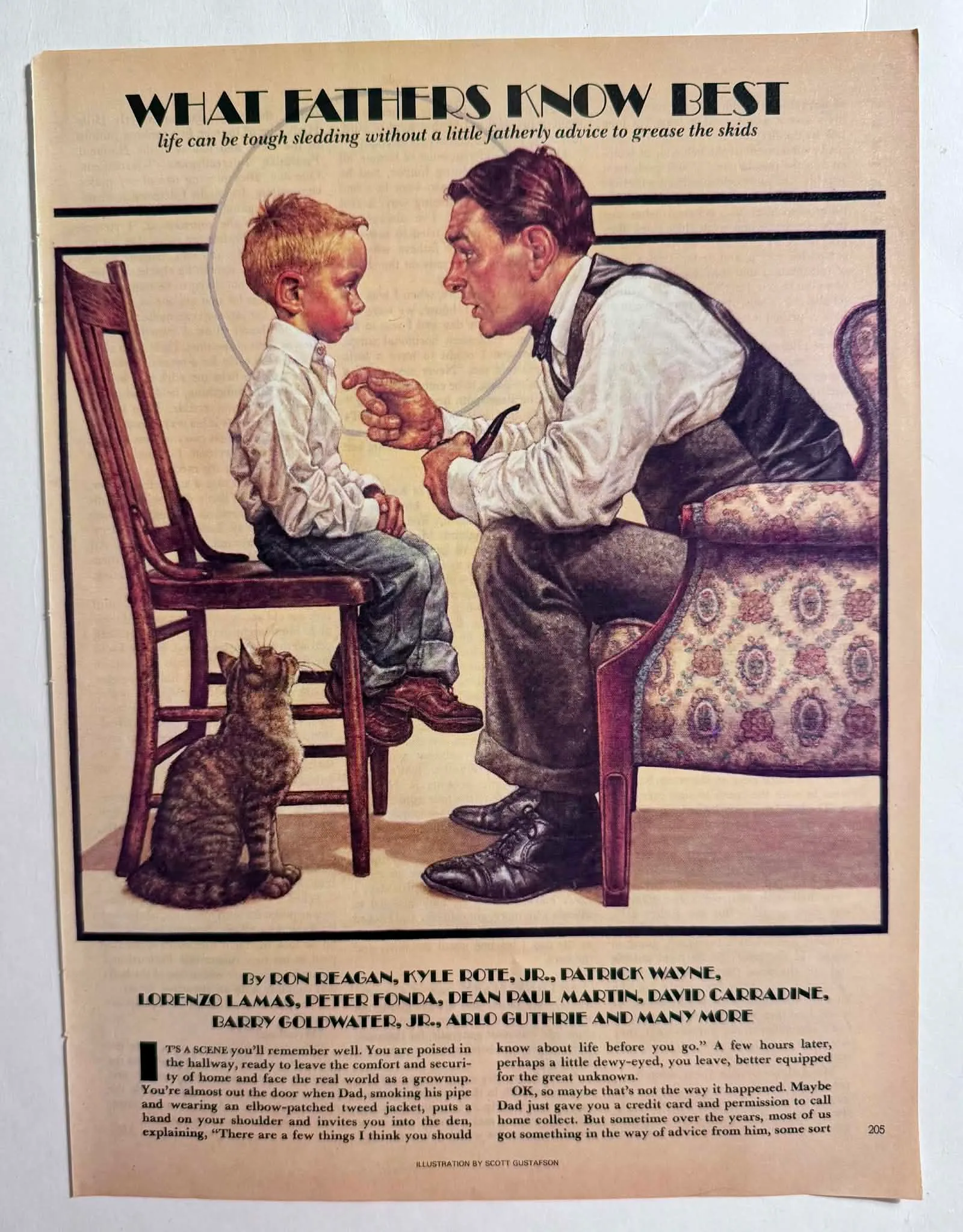
Antes, la autoridad era absoluta. Se dictaba desde arriba, era incuestionable y rígida. Hoy, la autoridad se negocia. Se construye sobre una vulnerabilidad compartida y un consejo silencioso. Este artefacto, preservado en los archivos de The Record Institute, captura el momento exacto de esa transición. Presenta un problema: la partida inevitable de la juventud hacia la maquinaria implacable del mundo adulto. Y ofrece una solución: la transferencia de capital intergeneracional. No riqueza, sino previsión. Esta obra es un puente entre el patriarca estoico y distante de principios del siglo XX y el mentor emocionalmente disponible de finales del mismo siglo. Es una pieza de sentimentalismo calculado, diseñada con precisión para anclar a una sociedad en plena mutación a la iconografía familiar del santuario doméstico.
Category: Other
The History
El Plano Social y el Ideal Nuclear Este documento funciona como un espejo cultural. Refleja una versión muy específica y altamente curada del ideal doméstico estadounidense de mediados y finales del siglo XX. La imaginería se apoya fuertemente en la iconografía establecida del hogar. El padre está sentado en un sillón estampado. Lleva chaleco de tweed, corbata y fuma en pipa. Esto no es una domesticidad casual; es el uniforme institucional de la autoridad paternal. Sin embargo, la postura es íntima. Él se inclina hacia adelante. La distancia física entre el patriarca y el heredero ha sido abolida. La sociedad de esa época lidiaba con una fractura generacional sin precedentes. Los movimientos juveniles habían desmantelado activamente el respeto incondicional por la autoridad tradicional. En respuesta, los medios de comunicación de masas necesitaban un mecanismo para reconciliar el viejo mundo con el nuevo. Este artefacto cumple precisamente esa función. Redefine la marca del padre. Ya no es el guardián de la disciplina que sostiene una vara. Es el estratega que ofrece un mapa. El texto habla de que la vida puede ser como "deslizarse en un trineo difícil" (tough sledding) y de la necesidad de "consejos paternales para engrasar los patines" (fatherly advice to grease the skids). Reconoce abiertamente que el mundo fuera del pasillo es hostil. El hogar se posiciona como la última sala de reuniones antes del despliegue táctico en la edad adulta. El Peso del Legado y la Negociación de la Identidad El bloque de texto situado debajo de la ilustración ancla este concepto filosófico en una realidad tangible. Enumera nombres: Ron Reagan, Kyle Rote Jr., Patrick Wayne, Lorenzo Lamas, Peter Fonda, Dean Paul Martin, David Carradine, Barry Goldwater Jr., Arlo Guthrie. Estas selecciones no son arbitrarias. Son los hijos de gigantes. Políticos, iconos de Hollywood, leyendas musicales y titanes del deporte. Al invocar estos nombres específicos, el artefacto eleva la conversación de la simple domesticidad común al teatro del gran legado. Pide al lector que considere el inmenso peso psicológico de estar de pie bajo sombras tan vastas. Cada nombre en esa lista representa una negociación de identidad altamente pública. Peter Fonda se rebeló contra el clasicismo estoico de Henry Fonda. Arlo Guthrie cargó con el manto folk populista de Woody Guthrie mientras navegaba por la contracultura. Ron Reagan se apartó drásticamente de la ortodoxia conservadora de Ronald Reagan. El artefacto utiliza a estos hombres como representantes de la lucha universal por la separación. Sugiere que, sin importar la magnitud del padre, el mecanismo fundamental de la partida sigue siendo idéntico. La mano en el hombro. La invitación al estudio. La última transmisión de tácticas de supervivencia. El Motor Económico del Sentimiento El contenido publicitario y editorial de esta época no vendía productos; vendía estabilidad. El panorama económico estaba definido por una rápida industrialización, el ascenso en la escala corporativa y la creciente movilidad de la fuerza laboral. Los hijos ya no heredaban necesariamente la granja familiar o el comercio local. Partían hacia las universidades. Cruzaban el continente para obtener puestos corporativos. Esta dispersión geográfica y económica creó un mercado para la nostalgia. Los sindicatos de la prensa escrita entendían esto íntimamente. Las revistas funcionaban como el tejido conectivo de una nación fracturada. Este artefacto es un ejemplo fundamental de la economía del sentimiento. Al ilustrar un momento de conexión profundamente idealizado y estático, la publicación crea un ancla psicológica para el lector. El lector no compra la revista solo por la información, sino por la restauración temporal del orden. La iconografía monetiza la ansiedad universal relacionada con el envejecimiento y el acto de dejar ir a los hijos. El Paisaje Competitivo: La Letra Impresa contra la Pantalla Cuando se encargó esta ilustración, la prensa escrita estaba inmersa en una brutal guerra de desgaste con la televisión. La pantalla ofrecía movimiento, sonido e inmediatez. La letra impresa tenía que contraatacar con profundidad, textura y permanencia. Las emisiones desaparecían en el instante en que se transmitían. Una revista permanecía en la mesa de café durante un mes. Este artefacto aprovecha la inmovilidad inherente al medio. Su composición es una clase magistral en configuraciones de cámara estática (static camera setups). El espectador se posiciona como un observador silencioso en la habitación, inmóvil. La escena no tiene prisa. Exige que el espectador se detenga en los detalles: el tejido del tapizado, los pliegues de la camisa del niño, la postura atenta del gato. Mientras los competidores impresos de la época se orientaban hacia diseños agresivos basados en la fotografía, la decisión de utilizar una ilustración tradicional y minuciosamente elaborada fue un contramovimiento deliberado. Es el rechazo a la cruda realidad iluminada con flash del fotoperiodismo a favor de una calidez mítica y duradera. Le dice al lector que ciertas verdades se capturan mejor con el pincel del pintor que con el obturador de la cámara. La Mecánica de la Transición Histórica El verdadero cambio histórico representado aquí es la transición de la utilidad paternal. Históricamente, el papel del padre en los medios de comunicación se describía como un proveedor de capital y disciplina. Su presencia física a menudo era secundaria frente a su función económica. Esta ilustración documenta el giro hacia la utilidad emocional. El valor del padre en esta imagen no se deriva de su billetera, sino de su experiencia cognitiva. "Hay algunas cosas que creo que deberías saber sobre la vida antes de irte." Esta línea significa la democratización de las dinámicas familiares. Es la admisión de que el hijo enfrentará desafíos que el padre no puede resolver con dinero ni con fuerza. La única herramienta que se puede proporcionar es la perspectiva. Este cambio sentó las bases para la interpretación moderna de la paternidad. Trasladó el arquetipo de una figura de miedo a una figura de consejo. Cerró la brecha entre el estoicismo rígido de la generación anterior y la introspección emocional exigida por las generaciones posteriores.
The Paper
Este artefacto es un testimonio de la química lenta e inevitable del tiempo. El sustrato es probablemente un papel de revista estándar de mediados de siglo, estimado entre 60 y 70 GSM. Fue diseñado para la distribución masiva, no para la supervivencia en archivos, un hecho que hace que su estado físico actual sea profundamente fascinante. El papel exhibe una oxidación avanzada de la lignina. Esto es visible en el halo cálido y amarillento que se arrastra hacia adentro desde los márgenes, creando una textura de papel envejecido (aged paper texture) orgánica que los filtros digitales contemporáneos intentan imitar constantemente. El método de impresión es una litografía offset clásica. Bajo una inspección minuciosa, la estructura de los puntos de semitono (halftone) y el patrón de roseta CMYK son completamente visibles, dictando físicamente la densidad de las sombras y la calidez de los tonos de piel. La tinta se ha hundido profundamente en las fibras a lo largo de las décadas, perdiendo la tensión superficial brillante de su juventud para adquirir una resonancia histórica mate. No se trata solo de una imagen sobre un papel; es "materia que contiene tiempo", registrando físicamente el paso de los años a través de su degradación celular.
The Rarity
Aunque la página física de la revista en sí misma no alcance precios astronómicos en las subastas, su rareza contextual eleva este artefacto a la "Clase A" dentro de The Record Institute. Su valor no reside en la escasez numérica, sino en su destilación perfecta de una psicología cultural específica. Encontrar una representación intacta y altamente legible de este momento exacto de transición en la historia de la publicidad —donde la ilustración tradicional se encuentra con la dinámica cambiante de la familia nuclear— es cada vez más inusual. Sirve como una fuente primaria vital para sociólogos e historiadores visuales que rastrean la evolución de los arquetipos domésticos.
Citar este artículo
- MLA
- Naodhinsuk, Ronin. “El Expediente del Viajero en el Tiempo : WHAT FATHERS KNOW BEST - La Arquitectura del Legado Paternal.” The Record Institute, 2 September 2026, https://therecord.institute/es/journal/the-time-travellers-dossier-what-fathers-know-best-the-architecture-of-paternal-legacy.
- APA
- Naodhinsuk, R. (2026, September 2). El Expediente del Viajero en el Tiempo : WHAT FATHERS KNOW BEST - La Arquitectura del Legado Paternal. The Record Institute. https://therecord.institute/es/journal/the-time-travellers-dossier-what-fathers-know-best-the-architecture-of-paternal-legacy
- CHICAGO
- Naodhinsuk, Ronin. 2026. “El Expediente del Viajero en el Tiempo : WHAT FATHERS KNOW BEST - La Arquitectura del Legado Paternal.” The Record Institute, September 2, 2026. https://therecord.institute/es/journal/the-time-travellers-dossier-what-fathers-know-best-the-architecture-of-paternal-legacy.