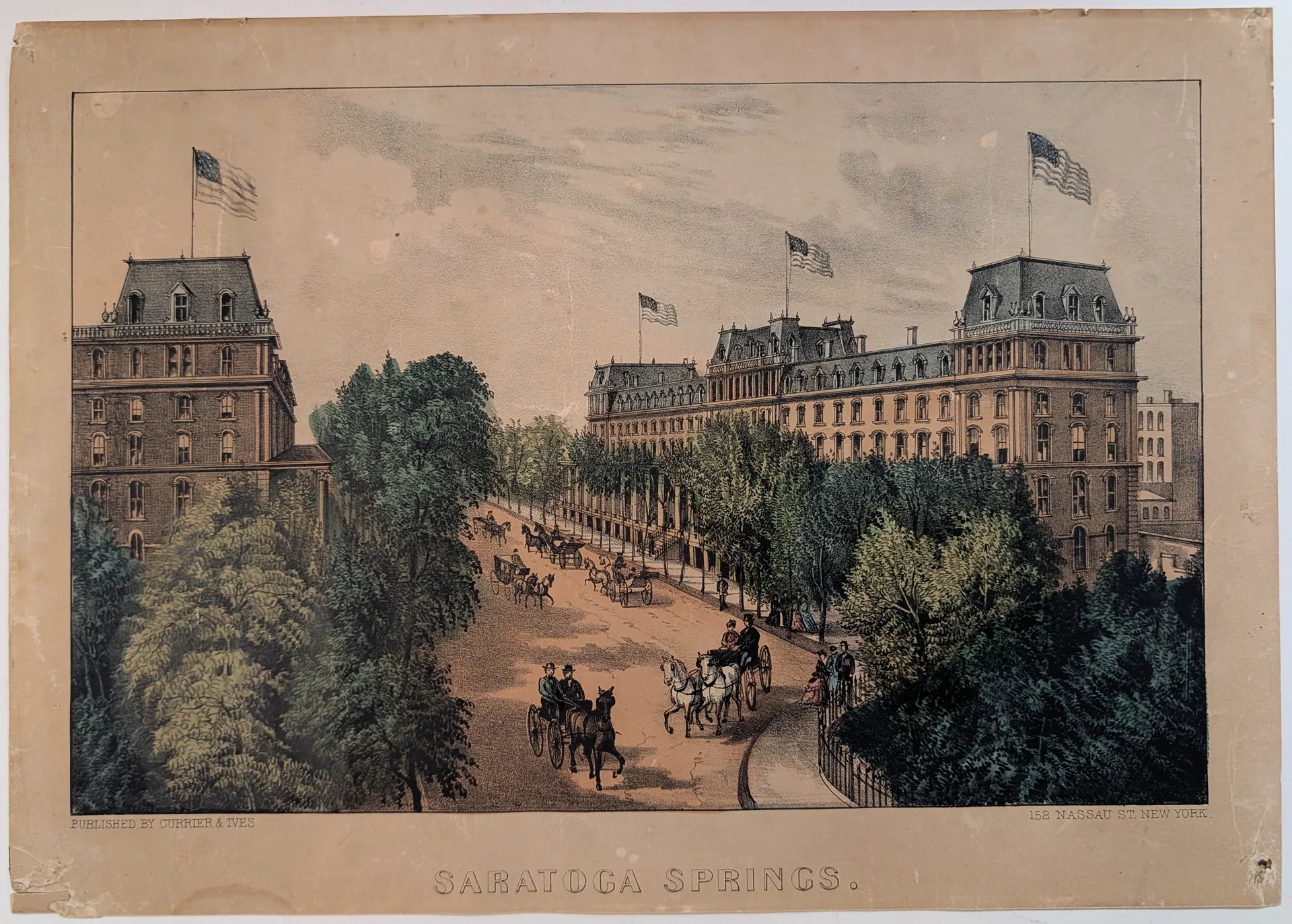
1870s "Saratoga Springs Street View" Antique Lithograph (Currier & Ives)
1870s "Saratoga Springs Street View" Antique Lithograph (Currier & Ives) is a vintage Lithographs / Prints artifact by Currier & Ives from 1870, preserved in The Record Institute Ephemera Archive.
Category: Lithographs / Prints
Brand: Currier & Ives
Year: 1870
Rarity Class: A
This hand-colored Currier & Ives lithograph captures Saratoga Springs at the precipice of the Gilded Age, defined by the monumental French Second Empire architecture of its expanding resort hotels. Published from the firm's 152 Nassau Street address shortly before their 1872 relocation, the view presents a bustling, tree-lined avenue of carriages and promenaders, perfectly encapsulating the sheer industrial scale of post-Civil War American leisure and the architectural ambition of the republic's premier watering place.
Quick Read
Era & Origin: Hand-colored stone lithograph by Currier & Ives, c. 1868–1872, printed at 152 Nassau Street, New York. Dated by the publisher's imprint and the specific architectural history of the resort. Subject: A bustling street view of Saratoga Springs, N.Y., showcasing the massive, newly constructed French Second Empire resort hotels that defined the post-Civil War era. Key feature: Prominent Mansard roofs, dormer windows, and large American flags flying from the hotel pavilions, capturing the dawn of Gilded Age architectural ambition. Social context: The broad avenue filled with horse-drawn carriages and formally dressed pedestrians illustrates the industrial scale of 19th-century hospitality and the performative nature of high-society leisure. Condition: Excellent antique condition. Exhibits expected age-toning to a warm cream, with vibrant, original assembly-line hand-coloring and a fully intact publisher imprint.
Summary
This hand-colored Currier & Ives lithograph captures Saratoga Springs at the precipice of the Gilded Age, defined by the monumental French Second Empire architecture of its expanding resort hotels. Published from the firm's 152 Nassau Street address shortly before their 1872 relocation, the view presents a bustling, tree-lined avenue of carriages and promenaders, perfectly encapsulating the sheer industrial scale of post-Civil War American leisure and the architectural ambition of the republic's premier watering place.