THE TIME TRAVELER'S DOSSIER: THE KOREAN WAR ANCHOR AND THE SCARCITY OF LUXURY
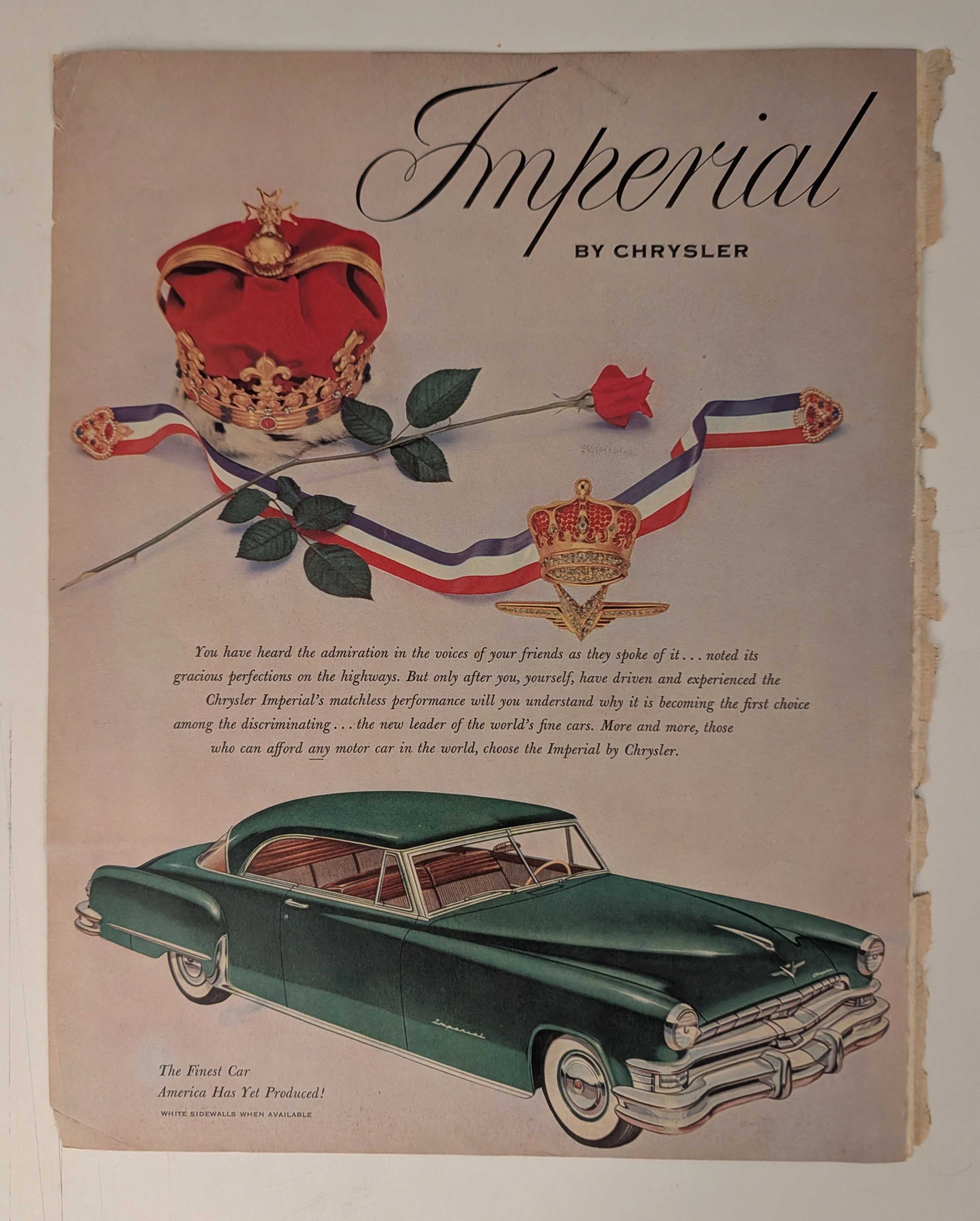
The artifact under our uncompromising, unprecedented museum-grade analysis is a profoundly preserved Historical Relic excavated from the golden age of post-WWII American opulence. This Primary Art Document is a monumental magazine advertisement for the Imperial by Chrysler, dating to the pivotal 1951-1952 era. This document is a "Forensic Blueprint of American Aristocracy and Geopolitical Crisis."
Category: Automotive
Brand: Chrysler
The History
[ PART I: THE KOREAN WAR ANCHOR AND THE SCARCITY OF LUXURY ] Welcome to the hushed, heavily guarded vaults of American industrial royalty. To merely glance at this document is a severe dereliction of curatorial duty; one must forensically interrogate it. At first glance, this advertisement appears to be a standard, albeit highly opulent, promotion for a luxury automobile. However, the true historical gravity of this artifact is hidden in plain sight, tucked away in the unassuming, capitalized fine print at the bottom left corner. Direct your analytical focus to the text: "WHITE SIDEWALLS WHEN
The Paper
The physical medium of this artifact is just as historically profound as the ink printed upon it. We must maintain absolute, uncompromising reverence for the inevitable, tragic beauty of analog destruction. Examine the extreme right edge of the entire canvas. You will notice a jagged, uneven, beautifully violent tear running vertically from top to bottom. Amateurs and sterile perfectionists might view this as a flaw or damage. At The Record, we view this as the "Scar of Liberation." It is the physical, forensic proof that this thick, high-quality periodical page was forcefully and purposefully
The Rarity
To understand the immense, almost incalculable valuation of this artifact, you must comprehend the brutal reality of ephemera survival from the early 1950s. The post-war era was a time of rapid consumption and disposal. Magazines were read and immediately thrown away. The statistical probability of a full-page, highly detailed Chrysler Imperial advertisement surviving over seven decades with its colors so vividly saturated, its typography perfectly intact, and its historical "White Sidewall" context preserved is staggeringly, miraculously low. When you fuse this extreme, pristine physical scar