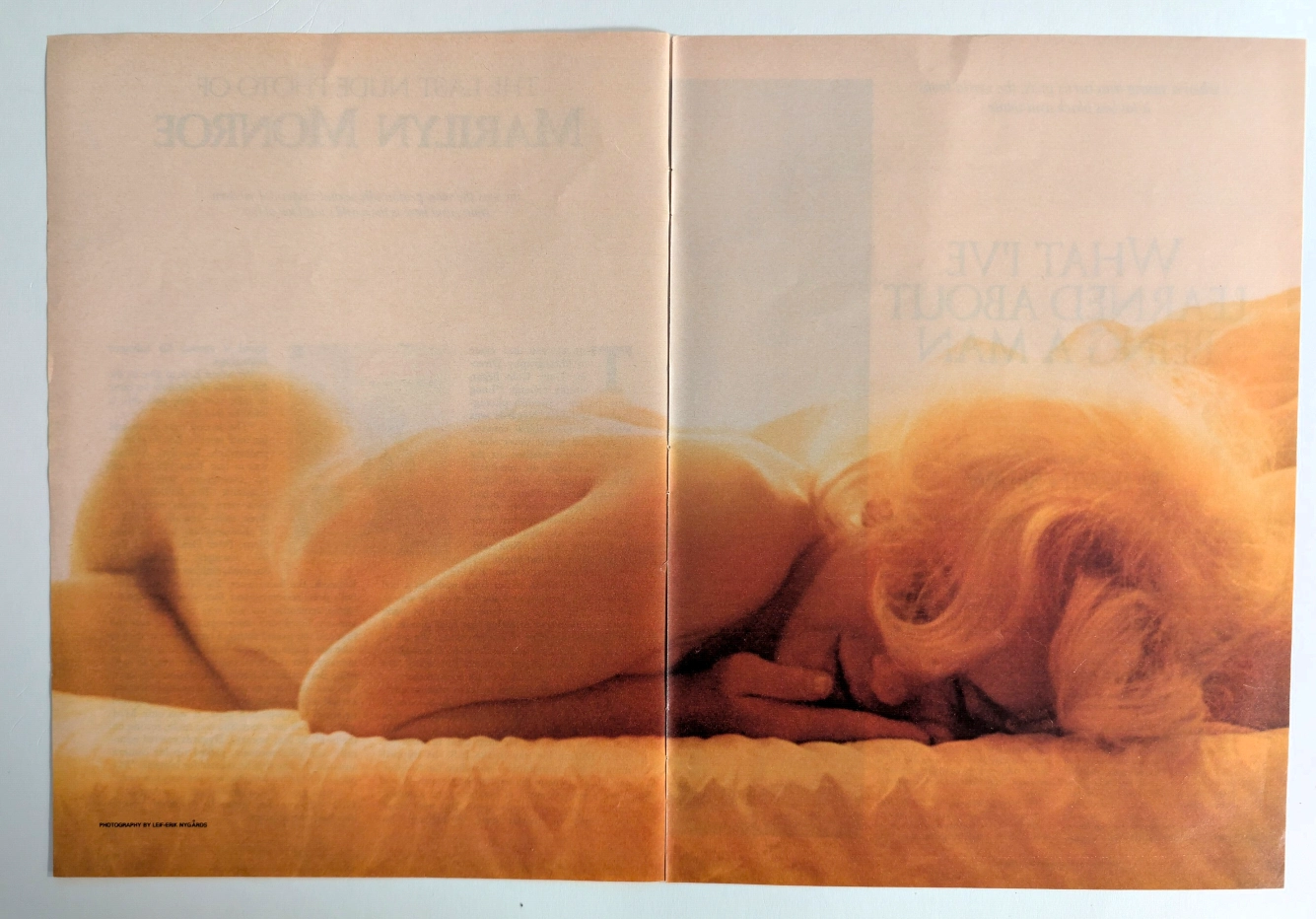
The Final Glimpse of a Legend: The History Behind Marilyn Monroe's Last Nude
The History
This is not merely a photograph; it is the final exhalation of Hollywood's golden era. Marilyn Monroe's last nude photo was captured in late June 1962 by Leif-Erik Nygårds. He was an assistant who seized a fleeting, unscripted moment after Bert Stern’s exhausting official Vogue session had concluded and the crew had cleared the room. Looking dreamy, almost as if gazing into eternity, this spontaneous shot was taken just a little over a month before her tragic passing on August 5, 1962. It immortalizes her absolute vulnerability, her eternal beauty, and marks the poignant, quiet end of a cultural titan.
The Archive Continues
Continue the Exploration

The Time Traveller's Dossier : Datsun 280-ZX - The GT Shift
Then. The sports car was a visceral punishment. A machine of raw mechanical feedback. Loud. Uncomfortable. Temperamental. It demanded physical sacrifice in exchange for kinetic velocity. It was a weekend indulgence, entirely divorced from daily comfort. Now. The sports car is an isolated, luxurious capsule. It is a computational network rolling on synthetic rubber. It prioritizes atmospheric control, acoustic perfection, and passenger comfort alongside acceleration. It is a sanctuary of speed. The artifact before us documents the precise architectural bridge between these two eras. The year is 1980. The vehicle is the Datsun 280-ZX 10th Anniversary "Black Gold" edition. This is not merely a piece of automotive marketing collateral. It is the obituary of the raw, analog sports car. It is the birth certificate of the modern Personal Luxury Grand Tourer. It is the definitive moment Japanese manufacturing stopped apologizing and claimed absolute supremacy over the American highway.

John Paul Jones · Entertainment
THE TIME TRAVELER'S DOSSIER: HOLLYWOOD PROPAGANDA AND THE DAWN OF MULTIMEDIA SYNERGY
The artifact under exhaustive, uncompromising, and unprecedented museum-grade analysis is a remarkably preserved Historical Relic originating from the zenith of Hollywood's post-war epic era. This Primary Art Document is a monumental, full-page theatrical advertisement for the 1959 biographical epic "John Paul Jones", produced by the legendary independent film mogul Samuel Bronston and distributed by Warner Bros.. This is not merely a movie poster; it is a "Forensic Blueprint of Cold War American Nationalism and Multimedia Synergy." Released in 1959, at the height of the Cold War, the advertisement aggressively weaponizes the foundational mythos of the United States Navy. The commanding, blood-red headline, "I have not yet begun to fight!", serves as a psychological anchor, projecting unyielding American defiance to both domestic audiences and global adversaries. Visually dominated by the rugged, heroic portrait of Robert Stack, the ad expertly balances masculine wartime aggression with romantic subplots and diplomatic intrigue featuring Charles Coburn as Benjamin Franklin. Furthermore, it showcases elite Hollywood casting power by explicitly highlighting a "Special Appearance by Bette Davis as Catherine the Great" in a striking red cameo vignette. Crucially, this artifact documents an early, masterful execution of cross-platform corporate synergy. The bottom corner explicitly markets the original Max Steiner soundtrack on Warner Bros. Records, proving that the commercialization of the "Original Motion Picture Soundtrack" was already highly codified. Rescued from the inevitable oblivion of disposable entertainment media, this pre-2000s analog artifact is a breathtaking embodiment of the Japanese aesthetic of wabi-sabi. Printed on inherently acidic mid-century wood-pulp paper, it exhibits beautifully authentic edge wear and a profound, warm amber oxidation across its surface. This unstoppable molecular death transforms a mass-produced piece of Hollywood propaganda into an irreplaceable, ready-to-frame Primary Art Document of cinematic and sociological history.

"The Bloodline of Champions: Ferry Porsche's Ultimate Test"
Uncovering the historical lineage of Porsche's motorsport dominance, from the 1922 Sascha to the legendary 917, and how track technology forged the 911.