The Time Traveller's Dossier : 1795 Franklin Iron Stove - The Thermodynamics of Colonial Modernity
Before this, fire was an untamed tenant. It consumed resources without returning equivalent value. Open hearths devoured vast cords of wood. They sent the vast majority of their thermal output directly up the masonry chimney. Rooms remained frigid. Drafts pulled cold air across the floorboards. Backs shivered while faces burned. The Franklin iron stove shifted this paradigm permanently. It trapped the chaotic process of combustion. It forced the exhaust through a calculated, metallic labyrinth. It radiated captured heat from exposed iron plates directly into the center of the living space. This was not merely a fireplace insert. It was the subjugation of thermodynamics. It was the exact historical moment when heat became engineered.
Category: Technology
The History
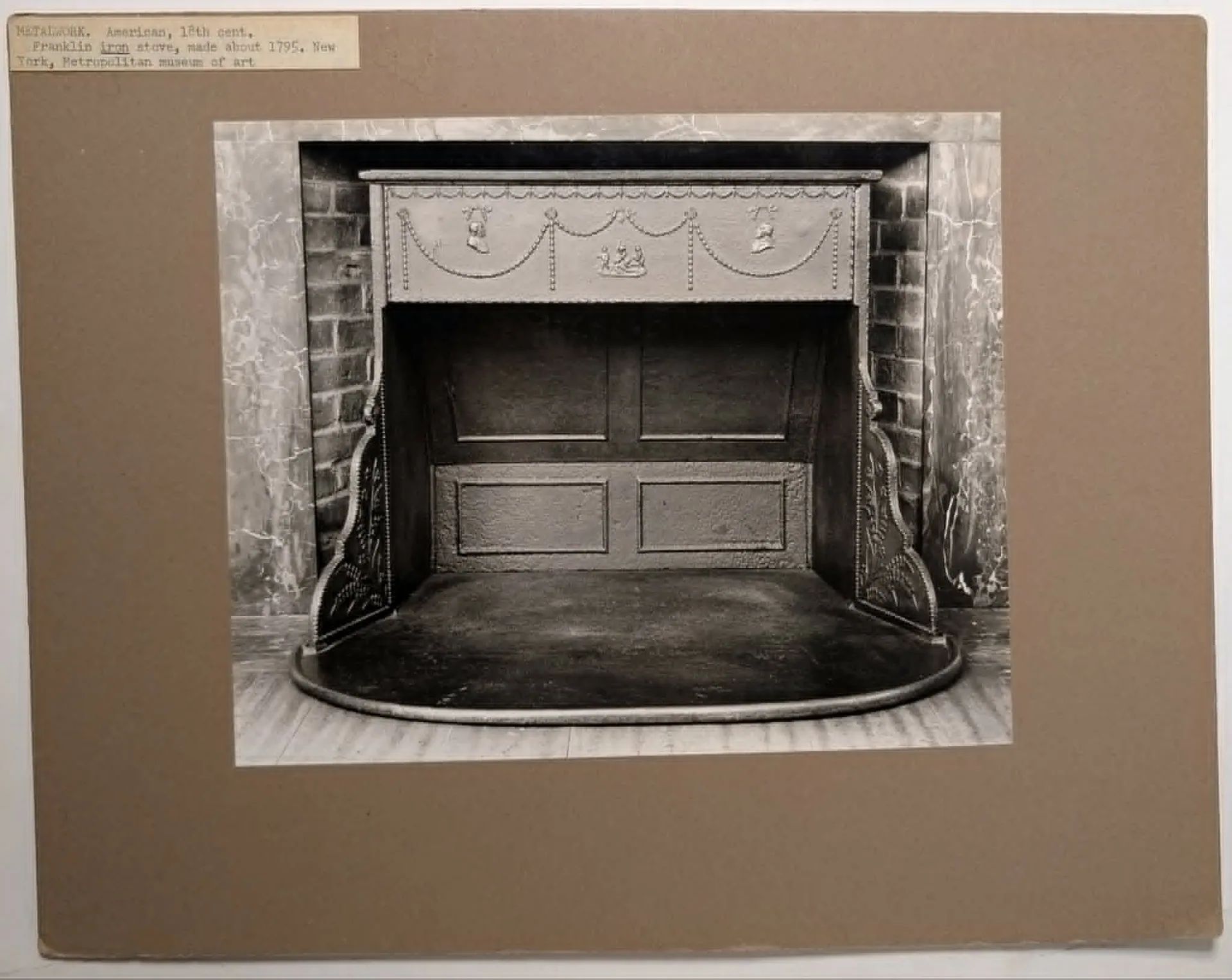
The Atmospheric Economy of 1795 In the closing decade of the 18th century, the North American landscape was fundamentally hostile. The climate was governed by the lingering effects of the Little Ice Age. Winters held burgeoning coastal cities in prolonged, freezing isolation. Urban centers like New York and Philadelphia faced a quiet but critical crisis of resources. The primary issue was deforestation. Wood was the absolute baseline fuel for survival, and its consumption was entirely exponential. As urban populations condensed, forests receded further from the city limits with each passing season. The logistics of chopping, drying, and transporting timber by horse and cart drove domestic fuel prices aggressively upward. Heating a home was no longer merely a daily domestic chore. It was a significant, compounding economic burden. Society required a new mechanism for winter survival. The agrarian model of infinite resource abundance was failing under the weight of urban density. A technological shift was demanded by the economy itself. Society needed a transition from passive consumption to active, calculated efficiency. The Flaw of the Open Hearth The traditional open fireplace was an architectural failure masked as a cultural necessity. It was rooted in an ancient psychological need to see the open flame. However, the physics of the open hearth were inherently flawed. An open fire relies on a massive, unrestricted draft to carry smoke up the chimney. This draft creates a powerful thermal vacuum within the architecture of the home. As hot air rapidly ascends the flue, it mechanically pulls freezing outside air through every crack in the walls, windows, and doors to replace it. The harder the fire burned, the more cold air it dragged into the room. The thermal efficiency was abysmal. Nearly ninety percent of the generated heat was lost to the sky. The result was a specific societal behavior pattern. Families were forced into tight, localized circles immediately surrounding the hearth. The architecture of the home was dictated by thermal failure. The periphery of any room was uninhabitable during the winter months. Human productivity plummeted when the sun set and the cold crept in. The Mechanics of the Cast Iron Baffle The solution required a fundamental rethinking of how fire interacts with atmosphere. Benjamin Franklin laid the theoretical groundwork decades earlier in 1741, but by 1795, the design had been iterated, refined, and industrialized. The unit depicted in the archival photograph is a masterclass in early thermodynamic engineering. It operates on the principle of heat exchange. The stove is essentially a cast-iron box inserted directly into the existing masonry hearth. It functions by creating a physical barrier between the combustion chamber and the chimney draft. A highly specific arrangement of iron baffles forces the hot exhaust gases to travel down and around a metallic channel before they are permitted to escape up the flue. This extended journey forces the heat to transfer into the cast iron plates. The iron then radiates this absorbed thermal energy continuously and evenly into the room. It transformed the fireplace from a mere exhaust vent into an active, centralized thermal battery. Metallurgical Infrastructure and Production The existence of this stove speaks directly to the maturity of the early American metallurgical infrastructure. It is a product of the sand-casting method. Foundries in Pennsylvania and New York were transitioning from producing crude iron pigs to intricate, multi-part consumer goods. The creation of this stove required heavy industry. Iron ore had to be mined, smelted in massive blast furnaces fueled by charcoal, and poured as molten metal into precisely carved wooden molds packed with fine sand. The resulting cast iron plates were incredibly heavy, brittle, and difficult to transport. Yet, the material was entirely necessary. Cast iron possesses an exceptionally high thermal mass. It absorbs heat slowly and releases it steadily over time, preventing the violent temperature fluctuations inherent to an open wood fire. It was the absolute ideal material for the era. The rough, pitted texture visible on the internal plates in the archival photograph is the literal imprint of the sand mold. It is a permanent record of the violent, industrial manufacturing process. The Competing Thermal Ideologies The 1795 iron stove did not exist in a vacuum. It was engaged in a fierce market competition against competing thermal ideologies. The primary alternative was the closed-box German jamb stove, often called a five-plate stove. These enclosed units were incredibly efficient at radiating heat, but they completely hid the fire from view. The Anglo-American populace heavily resisted this. They demanded the psychological comfort of seeing the flames. Another competitor was the Rumford fireplace, developed in the late 1790s, which utilized shallow, steeply angled brick walls to reflect radiant heat into the room without requiring heavy iron inserts. The Franklin-style stove represented a calculated compromise. It offered the enclosed, engineered efficiency of a heat-exchanging baffle system, while remaining open at the front. It allowed the user to look directly into the combustion chamber. It balanced the cold, hard logic of thermodynamic engineering with the deeply ingrained, emotional human need for a visual connection to the hearth. The Neoclassical Disguise Perhaps the most fascinating aspect of this artifact is its aesthetic disguise. This is a heavy, industrial machine built for the violent processing of chemical combustion. Yet, it is adorned with delicate Neoclassical motifs. The upper frieze features meticulously cast drapery, classical swags, and profile medallions depicting idealized figures. This is not arbitrary decoration. It is a deliberate, strategic mechanism of social integration. In 1795, heavy iron machinery belonged in mills, foundries, and the damp holds of ships. It did not belong in the formal parlor of a polite home. To convince the wealthy elite to install a massive iron engine into their living spaces, the engineers had to disguise it as classical architecture. The stove masks its utilitarian function behind the fashionable aesthetics of the Federal period. It mimics the delicate plasterwork and carved wood of the surrounding mantle. This represents a profound shift in consumer culture. It is an early instance of industrial design attempting to domesticate machinery through the application of classical art. The Enlightenment of Heat The ultimate historical shift represented by this stove is the democratization of time and space within the home. By vastly increasing the thermal efficiency of a given quantity of wood, the stove lowered the physical and financial burden of survival. Rooms were entirely heated, not just the two feet immediately in front of the flames. This expanded the habitable square footage of a house during the winter. It allowed individuals to sit at a desk near a window to read, write, or sew. It extended the productive hours of the day deep into the freezing night. In many ways, the engineered heat of the iron stove was a localized, domestic engine for the Enlightenment. It provided the physical comfort necessary for intellectual and economic labor to continue regardless of the hostile atmospheric conditions outside the brick walls.
The Paper
The artifact documenting this history is itself a physical record of time. It is a gelatin silver print securely mounted onto a rigid, highly acidic cardboard substrate. The paper naturally exhibits the inevitable chemical degradation associated with its archival lifespan. The edges of the mount show microscopic fraying, revealing the fibrous structure beneath. The surface of the photograph reflects a muted, matte finish, intentionally devoid of gloss. This preserves a period-accurate aesthetic, freezing the object in a specific temporal context. The accompanying typewritten label is a purely mechanical, tactile artifact. The ink was physically struck deep into the paper fibers through the forceful impact of a typewriter key. The typed underline situated directly beneath the word "iron" is a deliberate, human intervention. It silently commands the viewer to acknowledge the primacy of the material. The original flat illustration style of the photograph, combined with the aged paper texture, possesses a subtle, organic warmth that stands in stark, compelling contrast to the heavy, cold iron of the subject matter it records.
The Rarity
Classification: Class SS. While early American iron stoves exist in museum collections, an uncorrupted archival photograph with perfectly intact, original mechanical provenance typing is exceedingly rare. Its value is not dictated by market auction prices, but by its unparalleled contextual significance as a pristine, objective document of late 18th-century industrial domestication.
Cite this article
- MLA
- Naodhinsuk, Ronin. “The Time Traveller's Dossier : 1795 Franklin Iron Stove - The Thermodynamics of Colonial Modernity.” The Record Institute, 30 June 2026, https://therecord.institute/journal/the-time-travellers-dossier-1795-franklin-iron-stove-the-thermodynamics-of-colonial-modernity.
- APA
- Naodhinsuk, R. (2026, June 30). The Time Traveller's Dossier : 1795 Franklin Iron Stove - The Thermodynamics of Colonial Modernity. The Record Institute. https://therecord.institute/journal/the-time-travellers-dossier-1795-franklin-iron-stove-the-thermodynamics-of-colonial-modernity
- CHICAGO
- Naodhinsuk, Ronin. 2026. “The Time Traveller's Dossier : 1795 Franklin Iron Stove - The Thermodynamics of Colonial Modernity.” The Record Institute, June 30, 2026. https://therecord.institute/journal/the-time-travellers-dossier-1795-franklin-iron-stove-the-thermodynamics-of-colonial-modernity.