The Time Traveller's Dossier : Alinari Louis XIV - The Shift in Visual Ownership
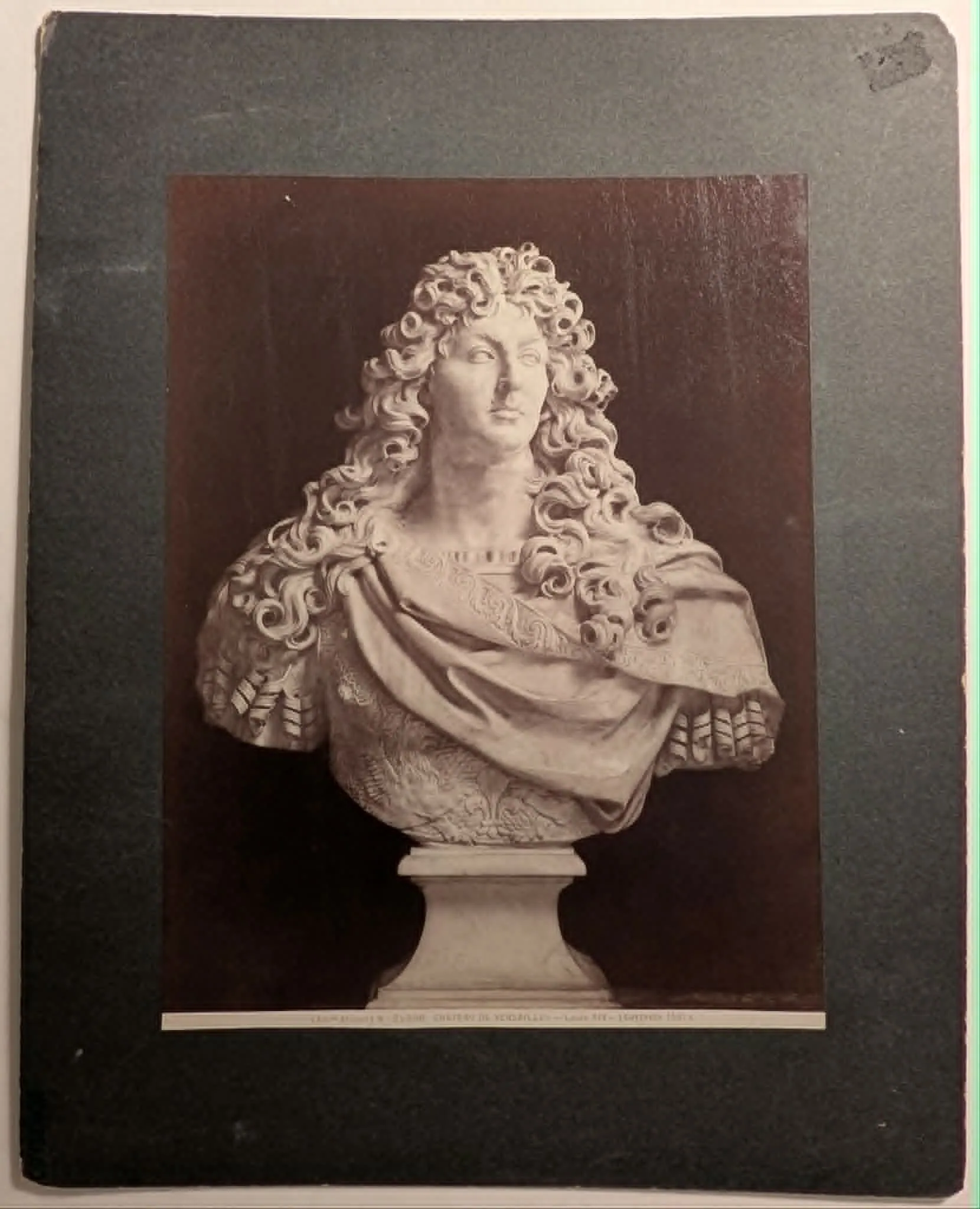
An image of an absolute monarch. Captured by mechanical reproduction. Acquired by a public institution. Stamped. Circulated. Discarded. This artifact is not merely a photograph; it is a collision of four distinct timelines. It begins with the divine right of kings in 1681, synthesized into marble by Antoine Coysevox. It shifts into the era of the Fratelli Alinari, who utilized the camera to democr
Category: Other
The History
The Blueprint of Divinity (1681) To understand the photograph, we must first understand the marble. In 1681, Antoine Coysevox sculpted the bust of King Louis XIV of France. This was not a mere portrait; it was a highly calibrated instrument of political technology. During the late 17th century, absolute monarchy required absolute visibility. Louis XIV, the Sun King, utilized art as statecraft. The Palace of Versailles was his theater, and sculptures like this were the enduring actors upon its stage. Coysevox’s task was engineering over aesthetics. He had to convey immovable authority. Look at
The Paper
The artifact is a photographic print, likely a gelatin silver or albumen print, meticulously adhered to a dense, industrial-grade archival mounting board. The board itself exhibits severe oxidation, transitioning from what was likely a neutral gray to a warm, aged olive-brown. The corners are rounded and worn, indicating decades of physical friction—sliding in and out of filing cabinets. The front side features the photograph, showcasing a rich tonal range. The Alinari process captured deep, velvety shadows in the folds of the king's drapery and sharp, high-contrast highlights on the marble’s
The Rarity
Classification: Class A (Contextual Anomaly). Millions of Alinari prints were produced and distributed globally to museums and academies. The photograph itself is fundamentally common in the context of late 19th-century reproductions. However, its classification elevates to a Class A artifact due to its specific institutional provenance and the physical evidence of its lifecycle. Finding an Alinari print is easy; finding one that documents the precise bureaucratic process of American civic education and its subsequent digital-era obsolescence is significantly harder. Its rarity lies not in the