The Time Traveller's Dossier : Ipana - Post-War Mobility
The world was once a vast, disconnected expanse. Travel was an ordeal of physical endurance. Then came the shift. The heavy machinery of global conflict was rapidly retrofitted for civilian velocity. This artifact documents a very distinct, heavily engineered threshold in human history. It captures the precise moment when the miracle of mechanical flight became entirely mundane. It became mundane enough to accommodate the routine, trivial acts of personal hygiene. We moved from merely surviving the journey. To meticulously grooming ourselves during it. The sky was no longer a terrifying theater of war, nor a frozen void. It was a commuting route. The introduction of running water and dental care inside a pressurized aluminum tube, flying at ten thousand feet, was not merely a convenience. It was a psychological declaration. Humanity had permanently domesticated the stratosphere.
Category: Technology
The History
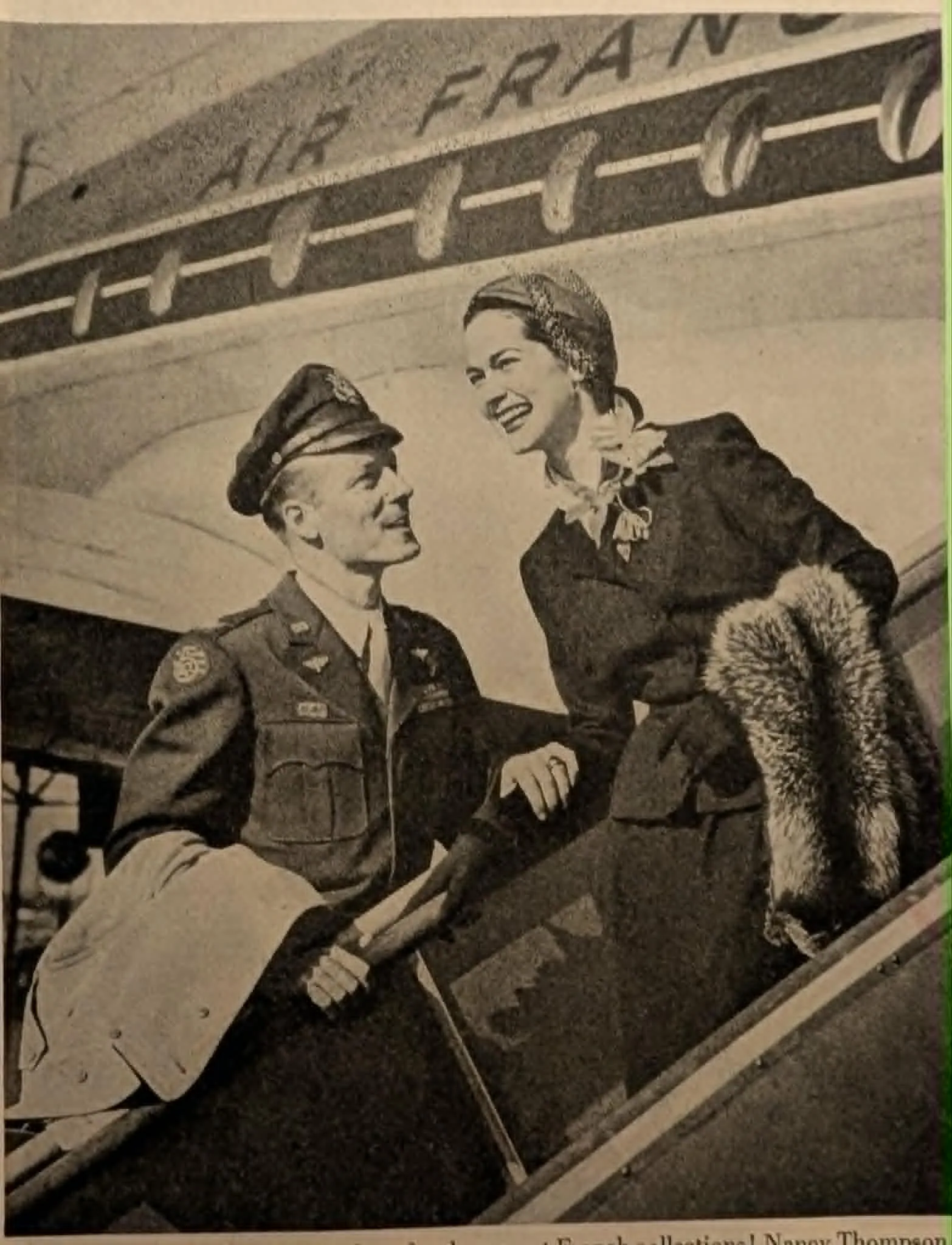
The Epoch of Accelerated Mobility To understand the true gravity of this archival artifact, one must first dismantle the modern assumption of frictionless, invisible travel. In the era immediately preceding the creation of this document, commercial aviation was a fragile, terrifying experiment. Aircraft were unpressurized. Cabins were deafeningly loud. Passengers routinely endured freezing temperatures and severe, unmitigated turbulence. The act of flying was an exercise in extreme physical fortitude. The human body was merely subjected to the hostile environment of the upper troposphere. Then, the infrastructure of global war ended. The massive manufacturing pipelines designed to churn out heavy bombers and fighter escorts faced sudden, catastrophic obsolescence. The aerospace industry was forced to pivot. They redirected their metallurgical mastery and aerodynamic research toward civilian enterprise. Factories that built instruments of absolute destruction began assembling pressurized vessels for mass civilian transit. We see this transition perfectly crystallized in the sociopolitical coding of the artifact's primary image. The presence of the military uniform, juxtaposed with high-fashion civilian attire, is a calculated narrative device. The soldier is returning from a theater of combat, but he is immediately transitioning into a theater of commerce. The aircraft behind them, proudly branded with the insignia of international transit, represents the re-establishment of global connectivity. Europe and America were no longer separated by weeks of perilous, unpredictable ocean navigation. They were bridged by a few hours of mechanical flight. This was the birth of the kinetic elite. The pace of human interaction accelerated exponentially. And with this unprecedented speed, the societal expectations placed upon the individual's presentation upon arrival compounded drastically. The Domestication of the Stratosphere The true historical shift documented here is not the airplane itself. It is the lavatory hidden within it. The concept of performing intimate, domestic rituals—specifically oral hygiene—while suspended miles above the earth represents a profound psychological and engineering evolution. Early flight required heavy leather jackets, fur-lined goggles, and a grim endurance against the elements. The passenger was a willing participant in a harsh, industrial experiment. By the time this specific campaign was launched, the narrative had irrevocably altered. The environment within the aircraft had been rigorously engineered to simulate the terrestrial home. This required monumental feats of hidden engineering. Water is exceptionally heavy; it weighs roughly eight pounds per gallon. Lifting hundreds of gallons of water into the sky requires immense fuel expenditure and thrust. Furthermore, designing miniaturized plumbing systems that could withstand extreme pressure differentials, violent vibrations, and freezing temperatures without failing was a triumph of mid-century industrial design. Yet, this monumental engineering effort was presented to the consumer as a basic, expected comfort. The woman smiling while brushing her teeth in the confined, sterile space of the aircraft washroom is a demonstration of absolute atmospheric dominion. Mankind had not just conquered the sky; we had trivialized it. We made it a place to freshen up before a meeting. This artifact marks the dawn of expected convenience, a psychological baseline that forms the absolute cornerstone of modern consumer behavior. The Weaponization of Clinical Authority The post-war era ushered in the golden age of the technocrat, the scientist, and the invisible expert. Society, having just witnessed the terrifying, world-altering efficacy of applied science—from the deployment of radar to the unleashing of atomic energy—placed absolute, unquestioning faith in the specialist. This artifact leverages that cultural submission with lethal precision. The text declaring, "In thousands of reports from all over the country" and referencing a tool that "1000 dentists helped design," is a masterclass in the architecture of persuasion. Marketing had rapidly moved away from mere poetic promises and emotional appeals. It anchored itself entirely in empirical rationalism and pseudo-scientific mandate. The consumer was no longer being asked to believe the manufacturer; they were being instructed to obey the consensus of the medical community. The "DOUBLE DUTY Tooth Brush with the twist in the handle" represents the era's absolute obsession with ergonomic engineering. The human body was increasingly treated as a complex machine that required scientifically calibrated maintenance. The 'twist' was not just an aesthetic design choice. It was presented as a functional imperative, validated by a thousand unseen, unnameable authorities. This marked a departure from ancestral habits to clinically directed behavior. The individual surrendered their personal judgment to the aggregate data of the newly formed, highly revered professional class. The Competitive Landscape of Mid-Century Hygiene During this period, the economic landscape of personal care was a fierce, highly capitalized battleground. The transition from abrasive tooth powders to smooth toothpastes was largely complete, but brand loyalty was still highly fluid among the rapidly expanding, wealthy middle class. Competitors like Colgate, with their Ribbon Dental Cream, and Pepsodent, heavily pushing the vague chemical promise of 'Irium', were aggressively vying for absolute market dominance. The strategy was twofold. First, associate the product with upper-class mobility. Second, ground it in undeniable scientific necessity. This Ipana artifact operated as a dual-threat in that vicious landscape. By associating a low-cost, daily dental product with the highly exclusive, expensive realm of international air travel, the brand elevated itself. It mutated from a simple bathroom staple into an accessory of the cosmopolitan elite. It explicitly suggested that financial success, global mobility, and pristine oral health were inexorably linked. The economic boom of the post-war years created an unprecedented surplus of disposable income. People were not just buying hygiene; they were purchasing a token of membership into a modernized, sanitized, and globally dominant society. The toothpaste tube became a symbol of participation in the new, immaculate world order. Ultimately, Ipana would lose this war. The introduction of stannous fluoride by Crest in the late 1950s, backed by the official endorsement of the American Dental Association, would shatter Ipana's market share. But in this exact moment, captured in this artifact, they were projecting absolute supremacy. The Societal Shift in Gender and Transit Finally, the artifact serves as a critical, unvarnished record of shifting gender dynamics within the specific context of travel. The woman is the undisputed focal point of the domestic action within the mechanical space. She is traveling, she is glamorous, and she is participating in the new global economy. However, she is also bound by the rigorous, exhausting expectations of mid-century grooming standards. The smile she wears is not merely an expression of spontaneous joy. It is a strict social requirement. It is a physical asset that must be maintained, polished, and presented flawlessly, regardless of the physical toll of transit. The rigorous demand for presentability, even after crossing turbulent oceans in a metal tube, speaks to the immense societal pressure placed on the visual aesthetics of the individual. Travel was no longer an accepted excuse for dishevelment. The modern world demanded constant, unyielding readiness. The artifact captures the underlying, vibrating anxiety of the era: the deep-seated fear of falling behind, of appearing unkempt in a world that was moving faster, looking cleaner, and demanding aesthetic perfection at every altitude. The toothbrush and the paste were the mandatory tools issued to the individual, required to keep pace with the relentless acceleration of societal expectations.
The Paper
The physical medium of this archive speaks directly to the highly ephemeral nature of mass communication. Printed on what is clearly mid-weight, machine-made mechanical pulp paper, it was engineered for immediate consumption, not for historical preservation. The artifact exhibits the inevitable, slow-motion chemical reality of lignin oxidation. The paper has absorbed the decades, transitioning from a presumed crisp, chemically bleached white to a muted, archival sepia. The printing technique utilized is classic web-fed offset lithography, relying on a distinct, coarse line screen frequency. This physical architecture is entirely exposed under magnification. The continuous tone of the human smile—the very core of the advertisement's promise—is a total optical illusion. It is constructed entirely of varied, heavily regimented halftone dots. The capillary action of the wet ink bleeding slightly into the porous, cheap paper fibers softens the edges of these dots, a characteristic, undeniable signature of mid-century, high-volume magazine production. This physical degradation contrasts sharply with the permanence of the cultural shift it documents. The paper rapidly decays, but the habit of brushing one's teeth at thirty thousand feet remains an unquestioned, permanent standard of modern transit.
The Rarity
This artifact is not inherently rare in its physical form. Millions of these publications were printed, distributed, and subsequently discarded. However, its true rarity classification elevates to 'Class A' strictly due to its immense contextual value. It serves as a flawless primary source document for the intersection of three distinct mid-century revolutions: the rise of commercial aviation, the medicalization of consumer marketing, and the globalization of personal hygiene expectations. Its rarity lies in its pristine articulation of an era's psychological baseline. It is a perfect, uncontaminated mirror reflecting the exact moment humanity collectively decided that the conquest of the sky required a mint-flavored smile.
Cite this article
- MLA
- Naodhinsuk, Ronin. “The Time Traveller's Dossier : Ipana - Post-War Mobility.” The Record Institute, 16 July 2026, https://therecord.institute/journal/the-time-travellers-dossier-ipana-post-war-mobility.
- APA
- Naodhinsuk, R. (2026, July 16). The Time Traveller's Dossier : Ipana - Post-War Mobility. The Record Institute. https://therecord.institute/journal/the-time-travellers-dossier-ipana-post-war-mobility
- CHICAGO
- Naodhinsuk, Ronin. 2026. “The Time Traveller's Dossier : Ipana - Post-War Mobility.” The Record Institute, July 16, 2026. https://therecord.institute/journal/the-time-travellers-dossier-ipana-post-war-mobility.