The Time Traveller's Dossier : Mitsubishi MCA-Jet - The Clean Air Paradigm Shift
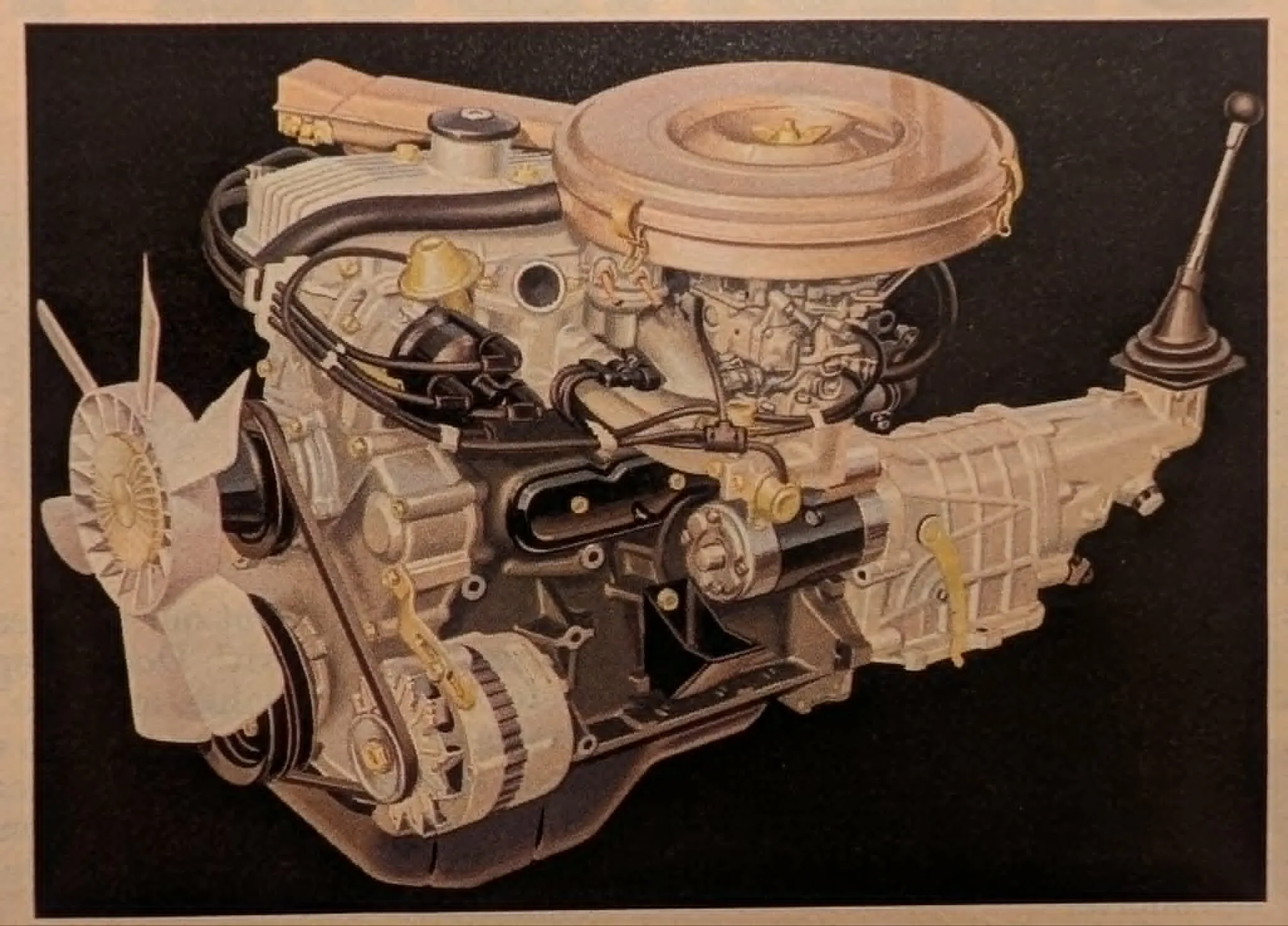
The roar of the American V8 engine was dying. It was not a peaceful death. It was choked by smog and starved by geopolitics. The 1970s demanded an immediate, desperate pivot. Efficiency was no longer a luxury. It was a mandate for survival. Automakers scrambled. Many failed. They bolted crude constraints onto outdated iron blocks. They compromised performance for compliance. The result was a generation of lethargic, uninspired machines. Then, a quiet answer arrived from across the Pacific. It was not a compromise. It was a recalculation. This artifact—a vintage advertisement for the Mitsubishi MCA-Jet System—is the physical record of that specific shift. It documents the exact moment when brute force surrendered to precise engineering. It highlights a system that solved the emissions crisis not by suffocating the engine, but by rethinking the very nature of combustion. It is a bridge between the reckless displacement of the past and the calculated intelligence of the modern era.
Category: Automotive
Brand: Mitsubishi
The History
The Death of the Dinosaurs To understand the profound significance of this document, we must first reconstruct the environment that necessitated its creation. The American automotive landscape prior to 1973 was an ecosystem of excess. Gasoline was cheap. Steel was abundant. The solution to making a vehicle faster or smoother was elementary: increase the displacement. Add more cylinders. Pour more fuel. This philosophy was utterly shattered by the 1973 OPEC oil embargo. Overnight, the fundamental metrics of automotive success inverted. Fuel economy transformed from an afterthought into the primary deciding factor for the global consumer. Simultaneously, the sky was turning brown. Urban centers like Los Angeles and Tokyo were drowning in photochemical smog. Governments reacted with severe legislative force. The United States passed stringent amendments to the Clean Air Act. Japan enacted equally aggressive emissions standards. The era of unchecked internal combustion was over. The mandate was clear: clean up the exhaust, or cease production. The Malaise Era and the Engineering Panic The established titans of the industry panicked. Their initial response was reactive, not innovative. Detroit engineers, facing impossible deadlines, resorted to crude, bolt-on solutions. They lowered compression ratios, severely retarding spark timing, and introduced early, restrictive catalytic converters. They strangled their own engines to meet the legal limits. The consequences were disastrous. Horsepower plummeted. A massive V8 engine from the late 1970s often produced less power than a four-cylinder engine from a decade prior. Furthermore, drivability suffered immensely. Vehicles stalled. They hesitated. They ran rough. This period became infamously known as the "Malaise Era" of automotive history. The problem was philosophical. The traditional approach was to clean the toxic gases after they had been created, deep within the exhaust system. The Japanese approach, documented in this artifact, was fundamentally different. They chose to solve the problem at the source. They chose to change how the fire burned. The Mechanics of the Swirl: The MCA-Jet Solution Mitsubishi Clean Air. The MCA-Jet System. It was a brilliantly elegant answer to a violently complex problem. The engineers at Mitsubishi recognized that unburned hydrocarbons and carbon monoxide were the results of incomplete combustion. If the fuel and air mixture in the cylinder was uneven, the spark plug could not ignite it efficiently. Standard engines utilized two valves per cylinder: one to let fuel and air in, one to let exhaust out. Mitsubishi introduced a third. They called it the "Jet" valve. It was a remarkably small intake valve, operating on a separate, precisely calibrated rocker arm. Look closely at the technical illustrations at the bottom of the advertisement. They are not merely decorative. They are thermodynamic blueprints. During the intake stroke, especially at low engine speeds where emissions are typically highest and combustion is least stable, the standard intake valve opened. But simultaneously, the tiny Jet valve opened, injecting a high-velocity stream—a jet—of super-lean air directly into the cylinder. This high-speed jet collided with the standard intake charge. It created a violent, calculated turbulence. A "swirl." This swirl homogenized the fuel and air on a molecular level. It atomized the droplets. When the piston rose and the spark plug fired, the resulting combustion was radically different from a standard engine. It was faster. It was more even. It was drastically more complete. Because the burn was complete, there was very little wasted fuel to exit the exhaust pipe as pollution. It met the stringent new emissions standards natively, without the severe choking required by its competitors. It achieved clean air without sacrificing the engine's willingness to rev. Harmonic Resonance and the Silent Shaft Yet, solving the emissions puzzle was only half the battle. Mitsubishi was attempting to sell small, four-cylinder engines to an American public that was deeply conditioned to expect the silken, effortless idle of a heavy V8. Four-cylinder engines possess an inherent mechanical flaw. Due to their firing order and the movement of the pistons, they generate secondary harmonic vibrations. At certain RPMs, a traditional four-cylinder engine buzzes. It shakes. It feels unrefined. It feels cheap. To a consumer stepping out of a large-displacement American sedan, this vibration was unacceptable. Mitsubishi’s countermeasure is boldly declared in the copy: the "Silent Shaft." This was not a marketing buzzword. It was applied physics. Deep within the engine block, Mitsubishi installed two counter-rotating balance shafts. These heavy metal shafts were gear-driven by the crankshaft, spinning at twice the speed of the engine. As the pistons moved up and down, generating their inherent, jarring vibrations, the heavy lobes on the balance shafts spun in the exact opposite phase. The vibrations met. They collided in the cast-iron block. And they canceled each other out. The result was an engineering marvel. A four-cylinder engine that idled with the eerie smoothness of a luxury V8. It was a psychological masterstroke. Mitsubishi removed the sensory stigma associated with small, efficient engines. They proved that driving a responsible car did not mean enduring a miserable driving experience. Corporate Symbiosis: The Captive Import Strategy Finally, we must analyze the specific vehicles listed in the advertisement's typography. Exclusively available on Dodge Challenger, Dodge Colt, Plymouth Sapporo, and Plymouth Arrow. The word "Mitsubishi" appears only at the bottom, as the corporate parent. Why? This reveals the geopolitical and economic reality of the era. The "Big Three" American automakers were caught entirely off guard by the demand for small cars. They simply did not have the tooling, the designs, or the time to build them. Chrysler Corporation, desperate for high-quality, high-efficiency vehicles to sell, turned to their partner in Japan: Mitsubishi Motors. This was the era of the "captive import." Mitsubishi manufactured the cars in Japan, utilizing their advanced MCA-Jet and Silent Shaft technologies. The cars were shipped across the Pacific, where Chrysler applied Dodge and Plymouth badges to them, selling them through American dealerships. This advertisement is a strategic artifact. It is a Trojan Horse. It introduced radically advanced Japanese thermodynamics and vibration management to the American public under the comforting, familiar umbrella of domestic brand names. It built trust. It educated the consumer. And it laid the vital groundwork for the eventual, massive success of Japanese automakers operating under their own flags in the Western world. This single page of printed paper encapsulates the death of the American muscle era and the birth of the modern, globally integrated, technology-driven automotive industry.
The Paper
Physical analysis indicates this is a standard magazine insert from the late 1970s. The paper weight sits approximately at 65-75 GSM. It is coated with a light gloss finish, intended to make the automotive photography pop under domestic lighting. However, the acidic nature of the wood pulp used in mass-market periodicals of this era has initiated inevitable oxidation. The edges show slight yellowing. The black ink, laid down in dense CMYK halftone dots, has slightly permeated the grain over the decades. It is a fragile, tangible slice of mass communication. It is a temporary medium carrying a permanent historical shift.
The Rarity
Classification: Class A. While millions of these advertisements were printed and distributed in publications like Car and Driver, surviving examples in pristine, un-creased condition are exceedingly uncommon. The true rarity of this artifact, however, lies in its contextual gravity. It is not valuable because it is scarce. It is valuable because it is a pristine pedagogical tool. It represents the exact nexus point where mechanical engineering, environmental policy, and global corporate strategy collided on a single page.
Cite this article
- MLA
- Naodhinsuk, Ronin. “The Time Traveller's Dossier : Mitsubishi MCA-Jet - The Clean Air Paradigm Shift.” The Record Institute, 19 June 2026, https://therecord.institute/journal/the-time-travellers-dossier-mitsubishi-mca-jet-the-clean-air-paradigm-shift.
- APA
- Naodhinsuk, R. (2026, June 19). The Time Traveller's Dossier : Mitsubishi MCA-Jet - The Clean Air Paradigm Shift. The Record Institute. https://therecord.institute/journal/the-time-travellers-dossier-mitsubishi-mca-jet-the-clean-air-paradigm-shift
- CHICAGO
- Naodhinsuk, Ronin. 2026. “The Time Traveller's Dossier : Mitsubishi MCA-Jet - The Clean Air Paradigm Shift.” The Record Institute, June 19, 2026. https://therecord.institute/journal/the-time-travellers-dossier-mitsubishi-mca-jet-the-clean-air-paradigm-shift.