The Time Traveller's Dossier : Post Toasties - The Metacognitive Shift
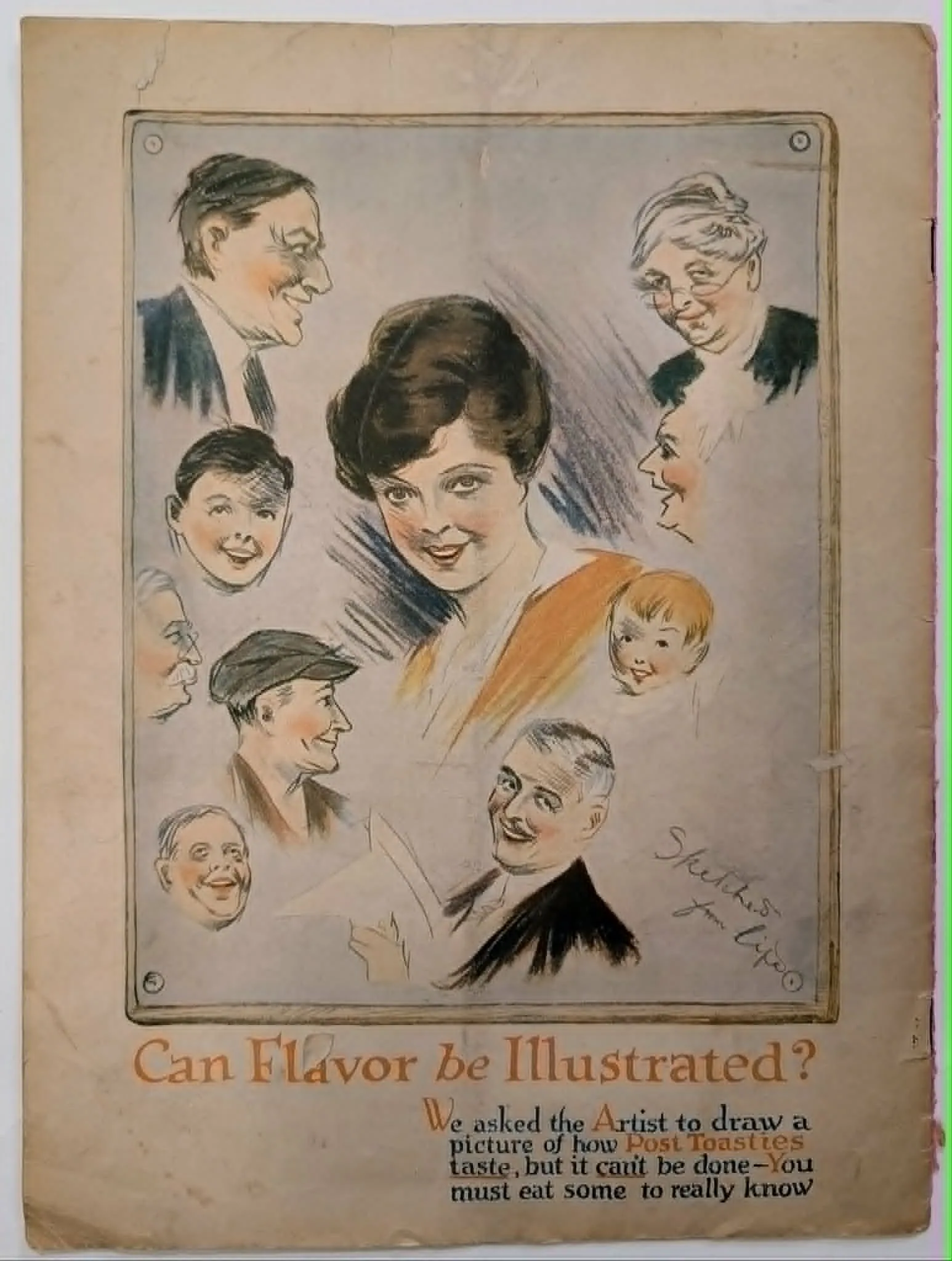
Look at the date. The early twentieth century. Advertising was previously a rigid, encyclopedic endeavor. It was a one-way street of objective claims, patent numbers, and exaggerated promises. The consumer was treated as a calculating machine, waiting for logical persuasion. This artifact marks the absolute death of that rationalist era. It introduces a calculating, absolute new reality: the psych
Category: Entertainment
The History
The Industrialization of the American Morning To comprehend the profound weight of this artifact, one must first dissect the societal fracture of the early twentieth century. The agrarian morning was dead. The relentless rhythm of industrialization and urbanization demanded absolute efficiency. The traditional American breakfast—a slow, labor-intensive preparation of salted meats, eggs, and heavy porridges—was no longer compatible with the frantic pace of the factory whistle or the commuter train. The breakfast table required a revolution in logistics. Enter the ready-to-eat cereal. It was the
The Paper
To interface with this artifact is to touch the slow, silent violence of time. It was never engineered for permanence. The substrate is a low-grade, mass-produced wood pulp, likely resting between 60 and 80 GSM. During this era, the absolute priority was production volume and distribution speed, not archival stability. The paper is highly acidic, a byproduct of cheap manufacturing processes for disposable media. Over a century of existence, we observe the inevitable chemical degradation. The lignin within the wood fibers has oxidized violently upon prolonged exposure to ultraviolet light and a
The Rarity
Classification: Class B. This artifact is not classified in the highest tiers like SSS or Omega. It is not a singular, unrepeatable masterpiece of fine art. It was a mass-produced piece of commercial ephemera, printed in the thousands to be consumed and discarded. However, its rarity is derived entirely from its immense contextual and philosophical value. Surviving copies of early metacognitive advertising are increasingly scarce due to the self-destructing nature of the acidic paper on which they were printed. Its true value lies not in a speculative auction house hammer price, but in its abs