The Time Traveller's Dossier : Galeries Lafayette - The Analog Fashion Shift
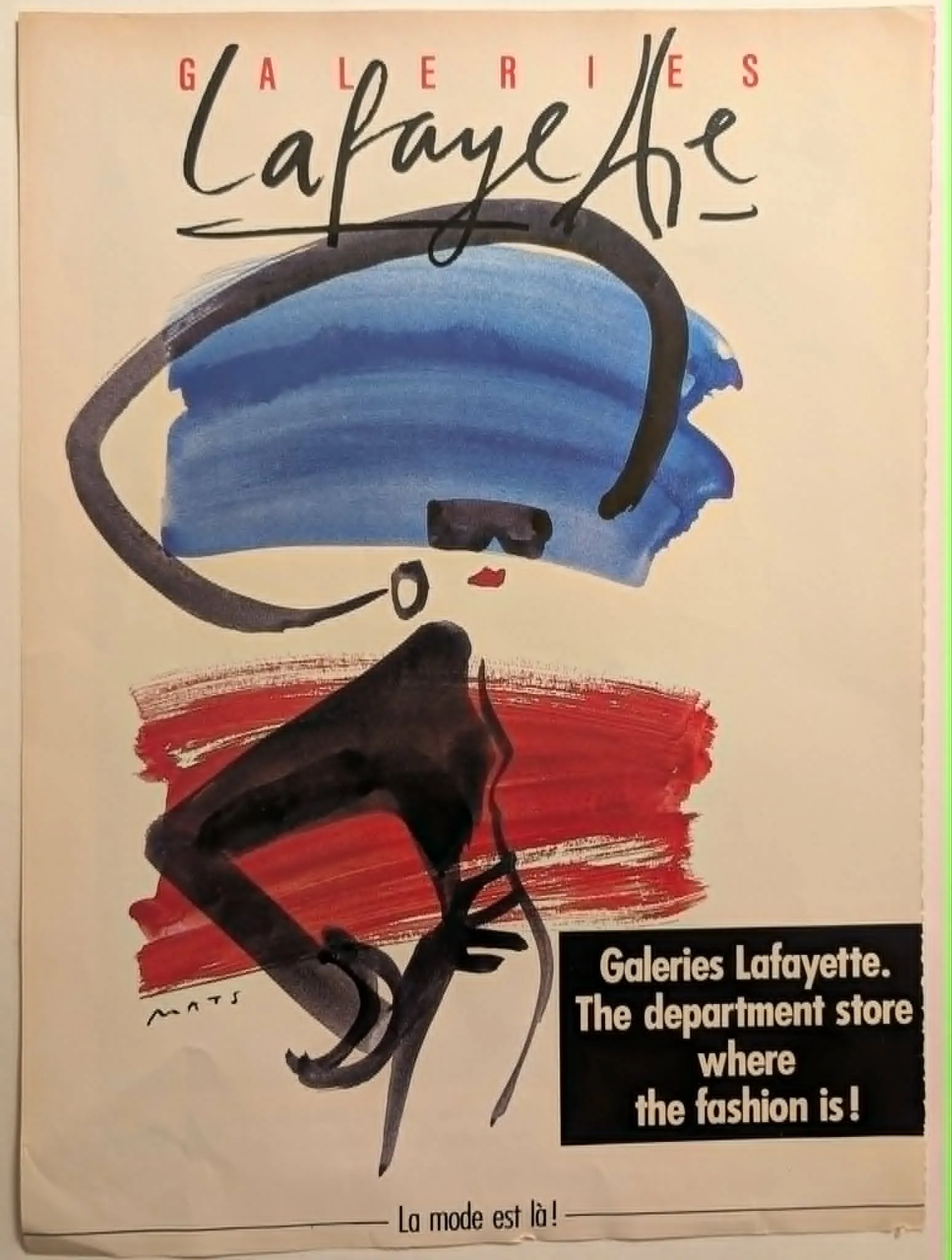
Then, the retail industry sold inventory. The department store was a physical catalog. Advertisements were literal. They existed to document the precise cut of a lapel, the specific texture of a wool blend, and the exact price of a garment. They appealed to the rational mind. The transaction was a simple exchange of currency for textiles. Now, the retail industry operates on algorithms and hyper-t
Category: Fashion
The History
The Burden of the Literal To understand the profound historical shift this artifact represents, one must first examine the utilitarian predecessor of retail marketing. For decades, the department store advertisement was anchored entirely in literalism. The objective was pure documentation. If a store had coats to sell, the advertisement displayed a coat. It showcased the seams, the buttons, and the silhouette with objective clarity. The communication was a straightforward contract of inventory. The consumer was invited to examine a product and make a rational economic decision. This model, whi
The Paper
An examination of the physical artifact reveals the microscopic evidence of its analog birth. This is not a sterile digital file; it is a fragile survivor of the physical printing press. The paper stock appears to be an uncoated or very lightly coated matte grade. This is a crucial technical choice. A high-gloss paper would have repelled the aesthetic of the watercolor, creating an artificial barrier between the artwork and the viewer. The matte finish allows the printed ink to mimic the way watercolor physically absorbs into cold-pressed paper. Upon macro-inspection of the red horizontal brus
The Rarity
Archival Classification: Class A (High Contextual & Paradigm Shift Value) While vintage department store posters were printed in significant quantities for mass distribution, survival rates for non-rigid paper ephemera from this specific era are remarkably low. They were designed to be temporary—taped to walls, displayed in subway stations, and discarded when the season turned. Its true archival rarity, however, is not dictated by market scarcity, but by its immense contextual weight. It is a perfect, unblemished specimen of a highly specific historical transition. It captures the exact moment