The Time Traveller's Dossier : Victor Records - 聴覚文化の自動化と大衆化
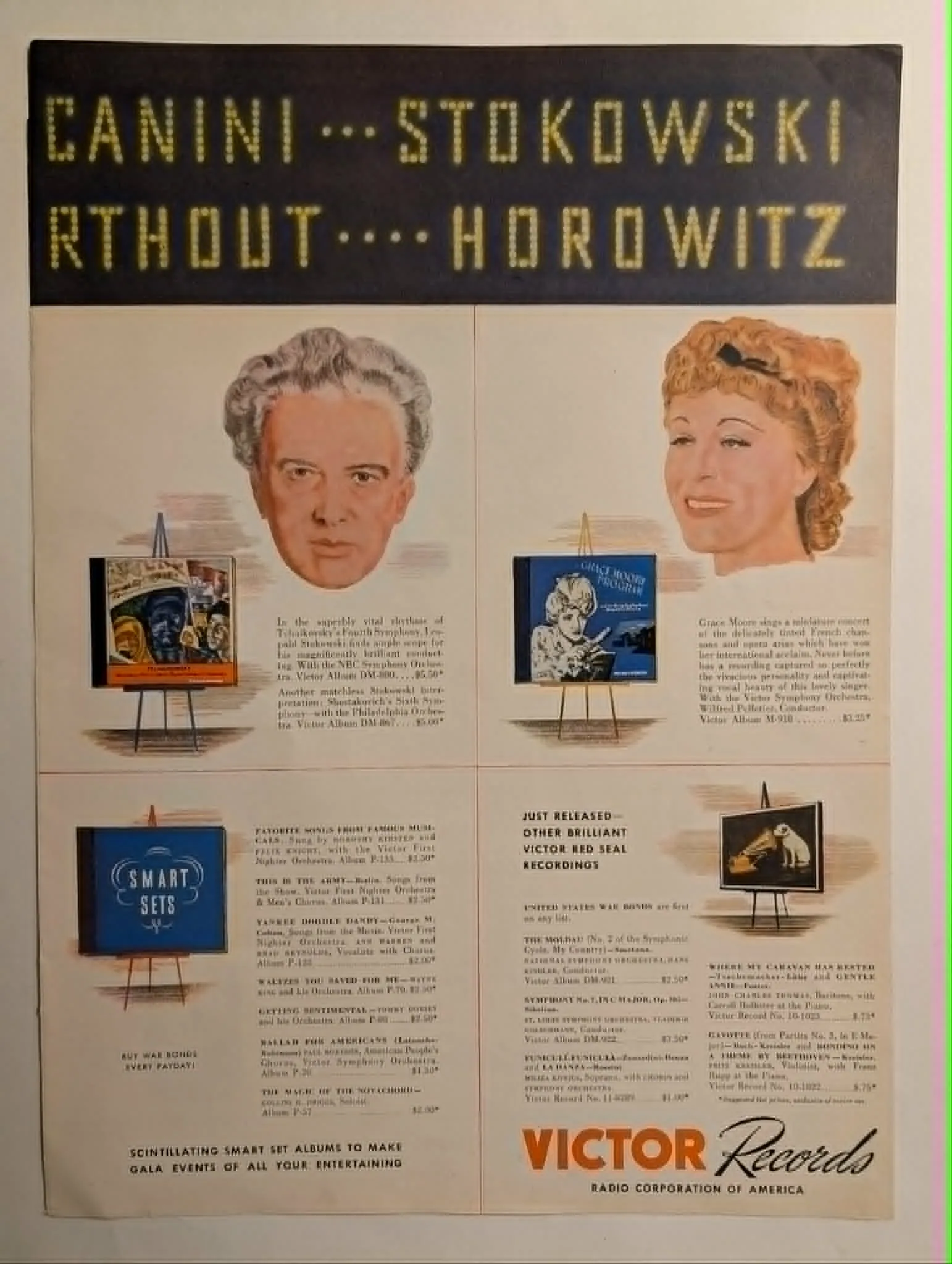
音の溝が刻まれる前、交響曲は幻影に過ぎなかった。 それは木張りの壁に最後の音が消えゆくまでの、ほんのわずかな時間だけ存在した。 人間の天才性を体験するには、地理的な運、厳格な社会的地位、そして貴族的な富が必要だった。 やがて、ラッカー盤が到来した。シェラックが。崇高なるものの機械的複製が。 RCA Victorによるこの戦時中の広告遺物は、人類の消費行動における、正確で不可逆的な転換点を記録している。 それは、局所的で「能動的な参加」から、大量に分配され、自動化された「受動的な孤立」への完全な移行を捉えている。 天才の技巧は、もはや儚い出来事ではなくなった。それは棚に並べることができる、装丁された書物となった。 一瞬の出来事は、在庫品へと姿を変えた。広大なコンサートホールは、家庭のリビングルームへと折りたたまれたのである。
Category: Entertainment
The History
音の地理学と、録音以前の虚無 この遺物が持つ計り知れない重みを理解するには、まず、それに先行する時代の「圧倒的な沈黙」を理解しなければならない。何千年もの間、人類の音楽は物理的な地理の絶対的な奴隷であった。チャイコフスキーの交響曲が演奏されるということは、孤立した生物学的な異常事態だった。特定の音響空間内で空気分子を激しく振動させるためには、高度な訓練を受けた100人以上の音楽家が必要だった。もしあなたが物理的にその部屋に存在していなければ、音楽はあなたにとって存在しないも同然だった。それは決して完璧に繰り返すことのできない、儚く局所的な現象であった。 初期のアコースティック蓄音機の登場は、この空間の専制を打ち砕いたが、初期の録音は実際の出来事の微弱で幽霊のような影に過ぎなかった。この文書が1940年代初頭に印刷される頃には、風景は劇的に変化していた。電気録音は、洗練され、武器化された科学へと成熟していた。コンデンサー・マイクはアコースティック・ホーンを完全に駆逐し、松脂の塗られたバイオリンの弓の微視的な摩擦音や、ティンパニの恐ろしいほどの打撃音を捕獲できるようになった。「Victor Red Seal」レーベルは、この技術的奇跡の頂点として位置づけられた。それは単に音楽を売っていたのではない。歴史的に排他的であったコンサートホールの「民主化」を売っていたのである。 戦時経済とシェラックのパラドックス この文書は、その時代の地政学的なトラウマによって根本的に定義されている。構造的なレイアウトの中に、消費者に対する無愛想で愛国的な指令が埋め込まれている。「BUY WAR BONDS EVERY PAYDAY!(給料日には毎回、戦時公債を買おう!)」。その出版年は、第二次世界大戦におけるアメリカの経済的努力に間違いなく結びついている。これは、深く物理的で経済的なパラドックスを生み出す。これら重い78回転(SP)レコードをプレスするために必要な原材料は「シェラック」であった。これは主に東南アジアの森林で採取されるラックカイガラムシの分泌物からなる天然樹脂である。 世界大戦の太平洋戦線は、この重要な海上補給線を突然切断した。シェラックは一夜にして、厳重に配給され、高く評価される軍事物資となった。レコード会社は、プレス機を稼働させ続けるためだけに、古いレコードを溶かすよう市民に懇願する廃品回収キャンペーンの立ち上げを余儀なくされた。それにもかかわらず、この広告は、終わりのない文化的な豊かさというストア派的な幻想を積極的に投影している。RCA Victorは、レオポルド・ストコフスキー指揮のチャイコフスキー交響曲第4番(Victor Album DM-880)を、5.50ドルという驚異的な価格で提供している。現代のインフレ率に換算すれば、これは戦時の家庭にとって莫大な資本支出であった。Red Sealのアルバムを購入することは、もはや単なる美的な選択ではなく、極度に不安定な世界における「家庭の安定」を宣言する心理的な行為であった。 ペトリロの反乱と沈黙のスタジオ この紙の表面下で振動している経済的緊張を完全に把握するには、世界規模の紛争と直接並行して起きた、国内の労働戦争を理解しなければならない。1942年8月、アメリカン・フェデレーション・オブ・ミュージシャンズ(AFM:アメリカ音楽家連盟)は、商業録音の絶対的かつ壊滅的な禁止(ペトリロ・バン)を発動した。音楽家たちは、大量生産されたレコードや機械式のジュークボックスが、レストラン、劇場、ラジオ局で生演奏をする人間のパフォーマーに永遠に取って代わることを恐れていたのだ。 2年以上の間、Victorの録音スタジオは完全に暗闇に包まれた。したがって、この広告で大々的に宣伝されている「Just Released(新発売)」や「Other Brilliant Victor Red Seal Recordings」は、実際にはストライキに至るまでの数ヶ月間に、RCA Victorがパニックに陥りながら急いで録音し、秘密裏に大量に備蓄していたマスターディスクから引き出されたものである。この印刷された文書は、高度に洗練された企業のファサード(虚構の外観)である。それはスムーズに稼働する文化装置を投影しているが、現実には、業界は生き残るためだけに、自らの隠された保管庫を共食いしていたのである。アーティストたちの穏やかに印刷された顔は、国際的な軍事配給と激しい国内の労働ストライキの両方に対する、企業の絶望的な闘争を見事に隠蔽している。 ストコフスキー、ムーア、そして神格化の力学 この遺物は、人間の卓越した才能を、特定の、高度に市場価値のあるアーキタイプ(原型)へと細心の注意を払って分類している。左側に浮かぶレオポルド・ストコフスキー(Leopold Stokowski)は、究極的で妥協のない知的な権威である。彼は単なる指揮者ではなく、音響学と正確なマイク配置の科学に執着するオーディオ・エンジニアリングの先駆者であった。彼の厳格な顔は、購入者に音響的な完璧さを保証する。彼は、ハイ・アート(純粋芸術)の男性的で厳格な規律を代表している。 その向かいにいるのは、映画的および声楽的な理想を代表するグレース・ムーア(Grace Moore)である。彼女のプログラムは、3.25ドルというより手頃な価格設定で、繊細に色付けされたフランスのシャンソンを提供している。彼女は、交響曲の恐ろしいほどの硬直性を、輝かしく親しみやすい人間性で和らげている。広告は明示的に彼らから肉体を剥ぎ取り、浮かび上がる、肉体のない頭部のみを提示している。この意図的な視覚戦略は、彼らの技術に伴う汗、筋肉、そして物理的な労働を排除し、彼らの才能を純粋で、努力を要さない、完全に神話的なものとして提示している。彼らはもはや人間の労働者ではない。彼らはRCA帝国の企業神へと昇華されているのである。 スマート・セット:商品としての「士気」 この文書はまた、RCAの全体的なマーケティング戦略における、明確に計算された階級区分を明らかにしている。エリート向けの、高価なRed Sealセクションの下に、「SMART SETS(スマート・セット)」がある。これらは大衆向けの製品であり、2.00ドルから2.50ドル前後と大幅に低価格で設定されている。具体的なタイトルは、戦時の士気高揚のために強力に武器化されている。「THIS IS THE ARMY(これが軍隊だ)」や「YANKEE DOODLE DANDY(ヤンキー・ドゥードゥル・ダンディ)」。 これは、世界的な紛争下におけるレコード産業の不可欠な「二重の効用」を明らかにしている。Red Seal部門がエリート向けのヨーロッパのクラシックの伝統を保存する一方で、Pシリーズのアルバムは、国内の心理的インフラストラクチャーとして直接機能した。それらは、戦争の恐怖に怯える国家に必要な、アップビートで愛国的なリズムを提供した。蓄音機はもはや富裕層のための単なる贅沢品ではなく、統一された国民的放送と感情調整のための必須メカニズムとなったのである。 ドロップ・オートマチック革命の力学 微妙ではあるが、歴史的に極めて重要な技術的転換が、アルバムのプレフィックス(接頭辞)に直接コード化されている。ストコフスキーのアルバムには「DM」のプレフィックスが付いている(DM-880、DM-867)。グレース・ムーアのアルバムには「M」のプレフィックスが付いている(M-918)。 12インチのシェラック盤には正確に4分間の音声しか収録できなかったため、完全な交響曲は、革のような本に綴じられた複数の重いディスクに断片化された。「M」はマニュアル・シーケンス(手動順序)を意味した。リスナーは機械に仕える能動的な召使いであり、4分ごとに立ち上がり、重いディスクを手動で裏返すことを強いられた。「DM」はドロップ・オートマチック(自動落下)を意味した。各面のプレス順序は、機械式レコードチェンジャーのために完全に再設計されていた。リスナーは背の高い金属製のスピンドル(軸)に交響曲全体を積み重ね、機械が順番にディスクを落としていく。「DM」のプレフィックスは、リスニングが受動的で継続的な活動になった人類史における正確な瞬間をマークしている。機械が物理的な労働を吸収し、人間が背もたれに寄りかかり、中断することなく消費することを可能にしたのである。 ラジオ・コーポレーションと芸術の標準化 ページの下部に明記されている親会社「Radio Corporation of America」を認識することは極めて重要である。RCAは単にレコードを製造していただけではない。彼らはそれを再生する蓄音機を製造し、巨大なNBCラジオネットワークを所有していた。彼らはアメリカの音の風景に対して、完全に垂直統合された独占権を持っていた。Victorのレコードを買うことで、消費者はRCAの閉鎖的なループに引き込まれたのである。 ここで示されている転換は、解釈の究極の標準化である。これらの大量生産されたアルバムが登場する前、交響曲は流動的で有機的なテキストであり、指揮者、会場、その夜の気温によって常に変化していた。しかし、ストコフスキーのショスタコーヴィチがマスターラッカーにエッチングされた瞬間、それは完全に固定された。それが決定的な真実となった。Red Sealアルバムの大量生産は、ライブ音楽の地域的差異を見事に根絶し、それらを単一の、中央集権化された、企業が承認した完璧さに置き換えた。コンサートホールは事実上解体され、標準化され、段ボール箱に詰められてリビングルームへと出荷されたのである。
The Paper
この遺物は、微視的な劣化を通じてその真実を語っている。これは、標準的な20世紀半ばの雑誌用紙、おそらく80 GSM程度の軽量なコーティング紙に印刷されている。粘土によるコーティングは、ハーフトーン印刷プロセスの濃密なインクが、多孔性の高い木材パルプににじむのを防ぐための、絶対的な工学的必要性であった。 高倍率で観察すると、CMYKのドットパターンの分離は、当時のプリプレス(製版)リトグラフ職人たちの強烈な手作業による労働を明らかにしている。ストコフスキーの肌の色調は、微視的なマゼンタとイエローのグリッドの激しい衝突によって表現されている。数十年にわたる大気中の酸素と紫外線の曝露は、紙の中のリーグニンの避けられない分解を開始させ、余白を脆く酸化した黄色に変えている。 しかし、油性インクは反抗的なまでに彩度を保っている。このページの触覚的特徴——脆く、乾燥しており、古びた製本用接着剤の微かな香りを漂わせている——は、混沌とした20世紀を生き抜いてきたことを証明している。有機物は朽ちていくが、それが運ぶ構造的なデータは、完璧に凍結されたまま残っているのだ。
The Rarity
分類:Class A - 文化のタイムカプセル (The Cultural Time Capsule) 1940年代の雑誌広告の純粋な数としての残存率は、比較的高い。しかし、この遺物の真の希少性は、その文脈的な密度の高さに完全に依存している。ストコフスキーというハイ・アートのエリート主義、「Yankee Doodle Dandy」という大衆的な戦時の士気高揚、そして明白な政府のプロパガンダ(戦時公債の購入)を、継ぎ目なく結びつける単一の無傷の文書を見つけることは、極めて異例である。その市場価値は、その巨大な歴史的引力に比べれば二次的なものに過ぎない。オーディオ・エンジニアリング、戦時経済、そしてRCAという独占企業の心理的構造を真剣に研究するための、一次資料として機能する。
この記事を引用する
- MLA
- Naodhinsuk, Ronin. “The Time Traveller's Dossier : Victor Records - 聴覚文化の自動化と大衆化.” The Record Institute, 5 July 2026, https://therecord.institute/jp/journal/the-time-travellers-dossier-victor-records-the-automation-of-aural-culture.
- APA
- Naodhinsuk, R. (2026, July 5). The Time Traveller's Dossier : Victor Records - 聴覚文化の自動化と大衆化. The Record Institute. https://therecord.institute/jp/journal/the-time-travellers-dossier-victor-records-the-automation-of-aural-culture
- CHICAGO
- Naodhinsuk, Ronin. 2026. “The Time Traveller's Dossier : Victor Records - 聴覚文化の自動化と大衆化.” The Record Institute, July 5, 2026. https://therecord.institute/jp/journal/the-time-travellers-dossier-victor-records-the-automation-of-aural-culture.