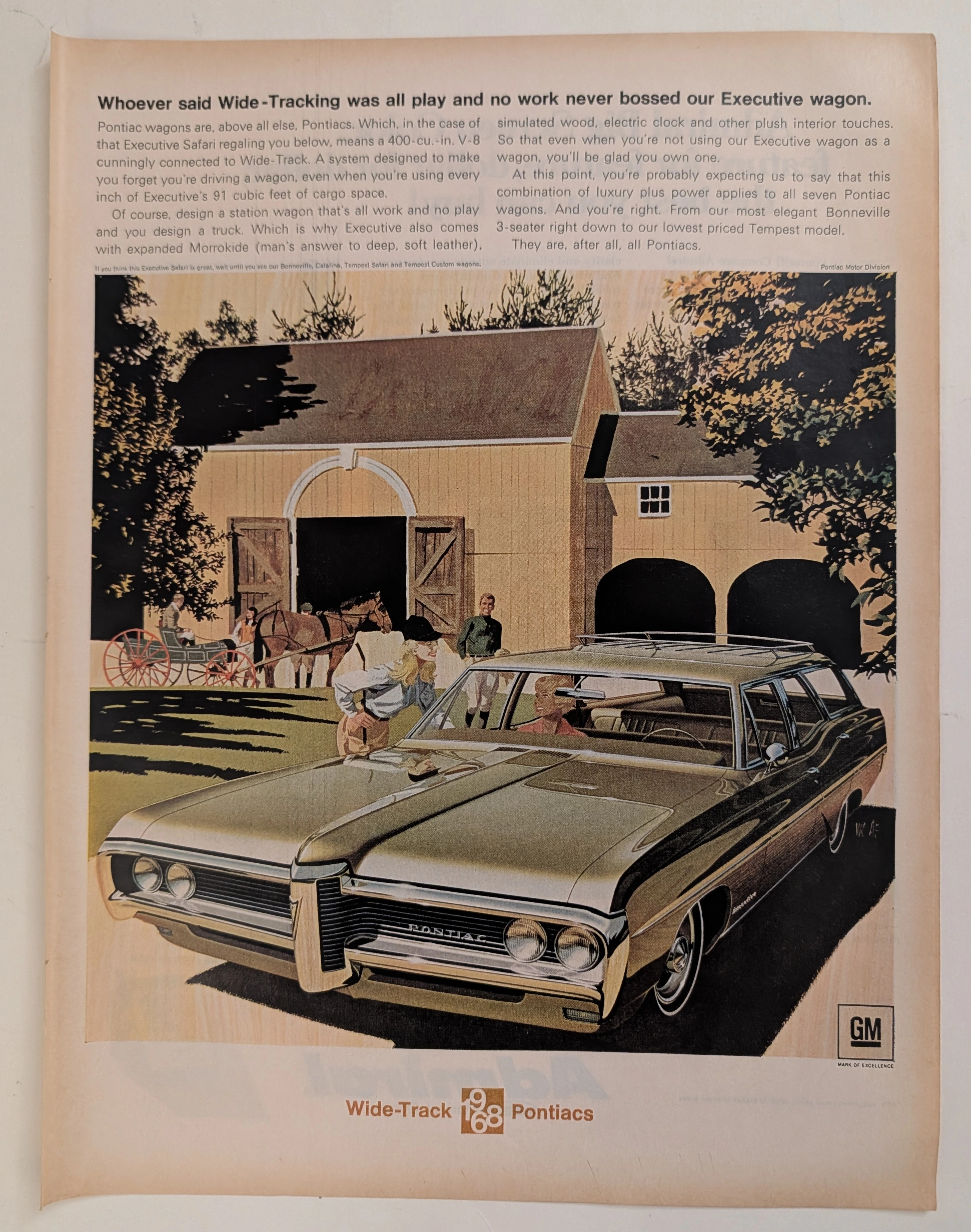
"All Play and No Work": The 1968 Pontiac Executive Wagon "Wide-Tracking" Advertisement (1968) — クラスB ヴィンテージAutomotive
CLASS B
1 / 4

"All Play and No Work": The 1968 Pontiac Executive Wagon "Wide-Tracking" Advertisement

カテゴリー|Automotive
サブカテゴリー|American
|1968
希少度クラス|CLASS B
Archive Views|11

Last updated: 26 Mar 2026

Historical Context

In the twilight of the 1960s, the American automotive industry was operating at the absolute zenith of its cultural, economic, and design influence. Pontiac, under the visionary leadership of executives like John DeLorean, had successfully shed its post-war reputation as a conservative brand, entirely redefining itself as General Motors' premier performance division. The cornerstone of this transformation was the famous "Wide-Track" marketing campaign. Originally rooted in a genuine engineering decision to widen the physical axle track for better handling, "Wide-Tracking" was mythologized by marketers into a lifestyle—a promise of stability, aggressive road presence, and uncompromised power. This specific 1968 advertisement for the Executive Safari wagon marks a fascinating sociological pivot in American consumerism. As the Interstate Highway System expanded and suburban sprawl evolved into established, affluent enclaves, the station wagon ceased to be marketed purely as a utilitarian family hauler. Instead, Pontiac positioned it as a highly sophisticated necessity for the upwardly mobile, active upper-middle class. Against the backdrop of a broader cultural upheaval in 1968, this advertisement sells a comforting vision of insulated, traditional prosperity. The setting of a private country club equestrian estate explicitly ties the vehicle to a life of exclusive leisure and "old money" luxury. Furthermore, the artwork represents the legendary, defining partnership of Art Fitzpatrick (AF) and Van Kaufman (VK). For over a decade, this duo held an unprecedented grip on General Motors' visual identity. Fitzpatrick, a master of automotive illusion, radically manipulated proportions—cutting up photographs, lowering rooflines, and artificially stretching the vehicles' width and length to maximize their visual dominance. To ground these impossibly sleek machines in reality, Kaufman (a former Disney animator) painted the glamorous, aspirational environments from his global travels. Together, their work bypassed the rational mind and appealed directly to the mid-century American desire for status, space, and speed.

Paper & Print Condition

Printed on standard mid-century, lightweight clay-coated magazine stock, typical of high-circulation prestige publications like Life or Look. High-resolution macro photography of the vehicle's grille and typography reveals the classic, overlapping rosettes of the CMYK (Cyan, Magenta, Yellow, and Key/Black) halftone dot structure. This specific dot spread is the distinct, uncounterfeitable signature of 1960s mass-market four-color commercial lithography. Tactilely, the paper retains its characteristic slickness, though it exhibits mild, uniform oxidation (acidic yellowing) predominantly along the margins—a natural degradation consistent with its half-century age and the lignin content of period paper pulp. Crucially, the ink saturation remains vibrant, and there are no significant tears, creases, or water damage apparent in the primary image field.

Provenance & Rarity

Extracted from a mainstream American periodical distributed in late 1967 or early 1968. Because these advertisements were ephemera—bound into magazines intended to be read once and subsequently discarded or recycled—their survival rate is remarkably low. While millions of impressions were originally struck, finding a surviving example carefully excised from the binding without tearing, and that has escaped the ravages of moisture, folding, and UV fading over five decades, is increasingly difficult. They are heavily sought after by automotive historians and mid-century modern design archivists.

Rarity & Condition Summary

his piece stands as a beautifully preserved, primary-source artifact of the golden age of American commercial art and automotive optimism. Its true historical and museum value lies not in absolute, single-item scarcity, but in its pristine, highly legible representation of the Fitzpatrick-Kaufman artistic partnership. It is a flawless time capsule that perfectly encapsulates the aesthetics, aspirations, and consumer psychology that defined a decade of American design.

Share This Archive

ジャーナルより

関連記事

The Time Traveller's Dossier: アスファルト上の航空建築学 (Aeronautical Architecture on the Asphalt) – SAAB 96 V4と悪天候を凌駕するエンジニアリング — related article
記事を読む

The Time Traveller's Dossier: アスファルト上の航空建築学 (Aeronautical Architecture on the Asphalt) – SAAB 96 V4と悪天候を凌駕するエンジニアリング

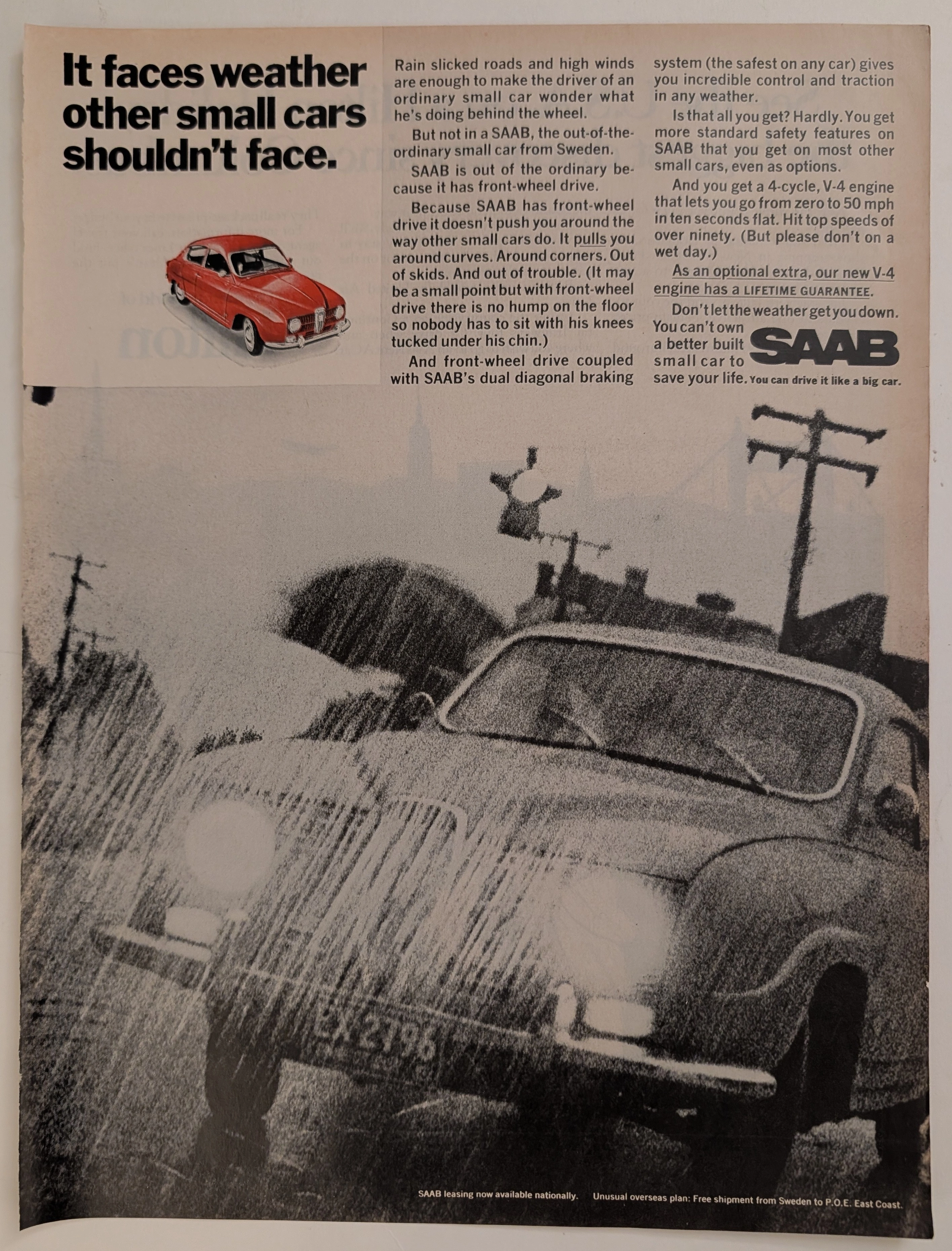
20世紀半ばのアメリカの自動車市場の進化は、ヨーロッパからの輸入車の流入によって大きく揺るがされました。それらの輸入車は皆、国内のV8エンジン・後輪駆動の巨人たちの覇権を打ち崩そうと競い合っていました。本日、The Record Instituteの分析テーブルの上に優雅かつ安全に配置された歴史的遺物は、1960年代後半に明確に年代特定される、視覚的に印象的で物語性に満ちた**SAABオートモービル(新型V-4エンジン搭載)**の全面印刷広告です。この文書は、自動車マーケティングの標準的で実用的な境界を完全に超越しています。それは、航空機にインスパイアされた優れたエンジニアリングの約束を通じて、悪天候下での運転の不安が積極的に緩和された消費者心理の正確な時代を映し出す、非常に洗練された多層的な文化の鏡として機能しています。豪雨の中を突き進むSAABのドラマチックで粒子の粗い高コントラストのモノクロ写真と、車両の無垢なスポットカラーの赤いイラストを並置することで、メーカーは自らを単なる自動車会社としてではなく、「気象学的無敵」の提供者として位置づけることに成功しました。 この世界最高峰の包括的なアーカイブ報告書は、歴史的、社会学的、および材料科学的評価の最も厳格なパラメータの下で、この遺物を極めて綿密に、妥協なく徹底的に探求します。私たちの分析の焦点の圧倒的多数(80%)をその巨大な歴史的重みに捧げ、「前輪駆動」の物語に埋め込まれた見事なマーケティング心理学を解読し、「新型V-4エンジン」という深遠なエンジニアリングの転換点を分析し、連邦政府によって義務付けられる以前に「安全性」をマーケティングしたという社会政治的な天才性を解剖します。さらに、このアナログ印刷エフェメラの化学的および物理的基盤へと深く歩を進めることで(10%)、赤いSAABのイラストのマクロ画像に捉えられたスポットカラー・ハーフトーンの正確な機械的指紋を明らかにします。最終的に、そのアーカイブとしての希少性を評価し(10%)、紙基材の優雅で自然な酸化がいかにして静かな*わび・さび(Wabi-sabi)の美学を育むかを探求します。この自然で不可逆的な現象こそが、世界中のエリート・ヴィンテージ商業エフェメラおよび自動車アーカイブ収集界において*「市場価値を指数関数的に暴騰させる」**主要なエンジンとして機能しているのです。

朝鮮戦争のアンカーとラグジュアリーの枯渇 (THE KOREAN WAR ANCHOR AND THE SCARCITY OF LUXURY) ] — related article
記事を読む

朝鮮戦争のアンカーとラグジュアリーの枯渇 (THE KOREAN WAR ANCHOR AND THE SCARCITY OF LUXURY) ]

私たちの妥協なき、前例のない博物館レベルの分析下にあるこの遺物は、第二次世界大戦後のアメリカの豊かさの黄金時代から発掘された、極めて状態の良い歴史的遺物(Historical Relic)です。この一次芸術文書(Primary Art Document)は、1951年から1952年という極めて重要な時代にさかのぼる、クライスラー・インペリアルの記念碑的な雑誌広告です。この文書は「アメリカの貴族主義と地政学的危機の法医学的な青写真」です。ヨーロッパの王室の図像を見事に武器化し、クライスラーのフラッグシップモデルを単なる移動手段以上のものへと引き上げ、"世界中のどんな自動車でも買える人々" を明確にターゲットにしています。 しかし、その最も重要な歴史的アンカー(錨)は、微視的な細字(ファインプリント)の中に隠されています:"WHITE SIDEWALLS WHEN AVAILABLE"(ホワイトリボンタイヤは在庫がある場合のみ)。このたった一文が、この広告を即座に戦時の遺物へと変貌させ、朝鮮戦争中に課された深刻なゴム不足を反映しています。象徴的な宝石のエンブレム と、暴力的に引き裂かれた綴じ縁によって強調される息を呑むようなわびさびの化学的劣化に根ざしたこの遺物は、かけがえのない地位を占め、**レアリティクラスA(Rarity Class A)**の指定を確固たるものにしています。
The Time Traveller's Dossier: 男性支配の建築学(アーキテクチャ) – ピエール・カルダン(Pierre Cardin)エディトリアル・イラストレーション (1980年代) — related article
記事を読む

The Time Traveller's Dossier: 男性支配の建築学(アーキテクチャ) – ピエール・カルダン(Pierre Cardin)エディトリアル・イラストレーション (1980年代)

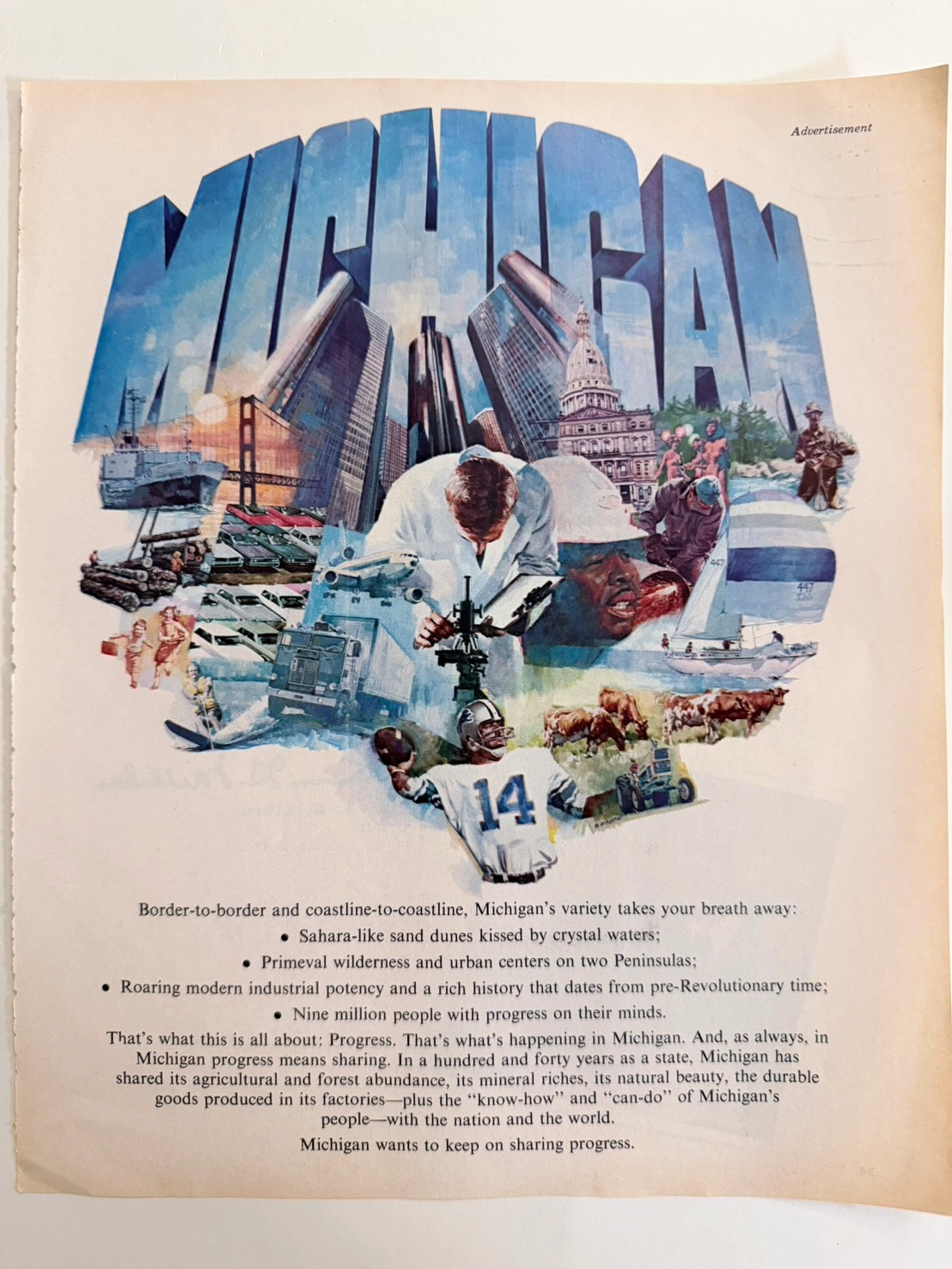
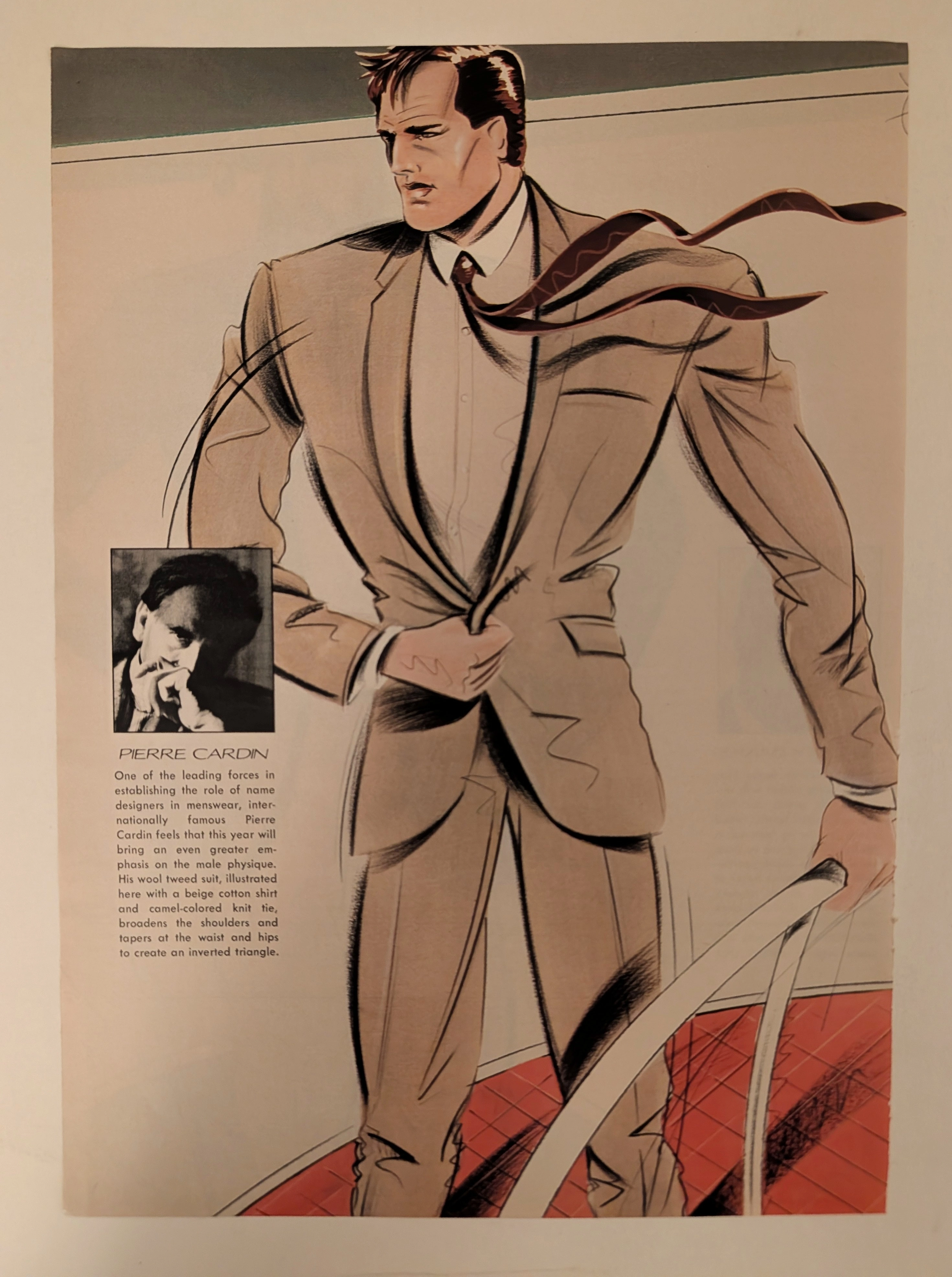
歴史は単に記されるのではない。それは仕立てられ、ドレープを施され、そして肩に攻撃的なパッドを詰め込まれるのだ。冷酷なデジタルアルゴリズムが現代のメンズウェアの無菌的なパラメータを独裁し、企業におけるワードローブのカジュアル化が現代のエグゼクティブから「服飾という名の鎧(Sartorial armor)」を剥ぎ取るずっと以前、社会工学(Social Engineering)は、デザイナーズ・スーツの計算し尽くされた幾何学を通して実行されていた。我々の目の前にあるこの歴史的遺物は、単なる使い捨ての雑誌の切り抜き(Tear sheet)ではない。これは、1980年代の「ハイパー・マスキュリニティ(超男性性)」を完璧に兵器化した青写真であり、企業支配の視覚的宣言(マニフェスト)であり、そして衣服が物理的および心理的な威嚇のツールとして利用されていた時代への揺るぎない証明書である。 世界最高峰の美術館アーカイブ基準を満たすこの学術的解体報告書は、1980年代の極めて重要な「パワー・スーツ(Power Suit)」の時代に遡る、ピエール・カルダン(Pierre Cardin)の革命的なメンズウェアを取り上げたアナログ後期(Late-analog)のエディトリアル・イラストレーションを徹底的に分析するものである。深遠かつ冷酷な二項対立構造(Binary Structure)を中核理論として機能するこの文書は、世界のファッション産業内部で計算されたパラダイムシフトを記録している。メンズウェアという概念が、20世紀半ばの保守的で同調性に縛られた「組織の歯車(Organization Man)」から、1980年代の攻撃的で空間を支配する「権力の覇者(Power Broker)」へと移行した、正確な歴史的断絶を捉えているのだ。後期アナログ商業芸術と極めて厳格な視覚的法医学(Visual Forensics)の専門的なレンズを通し、この資料はジェンダーと権力の心理的マーケティングのマスタークラスとして機能する。これは、現代の「アルファメイル(群れのボス)」の美学のための基礎的なアーキタイプを確立し、そのアーキタイプは、今日においても企業支配の視覚的および戦略的トーテムを無条件に独裁し続けている。
The Time Traveller's Dossier :最高権力の建築的DNA – 35人の歴代米国大統領の出生地に関する法医学的解剖 — related article
記事を読む

The Time Traveller's Dossier :最高権力の建築的DNA – 35人の歴代米国大統領の出生地に関する法医学的解剖

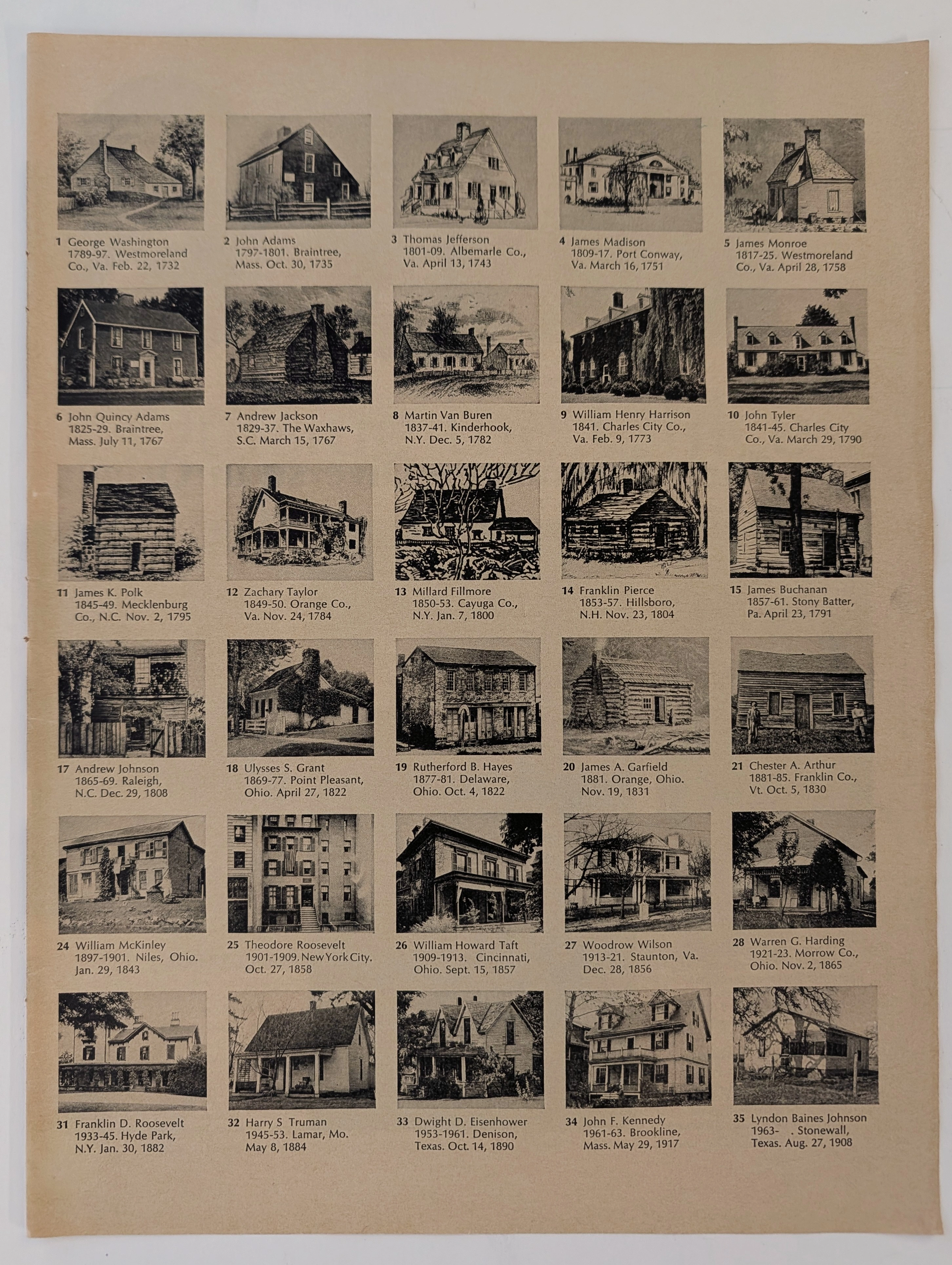
世界最高峰の権力へと登り詰める歴史の軌跡は、血塗られた戦場や大統領執務室(オーバルオフィス)の署名文書の中だけに刻まれているわけではない。それは、指導者たちがこの世に生を受けた最初の瞬間から彼らのビジョンを形作った「空間的DNA」と、居住建築物の中に深く根を下ろしている。美術館レベル(Museum-grade)の法医学的分析のために我々の目の前に展示されたこの歴史的遺物(Artifact)は、20世紀半ばの教育出版物から抽出されたフルページ(見開き)の印刷物であり、**「35人の米国大統領の出生地」**の建築的イラストを完全に、そして完璧に網羅したものである。 このマスタークラスの学術的アーカイブ・ドシエは、35の出生地すべての視覚的構造、工学的構造、および伝記的背景を、個人レベル(Individual Forensic Breakdown)で徹底的に解剖する。インターネットや衛星地図、ドローン撮影などが存在するずっと以前のアナログ時代、これらのオフセット印刷物は一種の「時間の窓」として機能した。厳しい寒さの森の奥深くにある極貧の丸太小屋(ログキャビン)から、裕福で権力のあるエリート層の広大な赤レンガの邸宅に至るまで、住宅の形態を通してアメリカの社会的格差、経済の進化、そして「アメリカン・ドリーム」の構築を如実に映し出している。我々は、オフセット・ハーフトーン(網点)の印刷技術と、時間が刻み込んだ*わび・さび(Wabi-sabi)*の魅力を放つ紙の酸化プロセスを分析する。これこそが、このヴィンテージ印刷物の市場価値を天文学的に引き上げる最も重要な化学的メカニズムである。