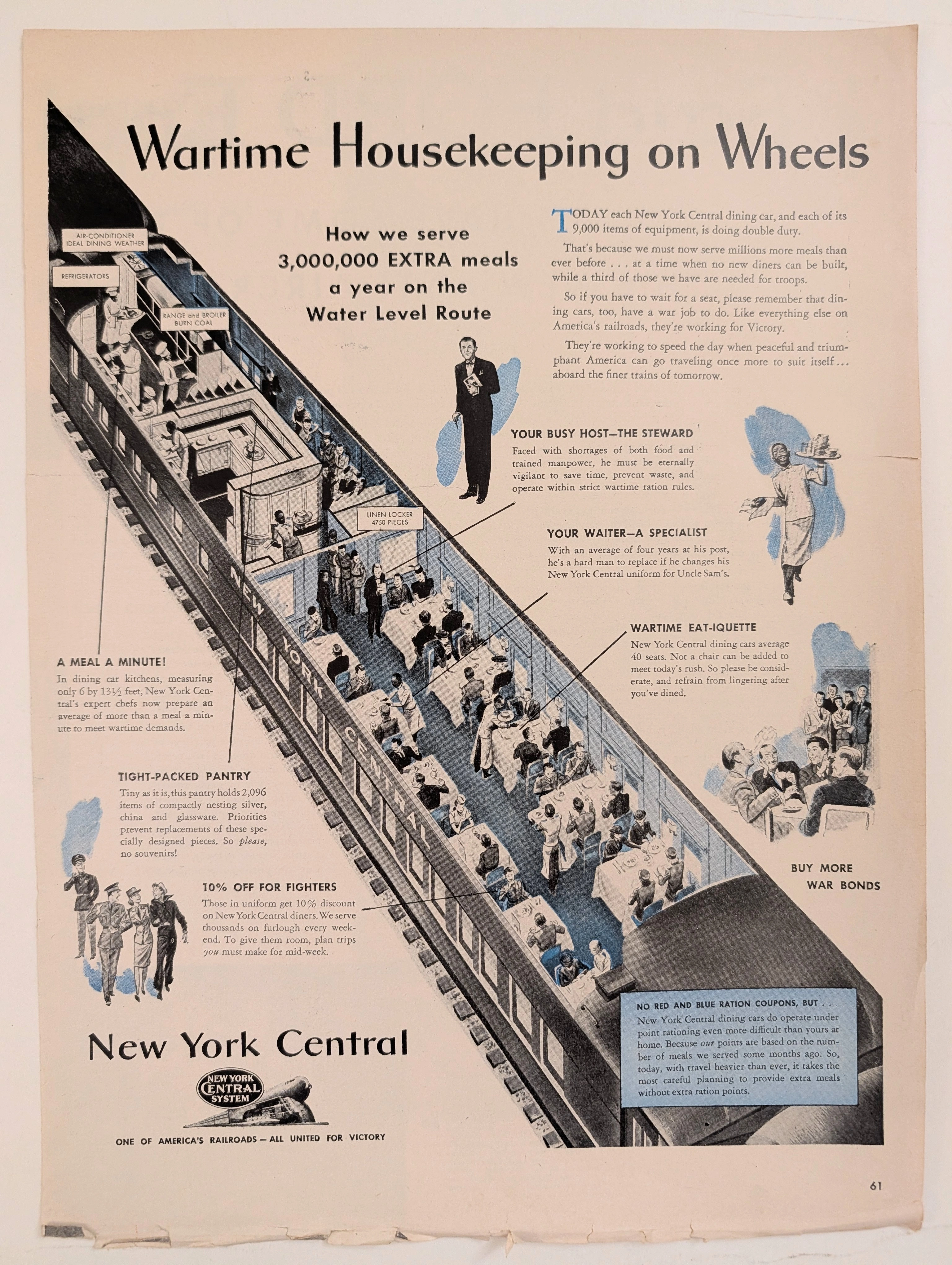
1944 New York Central "Wartime Housekeeping on Wheels" Vintage Advertisement
1944 New York Central "Wartime Housekeeping on Wheels" Vintage Advertisement The Second World War placed an unimaginable strain on the American railroad network. With civilian gasoline and rubber tires heavily rationed, domestic train travel surged at the exact moment the military required massive, continuous troop movements. This advertisement brilliantly addresses the resulting friction of wartime travel by pulling back the curtain on the railroad's hidden operations. By detailing the cramped 6 by 13 ½ foot kitchen where specialized chefs used coal-burning ranges to prepare "a meal a minute," the New York Central System reframes potential passenger delays and crowded conditions as necessary acts of patriotic sacrifice. The copywriting is a treasure trove of WWII home-front vernacular. It explicitly addresses the complex national rationing system, noting the absence of "Red and Blue Ration Coupons" for passengers, while reminding them that the railroad's own food points are strictly monitored based on past service numbers. To manage the incredible volume of "3,000,000 EXTRA meals a year," the ad introduces "Wartime Eat-iquette," politely urging diners to eat quickly and refrain from lingering so that others—particularly the troops—might be seated. Visually, the ad relies on a clean, two-color isometric illustration to guide the reader's eye through the train car's anatomy, from the "linen locker" holding 4,750 pieces to the dining floor shared by civilians and military personnel. The inclusion of a "10% off for fighters" policy, alongside recurring wartime slogans like "Buy More War Bonds" and "All United for Victory," firmly anchors this artifact in the 1940s. It is a profound testament to how American corporations aligned their operational challenges with the nationalistic duty of the era.
Category: Travel & Hotels
Year: 1944
Rarity Class: B
Paper & Print Condition
ชิ้นงานนี้มีรอยสีซีดจางตามอายุในระดับปานกลางและรอยสึกหรอที่ขอบเล็กน้อย ซึ่งเป็นลักษณะทั่วไปของกระดาษนิตยสารในช่วงสงครามที่มักอยู่ภายใต้มาตรการอนุรักษ์กระดาษระดับชาติ กระบวนการพิมพ์สองสี—ซึ่งใช้ฐานภาพฮาล์ฟโทนสีดำร่วมกับสีฟ้าไซอัน (Cyan-blue) เป็นสีเน้นเฉพาะจุดเพื่อขับเน้นพนักงานและองค์ประกอบทางโครงสร้าง—ยังคงแสดงภาพได้อย่างมีประสิทธิภาพและได้รับการเก็บรักษาไว้อย่างดีเยี่ยมโดยไม่มีการซีดจางอย่างมีนัยสำคัญ
Provenance & Rarity
ได้รับมาจากสิ่งพิมพ์ระดับชาติของอเมริกาในช่วงกลางทศวรรษ 1940 โฆษณาแนวหลัง (Home-front) ในช่วงสงครามโลกครั้งที่ 2 ที่ให้ข้อมูลด้านโลจิสติกส์อย่างละเอียด (เช่น ขนาดของห้องครัวที่เฉพาะเจาะจง และปริมาณการจัดเตรียมอาหาร) ควบคู่ไปกับนโยบายการปันส่วนทรัพยากรที่ชัดเจน ได้รับการยกย่องและมีคุณค่าอย่างมากสำหรับนักประวัติศาสตร์ เนื่องจากชิ้นงานเหล่านี้ทำหน้าที่เป็นเอกสารชั้นต้นที่บันทึกวิถีชีวิตของพลเรือนในช่วงสงครามได้อย่างสมบูรณ์
Rarity & Condition Summary
ชิ้นงานประวัติศาสตร์การคมนาคมในยุคสงครามโลกครั้งที่ 2 ที่มีความสำคัญและได้รับการเก็บรักษาไว้อย่างดีเยี่ยม มอบมุมมองที่หาชมได้ยากและมีรายละเอียดลึกซึ้งเกี่ยวกับการดำเนินงานประจำวัน ความเสียสละร่วมกัน และการสื่อสารที่แสดงถึงความรักชาติของการรถไฟอเมริกาในช่วงความขัดแย้งระดับโลก