The Time Traveller's Dossier : Leslie's 1918 - WWI Media Propaganda Shift
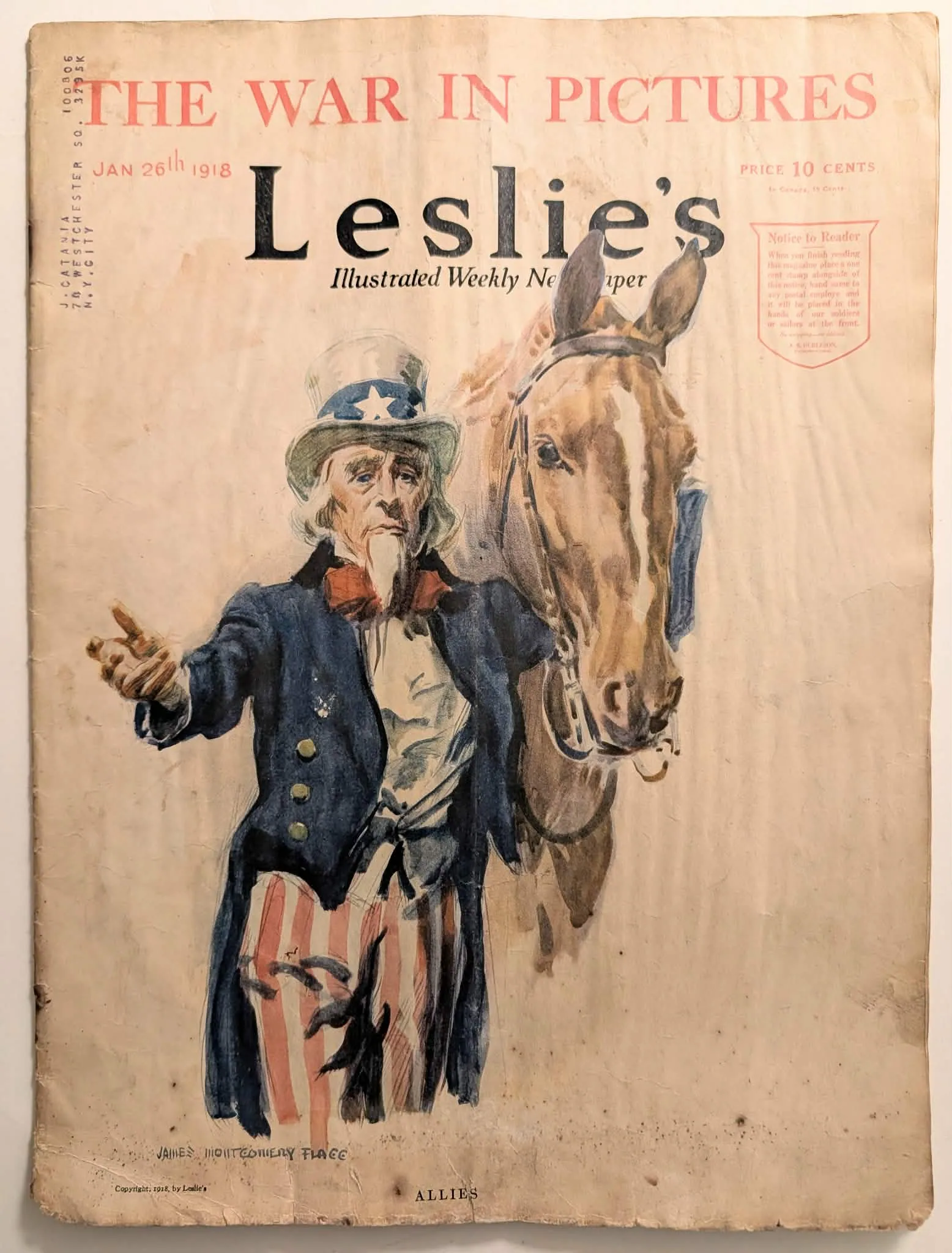
Information was once physical. It had weight. It had a trajectory. Before the immediate transmission of digital data, public morale was constructed through paper, ink, and logistics. This edition of Leslie’s Illustrated Weekly Newspaper, dated January 26, 1918, represents a critical intersection of journalism and state apparatus. It is not merely a magazine. It is a civilian weapon. The shift here
Category: Other
The History
The Architecture of a Global Winter The year is 1918. The month is January. The world is paralyzed in a state of mechanized slaughter. Trenches cut across the European continent like deep, unhealing scars. The conflict, once thought to be a brief geopolitical correction, has become an endless grinder of human and industrial resources. The United States has been officially involved in the First World War for less than a year. The initial wave of patriotic fervor is settling into a grim reality. Winter has halted major offensives. Both sides are digging in. The war is no longer just about territ
The Paper
This document is printed on early 20th-century mass-market stock. It was engineered for extreme temporary utility. The paper contains a high percentage of wood pulp, retaining significant lignin. This chemical composition is inherently self-destructive. As the lignin oxidizes over a century, it shifts the paper from white to a deep, brittle sepia. The printing process reflects industrial scale. The black ink of the typography is deeply pressed, leaving a micro-embossment on the fibers. The cover utilizes an early form of commercial spot color. Notice the aging divergence. The red ink used for
The Rarity
Class A This classification relies entirely on contextual survival. Millions of these issues were printed. It was a mass-market commodity. However, its intended lifecycle was incredibly short. The Burleson directive meant that a vast percentage of the print run was voluntarily shipped overseas, where the copies were subsequently destroyed in combat zones. The remaining domestic copies were heavily targeted during World War II paper drives, where millions of tons of old magazines were pulped for the new war effort. Finding an intact cover, free from severe water damage, retaining its vibrant re