The Time Traveller's Dossier : Nassa Shell Pectoral - Currency and Status
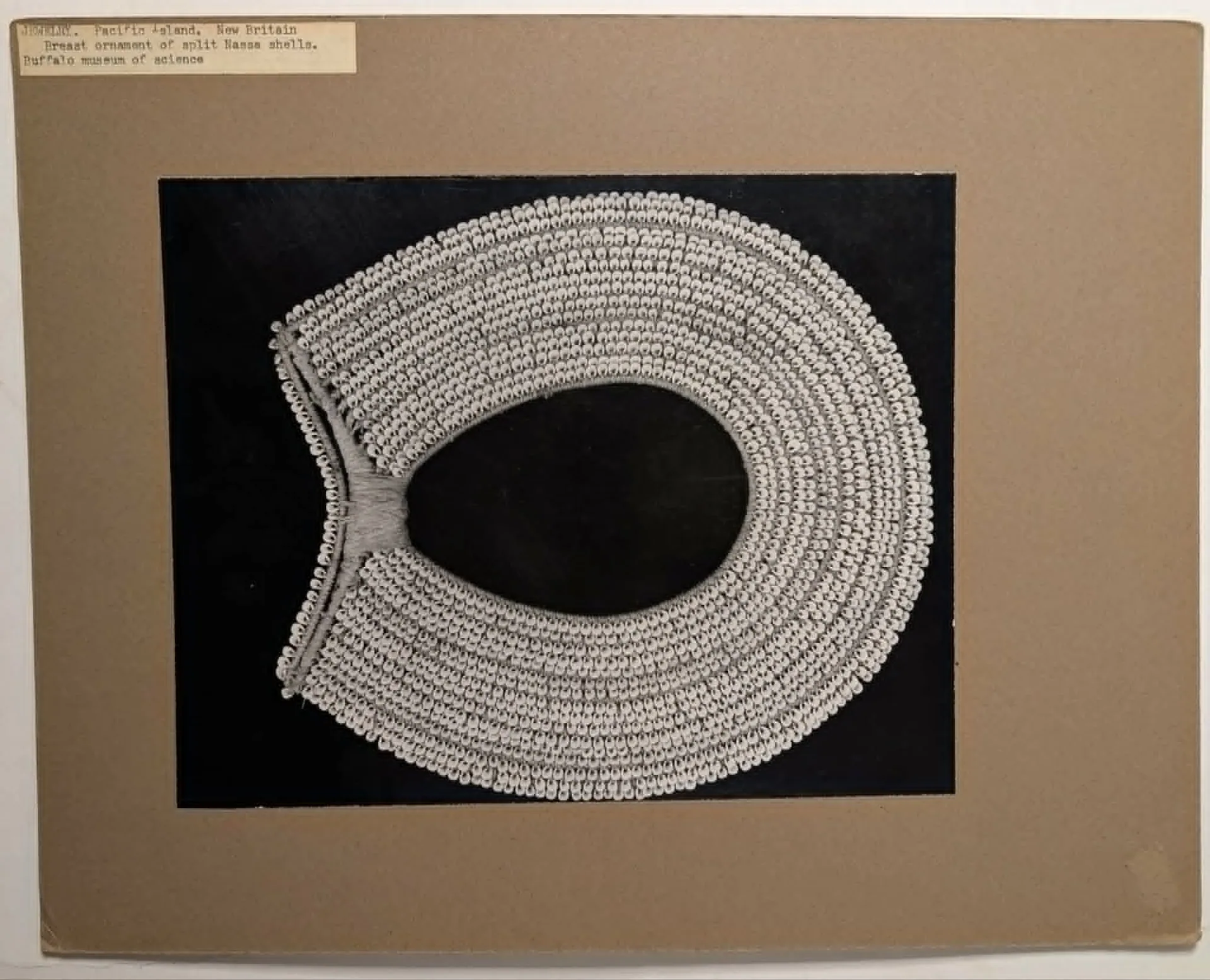
Before this, wealth was an abstract concept. In the West, capital was hidden in ledgers, locked in vaults, or buried in gold reserves. It was unseen. It was a theoretical agreement of power. In the Pacific Islands of New Britain, capital was tactile. It was worn on the chest. It was a heavy, physical manifestation of labor, time, and societal structure. This artifact is not merely a necklace. It i
Category: Fashion
The History
The Architecture of Indigenous Capital To understand this artifact, one must first dismantle the Western definition of currency. In the late 19th and early 20th centuries, the Tolai people and surrounding cultures of New Britain (in present-day Papua New Guinea) operated on a highly sophisticated economic system. Their currency was not paper fiat. It was tambu or diwarra—shell money. The fundamental unit of this economy was the Nassa shell (Nassarius). These small, hump-backed sea snails were abundant in the ocean, but their value was not derived from rarity. Their value was derived strictly f
The Paper
The artifact is a multi-layered composite of materials, each degrading at its own distinct chronological pace. The primary substrate is a rigid, heavy-stock cardboard mount. It is highly acidic, exhibiting the deep, oxidized grey-brown hue typical of mid-20th-century institutional filing materials. The surface has a rough, fibrous texture, designed for durability in a card catalog system rather than aesthetic presentation. The photograph itself is a gelatin silver print. The emulsion layer sits flatly on the paper base, exhibiting a low-gloss, matte finish. This finish was intentional, designe
The Rarity
Classification: Class A. The original breast ornament safely resides within the climate-controlled vaults of a museum. However, this specific photographic mount possesses a unique and irreplaceable contextual rarity. Its value does not stem from the object it depicts, but from the institutional scars it bears. It is a primary document of archival failure. The combination of the inaccurate taxonomic labels ("Jewelry," "Primitive Arts") paired directly with the brutal "DISCARDED" stamp elevates this from a mere reference photo to a powerful piece of meta-history. It forces us to confront how ins