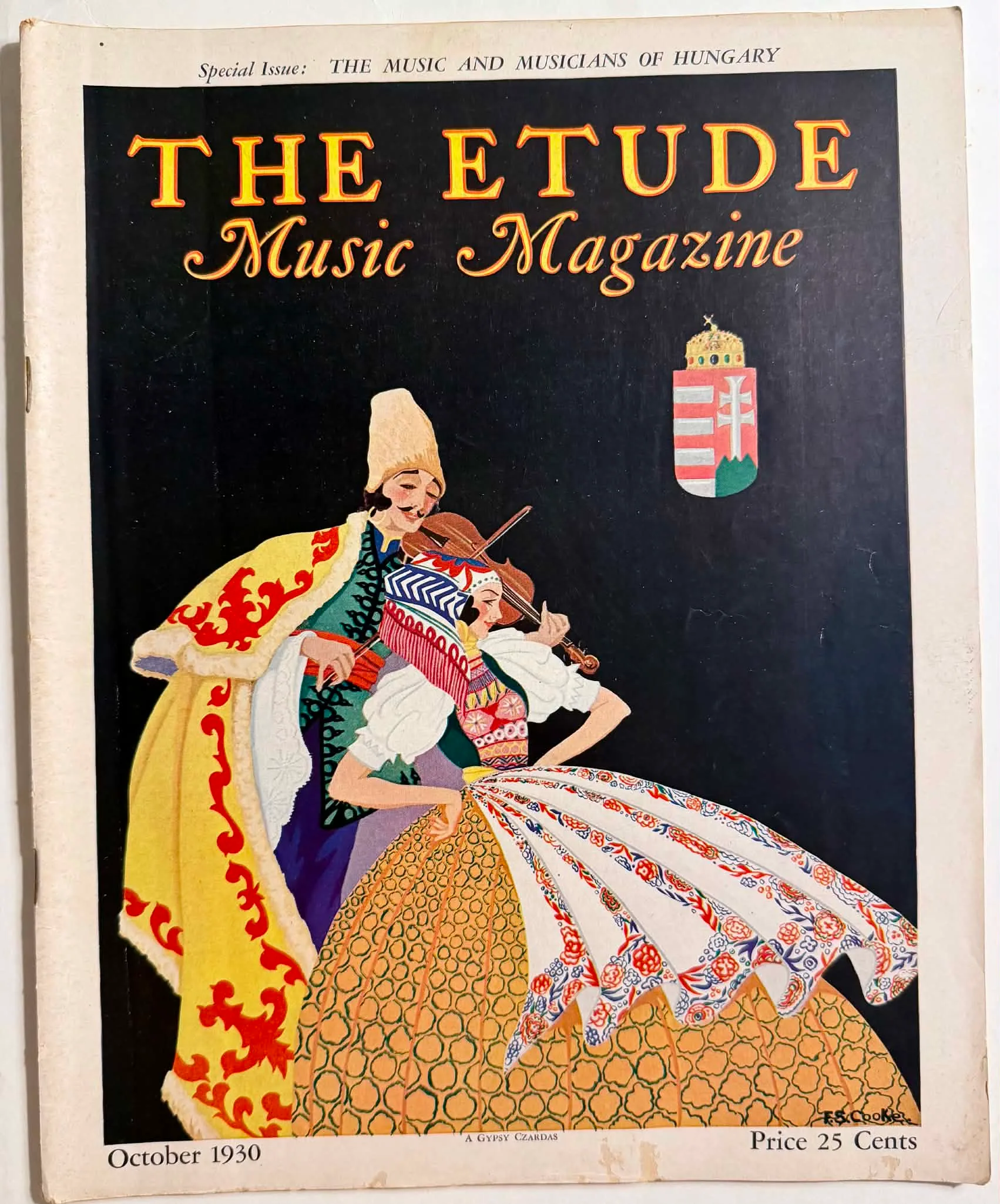
1930 F.S. Cooke A Gypsy Czardas Etude Magazine Cover Art
The visual evidence presented within the supplied digital proxies reveals a highly theatrical, full-colour periodical cover characterized by a stark, graphic aesthetic. The compositional space is aggressively dominated by an absolute black void, functioning not as an atmospheric background, but as a flat, high-contrast graphic stage designed to amplify the luminosity of the central figures. Against this impenetrable dark field, two figures are engaged in a dynamic, mid-motion dance, visually capturing the rhythmic intensity of a traditional Hungarian Csárdás. The male figure, positioned slightly behind and to the left, plays an acoustic violin with a sweeping bow arm. He is adorned in an elaborate, romanticized interpretation of Hungarian/Romani folk attire, featuring a tall, light-coloure
Category: Electronics
Year: 1930
Rarity Class: A
Paper & Print Condition
Rigorous macroscopic analysis of the supplied digital proxies reveals definitive physical evidence regarding the production method and current material reality of the artifact. The most dominant feature is the expansive application of flat black ink, which provides the stark background field. The digital image resolves a fine, highly structured halftone rosette pattern within the coloured areas (visible particularly upon close inspection of the orange and red hues), categorically confirming the
Provenance & Rarity
Original front cover wrapper of The Etude Music Magazine, Vol. XLVIII, No. 10, issued strictly in October 1930. The historical rarity of this specific artifact operates on a dual axis of initial commercial ubiquity versus subsequent, aggressive physical attrition. The Etude, published under the massive infrastructure of the Theodore Presser Company in Philadelphia, boasted an immense national circulation designed to penetrate virtually every musically inclined middle-class household in the Unite
Rarity & Condition Summary
The artifact survives as a remarkably well-preserved, highly striking example of 1930 commercial printing, securing a Class A historical designation. It visually presents robust, un-faded four-colour halftone fields against a vulnerable, heavy black matrix, interrupted only by mild, structurally expected physical wear along the original binding edge and minor lower-margin foxing.