Dead Brand Stories / Piedmont Airlines
What Happened to Piedmont Airlines?
Piedmont's first flight carried exactly one paying passenger. At its peak in April 1989 the airline had some 22,000 employees — and four months later the Piedmont name was taken off the fleet.
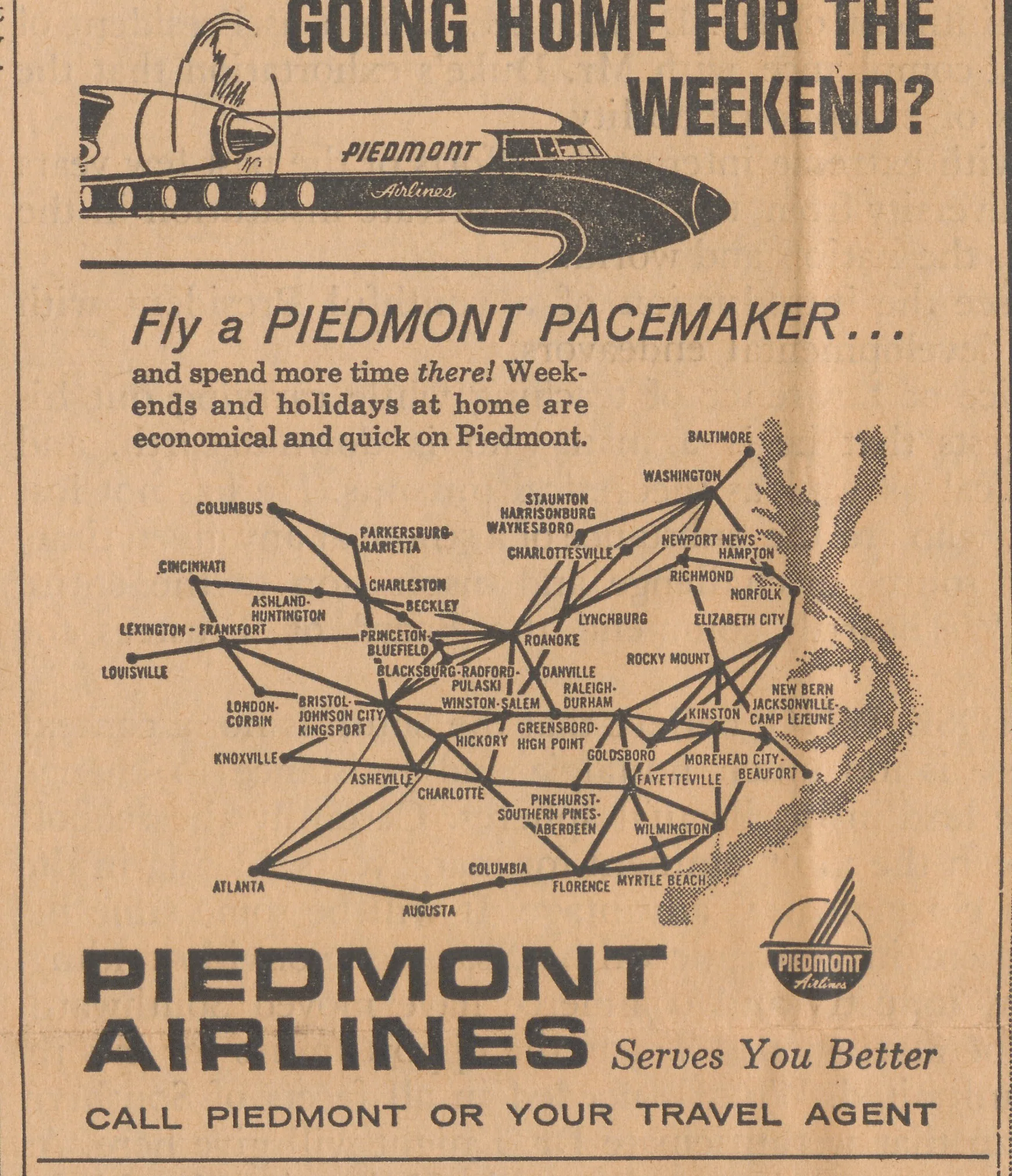
Opening statement
In April 1989, Piedmont Airlines was the biggest it had ever been: some 22,000 employees, 95 airports of its own, widebody jets flying from Charlotte to London. Four months later the Piedmont name was taken off every aeroplane in the fleet. Nothing had failed. The airline had been bought — at its peak, for its loyal passengers and its profits — and absorbed into a larger rival that the merger itself would wound. The arc runs from a Winston-Salem flying-service company created in July 1940, through a first flight in February 1948 that carried exactly one paying passenger, to a distinction no other American airline held: the fewest passenger complaints of any United States airline, period after period in the first half of the nineteen seventies, and Air Transport World's Airline of the Year in 1984. Every aeroplane was a named Pacemaker, and the motto was "Piedmont Sets the Pace." This is the story of how that airline was built, what it was worth, and why being loved was not enough to keep its name. This account is drawn from the record: the North Carolina Department of Natural and Cultural Resources and NCpedia, the Smithsonian's National Air and Space Museum, R. E. G. Davies's Airlines of the United States Since 1914, the airline's own Piedmonitor, the Winston-Salem Journal, and Kole and Lehn's study of the merger for the National Bureau of Economic Research. It runs from a flying-service office in 1940 to a name that still flies today — on a different airline.
Video Archive
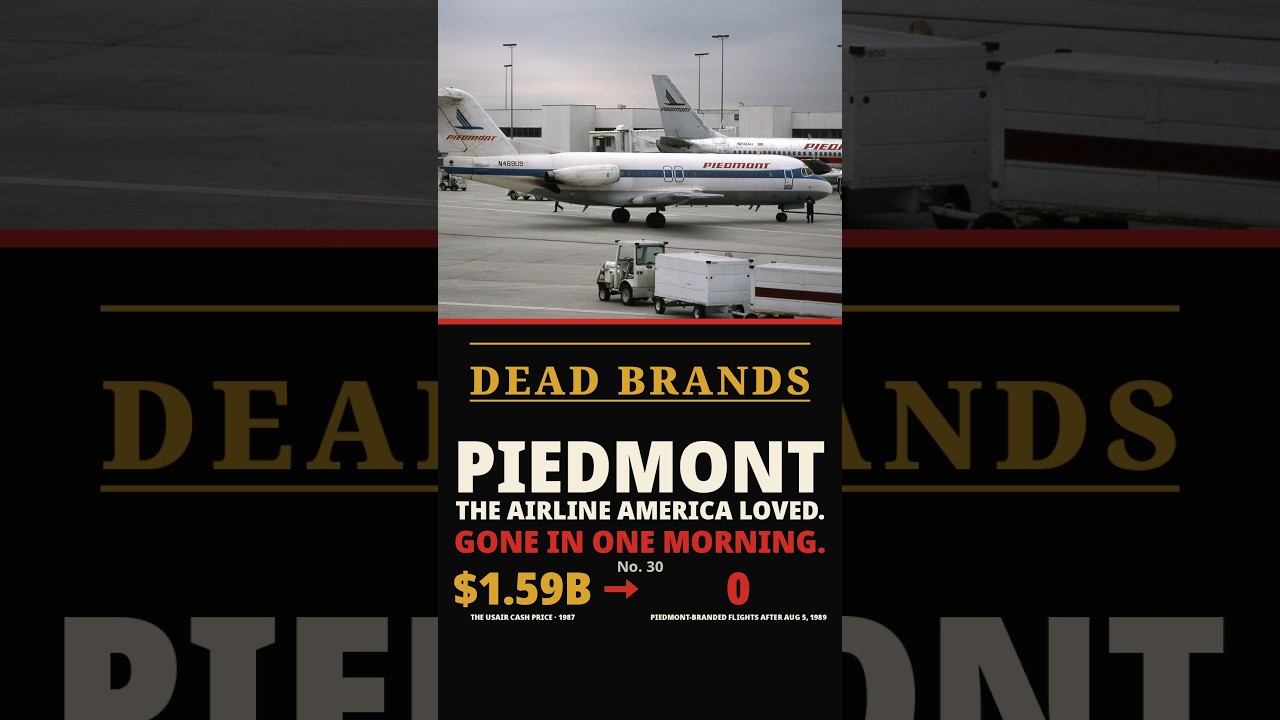
Dead Brand Stories · Episode 30 · The story in brief
What Happened to Piedmont Airlines? — the story in brief (Short)
Runtime not listed
A structured case history
Reading section 01
Watch: Dead Brands No. 30, the short — "What Happened to Piedmont Airlines?"
Founded1940, Winston-Salem, North Carolina — Piedmont Aviation, Inc., created in July 1940 by Thomas H. Davis from Camel City Flying Service, an aircraft sales, service and pilot-training company. The airline itself began service on 20 February 1948, under a Civil Aeronautics Board certificate effective 1 January 1948 PeakApril 1989 — some 22,000 employees and 95 airports of its own; Air Transport World Airline of the Year in 1984; widebody Boeing 767s flying Charlotte–London Gatwick under its own name Fell1989 — absorbed into USAir on 5 August 1989, after USAir's purchase agreement of 6 March 1987 (sixty-nine dollars a share, about 1.59 billion dollars in cash); Piedmont's last flights operated on 4 August 1989 Cause of fallPrimary: Acquired — merged into USAir · Secondary: (none) Status todayName only — the original airline was absorbed into USAir on 5 August 1989; the name survives on a different company: Henson Aviation (bought by Piedmont in 1983), renamed Piedmont Airlines by USAir in 1993 to protect the trademark, today an American Eagle carrier wholly owned by American Airlines Group (status checked 2026-11-24) EpisodeDead Brands No. 30Reading section 02
The Rise of Piedmont
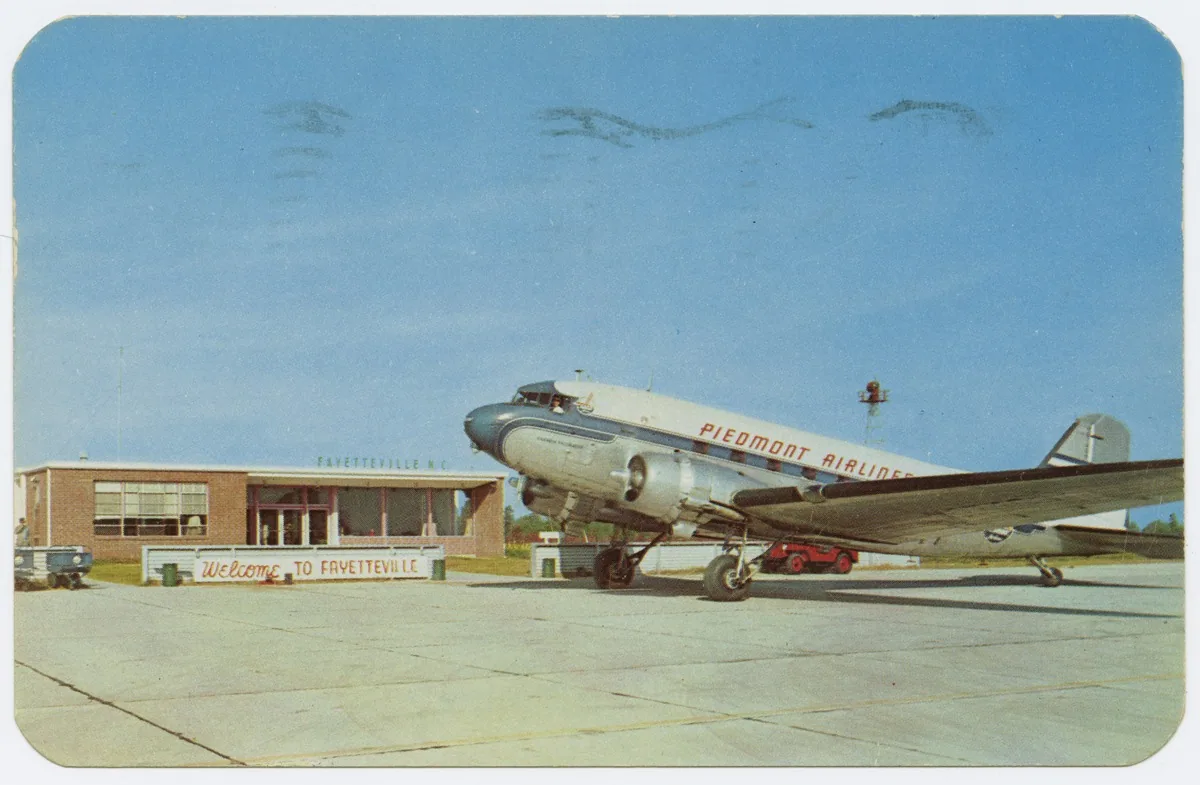
On February 20, 1948, Piedmont Airlines' first flight left Wilmington, North Carolina, for Cincinnati: one DC-3, five stops, a journey of more than five hours — and exactly one paying passenger, who paid thirty-four dollars and thirty-five cents for the ticket. The airline behind that flight had been authorised by the Civil Aeronautics Board in 1947, with its certificate effective January 1, 1948. Its parent, Piedmont Aviation, had been created in July 1940 in Winston-Salem by Thomas H. Davis, grown out of Camel City Flying Service, an aircraft sales, service and pilot-training business. Winston-Salem stayed the airline's home for its entire life.
Davis called every Piedmont airplane a "Pacemaker," each with its own name painted on the nose, and the airline's motto was "Piedmont Sets the Pace." The name was not decoration. In the first half of the 1970s, for six rolling twenty-four-month periods, Piedmont recorded the fewest passenger complaints of any airline in the United States, according to the Civil Aeronautics Board's Office of Consumer Affairs. The Smithsonian's National Air and Space Museum describes the airline as "noted for its excellent service and 'southern hospitality'." In 1984, Air Transport World named Piedmont its Airline of the Year.
Visual interlude
Reading section 03
The Peak
The fleet tells the growth. Piedmont flew DC-3s from 1948 to 1963, when the last one was retired. Pressurised Martin 4-0-4s arrived from December 1961. The first jets, Boeing 727s, came in March 1967, followed by Boeing 737-200s in 1968; by 1982 the airline was all-jet.
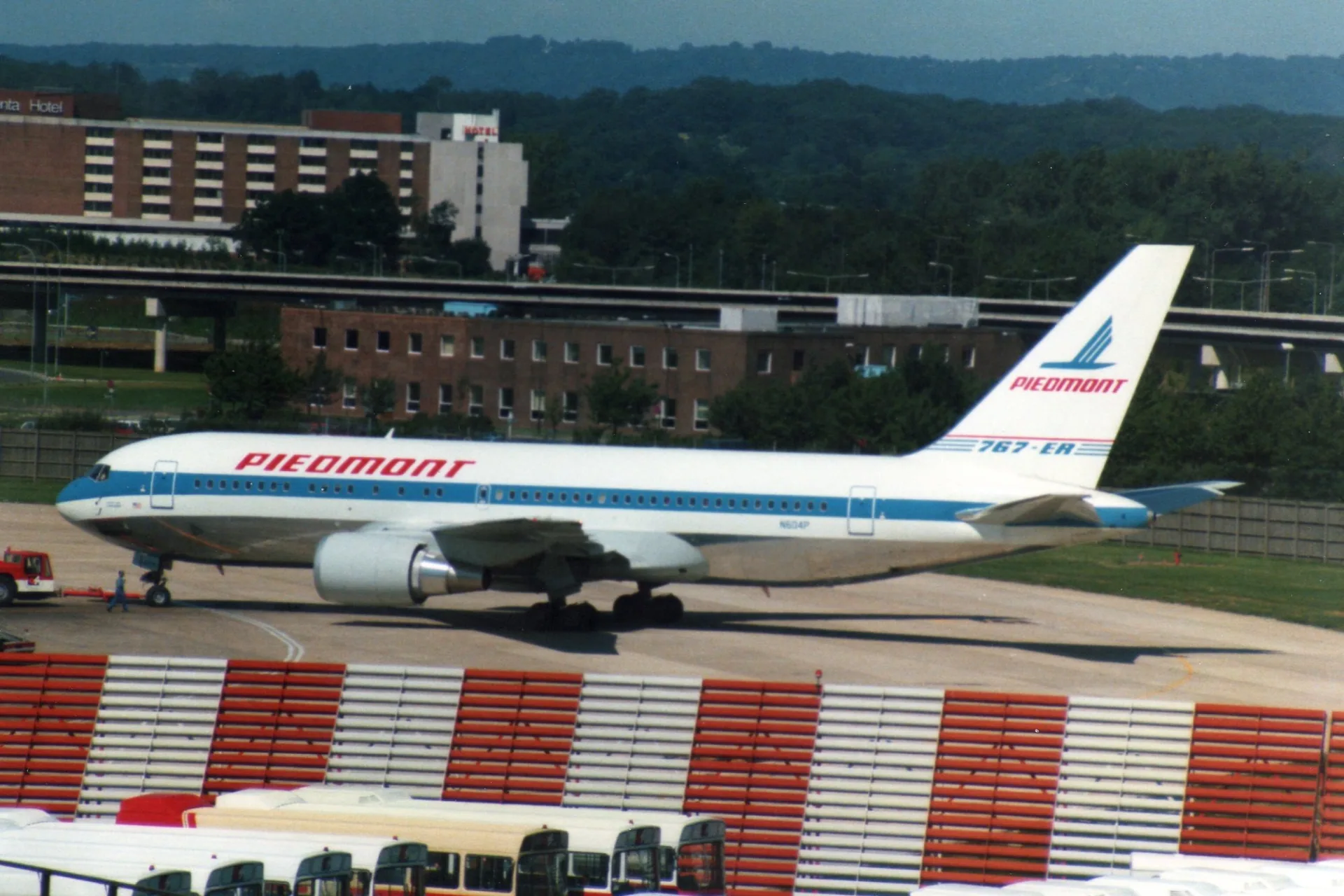
After deregulation, Piedmont built hubs: Charlotte from 1981, Dayton in 1982, Baltimore in 1983, and Syracuse through the Empire Airlines merger in 1986. In May 1987 it took delivery of its first Boeing 767-200ER, and that June it opened Charlotte–London Gatwick service — a regional airline from Winston-Salem flying widebodies across the Atlantic under its own name. At its peak, in April 1989, Piedmont had some 22,000 employees and served 95 airports of its own.
STAT CARD
1 passenger → 95 airports
The single paying passenger on Flight 41 in February 1948 — and the 95 airports and some 22,000 employees of April 1989, the peak, four months before the name came off the fleet.
Visual interlude
Reading section 04
The Fall of Piedmont
Success made Piedmont a target. After a bidding contest in early 1987, USAir agreed on March 6, 1987 to buy Piedmont for sixty-nine dollars a share — about 1.59 billion dollars in cash. The Department of Transportation approved the deal on October 30, 1987, and ownership closed that November. What Piedmont's buyers wanted, as the record puts it, was its loyal passenger following, its profitability and its route system.
Integration, though, was delayed until 1989 by regulatory and labour questions. Piedmont's last flights operated on August 4, 1989; on August 5, the airline was absorbed into USAir and the Piedmont name came off the fleet. Researchers who later studied the merger found that after integration USAir's costs rose, its service deteriorated, and more than 2.5 billion dollars of shareholder value was destroyed within five years. In Winston-Salem, the local workforce melted from 5,600 at the time of the deal to a low of 485 by October 2005, and only four of Piedmont's top forty officials remained when the integration was complete.
Visual interlude
Reading section 05
The Afterlife
One thread survived. Henson Aviation, bought by Piedmont in 1983 and flown as "Henson, The Piedmont Regional Airline," was renamed Piedmont Airlines by USAir in 1993 to protect the trademark. That company — a different airline from the 1948 original — still flies today as an American Eagle carrier, wholly owned by American Airlines Group. The hub Piedmont built at Charlotte is now American Airlines' second-largest.
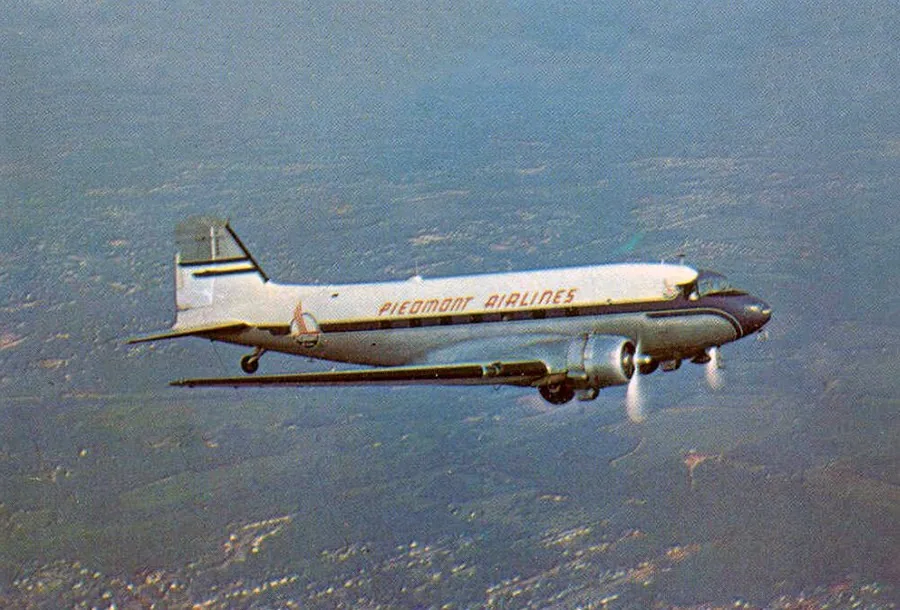
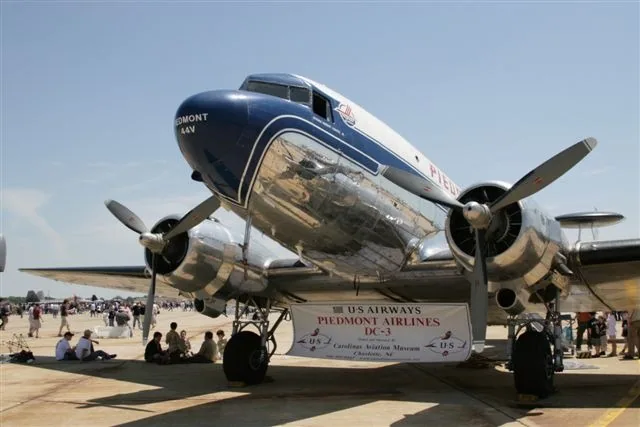
And the DC-3 never really left: years after the airline ended, a DC-3 in Piedmont colours was still appearing at airshows — one is photographed at Andrews Air Force Base in 2007, among this article's plates.
Visual interlude
Reading section 06
The Verdict
Piedmont is the rare file in this series in which nothing failed. The service was the best-measured in America, the airline was profitable, and it was bought precisely because of both. What ended it was not collapse but absorption — a merger whose own researchers found that it destroyed more than 2.5 billion dollars of shareholder value within five years.
The 1948 airline is gone. What it built — and how it treated the people who flew with it — is why, decades later, its name still draws out the memories of the people who worked for it and grew up with it.
Visual interlude
Reading section 07
The Conversation Continues
This story did not end when the episode was published. When Dead Brands No. 30 was posted as a Facebook Reel, the thread beneath it filled with the people who lived this history — former Piedmont pilots, flight attendants and ground staff, and the passengers who grew up flying the Pacemakers — sharing memories, photographs and corrections. That thread is still open, and it is the living oral history of this airline. Read it, and add your own memory, here: https://www.facebook.com/reel/1538805461405094/
Visual interlude
Reading section 08
Timeline
- July 1940 — Piedmont Aviation, Inc. is created in Winston-Salem, North Carolina, by Thomas H. Davis, from Camel City Flying Service — an aircraft sales, service and pilot-training company, not yet an airline. [F1]
- 1947 / 1 January 1948 — the Civil Aeronautics Board awards the airline's routes in 1947; its certificate takes effect on 1 January 1948. [F2]
- 20 February 1948 — Flight 41, the first flight: Wilmington to Cincinnati in a DC-3, five stops, and one paying passenger — Bill Turner, who paid thirty-four dollars and thirty-five cents. [F3]
- December 1961 — pressurised Martin 4-0-4s arrive (first service 4 December 1961). [F9]
- 1963 — the last DC-3 is retired, closing the type's fifteen years with the airline. [F9]
- March 1967 — the first jets: Boeing 727s. [F9]
- 1968 — Boeing 737-200s follow; the NAMC YS-11A enters service on 19 May 1968. [F9]
- First half of the 1970s — for six rolling twenty-four-month periods, Piedmont records the fewest passenger complaints of any United States airline (Civil Aeronautics Board, Office of Consumer Affairs). [F6]
- 1981–1983 — the hub build-out: Charlotte (1981), Dayton (1 July 1982), Baltimore (1983). [F10]
- 1982 — Piedmont becomes all-jet, as the last YS-11 flights end the prop era. [F9]
- 1983 — Piedmont buys Henson Aviation, flown as "Henson, The Piedmont Regional Airline." [F19]
- 1984 — Air Transport World names Piedmont its Airline of the Year. [F8]
- 1 May 1986 — the Empire Airlines merger completes, bringing the Syracuse hub. [F10]
- 6 March 1987 — after a bidding contest (Norfolk Southern bid sixty-five dollars a share on 17 February), USAir agrees to buy Piedmont: sixty-nine dollars a share, about 1.59 billion dollars in cash. [F13]
- 21 May 1987 — the first Boeing 767-200ER is delivered. [F12]
- 15 June 1987 — Charlotte–London Gatwick service begins — the airline's only widebody operation and its first transatlantic service. [F12]
- 30 October 1987 — the Department of Transportation approves the purchase. [F13]
- November 1987 — ownership of Piedmont closes to USAir. [F13]
- April 1989 — the peak — some 22,000 employees; the system serves 95 airports of its own (September 1988). [F11]
- 4 August 1989 — Piedmont's last flights operate. [F15]
- 5 August 1989 — Piedmont is absorbed into USAir; the name comes off the fleet. [F15]
- 1993 — USAir renames Henson Aviation "Piedmont Airlines," to protect the trademark. [F19]
- Today (checked 2026-11-24) — the name flies on: Piedmont Airlines — the former Henson — operates as an American Eagle carrier, wholly owned by American Airlines Group; the original 1948 airline remains gone. Status: Name only. [F20]
Visual interlude
Reading section 09
Sources & image credits
Sources. The founding (Piedmont Aviation, Inc., July 1940, Winston-Salem; Thomas H. Davis; Camel City Flying Service) — North Carolina Department of Natural and Cultural Resources, "Piedmont Airlines Takes Flight"; NCpedia; Piedmont Aviation Historical Society. The authorisation (CAB award 1947; certificate effective 1 January 1948) — NCpedia. The first flight (Flight 41, 20 February 1948; Wilmington–Cincinnati; five stops; one paying passenger, Bill Turner, thirty-four dollars and thirty-five cents) — North Carolina Department of Natural and Cultural Resources; Smithsonian National Air and Space Museum, Wall of Honor (Capt. Leon M. Fox); Piedmonitor, February 1988. Headquarters (Winston-Salem for the airline's whole life) — Flight International Directory. The Pacemaker names and the motto ("Piedmont Sets the Pace") — Our State magazine; PlaneTags. The service record (fewest CAB passenger complaints of any United States airline, six rolling twenty-four-month periods, first half of the 1970s) — American Aviation Historical Society Journal (Weber), from the Civil Aeronautics Board's Office of Consumer Affairs. The Smithsonian's description ("noted for its excellent service and 'southern hospitality'") — National Air and Space Museum record A19900337000 (1989 flight-attendant handkerchief). Airline of the Year 1984 — Air Transport World, via the Piedmont Aviation Historical Society marker, the South Carolina House resolution of February 1985, and the airline's 1984 annual report. The fleet chain (DC-3 1948–1963; Martin 4-0-4 from 4 December 1961; YS-11A from 19 May 1968; Boeing 727 first jets March 1967; 737-200 1968; all-jet after the last YS-11 flights in 1982) — R. E. G. Davies, Airlines of the United States Since 1914 (Smithsonian Institution Press); American Aviation Historical Society; Yesterdays Airlines. The hubs (Charlotte chosen 1979, operating 1981, new terminal 1982; Dayton 1 July 1982; Baltimore 1983; Syracuse via Empire, agreed October 1985, merged 1 May 1986) — Charlotte Douglas airport history; Davies; American Aviation Historical Society. The peak (some 22,000 employees, April 1989; 95 airports of its own, September 1988) — Flight International Directory; Piedmonitor, June 1988 (contemporary boardings). The 767 and London (first 767-200ER delivered 21 May 1987; Charlotte–London Gatwick from 15 June 1987) — World Airline News chronology; American Aviation Historical Society. The deal, in its three dates (agreement 6 March 1987, sixty-nine dollars a share, about 1.59 billion dollars cash, after Norfolk Southern's sixty-five-dollar bid of 17 February and USAir's 5 February approach; Department of Transportation approval 30 October 1987; ownership closed November 1987) — Kole & Lehn (National Bureau of Economic Research); Aviation Week, 16 March 1987. Why USAir wanted it (the loyal passenger following, profitability and route system) — the episode's research file, from Davies and the Piedmont record. The delayed integration and the absorption (delayed November 1987 to August 1989 for regulatory and labour reasons; last flights 4 August 1989; absorbed 5 August 1989) — Kole & Lehn (NBER). The merger's aftermath (costs rose, service deteriorated, more than 2.5 billion dollars of shareholder value destroyed within five years) — Kole & Lehn (NBER). The Winston-Salem melt (workforce 5,600 at the deal to a low of 485 by October 2005; four of the top forty officials remaining at completion) — Winston-Salem Journal retrospective, 4 November 2007. Charlotte today (the hub Piedmont established is now American Airlines' second-largest) — the episode's research file. Henson and the name's second life (Henson Aviation formed 1961, scheduled service 1962; bought by Piedmont 1983; renamed Piedmont Airlines by USAir in 1993 to protect the trademark) — the episode's research file; Piedmont Airlines' own release of 10 June 2025. Today's Piedmont (operating; wholly owned by American Airlines Group; American Eagle carrier) — Piedmont Airlines release, 10 June 2025; American Airlines Group Form 10-K (status record verified 2026-11-16 in the episode's fact gate; package status check dated 2026-11-24).
Image credits (all via Wikimedia Commons; licenses as logged in the episode's image manifest, November 2026):
- Piedmont Airlines advertisement, The Duke Chronicle (Duke University), 2 November 1962 · The Duke Chronicle / Duke University Libraries · Wikimedia Commons · Public domain (PD-US-not-renewed) · cropped to the advertisement
- "Municipal Airport, Fayetteville, N.C." postcard, 1953 · Photo Center, Fayetteville, N.C. (photographer Jack Taylor) · UNC Libraries, Durwood Barbour Collection of North Carolina Postcards · Wikimedia Commons · Public domain · shown unmodified
- Douglas C-47A-90-DL N55V · author unknown · Wikimedia Commons · Public domain (PD-US-no notice) · shown unmodified
- Piedmont DC-3 at Andrews AFB, 2007 · Shawn Dorsch · Wikimedia Commons · Public domain (PD-self) · shown unmodified
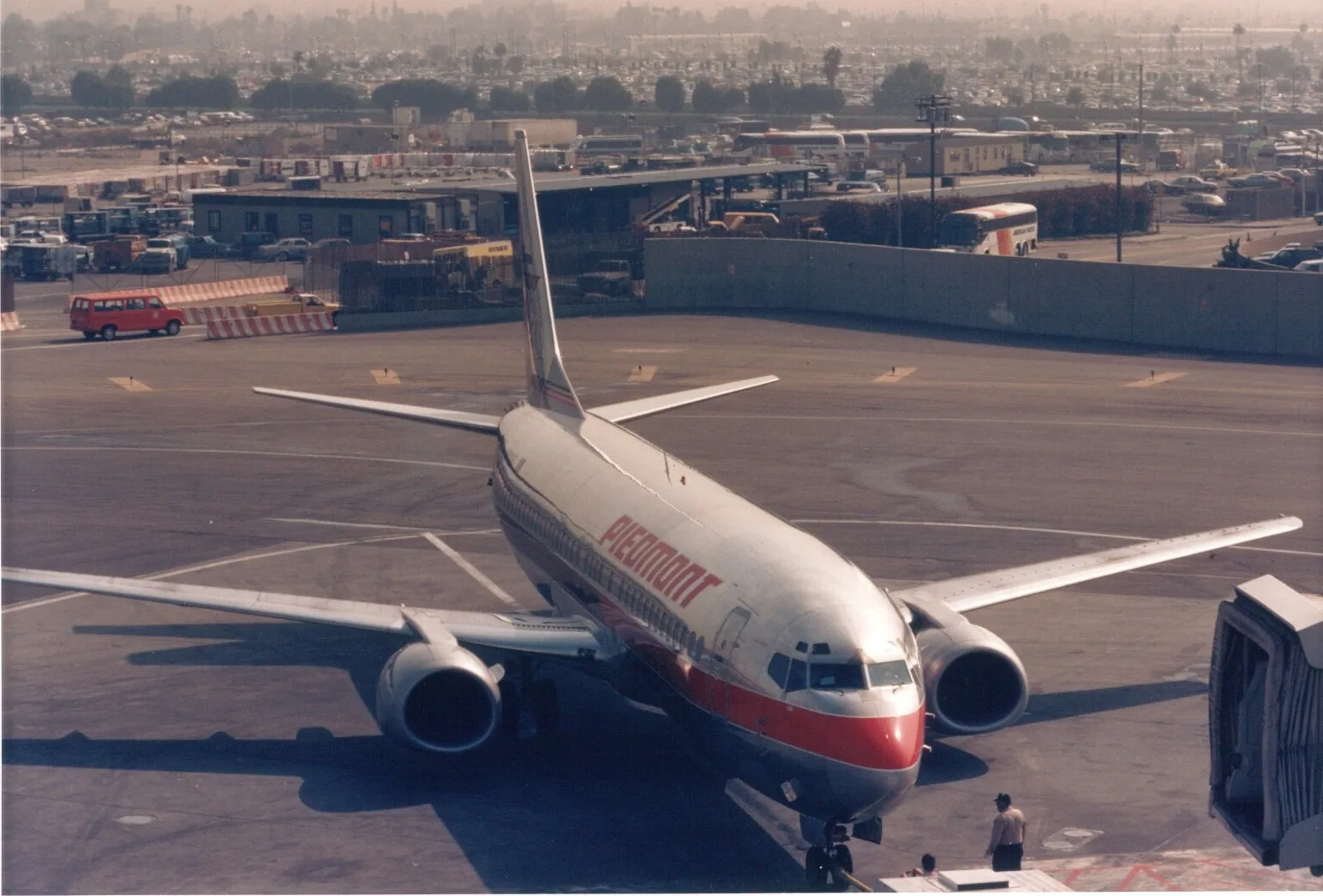
- Piedmont Boeing 737 at the gate · San Diego Air & Space Museum Archives · Wikimedia Commons · Public domain (PD-SDASM) · white print border cropped
- Piedmont Boeing 767-200ER N604P, London Gatwick, 1987 · Simon Butler · Wikimedia Commons · CC BY 2.0 · shown unmodified
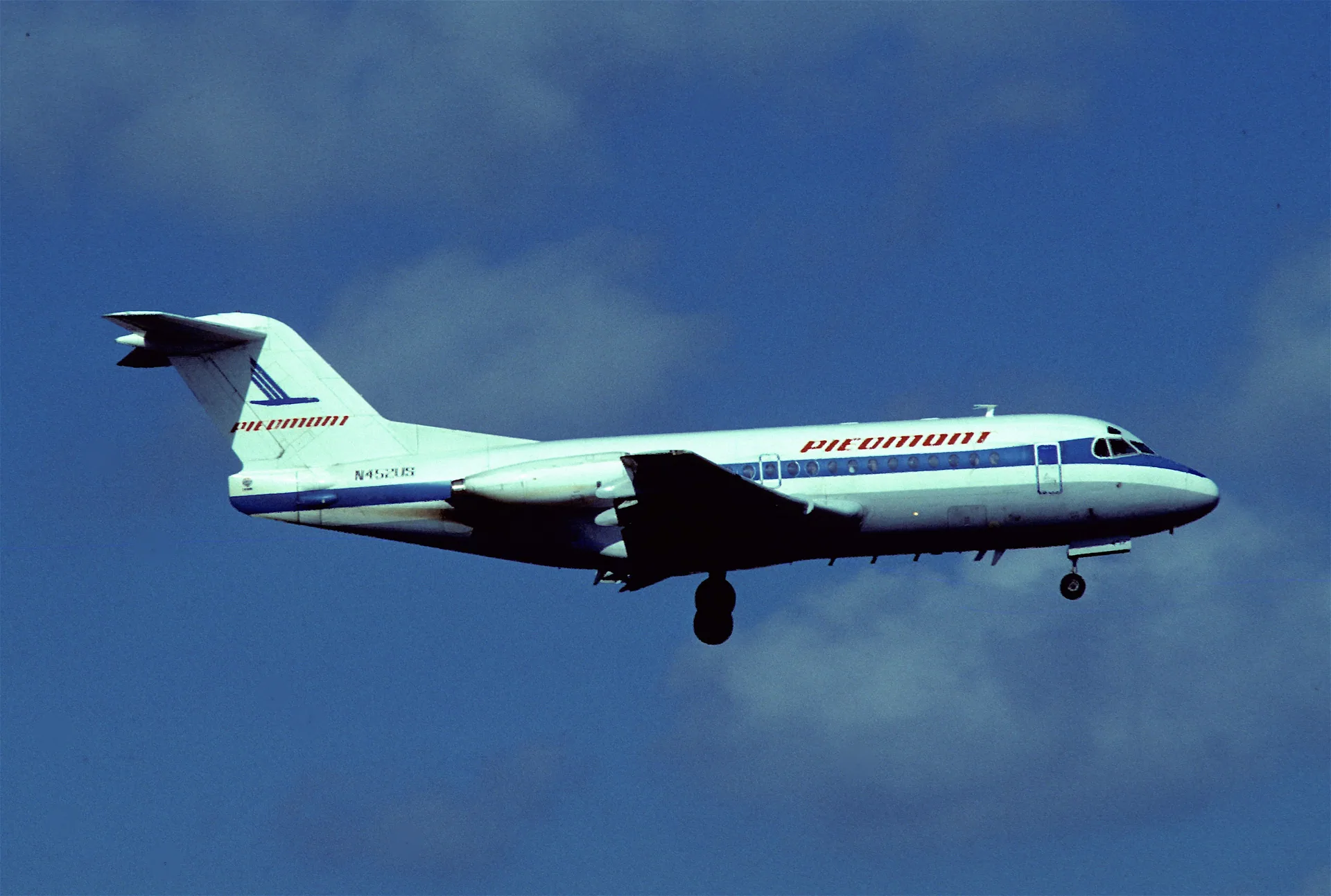
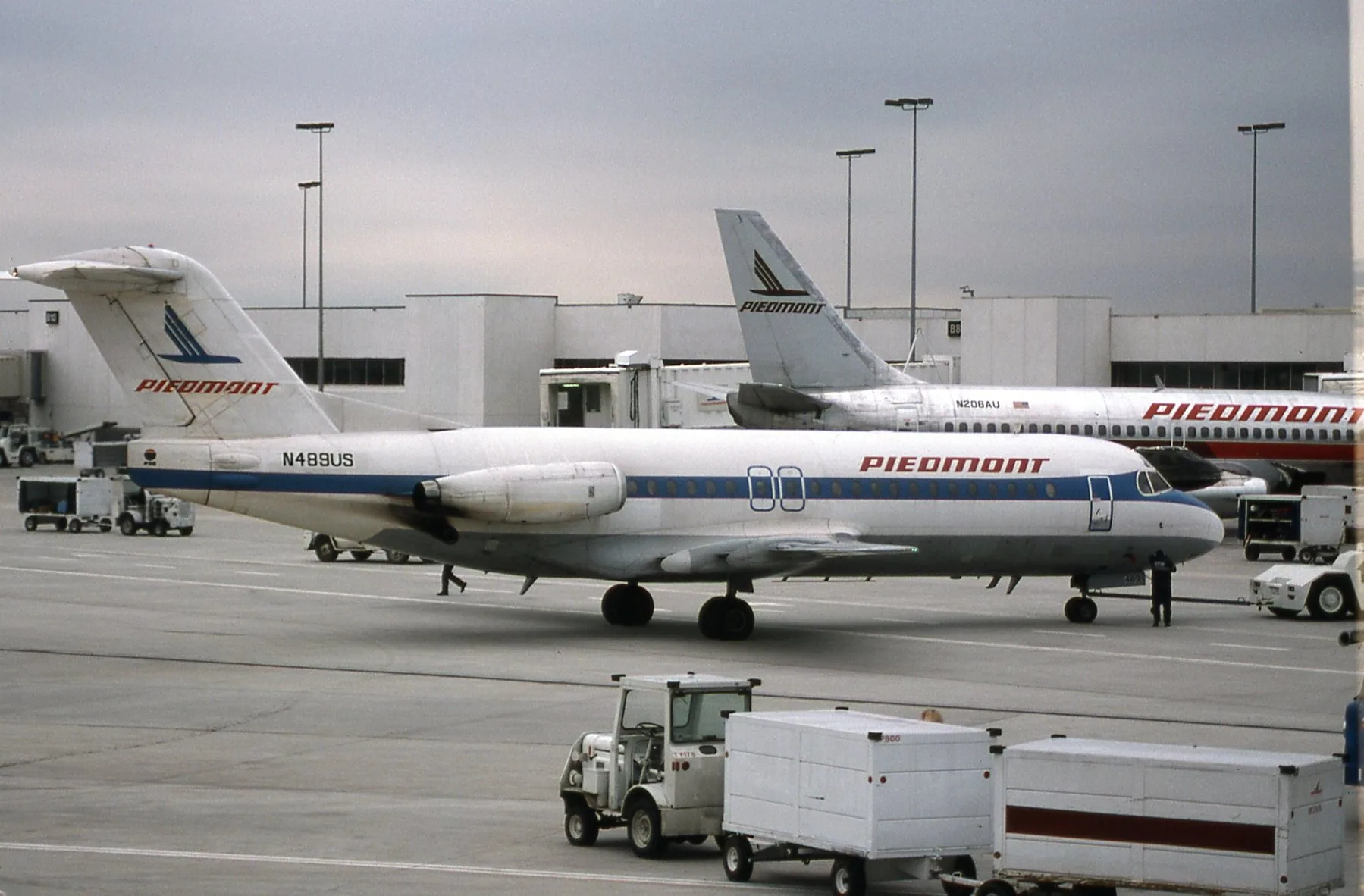
- Fokker F-28 Fellowship N452US, February 1989 · Aero Icarus · Wikimedia Commons · CC BY-SA 2.0 · shown full-frame, unmodified
- Charlotte Douglas International, March 1989 · Pete Macklin · Wikimedia Commons · CC BY 2.0 · shown unmodified
Dates. Published: 2026-11-24 · Last verified: 2026-11-24 · Updated: 2026-11-24
Author: Ronin Naodhinsuk
Piedmont Airlines, USAir, American Eagle, American Airlines, and all other brand names and logos mentioned in this article are trademarks of their respective owners. The Record Institute is an independent archive and is not affiliated with, endorsed by, or connected with American Airlines Group, Piedmont Airlines, Inc., or any successor of Piedmont Aviation, Inc.
Related Articles
- Schlitz — What Happened to Schlitz?
- RadioShack — What Happened to RadioShack?
- TWA — What Happened to TWA?