1 artifact found
Vespa
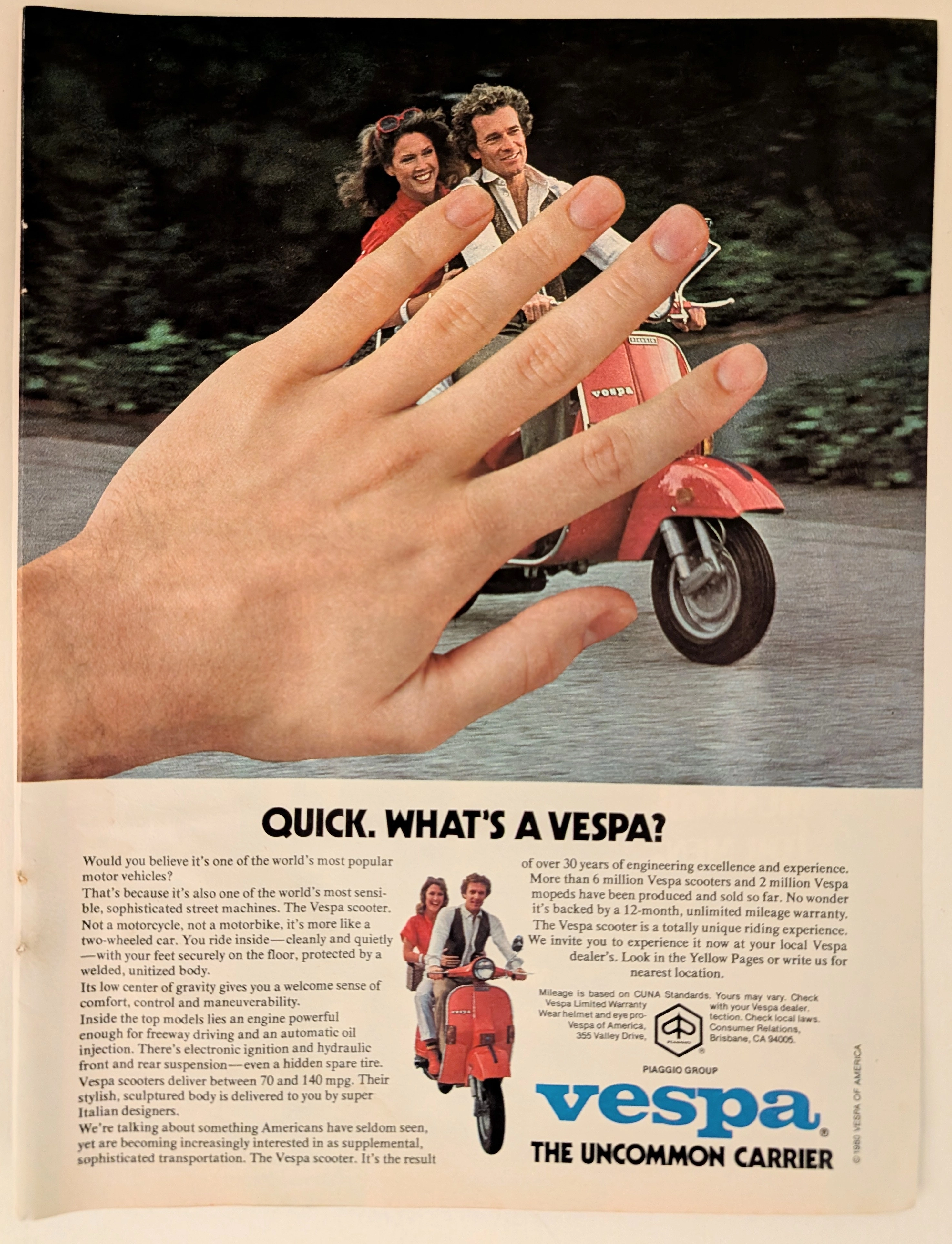
Then, it was a battle against American perception. A calculated interruption of the automotive status quo. In 1980, the United States was reeling from the aftershocks of the 1979 energy crisis. Fuel lines were long. Economic anxiety was high. The era of the careless, chrome-laden V8 engine was facing a harsh, geopolitical reckoning. Yet, the American commuter remained fundamentally tethered to the concept of the automobile. Motorcycles, conversely, were culturally relegated to the domains of outlaws, rebels, or recreational thrill-seekers. This document represents Piaggio’s aggressive, intellectual attempt to force a third option into the American consciousness. It explicitly denies its own mechanical taxonomy. "Not a motorcycle, not a motorbike, it's more like a two-wheeled car." Now, it is an artifact of an alternative urban timeline. A perfectly preserved record of a European utility vehicle attempting to rebrand itself as a sophisticated, lifestyle-driven solution for a sprawling, infrastructure-hostile continent. It stands as a testament to the difficulty of importing not just a machine, but an entirely foreign philosophy of urban mobility. The shift here is cultural and infrastructural. It marks the moment a machine born out of post-war European poverty attempted to pivot into an emblem of American suburban sophistication.