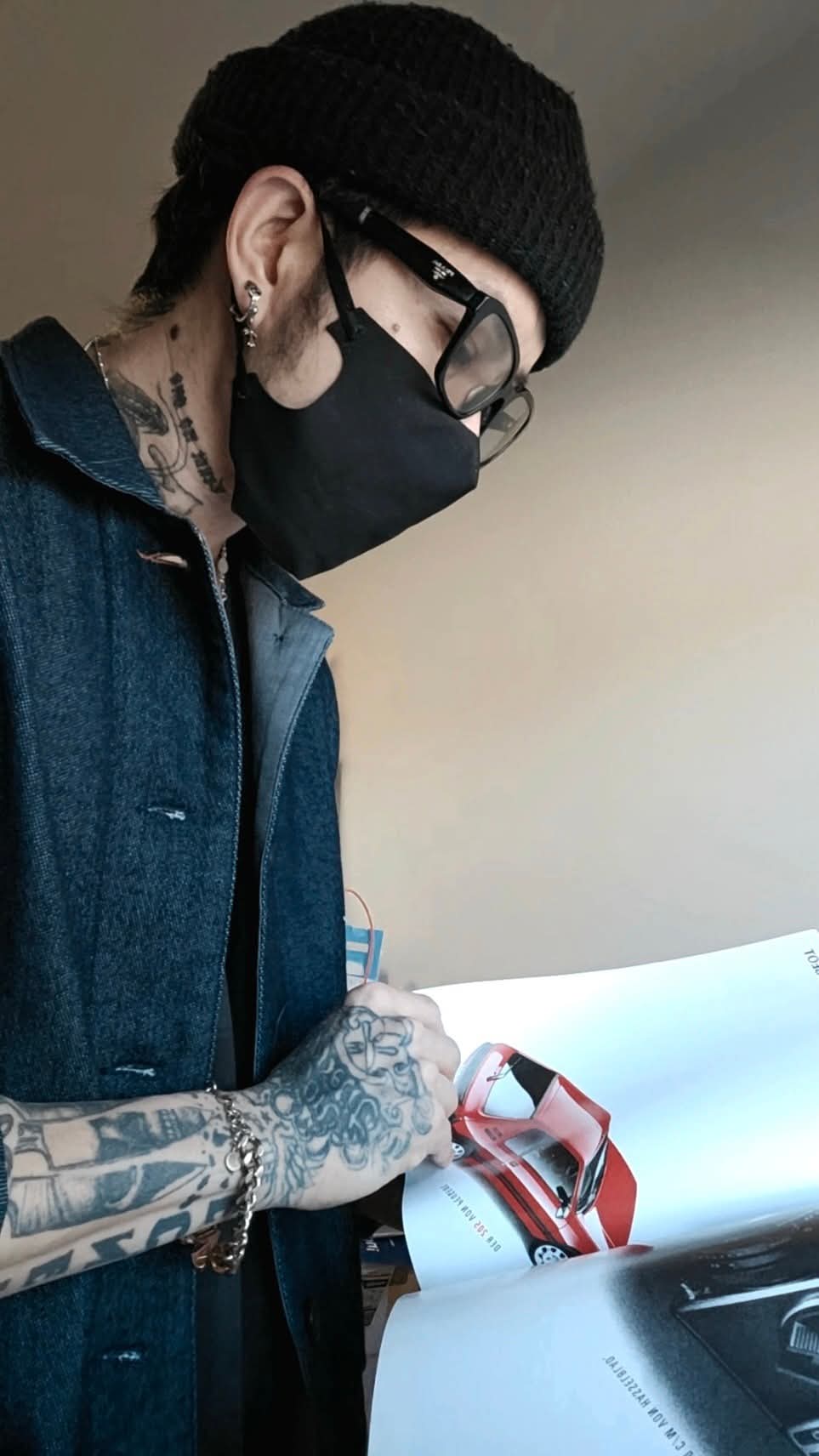
Ronin — Founder/Collector & Visual Curator
Serving as a quiet bridge between the Digital and Analog eras, he is a dedicated collector and conservator of cultural origins. He holds a profound belief that every extracted page is not merely a fragment of the past, but a living narrative that deserves to be remembered.
Born in Bangkok in 1980, this 45-year-old archivist of Thai-Vietnamese-Chinese descent was nurtured in an environment where global cultures seamlessly wove into the fabric of daily life.
His father, educated in the UK, immersed himself in the automotive world as a race car driver, journalist, and test driver. Consequently, his childhood home was surrounded by imported literature, international magazines, and global radio broadcasts. Simultaneously, his mother's work within a United Nations agency and the publishing industry enveloped him in historical photographs, official documents, and diverse languages. He did not merely observe these elements as an outsider; he grew up natively rooted within them.
Over the past 15 years, his journey across Europe and Australia, leading to his current residence in the United States, has granted him a reflective perspective. Through time spent exploring cultural landmarks globally, he recognized a poignant truth: the beautiful simplicity of the analog era is quietly fading away. Even within vintage archives, these remnants are disappearing. The only enduring evidence of these bygone eras lies in physical print imagery—images that still exist, yet are slowly succumbing to the natural passage of time.
By day, Ronin works as a professional chef—a craft that demands precision, discipline, and an eye for detail. By evening and throughout each week, he dedicates 4-5 hours daily to TRI, meticulously curating museum-grade narratives for every artifact. This dual commitment—sustaining himself through culinary craft while preserving cultural history—allows him to operate free from commercial pressure, ensuring that curation remains an act of genuine stewardship rather than commerce.
Today, at The Record Institute, he is quietly but firmly dedicated to embracing and preserving the fragmented memories of the pre-digital world, ensuring they are not lost to the ages.
"We are not merely collectors of aging print media.
We are custodians of human memory.
Every page, every photograph, every word printed upon analog media is not simply a fragment of the past—it is evidence, narrative, and testament to who we were.
Before these remnants fade forever.
Before time renders them obscure.
Before they become mere footnotes in history.
The Record Institute exists to preserve what is being lost. Not as commerce. Not as commodity. But as stewardship.
We curate. We document. We elevate. We remember.
Because preservation is not about saving objects.
It is about ensuring that the stories, the voices, and the human truths embedded within these pages are never forgotten."