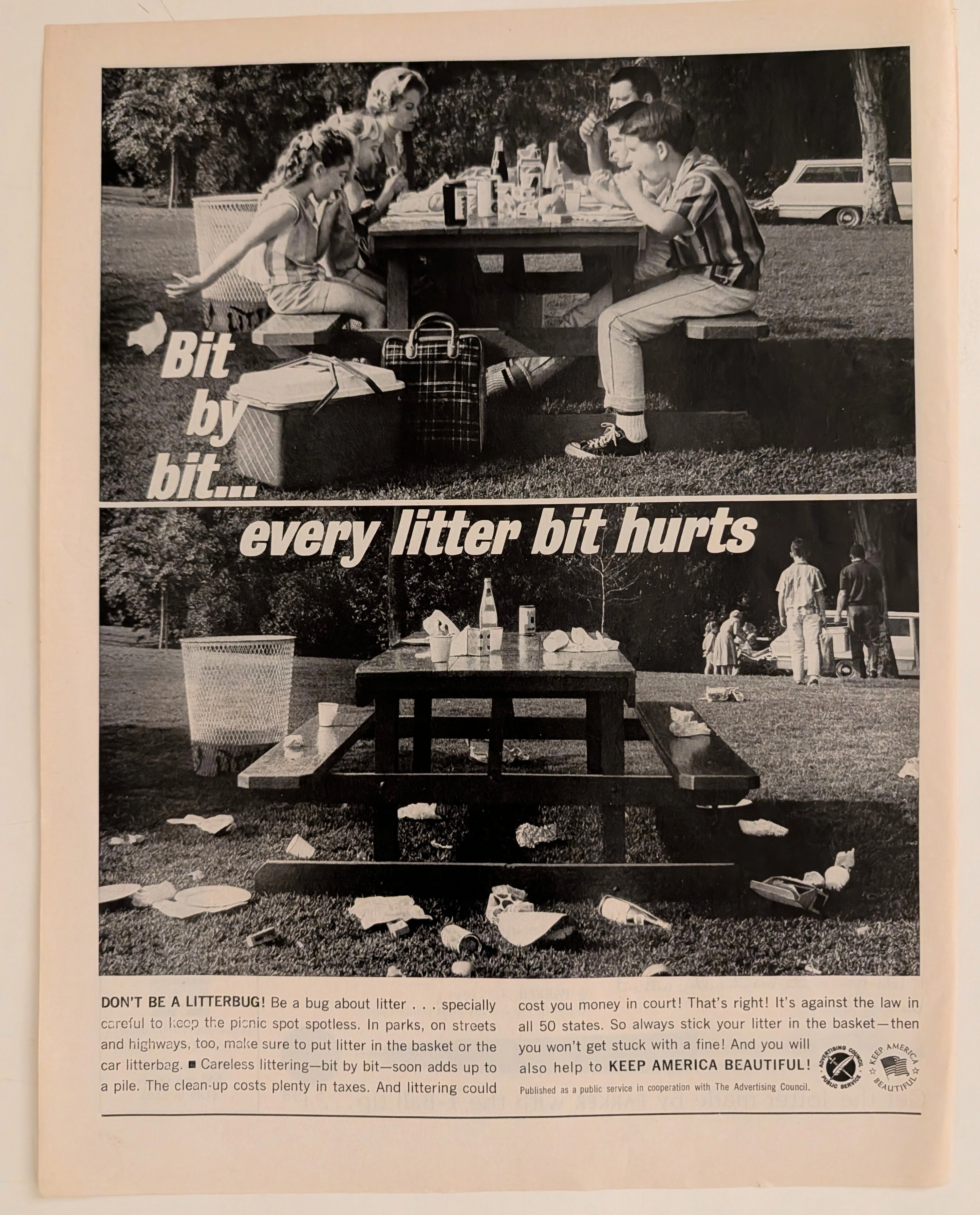
The Time Traveller's Dossier : Keep America Beautiful - Invention of the Litterbug
Before this artifact. Waste was a systemic reality, largely managed through local, reusable infrastructure. Milk bottles were returned. Soda glass was collected. The burden of packaging remained, to a significant degree, tethered to the producer. Consumption was a cycle, anchored by the economics of material recovery. Then, a shift. The post-war boom dictated an economy of disposability. Convenien
Category: Other
The History
The Post-War Packaging Boom and the Crisis of Convenience To decode the profound historical shift embedded within this artifact, one must analyze the industrial landscape of the mid-twentieth century. Following the conclusion of the Second World War, the American economic engine required perpetual consumption to maintain its unprecedented momentum. The mechanisms of mass production, honed during wartime, were redirected toward domestic convenience. This era witnessed the mass introduction of single-use plastics, aluminum cans, and disposable paper packaging. The previous paradigm of the deposi
The Paper
The physical substrate of this artifact is highly indicative of mid-century mass-market print distribution. It is printed on standard, un-coated newsprint or low-grade magazine stock. The absence of color is a deliberate economic choice. Public Service Announcements (PSAs), often placed in donated or heavily discounted media space by publishers cooperating with the Ad Council, were frequently printed in black and white to minimize production costs. The halftone process is distinctly visible upon close inspection, particularly in the grey mid-tones of the grass and the shadows of the picnic tab
The Rarity
Class B. As a mass-distributed Public Service Announcement, this specific advertisement was printed in vast quantities across numerous national and regional publications throughout the 1960s. Physical copies of the magazines containing this ad are relatively common in archival and vintage markets. However, its historical and contextual value is monumental. It is a primary source document for the study of modern environmentalism, corporate public relations, and behavioral engineering. Its rarity does not stem from a lack of surviving physical copies, but from its crystalline articulation of a m