The Time Traveller's Dossier: The Architect of the Great Society – Lyndon B. Johnson
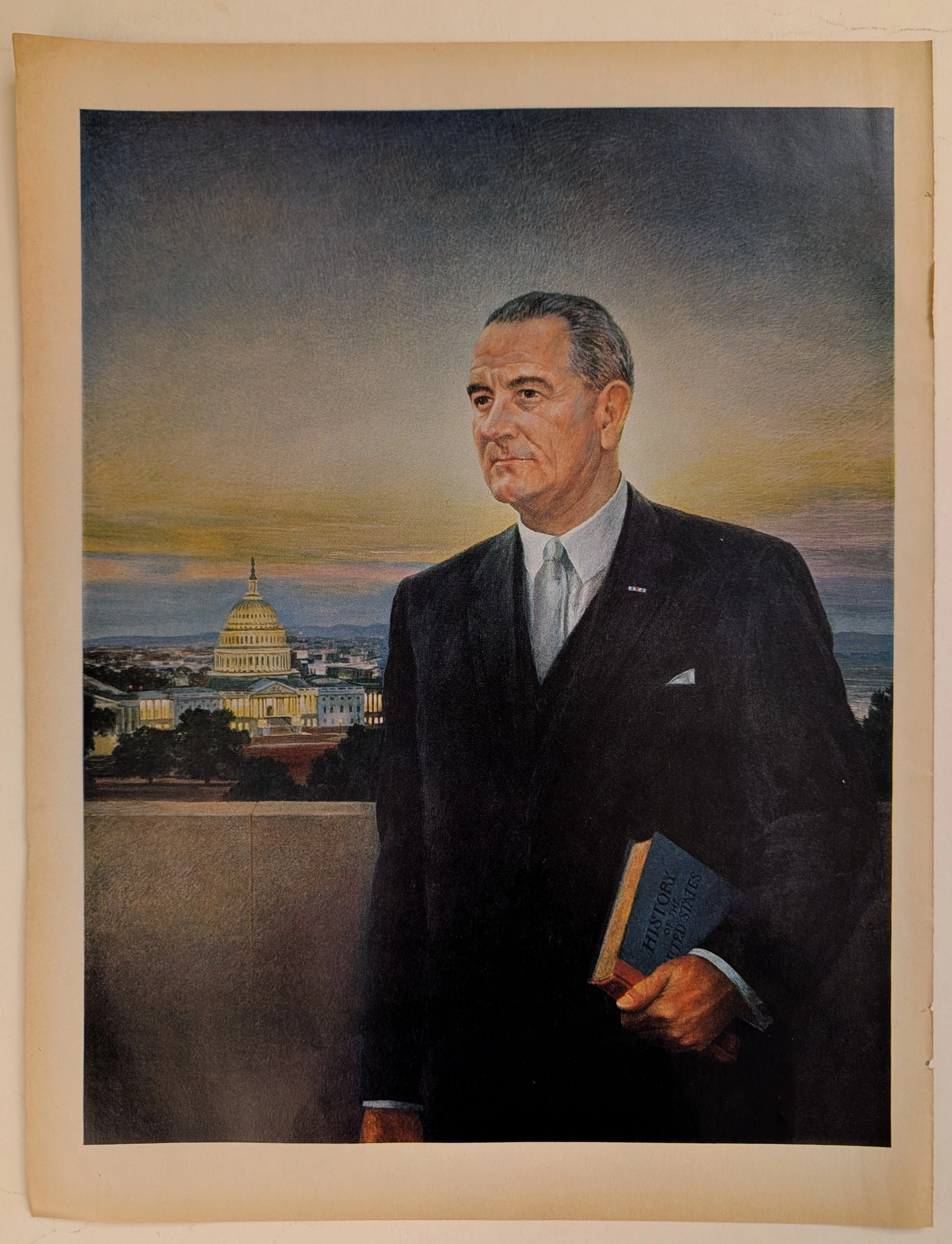
The presidency of the United States during the mid-twentieth century was an office defined by epochal challenges, sweeping domestic transformations, and the profound weight of global leadership. The historical artifact elegantly and securely positioned upon the analytical table of The Record Institute today is a majestic, large-format political lithograph portraying Lyndon Baines Johnson, the 36th
Category: Other
Brand: Lyndon B Johnson
The History
To fully appreciate the immense historical gravity, cultural magnitude, and sociological importance of this artifact, one must meticulously contextualize the extraordinary trajectory of Lyndon Baines Johnson (LBJ) and the nation he was called upon to lead during a period of profound mourning and necessary healing. The narrative of this portrait is inextricably linked to one of the most somber days of the American twentieth century: November 22, 1963. Thrust into the highest office in the land under tragic circumstances, Johnson inherited a nation that required immediate stability and reassuran
The Paper
As a physical entity, this printed artifact functions as a living, breathing, and profound record of mid-twentieth-century graphic reproduction and substrate chemistry. Under exceptional macro-lens examination, this document reveals the stunning complexity and mathematical precision of analog color printing. The intricate, textured rendering of Johnson's facial features, the golden architectural lighting spilling across the columns of the Capitol building, and the sharp, embossed-style typography on the cover of the "HISTORY OF THE UNITED STATES" book are all meticulously constructed from a pr
The Rarity
RARITY CLASS: S (Historic Presidential Ephemera / Exceptional Archival State) Evaluated under the most exacting, rigorous, and uncompromising archival parameters, this artifact is definitively and securely designated as Class S. The remarkable and defining paradox of mid-century political ephemera is that these specific documents were often produced in significant numbers for campaigns, commemorative events, or institutional distribution. They were inherently destined by their very nature to be tacked to bulletin boards, exposed to harsh office lighting, folded into archives, and ultimately ph