The Time Traveller's Dossier : Keep America Beautiful - The Invention of the Litterbug — The Record Institute JournalThe Time Traveller's Dossier : Keep America Beautiful - The Invention of the Litterbug — The Record Institute JournalThe Time Traveller's Dossier : Keep America Beautiful - The Invention of the Litterbug — The Record Institute Journal
1 / 3

✦ 3 사진 — 이미지를 클릭하여 고해상도로 보기

2026년 5월 5일

The Time Traveller's Dossier : Keep America Beautiful - The Invention of the Litterbug

Other
Archive Views: 22

역사

The Post-War Packaging Boom and the Crisis of Convenience
To properly decode the profound historical shift embedded within this artifact, it is imperative to analyze the industrial and economic landscape of the mid-twentieth century. Following the conclusion of the Second World War, the American economic engine required perpetual, frictionless consumption to maintain its unprecedented momentum. The massive mechanisms of mass production, which had been ruthlessly honed during the global conflict, were rapidly redirected toward domestic convenience and suburban expansion.

This era witnessed the mass introduction and aggressive marketing of single-use plastics, lightweight aluminum cans, and disposable paper packaging. The previous paradigm of the deposit-return system—where glass bottles were heavy, economically valuable, and inherently part of a localized, closed-loop economy—was systematically dismantled. It was replaced by the alluring ethos of the disposable lifestyle.

However, this sudden, overwhelming influx of single-use packaging generated an immediate and highly visible consequence: the American landscape began to drown in indestructible refuse. Highway systems, municipal parks, and the newly paved streets of suburban utopias became unintended repositories for the detritus of convenience. The structural reality was that the nation severely lacked the municipal infrastructure necessary to handle this abrupt explosion of permanent, non-biodegradable waste. A severe crisis of optics emerged for the manufacturing sector. If the voting public began to associate the blight of trash with the specific corporations producing the packaging, legislative action—such as state-level bans on disposable containers—loomed as a genuine, existential threat to corporate bottom lines.

The Strategy of Absolute Corporate Deflection
This printed artifact represents one of the most successful, deceptive, and enduring public relations maneuvers in the history of global commerce. Faced with the credible threat of systemic regulation and potential packaging bans, a consortium of packaging manufacturers, beverage companies, and related industrial giants formed a defensive coalition. Massive entities such as the American Can Company, Owens-Illinois Glass Company, and major beverage conglomerates pooled their immense resources to create the organization proudly stamped on the bottom right of this document: "Keep America Beautiful" (KAB), officially founded in 1953.

The strategic brilliance of KAB rested in its absolute, unwavering deflection of responsibility. At no point in their massive public campaigns did they address the staggering volume of disposable packaging their factories were relentlessly churning out. Instead, they aimed the harsh spotlight of blame entirely onto the behavior of the end-user. The campaign fundamentally redefined the very concept of waste. Trash was no longer framed as an inevitable industrial byproduct; it was meticulously reframed as a failure of individual human character. By focusing the national conversation entirely on the localized act of littering, the architects of this campaign effectively shielded the global production pipeline from any meaningful scrutiny. They engineered a lasting narrative where the corporation was merely a neutral provider of modern convenience, and the citizen was the sole, negligent agent of environmental degradation.

The Invention and Anatomy of the "Litterbug"
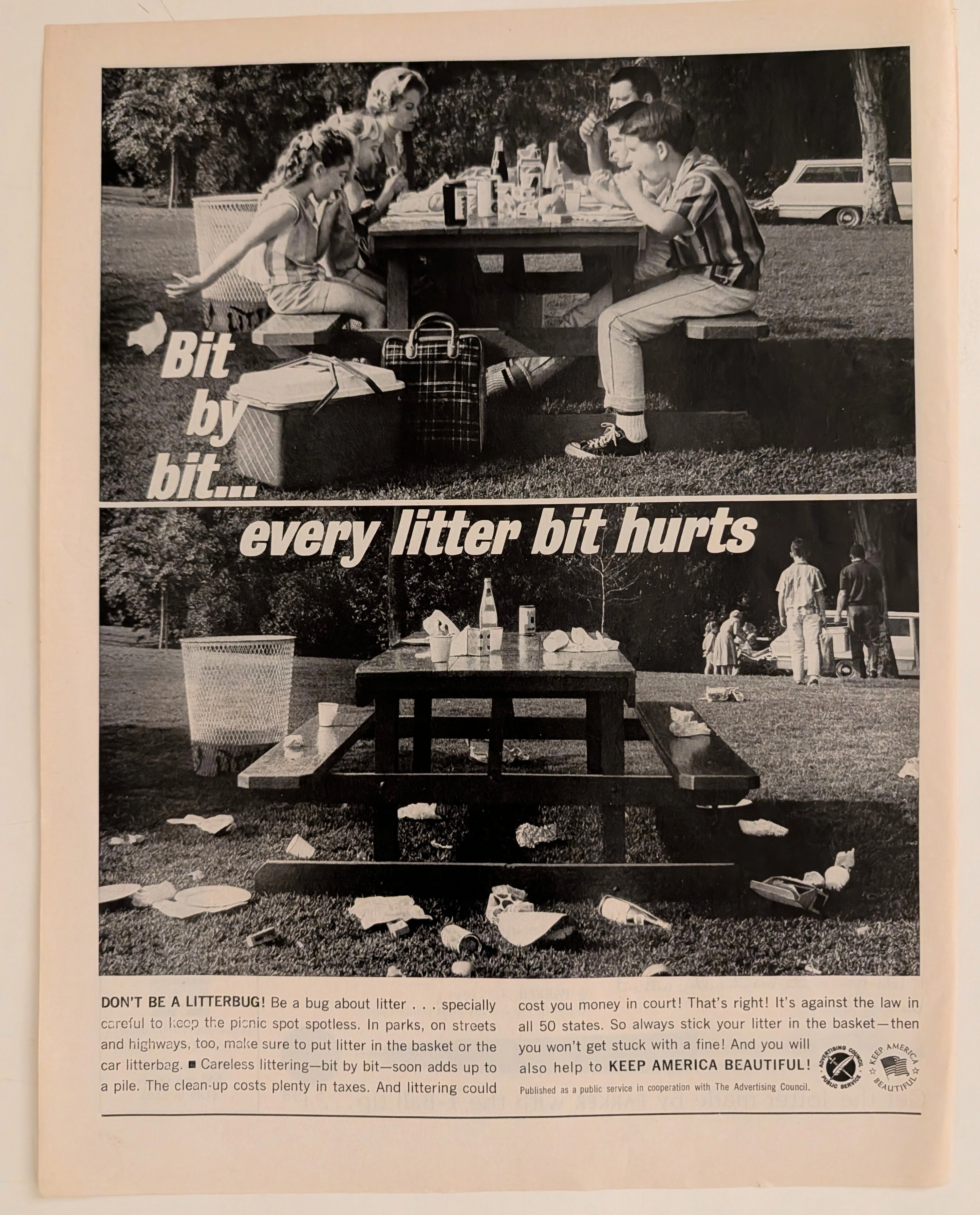
The primary copy of the artifact commands the reader with authoritative severity: "DON'T BE A LITTERBUG!" This specific terminology is a masterclass in behavioral conditioning and psychological warfare. The coinage of the term "Litterbug" was a deliberate linguistic weapon, designed specifically to shame, marginalize, and ostracize the offender.

By appending the suffix "-bug," the campaign explicitly associated the act of dropping trash with agricultural pests, urban infestations, and moral uncleanliness. It dehumanized the violator, reducing them to a societal nuisance that needed to be eradicated. Prior to this highly funded campaign, discarding an item on the ground was often a thoughtless, culturally unexamined habit—a harmless holdover from an agricultural era where the vast majority of human waste was biodegradable organic matter.

The KAB campaign forcefully categorized this habit as an anti-social, deviant, and destructive act. The artifact goes much further than mere suggestion, demanding that the citizen become a hyper-vigilant enforcer of this new, fabricated moral code: "Be a bug about litter... specially careful to keep the picnic spot spotless." It explicitly asks the public to police themselves and to surveil their neighbors, effectively embedding the micromanagement of waste disposal into the very fabric of suburban civic duty.

The Nuclear Family as the Moral Baseline
The visual narrative of the advertisement relies entirely upon the archetype of the mid-century American nuclear family, a potent symbol during the Cold War era. In the upper panel of the diptych, we observe the flawless ideal. A father, a mother, and three children are partaking in the quintessential post-war leisure activity: the public park picnic.

The styling and art direction are immaculate. The father is actively engaged with his family, the mother is attentive and poised, and the children are well-groomed, wearing clean canvas sneakers and crisp, patterned shirts. A plaid thermos and a woven basket sit gently on the grass, serving as universally recognized symbols of middle-class stability, economic prosperity, and wholesome outdoor recreation. They are the ultimate, sanitized representation of the American Dream.

This imagery establishes the unyielding moral baseline. The viewer is psychologically manipulated to identify with them, to aspire to their level of domestic tranquility and social status. This emotional identification is absolutely crucial for the psychological trap that is violently sprung in the second panel.

The Betrayal of the Public Commons
The lower panel serves as a brutal, unforgiving subversion of the ideal that was just established. The diptych format functions as a literal "Before and After" sequence, presenting a heaven and hell of suburban civic conduct. The family is seen retreating into the distance, heading toward their station wagon—the ultimate chariot of suburban sprawl and automotive dominance.

What they leave behind is absolute, shameful ruin. The wooden picnic table, which moments before served as the sacred altar of family communion, is now a depressing monument to their apathy. Crushed paper cups, discarded wrappers, a tossed newspaper, and empty glass bottles litter the meticulously manicured grass.

The most damning, brilliant element of the photographic composition is the prominent presence of the white wire trash receptacle, situated just to the left of the table. It is entirely empty. It stands as a silent, geometrical judge of their moral failure. The message communicated is crystal clear: these are not uneducated, malicious, or impoverished people; they are highly respectable, affluent citizens who have committed a crime of modern convenience. They have betrayed the public commons. The jarring visual juxtaposition forces the viewer to confront the ugly reality that the perpetrators of this environmental blight are not foreign 'others'—they are us.

The Threat of Law and the Shield of Patriotism
The textual copy within the artifact refuses to rely solely on moral persuasion; it pivots sharply and aggressively toward the threat of state violence and financial penalty. "Careless littering—bit by bit—soon adds up to a pile. The clean-up costs plenty in taxes. And littering could cost you money in court! That's right! It's against the law in all 50 states."

The transition from the emotional guilt of ruining a beautiful park to the cold, hard reality of municipal taxation and legal prosecution is abrupt, calculated, and highly effective. It successfully monetizes the guilt. This threat is immediately followed by the presentation of two logos in the bottom right corner, serving as the dual, unassailable authorities authorizing the message.

The Advertising Council logo, featuring a crossed sword and feathered quill, represents the weaponization of mass communication in the service of the public. It signals that this is not a frivolous commercial advertisement, but a decree of vital national importance. Beside it, the Keep America Beautiful logo utilizes the ultimate ideological shield: the waving American flag. By wrapping the anti-littering message in the nation's flag, the campaign successfully equated environmental cleanliness with patriotism. To drop a wrapper was no longer just messy; it was treasonous, an inherently un-American act. This potent combination of corporate deflection, individual shame, legal threat, and patriotic duty solidified a behavioral shift that remains the absolute dominant framework for environmental responsibility today.

종이

The physical substrate of this archival artifact is highly indicative of mid-century, mass-market print distribution techniques. It is printed on standard, un-coated newsprint or low-grade magazine stock, weighing approximately 60 to 70 GSM. The distinct absence of color is a deliberate, calculated economic choice. Public Service Announcements (PSAs), which were frequently placed in donated or heavily discounted media space by compliant publishers cooperating with the Ad Council, were almost always printed in black and white to ruthlessly minimize production costs.

The halftone printing process is distinctly visible upon close, macro inspection, particularly within the grey mid-tones of the manicured grass and the harsh shadows cast beneath the wooden picnic table. The dot matrix creates a slightly gritty, documentary-style texture, which subconsciously lends gravity, urgency, and stark realism to the highly orchestrated, staged photography. The paper exhibits the typical, inevitable signs of natural acidification—a slight yellowing or foxing of the negative white space, serving as a chemical testament to the lignin content reacting with decades of ambient light and atmospheric oxygen. It is a fragile, highly ephemeral piece of paper carrying a permanent, heavy psychological payload.

희귀도

Class B.
As a mass-distributed Public Service Announcement, this specific advertisement was printed in vast, astronomical quantities across numerous national and regional publications throughout the entirety of the 1960s. Physical copies of the magazines containing this specific ad are relatively common and easily acquired in archival circles and vintage paper markets.

However, its historical and contextual value is absolutely monumental. It is a vital primary source document for the serious study of modern environmentalism, corporate public relations, and large-scale behavioral engineering. Its true rarity does not stem from a lack of surviving physical copies, but from its crystalline, perfect articulation of a major, global societal pivot. It serves as the exact, documented moment the crushing burden of the disposable economy was lifted from the factory floor and placed squarely onto the shoulders of the individual consumer.

시각적 임팩트

The visual impact relies entirely on the stark, unforgiving, and immediate contrast of the diptych structure. It heavily borrows the established visual language of religious morality tales—a bright depiction of grace followed instantly by a dark depiction of the fall from grace.

The photography is tightly and meticulously controlled. The lighting in the top panel is bright, airy, and even, specifically highlighting the joyful faces of the family unit. In the bottom panel, the lighting appears significantly harsher, deliberately drawing the viewer's eye to the high-contrast shapes of the white trash violently scattered against the dark grass.

The typography of the central headline, "Bit by bit... every litter bit hurts," utilizes a bold, slanted sans-serif font that conveys motion, urgency, and a scolding tone. The visual path is engineered with clinical precision: it forces the viewer to look at the pristine family, then read the scolding headline, and finally drop their eyes in shame toward the devastation below. The scattered debris is carefully arranged; it is not truly random, but highly styled to ensure every type of disposable packaging is represented and clearly identifiable. The overall psychological impact is one of sudden, jarring disappointment, specifically designed to trigger an immediate, visceral sense of civic shame.

이 아카이브 공유

아카이브는 계속됩니다

탐험 계속

시간 여행자의 조서 : Datsun 280-ZX - GT(그랜드 투어링)로의 패러다임 전환

시간 여행자의 조서 : Datsun 280-ZX - GT(그랜드 투어링)로의 패러다임 전환

과거. 스포츠카는 육체적 형벌이었다. 날것 그대로의 기계적 피드백을 전달하는 기계. 시끄럽고. 불편하며. 변덕스러웠다. 그것은 운동 속도와 맞바꿔 육체적 희생을 요구했다. 일상의 안락함과는 완전히 단절된, 주말의 사치였다. 현재. 스포츠카는 외부와 철저히 격리된, 호화로운 캡슐이다. 그것은 합성 고무 위를 구르는 컴퓨터 네트워크다. 가속력 못지않게 공조 제어, 완벽한 음향, 승객의 편안함을 최우선으로 삼는다. 그것은 속도의 성소(Sanctuary)다. 우리 앞에 놓인 이 아티팩트(유물)는 이 두 시대 사이의 정확한 건축적 교량을 기록하고 있다. 때는 1980년. 차량은 닷슨(Datsun) 280-ZX 10주년 기념 "블랙 골드(Black Gold)" 에디션. 이것은 단순한 자동차 마케팅 인쇄물이 아니다. 날것의 아날로그 스포츠카를 향한 부고장이자, 현대적인 '퍼스널 럭셔리 그랜드 투어러(Personal Luxury Grand Tourer)'의 출생 증명서다. 그리고 일본의 제조업이 더 이상 변명하지 않고, 미국의 고속도로에서 절대적인 패권을 쥐었음을 선언한 결정적 순간이다.

시간 여행자 파일: Joyce Hall & Hallmark - 공감의 산업화

Hallmark · Other

시간 여행자 파일: Joyce Hall & Hallmark - 공감의 산업화

빈 페이지는 두려운 지형이다. 인류 역사의 대부분 동안, 감정을 말이나 글로 표현하는 것은 고독하고 엄청난 마찰을 동반하는 작업이었다. 사랑, 깊은 슬픔, 혹은 감사를 전하기 위해서는 잉크와 시간, 그리고 개인의 유창함을 드러내야 하는 취약성이 필요했다. 그것은 어려웠기 때문에, 글로 쓰인 감정은 비교적 희소했다. 그것은 보내는 이의 어휘력의 한계에 묶인, 인간 정신이 만들어낸 수공예품이었다. 그리고 20세기가 도래했다. 인간 영혼의 대량 생산이 시작된 것이다. 이 잡지 기사는 단순한 기업 임원의 전기가 아니다. 현대 사회의 심오한 심리학적 패러다임 전환을 기록한 기초 문서이다. 인류가 자신의 감정 표현을 '조립 라인'에 외주(Outsourcing)하기 시작한 정확한 시대를 기록하고 있다. 홀마크(Hallmark)의 창립자인 조이스 클라이드 홀(Joyce Clyde Hall)은 단순히 반으로 접힌 종이를 판 것이 아니다. 그는 '공감을 위한 인프라'를 설계했다. 그는 2억 달러 규모의 제국을 건설했는데, 이는 하나의 근본적인 진실을 깨달았기 때문이다. '사람들은 필사적으로 서로 연결되기를 원하지만, 종종 그렇게 할 단어를 찾지 못한다'는 것이다. 문제는 자기표현에 수반되는 마비될 듯한 마찰력이었다. 해결책은 산업화된 감정이었다.

타임 트래블러의 문서 : 1944년 후버(Hoover) 광고 - 희생의 게이미피케이션

타임 트래블러의 문서 : 1944년 후버(Hoover) 광고 - 희생의 게이미피케이션

최전선은 어디에나 있었다. 1944년 봄에 이르러, 전쟁의 무대는 더 이상 태평양의 피비린내 나는 환초나 동유럽의 얼어붙은 진흙탕에만 국한되지 않았다. 그것은 미국 가정의 차고 진입로로 조직적으로 자리를 옮겼다. 이 아티팩트(유물)가 인쇄되기 전, 가정 생활은 지속적이고 자동화된 '편리함의 가속'으로 정의되었다. 현대의 가정은 소비주의의 성소였다. 그리고 전 지구적 갈등이라는 절대적인 병참학적 수학이 찾아왔다. 이 광고는 정밀한 심리학적 메커니즘을 보여준다. 이것은 가혹한 현재의 현실, 즉 민간 자원의 완전한 고갈과 전쟁이 끝나기를 기다리는 고통스러운 심리적 부담을 직접적으로 다룬다. 동시에 행동주의적 해결책, 즉 시민 의무의 '게이미피케이션(Gamification, 게임화)'을 판매한다. 당면한 문제는 후버(Hoover) 회사가 판매할 진공청소기를 단 한 대도 가지고 있지 않다는 것이었다. 그들의 생산 라인은 군 복무를 위해 모두 징집된 상태였다. 제시된 해결책은 민간인 주부와 교외의 아버지를 활동적인 전술 자산으로 변모시키는 것이었다. "War-Shorteners(전쟁을 단축시키는 것들)"을 찾아냄으로써 평범한 가사 노동은 무기화되었고, 민간인의 불편함은 징집된 아들들의 빠른 귀환이라는 보상과 교환되었다.

발행자

The Record Institute

분류 일치

관련 기사

시간 여행자의 파일 : 제2차 세계대전 전시 공채 - 기업의 총동원령 — related article
기사 읽기

시간 여행자의 파일 : 제2차 세계대전 전시 공채 - 기업의 총동원령

국가는 강철만으로 전쟁을 수행하지 않는다. 자본으로 수행한다. 그리고 신념으로 싸운다. 1941년 이전, 미국의 소비자는 안락함에 길들여진 존재였다. 신흥 광고 산업에 의해 탄산음료, 자동차, 그리고 현대적인 편의 시설을 끊임없이 갈망하도록 훈련받았다. 그러다 전 지구적 갈등이라는 폭력이 돌연히 들이닥쳤다. 공장들은 방향을 틀었다. 공급망은 얼어붙었다. 소비 경제는 갑작스럽고도 파괴적인 급정거를 맞이했다. 그러나 광고라는 거대한 기계 장치는 잠들지 않았다. 그것은 '징집'되었다. 여기에 제시된 아카이브 기록물들—세븐업(The Seven-Up Co.)이나 오토카 트럭(Autocar Trucks) 같은 기업들의 상업적 메시지 속에 박제된 1943년 인쇄물의 파편들—은 인간 행동의 기념비적인 패러다임 전환을 상징한다. 대중이 '현재' 대신 '미래'를 구매하도록 요구받은 바로 그 순간이다. 그 전략은 전례가 없는 것이었다. 민간인을 국가의 주주로 변환시키는 것. '저축'이라는 행위를 보이지 않는 적에 대한 궁극적인 공격 행위로 탈바꿈시키는 것. 이것은 단순한 빈티지 광고 컬렉션이 아니다. 기업의 마케팅이 국가 생존을 위한 무기로 병기화(weaponized)된 정확한 변곡점이다.

시간 여행자의 조서 : 1968 펩시콜라 - 젊음의 열역학 — related article
기사 읽기

시간 여행자의 조서 : 1968 펩시콜라 - 젊음의 열역학

연도는 1968년이다. 지구는 심오한 사회적, 정치적 격변의 무게 아래 분열되고 있다. 과거, 탄산음료는 가족 모임의 따뜻함과 향수 어린 유산이라는 온건한 장점을 바탕으로 마케팅되었다. 이제 상업의 전쟁터는 새롭고 공격적인 인구통계학적 충성도를 요구한다. 이 유물은 온도와 정체성의 무기화에 대한 마스터클래스다. 콜라 전쟁(Cola Wars)의 정확한 고조를 기록하며, 액체 자체에서 소비자의 심리통계학적(psychographic) 프로필로 초점을 이동시킨다. 이것은 '펩시 제너레이션(Pepsi Generation)'의 건축학적 청사진이다. 젊음, 행동, 그리고 애슬레틱 레저(athletic leisure)로 가득한, 태양이 내리쬐는 인공적인 성소. 이것은 기득권층의 따뜻한 향수를 거부한다. 신경계에 대한 본능적이고 얼어붙는 듯한 충격을 요구한다. 이것은 절대적인 열역학적 패권의 선언이다. 다른 것들을 얼어붙게 만드는 맛 (Taste that beats the others cold).

시간 여행자의 파일 : 스미스 코로나(Smith-Corona) - 인내의 메커니즘 — related article
기사 읽기

시간 여행자의 파일 : 스미스 코로나(Smith-Corona) - 인내의 메커니즘

빛나는 화면과 소리 없는 디지털 입력의 시대가 도래하기 전, 상업과 관료제는 타자바(Typebar)의 기계적인 마찰음과 줄 바꿈을 알리는 날카로운 종소리에 의해 구동되었다. 타자기는 단순한 사무용품이 아니었다. 그것은 세계 경제의 엔진이었다. 그러나 세계가 제2차 세계대전의 총력전으로 빠져들면서, 민간인을 위한 편의용품 공급선은 돌연 끊어졌다. 강철, 황동, 알루미늄은 군수품을 위해 징발되었다. 타자기 공장들은 하룻밤 사이에 소총, 포탄 신관, 암호기를 제조하기 위해 설비를 재조정해야 했다. 우리 앞에 놓인 이 기록물—L.C. 스미스 & 코로나 타자기 회사(L.C. Smith & Corona Typewriters Inc.)의 적나라하고 초현실적인 인쇄 광고—는 미국 자본주의 사고방식의 심오한 변화를 포착하고 있다. 이것은 명시적으로 신제품을 팔려고 하지 않는 광고다. 대신, 이것은 생존 매뉴얼이다. 소비주의가 강제로 유예되고, 그 자리를 보존, 인내, 기계적 응급처치라는 국가적 문화가 대체했던 시대를 반영한다. 이 광고는 강력하고 꿈결 같은 이미지를 사용하여 미국 대중에게 그들의 기계가 과로로 죽어가고 있으며, 그 기계를 다뤄야만 하는 여성들 또한 마찬가지라는 사실을 상기시킨다.

시간 여행자의 조서 : KFC - 가사 노동의 아웃소싱 — related article
기사 읽기

시간 여행자의 조서 : KFC - 가사 노동의 아웃소싱

연도는 가려져 있지만, 시대는 잔인할 정도로 명확하다. 1960년대 후반이다. 미국의 가정이라는 영역은 불가능한 기대치가 교차하는 극장이었다. 과거, 홀리데이 시즌은 여성의 가사 노동을 시험하는 가혹한 시련(도가니)이었다. 어머니는 축제의 만찬을 만들어내는, 아무런 도움도 받지 못하는 유일한 건축가였다. 현재, 거대한 기업체가 면죄부를 제공하고 있다. 이 유물은 신성한 명절의 식탁이 산업화된 패스트푸드에 의해 침해당한 정확한 순간을 기록한다. 이것은 코팅된 종이 위에 인쇄된, 가정 내 구원의 상업화이다. 지친 주부가 자신의 프라이팬을 자비롭고 인공적으로 만들어진 가부장에게 넘겨주는 전환의 순간을 포착한다. 이것은 시간을 사라는 초대장이다. '크리스마스의 압박(Christmas rush)'이라는 짓눌리는 무게를 거부하라는 것. 종이로 만든 양동이(Bucket)를 환대(Hospitality)의 정당한 그릇으로 받아들이라는 것이다.

THE TIME TRAVELER'S DOSSIER: 50년대 권력의 건축과 디지털 세계의 탄생 — related article
기사 읽기

THE TIME TRAVELER'S DOSSIER: 50년대 권력의 건축과 디지털 세계의 탄생

철저하고 타협 없는 박물관급 분석을 거친 이 유물은 전후 미국 경제 호황의 정점에서 탄생한 놀랍도록 잘 보존된 역사적 유물입니다. 이 주요 예술 문서는 Sheraton Hotels 제국의 광대하고 기념비적인 전면 광고로, 작품 내에 명시적으로 묘사된 Pittsburgh Bicentennial (1758-1958) 스탬프를 통해 대략 1958년에서 1959년 사이로 법의학적으로 연대가 확인되었습니다. 이 문서는 단순한 여행 광고를 넘어, "미국 기업 상승의 사회학적 청사진"을 심오하게 제시합니다. Sheraton의 대표적인 호텔들—New York, Cleveland, Pittsburgh, Detroit—의 과장되게 양식화된 건축학적 삽화 네 개를 시각적 중심으로 하여, 이 작품은 당시 시대의 거침없는 낙관주의를 포착합니다. 각 패널은 중세 상업 일러스트레이션의 걸작이며, 특히 Motor City의 지배력을 상징하는 환상적이고 떠다니는 테일핀 자동차를 특징으로 하는 Detroit 패널은 압권입니다. 더 나아가, 이 유물은 글로벌 비즈니스 역사의 중요한 이정표를 기록합니다. Diners' Club 카드의 수용을 자랑스럽게 광고하며, 이는 현대 신용카드 시대의 혁명적인 여명을 알립니다. 또한 Sheraton의 "Reservatron" 전자 시스템—환대 산업에서 컴퓨팅의 가장 초기 상업적 적용 사례 중 하나—을 자랑하며, New York Stock Exchange 상장을 당당히 선언합니다. 잊혀진 두꺼운 제본의 정기간행물에서 구출된 이 2000년대 이전의 아날로그 유물은 일본의 와비사비(wabi-sabi) 미학에 대한 위조 불가능한 증거입니다. 본질적으로 산성인 목재 펄프지에 인쇄되어, 아름답게 거칠고 들쭉날쭉한 오른쪽 여백과 표면 전체에 걸쳐 깊고 따뜻한 호박색 산화가 나타납니다. 이 장엄하고 멈출 수 없는 화학적 분해는 대량 생산된 기업 선전물을 중세 건축 및 경제사의 대체 불가능한, 액자화할 준비가 된 주요 예술 문서로 변모시킵니다.

시간 여행자의 기록: 색채의 마법과 인간 기억의 혁명 — related article
기사 읽기

시간 여행자의 기록: 색채의 마법과 인간 기억의 혁명

시간 여행자의 기록: 색채의 마법과 인간 기억의 혁명 - 발췌문 철저하고 타협 없는, 전례 없는 박물관급 분석을 거친 이 유물은 20세기 중반 미국 소비자 기술의 황금기에서 유래한, 탁월하게 보존된 역사적 유물입니다. 이 주요 예술 문헌은 Eastman Kodak Company의 기념비적인 전면 광고로, 전설적인 Kodachrome Film과 35mm 소형 카메라 생태계를 특별히 홍보하고 있습니다. 광고에 등장하는 카메라 모델들—Kodak Pony 135 Model B, Kodak Signet 35, 그리고 Bantam RF—을 기반으로, 이 유물은 법의학적으로 1950년대 중반, 특히 1954년에서 1955년경으로 추정되며, HOLIDAY 매거진 6월호에서 발췌되었습니다. 이는 단순한 카메라 광고가 아닙니다. 그것은 "전후 미국 드림의 심오한 사회학적 청사진"입니다. "This is the magic of Kodachrome Photography"라는 헤드라인은 색채 기억의 기술적 민주화를 함축합니다. 이 시대 이전에는 컬러 사진이 엘리트 전문가들의 전유물이었습니다. Kodachrome은 상징적인 노란색과 빨간색 상자와 함께 평범한 교외 거주자들을 그들 자신의 생생한 삶을 기록하는 아키비스트로 변모시켰습니다. 이 광고는 단순히 하드웨어뿐만 아니라, "홈 스크린" 슬라이드 프로젝션이라는 깊이 있는 감성적 의식을 절묘하게 판매합니다. "KODACHROME TRANSPARENCY"의 극도로 사실적인 빨간색 종이 마운트를 시각적 앵커로 삼은 이 문헌은 열망을 불러일으키는 마케팅의 정수입니다. 소비성 대중 매체의 피할 수 없는 망각으로부터 구출된 이 2000년대 이전의 아날로그 유물은 일본 미학의 와비사비를 숨 막히게 구현합니다. 본질적으로 산성인 목재 펄프지에 인쇄된 이 유물은 아름답고 진정한 들쭉날쭉한 왼쪽 제본 가장자리, 미세한 구조적 주름, 그리고 전체 표면에 걸쳐 깊고 따뜻한 호박색 산화를 보여줍니다. 이 멈출 수 없는 분자적 죽음은 대량 생산된 기업 선전을 사진 및 사회학적 역사의 대체 불가능한, 액자화할 준비가 된 주요 예술 문헌으로 변모시킵니다.