#MidCenturyDesign
2 artifacts found
Studebaker
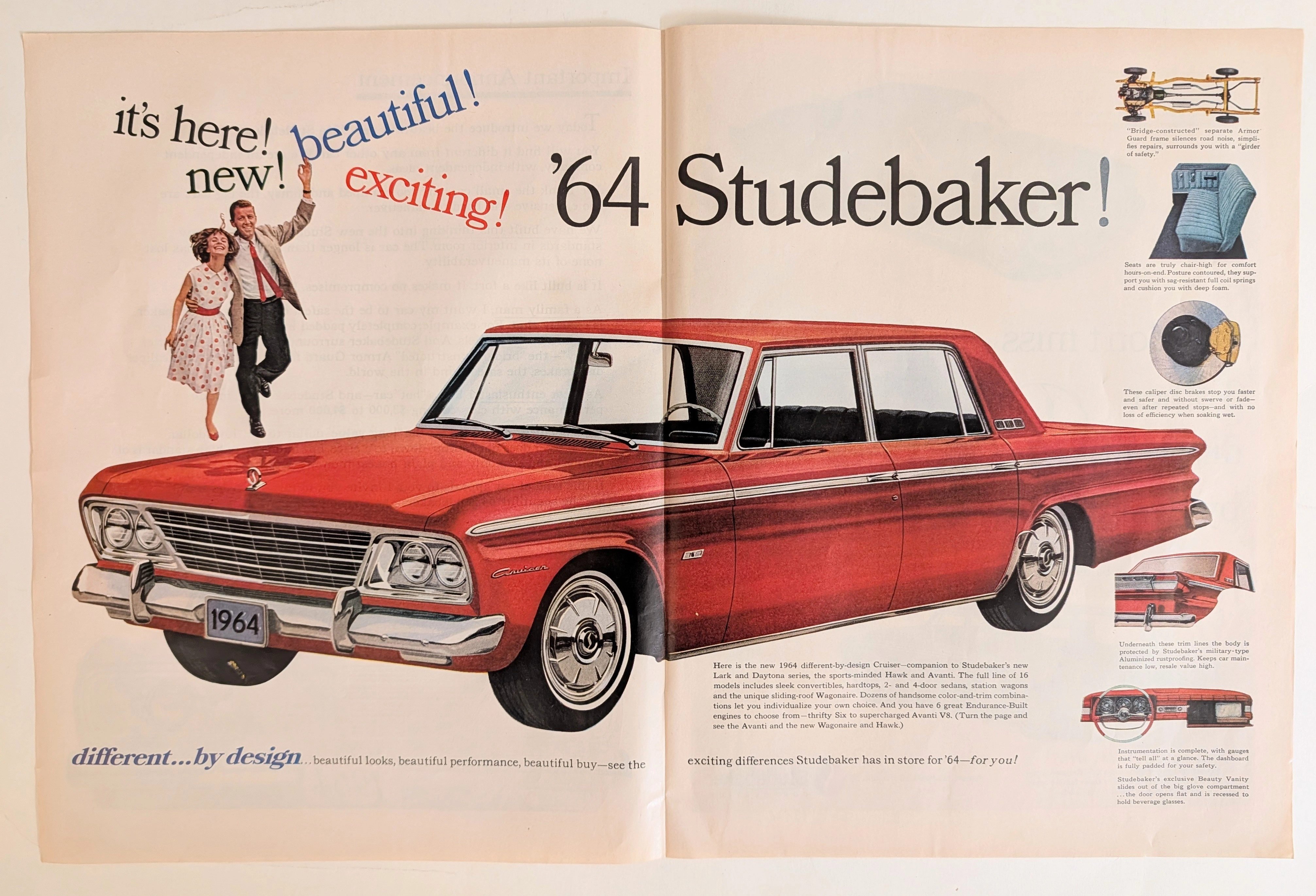
The Time Traveller's Dossier : 1964 Studebaker Cruiser - The Euphoric Facade of a Dying Empire
Then, it was a desperate masquerade. A corporate death rattle disguised as a celebration. As this vibrant, two-page centerfold spread graced the glossy pages of American magazines in late 1963, the Studebaker Corporation was quietly bleeding to death. To the casual observer, the advertisement projects an atmosphere of unbridled optimism. A couple leaps into the air with forced, hysterical joy. The typography dances across the page, screaming, "it's here! beautiful! new! exciting!" It is a masterclass in the marketing of artificial momentum. Yet, to the side, anchored in a rigid column of diagrams and technical specifications, lies the stubborn, unyielding truth of a company that still believed superior engineering could save it from financial ruin. Now, this artifact is a profound psychological study of cognitive dissonance in industrial capitalism. It is the physical record of a brand caught in a fatal crossfire: desperately trying to mimic the lifestyle-driven, emotion-heavy advertising of Detroit’s Big Three, while simultaneously clinging to its heritage of hyper-rational, utilitarian engineering. The historical shift here is the final realization that in the modern consumer economy, a superior machine cannot survive if the dream it sells has already expired.
Studebaker
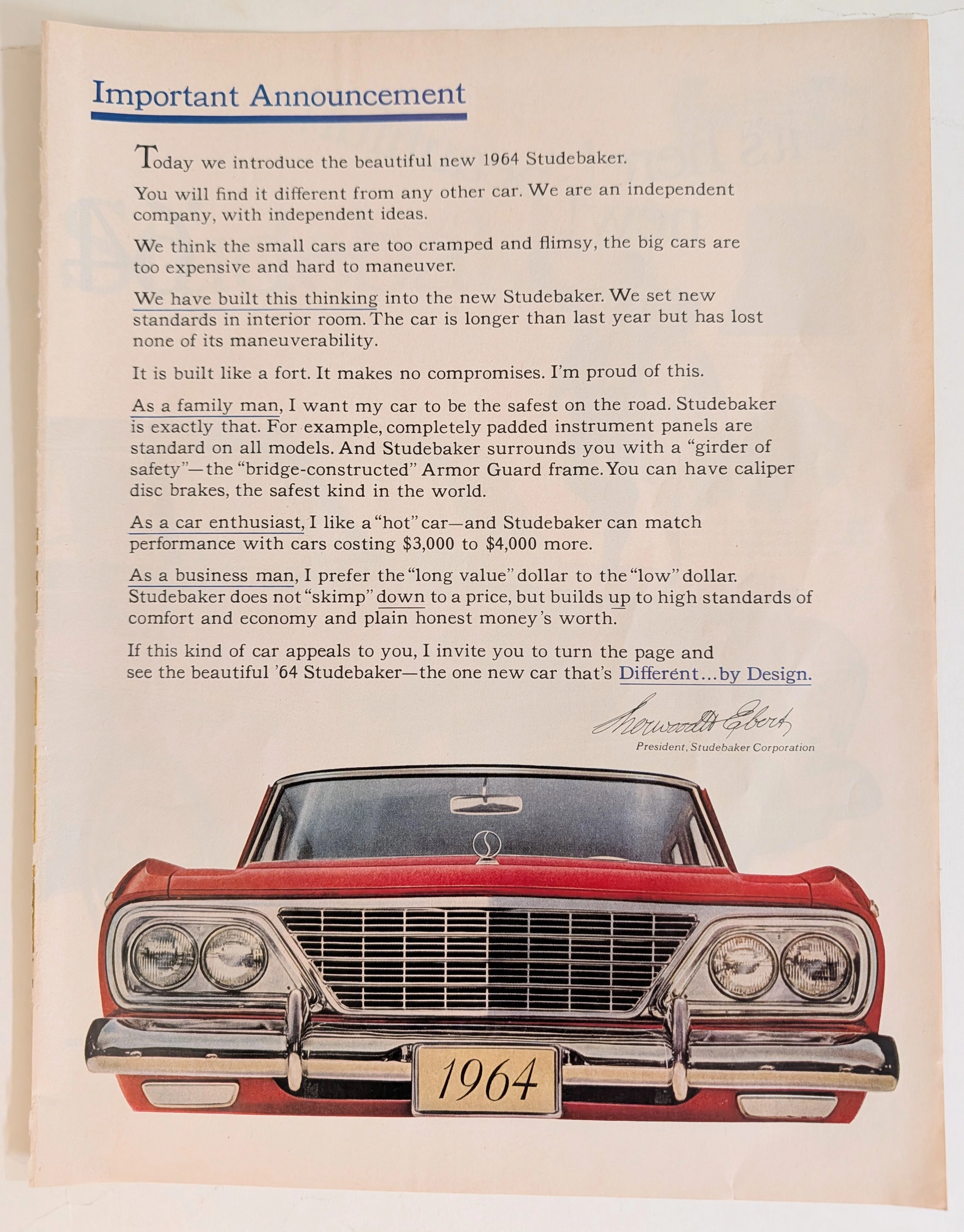
The Time Traveller's Dossier : 1964 Studebaker - The Final Defiance of the Independent Automaker
Then, it was a declaration of survival. A corporate manifesto masked as a product introduction. In late 1963, as this advertisement went to press, the American automotive landscape was consolidating into an impenetrable oligopoly. The Big Three—General Motors, Ford, and Chrysler—dictated the market. Studebaker, an independent manufacturer with roots dating back to wagon-building in the 19th century, was bleeding capital. This document represents their final, logical plea to the rational consumer. It highlights safety before safety was mandated. It promises performance, economy, and structural integrity. It carries the personal signature of a dying president, Sherwood H. Egbert. Now, it is an artifact of extinction. A perfectly preserved record of a company attempting to logic its way out of an emotional marketplace. It stands as a testament to the brutal reality of industrial capitalism: superior engineering and honest value cannot always overcome the sheer inertia of massive corporate scale. The shift here is not technological. It is structural. It marks the closing of the era where an independent automaker could survive purely on the merit of being "Different… by Design."