Rolex "Perpetually Yours" — The Record Institute JournalRolex "Perpetually Yours" — The Record Institute JournalRolex "Perpetually Yours" — The Record Institute JournalRolex "Perpetually Yours" — The Record Institute JournalRolex "Perpetually Yours" — The Record Institute JournalRolex "Perpetually Yours" — The Record Institute JournalRolex "Perpetually Yours" — The Record Institute Journal
1 / 7

✦ 7 Photos — Click any image to view in high resolution

February 19, 2026

Rolex "Perpetually Yours"

Archive Views: 30
Heritage AdvertisementsLuxury

The History

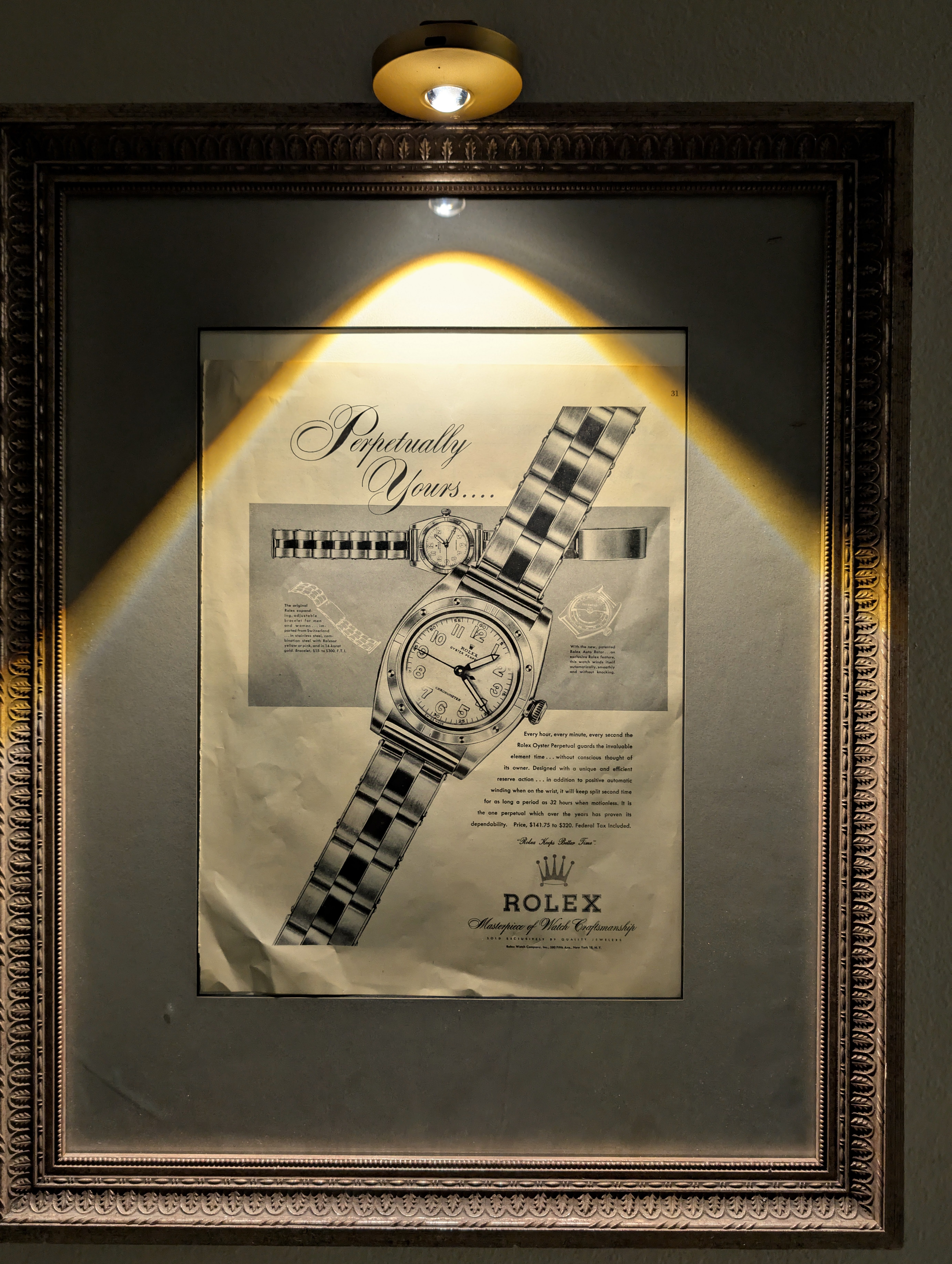
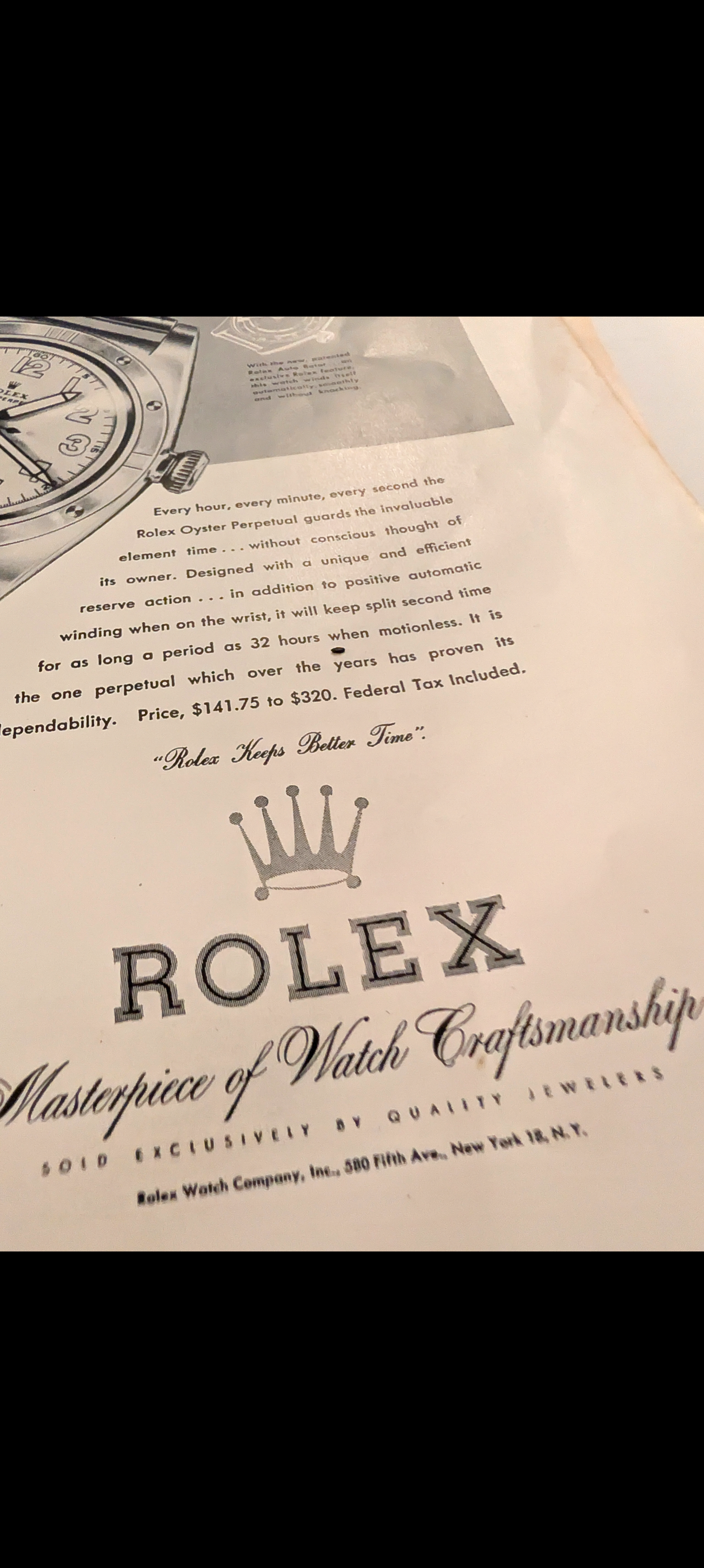
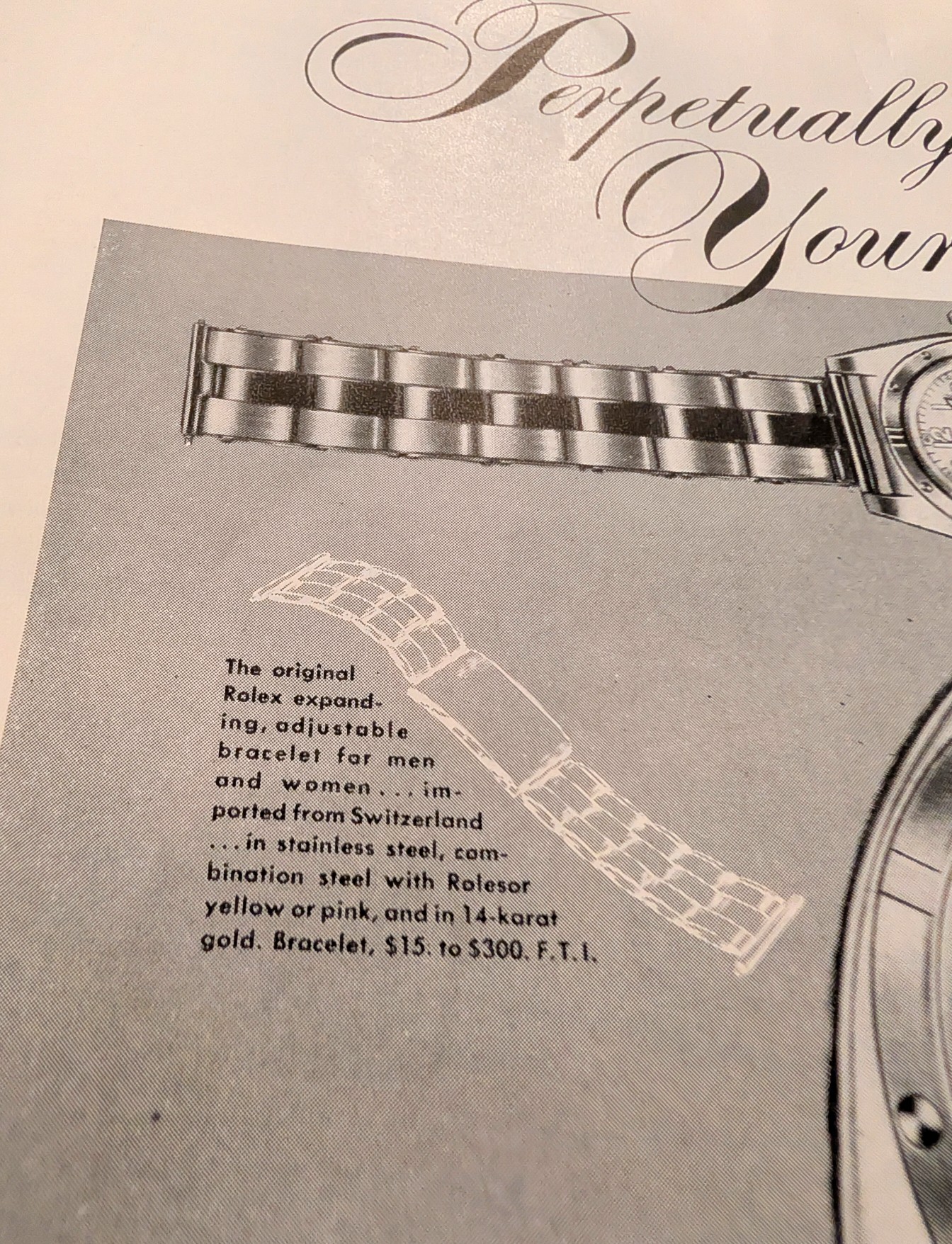
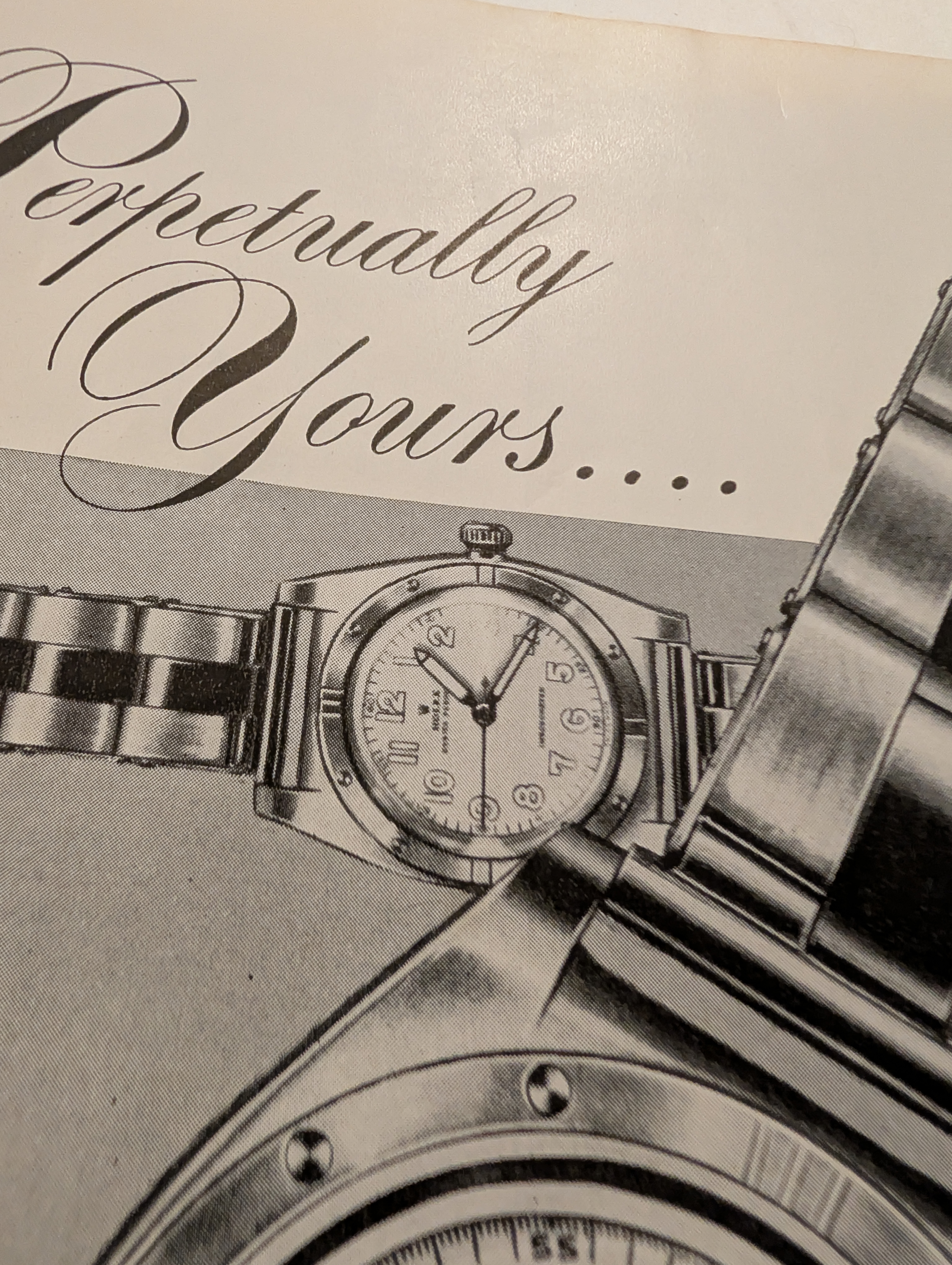
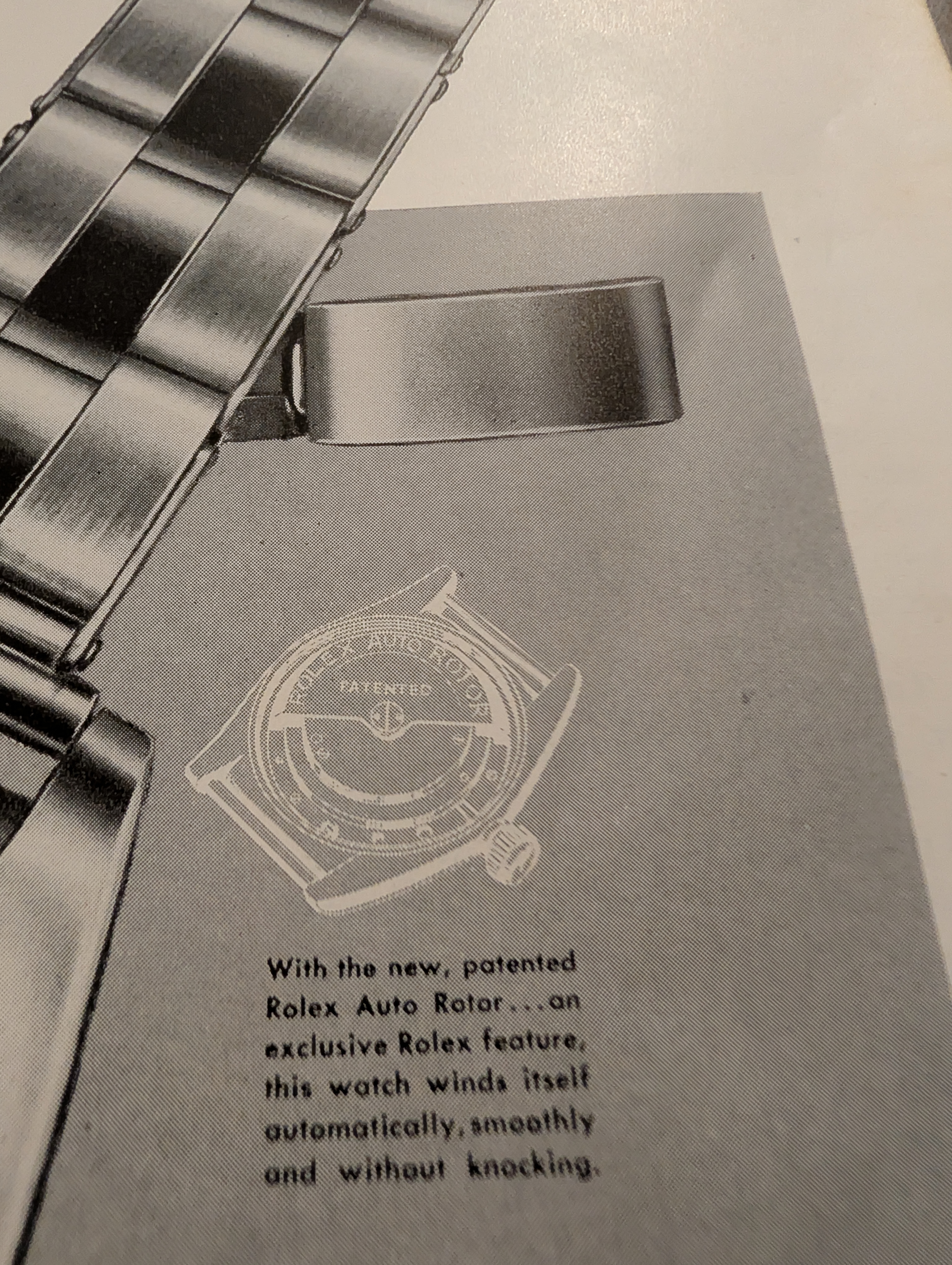
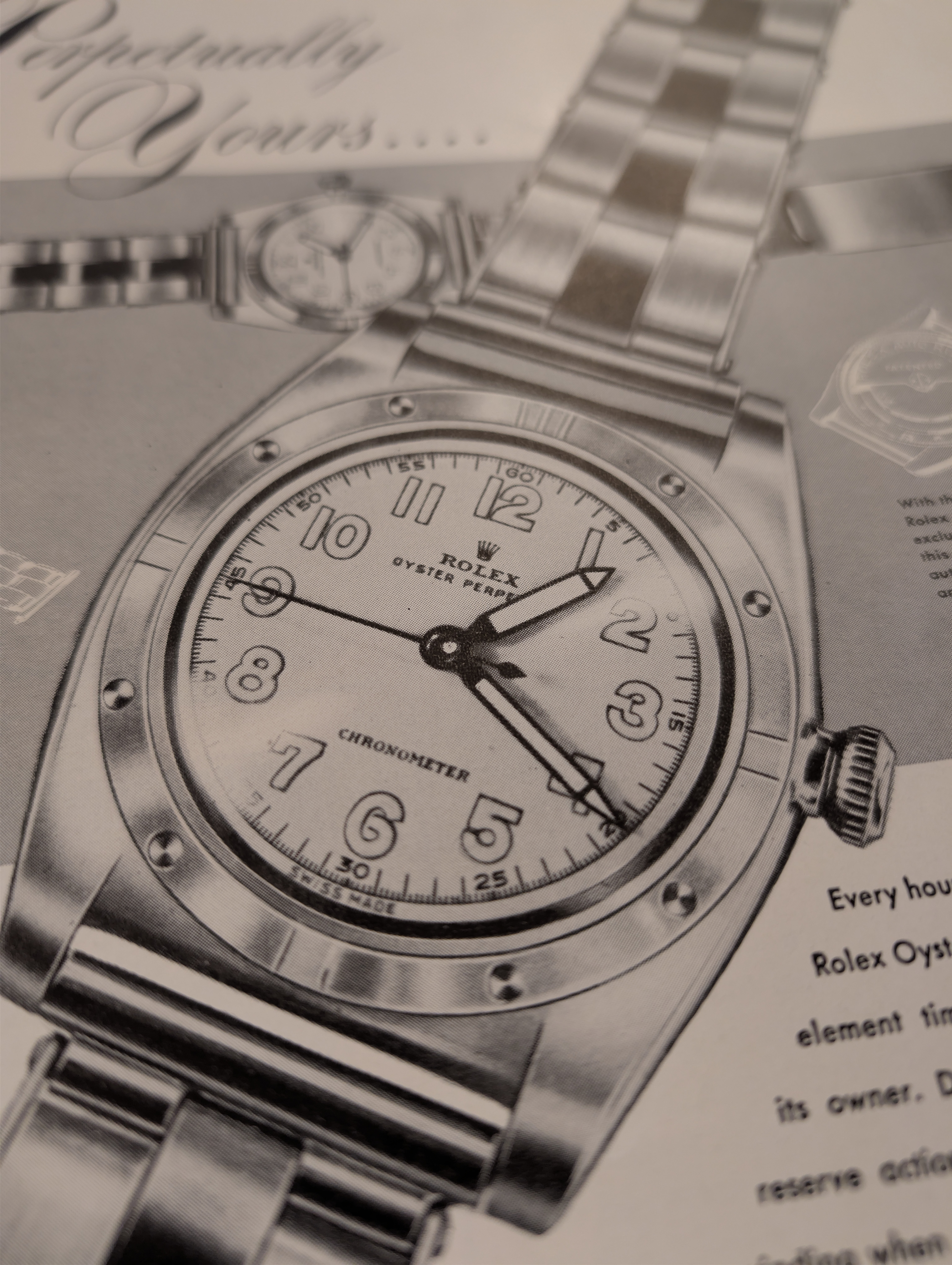
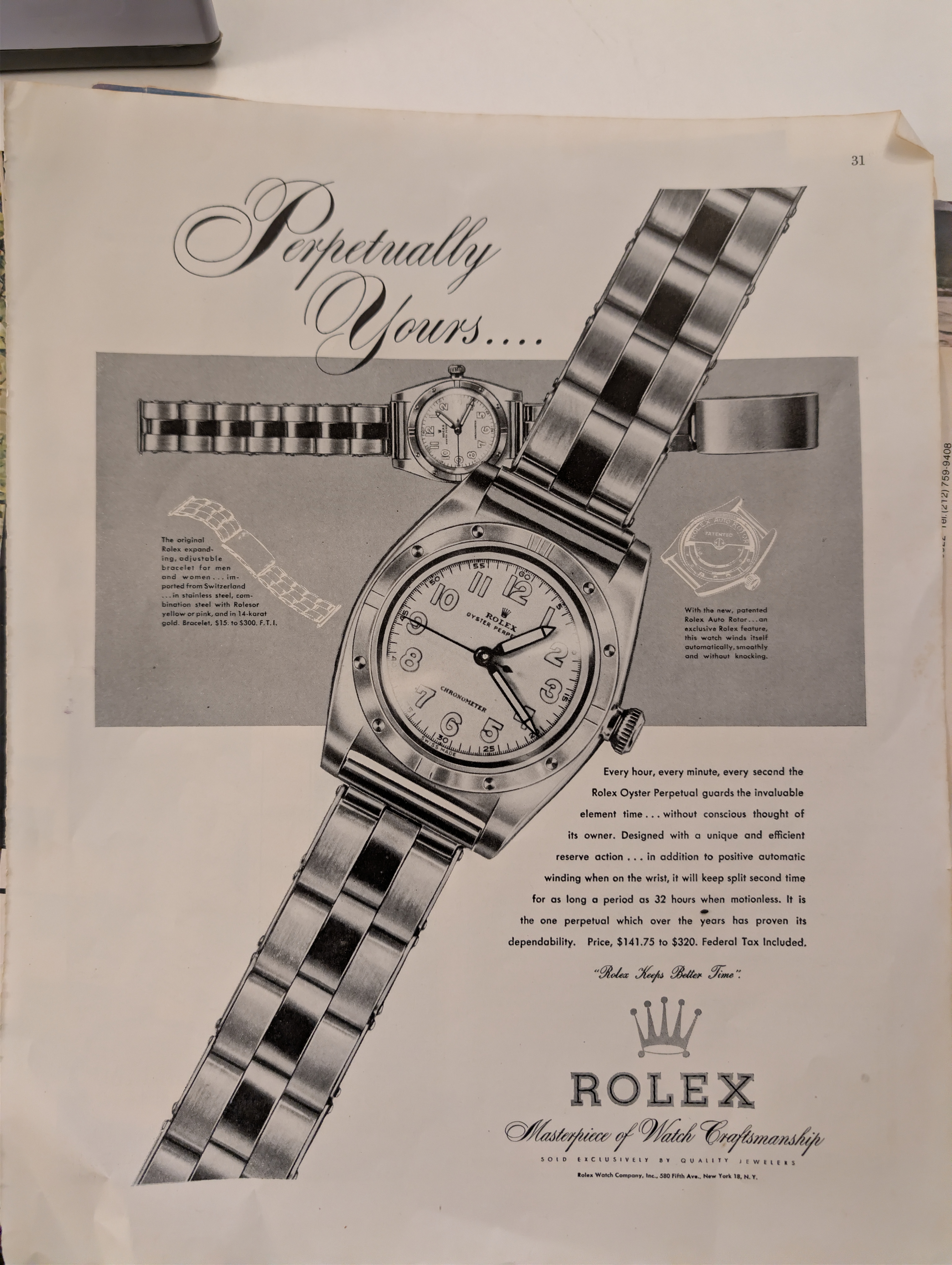
"Entitled 'Yours....', this remarkable mid-century (1950s-1960s) vintage advertisement is a profound historical artifact chronicling the genesis of the modern Rolex empire. The masterpiece featured is the legendary Rolex Oyster Perpetual, a timepiece that forever changed horological history. It represents the perfect union of Rolex's two most groundbreaking innovations: the 'Oyster' (the world’s first waterproof case, introduced in 1926) and the 'Perpetual' (the revolutionary self-winding rotor mechanism invented in 1931). This specific model served as the foundational blueprint, passing its mechanical DNA to every iconic Rolex sports watch that followed. The ad boldly highlights its ability to 'guard the invaluable element time... without conscious thought of its owner,' boasting a 32-hour power reserve. Preserved as a true museum-grade artifact, this monochrome print offers serious collectors a tangible connection to the ultimate horological ancestor—the very watch that established Rolex's eternal supremacy in precision, durability, and innovation."

Share This Archive

The Archive Continues

Continue the Exploration
The Time Traveller’s Dossier: Circa 1970s Shakespearean Richard III Vintage Illustration — The Tudor Web of Blood

The Time Traveller’s Dossier: Circa 1970s Shakespearean Richard III Vintage Illustration — The Tudor Web of Blood

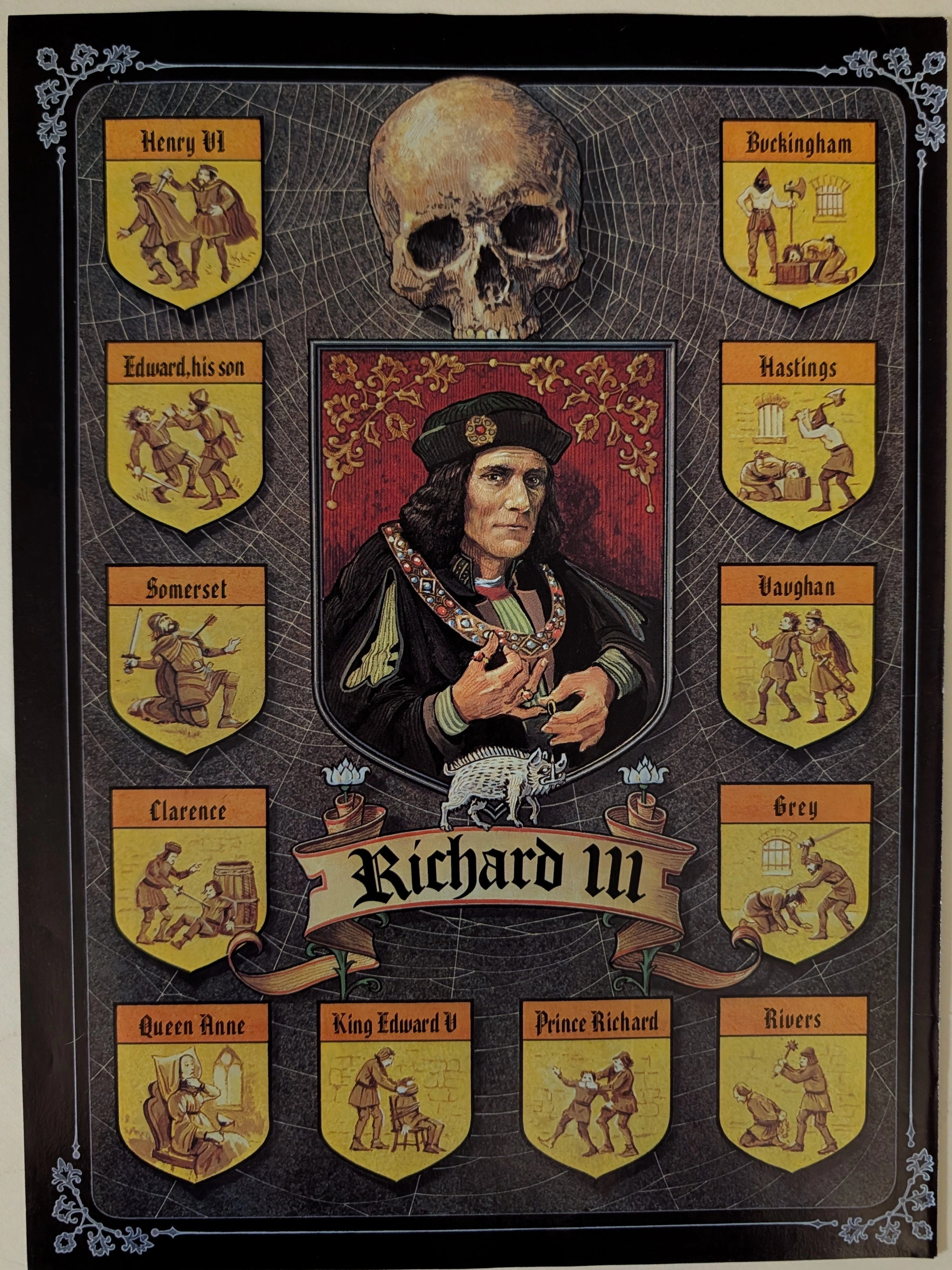
Delve into the archives to explore this definitive Circa 1970s Shakespearean Richard III vintage illustration, a profoundly dark and historically layered piece of theatrical and literary art. Likely produced as an educational broadside or promotional poster for a mid-to-late 20th-century theatrical run, this piece transcends basic historical depiction, serving instead as a macabre visual map of the corpse-paved path to the English throne as dramatized by William Shakespeare. For collectors of Gothic art, literary ephemera, and vintage ads, this artifact stands as a masterful intersection of historical reverence and narrative design. Unlike standard old advertisements or classic print ads that promote consumer goods, this illustration acts as a haunting visual codex of the "Tudor Myth." Its preservation of chilling literary iconography makes it a highly coveted piece of specialized print ephemera, capturing the visceral dread of Shakespeare's most infamous usurper.
THE TINY TEXT THAT AUTHENTICATES HISTORY Why Fine Print in Magazine Advertisements Matters More Than You Think

THE TINY TEXT THAT AUTHENTICATES HISTORY Why Fine Print in Magazine Advertisements Matters More Than You Think

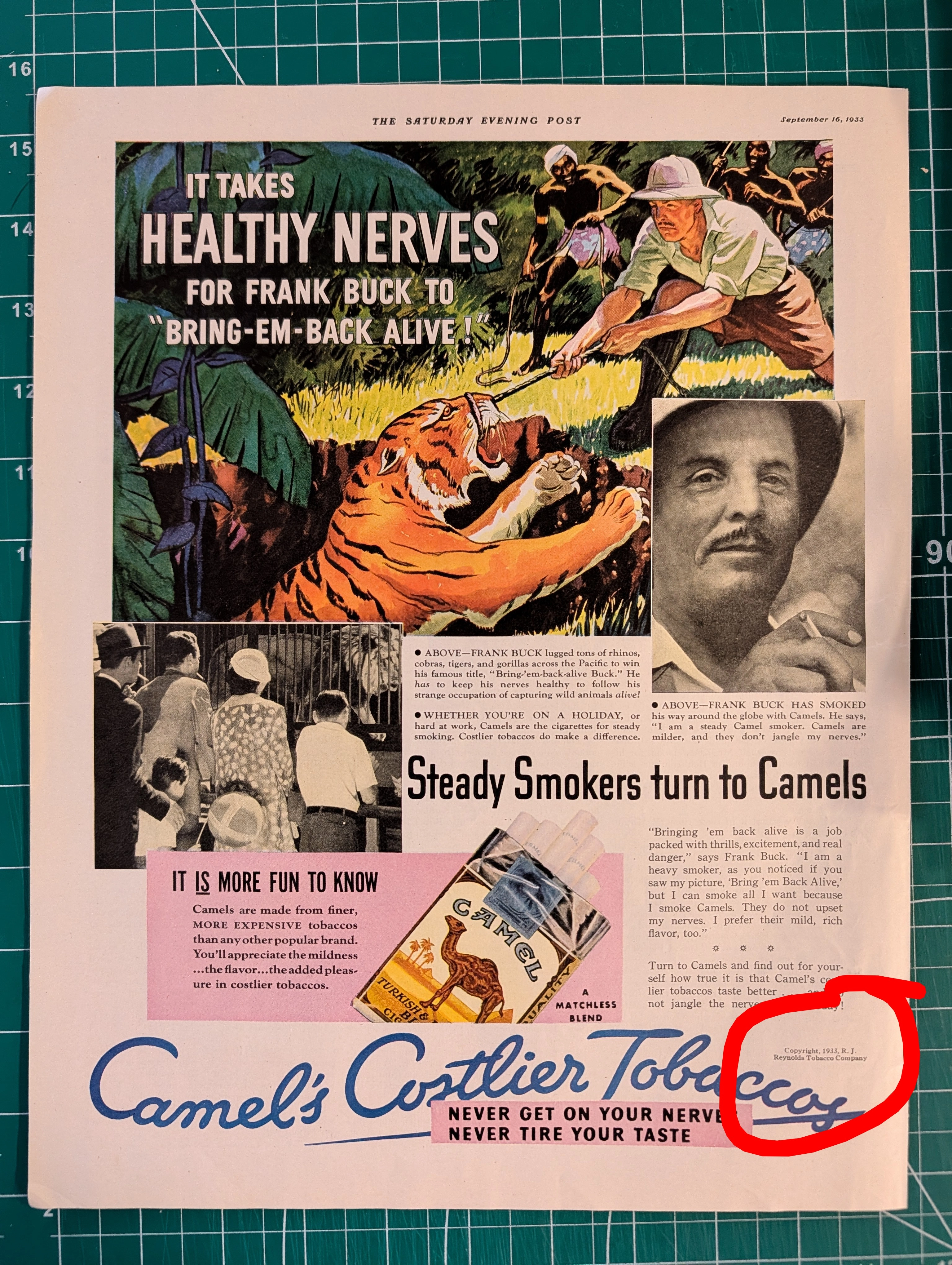
Tiny copyright notices in magazine ads originated from mandatory US copyright law (1909 Act) and sector-specific regulations (BATF for alcohol). They function as layered authentication evidence: typographic era-consistency, regulatory language accuracy, ink/paper forensics, and contextual integrity — paralleling vintage band tee authentication methods. Collaboration credits (Pierre Cardin × Tiffany & Co.) and creative credits (photography, calligraphy, fashion) document commercial relationships lost to no other record.

The Time Traveller’s Dossier: 1970s The Vargas Girl Vintage Illustration — The Ethereal Elegance of the American Pin-Up

Vargas Girl · Other

The Time Traveller’s Dossier: 1970s The Vargas Girl Vintage Illustration — The Ethereal Elegance of the American Pin-Up

Discover the captivating allure of the 1970s The Vargas Girl vintage illustration, a quintessential masterpiece of mid-to-late 20th-century editorial and commercial art. This exquisite piece transcends typical vintage ads by encapsulating the playful, sophisticated, and idealized sexuality that defined the era's publishing landscape. Featuring Alberto Vargas' legendary watercolor and airbrush technique, the illustration portrays an elegant, nude woman adorned with a delicate sun hat and a suggestive smile, perfectly punctuated by the flirtatious caption: "... And a pinch to grow on." It brilliantly illustrates how classic print ads and editorial features constructed a powerful narrative of liberated yet deeply romanticized femininity. For archivists, cultural historians, and collectors of old advertisements and pop-culture ephemera, this Vargas Girl stands as a definitive artifact. It not only highlights the artistic zenith of the American pin-up but also visually immortalizes a transitional era in publishing, making it a highly prized document in the history of commercial illustration.

Published by

The Record Institute

Taxonomy Match

Related Articles

THE TIME TRAVELER'S DOSSIER: THE KOREAN WAR ANCHOR AND THE SCARCITY OF LUXURY — related article
Read Article

THE TIME TRAVELER'S DOSSIER: THE KOREAN WAR ANCHOR AND THE SCARCITY OF LUXURY

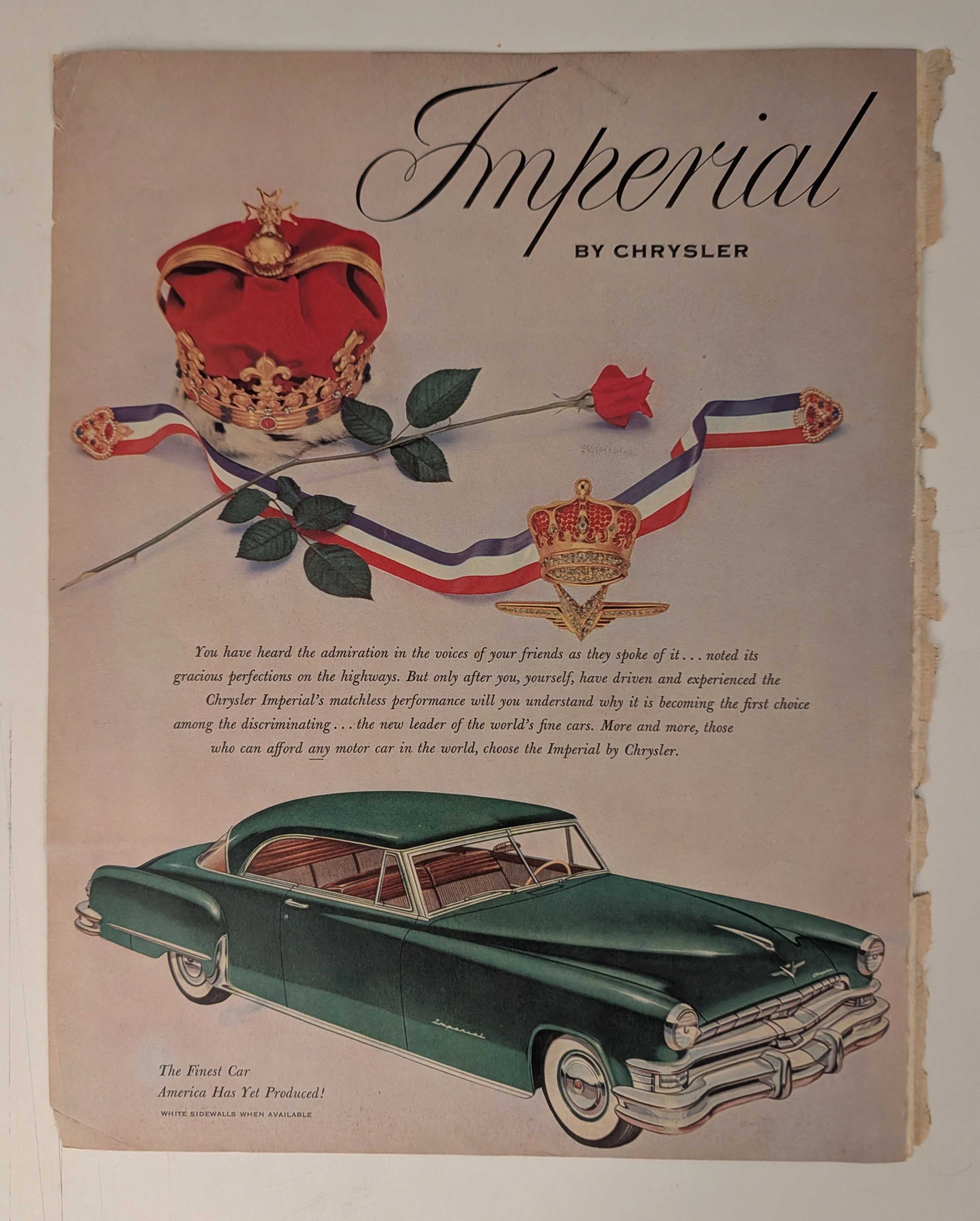
The artifact under our uncompromising, unprecedented museum-grade analysis is a profoundly preserved Historical Relic excavated from the golden age of post-WWII American opulence. This Primary Art Document is a monumental magazine advertisement for the Imperial by Chrysler, dating to the pivotal 1951-1952 era. This document is a "Forensic Blueprint of American Aristocracy and Geopolitical Crisis." It masterfully weaponizes regal European iconography to elevate Chrysler's flagship model above mere transportation, explicitly targeting "those who can afford any motor car in the world". Yet, its most significant historical anchor is hidden in the microscopic fine print: "WHITE SIDEWALLS WHEN AVAILABLE". This single sentence instantly transforms the advertisement into a wartime relic, reflecting the severe rubber shortages imposed during the Korean War. Grounded by the iconic jeweled emblem and its breathtaking wabi-sabi chemical degradation—highlighted by its violently torn binding edge—this artifact commands an irreplaceable status, cementing its Rarity Class A designation.

"The Bloodline of Champions: Ferry Porsche's Ultimate Test" — related article
Read Article

"The Bloodline of Champions: Ferry Porsche's Ultimate Test"

Uncovering the historical lineage of Porsche's motorsport dominance, from the 1922 Sascha to the legendary 917, and how track technology forged the 911.

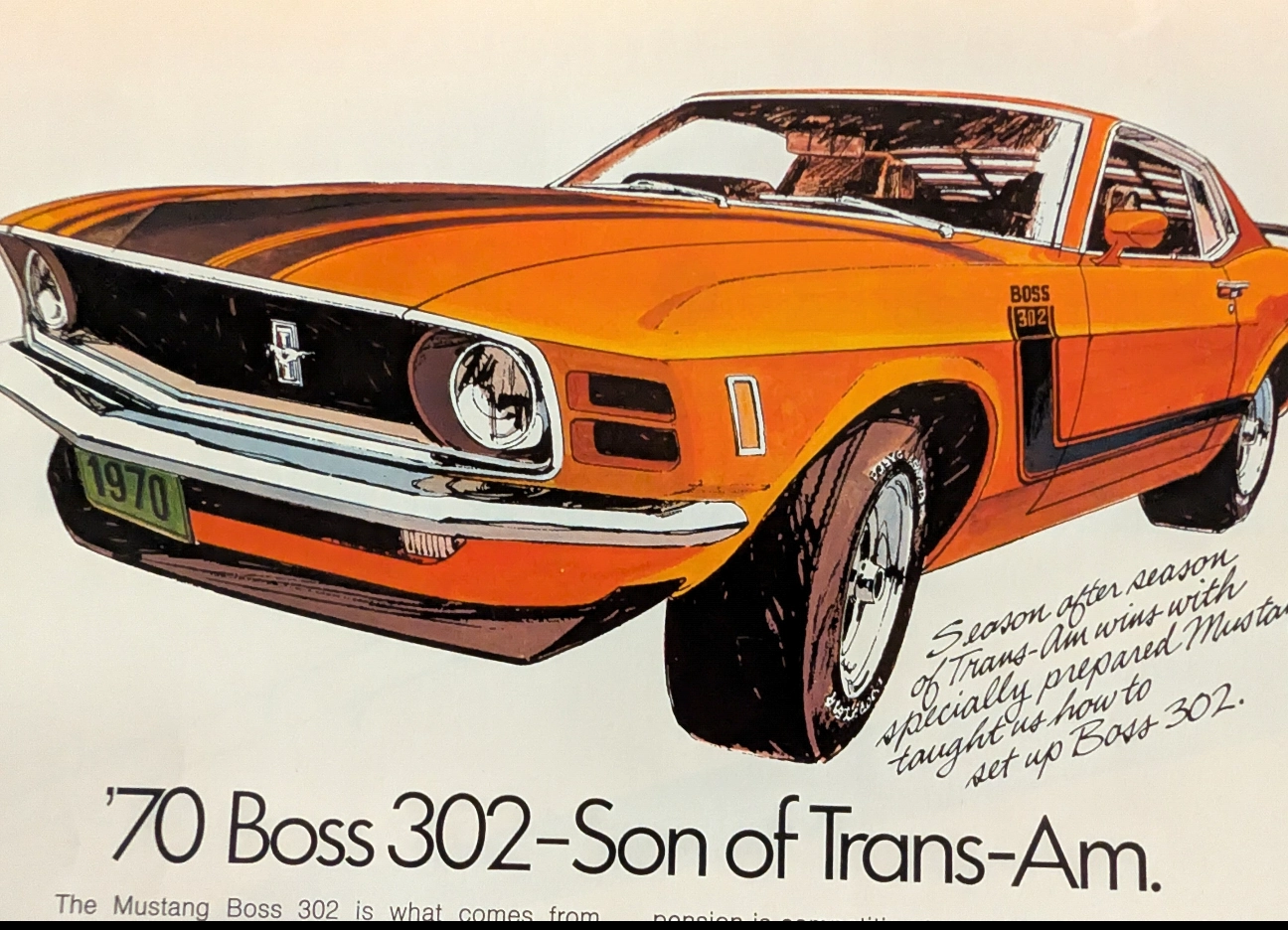
True Blood of the Trans-Am: The 1970 Ford Mustang Boss 302 Legacy — related article
Read Article

True Blood of the Trans-Am: The 1970 Ford Mustang Boss 302 Legacy

Experience the raw spirit of an American muscle car legend through an authentic, pre-2000 analog magazine advertisement, carefully extracted as a single sheet.

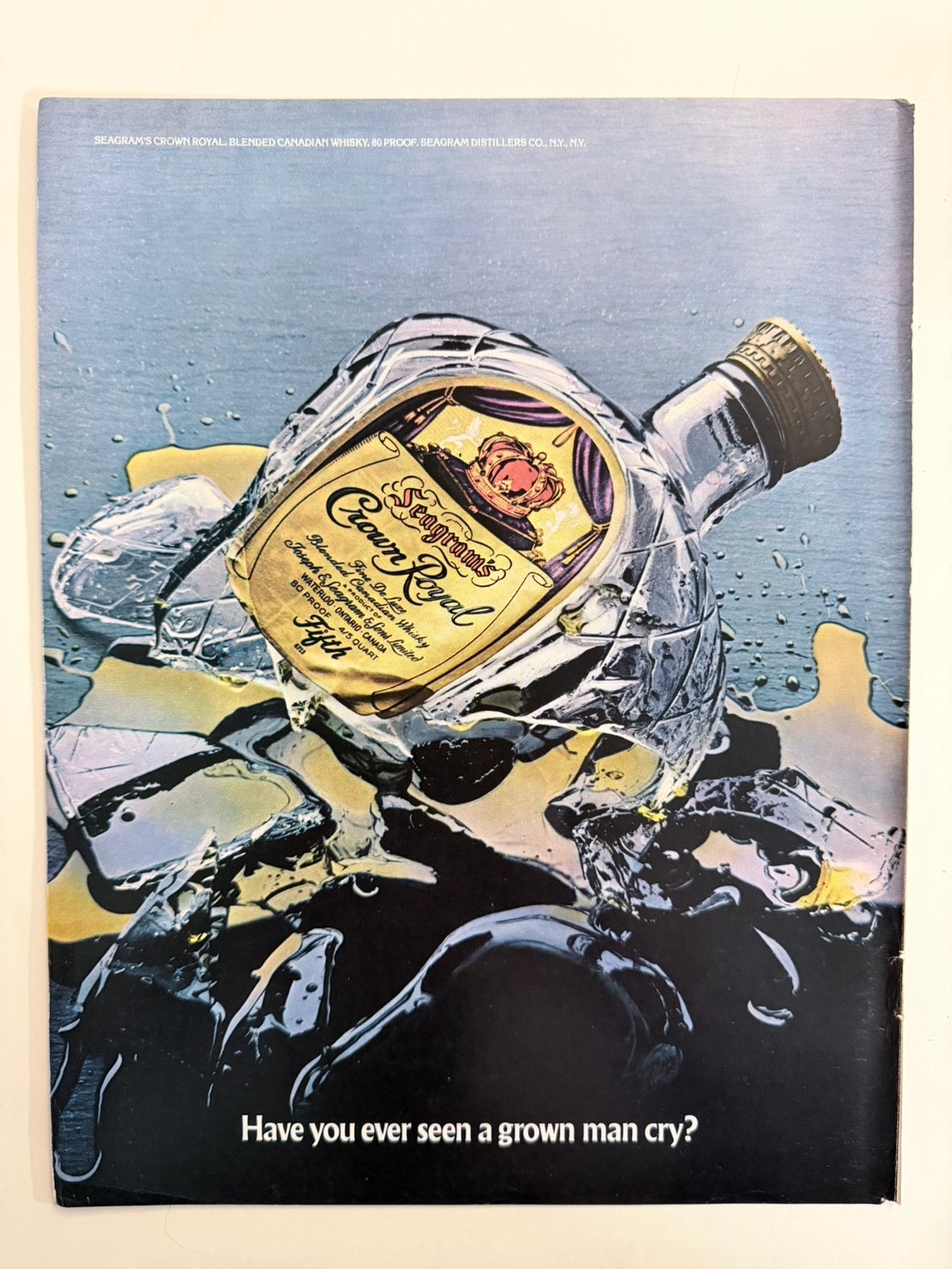
Vintage 70s Crown Royal Ad: Vanishing Analog Art | The Record — related article
Read Article

Vintage 70s Crown Royal Ad: Vanishing Analog Art | The Record

An in-depth look at the priceless 1970s Crown Royal "Have you ever seen a grown man cry?" advertisement. A masterpiece of authentic analog photography on degrading vintage paper, driving up the value of this original print as global supply inevitably shrinks.

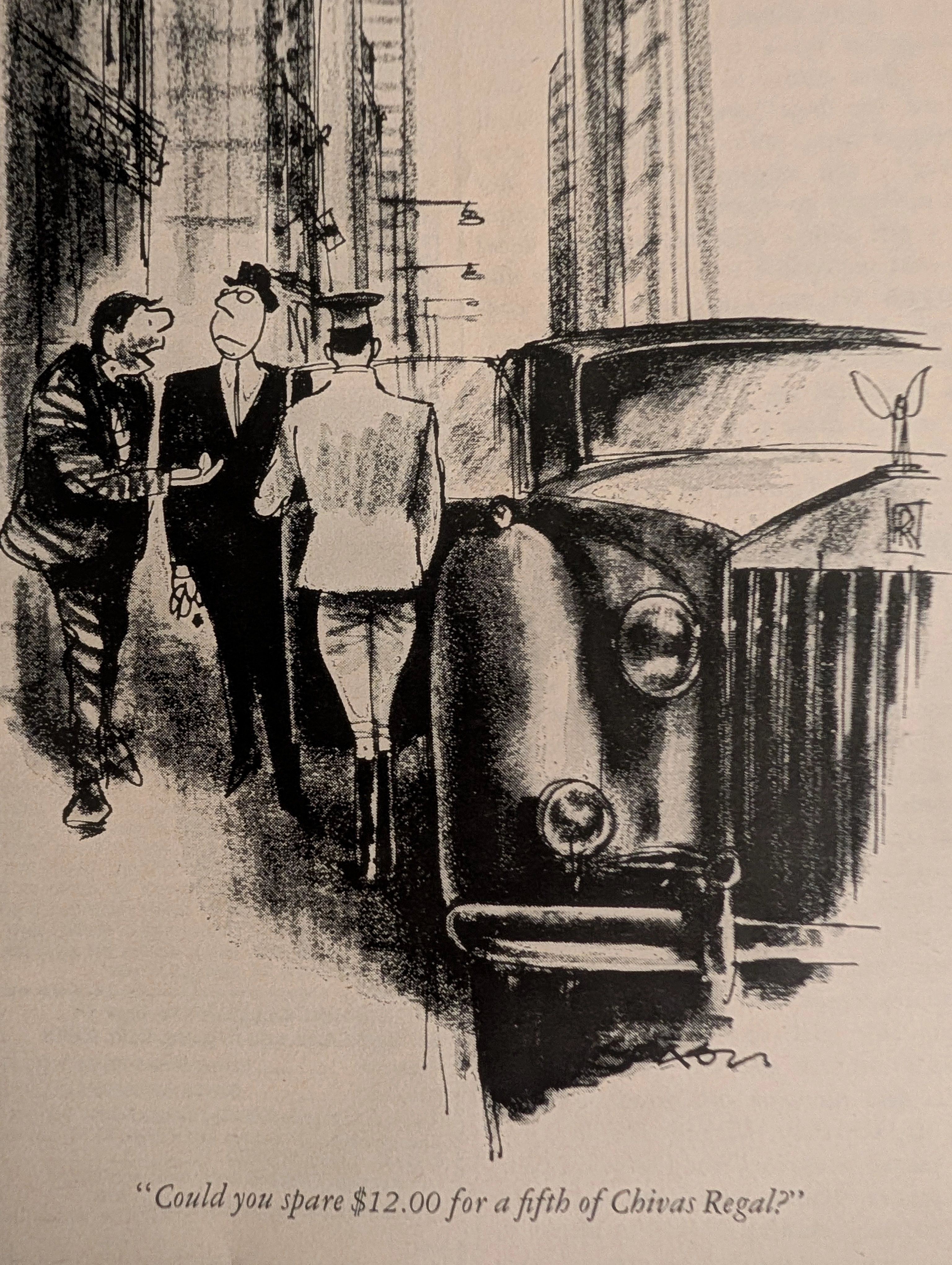
Vintage Chivas Regal x Charles Saxon Ad: The Vanishing Playboy Art | The Record — related article
Read Article

Vintage Chivas Regal x Charles Saxon Ad: The Vanishing Playboy Art | The Record

An in-depth look at the Chivas Regal ad from Playboy magazine, illustrated by legendary artist Charles Saxon. A magazine-sized piece of authentic analog art on degrading vintage paper, driving up its value as an alternative asset.

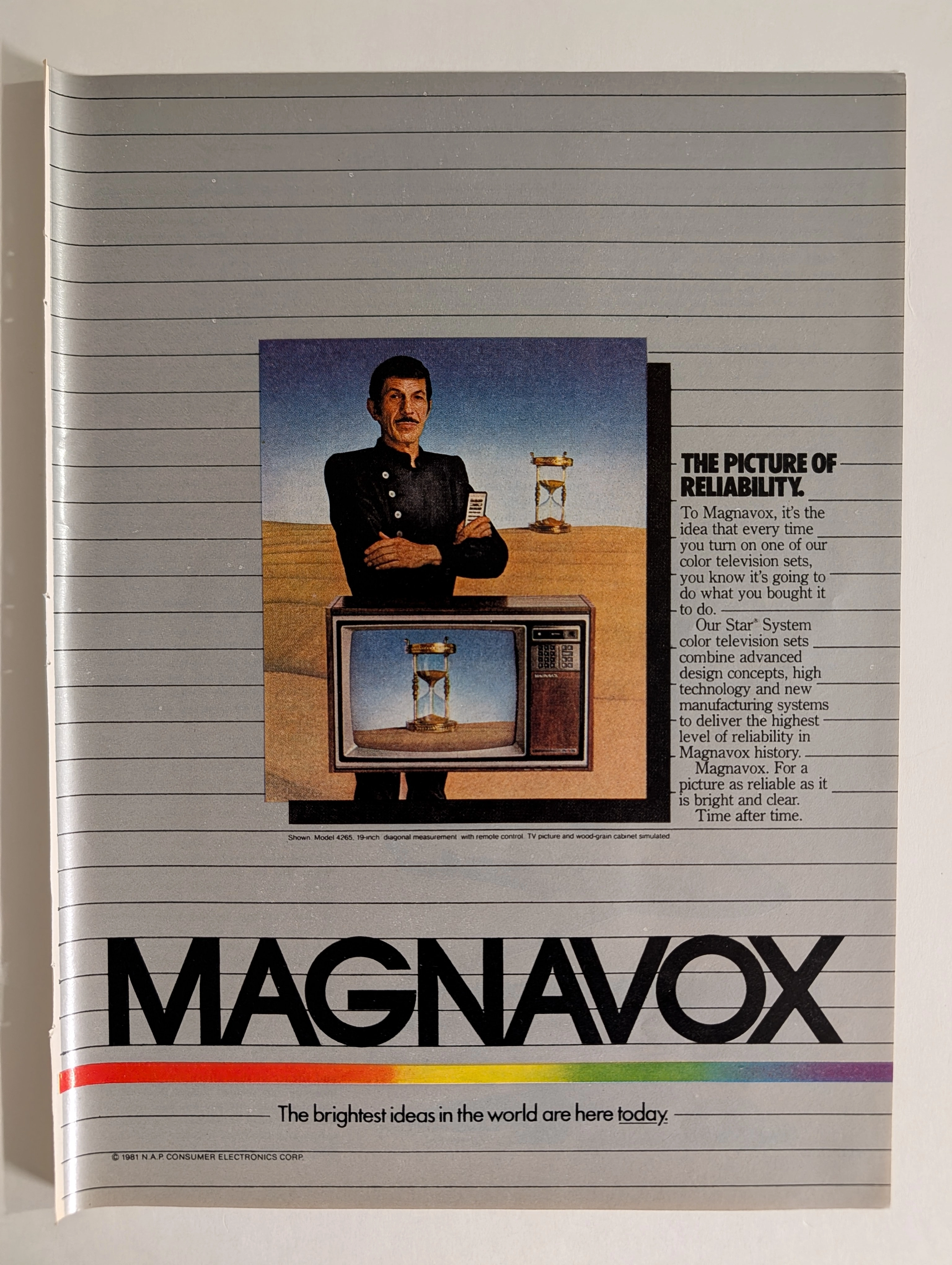
Magnavox Star System 1981 Leonard Nimoy TV Advertisement | 'The Picture of Reliability' | Deep Analysis Rarity Class A-SS — related article
Read Article

Magnavox Star System 1981 Leonard Nimoy TV Advertisement | 'The Picture of Reliability' | Deep Analysis Rarity Class A-SS

The advertisement analyzed here is a full-page full-color magazine promotion for Magnavox's Star® System color television sets, copyright © 1981 N.A.P. Consumer Electronics Corp. The ad features what is almost certainly Leonard Nimoy — iconic for his role as Mr. Spock in Star Trek — dressed in a black nehru-collar uniform against a surrealist desert landscape, standing above a Magnavox color TV set (Model 4265, 19-inch diagonal) that displays an hourglass on screen. A second hourglass appears behind him. The visual concept communicates timeless reliability. The headline 'The Picture of Reliability' and tagline 'The brightest ideas in the world are here today' frame Magnavox's Star System as the pinnacle of 1981 television technology. The rainbow spectrum stripe at the bottom is a distinctive brand element that ran across Magnavox advertising throughout the early 1980s. N.A.P. (North American Philips) Consumer Electronics Corp. was the American subsidiary of Philips that owned the Magnavox brand at this time, having acquired it in 1974.