Vintage Chivas Regal x Charles Saxon Ad: The Vanishing Playboy Art | The Record
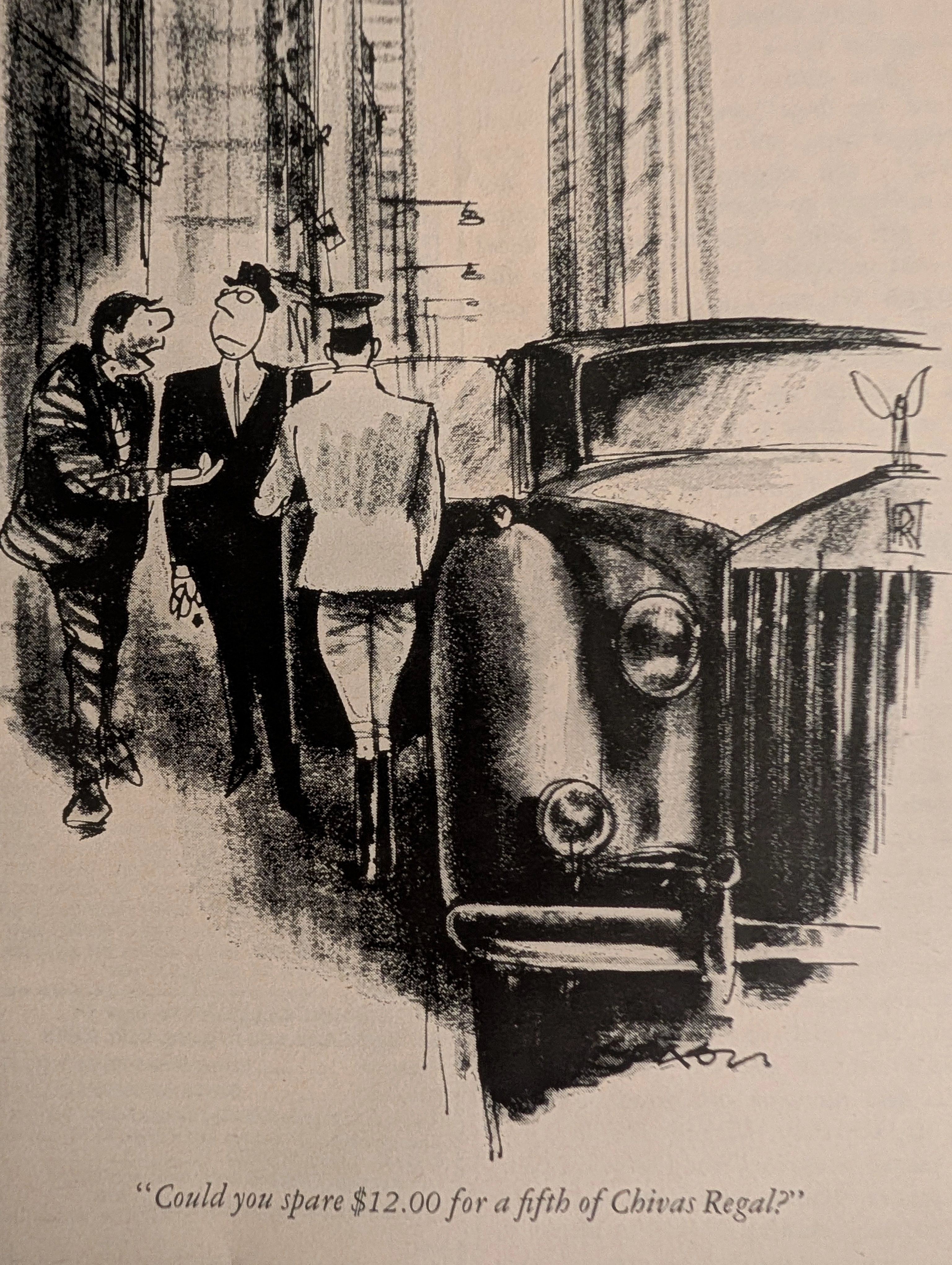
An in-depth look at the Chivas Regal ad from Playboy magazine, illustrated by legendary artist Charles Saxon. A magazine-sized piece of authentic analog art on degrading vintage paper, driving up its value as an alternative asset.
THE AUDACIOUS REQUEST The Ultimate High-Class Beggary on a Playboy Page As the Chief Curator of The Record, I present a masterpiece that brilliantly merges refined humor with absolute luxury. This original Chivas Regal advertisement, salvaged from the pages of a vintage Playboy magazine, features the distinctive linework of the legendary illustrator Charles Saxon. This magazine-sized print is not just a comedic sketch; it is a "Museum Grade Artifact" documenting high-society ideals, analog illustration, and the fragile nature of decaying paper. 🏛️ CHAPTER I: THE HERITAGE OF LUXURY & THE MASTER ILLUSTRATOR The Brand: Positioned as a premium blended Scotch whisky, Chivas Regal brilliantly uses this ad to mock everyday beggary. The beggar asks, "Could you spare
2.00 for a fifth of Chivas Regal?"—elevating the brand to an absolute necessity even for the destitute. The Artist (Charles Saxon): The signature "Saxon" belongs to Charles Saxon, a renowned American cartoonist famous for his work in The New Yorker. His masterful ink strokes effortlessly convey the stark contrast between the wealthy gentleman and the ambitious beggar. 📷 CHAPTER II: THE CRAFT OF ANALOG ILLUSTRATION & PRINTING Analog Execution: Before digital tablets, Saxon crafted this using physical ink and wash techniques. Translating his hand-drawn shadows into the CMYK halftone printing of pre-2000s magazines created a unique, textured dot pattern. It is an authentic analog footprint that modern printing simply cannot replicate. ⏳ CHAPTER III: THE FRAGILITY OF HISTORY & PAPER DEGRADATION The Chemistry of Decay: This paper contains Lignin, which oxidizes when exposed to light and air. The beautiful, warm yellowing (patina) you see is the physical manifestation of acid autocatalysis—the paper is slowly consuming itself. This page's survival over decades makes it a rare, decaying artifact of the analog age. 📈 CHAPTER IV: THE ECONOMICS OF SCARCITY Alternative Asset: Original vintage Playboy magazines are steadily being destroyed by time and elements. As the source material vanishes, intact original prints like this transform into high-yield alternative assets. Framed perfectly, this magazine-sized piece elevates any home art gallery or luxury bar.
Cite this article
MLA
Naodhinsuk, Ronin. “Vintage Chivas Regal x Charles Saxon Ad: The Vanishing Playboy Art | The Record.” The Record Institute, 27 February 2026, https://therecord.institute/journal/vintage-chivas-regal-x-charles-saxon-ad-the-vanishing-playboy-art-the-record.
APA
Naodhinsuk, R. (2026, February 27). Vintage Chivas Regal x Charles Saxon Ad: The Vanishing Playboy Art | The Record. The Record Institute. https://therecord.institute/journal/vintage-chivas-regal-x-charles-saxon-ad-the-vanishing-playboy-art-the-record
CHICAGO
Naodhinsuk, Ronin. 2026. “Vintage Chivas Regal x Charles Saxon Ad: The Vanishing Playboy Art | The Record.” The Record Institute, February 27, 2026. https://therecord.institute/journal/vintage-chivas-regal-x-charles-saxon-ad-the-vanishing-playboy-art-the-record.