Exhibition Hall

The Ephemeral Protocol

The science of preservation and the beauty of age. Strict focus on patina, foxing, paper degradation, and what makes a print truly rare.

30 artifacts in this collection

The Time Traveller's Dossier: The Stroke of Seduction – 1970s Christian Dior "Dioressence" Advertisement

Christian Dior

The Time Traveller's Dossier: The Stroke of Seduction – 1970s Christian Dior "Dioressence" Advertisement

History is not written; it is printed. Before digital algorithms dictated consumer desires, societal engineering was executed through the calculated geometry of the four-color offset press and the masterful stroke of an illustrator's brush. The historical artifact before us is not merely a fragrance advertisement; it is a weaponized blueprint of unapologetic female sensuality and a testament to the absolute zenith of French haute couture marketing. This museum-grade archival dossier presents an academic deconstruction of a vintage 1970s print advertisement for Christian Dior's "Dioressence" perfume. Operating on a profound binary structure, it documents a calculated paradigm shift within the global luxury fragrance industry. It illustrates the precise historical fracture where the polite, restrained elegance of post-war fashion transitioned into the bold, liberated, and sexually assertive era of the 1970s. Through the lens of late-analog commercial artistry—specifically the genius of René Gruau—and precise visual forensics, this document serves as a masterclass in psychological semiotics, establishing the visual tropes of the empowered, enigmatic woman that unconditionally dominate modern luxury branding.

#ReneGruau#ChristianDiorVintage#Dioressence
The Time Traveller's Dossier: The Tailfin of Rebellion – "Blue Cadillac" by Peter Lloyd

Cadillac

The Time Traveller's Dossier: The Tailfin of Rebellion – "Blue Cadillac" by Peter Lloyd

History is not written; it is printed. Before digital algorithms dictated human behavior, societal engineering was executed through the calculated geometry of the four-color offset press. The historical artifact before us is a magnificent two-page magazine spread—an original, magazine-sized print carefully extracted from its source publication. It serves as a weaponized blueprint of counter-culture defiance and a testament to the absolute zenith of the golden age of airbrush illustration. This museum-grade archival dossier presents an academic deconstruction of Peter Lloyd’s breathtaking illustration for Michael Malone’s fiction piece, "Blue Cadillac." Operating on a profound binary structure, it documents a calculated paradigm shift where the wholesome, conservative American Dream of the 1950s is violently hijacked by the liberated, rebellious spirit of the late 20th century. Through the lens of late-analog commercial artistry and precise visual forensics, this document serves as a masterclass in psychological semiotics, establishing the visual tropes of the American open road that relentlessly dominate modern retro-futuristic pop culture.

#PeterLloyd#VintageCadillac#Cadillac
The Time Traveller's Dossier: Engineering as High Art – 1981 Honda CBX Advertisement

HONDA

The Time Traveller's Dossier: Engineering as High Art – 1981 Honda CBX Advertisement

History is not written; it is printed. Before digital algorithms dictated human behavior, societal engineering was executed through the calculated geometry of the four-color offset press. The historical artifact before us is not merely an advertisement; it is a weaponized blueprint of mechanical aspiration and a testament to the golden age of Japanese technological supremacy. This museum-grade archival dossier presents an academic deconstruction of a 1981 print advertisement for the legendary Honda CBX. Operating on a profound binary structure, it documents a calculated paradigm shift within the global motorcycle industry. It illustrates the precise historical fracture where the motorcycle was conceptually transitioned from a stigmatized symbol of counter-culture rebellion into a highly sophisticated, aerodynamic marvel tailored for the affluent connoisseur. Through the lens of late-analog commercial artistry and precise visual forensics, this document serves as a masterclass in psychological marketing, establishing the archetype of the high-tech superbike that unconditionally dominates modern automotive pop culture.

#HondaCBX#VintageMotorcycleAd#SportTouring
The Time Traveller's Dossier: How a 1959 Beer Ad Turned Alcohol into 'Health Food' – Barley and Malt Institute Advertisement

The Time Traveller's Dossier: How a 1959 Beer Ad Turned Alcohol into 'Health Food' – Barley and Malt Institute Advertisement

History is not written; it is printed. Before digital algorithms dictated human behavior, societal engineering was executed through the calculated geometry of the four-color offset press. The artifact before us is not merely an advertisement; it is a weaponized blueprint of middle-class aspiration. This museum-grade archival dossier presents an academic deconstruction of a 1959 print advertisement commissioned by the Barley and Malt Institute of Chicago. Operating on a profound binary structure, it documents a calculated paradigm shift within the American alcohol industry. It illustrates the precise historical fracture where beer was conceptually transitioned from a stigmatized working-class vice into a health-conscious staple of suburban domesticity. Through the lens of mid-century commercial artistry and precise visual forensics, this document serves as a masterclass in psychological marketing, establishing cultural tropes that unconditionally dominate modern pop culture and contemporary branding

#1950sBreweriana#BarleyAndMalt#WeimerPursell
THE TIME TRAVELER'S DOSSIER :THE BIRTH OF THE WIDE-TRACK

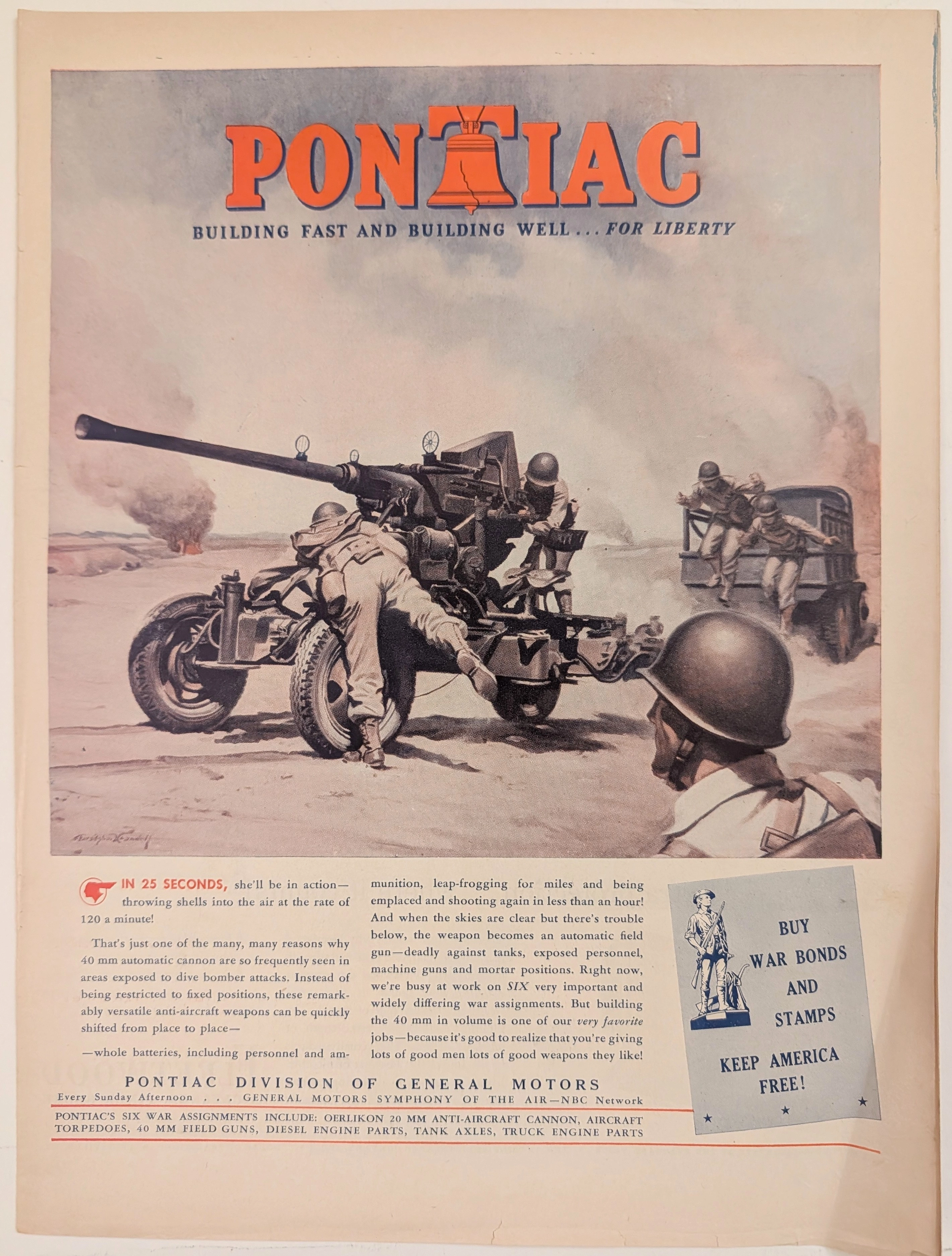
Pontiac

THE TIME TRAVELER'S DOSSIER :THE BIRTH OF THE WIDE-TRACK

The artifact currently subjected to our uncompromising, museum-grade analysis is a profoundly preserved Historical Relic excavated from the turning point of Detroit's "horsepower and handling" wars. This Primary Art Document is a full-page magazine advertisement for the 1959 Pontiac, explicitly introducing the brand's revolutionary "Wide-Track" engineering. Functioning as a "Forensic Blueprint of Automotive Rebranding," the document masterfully weaponizes the peerless artistic talents of Fitz and Van to transform Pontiac from a conservative, aging brand into America's most aggressive performance marque. Its historical context is irrefutably anchored by the extreme macro details of its proprietary engineering claims and the highly coveted "Body by Fisher" corporate hallmark. Grounded by these physical timestamps, the microscopic artist signature, and its breathtaking wabi-sabi chemical degradation, this artifact commands an irreplaceable status, cementing its Rarity Class A designation.

#PontiacWideTrack#FitzAndVan
THE TIME TRAVELER'S DOSSIER: OLD CROW - THE MYTHOLOGY OF AMERICAN BOURBON

THE TIME TRAVELER'S DOSSIER: OLD CROW - THE MYTHOLOGY OF AMERICAN BOURBON

The artifact currently subjected to our uncompromising, museum-grade analysis is a profoundly preserved Historical Relic excavated from the golden age of American print media. This Primary Art Document is a full-page, magazine-sized advertisement for OLD CROW Kentucky Straight Bourbon Whiskey. Functioning as a "Forensic Blueprint of American Myth-Making," the document masterfully weaponizes political heritage and historical titans to validate the aristocratic taste and unparalleled quality of the bourbon. ​Its historical context is irrefutably anchored by the embossed text physically molded into the glass bottle itself—the most powerful and undeniable forensic evidence available in mid-century liquor advertising. Grounded by extreme macro details of the label, the microscopic golden monogram embroidered on the coat, and the breathtaking wabi-sabi chemical degradation of the highly acidic, magazine-sized paper, this artifact commands an irreplaceable status. It firmly cements its Rarity Class A designation as an absolute masterpiece of historical marketing engineering and analog preservation.

#OldCrowBourbon#HenryClay#VintageBourbon
THE TIME TRAVELER'S DOSSIER: PAN AM - THE ARCHITECTURE OF THE AMERICAN TOURIST

PAN AMERICAN WORLD AIRWAYS

THE TIME TRAVELER'S DOSSIER: PAN AM - THE ARCHITECTURE OF THE AMERICAN TOURIST

The artifact currently subjected to our uncompromising, museum-grade analysis is a profoundly preserved Historical Relic excavated from the zenith of mid-century American aviation prosperity. This Primary Art Document is a full-page magazine advertisement for Pan American World Airways. Functioning as a "Forensic Blueprint of the American Leisure Class Abroad," the document masterfully weaponizes European heritage and history to validate the affluent, off-season travel of post-war American consumers. ​Its historical context is irrefutably anchored by the microscopic silhouette of a Douglas DC-7B aircraft, placing this artifact squarely in the twilight of the propeller age, just before the dawn of the Boeing 707 jet era. Grounded by extreme macro details of the iconic PAA flight bag, the bold corporate typography, and the breathtaking wabi-sabi chemical degradation highlighted by its violently torn binding edge, this artifact commands an irreplaceable status, cementing its Rarity Class S designation as a masterpiece of corporate sociological engineering.

#PanAm#VintageAviation#MidCenturyTravel
THE TIME TRAVELER'S DOSSIER :THE APPARITION OF HERITAGE — THE STRIDING MAN

Johnnie walker

THE TIME TRAVELER'S DOSSIER :THE APPARITION OF HERITAGE — THE STRIDING MAN

The artifact currently subjected to our uncompromising, museum-grade analysis is a profoundly preserved Historical Relic excavated from the zenith of mid-century American prosperity. This Primary Art Document is a full-page magazine advertisement for Johnnie Walker Blended Scotch Whisky. Functioning as a "Forensic Blueprint of the Transatlantic Leisure Class," the document masterfully weaponizes British aristocratic heritage (embodied by the Striding Man) to validate the newly acquired wealth of post-war American consumers. Its historical context is irrefutably anchored by the microscopic fine print identifying the importer as "Canada Dry Ginger Ale, Inc., New York, N.Y.", a specific corporate era of distribution. Grounded by extreme macro details of analog halftone lithography and the breathtaking wabi-sabi chemical degradation highlighted by its violently torn binding edge, this artifact commands an irreplaceable status, cementing its Rarity Class A designation as a masterpiece of corporate sociological engineering.

#johnnieWalker#Vintagewhiskyad#StridingMan
THE TIME TRAVELER'S DOSSIER: THE KOREAN WAR ANCHOR AND THE SCARCITY OF LUXURY

Chrysler

THE TIME TRAVELER'S DOSSIER: THE KOREAN WAR ANCHOR AND THE SCARCITY OF LUXURY

The artifact under our uncompromising, unprecedented museum-grade analysis is a profoundly preserved Historical Relic excavated from the golden age of post-WWII American opulence. This Primary Art Document is a monumental magazine advertisement for the Imperial by Chrysler, dating to the pivotal 1951-1952 era. This document is a "Forensic Blueprint of American Aristocracy and Geopolitical Crisis." It masterfully weaponizes regal European iconography to elevate Chrysler's flagship model above mere transportation, explicitly targeting "those who can afford any motor car in the world". Yet, its most significant historical anchor is hidden in the microscopic fine print: "WHITE SIDEWALLS WHEN AVAILABLE". This single sentence instantly transforms the advertisement into a wartime relic, reflecting the severe rubber shortages imposed during the Korean War. Grounded by the iconic jeweled emblem and its breathtaking wabi-sabi chemical degradation—highlighted by its violently torn binding edge—this artifact commands an irreplaceable status, cementing its Rarity Class A designation.

#chrysler#chryslerimperial#1950sluxury
THE TIME TRAVELER'S DOSSIER: THE GOLDEN LIE AND THE PROPAGANDA OF 1936

THE TIME TRAVELER'S DOSSIER: THE GOLDEN LIE AND THE PROPAGANDA OF 1936

The artifact under exhaustive, uncompromising, and unprecedented museum-grade analysis is an exceptionally rare, battle-scarred Historical Relic originating from the absolute zenith of the American tobacco empire. This Primary Art Document is a monumental, full-page advertisement for Lucky Strike Cigarettes, forensically and definitively dated to 1936 by the explicit copyright text: "Copyright, 1936, The American Tobacco Company". This is not merely a vintage tobacco ad; it is a profound "Sociological Blueprint of Corporate Propaganda" from the interwar period. Emerging in the heart of the Great Depression, this artifact captures the audacious peak of 1930s psychological marketing. The commanding headline, "Smoke to Your Throat's Content", represents the era's surreal, medically ironic strategy where tobacco conglomerates aggressively marketed deadly carcinogens as "smooth" and "non-irritating" to the throat. Furthermore, the legendary slogan "It's Toasted" serves as a masterclass in advertising spin, transforming a standard manufacturing process into an exclusive health benefit. Visually, the ad brilliantly normalizes and glamorizes female smoking—a direct continuation of the industry's sociological engineering to double their consumer base. Rescued from the inevitable oblivion of disposable mass media, this pre-2000s analog artifact is a breathtaking embodiment of the Japanese aesthetic of wabi-sabi. Printed on highly acidic wood-pulp paper, it exhibits severe, violent edge trauma, deep structural creasing, ancient tape residue, and a profound, burning amber oxidation across its entire surface. This unstoppable molecular death transforms a piece of mass-produced corporate propaganda into an irreplaceable, ready-to-frame Primary Art Document of American marketing history.

THE TIME TRAVELER'S DOSSIER: THE ARCHITECTURE OF POWER AND THE BIRTH OF THE DIGITAL WORLD IN THE 50S

THE TIME TRAVELER'S DOSSIER: THE ARCHITECTURE OF POWER AND THE BIRTH OF THE DIGITAL WORLD IN THE 50S

The artifact under exhaustive, uncompromising museum-grade analysis is a remarkably preserved Historical Relic originating from the absolute zenith of the post-war American economic boom. This Primary Art Document is a sweeping, monumental full-page advertisement for the Sheraton Hotels empire, forensically dated to circa 1958–1959 via the explicitly illustrated Pittsburgh Bicentennial (1758-1958) stamp embedded within the artwork. This document is not merely a travel advertisement; it is a profound "Sociological Blueprint of the American Corporate Ascendancy." Visually anchored by four hyper-stylized, architectural illustrations of Sheraton's flagship properties—New York, Cleveland, Pittsburgh, and Detroit—the piece captures the era's unbridled optimism. Each panel is a masterpiece of mid-century commercial illustration, particularly the Detroit panel featuring ethereal, floating tail-fin automobiles symbolizing the Motor City's dominance. Furthermore, this artifact documents critical milestones in global business history. It proudly advertises the acceptance of the Diners' Club card, marking the revolutionary dawn of the modern credit card era. It also boasts of Sheraton's "Reservatron" electronic system—one of the earliest commercial applications of computing in the hospitality industry—and proudly declares its listing on the New York Stock Exchange. Rescued from the binding of a forgotten, heavy-stock periodical, this pre-2000s analog artifact is an unforgeable testament to the Japanese aesthetic of wabi-sabi. Printed on inherently acidic wood-pulp paper, it exhibits a beautifully violent, jagged right margin and a deep, warm amber oxidation across its surface. This majestic, unstoppable chemical degradation transforms a mass-produced corporate propaganda piece into an irreplaceable, ready-to-frame Primary Art Document of mid-century architectural and economic history.

THE TIME TRAVELER'S DOSSIER: THE STRATOSPHERIC MANSION AND THE AESTHETICS OF DECAY

THE TIME TRAVELER'S DOSSIER: THE STRATOSPHERIC MANSION AND THE AESTHETICS OF DECAY

The artifact under exhaustive, museum-grade analysis is a flawlessly preserved Historical Relic originating from the absolute dawn of the commercial Jet Age (circa late 1950s to early 1960s). This Primary Art Document is a magnificent full-page advertisement for the Douglas DC-8, the aerospace leviathan engineered to rival the Boeing 707 and conquer the global skies. ​Visually anchored by an elegant, sweeping illustration of the aircraft's exterior and a highly detailed, evocative rendering of its opulent passenger lounge, the piece represents the zenith of mid-century aspirational marketing. Signed by an elusive mid-century commercial artist, the illustration captures the "Palomar Lounge"—a private club in the stratosphere where the elite played cards, smoked, and drank champagne beneath a Space-Age celestial diagram. By utilizing the ultimate authority of the era—the airline stewardess—to validate its luxury ("Stewardesses call it... The world's most luxurious jetliner!"), Douglas masterfully sold the illusion of exclusive, aristocratic segregation at 600 miles per hour. ​Rescued from the binding of a forgotten periodical, this pre-2000s analog artifact is an unforgeable testament to the aesthetic of wabi-sabi. Printed on inherently acidic wood-pulp paper, it exhibits a beautifully frayed right margin and a deep, warm ivory oxidation. This majestic chemical degradation transforms a mass-produced corporate propaganda piece into an irreplaceable, ready-to-frame Primary Art Document of aerospace history.

THE TIME TRAVELER'S DOSSIER: THE ARCHITECT OF CAPITALISM AND THE AESTHETICS OF RUIN

THE TIME TRAVELER'S DOSSIER: THE ARCHITECT OF CAPITALISM AND THE AESTHETICS OF RUIN

The artifact under rigorous, museum-grade analysis is a profoundly significant Historical Relic originating from the absolute zenith of American corporate ascendancy. This Primary Art Document is the front cover of FORTUNE magazine, explicitly dated September 1963. It features a majestic, expressive painted portrait of Alfred P. Sloan Jr., the legendary architect of the General Motors empire. ​Masterfully rendered by the acclaimed American illustrator Robert Weaver, whose signature is prominently visible, this artifact visually anchors the magazine's serialization of Sloan's definitive business memoir, My Years with General Motors. This text remains a foundational scripture of modern corporate management and decentralized organizational structure. ​Rescued from the ravages of time and preserved as a standalone Archival Artifact, the premium, heavy-stock analog paper of Fortune is undergoing a breathtaking process of chemical degradation. It exhibits severe edge fraying, jagged paper loss, and deep biological oxidation along its borders. This glorious decay transforms a mass-produced business periodical into an irreplaceable, ready-to-frame Primary Art Document—a testament to the fragile mortality of even the greatest capitalist empires.

THE TIME TRAVELER'S DOSSIER: ARROGANCE AND INNOVATION IN THE ABYSS OF THE DEPRESSION

THE TIME TRAVELER'S DOSSIER: ARROGANCE AND INNOVATION IN THE ABYSS OF THE DEPRESSION

The artifact under rigorous, museum-grade analysis is an exceptionally preserved Historical Relic originating from the darkest economic abyss of the 20th century: the American Great Depression. Sourced from a 1931 issue of The Saturday Evening Post, this Primary Art Document features a sweeping, full-page advertisement for the Sheaffer's "Balance" Lifetime Pen. This piece is a profound sociological and industrial marker. In 1931, as the global economy collapsed, W.A. Sheaffer defiantly marketed a revolutionary, streamlined luxury writing instrument priced at an astronomical $15. The ad explicitly highlights the "White Dot" lifetime guarantee and the 14-karat solid gold "Autograph" band engraved with the owner's signature ("John Adams"). It is a masterclass in aspirational marketing during an era of mass destitution. Physically, this nearly century-old wood-pulp document is a breathtaking testament to the Japanese aesthetic of wabi-sabi. It exhibits severe, dramatic edge trauma, profound edge loss, deep amber oxidation, and prominent moisture staining along the left margin. This extreme analog decay transforms the mass-produced commercial print into an irreplaceable, highly coveted Primary Art Document that physically embodies the scars of its 90-year journey through history.

THE TIME TRAVELER'S DOSSIER: THE ILLUSION OF FRAGILITY AND THE ARCHITECTURE OF 60S BEAUTY

THE TIME TRAVELER'S DOSSIER: THE ILLUSION OF FRAGILITY AND THE ARCHITECTURE OF 60S BEAUTY

The artifact under rigorous, museum-grade analysis is a breathtaking, meticulously preserved Double-Page Historical Relic originating from the glamorous, highly engineered world of early 1960s American publishing. It features a sweeping, visually arresting advertisement for Revlon's "Touch & Glow" creme soufflé makeup. ​This Primary Art Document is not merely a cosmetic promotion; it is a profound sociological blueprint of mid-century feminine ideals. The ad's commanding copy, declaring makeup for "today's fair and fragile face," perfectly encapsulates the era's prescribed aesthetic: an aristocratic, porcelain delicacy juxtaposed with the striking, graphic eye makeup synonymous with the early 1960s. ​Crucially, this artifact documents the absolute genius of Charles Revson’s psychological marketing. By explicitly styling the model with "JEWELS BY VAN CLEEF & ARPELS" (as verified by the microscopic credit in the bottom right corner and the exquisite pearl/diamond earring), Revlon brilliantly anchored its accessible consumer cosmetics to the highest echelons of European haute joaillerie. ​Rescued from the binding of a forgotten periodical, this expansive double-page spread is printed on inherently acidic, mass-market wood-pulp paper. It is currently undergoing a slow, majestic chemical degradation. This natural oxidation—visible in the warm ivory patina and the delicate aging of the central seam—transforms a disposable commercial message into an irreplaceable, ready-to-frame Primary Art Document of mid-century beauty history.

THE TIME TRAVELER'S DOSSIER: THE FALLEN IDOL AND THE MASTER'S REBELLION

THE TIME TRAVELER'S DOSSIER: THE FALLEN IDOL AND THE MASTER'S REBELLION

The artifact under rigorous, museum-grade analysis is an exceptionally preserved Historical Relic originating from the unapologetic, counter-cultural zenith of 1970s American underground publishing. It features a full-page, breathtakingly subversive illustration titled "CLARK GHENT'S SCHOOL DAYS", masterfully rendered by the legendary comic book artist Neal Adams (credited in the print with the common underground misspelling 'Neil Adams'), accompanied by the biting satirical prose of Robert S. Wieder. ​This Primary Art Document represents a ferocious, calculated deconstruction of American mythology. Neal Adams—the visionary architect who defined the heroic, hyper-realistic, and idealized versions of Batman, Superman, and Green Lantern during the Bronze Age of Comics—utilizes his unparalleled dynamic style to mercilessly parody the "Man of Steel." By depicting "Clark Ghent" utilizing his god-like powers (heat and x-ray vision) to melt through the brick wall of the "Littleville High Girls Gym" to fulfill base, voyeuristic desires, this artifact shatters the wholesome, censorship-heavy constraints of the Comics Code Authority (CCA). ​Rescued from the incinerators of history and meticulously preserved as a standalone Archival Artifact, the inherently acidic wood-pulp paper is undergoing a slow, magnificent chemical degradation. This natural aging process—visible in the warm amber patina, the oxidized margins, and the fragile tactile feedback of the fibers—transforms a disposable piece of 1970s underground rebellion into an irreplaceable, frame-ready Primary Art Document of immense cultural weight.

THE TIME TRAVELER'S DOSSIER: THE DAWN OF ELEGANCE AND THE EXTINCT $1,500 HOLY GRAIL

THE TIME TRAVELER'S DOSSIER: THE DAWN OF ELEGANCE AND THE EXTINCT $1,500 HOLY GRAIL

The artifact under museum-grade analysis is an exceptionally preserved Historical Relic originating from the golden age of analog publishing—a vintage issue of PLAYBOY magazine (circa late 1960s to 1970s). It features a striking, deeply sophisticated advertisement for one of the most revolutionary men's fragrances in modern human history: EAU SAUVAGE by Christian Dior. ​This Primary Art Document does not merely advertise a grooming product; it serves as a tangible historical marker of a monumental cultural paradigm shift. Prior to its introduction in 1966, men's fragrances were exclusively heavy, musky, and brutally spiced. Eau Sauvage, formulated by the legendary Master Perfumer Edmond Roudnitska, shattered this archaic mold by introducing Hedione (an airy, luminous synthetic jasmine compound) to men's perfumery, forever altering the trajectory of the global fragrance industry. ​Crucially, the original mid-century formulation and the specific ribbed-glass bottle design depicted in this artifact are permanently discontinued and lost to time. Modern reformulations driven by strict chemical regulations (such as the banning of natural oakmoss) have forever altered Roudnitska's original masterpiece. Consequently, surviving vintage bottles of this exact era have achieved mythical "Holy Grail" status, currently commanding astronomical prices of up to $1,500 USD in the global collector's market. This transforms the preserved advertisement from a commercial print into an invaluable piece of historical provenance—a birth certificate for an extinct luxury. ​Rescued from destruction and preserved as a standalone Archival Artifact, the inherently acidic, glossy paper stock of the mid-century era is undergoing a slow, breathtaking chemical degradation. This natural aging process (oxidation and lignin breakdown) transforms the mass-produced print into an irreplaceable, ready-to-frame Primary Art Document, embodying the ultimate aesthetic of analog impermanence.

THE TIME TRAVELER'S DOSSIER: THE HOME FRONT SMILE AND THE 1944 PSYCHOLOGICAL WAR

THE TIME TRAVELER'S DOSSIER: THE HOME FRONT SMILE AND THE 1944 PSYCHOLOGICAL WAR

This original 1944 7-Up advertisement cut page from The Saturday Evening Post is a vital piece of WWII Home Front ephemera. Beneath the wholesome mid-century illustrations lies a patriotic directive to support the war effort by adhering to rationing laws. The massive water stain and natural oxidation of the 80-year-old acidic paper highlight the beautiful aesthetic of decay, elevating this to a Class A primary art print.

THE TIME TRAVELLER'S DOISSIER — THE WWII HOME FRONT AND THE AESTHETICS OF DESTRUCTION

THE TIME TRAVELLER'S DOISSIER — THE WWII HOME FRONT AND THE AESTHETICS OF DESTRUCTION

Executive summary of the original vintage double-page cut sheet featuring Norman Rockwell's WWII masterpiece, "Norman Rockwell Visits a Ration Board" (circa 1944). This artwork masterfully captures the egalitarian struggle of the American home front rationing system. The massive, rust-colored water stain blooming across the highly acidic 80-year-old paper is not damage, but a profound 'historical scar' that exemplifies the beautiful decay of analog media. Surviving wartime paper drives, this frame-ready primary artifact commands a Rarity Class S designation.

THE TIME TRAVELER'S DOSSIER: THE GENESIS OF ARROGANCE — OMEGA, THE QUARTZ CRISIS, AND THE SPACE HERO

THE TIME TRAVELER'S DOSSIER: THE GENESIS OF ARROGANCE — OMEGA, THE QUARTZ CRISIS, AND THE SPACE HERO

An original vintage magazine cut page featuring the OMEGA Quartz Chronometer, endorsed by NASA Mercury Seven astronaut Scott Carpenter. This standard-sized ephemera captures Omega's luxurious counter-offensive during the "Quartz Crisis," elevating battery-powered movements to haute horlogerie. The natural degradation and warm patina of the pre-2000s acidic paper transform this surviving ad into a highly collectible Class A historical artifact.

The Marilyn Monroe Enigma: Uncovering 1950s Hollywood Secrets Through Ultra-Rare Vintage Magazine Art (Class SS)

The Marilyn Monroe Enigma: Uncovering 1950s Hollywood Secrets Through Ultra-Rare Vintage Magazine Art (Class SS)

This museum-grade editorial explores an ultra-rare SS-Class archival piece from The Record Institute. It chronicles the 1980 Playboy magazine discovery of lost Marilyn Monroe negatives, eventually solved by legendary illustrator Jon Whitcomb. The artifact not only captures the vulnerability of the 1950s ultimate sex symbol alongside Arthur Miller but also serves as a poignant historical record of the transition from the Golden Age of Illustration to modern photography, celebrating the visceral charm of analog paper preservation.

THE TIME TRAVELLER'DOISSIER : SUPERMAN — The Christopher Reeve Flagpole Postcard and the Birth of the Superhero Blockbuster

THE TIME TRAVELLER'DOISSIER : SUPERMAN — The Christopher Reeve Flagpole Postcard and the Birth of the Superhero Blockbuster

The item analyzed is an official Superman movie merchandise postcard or large-format photo card, featuring Christopher Reeve as Superman clinging dramatically to a metal flagpole while a large American flag billows behind him against a pure black background. The image is framed with a bold red outer border and a thin blue inner rule — a design consistent with the official Superman: The Movie (1978) merchandising aesthetic produced under license from Warner Bros. and DC Comics. Christopher Reeve (September 25, 1952 – October 10, 2004) portrayed Superman in four films (1978, 1980, 1983, 1987) and is universally regarded as the definitive cinematic Superman. This specific image — the flagpole scene lit dramatically against black — is one of the most iconic publicity photographs from the original film's promotional campaign. The physical item shows signs of age consistent with approximately 45–47 years, with slight surface wear and minor corner softening visible. The postcard format (estimated 4×6 or 5×7 inches) and the glossy coated stock are typical of high-quality movie merchandise of the late 1970s.

THE TINY TEXT THAT AUTHENTICATES HISTORY Why Fine Print in Magazine Advertisements Matters More Than You Think

THE TINY TEXT THAT AUTHENTICATES HISTORY Why Fine Print in Magazine Advertisements Matters More Than You Think

Tiny copyright notices in magazine ads originated from mandatory US copyright law (1909 Act) and sector-specific regulations (BATF for alcohol). They function as layered authentication evidence: typographic era-consistency, regulatory language accuracy, ink/paper forensics, and contextual integrity — paralleling vintage band tee authentication methods. Collaboration credits (Pierre Cardin × Tiffany & Co.) and creative credits (photography, calligraphy, fashion) document commercial relationships lost to no other record.

Norman Mailer 'The Fight' Original Illustrated Magazine Page 1974 | Ali vs Foreman Rumble in the Jungle | Deep Analysis & Market Valuation

Norman Mailer 'The Fight' Original Illustrated Magazine Page 1974 | Ali vs Foreman Rumble in the Jungle | Deep Analysis & Market Valuation

Vintage Chivas Regal x Charles Saxon Ad: The Vanishing Playboy Art | The Record

Vintage Chivas Regal x Charles Saxon Ad: The Vanishing Playboy Art | The Record

An in-depth look at the Chivas Regal ad from Playboy magazine, illustrated by legendary artist Charles Saxon. A magazine-sized piece of authentic analog art on degrading vintage paper, driving up its value as an alternative asset.

Ahead of Its Time: The 1978 Heuer Chronosplit Manhattan GMT

Ahead of Its Time: The 1978 Heuer Chronosplit Manhattan GMT

Rediscover the ultimate analog-digital hybrid timepiece through a rare 1978 vintage magazine advertisement, meticulously preserved as a single sheet cut-out.

Anatomy of a Monster: The Moto Guzzi V8 Technical Masterpiece

Anatomy of a Monster: The Moto Guzzi V8 Technical Masterpiece

Unearthing a rare technical illustration of the legendary Moto Guzzi V8 engine by Bob Freeman, preserved on naturally aged, pre-2000 analog print media.

The Final Glimpse of a Legend: The History Behind Marilyn Monroe's Last Nude

The Final Glimpse of a Legend: The History Behind Marilyn Monroe's Last Nude

Uncover the profound historical significance of the ultimate photograph of the 20th century's greatest pop culture icon, captured by Leif-Erik Nygårds just weeks before her tragic death.

"The Bloodline of Champions: Ferry Porsche's Ultimate Test"

"The Bloodline of Champions: Ferry Porsche's Ultimate Test"

Uncovering the historical lineage of Porsche's motorsport dominance, from the 1922 Sascha to the legendary 917, and how track technology forged the 911.

Rolex "Perpetually Yours"

Rolex "Perpetually Yours"

This rare mid-century Rolex "Perpetually Yours" advertisement captures the genesis of the modern Rolex empire. Featuring the legendary Oyster Perpetual, it celebrates the historic union of the world's first waterproof 'Oyster' case (1926) and the revolutionary self-winding 'Perpetual' rotor (1931). A true museum-grade horological archive, this piece represents the ultimate mechanical blueprint that defined Rolex's eternal supremacy.