The Marilyn Monroe Enigma: Uncovering 1950s Hollywood Secrets Through Ultra-Rare Vintage Magazine Art (Class SS)
The History
"Marilyn Mystery Unraveled" — An Art-Historical Document of the Publishing Golden Age
Historical Context
1.1 The Convergence of Mid-Century Titans
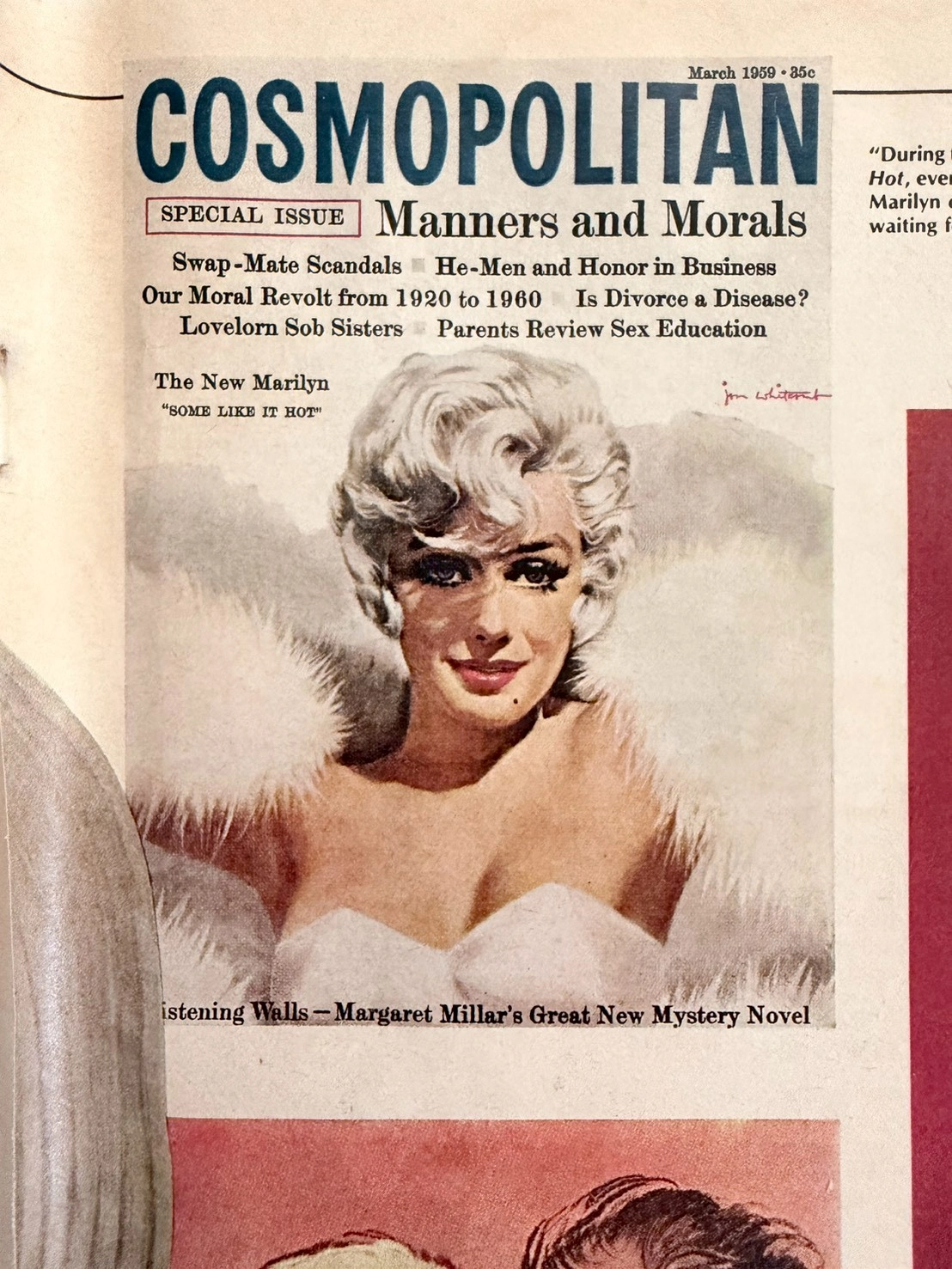
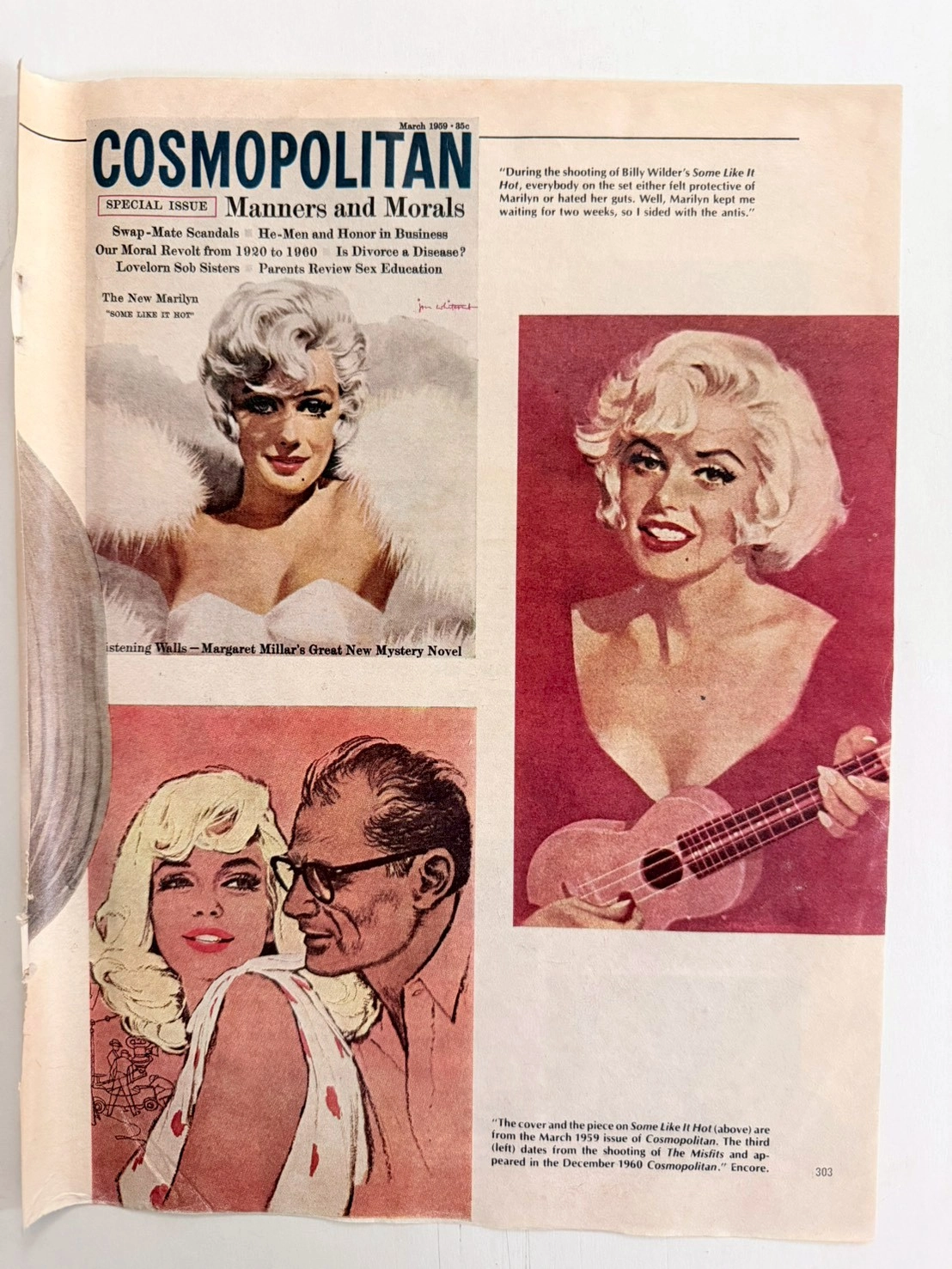
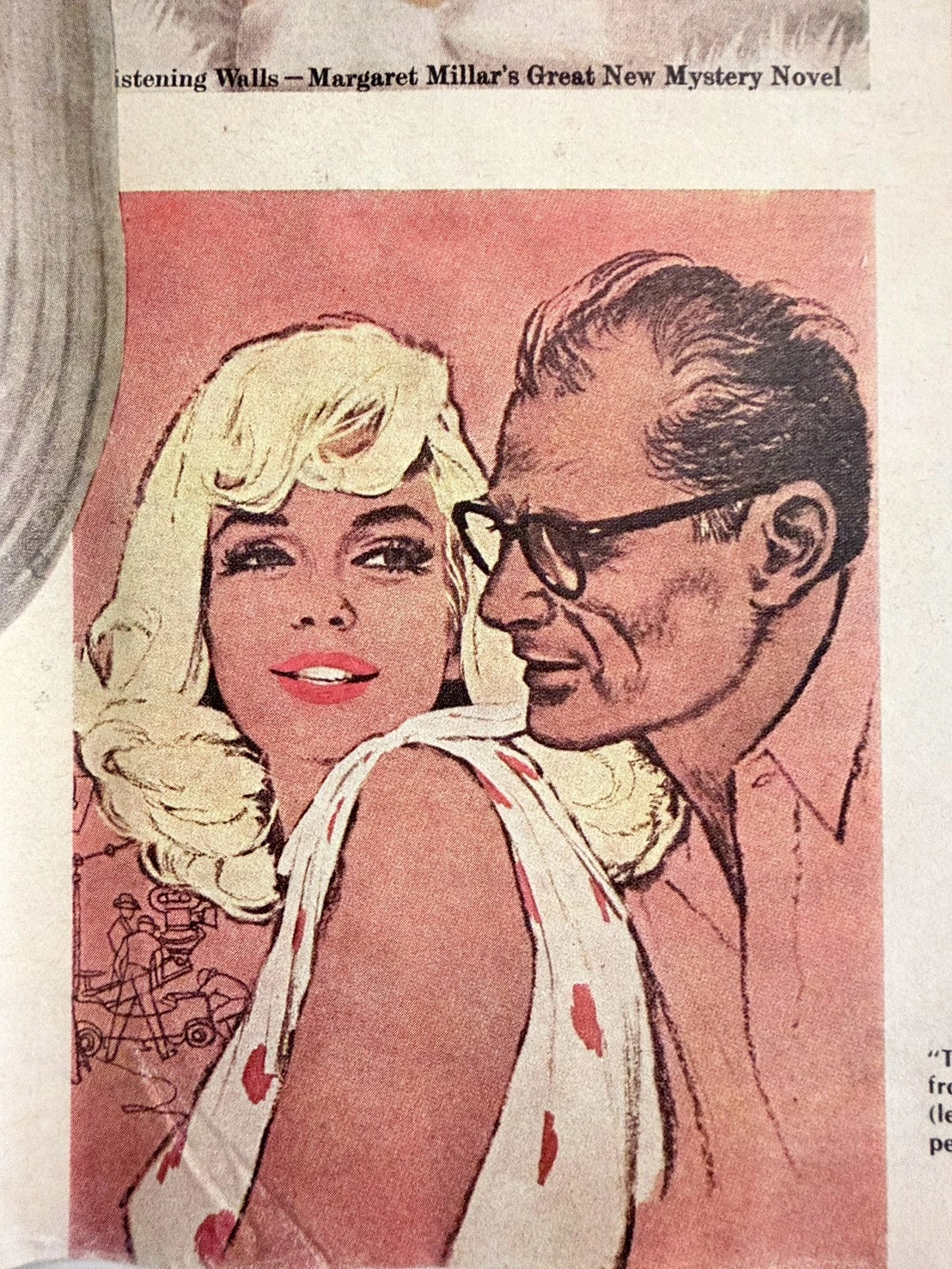
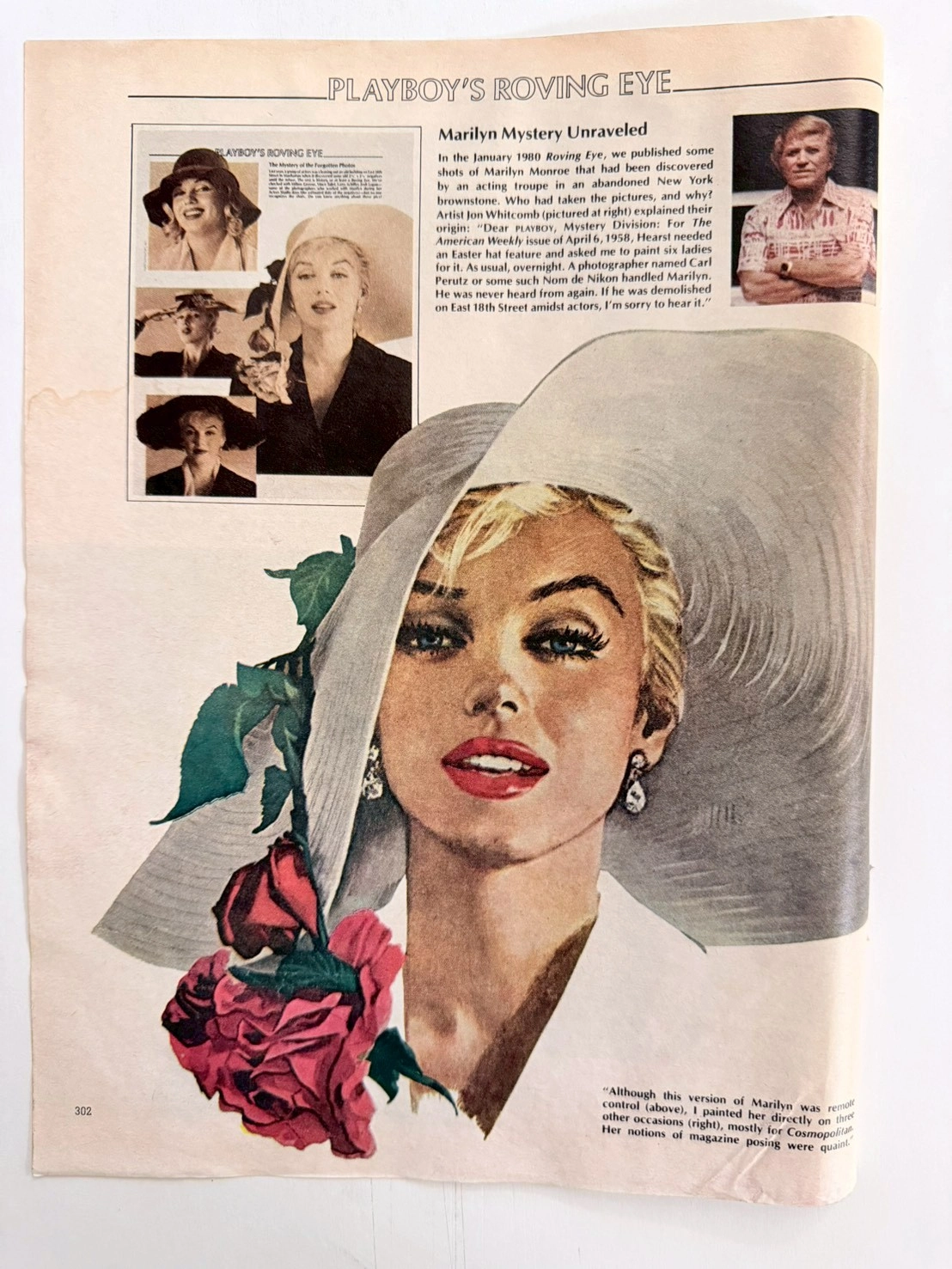
This original magazine cut page is an intersection of 20th-century royalty. It brings together Marilyn Monroe, the ultimate pop culture icon whose enduring legacy ensures intrinsic collector value; Jon Whitcomb, a masterful American illustrator whose glamorous watercolor style defined the aesthetic of post-war women's magazines; Arthur Miller, the Pulitzer Prize-winning playwright and Monroe's former husband, depicted during the tumultuous era of The Misfits (1961); and Carl Perutz, a skilled photographer whose uncredited work was brought to light through this very article.
1.2 The Unraveled Mystery of Creation
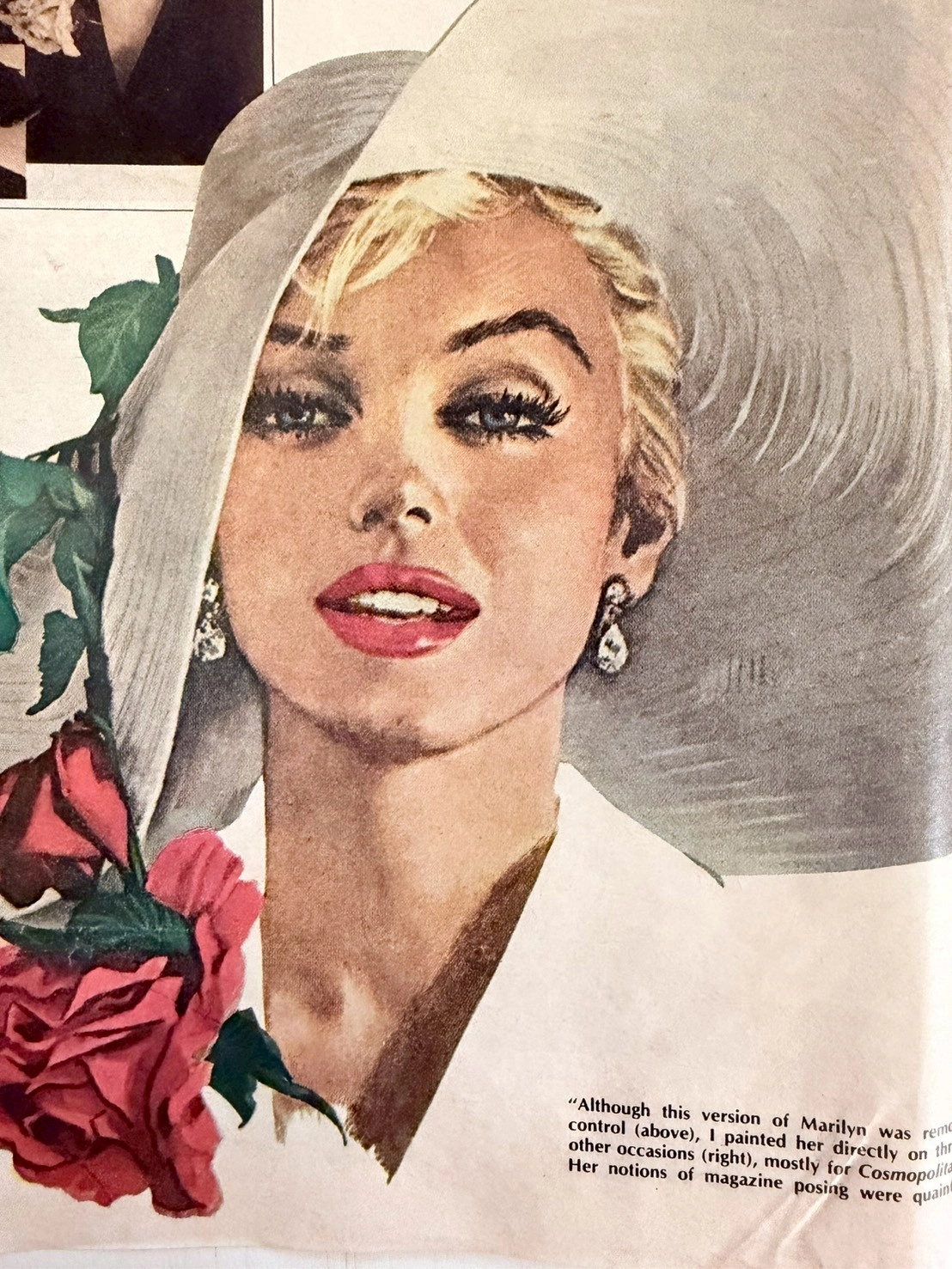
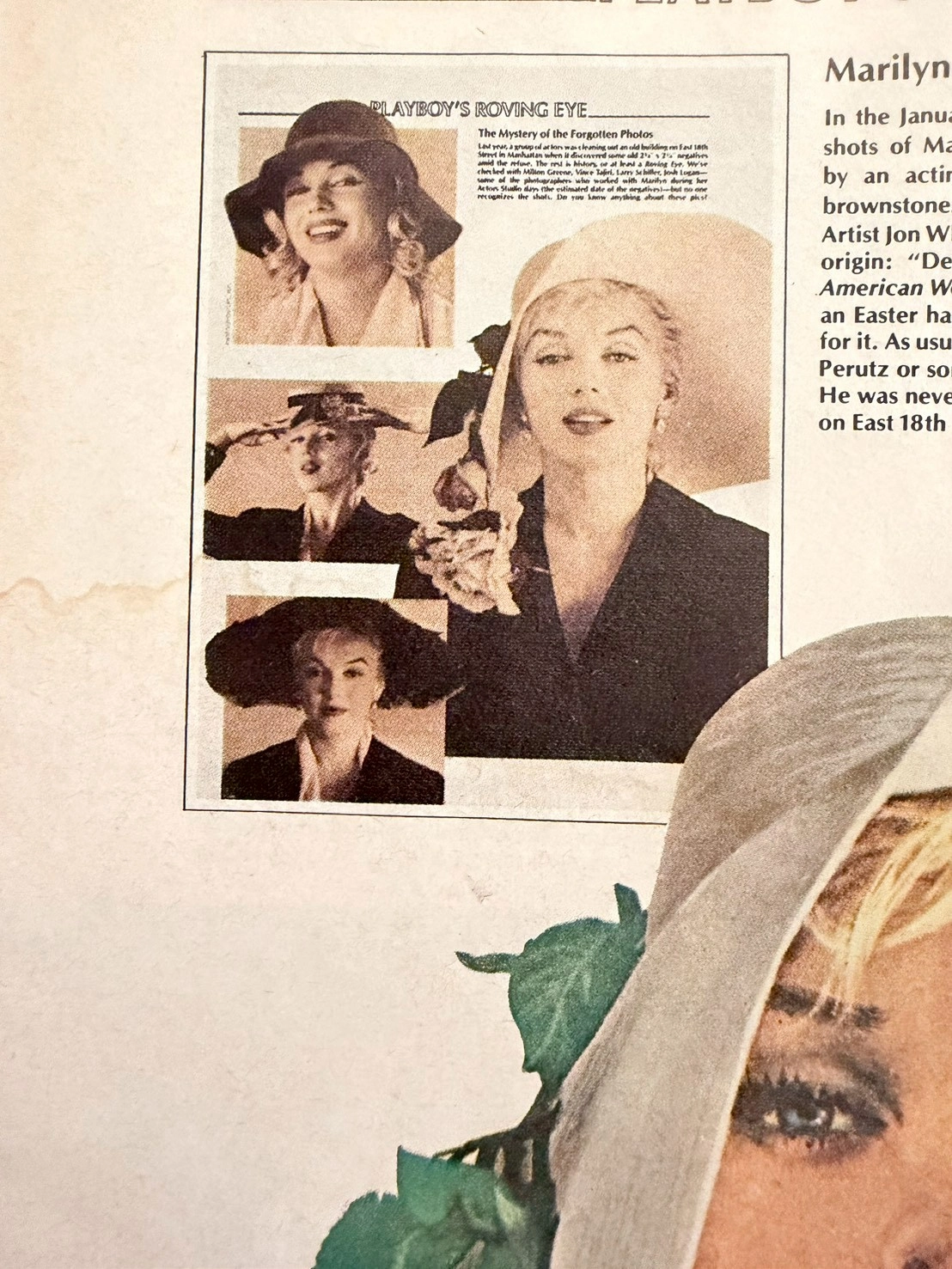
The column Playboy's Roving Eye reads like an art-historical detective story. Previously, Playboy had published "forgotten" photos of Monroe found in an abandoned Manhattan building, ignorant of their origin. Legendary illustrator Jon Whitcomb wrote in to solve the mystery: he had hired photographer Carl Perutz to shoot those images overnight, using them as direct references for his spectacular Easter hat watercolor portrait published in The American Weekly on April 6, 1958. This page, therefore, is a rare documentation of the creative process behind commercial illustration during the analog era.
1.3 Archiving the Competitor's Masterpieces
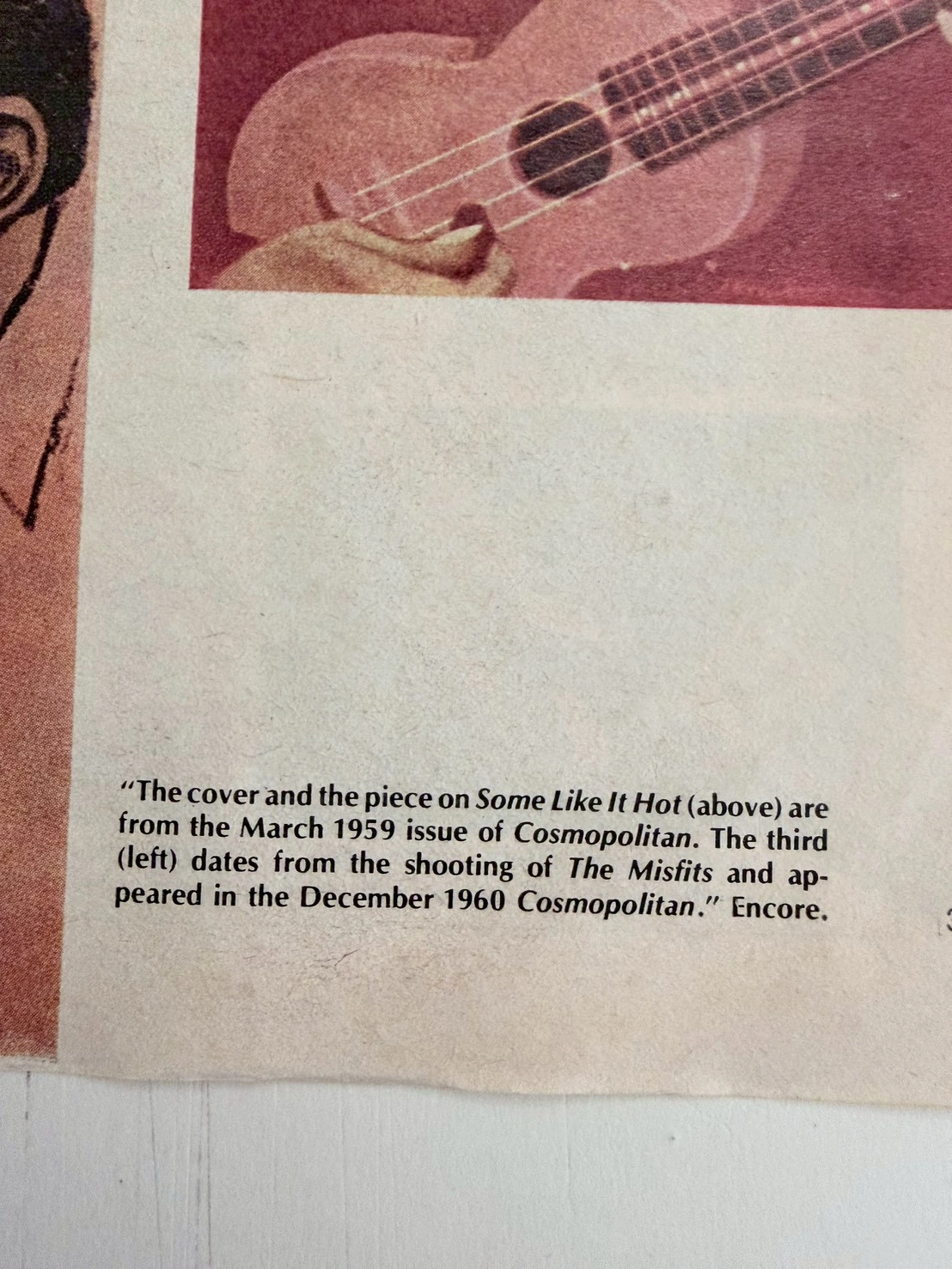
In a rare move, Playboy utilized this page to archive and celebrate Whitcomb's iconic cover illustrations for Cosmopolitan magazine: the March 1959 cover reflecting the Some Like It Hot era, and the December 1960 cover featuring Monroe and Miller. This cross-publication homage underscores Whitcomb's immense status in the publishing world and solidifies the page as a definitive historical record.
Paper, Production, and the Aesthetic of Fragility
2.1 The Archival Significance of Degradation
The true gravity of this piece lies in its ephemeral nature as an individual cut page. Analog-era paper, inherently acidic, was never designed to last forever. The visible oxidation, the slight water stains on the edges, and the beautiful warm-tan patina are not flaws—they are the physical proof of its journey through time. As original vintage paper continues to degrade, disintegrate, and vanish from the market, surviving examples like this become incredibly scarce. This inescapable mortality of the medium drives its value upward among serious ephemera collectors; it is a tangible, unreplicable artifact of a dying analog world.
2.2 Printing Technique
The page was produced using full-color offset lithography, capturing the subtle washes, shading, and dynamic brushwork characteristic of Whitcomb's technique. Playboy’s high production standards ensured that Whitcomb's art was reproduced with gallery-level fidelity.
Rarity and Market Classification
3.1 Rarity Factors — Class S Designation
This piece earns a Class S designation due to its multifaceted appeal: it holds deep crossover value for Monroe memorabilia collectors and illustration art aficionados alike. The page is not merely a portrait but a documented piece of publishing history, correcting the record on Carl Perutz while celebrating Jon Whitcomb. As a standalone cut page, it transcends the magazine format to become a frame-ready piece of historical art.
3.2 Future Market Outlook
The market for genuine Marilyn Monroe ephemera is a cornerstone of global pop-culture collecting. Combined with the rising appreciation for mid-century American illustration, this specific page sits at the nexus of high demand and dwindling supply. As the original paper artifacts of the 20th century physically disappear, the cultural and monetary value of preserved pieces like this will only appreciate.
★ RARITY CLASS: S ★ — Playboy Magazine Cut Page — Marilyn Mystery Unraveled by Jon Whitcomb
Exhibition Halls
The Archive Continues
Continue the Exploration
Drambuie · Beverage
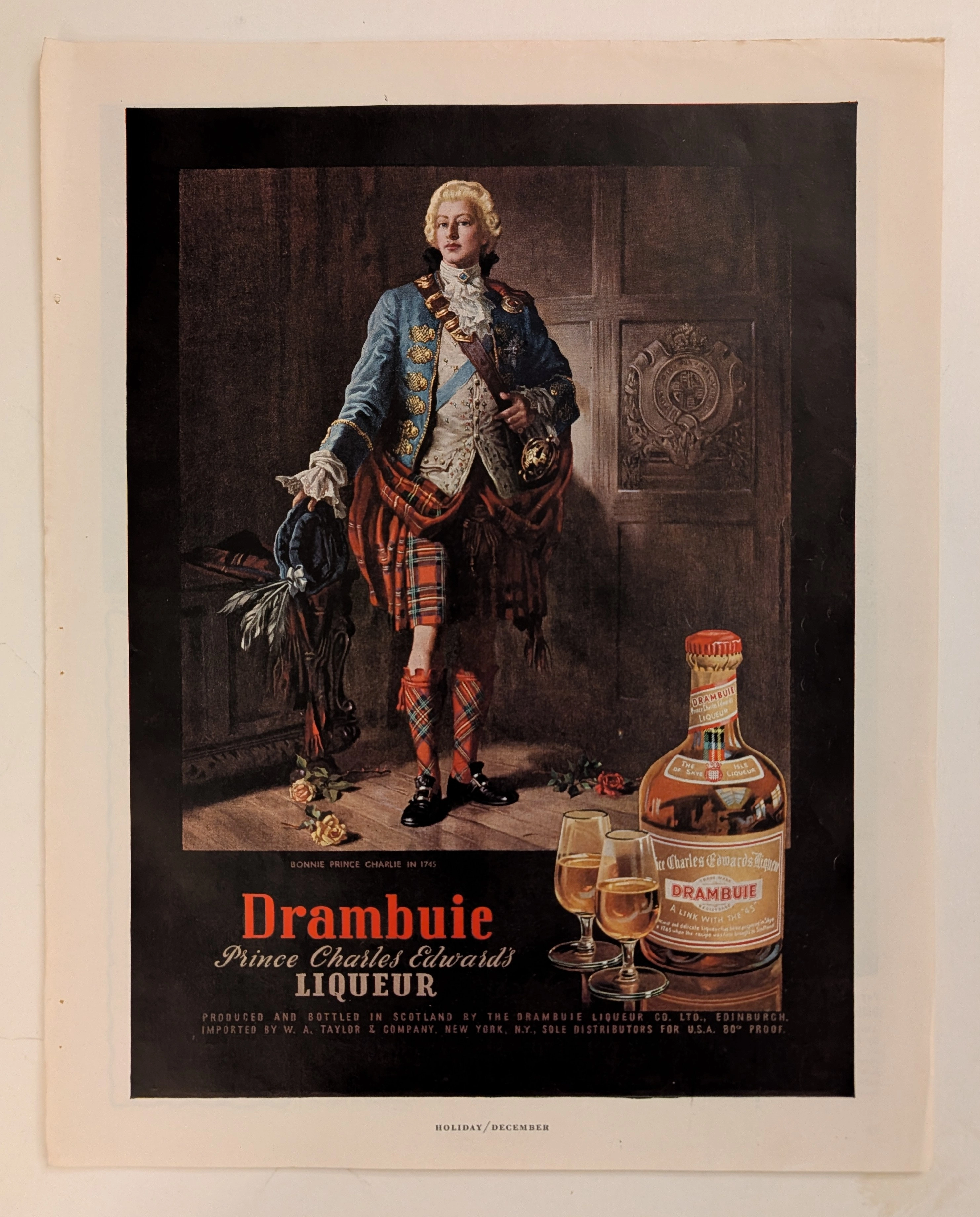
The Time Traveller's Dossier: The Alchemy of Royal Rebellion – Drambuie "Bonnie Prince Charlie" Advertisement (Circa Mid-20th Century)
History is rarely an objective chronicle of facts; it is a malleable narrative, continually rewritten, romanticized, and ultimately weaponized by those seeking to legitimize their power or, in the modern era, their products. Long before digital algorithms could synthesize artificial heritage, the supreme manifestation of corporate alchemy was executed through the calculated precision of the four-color offset press and the appropriation of historical iconography. The artifact presented before us is not merely a vintage magazine tear sheet selling a Scottish liqueur. It is a masterclass in the commodification of myth, a visual distillation of romantic rebellion, and a foundational blueprint for what is now known as "Heritage Branding." This museum-grade, academic archival dossier presents an exhaustive, microscopic deconstruction of a mid-20th-century print advertisement for Drambuie Liqueur. Operating on a profound binary structure, this document records a calculated paradigm shift within the global spirits industry. It captures the precise historical fracture where a highly specific, geographically isolated alcoholic beverage was conceptually transmuted into a literal draught of royal rebellion and aristocratic romance. Through the highly specialized lens of late-analog commercial artistry and stringent visual forensics, this document serves as a masterclass in psychological marketing. It established the foundational archetype for linking the consumption of a physical product with the ingestion of an epic, historical fantasy—an archetype that unconditionally dictates the visual and strategic totems of the modern luxury spirits industry today.
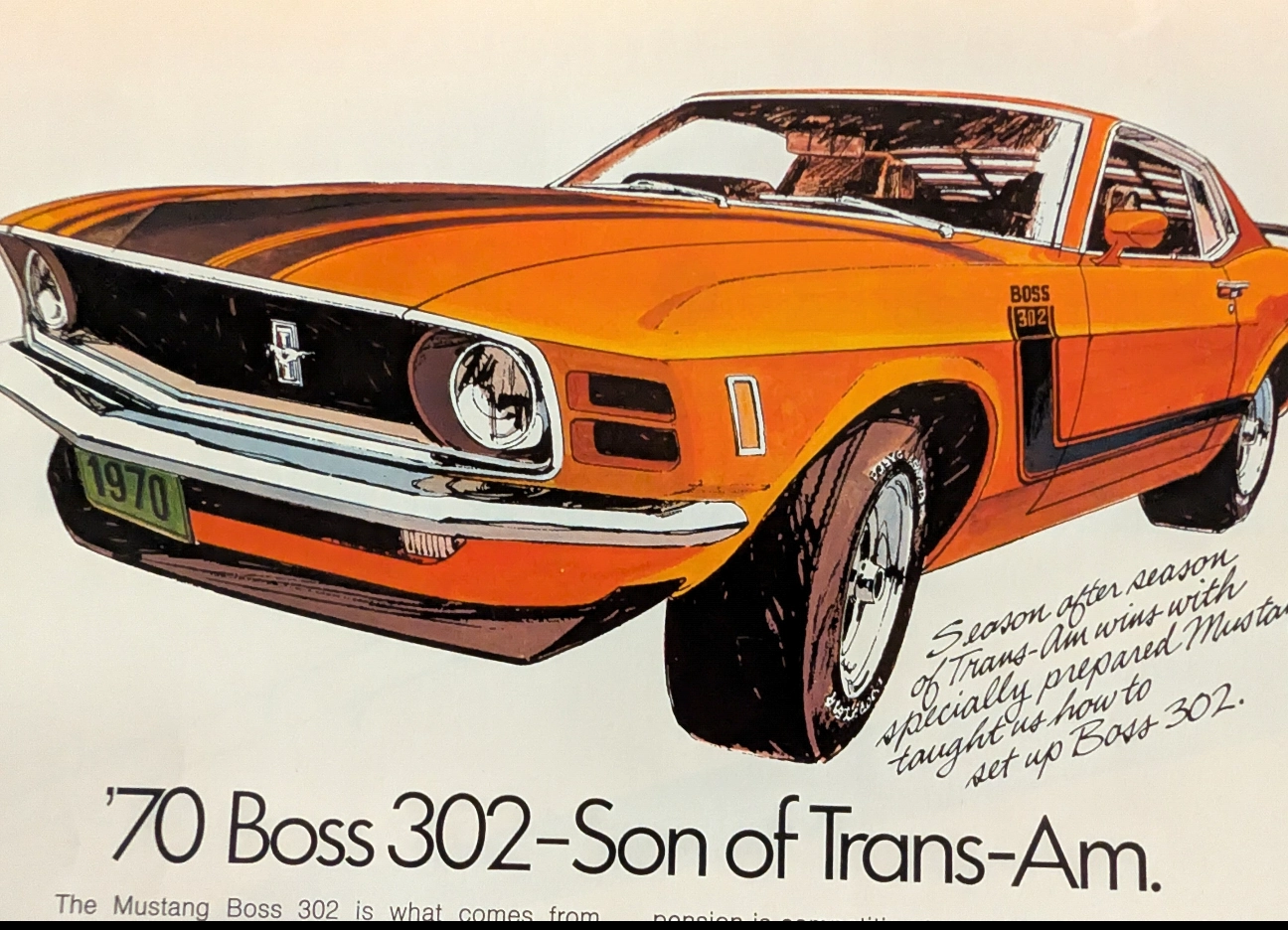
True Blood of the Trans-Am: The 1970 Ford Mustang Boss 302 Legacy
Experience the raw spirit of an American muscle car legend through an authentic, pre-2000 analog magazine advertisement, carefully extracted as a single sheet.
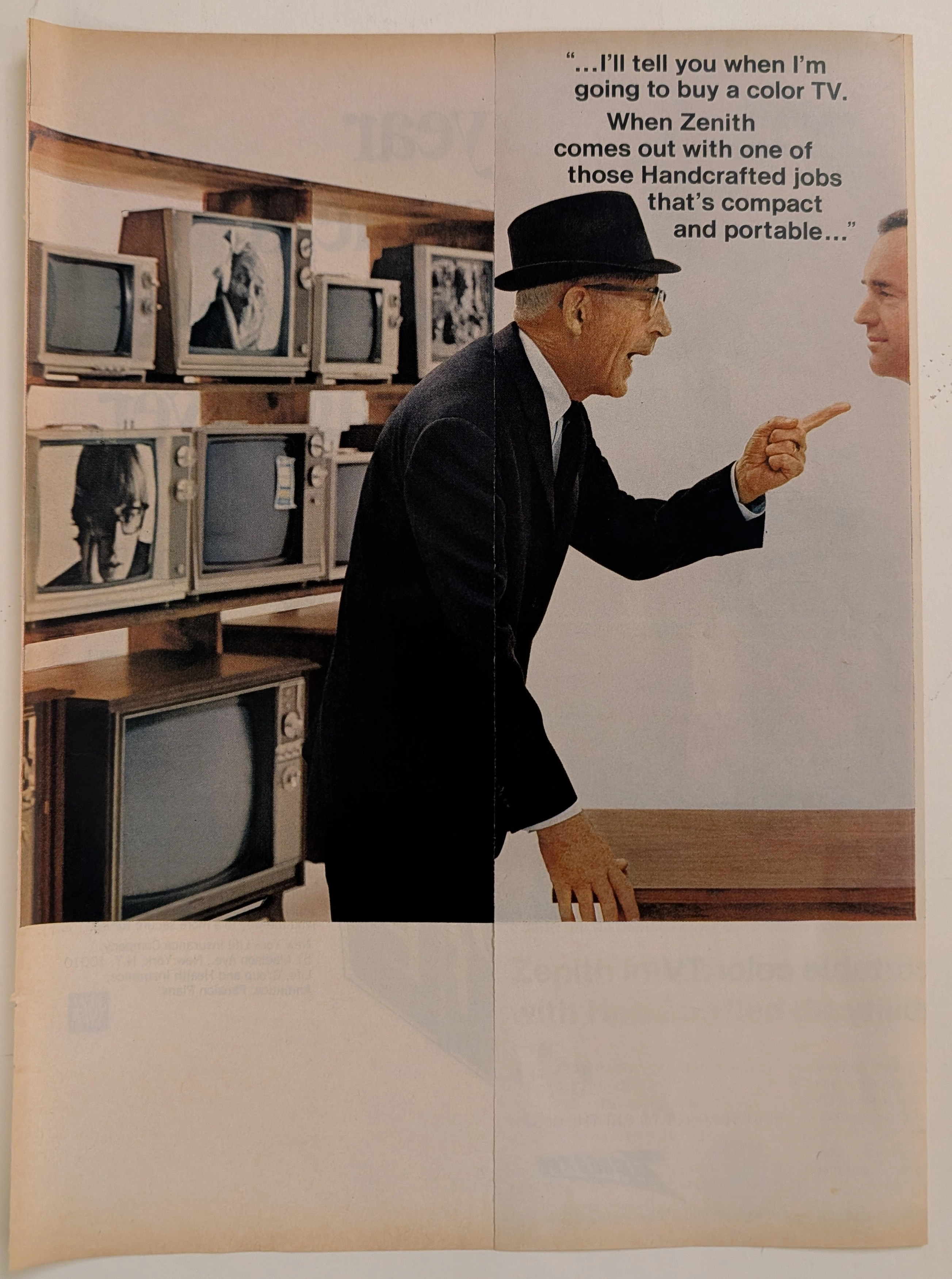
The Time Traveller's Dossier: The Color Revolution – The 1968 Zenith Handcrafted Golden Jubilee and the Generational Shift in Consumer Electronics
The evolution of the mid-twentieth-century American living room was fundamentally defined by the rapid, fiercely competitive technological arms race in consumer electronics. The historical artifact elegantly and securely positioned upon the analytical table of The Record Institute today is a striking, two-page centerfold print advertisement for the 1968 Zenith 14" Portable Color TV, originating from a highly transformative era in global broadcasting. This document completely transcends the standard, utilitarian boundaries of appliance marketing. It operates as a highly sophisticated, multi-layered cultural mirror, reflecting the precise era when American manufacturers had to psychologically persuade a cautious, older generation to adopt a radically new, expensive technology by anchoring it to traditional concepts of craftsmanship and reliability. This world-class, comprehensive dossier conducts a meticulous, unyielding, and exceptionally exhaustive examination of the artifact, operating under the absolute most rigorous parameters of historical, sociological, and material science evaluation. Dedicating the overwhelming majority of our analytical focus to its immense historical gravity, we will decode the brilliant marketing psychology embedded within the multi-page narrative of the "skeptical buyer," analyze the sociopolitical impact of Zenith's "Handcrafted" manufacturing philosophy during the rise of automation, and dissect the profound cultural semiotics of broadcasting the American pastime—baseball—in vivid color. Furthermore, as we venture deeply into the chemical and physical foundations of this analog printed ephemera, we will reveal the precise mechanical fingerprints of the CMYK halftone rosettes captured in the macro imagery of the television screen and corporate logos. Finally, we will assess its archival rarity, exploring how the graceful, natural oxidation of the paper substrate cultivates a serene wabi-sabi aesthetic—a natural, irreversible phenomenon that serves as the primary engine driving up its market value exponentially within the elite global spheres of Vintage Commercial Ephemera and Technology Archives.