#MotorsportEngineering
2 artifacts found
Renault
The Time Traveller's Dossier: The Heart of the Yellow Teapot – Renault's 1.5L V6 Turbo
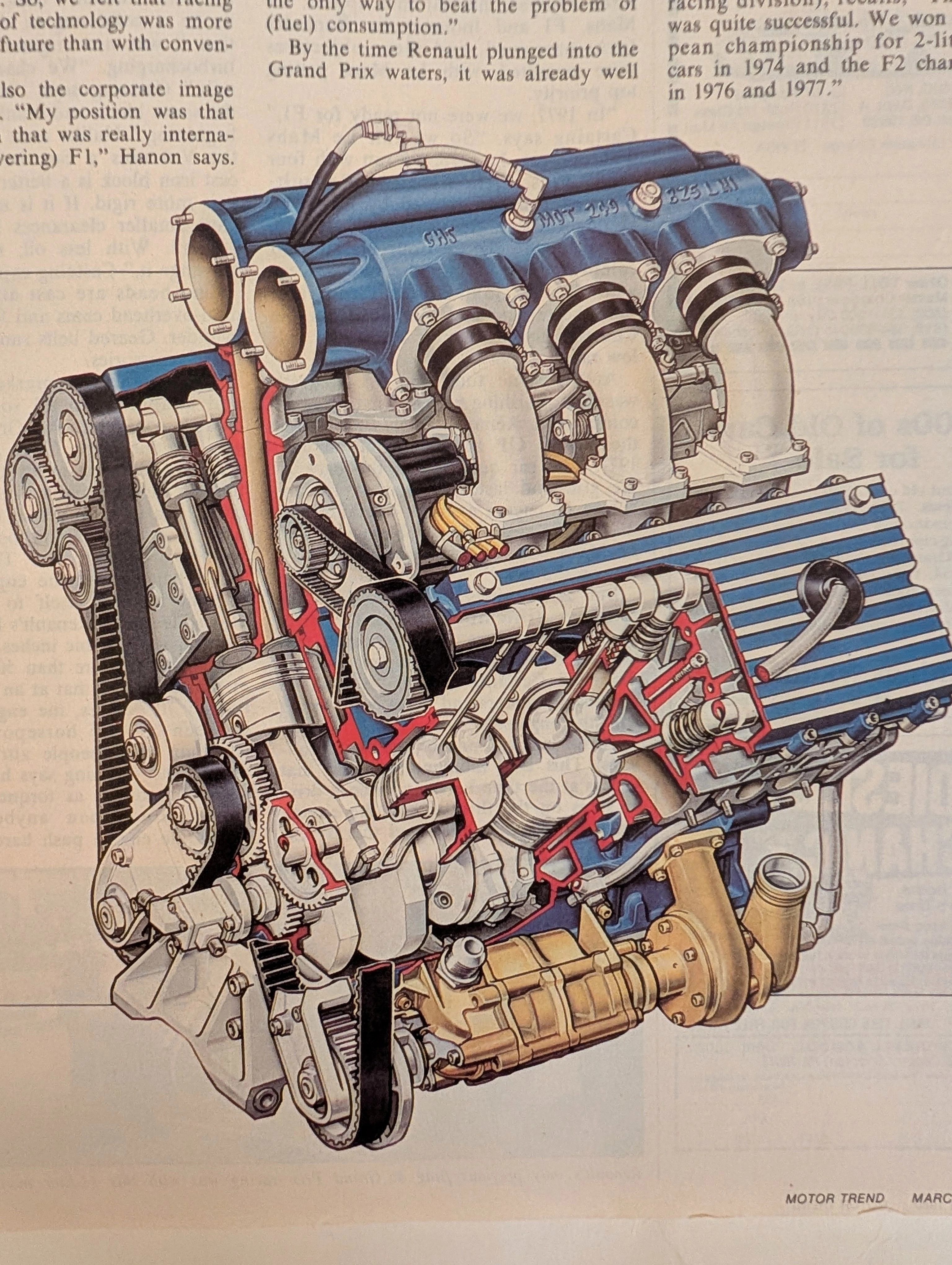
If the previous dossier showcased the aerodynamic envelope of the Renault F1 revolution, this artifact reveals its beating, volatile heart. Before us is page 113 of the March 1980 issue of Motor Trend magazine, featuring an article titled "Prix Car" by Fred M.H. Gregory. The visual anchor of the page is a stunning, full-color technical cutaway of the engine that triggered a seismic shift in motorsport: the Renault-Gordini EF1 1.5-liter turbocharged V6. This engine was the weapon that shattered the dominance of the naturally aspirated 3.0-liter engines. It is a masterpiece of complex plumbing, extreme thermal stress, and corporate ambition. The text surrounding the illustration provides the critical "why" behind the engineering—revealing that Renault's expensive F1 gamble was ultimately a high-speed marketing campaign to sell economical, turbocharged road cars to the everyday driver.
Renault
The Time Traveller's Dossier : Renault's Turbo Gamble - Anatomy of a Revolution
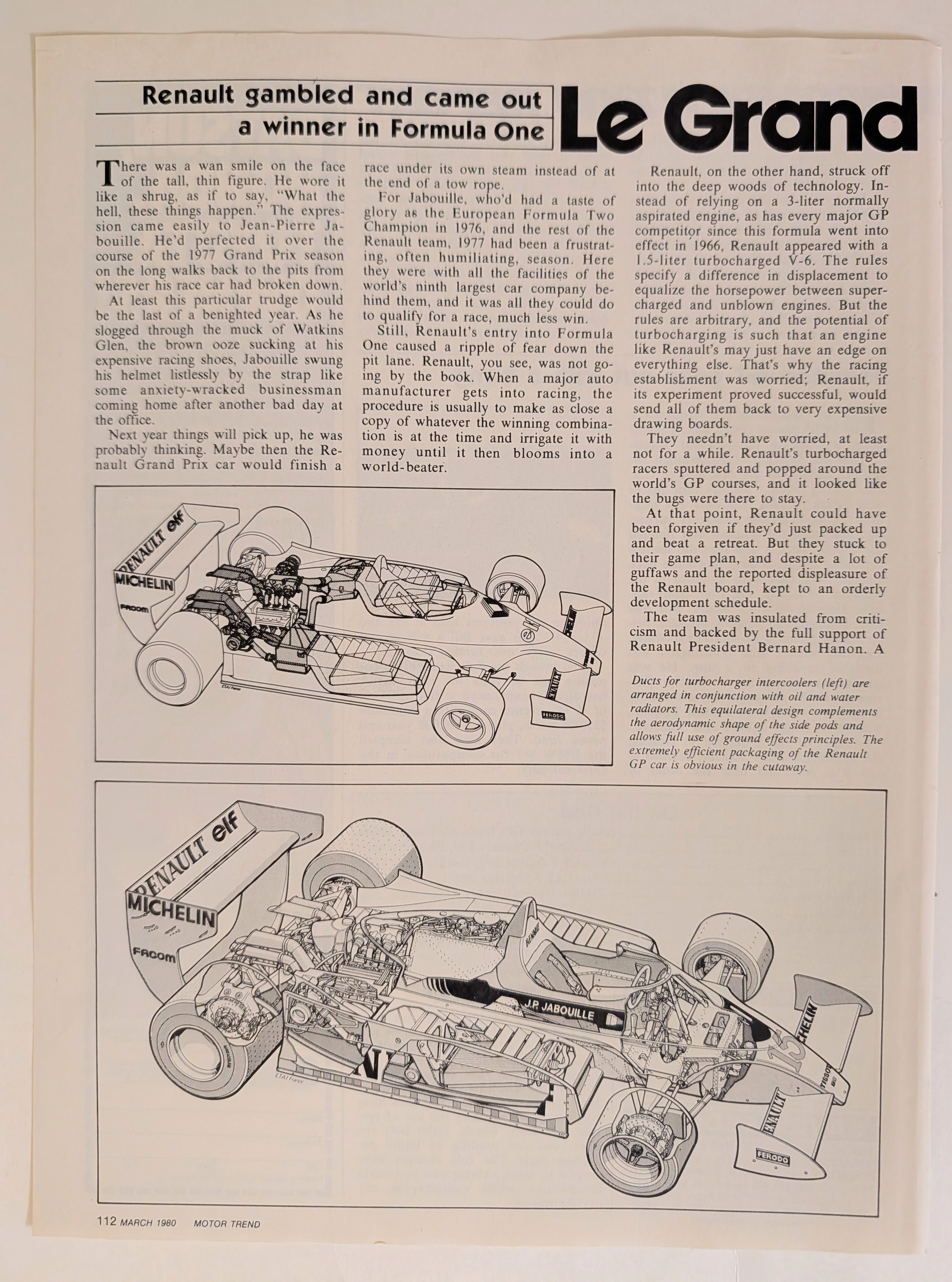
In the annals of motorsport, true revolutions are rarely born from immediate success. They are usually forged in the fires of public humiliation, mechanical failure, and stubborn, visionary persistence. Before the modern era of ultra-efficient hybrid power units, Formula One was dominated by a single, reliable philosophy: the 3.0-liter naturally aspirated engine (most notably the ubiquitous Ford Cosworth DFV). Then came Renault. In 1977, the French manufacturer did not enter F1 to conform; they entered to disrupt. They chose a loophole in the rulebook that allowed for 1.5-liter forced-induction engines—a path so complex and fraught with reliability issues that the established British teams dismissed it entirely. The artifact before us—a page from the March 1980 issue of Motor Trend magazine—captures the precise historical moment when the laughter stopped. It documents the vindication of the turbocharged V6. This magnificent technical cutaway illustrates not just a car, but the blueprint of a paradigm shift that would permanently alter the trajectory of global motorsport.