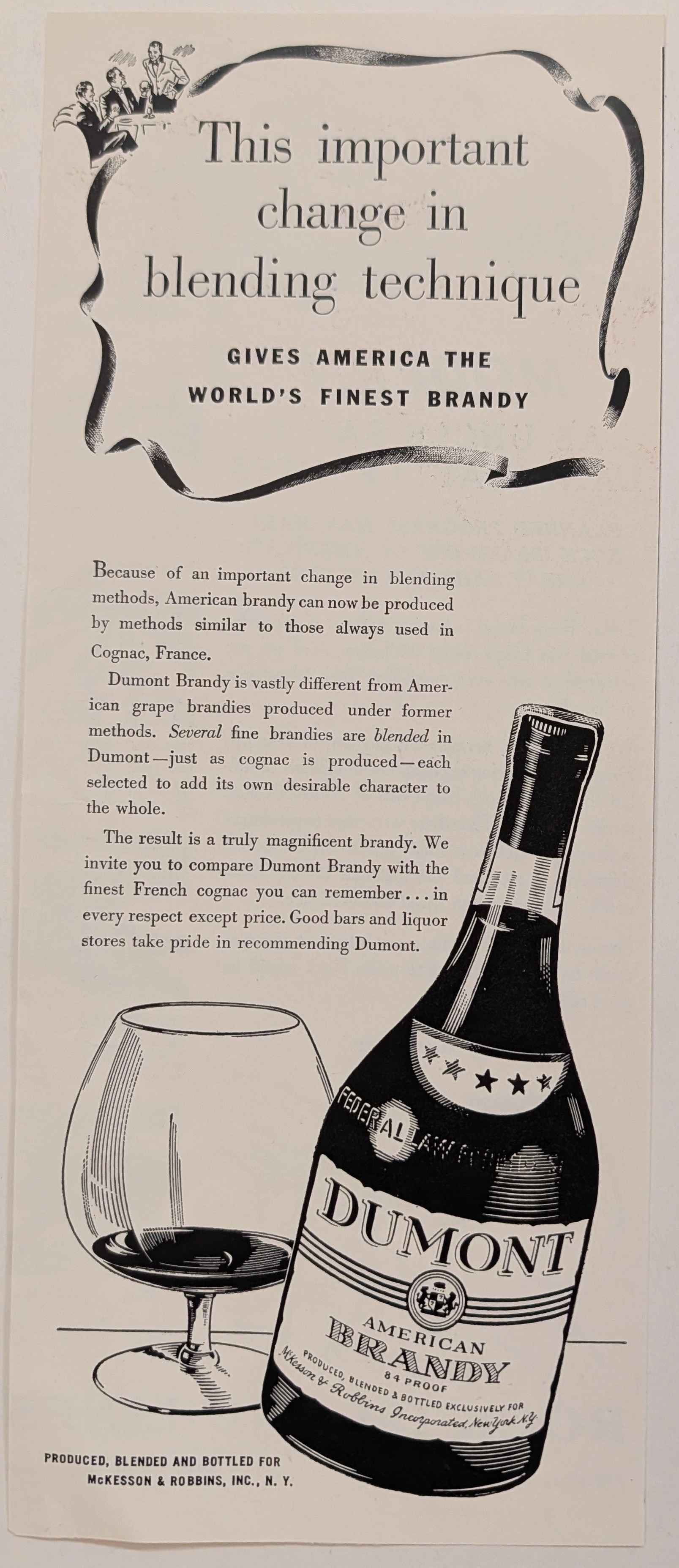
1944 Dumont American Brandy Vintage Advertisement
Mid-20th Century Dumont American Brandy Vintage Advertisement During the mid-20th century, particularly in the post-WWII era, the American distilled spirits market was evolving. While domestic whiskey dominated, there was a concerted effort by large distributors like McKesson & Robbins to cultivate an appreciation for domestic brandies, positioning them as sophisticated alternatives to European imports. This advertisement for Dumont American Brandy exemplifies this strategy. The copy aggressively targets the prestige of French cognac, claiming an "important change in blending methods" allows Dumont to mirror the production techniques of Cognac, France. By stating that "Several fine brandies are blended in Dumont—just as cognac is produced," the marketer is directly appealing to consumers s
Category: Alcohol
Year: 1944
Rarity Class: B
Paper & Print Condition
This document is printed on standard commercial, uncoated paper stock typical of mid-century periodicals or newspaper supplements. The printing technique relies entirely on high-contrast black-and-white ink, utilizing a combination of bold typography and meticulous line art (stippling and hatching) to create shading and depth on the bottle and glass, rather than halftone photographic reproduction. The ink remains remarkably deep and sharp. Archival inspection shows a noticeable horizontal center
Provenance & Rarity
Likely extracted from a mid-century lifestyle magazine or a large-format newspaper layout, this advertisement is a fascinating piece of commercial ephemera. While print runs for such publications were large, intact, clean single pages featuring high-quality line art are moderately rare today. Highly acidic paper from this era is prone to rapid degradation. The true archival value of this piece lies in its documentation of American liquor marketing strategies—specifically, the post-Prohibition, p
Rarity & Condition Summary
Rarity Classification: Class B (Moderately Rare) A sharply preserved example of mid-century black-and-white commercial art. While everyday print ads from this era are relatively common, the exceptional detail of the line art and the insight it provides into the specific positioning of American spirits elevate this document's archival significance. It requires no advanced conservation and serves as an excellent resource for historians of beverage marketing, advertising typography, and 1940s-1950s