Dead Brand Stories / Atari
What Happened to Atari?
The company that built the video game industry in a decade flooded it with rushed games — and was split and sold within a year of burying its own cartridges in the desert.
Opening statement
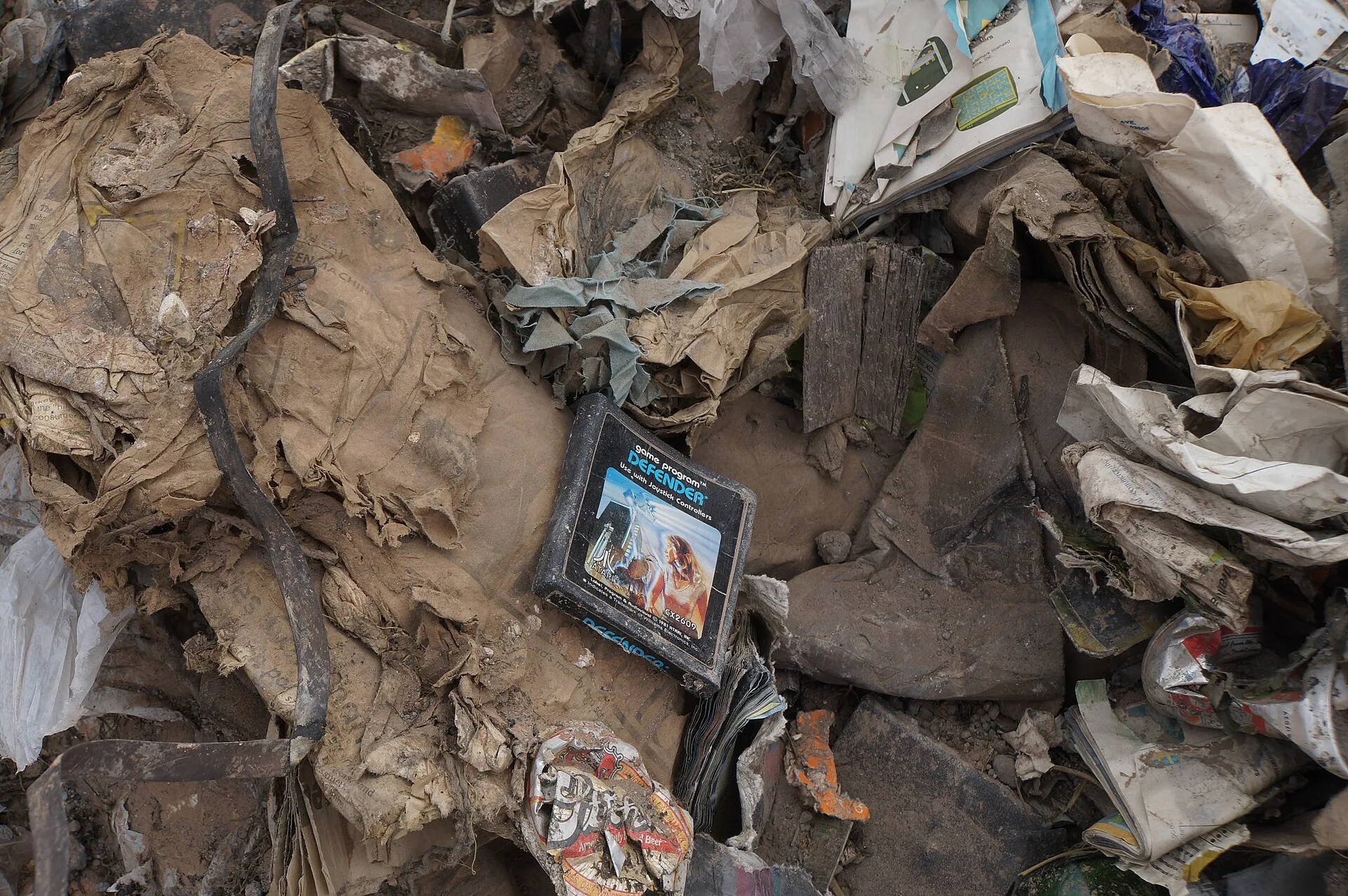
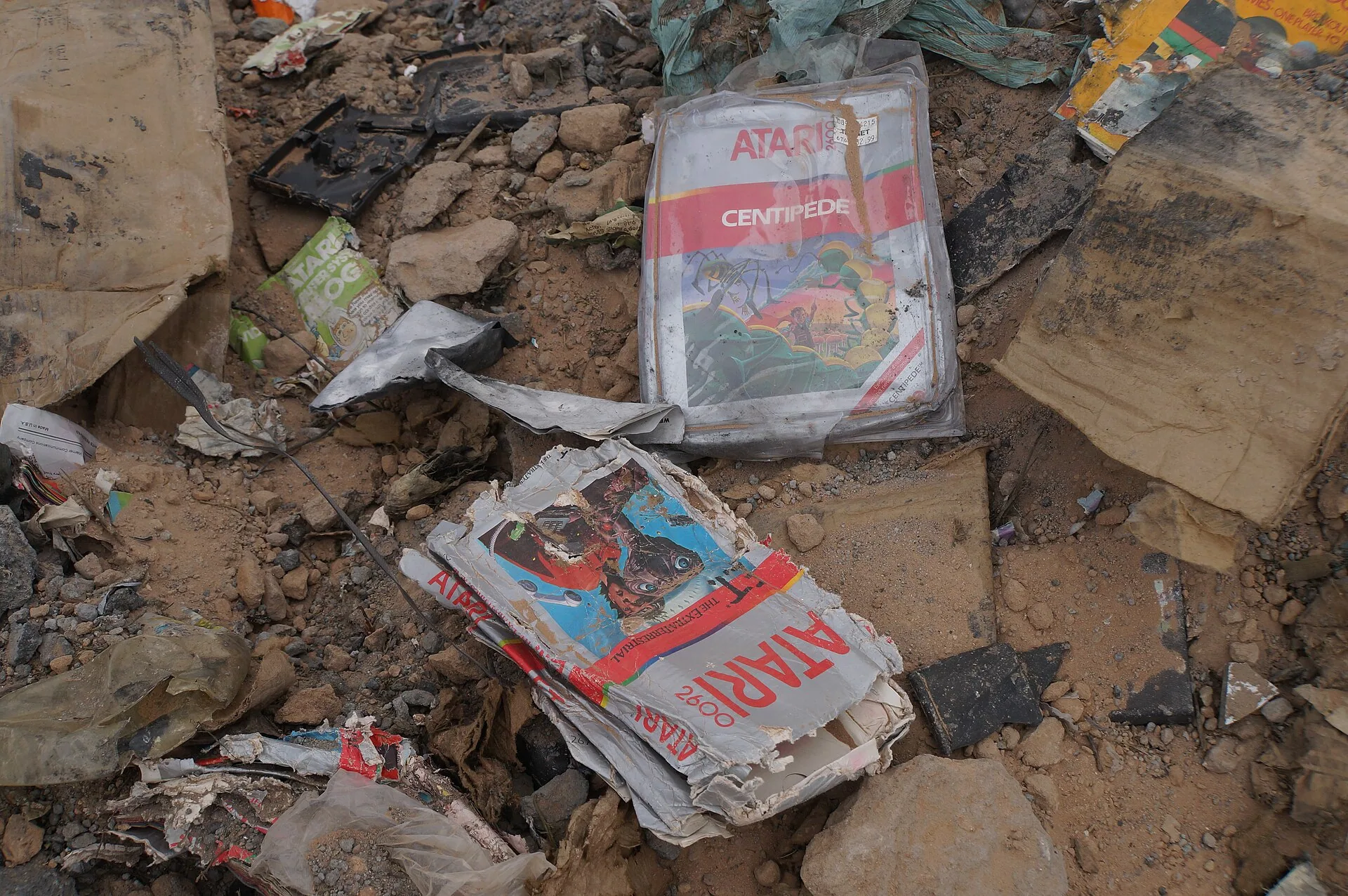
In September 1983, trucks from an Atari warehouse in El Paso, Texas, rolled into the city landfill at Alamogordo, New Mexico, and dumped their loads: unsold games and equipment, crushed and buried under concrete. The burial manager later put the load at about 728,000 cartridges. Among them were copies of E.T. — a game that had been made in about five weeks, had sold one and a half million copies, and had still failed. For thirty years the burial was treated as an urban legend. In April 2014, a dig pulled about thirteen hundred cartridges out of the ground and proved it true. The stranger fact is what the burial was not: it was not the end of a small company. One year earlier, in 1982, Atari had taken in nearly two billion dollars in revenue. It had built an industry — Pong in the arcades, the 2600 in the living room — and in 1983 it lost more than half a billion dollars in a single year. In July 1984 its owner, Warner, split it in two and sold the home business. The original Atari was twelve years old. This account is drawn from the record: contemporary reporting from the New York Times and the Alamogordo Daily News, and the documented history of the company and the crash. One distinction is kept throughout, because everything after 1984 depends on it: the Atari that exists today is not this company. The name survived. The company did not.
A structured case history
Reading section 01
Watch: Dead Brands No. 6, the short — "What Happened to Atari?"
Reading section 02
The Rise of Atari
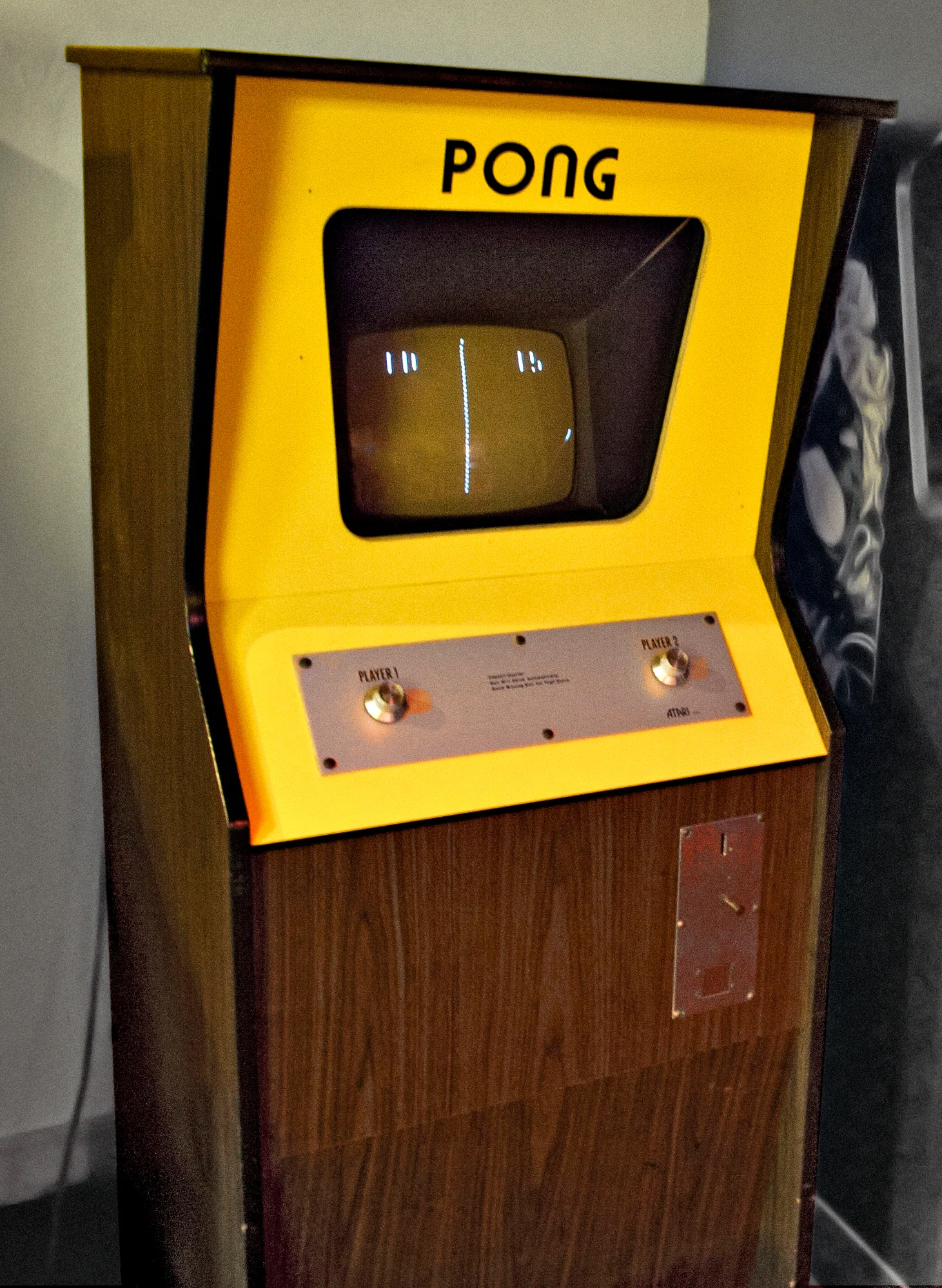
Atari was incorporated on 27 June 1972, by two engineers, Nolan Bushnell and Ted Dabney. Its first product was built almost by accident: Bushnell asked a young engineer, Allan Alcorn, to build a simple game as a training exercise. Alcorn produced Pong — two paddles, a ball, a score. Installed as a prototype in a bar, Andy Capp's Tavern, it stopped working within days — because its coin box had overflowed with quarters. Pong became the first commercially successful arcade video game, and it built an industry where none had existed.
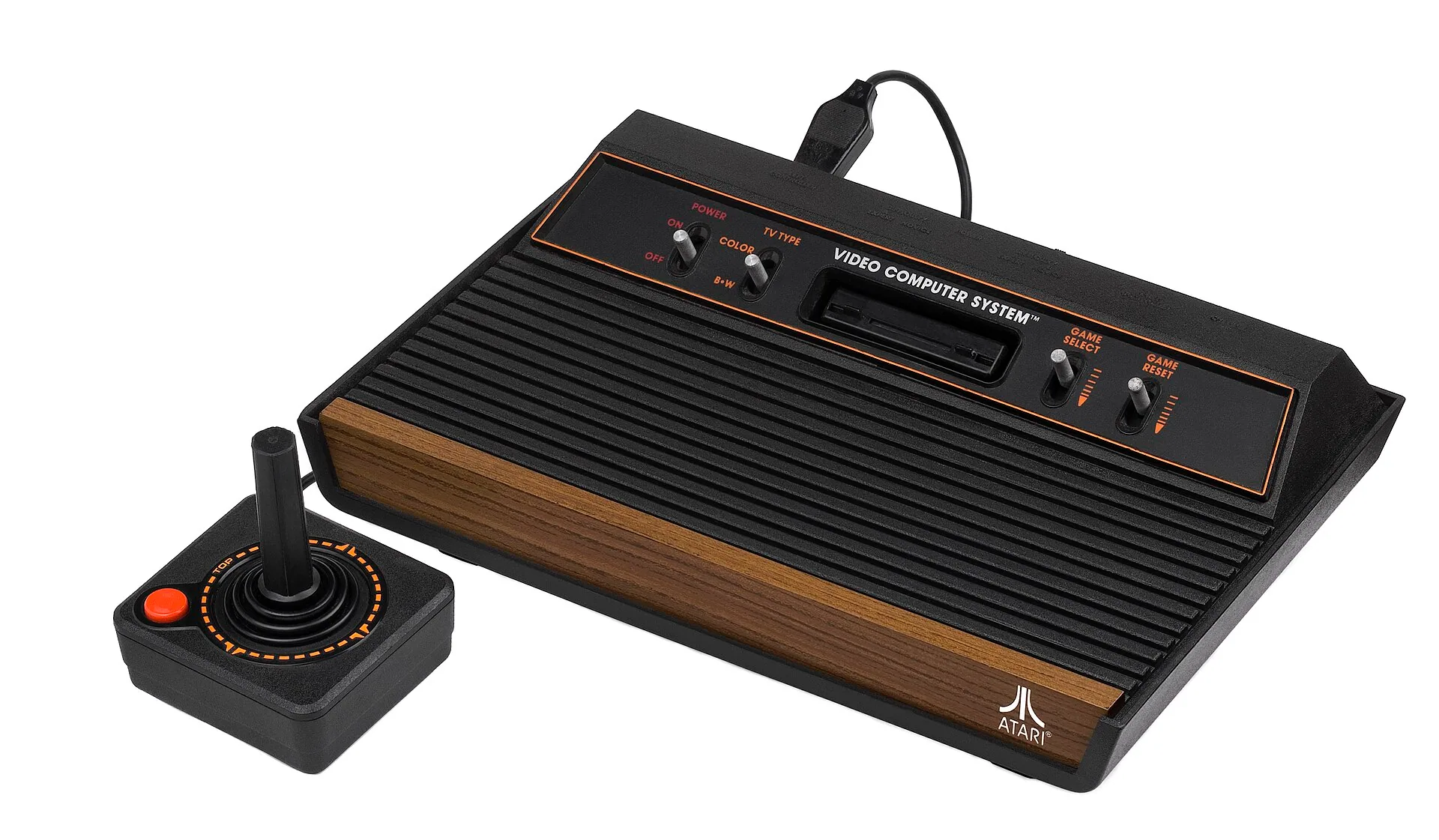
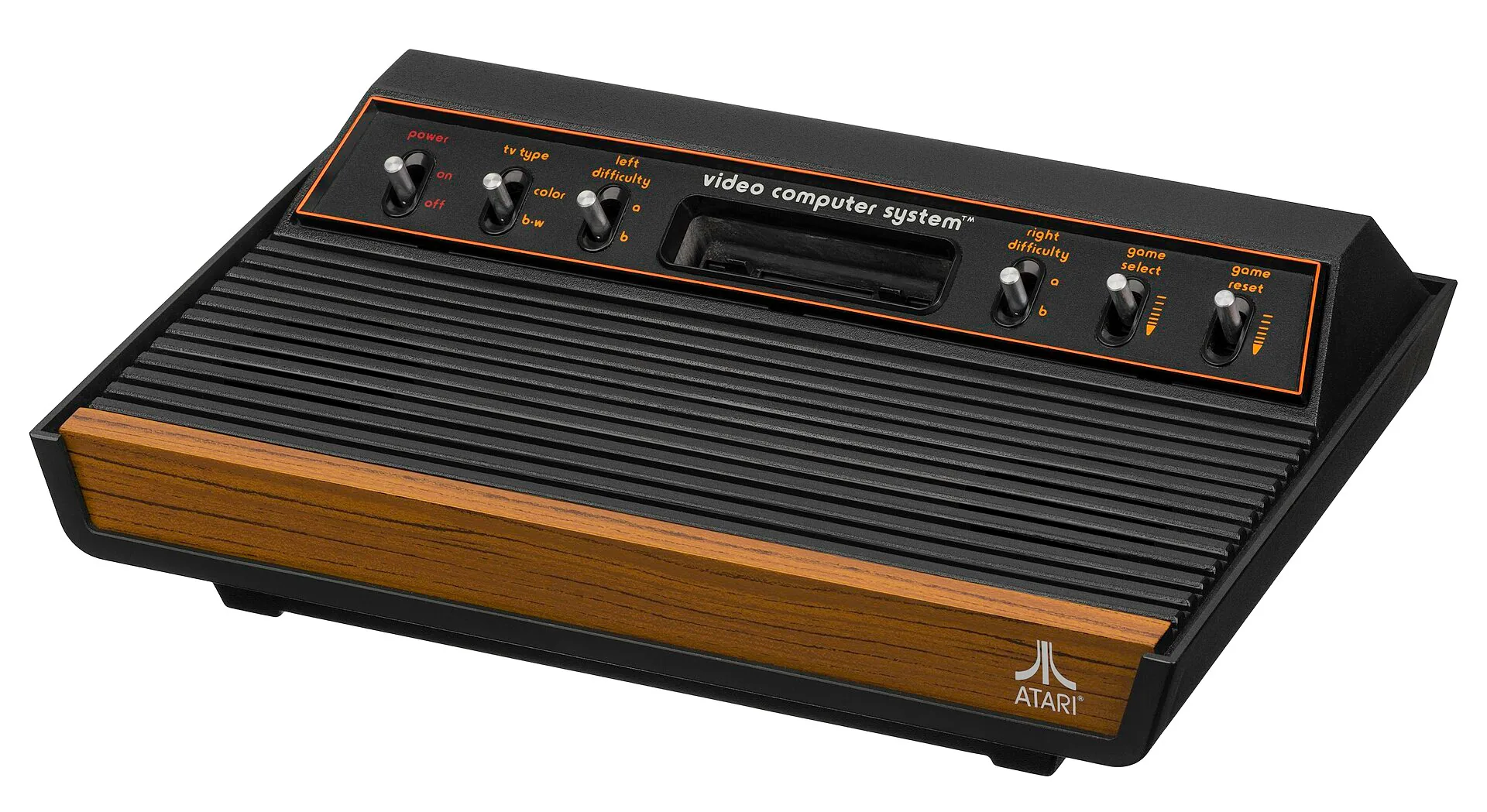
In 1976, Warner Communications bought Atari for a reported 28 million dollars — and gave it the money to go home. The result, launched in September 1977, was the Video Computer System, the machine the world knows as the Atari 2600: one console, and an endless shelf of games on swappable cartridges. The machine was no longer the product. The shelf was.
Visual interlude
Reading section 03
The Peak
The shelf filled fast. When the home version of Space Invaders arrived, console sales ignited. By 1982 the numbers were unreal for a company ten years old: in the first nine months of that year, Atari supplied about half of Warner's 2.9 billion dollars in revenue and two thirds of its operating profit. Across the full year it took in nearly two billion dollars. The 2600 would go on to sell thirty million machines in its lifetime.
Visual interlude
Reading section 04
The Fall of Atari
Success taught the industry the wrong lesson. Consoles multiplied; cartridges multiplied faster — too many of them rushed, and too many of them bad. Cheap home computers were undercutting the consoles on price. The warning sign appeared inside a hit: the 2600 version of Pac-Man became the console's best seller, and still left millions of cartridges unsold. The market was producing more games than there were players to buy them.
Then came the five weeks. Warner had paid a reported twenty to twenty-five million dollars for the rights to E.T. Programmer Howard Scott Warshaw was given about five weeks to build the Christmas game — against a normal production cycle of five or six months. He delivered. The game sold one and a half million copies — and it was still a failure, because Atari had manufactured some five million. Millions of cartridges had nowhere to go.
In September 1983, some of them went to Alamogordo. That same year the bottom fell out of the whole market: North American home video game revenue, about 3.2 billion dollars at its peak, would fall to about one hundred million dollars by 1985 — a collapse of almost ninety-seven percent. Atari alone lost 536 million dollars in 1983.
STAT CARD Nearly two billion dollars taken in (1982) → 536 million dollars lost (1983) Atari's revenue in its peak year — and its loss the very next year, in the crash it had helped to cause.
In July 1984, Warner cut the company in two. The home console and computer divisions were sold to Jack Tramiel — for roughly 240 million dollars in notes and stock, much of it Warner's own debt taken on by the buyer. What remained of the original company was renamed Atari Games: the arcade side. The company that had built the video game business no longer existed as one company.
Visual interlude
Reading section 05
The Afterlife
The desert kept its secret for thirty years, until it didn't. On 26 April 2014, an excavation at the Alamogordo landfill — filmed for a documentary — recovered about thirteen hundred cartridges: E.T. among them, alongside the crushed boxes the dig photographs show. Archaeologists catalogued 1,382 in all. The Smithsonian took an excavated E.T. cartridge into its collection, and the city of Alamogordo auctioned 881 of the recovered cartridges for a combined 107,930 dollars.
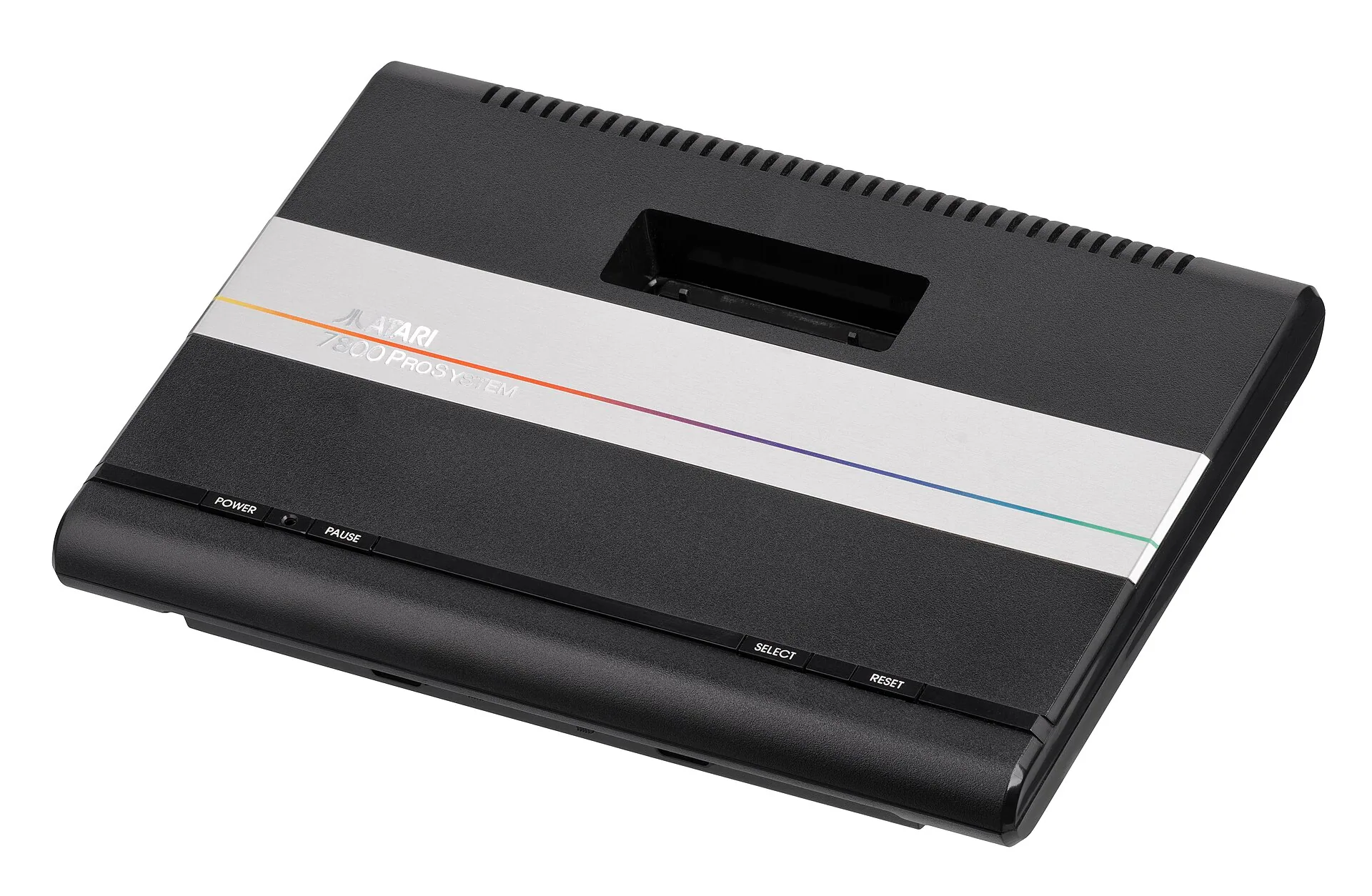
And the name began a long walk away from its makers. The home business became Atari Corporation under Tramiel. The name passed to JT Storage in 1996; to Hasbro Interactive in 1998, which paid five million dollars for the name and assets; to Infogrames in 2001, which renamed itself Atari SA in 2009. Today's Atari SA is a different company that sells retro consoles and games — the Atari VCS of 2021, the Atari 2600+ of 2023 — under a name older than most of its customers.
Visual interlude
Reading section 06
The Verdict
So is Atari dead? The company: yes — it died in July 1984, split by its owner twelve years after it was founded, in the wreckage of a crash it had helped to cause. What the record shows is written in its own numbers: an industry built in a decade, a market flooded with rushed product, more than half a billion dollars lost in a single year, and a warehouse of unsold games buried in the desert because there was nothing else to do with them.
What survived is the name — passed from owner to owner, worth five million dollars in 1998, worn today by a company that sells the past back to the people who grew up with it. The original Atari built the video game business. Then it showed how fast rushed games could bury it.
Visual interlude

Reading section 07
Timeline
Visual interlude
Reading section 08
Sources & image credits
Sources. Founding and Pong — Encyclopedia.com company history (International Directory of Company Histories) and the IEEE Spectrum review of Zap!: The Rise and Fall of Atari (Atari incorporated 27 June 1972 by Nolan Bushnell and Ted Dabney); the episode long-form outline, beat 1 (Allan Alcorn builds Pong as a training exercise; the Andy Capp's Tavern prototype's coin box overflows). The Warner purchase and the 2600 launch — the outline, beat 2 (Warner Communications buys Atari in 1976 for a reported 28 million dollars; the Video Computer System launches September 1977). The 1982 figures — the New York Times (December 1982), via the outline, beat 3 (about half of Warner's 2.9 billion dollars in revenue and two thirds of its operating profit in the first nine months of 1982; full-year revenue nearly two billion dollars); Encyclopedia.com ("By 1982, Atari was a 2 billion dollar company"); the 2600's lifetime sales of 30 million units — the Atari 2600 record. The flood and the Pac-Man warning — the outline, beat 4 (market saturation; cheap home computers undercutting; the 2600 Pac-Man port the console's best seller yet millions unsold). E.T. — Polygon, "Why E.T. wasn't the worst game in history" (2014), on Howard Scott Warshaw's five-week deadline; the rights fee of a reported twenty to twenty-five million dollars and the production and sales figures — the outline, beat 5, and the Atari video game burial record (five million manufactured; 1.5 million sold). The burial — Alamogordo Daily News reporting (September 1983) and the New York Times, 28 September 1983 (truckloads of discarded cartridges from the El Paso plant, crushed and buried at the city landfill; burial formally dated 26 September 1983); the load of about 728,000 cartridges is the burial manager James Heller's figure. The crash and the loss — the video game crash of 1983 record (North American home video game revenue falls from about 3.2 billion dollars at its peak to about 100 million dollars by 1985; Atari loses 536 million dollars in 1983). The split — the Atari, Inc. record (sale of the consumer electronics and home computer divisions to Jack Tramiel announced 3 July 1984, for roughly 240 million dollars in notes and stock / Warner-held debt taken on; the remainder renamed Atari Games). The name's later owners — the outline, beat 8, and the Atari / Atari SA records (Atari Corporation, then JT Storage, 1996, then Hasbro Interactive, 1998, for five million dollars, then Infogrames, 2001, renamed Atari SA, 2009; retro refocus; Atari VCS, 2021; Atari 2600+, 2023). The 2014 excavation — the City of Alamogordo and the excavation record (dig began 26 April 2014; about 1,300 cartridges recovered; archaeologists catalogued 1,382; the Smithsonian took an excavated E.T. cartridge); the city's auction of 881 recovered cartridges for a combined 107,930.15 dollars — Ars Technica (August 2015).
Image credits (all via Wikimedia Commons; licenses as logged at download, November 2026):
Dates. Published: 2026-11-09 · Last verified: 2026-11-08 · Updated: 2026-11-09
Author: Ronin Naodhinsuk
Atari, Warner, and all other brand names and logos mentioned in this article are trademarks of their respective owners. The Record Institute is an independent archive and is not affiliated with, endorsed by, or connected with Atari SA, Warner Bros. Discovery, or the former Atari Inc.
Next episode → No. 7: What Happened to Polaroid?
Related Articles
- Borders — What Happened to Borders?
- Tower Records — What Happened to Tower Records?
- Compaq — What Happened to Compaq?