Dead Brand Stories / Compaq
What Happened to Compaq?
The biggest computer maker on Earth beat IBM by copying it perfectly — and was gone as its own company within two years of its peak, absorbed in a merger its shareholders almost voted down.
Opening statement
In 2000, Compaq was the biggest computer maker on Earth. It sold more personal computers than any company alive, and its revenue passed 42 billion dollars in a single year. Two years later, it no longer existed as its own company — absorbed into Hewlett-Packard in a merger that was valued at 25 billion dollars when it was announced and at about 19 billion dollars by the day it closed, after a shareholder fight that nearly killed it. The strangest part is how Compaq got there. It built its empire on somebody else's machine: an IBM-compatible portable, legally reverse-engineered so that IBM could not stop it. The company that beat IBM by copying it perfectly then lost to a rival that made the same machine cheaper — and the name that once defined the personal computer ended as a licensed label on budget machines an ocean away. This account is drawn from the record: the merger announcements, the industry rankings, and the company's own reported figures. It runs from a sketch on a placemat in Houston in 1982 to the largest technology merger of its day — and to the quiet retirement of the name in 2013.
A structured case history
Reading section 01
Watch: Dead Brands No. 10, the short — "What Happened to Compaq?"
Reading section 02
The Rise of Compaq
The story starts in Houston, Texas, in February 1982. Rod Canion, Jim Harris and Bill Murto — three senior managers at Texas Instruments — left to found a company whose name was a promise: Compaq, from "Compatibility and Quality." The plan, sketched on a placemat, was to build a portable computer that ran IBM's software. That was the audacious part. IBM owned the personal computer market, and its software was the standard everyone needed — but IBM's designs were protected. Compaq's engineers reverse-engineered the critical BIOS chip by clean-room methods, documenting that they had never copied IBM's code, so the resulting machine was fully compatible and entirely legal. IBM could not shut it down.
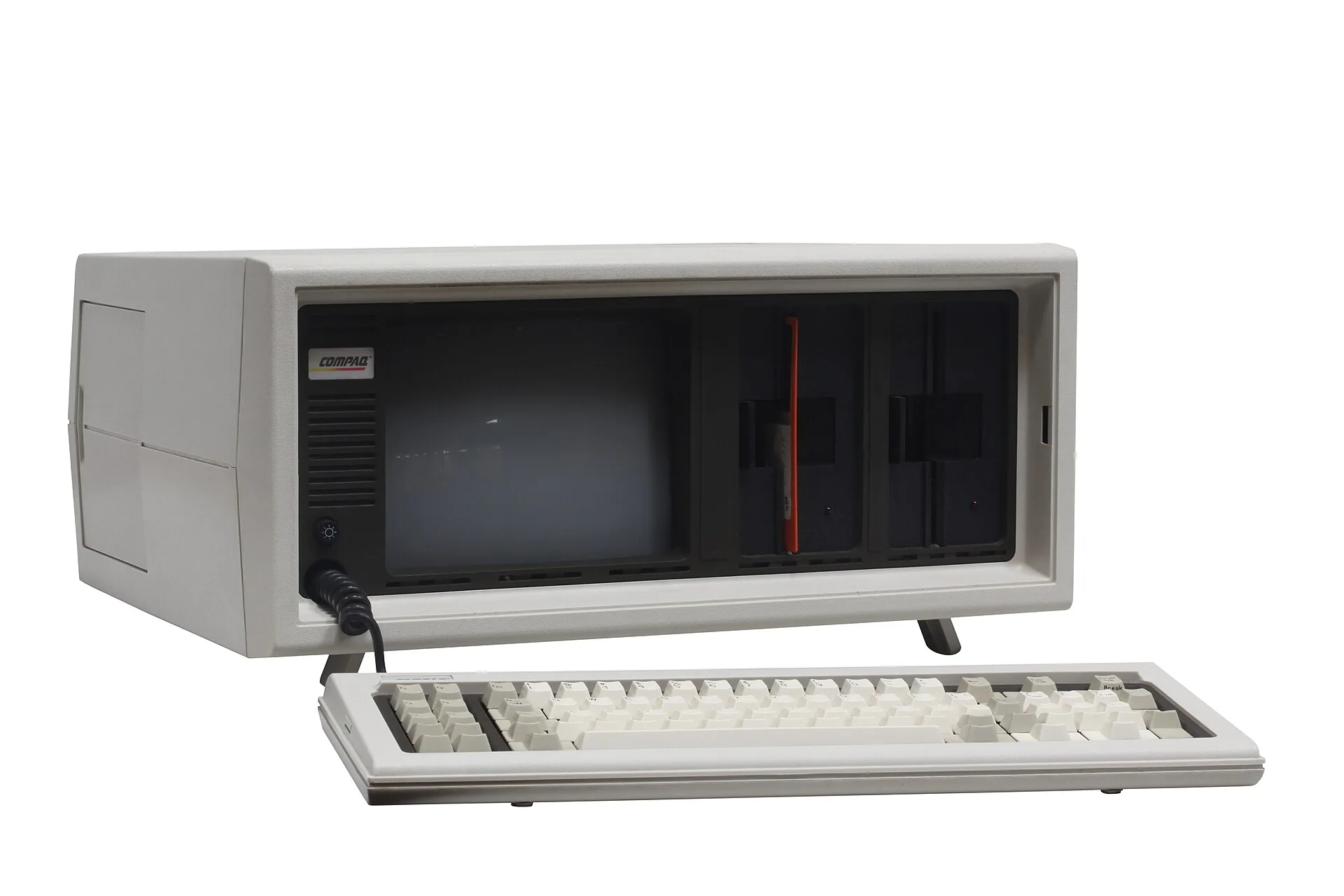
The Compaq Portable was announced in November 1982 and shipped in March 1983: a 28-pound luggable in a canvas case, priced at 2,995 dollars, that ran the software written for IBM's desktop. It sold beyond every projection. In 1983, its first full year of production, Compaq shipped 53,000 portables and took in more than 111 million dollars — then the most revenue any first-year company had ever recorded in American business history.
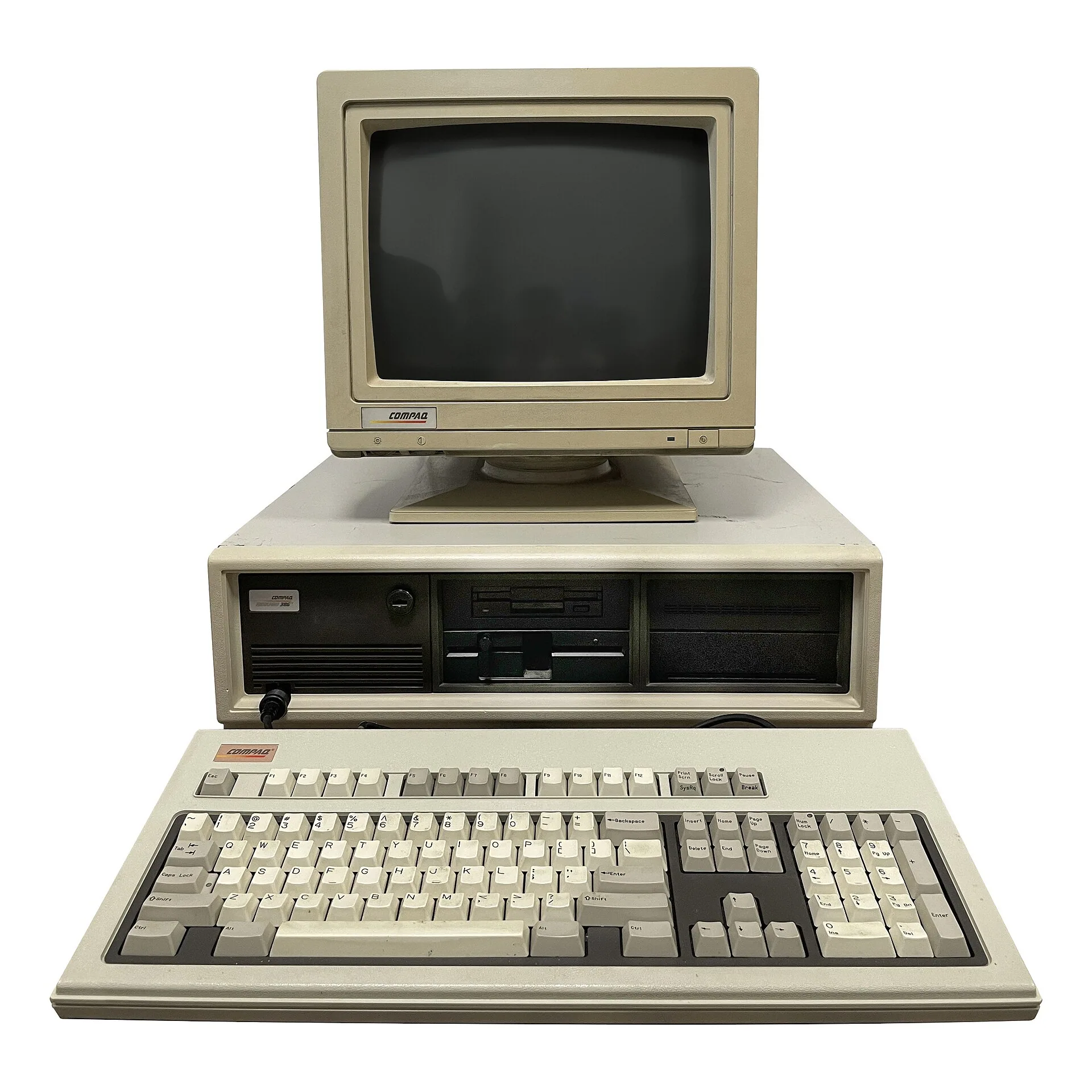
The rise did not slow. Compaq entered the Fortune 500 in 1986 — faster than any company before it — and reached one billion dollars in annual revenue in 1987, again the fastest any company had ever got there. The same year as the Fortune 500 milestone, its Deskpro 386 became the first personal computer built on Intel's 386 chip, beating IBM itself to market. The student was now setting the pace for the teacher: by 1995, Compaq had passed IBM to become the world's biggest PC seller.
Visual interlude
Reading section 03
The Peak
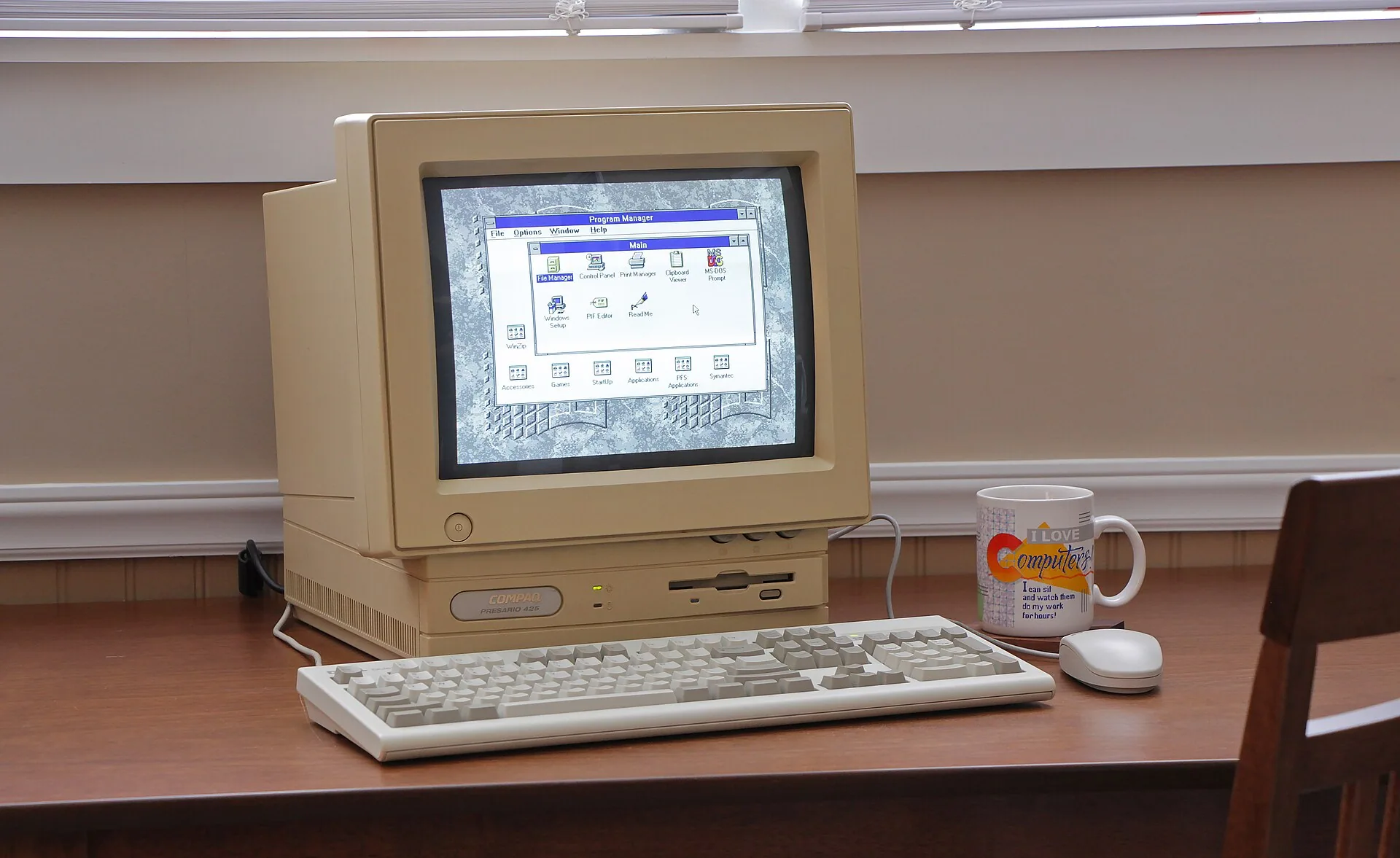
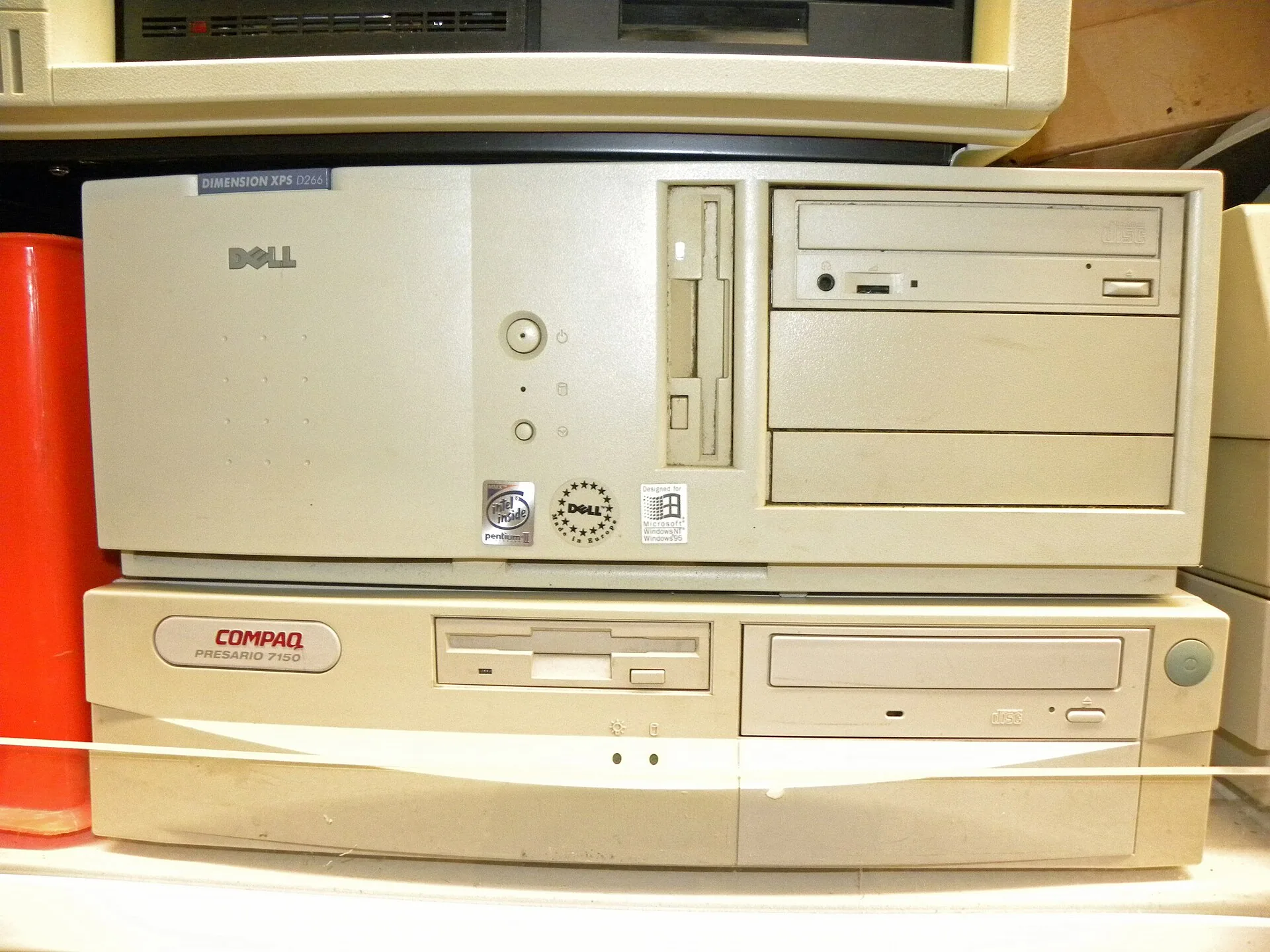
For many families, Compaq was simply the computer in the house. The shift came in August 1993, when Compaq launched the Presario line — its first machines built for the home, sold through ordinary shops. The first Presario, the 425, bundled the computer, the monitor, a modem and online-service software into one beige box, among the first home PCs to sell for under one thousand dollars at some configurations. A generation did its homework, and then its dial-up nights, on a Presario.
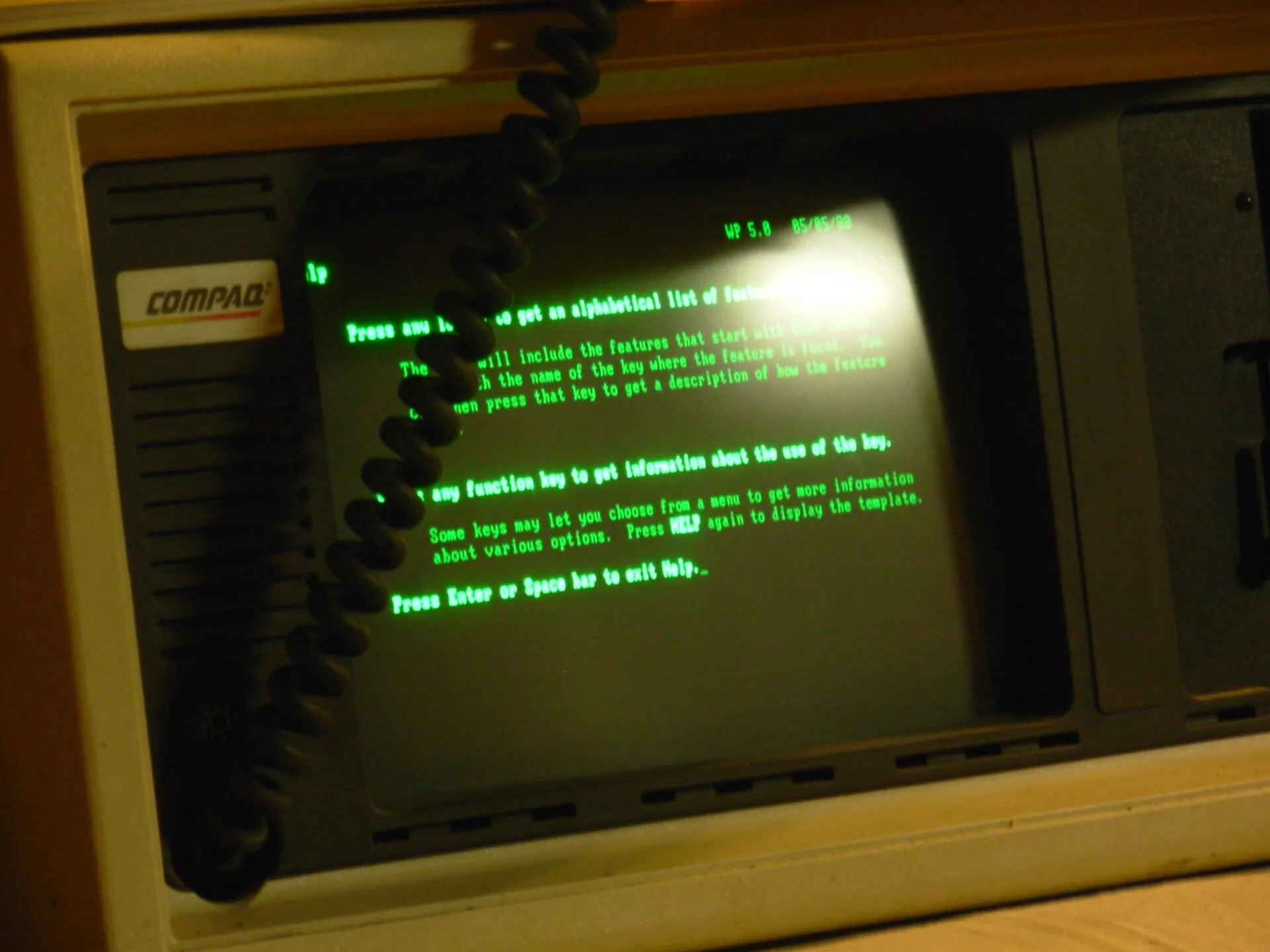
Through the 1990s Compaq was the world's largest PC supplier, with some 70,000 employees at its 1999 peak. In 2000 it stood at the summit: the No. 1 PC maker worldwide, with 12.8 percent of the global market by Gartner Dataquest's count and revenue of 42.38 billion dollars. It had gone from a placemat sketch to the top of its industry in eighteen years. It would be gone as an independent company in less than two.
Visual interlude
Reading section 04
The Fall of Compaq
Then Dell changed the math. Dell sold its machines directly to customers and built each one to order, which stripped out two costs Compaq still carried: the dealer's markup, and warehouses of finished machines losing value by the week. Compaq sold through resellers, and in a market where the machines were all but identical, the cheaper route to the same box won. Dell first passed Compaq in 1999; Compaq briefly retook the lead in 2000; in 2001 Dell took the top spot for good. The dot-com bust did the rest of the damage: Compaq's revenue fell from 42.38 billion dollars in 2000 to 33.55 billion dollars in 2001.
Compaq, meanwhile, had been reaching for a second identity. Imitating IBM again, it tried to become a full-services giant: it bought the computer maker Tandem in 1997, and in 1998 it paid a nearly ten-billion-dollar price for Digital Equipment Corporation, the fading minicomputer pioneer. Digesting DEC proved harder than buying it — integration struggles and internal conflict followed, and in April 1999, after a profit warning, chief executive Eckhard Pfeiffer was forced out. The company was now fighting a price war against Dell with one hand and swallowing the largest acquisition in its history with the other.
STAT CARD 42.38 billion dollars of revenue (2000) → absorbed (2002) The world's biggest PC maker at its peak year — and independent for less than two years after it.
The end came from the side nobody expected. On 3 September 2001, Hewlett-Packard announced it would acquire Compaq in an all-stock merger valued at about 25 billion dollars — a combined company with some 87 billion dollars in revenue. Walter Hewlett, a founder's son and HP board member, led a bitter proxy fight against the deal. While the fight ran, HP's share price fell, and with it the value of the prize: when shareholders finally approved the merger in March 2002, by a margin of about 51 percent, the deal that had been announced at 25 billion dollars closed on 3 May 2002 at about 19 billion dollars. Compaq's stock stopped trading. After twenty years, the company was a product line inside somebody else's.
Reading section 05
The Afterlife
HP had no use for two PC brands at the same table, and Compaq — the bigger seller of the two at the merger — was demoted to the budget shelf: from 2002 the name marked HP's lower-end machines in North America and Europe. In 2013, HP retired the Compaq brand in those markets altogether. The company had died in 2002; eleven years later, the name was stood down with it.
But names this famous are rarely buried. HP licensed Compaq to third parties abroad, and the badge survives on budget PCs and televisions in parts of Latin America and India: in Brazil the license passed from Globalk to Positivo Tecnologia in 2021; in Argentina, Grupo Newsan launched Presario notebooks under the name from 2015, though its Argentine operation later went quiet; in India, licensees have sold Compaq-branded smart TVs. What travels under the name today is not a company, and it is not the giant of 2000. It is a well-remembered word, rented out by the territory.
Visual interlude
Reading section 06
The Verdict
Compaq beat IBM by copying it perfectly. That was the genius of 1982: not a better computer, but the same computer, made legally, sold to everyone IBM's own prices and habits left waiting. The tragedy of 2001 is the mirror image. Once every maker sold the same machine, the contest moved from the machine to the cost of selling it — and Dell's direct model was simply a cheaper way to deliver an identical box. Compaq saw the future twice: it read IBM's, and it could not escape Dell's. The name it built is still on sale today, on machines its founders would not recognize, in markets the original company never reached. The company is gone. The word remains.
Visual interlude
Reading section 07
Timeline
Visual interlude
Reading section 08
Sources & image credits
Sources. Merger announcement and terms (0.6325 HP shares per Compaq share; value approximately 25 billion dollars at announcement) — HP press release, 3 September 2001. Closing value (approximately 19 billion dollars, 3 May 2002; some contemporary reports 18.6–18.7 billion dollars) — HP's later summaries and contemporary reporting. Proxy fight and shareholder approval (about 51.4 percent, March 2002) and combined revenue (about 87 billion dollars) — the episode's long-form outline, drawn from the merger record. Worldwide PC rankings (Compaq No. 1 in 2000, 12.8 percent share, 17.2 million units; IDC Q3 2000, 13.1 percent) — Gartner Dataquest (January 2001) and IDC. Founding (Houston, February 1982; Canion, Harris, Murto), the clean-room BIOS, 1983 first-year figures (53,000 portables, over 111 million dollars), the one-billion-dollar milestone (1987) and passing IBM (1995) — Encyclopaedia Britannica, "Compaq Computer Corporation"; Computer History Museum and CED histories (the legal clone); Kleiner Perkins history (Fortune 500 and revenue milestones). Revenue (FY2000 42.38 billion dollars; FY2001 33.55 billion dollars) — the company's reported figures, compiled in the ICMR HP–Compaq case study. Presario launch (26 August 1993; bundle of monitor, modem and online-service software; 1,399-dollar launch configuration) — Computer History Museum. DEC acquisition (1998; 9.6 billion dollars most commonly reported, 9.1 billion dollars in some case sources) and Tandem (1997), Pfeiffer's departure (April 1999), peak employment (about 70,000, 1999) — the episode's long-form outline and fact log. Dell's direct model and the 1999/2000/2001 lead changes — Wikipedia, "Compaq," citing industry analyses, and company histories citing Gartner/IDC data. Brand retirement (2013) — company history; TechSpot retrospective. Post-2013 licensing (Brazil: Globalk, then Positivo Tecnologia, 13 April 2021; Argentina: Grupo Newsan, 2015; India: including Ossify Industries, 2018) — the episode fact log.
Image credits (all via Wikimedia Commons; licenses as logged at download, November 2026):
Dates. Published: 2026-11-09 · Last verified: 2026-11-08 · Updated: 2026-11-09
Author: Ronin Naodhinsuk
Compaq, HP, Dell, IBM, and all other brand names and logos mentioned in this article are trademarks of their respective owners. The Record Institute is an independent archive and is not affiliated with, endorsed by, or connected with HP Inc., or any successor owner or licensee of the brand.
Next episode → No. 11: What Happened to Tower Records?
Related Articles
- Borders — What Happened to Borders?
- Tower Records — What Happened to Tower Records?
- Circuit City — What Happened to Circuit City?