Dead Brand Stories / Tower Records
What Happened to Tower Records?
Tower Records died in America in 2006 — but in Tokyo, its biggest store still has nine floors.
Opening statement
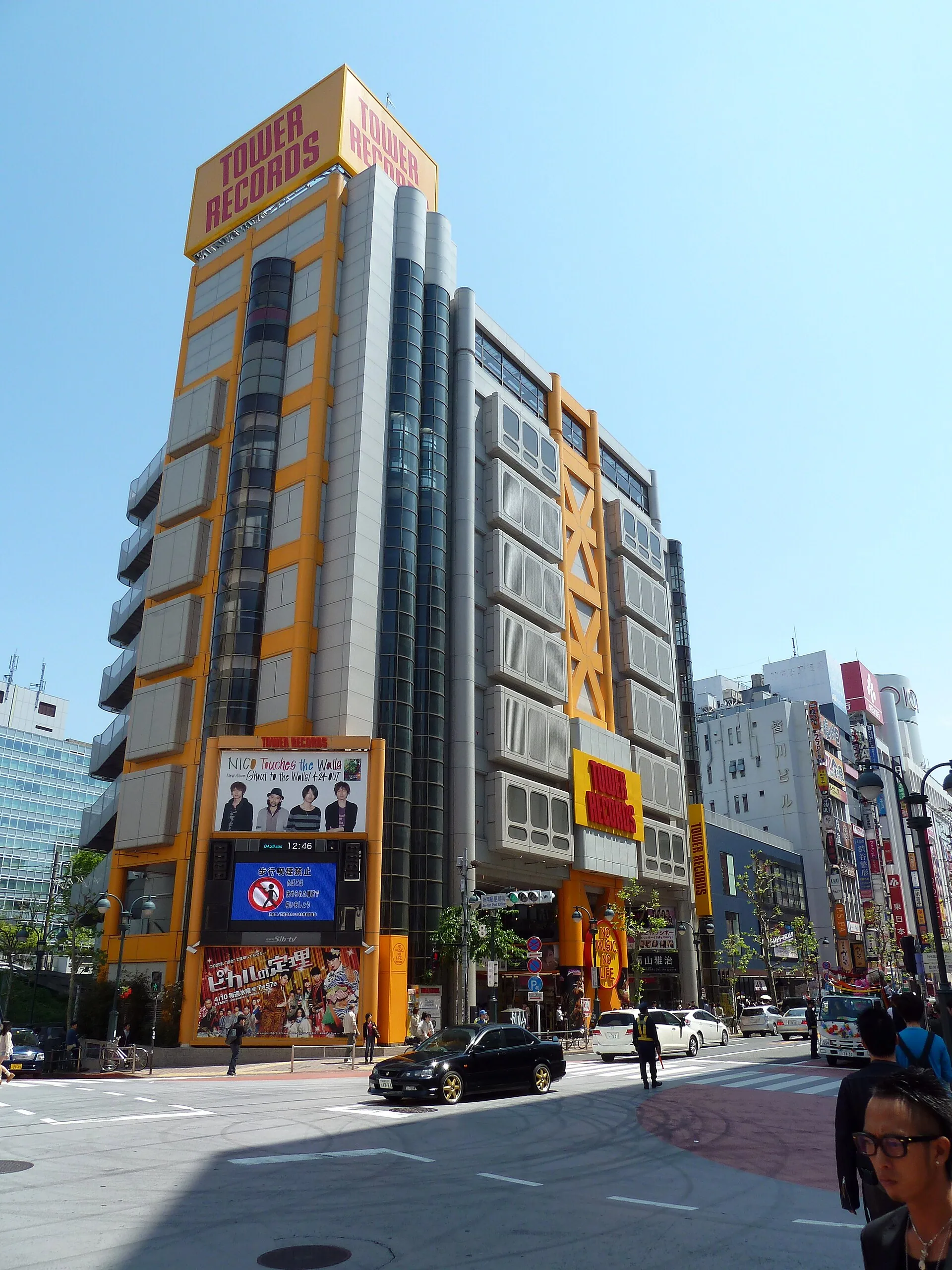
In America, Tower Records died in 2006. In Tokyo, its biggest store still has nine floors. Both halves of that sentence are true, and the distance between them is the whole story: a chain of record superstores so complete, so late-opening and so woven into the lives of music fans that, when the end came, it came only in the country that had invented it — while the Japanese company carrying the same name, independent since 2002, simply carried on. At its peak the American company ran nearly 200 stores in 15 countries and took in over one billion dollars a year in revenue. Its largest stores stocked 125,000 titles. It filed for bankruptcy twice in two years, was sold to a liquidator, and closed its last American stores three days before Christmas 2006. About 3,000 people lost their jobs. And then, fourteen years later, the name came back — online, selling vinyl. This account is drawn from the record: contemporary reporting of the two bankruptcies and the liquidation auction, the founder's obituary, and the episode's fact log. Where the record disputes a number — and it does dispute the size of the empire — the better-sourced figure is used and the disagreement noted.
A structured case history
Reading section 01
Watch: Dead Brands No. 11, the short — "What Happened to Tower Records?"
Reading section 02
The Rise of Tower Records
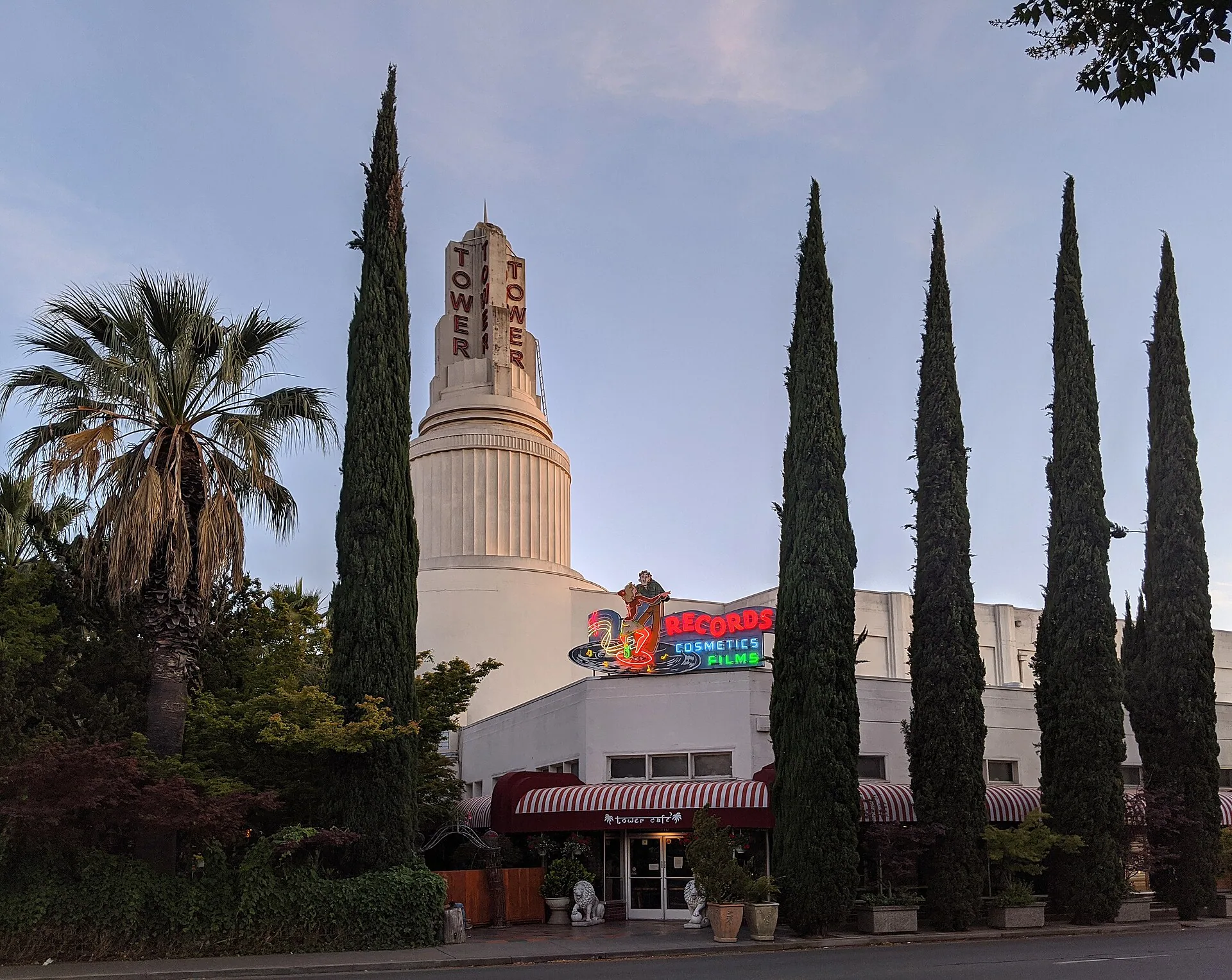
The story starts in Sacramento, California, where Russ Solomon began selling records from his father's drugstore in 1941. In 1960 he opened the first standalone Tower Records in the same city — and with it, a formula nobody had tried at that scale: stock everything, organize it by genre, and stay open late. A Tower store was not a record department. It was a warehouse of music, arranged for browsing, in a business that had previously sold records from behind counters and in department-store corners.
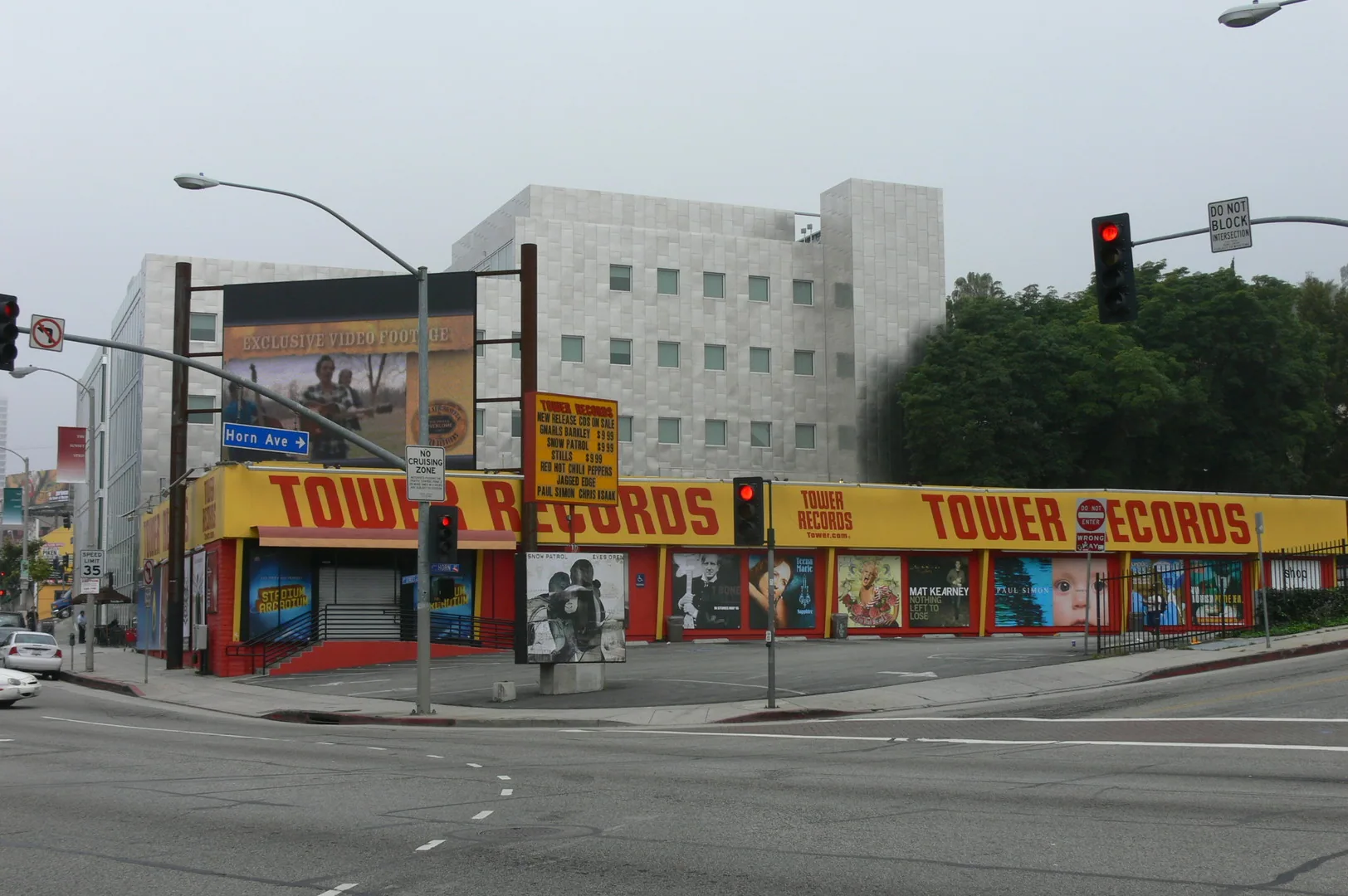
The formula spread. Through the following decades Tower planted its big yellow-and-red stores in city after city, and some of them became landmarks in their own right — none more than the Sunset Strip store in Los Angeles, opened in 1971, which drew musicians as customers and became part of the geography of the rock era. The chain's home city kept the faith longest: Sacramento's stores traded on, open late, into the chain's final years.
Visual interlude
Reading section 03
The Peak
By 1999 the empire stood at its height: nearly 200 stores in 15 countries, revenue over one billion dollars a year — earnings peaked at nearly 1.1 billion dollars in the fiscal year ending 31 July 2000 — and flagship stores that stocked as many as 125,000 titles. No rival carried as much music in one room.
But the numbers were not the real product. You did not shop at Tower. You stayed. The stores were open all year from nine in the morning until midnight, staffed by people hired locally who knew the music they sold, and sometimes a band would play between the racks. A record store that doubled as a concert venue: in-store performances and signings were an industry ritual, and Tower's floors were where the ritual happened — a visiting musician playing to shoppers in New Orleans in 1997 was not an event, it was an ordinary week.
Visual interlude
Reading section 04
The Fall of Tower Records
Then the music moved. Downloads and file-sharing emptied the aisles: the product Tower sold by the album, in a room, could now be taken from a computer, one song at a time, for nothing. The discounters undercut what was left, selling the hit CDs below Tower's prices as bait for grocery and electronics shoppers. And Tower met the squeeze carrying the debt from a decade of expansion — the 1998 expansion had been financed with about 110 million dollars of borrowed bonds. Losses followed: ten million dollars in 2000, ninety million dollars in 2001.
In February 2004, after missing a bond payment of 5.2 million dollars, Tower filed for Chapter 11 protection for the first time. It emerged with its bondholders holding an 85 percent stake and the Solomon family keeping about 15 percent; Russ Solomon, who had already begun stepping back from control as the lenders installed a turnaround chief executive, no longer ran the company he had founded. One part of the empire had already escaped: in October 2002, Tower Records Japan had been sold in a management buyout to pay down debt — structurally separate from the American company years before the collapse, though nobody yet knew how much that would matter.
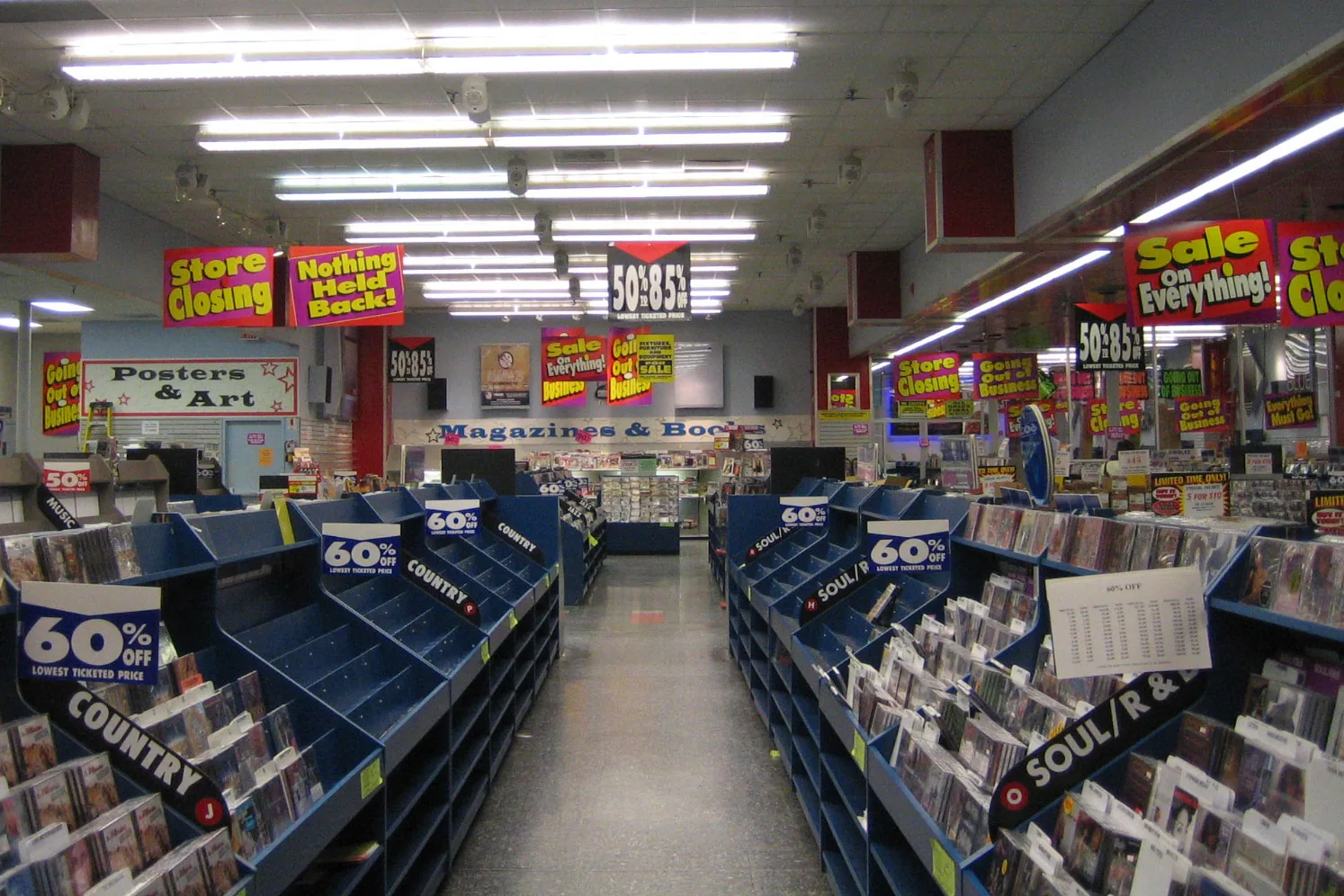
The reprieve lasted two years. On 20 August 2006 Tower filed for Chapter 11 a second time, with 89 stores in 20 states and about 200 million dollars owed to creditors. This time there was no rescue. On 6 October 2006 a bankruptcy judge approved the sale to the liquidator Great American Group, whose winning bid of 134.3 million dollars beat Trans World Entertainment by half a million dollars. Going-out-of-business sales began the next day.
On 22 December 2006, the last American Tower Records stores closed. About 3,000 people lost their jobs. The chain that had taught two generations how to browse was gone from its home country in a single autumn.
STAT CARD Nearly 200 stores → 0 U.S. stores Tower's worldwide store count at its 1999 peak, and the number left in the United States after December 2006.
Visual interlude
Reading section 05
The Afterlife
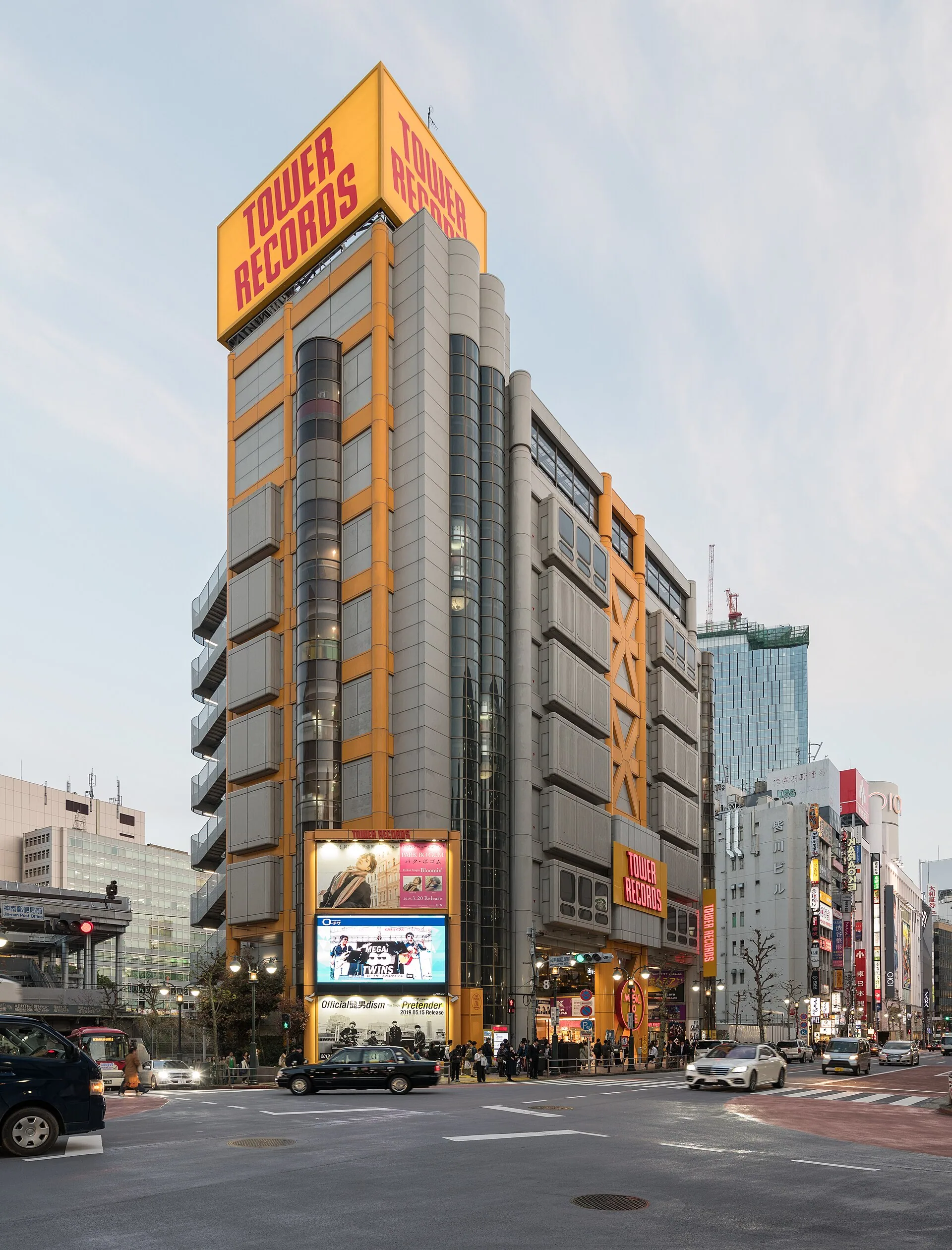
What survived was a trademark — and Japan. Tower Records Japan, independent since its 2002 buyout, was untouched by the American bankruptcy: it never closed. Its flagship in Tokyo's Shibuya district, in its current location since March 1995, occupies nine floors and 5,000 square meters — one of the biggest music retail outlets in the world. A count in October 2024 put the Japanese company at 72 stores. The slogan on its walls, "No Music, No Life", is its own creation, born in Japan in the late 1990s and later adopted abroad.
The founder did not live to see the name return. Russ Solomon died on 4 March 2018, aged 92. But on 13 November 2020, Tower Records relaunched in America as an online store under a new chief executive, Danny Zeijdel — selling vinyl, CDs, cassettes and merchandise, with more than 500,000 titles. It is still trading today: the revival is not a one-off announcement but a working record store with no rooms, in the country that closed all the rooms.
Visual interlude

Reading section 06
The Verdict
So what actually killed Tower Records? The download killed the room: once music could be taken song by song from a computer, a superstore's completeness stopped being worth a journey — and the discounters took the hit albums that remained. The debt killed the company's chances of surviving the transition: borrowed expansion money meant that when sales fell, there was nothing left to rebuild with, and two bankruptcies in two years finished the argument. The stores died with the download. The name — and Japan — never stopped playing.
Visual interlude
Reading section 07
Timeline
Visual interlude
Reading section 08
Sources & image credits
Sources. New York Times obituary of Russ Solomon (Robert D. McFadden, 5 March 2018) — founding in Sacramento in 1960, peak scale (nearly 200 stores in 15 countries; revenue over one billion dollars a year; 125,000 titles), store hours and in-store performances, losses in 2000–2001. Associated Press reporting, October 2006 — the August 2006 second Chapter 11 (89 stores in 20 states; about 200 million dollars owed to creditors), the Great American Group auction (winning bid 134.3 million dollars), the liquidation and about 3,000 jobs lost. Honolulu Advertiser (10 February 2004) and CBS reporting — the first bankruptcy, the 1998 expansion financed with about 110 million dollars of borrowed bonds, the missed bond payment of 5.2 million dollars, the bondholders' 85 percent stake. Online Archive of California, Tower Records collection guide — Russ Solomon stepping back from control in 2002–04. Wikipedia, "Tower Records" and Tower Records Japan history — last US stores closed 22 December 2006; the Japanese management buyout of October 2002; the Shibuya flagship (current location since March 1995; nine floors, 5,000 square meters); Japanese store counts (85 directly operated stores at 1 October 2014; 72 locations at an October 2024 count). Mixmag Asia (November 2020) — the Japanese buyout. NME and Deadline (November 2020) — the online relaunch of 13 November 2020 under chief executive Danny Zeijdel (more than 500,000 titles). Live check of towerrecords.com (5 November 2026) — the relaunched US online store is actively trading. Tower Records Japan's own anniversary posts and the "No Music, No Life" campaign book — the slogan's Japanese origin in 1996–97.
Image credits (all via Wikimedia Commons; licenses as logged at download, November 2026):
Dates. Published: 2026-11-09 · Last verified: 2026-11-05 · Updated: 2026-11-09
Author: Ronin Naodhinsuk
Tower Records, Tower Records Japan, and all other brand names and logos mentioned in this article are trademarks of their respective owners. The Record Institute is an independent archive and is not affiliated with, endorsed by, or connected with Tower Records, Tower Records Japan, Great American Group, or any successor owner of the brand.
Next episode → No. 12: What Happened to Borders?
Related Articles
- Borders — What Happened to Borders?
- Compaq — What Happened to Compaq?
- Circuit City — What Happened to Circuit City?