Dead Brand Stories / Borders
What Happened to Borders?
Borders was not killed by the internet — it was killed by the deal that handed its own online store, and its customers, to Amazon.
Opening statement
In the summer of 2011, the last Borders stores in America ran going-out-of-business sales, and a chain of more than a thousand bookshops disappeared in a single season. It was not beaten by a better bookshop, and it was not, in the end, killed by the internet. It was killed by a deal it had signed itself, ten years earlier, at the height of its powers: in 2001, America's second-largest bookseller handed its own online store to Amazon — and Amazon kept the customers. At its peak the chain ran 1,249 stores counting its mall bookshops, took in over four billion dollars in revenue, and employed more than thirty-five thousand people. Its superstores were built for lingering: a chair, a coffee, a stack of books you had not bought, and nobody hurrying you out. This is the story of how that empire was given away one decision at a time — seven years of online sales run by its greatest rival, an e-book store that arrived in 2010, and a bankruptcy, in February 2011, from which no buyer could save it. This account is drawn from the record: the company's bankruptcy filing and SEC filings, and contemporary reporting. It runs from an 800-square-foot book shop in Ann Arbor in 1971 to a liquidation sale forty years later — and then, strangely, it keeps going, because the name itself refused to stay entirely dead.
A structured case history
Reading section 01
Watch: Dead Brands No. 12, the short — "What Happened to Borders?"
Reading section 02
The Rise of Borders
The story starts in Ann Arbor, Michigan, in 1971. Brothers Tom and Louis Borders opened Borders Book Shop at 209 South State Street — an 800-square-foot used book shop. What set it apart was invisible: Louis built a software system, Book Inventory Systems, that could predict what the readers of a particular town would actually buy. Knowing local demand better than any rival was the chain's original edge, and it travelled with every store that followed.
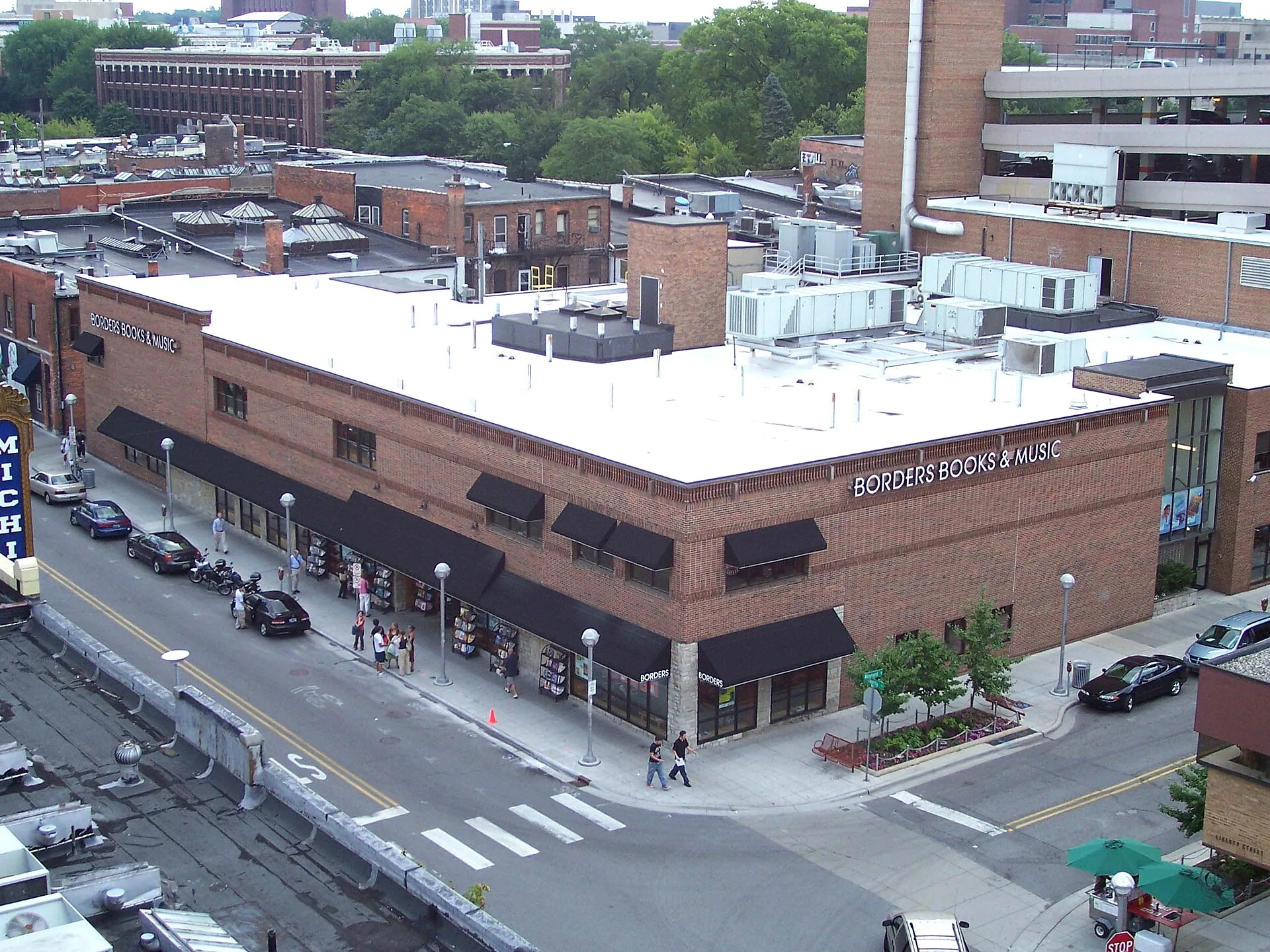
The format that edge built was the superstore. A Borders Books & Music carried tens of thousands of titles, and it was designed for staying, not shopping: plentiful sitting and browsing areas, knowledgeable staff, and espresso bars that featured live entertainment on some nights. The first prototype superstore opened in 1985. You remember the ritual, because the ritual was the business model: a chair, a coffee, a stack of books you had not bought — and nobody hurrying you out.
The little Ann Arbor chain did not stay little. In October 1992 Borders was sold to Kmart, and in 1995 it was spun off again as Borders Group, with Waldenbooks — the mall bookshop chain — as its smaller-format sister. The brothers' shop had become a national empire of stores built for lingering.
Reading section 03
The Peak
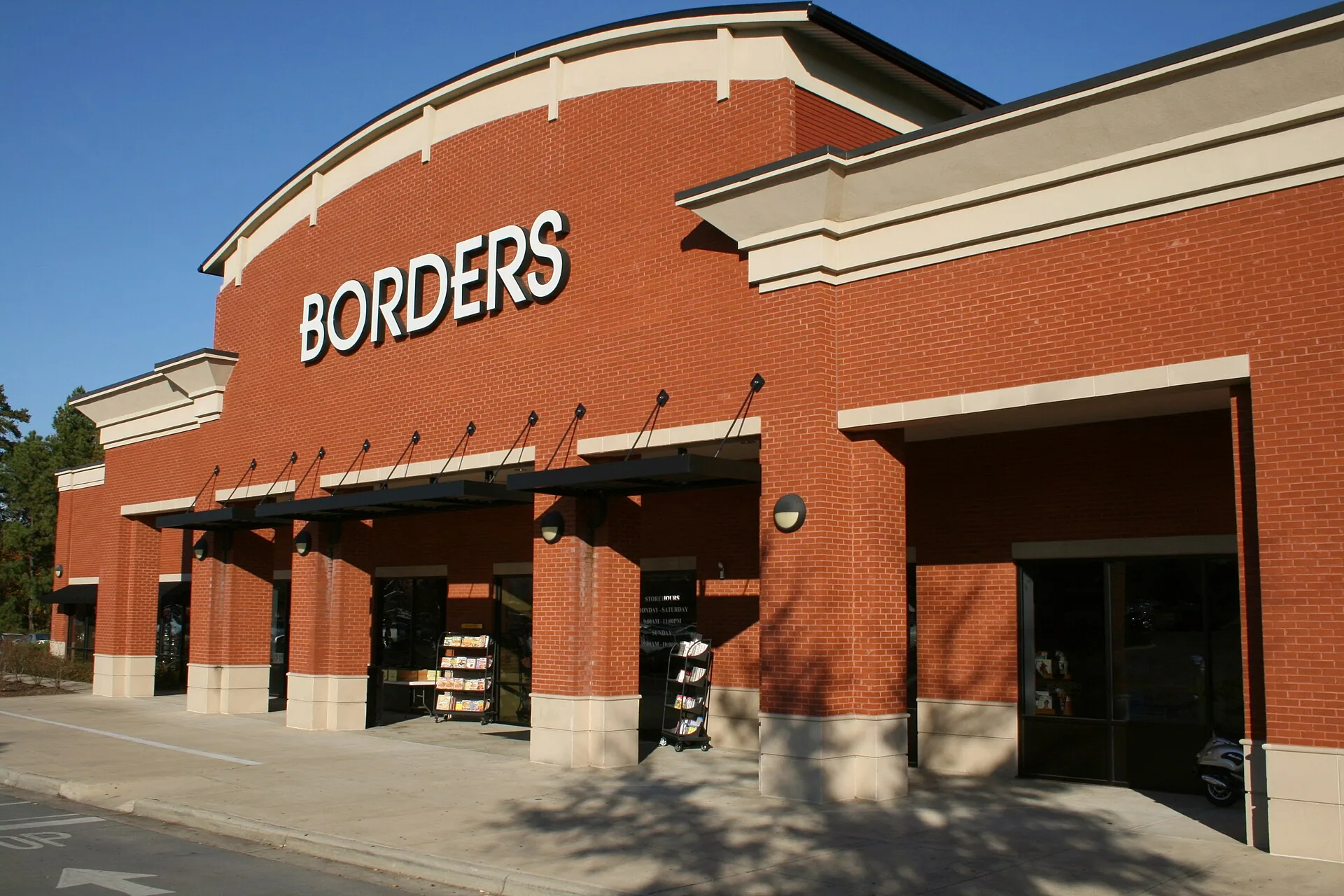
Count every format and the empire peaked in 2003: 1,249 stores, the superstores plus the Waldenbooks mall bookshops. The superstores alone went on growing to 567 by 2006. Revenue passed four billion dollars — 4.1 billion dollars in 2006 — and in the peak era, around 2006, the company employed about 35,500 people, 16,400 of them full-time and 19,100 part-time. Behind Barnes & Noble, Borders was America's second-largest bookseller.
The peak looked permanent because the experience was real. No website could offer what a Borders offered on a Friday night: the chair, the coffee, the live music, the stack of books growing beside you. What the peak concealed was that the company's future did not depend on any of that. It depended on a website — and Borders had already given the website away.
Visual interlude
Reading section 04
The Fall of Borders
In August 2001 came the fatal deal. Borders contracted Amazon to run its online store, and the terms were total: Amazon was the seller of record. It provided the inventory, the site content, the fulfillment and the customer service; it set the prices and kept the customers' payments, paying Borders a percentage — referral fees — for lending its name to the door. Borders.com carried the Borders name. The commerce, and the customer relationships, belonged to Amazon.
The arrangement lasted seven years, and in those seven years Borders built no online capability of its own. The world moved anyway: Amazon launched the Kindle in November 2007. Borders took its website back in May 2008 and relaunched Borders.com — six months after the Kindle, with no customer base of its own to bring with it, because for seven years its online customers had been Amazon's. Barnes & Noble launched the Nook in 2009. By the third quarter of 2010, online sales were still only about 2.7 percent of Borders' revenue.
The e-book answer, when it came, came last. On 7 July 2010, Borders launched its e-book store, powered by Kobo, with 1.5 million titles and a stated goal of taking 17 percent of the e-book market within a year. It had seven months. The company had lost 604.8 million dollars across 2006 to 2009, and a further 168.2 million dollars in the first eleven months of 2010.
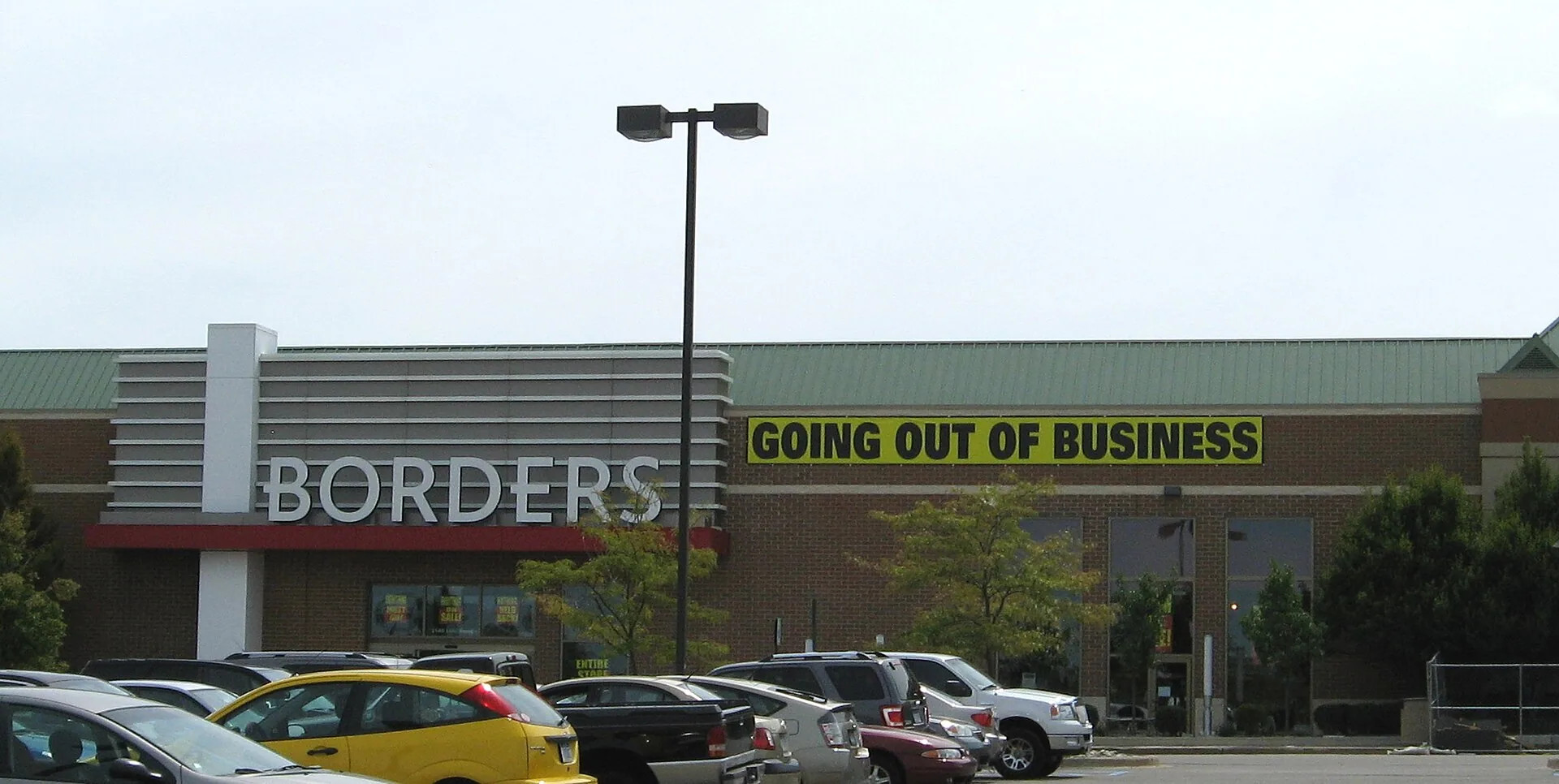
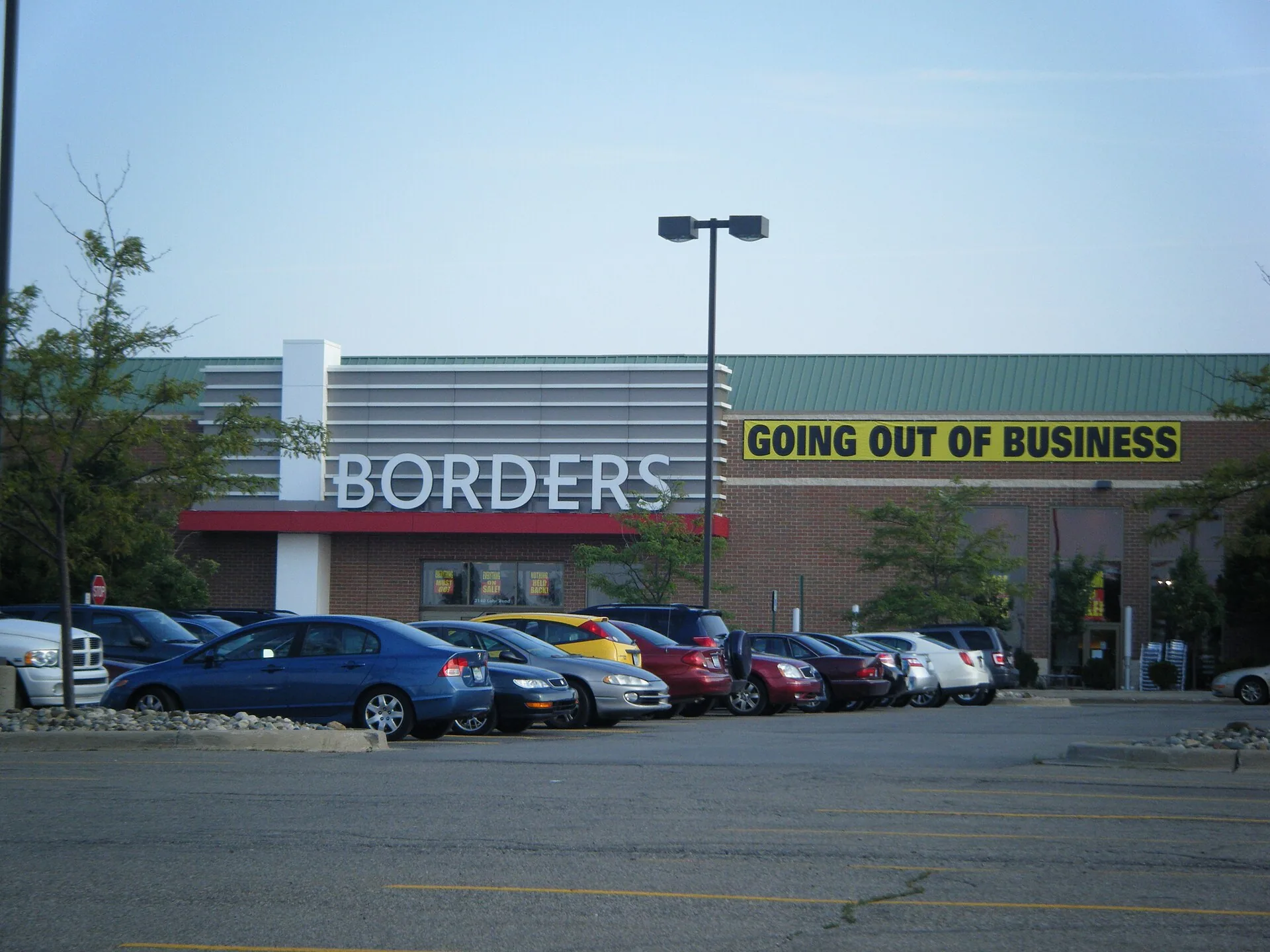
On 16 February 2011, Borders filed for Chapter 11 bankruptcy protection, listing 1.275 billion dollars in assets against 1.293 billion dollars in debts. Six hundred forty-two stores remained, and about 19,500 people still worked for the chain — barely half the peak-era workforce. The filing was supposed to be a rescue: keep the best stores, shed the rest, trade out. One rescue was actually attempted. On 1 July 2011, Direct Brands, part of the Najafi Companies, bid 215 million dollars for the business, plus 220 million dollars of debt it would take on. The creditors objected. The bid deadline lapsed on 17 July with no buyer they would accept — and on 22 July, liquidation of the remaining 399 stores began. No buyer could save it.
STAT CARD 1,249 stores → 0 Borders stores across all formats at the 2003 peak, counting the Waldenbooks mall bookshops — and the number still trading in America today.
The last American stores closed on Sunday, 18 September 2011. Borders.com itself closed on 27 September, and on 14 October it began redirecting its visitors to Barnes & Noble. The ritual was over: no chair, no coffee, no stack of unbought books.
Reading section 05
The Afterlife
What survived the liquidation was the name, and the name was sold to the rival. In September 2011, Barnes & Noble bought Borders' trademarks, tradenames, domain names and customer lists — a database of about 48 million customers — for 13.9 million dollars, in a sale the bankruptcy court approved on 27 September 2011. It never reopened a single store under the name in America. The name of the second-largest bookseller in the country sits in its largest rival's drawer, and that is where it has stayed.
The one place the name still trades is an ocean away from Ann Arbor. Al Maya Group, Borders' franchisee in the Gulf since 2006, bought the regional trademark rights outright in 2015, and Borders-branded stores still operate in the United Arab Emirates, Oman, Qatar and Kuwait — the operator claims more than twenty-five of them. They are a separate franchise business, not the Ann Arbor company, and they do not change the American ending: in America, nothing is left but the name, and the name belongs to Barnes & Noble.
Visual interlude
Reading section 06
The Verdict
So what actually killed Borders? Not one decision, and not one enemy — but one deal above all. Borders was not killed by the internet. It outsourced its future to the internet's winner, and spent seven years collecting a percentage of its own customers' purchases while Amazon learned the book trade from the inside. When Borders finally took its future back, in 2008, it was already six months behind the Kindle and three years from the end; its e-book store arrived in 2010, seven months before the bankruptcy filing.
The stores were not the mistake. The stores were loved, and the record says they were full of people — people reading, listening, lingering. The mistake was believing the stores were the future, when the future was the website with the chain's name on it and somebody else's customers inside it. Twelve hundred and forty-nine stores are gone. In America, nothing is left but the name.
Reading section 07
Timeline
Visual interlude
Reading section 08
Sources & image credits
Sources. Founding, the Book Inventory Systems software and the chain's growth — AnnArbor.com's Borders timeline and bankruptcy coverage (February 2011) and Company Histories (Borders Group). The superstore format (tens of thousands of titles; plentiful sitting and browsing areas; espresso bars featuring live entertainment) — Company Histories (Borders Group). The Kmart sale (October 1992) and the 1995 spinoff as Borders Group — Company Histories; AnnArbor.com timeline. The Amazon arrangement (Amazon as seller of record; inventory, site content, fulfillment and customer service; prices and payments Amazon's; referral fees to Borders; the seven-year term) — CIO Magazine (2 October 2007 and May 2008); AnnArbor.com timeline. Store counts — the 1,249 all-format count for 2003, including Waldenbooks (rip.so chronicle, consistent across histories); 482 superstores alone by the end of 2003 and the 567-superstore peak in 2006 (AnnArbor.com, from SEC filings). Revenue over four billion dollars — AnnArbor.com, from SEC filings; 4.1 billion dollars in 2006 (CIO Magazine, May 2008). Employment — about 35,500 in the peak era (early 2006: 16,400 full-time and 19,100 part-time), the company's Form 10-K reporting via AnnArbor.com; about 19,500 at the February 2011 bankruptcy filing. Position as America's second-largest bookseller — BetaNews (May 2010). The seven lost years and the online share of revenue (about 2.7 percent, third quarter 2010) — AnnArbor.com; CIO Magazine; Retail Dive. The e-book store launch (7 July 2010; 1.5 million titles; the 17 percent market goal) — AP (7 July 2010); Borders press release via Engadget (7 July 2010). Losses 2006–2010 and the bankruptcy figures (1.275 billion dollars in assets; 1.293 billion dollars in debts) — the Chapter 11 filing as reported in February 2011, and Jones Day's Year in Bankruptcy review. The rescue bid and liquidation — the episode's corrected fact log (PACKAGE.md, verified 2026-11-09): Direct Brands (Najafi Companies) bid 215 million dollars plus 220 million dollars of assumed debt, announced 1 July 2011; creditors objected; the bid deadline lapsed 17 July 2011; liquidation of the remaining 399 stores began 22 July 2011; the last US stores closed 18 September 2011; Borders.com closed 27 September 2011 and redirected to Barnes & Noble on 14 October 2011. The trademark sale — Borders Group Form 8-K (filed 3 October 2011): all trademarks, tradenames, domain names, goodwill, membership lists and customer information sold to Barnes & Noble for 13,900,000 dollars, court-approved 27 September 2011 (the customer database numbered about 48 million); Publishers Weekly / Shelf Awareness (September 2011). The Gulf afterlife — Al Maya Group (bordersstore.com): franchisee since 2006; regional trademark rights bought outright in 2015; more than twenty-five stores claimed across the UAE, Kuwait, Qatar and Oman (2025).
Image credits (all via Wikimedia Commons; licenses as logged at download, November 2026):
Dates. Published: 2026-11-09 · Last verified: 2026-11-09 · Updated: 2026-11-09
Author: Ronin Naodhinsuk
Borders, Barnes & Noble, Amazon, Kobo, Waldenbooks, and all other brand names and logos mentioned in this article are trademarks of their respective owners. The Record Institute is an independent archive and is not affiliated with, endorsed by, or connected with Borders Group, Barnes & Noble, Amazon, Kobo, or Al Maya Group.
Related Articles
- Tower Records — What Happened to Tower Records?
- Compaq — What Happened to Compaq?
- Circuit City — What Happened to Circuit City?