Dead Brand Stories / Circuit City
What Happened to Circuit City?
In March 2007, Circuit City fired 3,400 of its highest-paid store workers to save money — and less than two years later, the whole chain was gone.
Opening statement
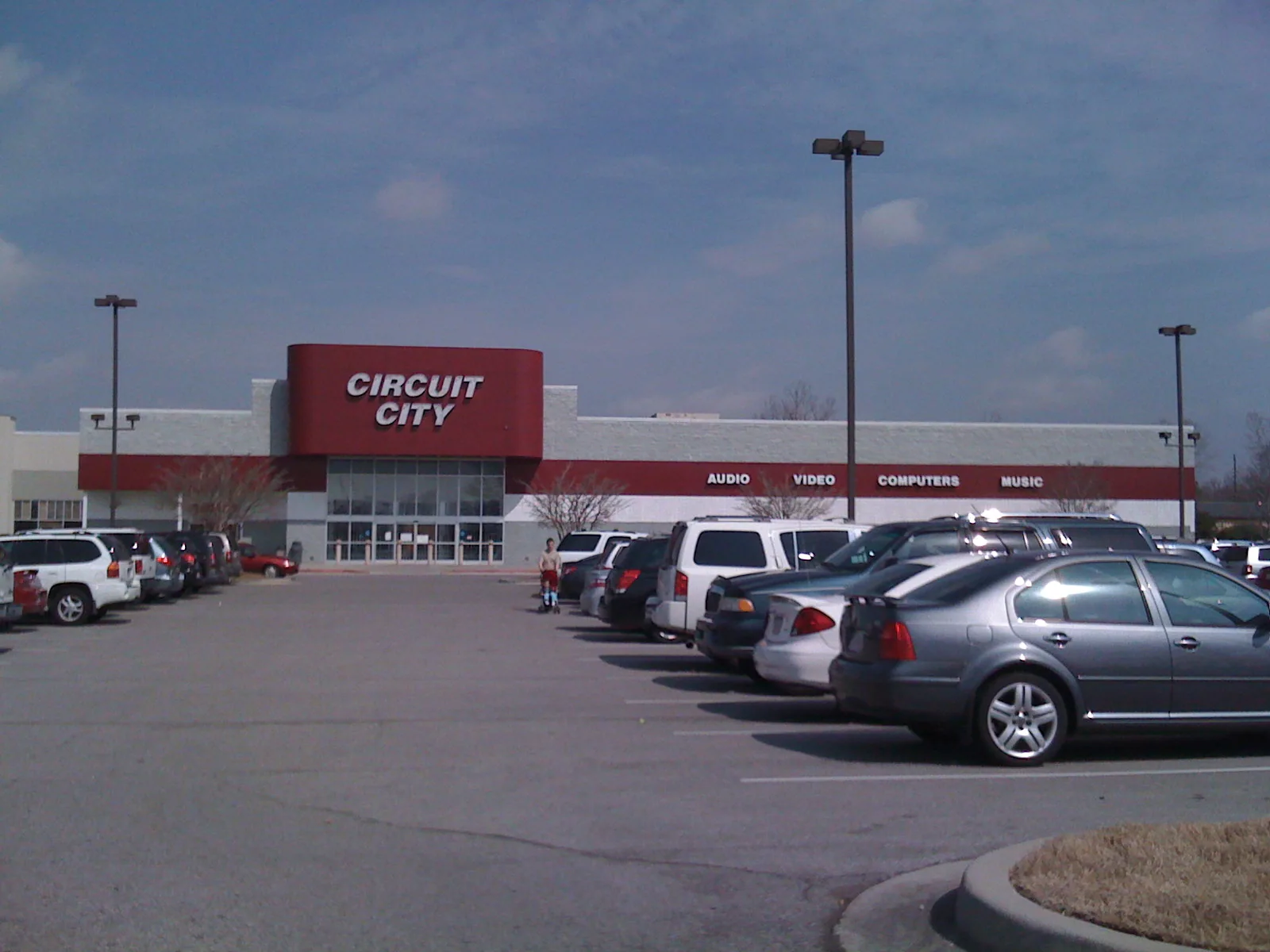
On 28 March 2007, Circuit City fired three thousand four hundred of its store workers in a single day. They were not fired for failing — the company said the dismissals had nothing to do with performance. They were fired for earning too much: each of them was paid above the market-based salary range the company had set for the job. They were, by definition, the experienced ones. Less than two years later, the whole chain was gone. This was a company that at its peak ran 616 stores, employed more than sixty thousand people, and took in more than twelve billion dollars a year in revenue — a company a bestselling business book had held up as a model of greatness. Its stores did not empty because the customers stopped coming. They emptied because the company removed the people the customers came for. This account is drawn from the record: the Washington Post's contemporary reporting on the firing and its aftermath, the company's own announcements, and the Federal Reserve Bank of Richmond's history of the chain. It runs from a television shop in Richmond, Virginia, in 1949 to a liquidation that cost some thirty-four thousand jobs in 2009 — and then, strangely, it keeps going, because the name refused to stay buried.
A structured case history
Reading section 01
Watch: Dead Brands No. 9, the short — "What Happened to Circuit City?"
Reading section 02
The Rise of Circuit City
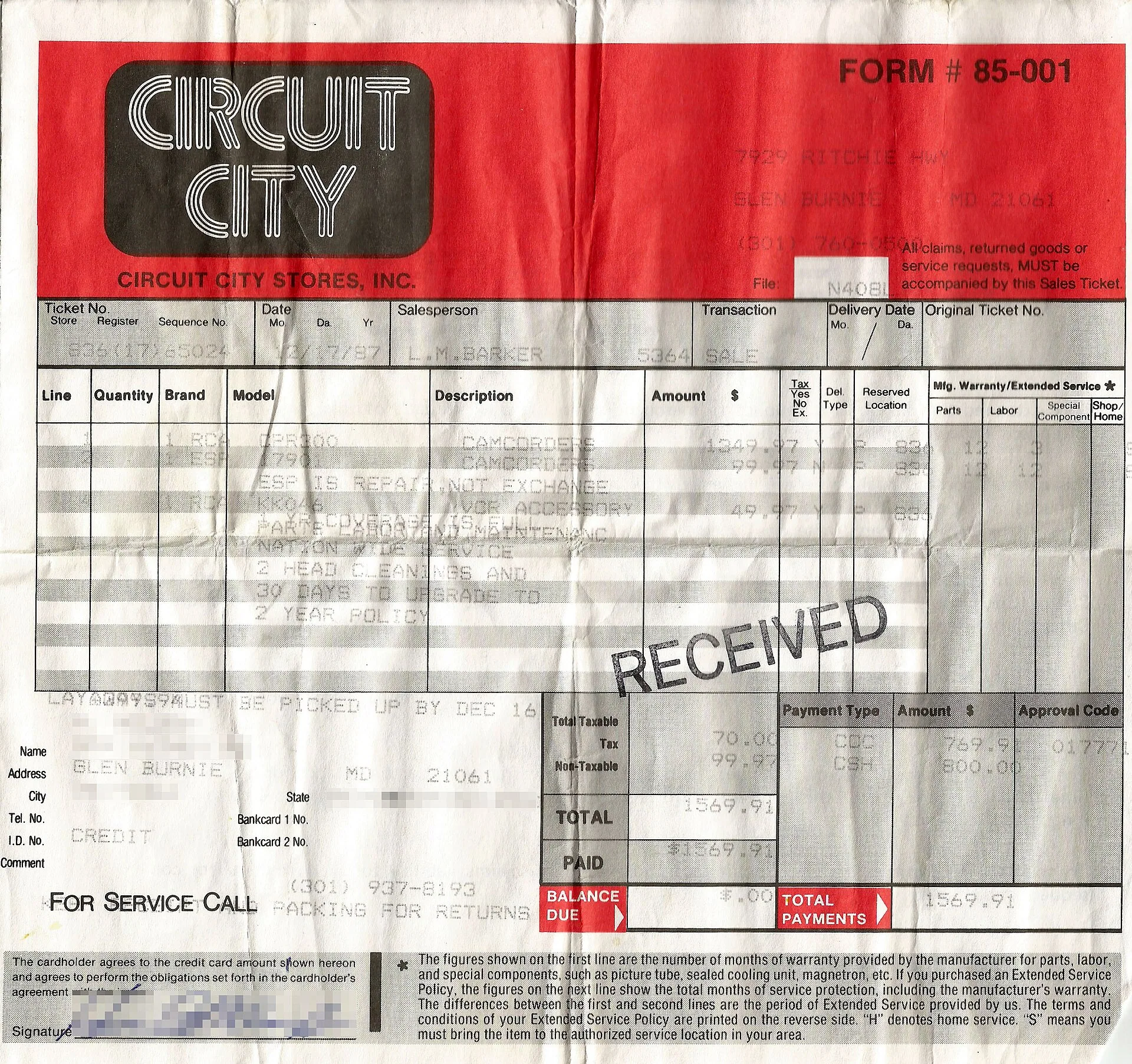
The story starts in Richmond, Virginia, in 1949. Samuel S. Wurtzel founded Wards Company after hearing that the South's first television station was coming — a bet that a new machine most households had never seen would need shops to sell it. One store grew into the pioneer of a new format: the electronics superstore, one big store carrying nothing but electronics, at scale. In 1984, the company took the name the format had made famous: Circuit City.
What the superstore sold was not only televisions. Electronics were expensive and bewildering, and Circuit City's model rested on people who could explain them — salespeople who knew the products and were paid for knowing them. If you bought a television or a first computer in those years, you remember the arrangement: you walked in with questions, and someone there knew the answers. That knowledge was the product.
Through much of the 1990s, Circuit City was the largest consumer-electronics chain in America by revenue. Only later did it slip to second place, behind a rival that was learning to copy its service model and then some: Best Buy.
Visual interlude
Reading section 03
The Peak
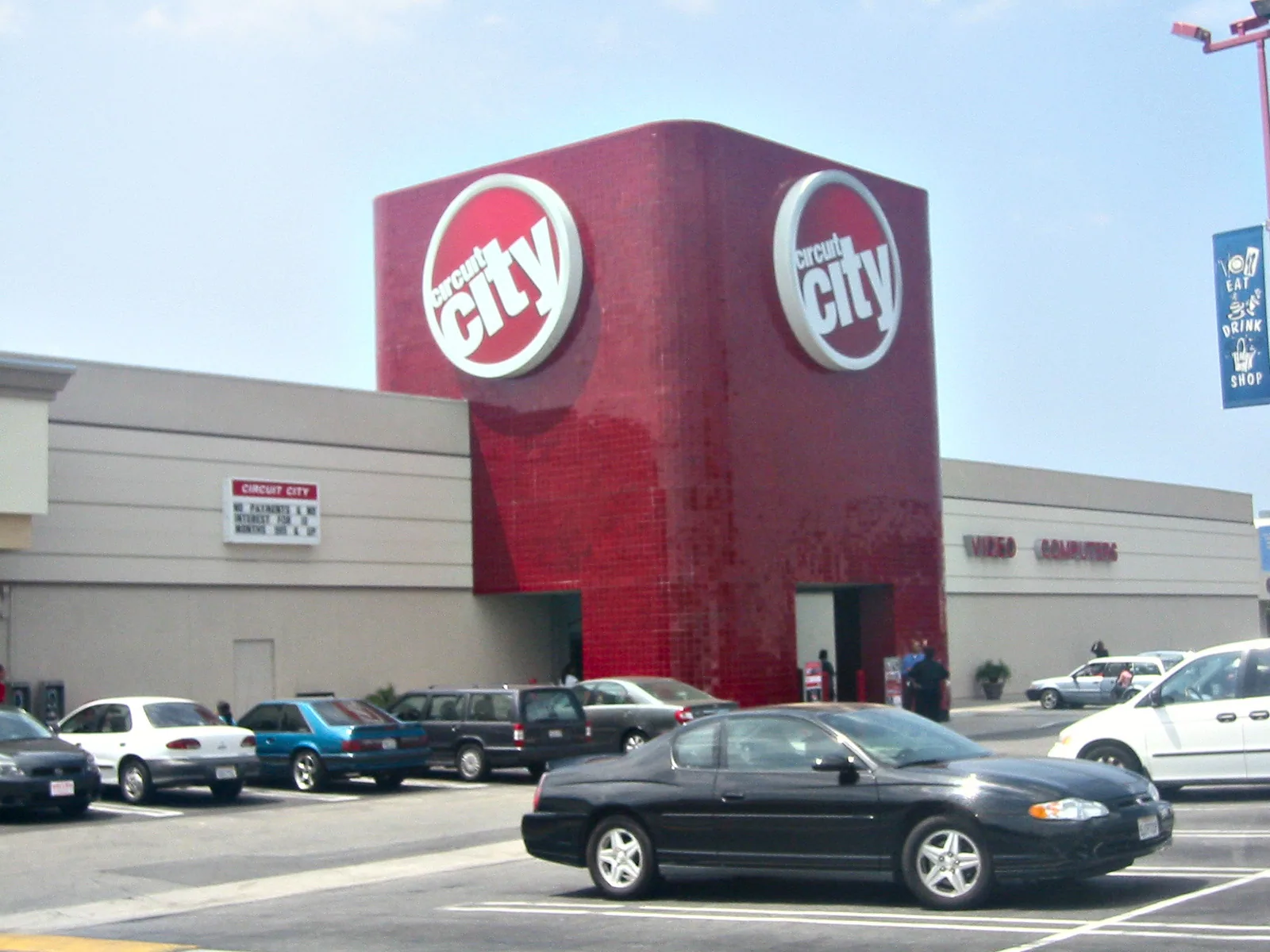
By 2000, the numbers described an empire: 616 stores and more than sixty thousand employees, with annual revenue that had crossed twelve billion dollars the year before. In 2001, Jim Collins published Good to Great, his study of the rare companies that had made the leap from good to great — and Circuit City was one of only eleven companies in it.
The company's own later history, written by the Federal Reserve Bank of Richmond, gives the peak its plain shape: hundreds of superstores, tens of thousands of staff, and a reputation built on answered questions. What the numbers could not show was how much of that reputation sat in the heads of the longest-serving people on the floor — or what the company was about to decide those people were worth.
Reading section 04
The Fall of Circuit City
The wounds began before the famous one. In 1998, the company launched DIVX, a costly pay-per-view disc format, and abandoned it. In 2000, it walked out of large appliances. In 2003, it abolished commissioned sales altogether and laid off about three thousand nine hundred commissioned salespeople — a first rehearsal for treating experience as a cost line.
Then, on 28 March 2007, came the decision the company called its "wage management initiative." About three thousand four hundred store workers — roughly nine percent of an in-store workforce of about forty thousand — were dismissed because their pay sat above the company's market-based range. They received severance, and they were told they could apply for their old jobs after ten weeks, at the new, lower wages. The cuts were expected to save one hundred and ten million dollars in the following fiscal year.
Within weeks, analysts were saying the move was backfiring. The Washington Post reported in May 2007 that the loss of experienced staff was being tied to weaker sales — including poor sales of the large flat-panel televisions that needed explaining most. Best Buy, which had kept investing in service, kept growing. Circuit City had saved the wages, and spent the reason people walked in.
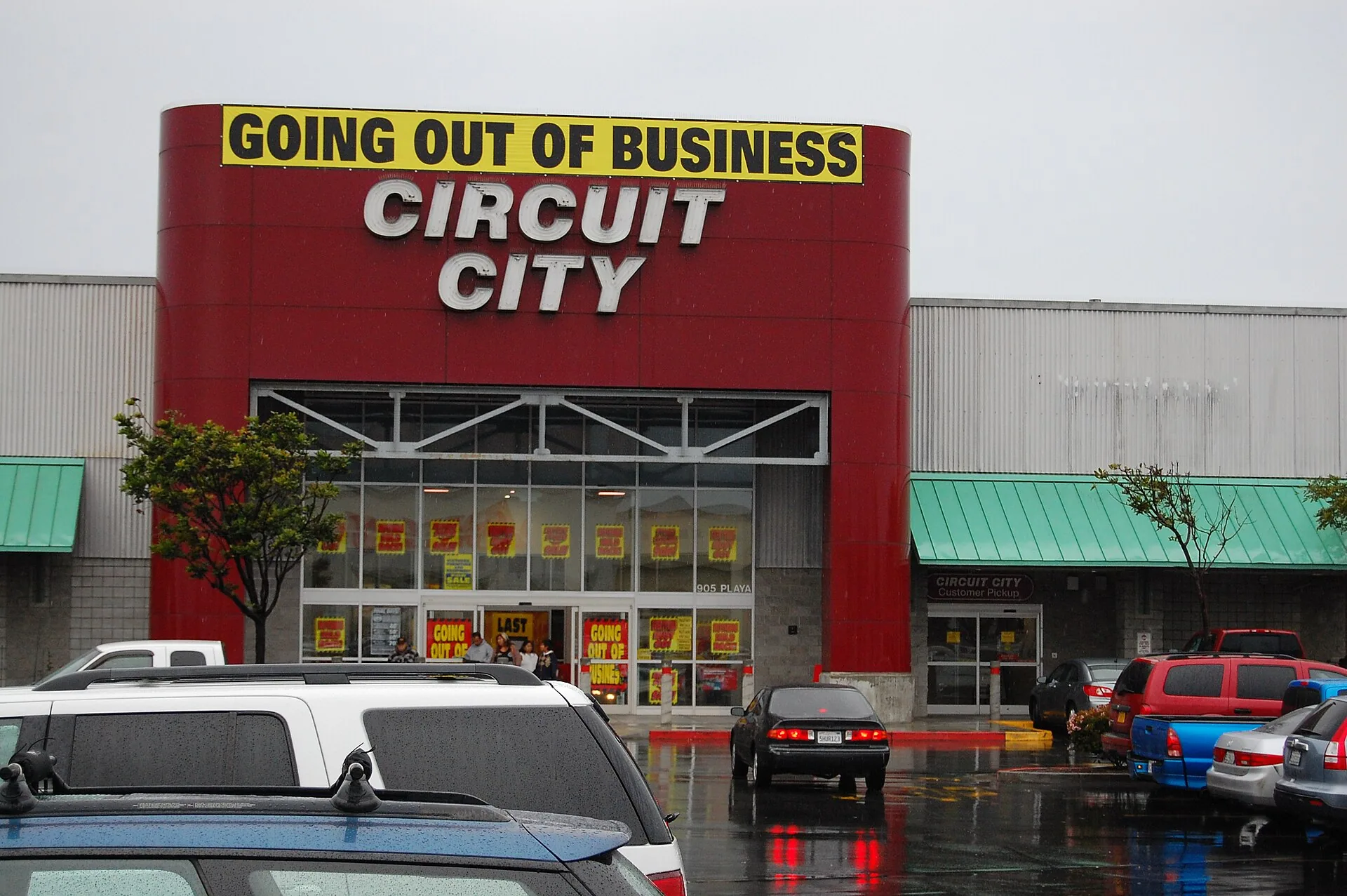
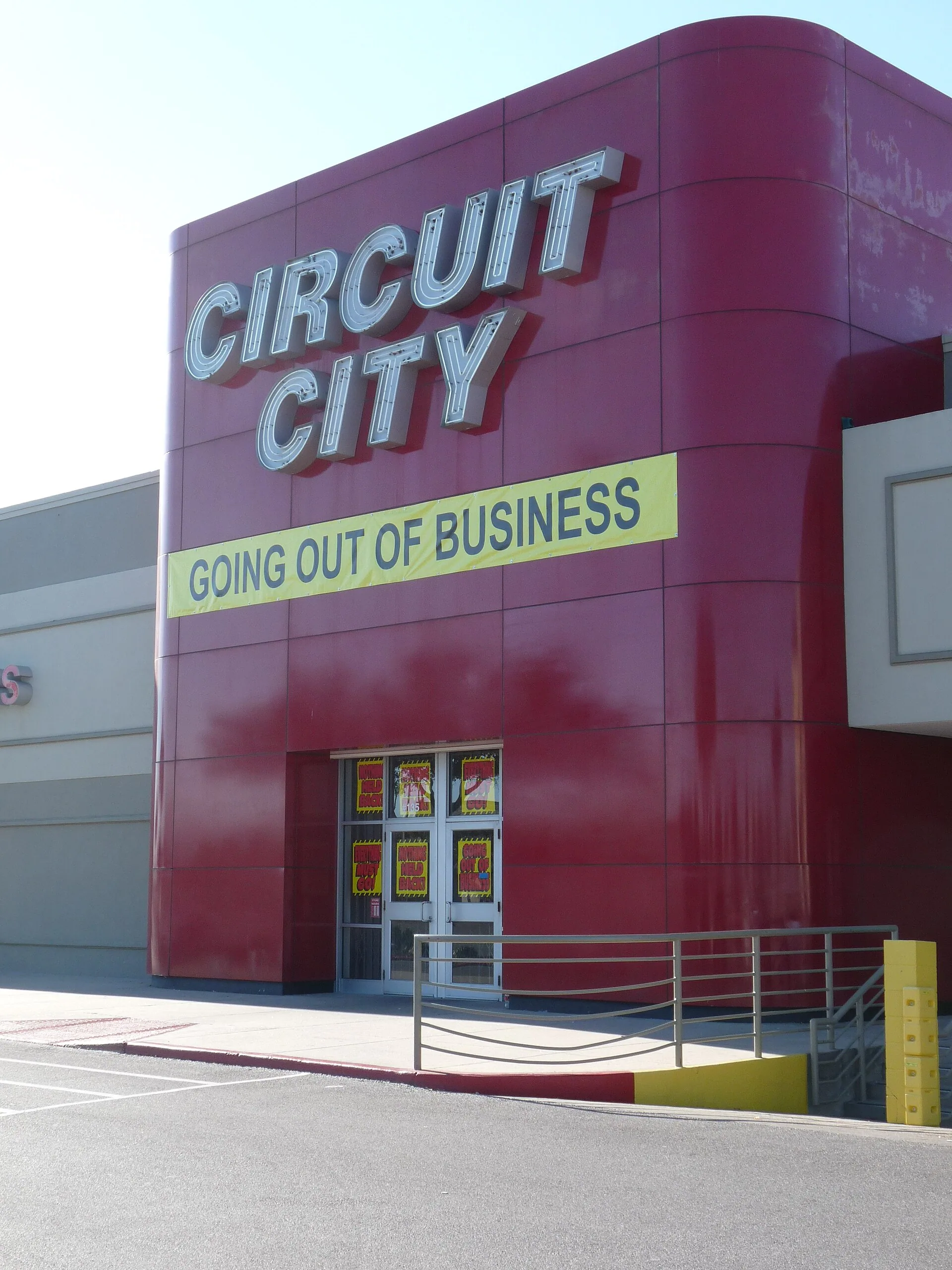
The end came quickly. In April 2008, a takeover bid for Blockbuster collapsed. In early November, the company closed 155 stores and cut seventeen percent of its workforce; on 10 November 2008, it filed for Chapter 11 bankruptcy protection in Richmond, with 567 stores and about thirty-four thousand employees left. No buyer was found. On 16 January 2009, the company announced liquidation, and on 8 March 2009 the last stores closed. About thirty-four thousand jobs were gone.
STAT CARD 616 stores → 0 Circuit City's store count at its 2000 peak — and the number that has traded since March 2009. The name survives online; not one store came back.
Visual interlude
Reading section 05
The Afterlife
What survived was a name. In May 2009, Systemax bought the Circuit City brand, its trademarks and its website at auction for fourteen million dollars, and relaunched the site within days. In 2012, Systemax folded the site into its TigerDirect business, and the name went quiet.
Retail veteran Ronny Shmoel acquired the brand in 2015–16 and relaunched Circuit City online on 22 August 2018, with plans for shops inside other stores and, one day, physical stores of its own. The plans never materialized. In December 2023, the company filed plans to raise twenty-five million dollars for a "Powered by Circuit City" partnership program; no stores followed. Today, a small online store still trades under the name. No physical Circuit City store has ever reopened.
Visual interlude
Reading section 06
The Verdict
So what killed Circuit City? Not the internet, and not, in the end, Best Buy. The analysts who watched it in 2007 and the historians who wrote it up afterward tell the same story from opposite ends: the company's real product was knowledge, carried by experienced people — and in March 2007 it decided that knowledge cost too much. The year the last stores closed, Jim Collins returned to Circuit City in a second book, How the Mighty Fall.
Circuit City did not run out of customers first. It ran out of the people customers came to ask.
Reading section 07
Timeline
Visual interlude
Reading section 08
Sources & image credits
Sources. The firing of 28 March 2007, its terms and its projected savings — Washington Post (Ylan Q. Mui, "Circuit City Cuts 3,400 'Overpaid' Workers," 29 March 2007) and the company's press release of 28 March 2007 (Form 8-K). The backfire — Washington Post (Amy Joyce, "Circuit City's Job Cuts Backfiring, Analysts Say," 2 May 2007); causation is attributed to analysts, as in the episode. Peak scale (616 stores; more than 60,000 employees in 2000) and the company's rise — Federal Reserve Bank of Richmond, Econ Focus, Q3 2013, "The Rise and Fall of Circuit City." Peak revenue (sales crossing twelve billion dollars in 1999) — TWICE company history. Good to Great (2001) and How the Mighty Fall (2009) — Jim Collins. Bankruptcy — Chapter 11 petition, U.S. Bankruptcy Court, Eastern District of Virginia, filed 10 November 2008; liquidation announced 16 January 2009; final closures 8 March 2009, per the company's closing notice and contemporary reporting. Founding, format history, the DIVX episode, the 2003 commission abolition, the 2008 endgame and the brand's afterlife — the episode research pack (BATCH-01-SCRIPTS.md, long-form outline and fact log), built from Richmond Fed history and contemporaneous trade reporting (TWICE, Chain Store Age). The name's sale and relaunches — Systemax purchase announced 13 May 2009; TigerDirect fold announced 2 November 2012; relaunch of 22 August 2018; the December 2023 SEC filing (via TechCrunch). Present status — circuitcity.com checked directly, 2 November 2026.
Image credits (all via Wikimedia Commons; licenses as logged at download, November 2026):
Dates. Published: 2026-11-09 · Last verified: 2026-11-02 · Updated: 2026-11-09
Author: Ronin Naodhinsuk
Circuit City, Best Buy, Blockbuster, and all other brand names and logos mentioned in this article are trademarks of their respective owners. The Record Institute is an independent archive and is not affiliated with, endorsed by, or connected with Circuit City, Systemax, TigerDirect, or any successor owner of the brand.
Next episode → No. 10: What Happened to Compaq?
Related Articles
- Borders — What Happened to Borders?
- Tower Records — What Happened to Tower Records?
- Compaq — What Happened to Compaq?