Dead Brand Stories / Kmart
What Happened to Kmart?
Kmart was not killed by one rival — it was squeezed from both sides at once: beaten on price by Walmart, beaten on style by Target, until the chain that ran more than two thousand three hundred stores was reduced to three.
Opening statement
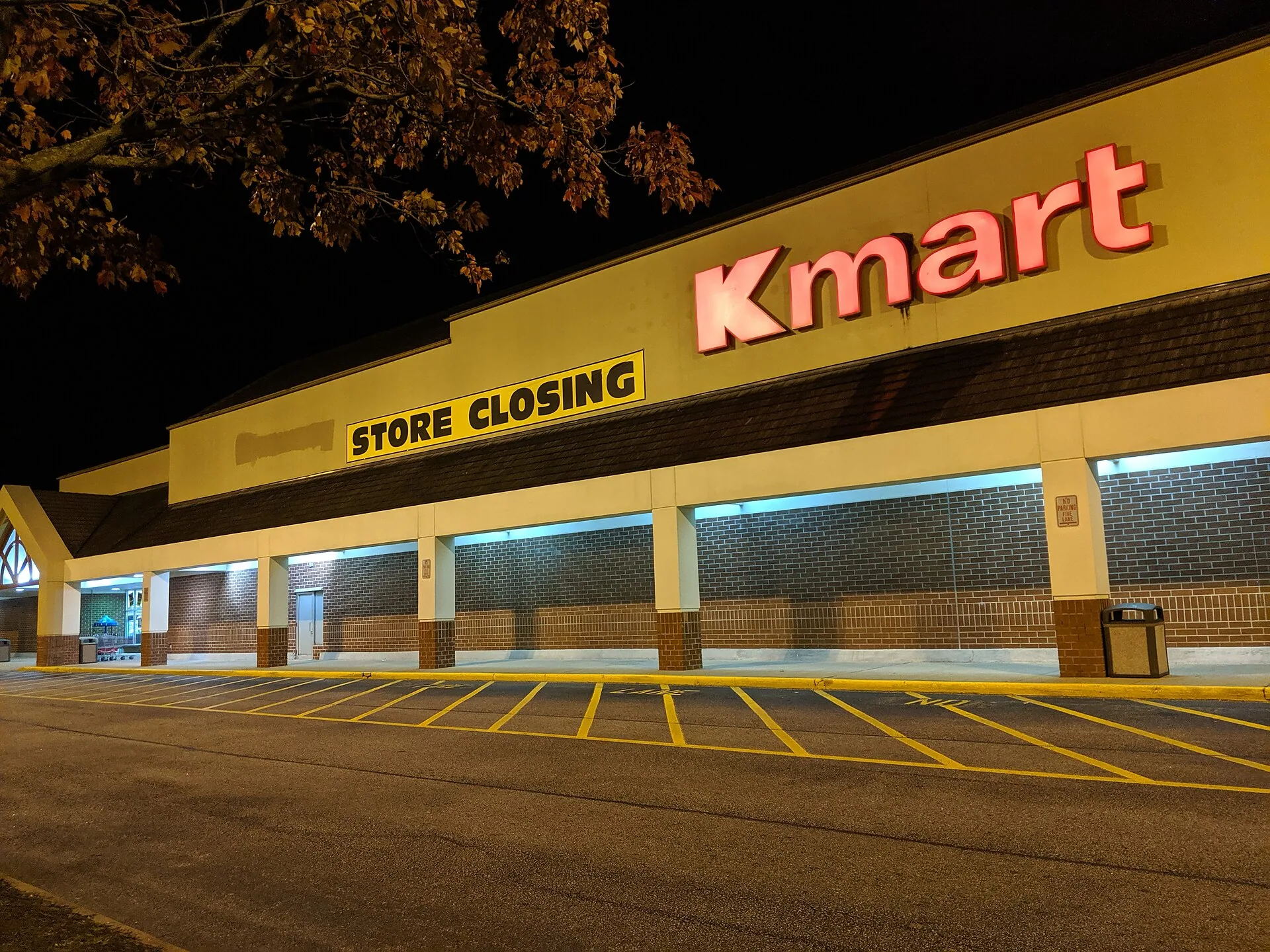
In October 2024, the last full-size Kmart on the American mainland closed its doors in Bridgehampton, New York, and the obituaries wrote themselves. They were almost right. Kmart — the chain that taught America the bargain hunt, that once ran more than two thousand three hundred stores — is not quite dead. Three stores still carry the name, and a website still trades. This is the story of the giant that was squeezed from both sides at once — and has not quite finished shrinking. At its peak, in fiscal 1993, Kmart ran 2,323 discount and Super Kmart stores in the United States — 2,486 worldwide — and through the nineteen eighties it was the second-largest retailer in America, behind only Sears. Its Blue Light Special turned a store announcement into a stampede: a flashing blue light, fifteen minutes, a surprise bargain. This is the story of how that empire was given away one decision at a time — two bankruptcies, a merger in which the rescued chain bought its bigger rival, and a long liquidation that has still not reached zero. This account is drawn from the record: the company's own SEC filings — its 10-K store tables and bankruptcy-era reports — and contemporary reporting. It runs from a Detroit five-and-dime in 1899 to a downsized store trading out of its own former garden center in Miami — and it does not end with a liquidation sale, because Kmart's ending has not finished arriving.
A structured case history
Reading section 01
Watch: Dead Brands No. 14, the short — "What Happened to Kmart?"
Reading section 02
The Rise of Kmart
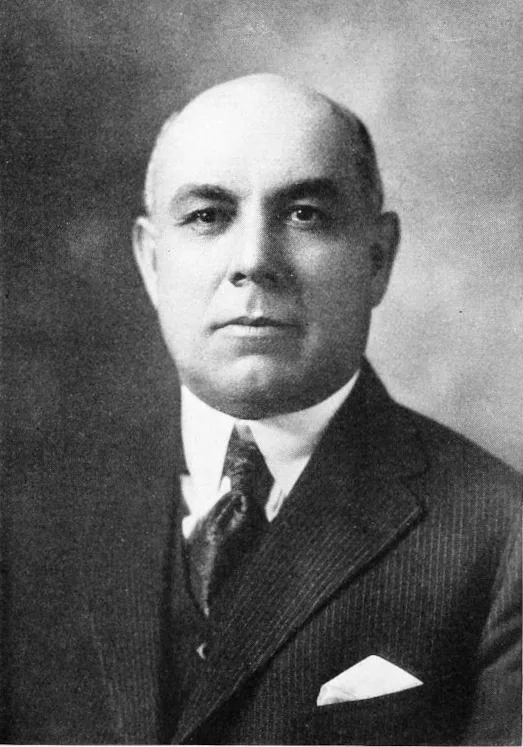
The story starts in Detroit, in 1899, where Sebastian S. Kresge's five-and-dime became the S. S. Kresge Company. The variety chain he built was solid and prosperous — and, by the early nineteen sixties, ready to be reinvented.
The reinvention came in 1962, and it came first. A smaller store in San Fernando, California, was the first to carry the Kmart name, on 25 January 1962 — a 27,000-square-foot "bantam". Five weeks later, on 1 March 1962, the first full-size Kmart opened at 29600 Ford Road in Garden City, Michigan: 80,000 square feet of everything, cheap. Eighteen Kmarts opened that year. Target opened its first store in May 1962 and Walmart in July — the two rivals that would eventually squeeze Kmart were born in its own year, months behind it.
What America remembers is the ritual. The Blue Light Special began in 1965, the idea of Earl Bartell, an assistant manager at an Indiana store: a flashing blue light wheeled into an aisle, a loudspeaker crackling "Attention, Kmart shoppers", and about fifteen minutes to grab a surprise bargain before the light went out. The original run lasted until 1991. It made bargain-hunting a sport — and Kmart owned the sport.
Visual interlude
Reading section 03
The Peak
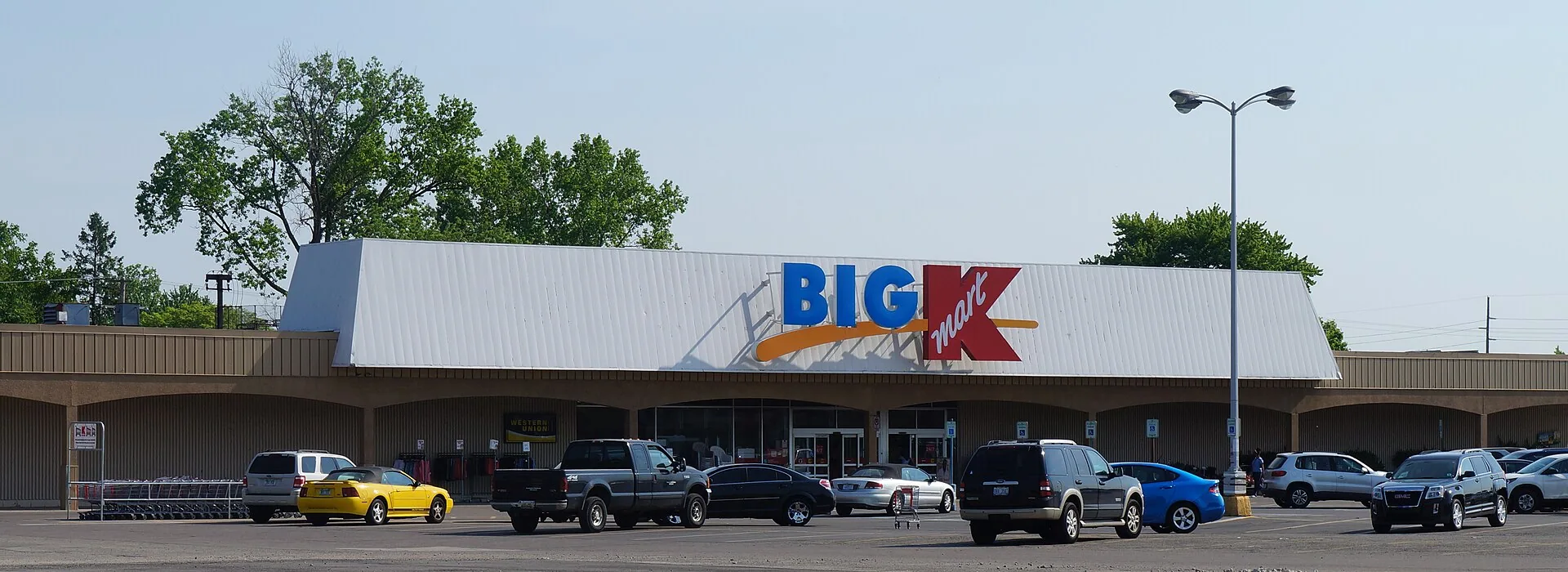
Count the discount and Super Kmart stores and the empire peaked in fiscal 1993 — Kmart's year ended in January 1994: 2,323 stores in the United States, 2,486 worldwide. Through the nineteen eighties, only Sears was bigger; Kmart was the second-largest retailer in America until Walmart passed it in November 1990.
The peak looked permanent because the stores were everywhere and the ritual was beloved. What the peak concealed was the pincer already closing: a rival undercutting it on price, another out-styling it, and a company that had stopped putting its money back into its own stores.
Visual interlude
Reading section 04
The Fall of Kmart
Through the nineteen nineties the squeeze tightened. Walmart beat Kmart on price. Target beat it on style. And Kmart, the record shows, under-invested: it failed to invest in the computer technology that managed its rivals' supply chains, kept paying a high dividend instead of improving its stores, and never built a coherent brand image to answer either rival. It was being beaten on both flanks at once, and spending its money elsewhere.
On 22 January 2002, Kmart filed for Chapter 11 bankruptcy protection in Chicago. It ran 2,114 stores and listed about 17 billion dollars in assets against 11.3 billion dollars in liabilities — the largest retail bankruptcy America had ever seen. Before the case was over, 599 stores had been closed: 283 approved in March 2002, and a second wave of 316 approved in January 2003.
STAT CARD 2,323 stores → 3 Kmart discount and Super Kmart stores in the United States at the fiscal-1993 peak — and the number still trading under the US flag today, in Miami, Guam and St. Thomas, alongside the website.
Kmart emerged on 6 May 2003, controlled by a hedge fund — Edward Lampert's ESL Investments, which held 53 percent of the new company. Then, barely two years later, the rescued chain did the thing nobody expected: it bought Sears. The deal was announced in November 2004 at about 11 billion dollars and completed on 24 March 2005, forming Sears Holdings — for accounting purposes, a purchase of Sears by Kmart — and making the combined company America's third-largest retailer.
It had bought a second collapse. On 15 October 2018, Sears Holdings filed for Chapter 11 — Kmart's second bankruptcy in sixteen years. In February 2019 a bankruptcy judge approved the sale of what was left to Transformco, Lampert's new entity: 425 stores in all, 202 of them Kmarts. The closings never stopped.
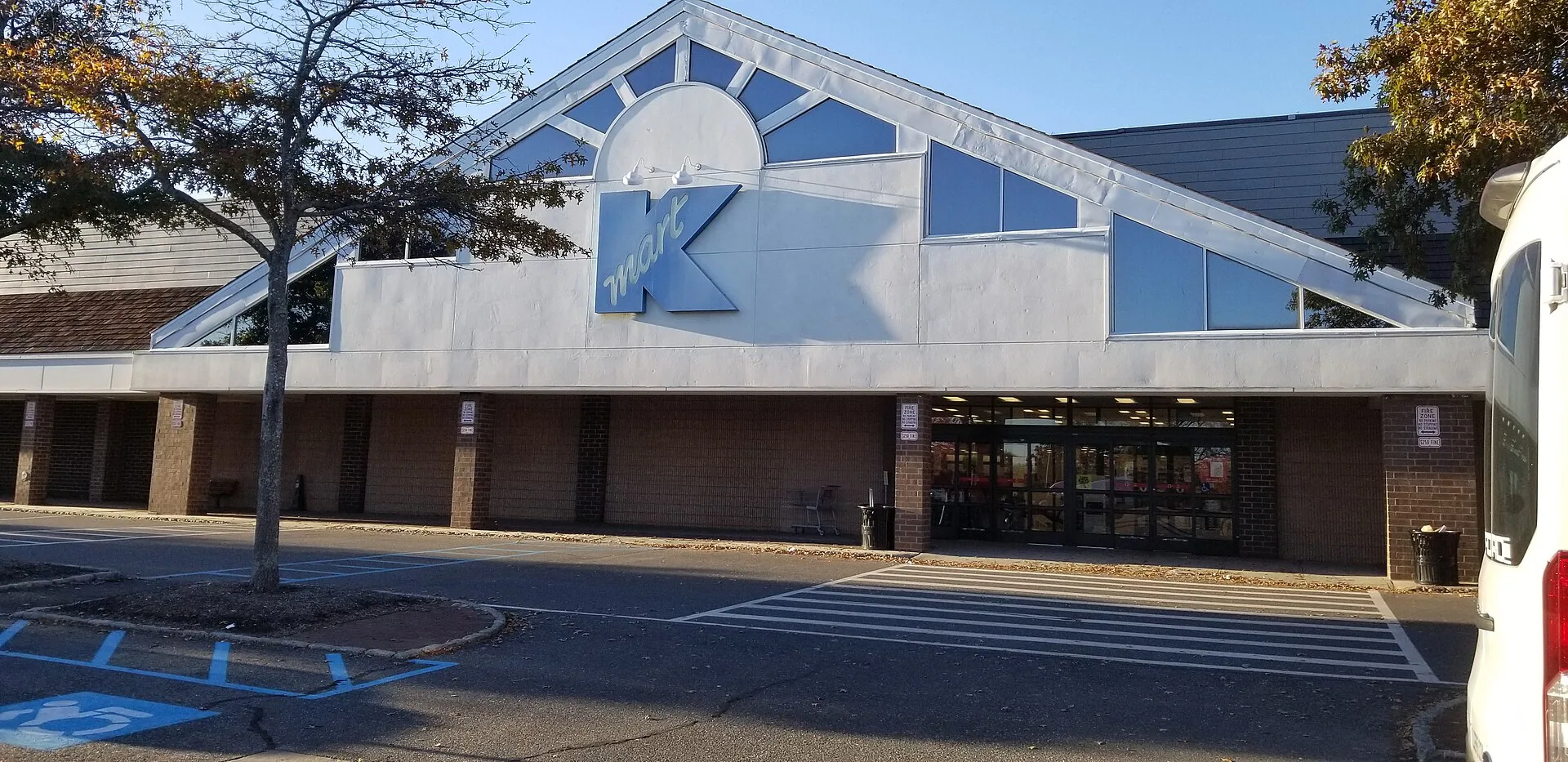
The first store's own ending came quietly: the Garden City original, the first full-size Kmart, closed in 2017. And on 20 October 2024, the Bridgehampton, New York store — the last full-size Kmart on the mainland — closed too.
Visual interlude
Reading section 05
The Afterlife
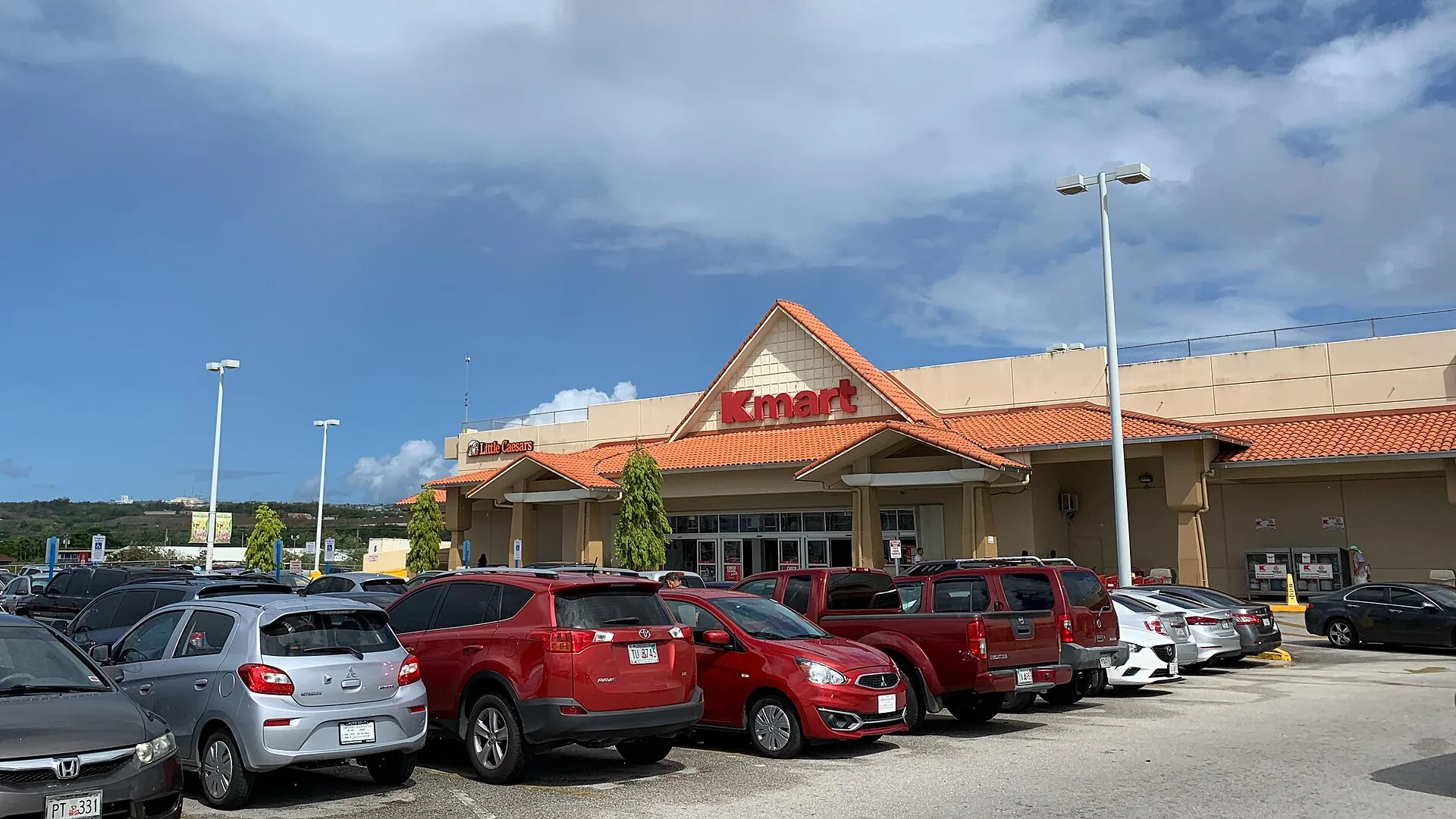
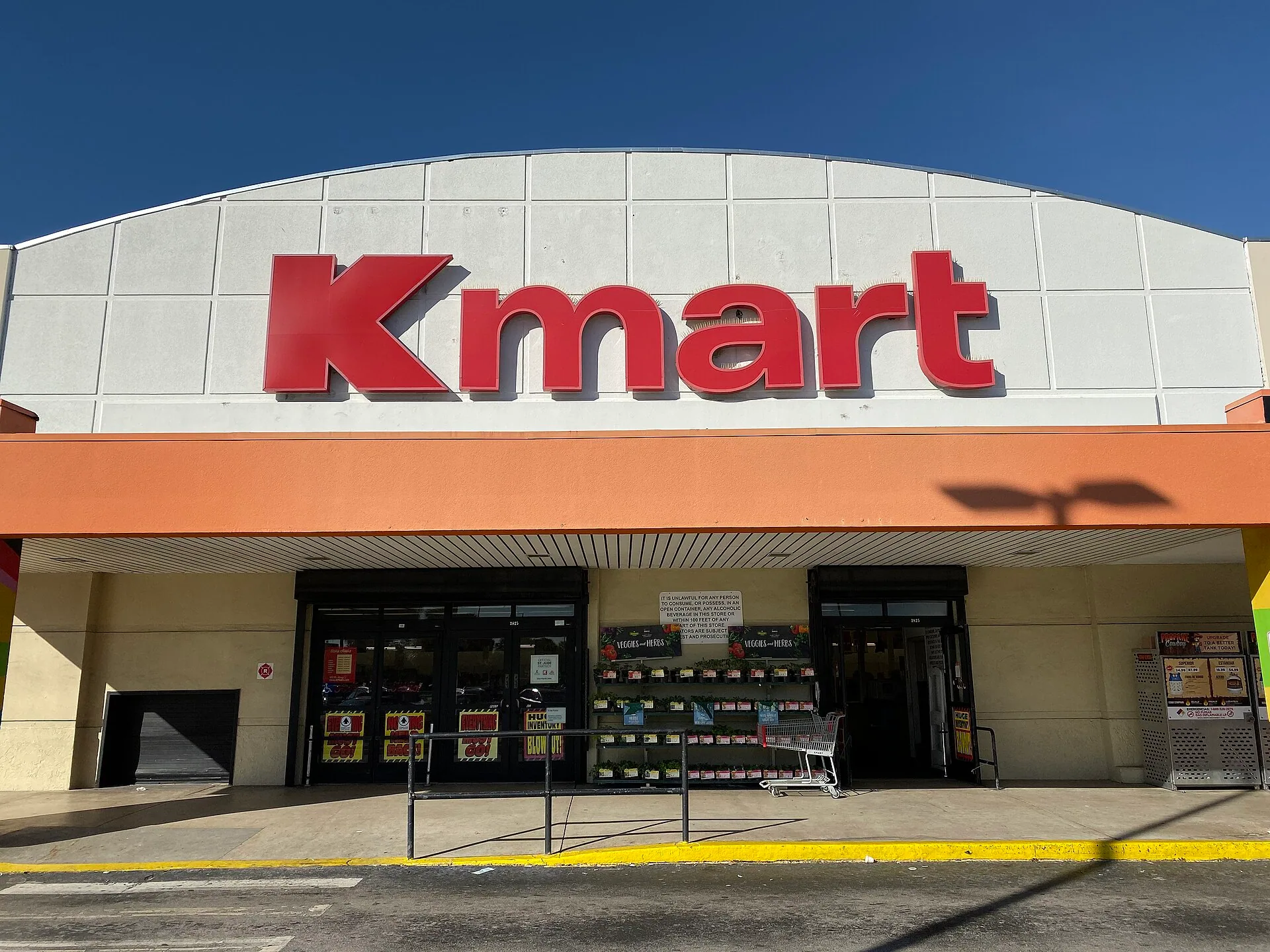
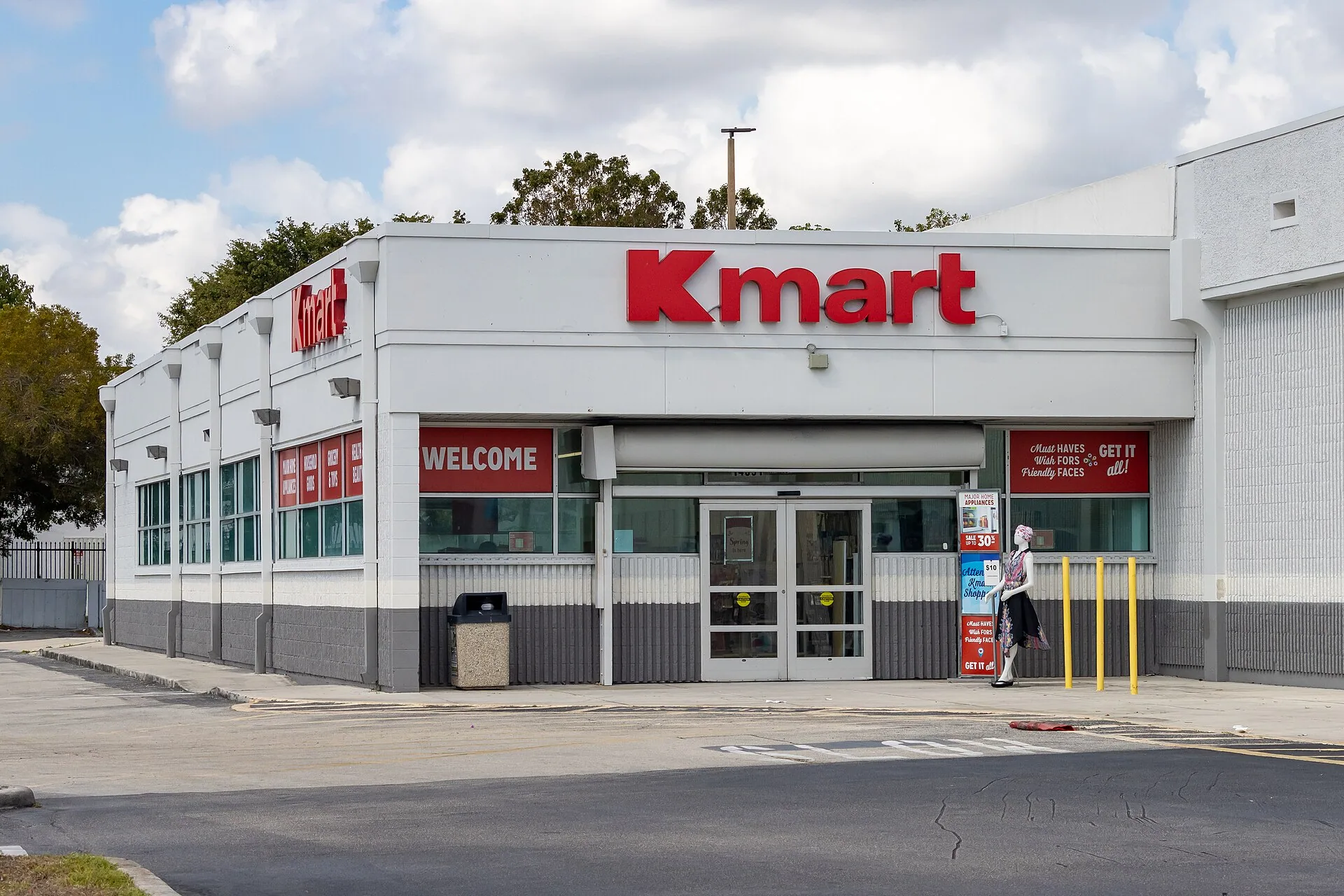
What remains is a remnant, and it is worth naming precisely. Three stores still trade under the US flag. In Miami's Kendale Lakes Plaza stands the last Kmart in the continental United States — a store opened in 1977 that downsized, in March 2023, into its own former garden center, the rest of the box leased to another retailer. In Tamuning, Guam, a full-size Kmart still trades. And in Charlotte Amalie, St. Thomas, in the US Virgin Islands, the Tutu Park Mall store is the territory's survivor — its St. Croix sister store closed in July 2025, and the second St. Thomas store, at Lockhart Gardens, was reported closing in August 2025. Behind them, kmart.com still operates under Transformco.
One caution for the nostalgic: the Kmart name you may meet abroad is not this chain. Kmart Australia has been a separate company since the nineteen seventies, under unrelated ownership — its survival says nothing about the American remnant. The American chain's afterlife is exactly three stores and a website.
Visual interlude
Reading section 06
The Verdict
So what actually killed Kmart? Not one decision and not one enemy — a pincer. It built the bargain hunt America loved, then lost it to the rivals born in its own year: Walmart took the low ground on price, Target took the high ground on style, and Kmart — paying its dividend and starving its stores — held neither. Two bankruptcies and one impossible merger later, the arithmetic is the whole story: 2,323 stores became three.
But the file does not close the way the others do. The stores are still trading; the website still takes orders; the name is still on three storefronts. Kmart is the rare giant this series cannot call dead — only barely alive, and honest about it.
Visual interlude
Reading section 07
Timeline
Visual interlude
Reading section 08
Sources & image credits
Sources. Founding and the Kresge company — Wikipedia's Kmart history (crawled 2026-11-10), corroborated by the company's annual-report archive (archive.org) and the Transformco corporate history. The first stores (San Fernando, 25 January 1962; Garden City, 1 March 1962) — Kmart's own 1961 annual report (archive.org full text), quoted in the episode's fact gate; Wikipedia history. The 1962 ordering (Target, May 1962; Walmart, July 1962) — History Facts, "The Year That Changed American Shopping"; Wikipedia. The peak store counts — Kmart Corporation's fiscal-1996 Form 10-K, Exhibit 13 store table (SEC EDGAR): United States fiscal 1993, 2,323; worldwide fiscal 1993, 2,486; the fiscal year ended in late January 1994. The second-largest-retailer run and the November 1990 Walmart pass — Wikipedia, citing contemporary AP reporting. The Blue Light Special (1965; Earl Bartell; the fifteen-minute mechanic; retired 1991) — Transformco's own press releases (2001 relaunch; 2007); AP (September 2024). The squeeze — the documented analyst consensus as recorded in Wikipedia (supply-chain technology, the high dividend, the missing brand image) and the episode register's cause line. The 2002 filing (22 January 2002; 2,114 stores; about 17 billion dollars in assets and 11.3 billion dollars in liabilities; the largest US retail bankruptcy at the time) — TWICE (22 January 2002); AP (January 2002); CNN. The 599 in-case closures — Form 10-K for fiscal 2002 (283 stores, approved 20 March 2002) and Form 10-Q for the first quarter of fiscal 2003 (316 stores, approved 28 January 2003; the two waves stated together in the company's first-quarter 2003 earnings 8-K). The emergence (6 May 2003; ESL's 53 percent) — Kmart Holding Corporation Form 10-Q (quarterly period ended 30 April 2003); Wikipedia. The Sears purchase — Form 8-K/A (filed 7 June 2005): completed 24 March 2005, total consideration approximately 11.9 billion dollars; the announced value of about 11 billion dollars — announcement-day reporting (November 2004) and AP (25 March 2005); "for accounting purposes, the business combination was treated as a purchase of Sears by Kmart" — Transformco. The second bankruptcy and the Transformco sale (15 October 2018; February 2019; 425 stores, 202 of them Kmart) — Wikipedia's 2018–2019 account of the filing and the court-approved sale. The last mainland store and the remnant (Bridgehampton closed 20 October 2024; the Garden City original closed 2017; the Kendale Lakes downsizing of March 2023; the 2025 US Virgin Islands closures leaving Tutu Park) — AP and CNN (September–October 2024); Newsday; kmart.com store listings and retail-press walk-throughs (checked 2026-11-10); Wikipedia infobox (crawled 2026-11-10): "Number of locations: 3 (1 in the mainland US)". Headquarters (Troy, Michigan 1962–2005; Hoffman Estates, Illinois since 2005) — Wikipedia infobox; Kmart Holding Corporation's Form 8-K of 16 June 2003, letterheaded 3100 West Big Beaver Road, Troy, Michigan.
Image credits (all via Wikimedia Commons; licenses as logged at download, November 2026):
Dates. Published: 2026-11-13 · Last verified: 2026-11-10 · Updated: 2026-11-13
Author: Ronin Naodhinsuk
Kmart, Sears, Walmart, Target, At Home, and all other brand names and logos mentioned in this article are trademarks of their respective owners. The Record Institute is an independent archive and is not affiliated with, endorsed by, or connected with Transformco, Sears Holdings, Walmart, or Target.
Related Articles
- RadioShack — What Happened to RadioShack?
- TWA — What Happened to TWA?
- Woolworth's — What Happened to Woolworth's?