Dead Brand Stories / RadioShack
What Happened to RadioShack?
RadioShack once had more than 7,300 stores across America — and today the company behind the name owns none of them in the United States. The chain died. The name lives on.
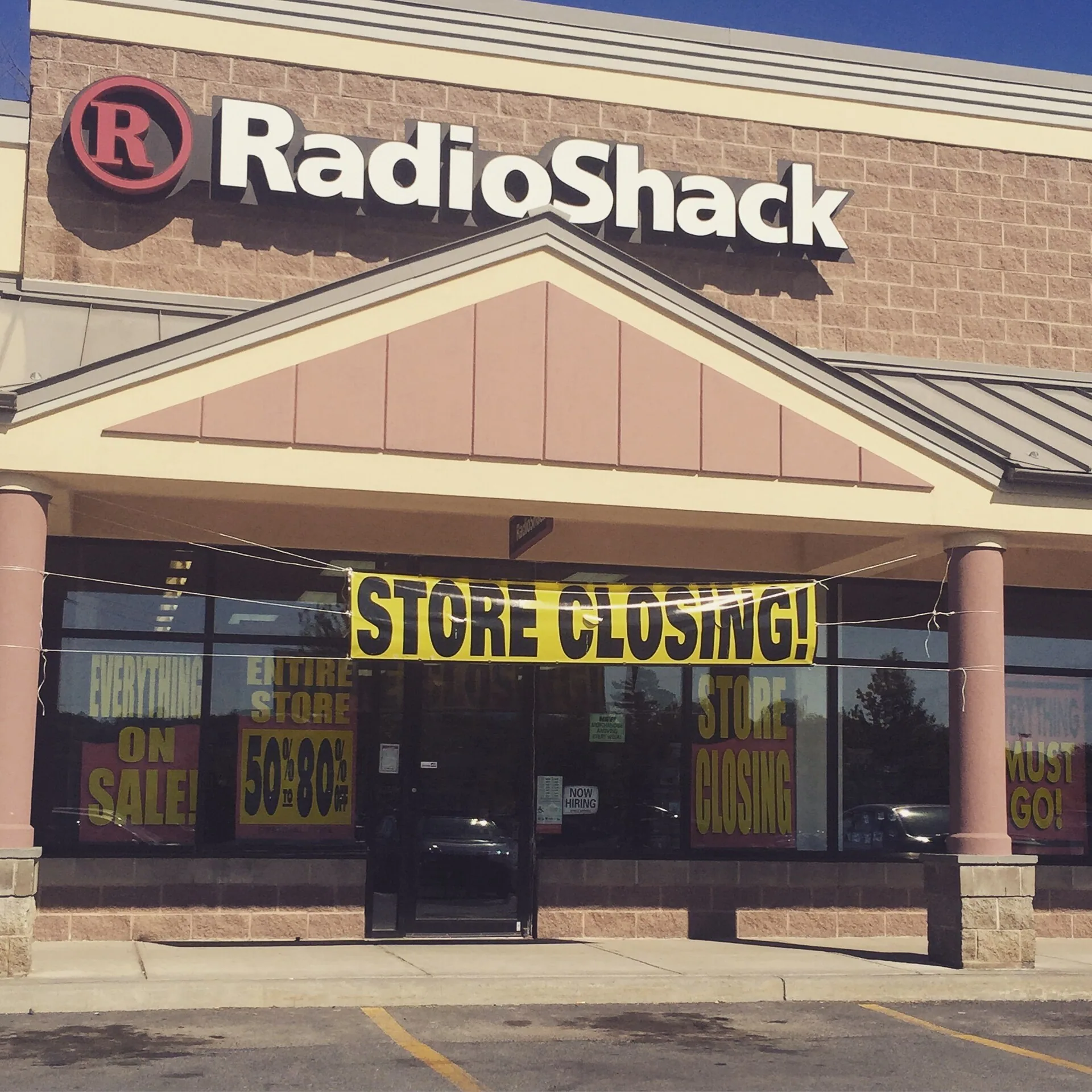
Opening statement
At its peak, RadioShack had over seven thousand three hundred stores across America. Today, the company behind it owns none in America. Not one of the more than one hundred and seventy shops that still trade under the name belongs to the company that owns the brand — they are independent dealers, and behind them a website. The chain that taught America electronics is dead. The name, improbably, is still trading. It began in Boston in 1921 as a mail-order shop for ham radio parts, and was rescued from near-bankruptcy in the early nineteen sixties by Charles Tandy, a Texas leather-goods man, who paid three hundred thousand dollars for it and filled America with thousands of tiny stores staffed by people who knew electronics. This is the story of how that empire was given away one decision at a time — the computer business it had led, walked away from; the parts wall it shrank to sell telephones; two bankruptcies in two years — and how the name was then sold, and sold again, until it belonged to a company on another continent. This account is drawn from the record: the company's own SEC filings and its 2017 farewell release, the bankruptcy reporting of 2015 and 2017, and the trade press that still tracks the dealer network today. It runs from a Boston mail-order counter in 1921 to a dealer program in 2026 — and it does not end the way the other files in this series end, because RadioShack's ending has a second half.
A structured case history
Reading section 01
Watch: Dead Brands No. 13, the short — "What Happened to RadioShack?"
Reading section 02
The Rise of RadioShack
The story starts in Boston in 1921, where brothers Theodore and Milton Deutschmann began selling parts and equipment to ham radio operators and ship radio officers — one small shop, and a mail-order business. The company they founded kept the faith with the hobbyist for four decades, and by the early nineteen sixties it was nearly bankrupt.
The rescue came from Texas. Charles Tandy, a leather-goods man, bought the chain for three hundred thousand dollars. (The figure is triple-sourced; the year is not — the Fort Worth archives and a House resolution date the deal to 1963, agreement in March and closing on 30 June, while Wikipedia dates the purchase 1962. This article carries the figure and flags the year rather than picking one.) Tandy's formula remade the chain: the catalogue was cut from some forty thousand items to two thousand five hundred, thousands of tiny rented stores — "little holes in the wall" — were staffed by people who knew electronics, private-label goods filled the shelves, and independent dealers carried the name into small markets too small for company stores.
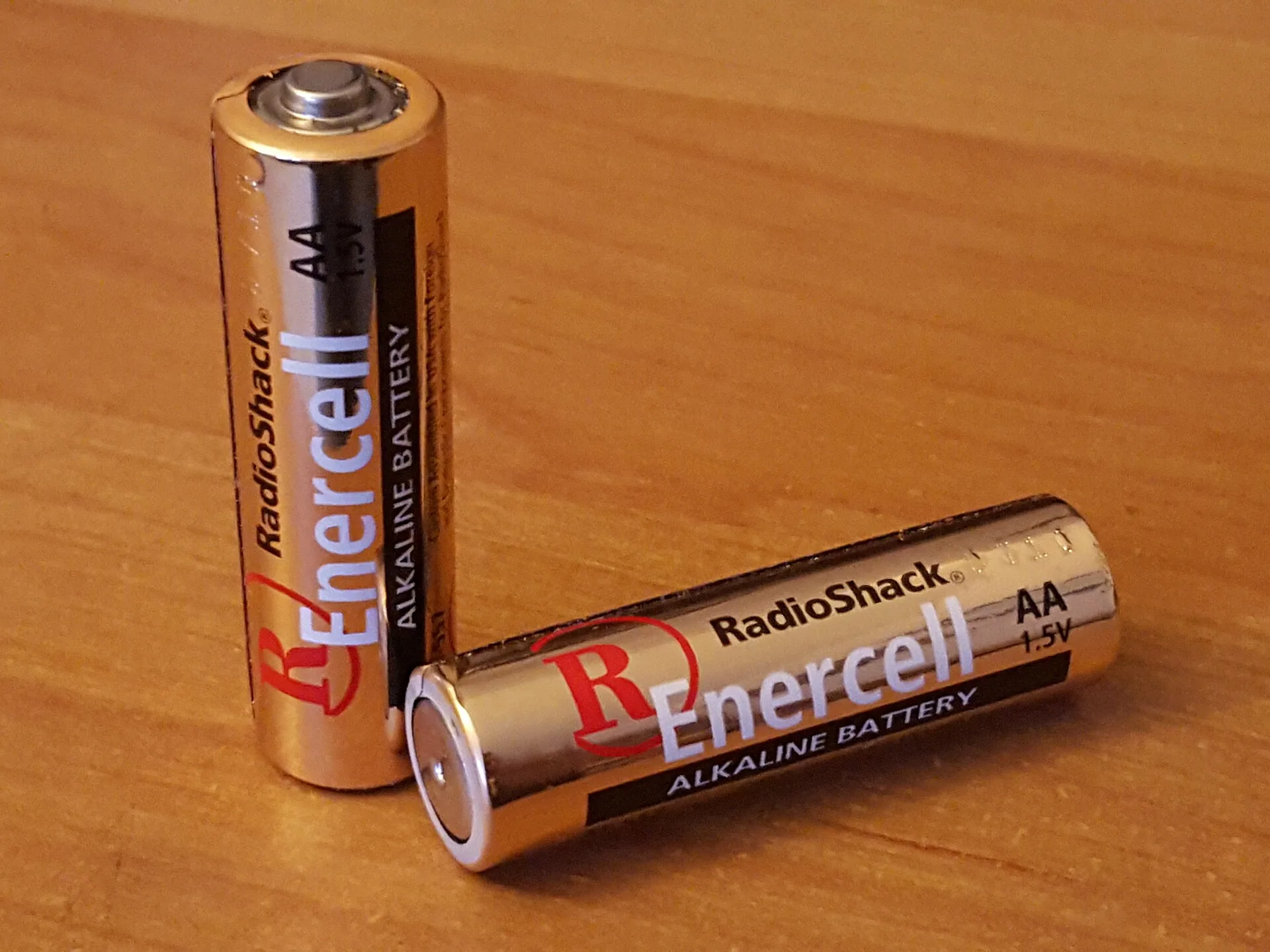
You remember the ritual. A wall of small parts — resistors, fuses, antennas, batteries — and a clerk who knew which resistor your project needed. And the Battery Club: the Battery of the Month Club gave members a card and one free Enercell battery a month, in store, just for coming in. It ran from the nineteen sixties until the early nineteen nineties, and it turned a parts run into a monthly habit.
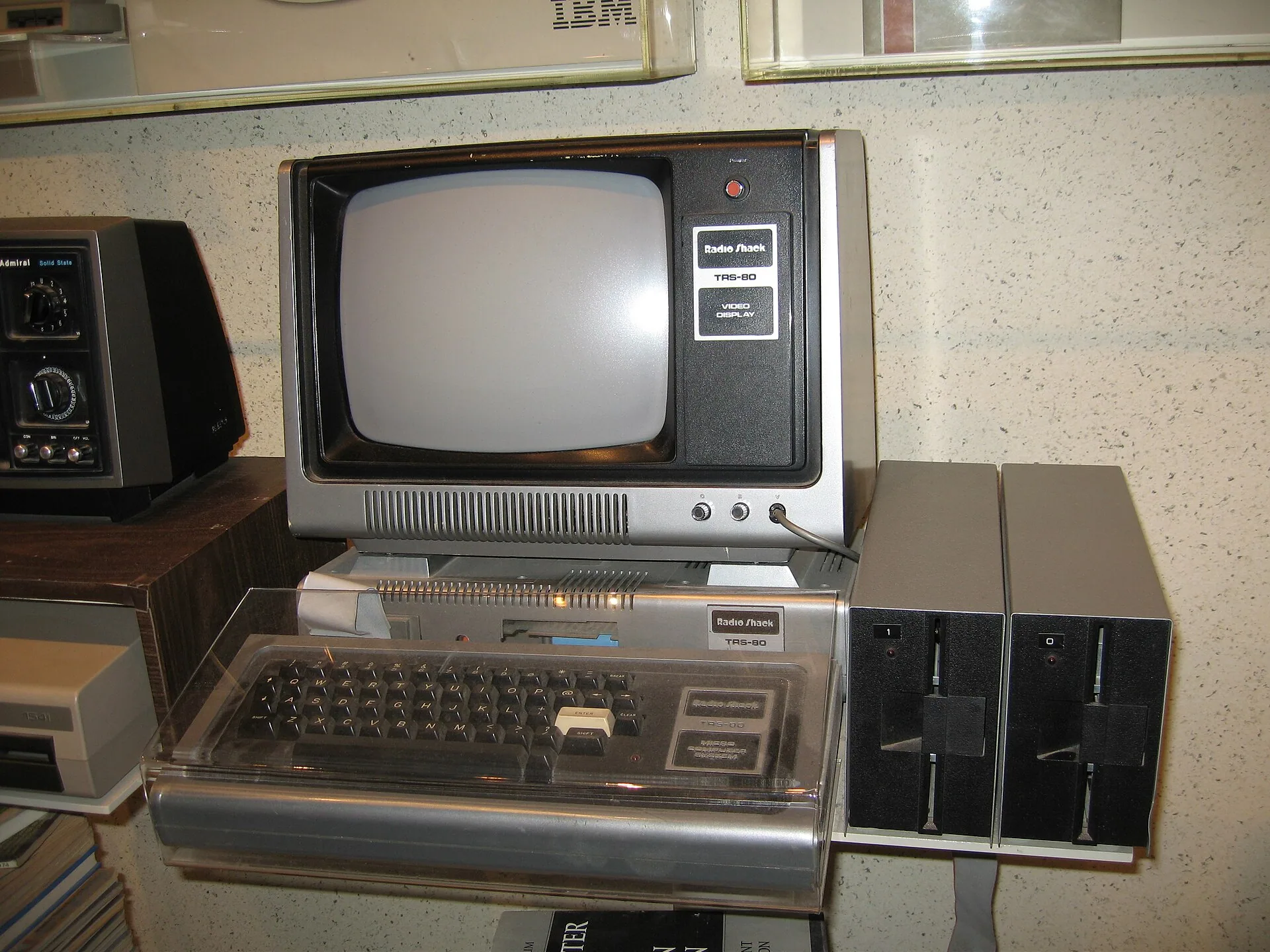
Then came the machine. In August 1977 RadioShack put a complete computer on the shelf: the TRS-80, a pre-assembled system — keyboard unit, monitor, cassette recorder — at five hundred ninety-nine dollars and ninety-five cents, when most computers came as kits. It was one of the first mass-market personal computers, and RadioShack's thousands of stores were its distribution. The TRS-80 was the best-selling personal computer of 1978, and by 1980 it had outsold every other personal computer.
Visual interlude
Reading section 03
The Peak
Count the company stores and the dealers together, as the company itself counted them, and the empire peaked at year-end 2001: 7,373 locations in the United States — 5,127 company-owned stores, plus 2,119 dealer and franchise outlets and a small in-store chain. The figure is from RadioShack's own FY2001 Form 10-K, read directly from the SEC filing. When the company said goodbye in 2017, its farewell release remembered the peak the same way: "over 7,300 stores."
The peak looked permanent because the stores were everywhere and the ritual was beloved. What the peak concealed was that the company had already begun walking away from the two things that built it: the hobbyist, and the computer. The parts wall was about to shrink, and the little stores were about to become phone shops.
Visual interlude
Reading section 04
The Fall of RadioShack
The walk-away came first. In 1993, Tandy sold its computer manufacturing to AST Research. The company that had put the first mass-market computer on America's shelves — and whose TRS-80 had outsold every other personal computer by 1980 — exited the business of making computers. Then it walked away from the machines that made it famous, and from the parts customer who had made it necessary. Through the nineteen nineties the chain de-emphasized the hobbyist market for wireless phones; the stores came to live on mobile commissions. When the carriers opened their own stores and the parts business moved online, the shops were stranded: too small to be phone stores, no longer stocked to be parts stores.
After eleven straight losing quarters, RadioShack filed for Chapter 11 bankruptcy protection on 5 February 2015; the New York Stock Exchange had delisted it three days earlier. A rescue was actually assembled. General Wireless, an affiliate of the hedge fund Standard General, kept 1,743 stores open — with Sprint counters inside 1,435 of them, a store-within-a-store — and the name and intellectual property were sold separately that May.
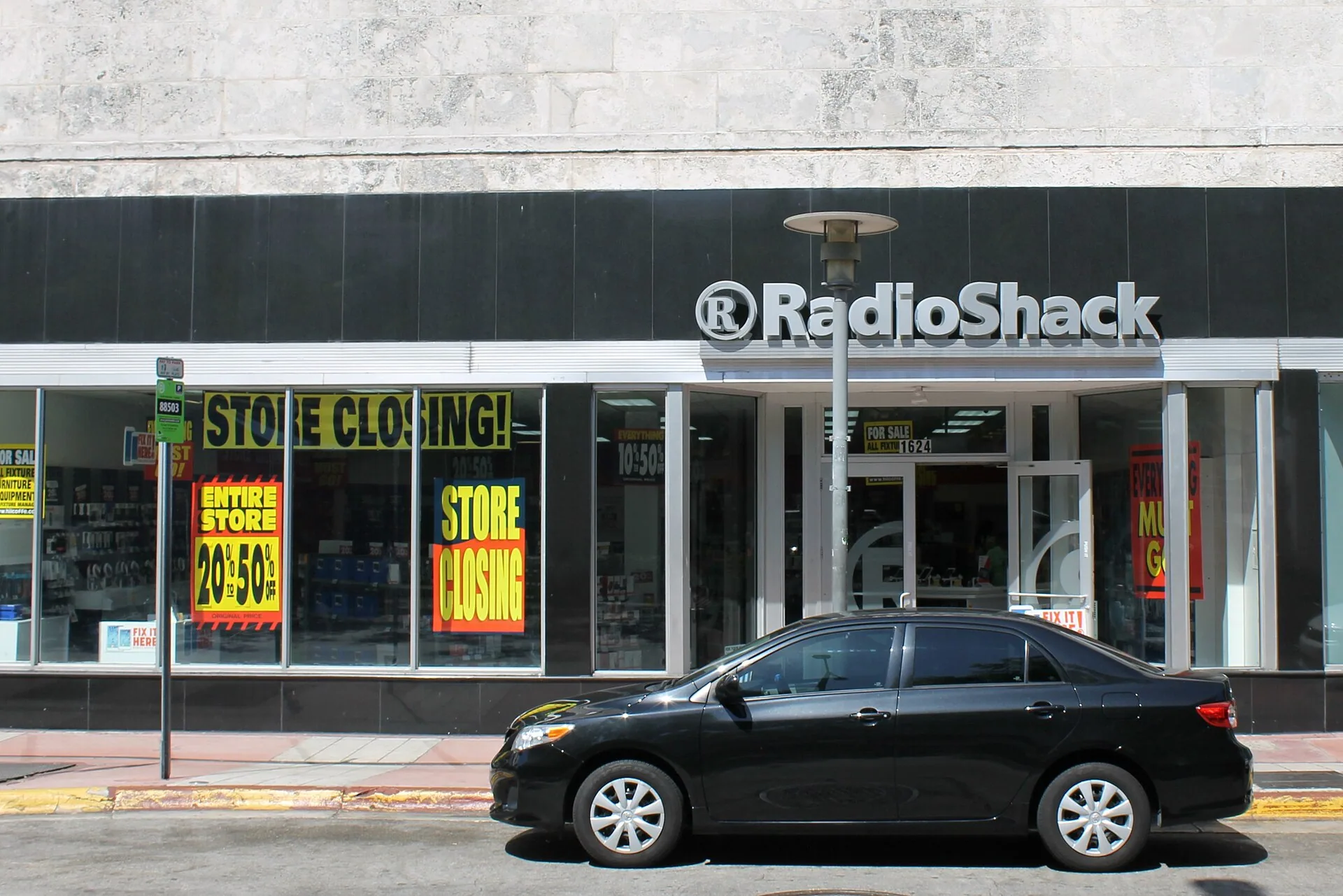
The rescue bought two years. On 8 March 2017, General Wireless filed for bankruptcy too, and over Memorial Day weekend that year more than a thousand company stores closed. Fewer than seventy corporate stores remained by the middle of 2017, alongside some five hundred dealers, and the company-owned chain — the chain Tandy built — was done. The name itself was auctioned that July.
STAT CARD 7,300 stores → 170 left More than 7,300 U.S. stores and dealers at the peak — and the one hundred and seventy-plus independent dealers who still trade under the name today, not one of them owned by the company.
Visual interlude
Reading section 05
The Afterlife
What survived the second bankruptcy was the name, and the name kept being sold. Auctioned in July 2017, it passed to Retail Ecommerce Ventures in November 2020, and in May 2023 the Unicomer Group — through its affiliate Global Franchising Corporation — acquired control of the worldwide RadioShack business.
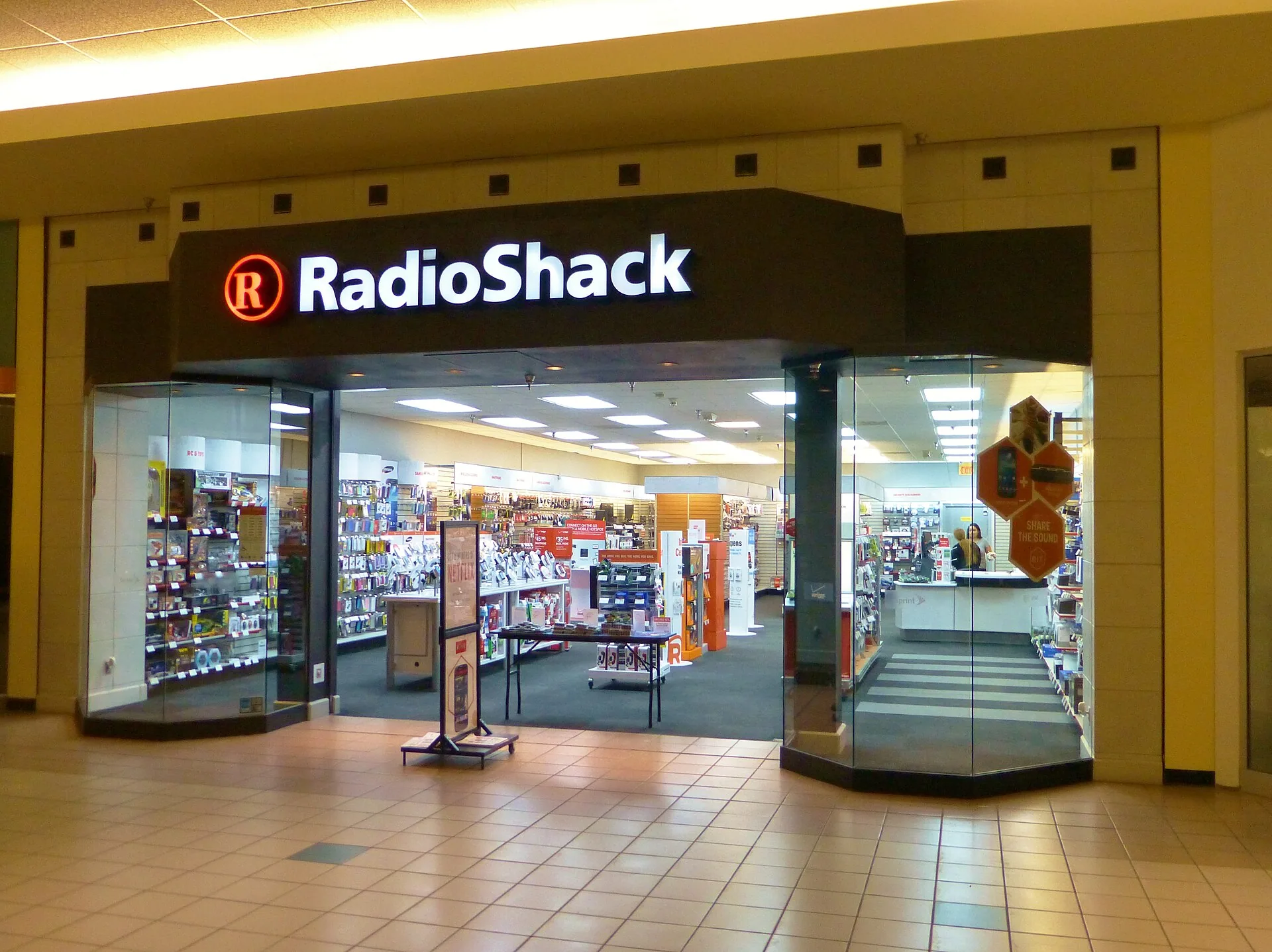
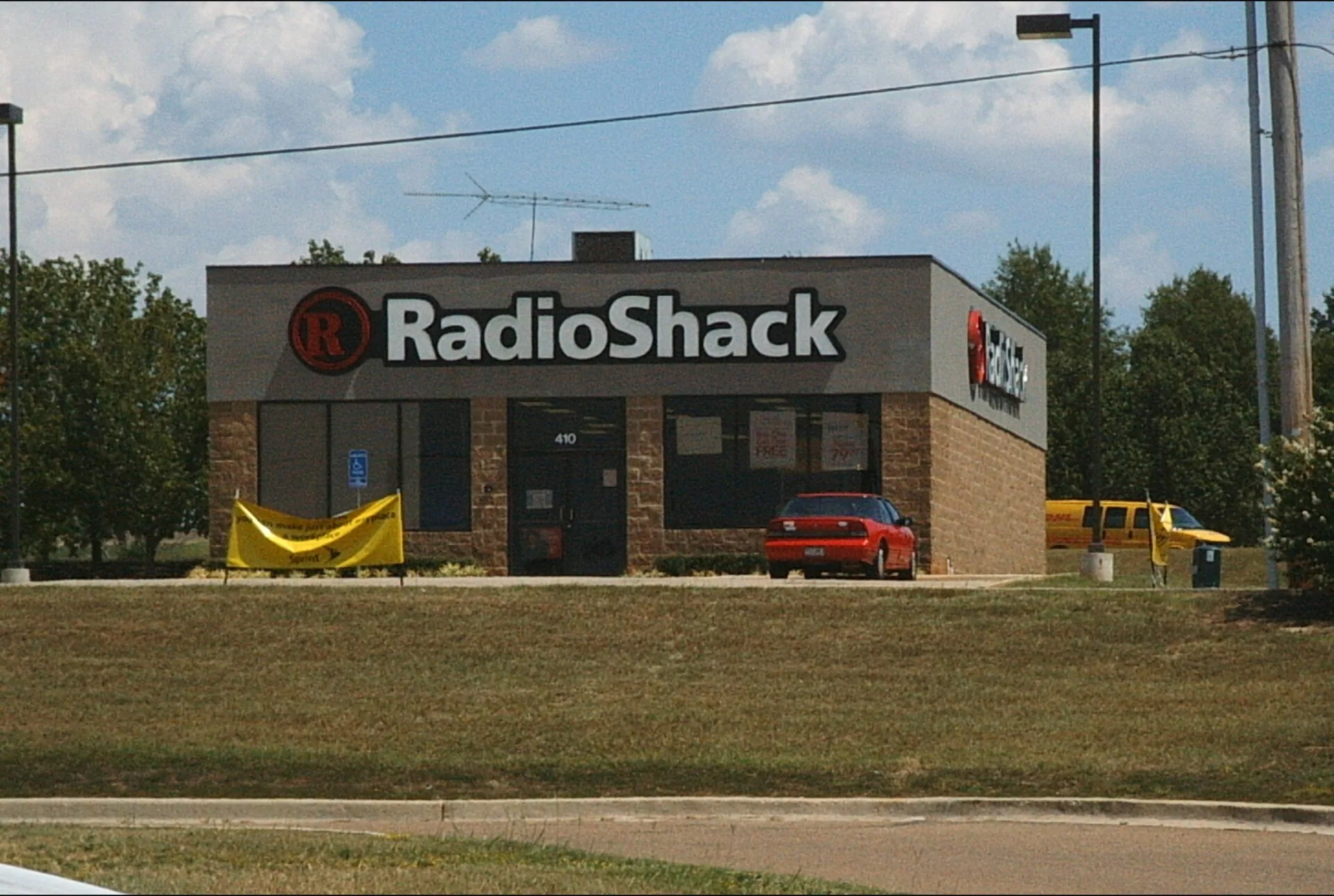
Under Unicomer the name trades on, in a form Tandy would half-recognize. In the United States it is an e-commerce site plus a network of independent authorized dealers — more than 170 dealer stores participating as of August 2026, in some forty states. They are other people's stores carrying the name, exactly as the small-town dealers of the Tandy formula did — except that now there is no company chain behind them at all. Abroad, the story is different again: Unicomer itself operates some 336 RadioShack stores across Central America, the Caribbean and South America. In America, though, the honest sentence is the episode's own: the company owns none of them. The chain died. The name lives on.
Visual interlude
Reading section 06
The Verdict
So what actually killed RadioShack? Not one bankruptcy — the bankruptcies were the end of a longer surrender. The chain that taught America electronics walked away from the computer business it had led, shrank the parts wall that made it necessary, and chained its little stores to mobile-phone commissions just as the carriers became its competitors and the parts trade moved online. Two bankruptcies, in 2015 and 2017, merely closed the file.
It taught America electronics — then stopped selling the parts. What remains is the strangest afterlife in this series: not a name in a rival's drawer, but a name still trading on other people's storefronts, in more than one hundred and seventy American towns, owned by a company that runs not a single one of them.
Visual interlude
Reading section 07
Timeline
Visual interlude
Reading section 08
Sources & image credits
Sources. Founding (1921, Boston; the Deutschmann brothers; ham and ship radio customers) — Fort Worth Library Archives, holder of the donated Radio Shack Records; H. Res. 1643 (111th Congress, 2010); Wikipedia. The Tandy purchase (300,000 dollars; nearly bankrupt chain) — Fort Worth Library Archives; H. Res. 1643; the deal account in Tandy's Money Machine (1992); the year split (1963 per the archives and the resolution — agreement March 1963, book-value closing 30 June 1963 — against Wikipedia's 1962) is disclosed wherever the purchase is dated. The Tandy formula (the 40,000-to-2,500 item cut; the tiny rented stores; knowledgeable staff; dealers in small markets) — Wikipedia's history of the company. Headquarters (Fort Worth, Texas, later) — Wikipedia infobox; Fort Worth archives. The peak (7,373 total U.S. outlets at year-end 2001 — 5,127 company-owned, 2,119 dealer/franchise, 127 Cool Things @ Blockbuster) — RadioShack's FY2001 Form 10-K, RETAIL OUTLETS table, read directly from sec.gov; the filing's Item 1 prose figure of 5,289 company-owned stores conflicts with its own table, and the table governs. The "over 7,300 stores" peak phrasing — RadioShack's farewell release of 26 May 2017. Wikipedia's separate "over 8,000 stores" (1999) is a global count and is not used. The Battery Club (free card; one free Enercell battery per month; 1960s to early 1990s) — Wikipedia; MediaPost (2010). The TRS-80 (introduced 3 August 1977; complete system at 599.95 dollars; one of the first mass-market personal computers) — How-To Geek (August 2022); Science Museum Group collection record; BYTE, November 1977. The 1978 sales position — stated qualitatively only ("best-selling personal computer of 1978"; roughly 60 percent market share at the end of 1977): published unit estimates vary widely and the episode's earlier quantitative card was withdrawn at audit. The 1980 position ("the TRS-80 had outsold every other personal computer") — the TRS-80's documented best-seller run, 1977 into 1980–81; TIME's contemporary "largest-selling computer of all time" (c. 1980). The claim that Tandy was the world's biggest maker of personal computers by 1991 is deliberately not used. The 1993 sale of computer manufacturing to AST Research — Wikipedia history; Personal Computer World, August 1993 (the 175 million dollar deal figure is not used). The turn (the nineteen-nineties focus on wireless phones and de-emphasis of the hobbyist market; mobile commissions; the carriers' own stores; parts moving online) — Wikipedia lead and history; General Wireless's March 2017 filing rationale; 2017 reporting on the parts trade's move to e-commerce vendors. The first bankruptcy (filed 5 February 2015; eleven consecutive quarterly losses; NYSE delisting 2 February 2015; D. Del. Case 1:15-bk-10197) — TheStreet's court reporting (March 2015); Wikipedia. The 2015 rescue (court approval 31 March 2015; General Wireless kept 1,743 stores; Sprint co-tenant in 1,435; name/IP sold separately in May 2015 for 26.2 million dollars) — Wikipedia; TWICE; Computerworld; Commercial Observer. The second bankruptcy (General Wireless filed 8 March 2017; more than 1,000 company stores closed over Memorial Day weekend 2017; fewer than 70 corporate stores plus some 500 dealers remaining mid-2017; October 2017 exit retaining at most 28 stores and the dealer/e-commerce operations; July 2017 IP auction to Kensington Capital, 15 million dollars, sole bidder) — WSJ via Hardware Retailing; RadioShack's 26 May 2017 release; Wikipedia. The afterlife chain (Retail Ecommerce Ventures, November 2020; Unicomer Group control, May 2023, via Global Franchising Corporation) — Wikipedia; SlashGear (5 September 2026). Current status (more than 170 U.S. authorized dealers as of August 2026 — RadioShack USA MD Kevin Hamann via Twice, reported by SlashGear; Adweek, 4 November 2026: "now has 170 authorized dealers, operating mainly online"; Modern Retail, May 2026: more than 170 resellers in 40 states; radioshack.com live; Unicomer operates some 336 RadioShack stores in Central America, the Caribbean and South America) — the episode's fact gate, checked fresh 2026-11-10. Wikipedia's infobox figure of approximately 400 authorized dealers is not used — it is unreconciled with the company's own MD figure and current trade reporting. The advertising slogan "You've got questions, we've got answers" is deliberately used nowhere in this article, as it was used nowhere in the episode.
Image credits (licenses as logged at download, November 2026):
Dates. Published: 2026-11-13 · Last verified: 2026-11-10 · Updated: 2026-11-13
Author: Ronin Naodhinsuk
RadioShack, TRS-80, Enercell, Tandy, Sprint, and all other brand names and logos mentioned in this article are trademarks of their respective owners. The Record Institute is an independent archive and is not affiliated with, endorsed by, or connected with RadioShack, the Unicomer Group, or any successor or licensee.
Next episode → No. 14: What Happened to Kmart?
Related Articles
- TWA — What Happened to TWA?
- Woolworth's — What Happened to Woolworth's?
- Kmart — What Happened to Kmart?