Dead Brand Stories / TWA
What Happened to TWA?
TWA beat Pan Am across the Atlantic — then came Icahn's debt, three bankruptcies, and a sale to American, until its own chief executive flew the final flight himself.
Opening statement
On 1 December 2001, TWA's chief executive, Captain Bill Compton, climbed into the cockpit of an MD-83 named Wings of Pride and flew the airline's final flight — the ceremonial Flight 220, from Kansas City — into St. Louis himself. Thirty-two years earlier, TWA had carried more passengers across the Atlantic than Pan Am, for the first time. Now the airline that beat Pan Am was being flown home by its own boss, for the last time. At its height this was Howard Hughes's airline: it opened scheduled New York–Paris passenger service with the Constellation in 1946, and it gave New York Eero Saarinen's Flight Center, a terminal shaped like a bird in flight. This is the story of how that airline was dismantled — a take-private that paid Carl Icahn 469 million dollars and loaded TWA with new debt, the London routes sold to American, Flight 800, three bankruptcies — until American bought what was left in 2001. This account is drawn from the record: Encyclopaedia Britannica, the Smithsonian's National Air and Space Museum, the TWA Museum, the NTSB's Flight 800 report and American's SEC filings. It runs from a merger in 1930 to a hotel check-in desk in 2019 — and it ends, as the episode does, in The Record Institute's own archive, where two TWA advertisements survive on paper.
A structured case history
Reading section 01
Watch: Dead Brands No. 16, the short — "What Happened to TWA?"
Reading section 02
The Rise of TWA
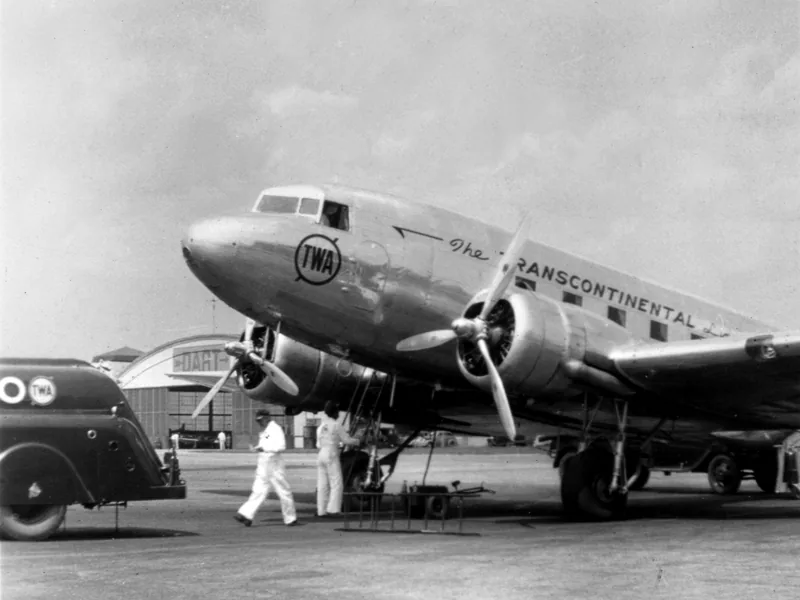
It began in 1930, when two airlines — Transcontinental Air Transport and Western Air Express — merged to form Transcontinental and Western Air, the company the initials TWA first stood for. The name the world remembers came twenty years later: Trans World Airlines was adopted on 17 May 1950.
Howard Hughes bought in, in 1939, and made it his airline. He did not found TWA — he bought into a going concern and turned it into the vehicle for his ambitions in the air, the airline of the Hughes era: movie-star glamour, transcontinental speed, and a fleet that kept pushing further.
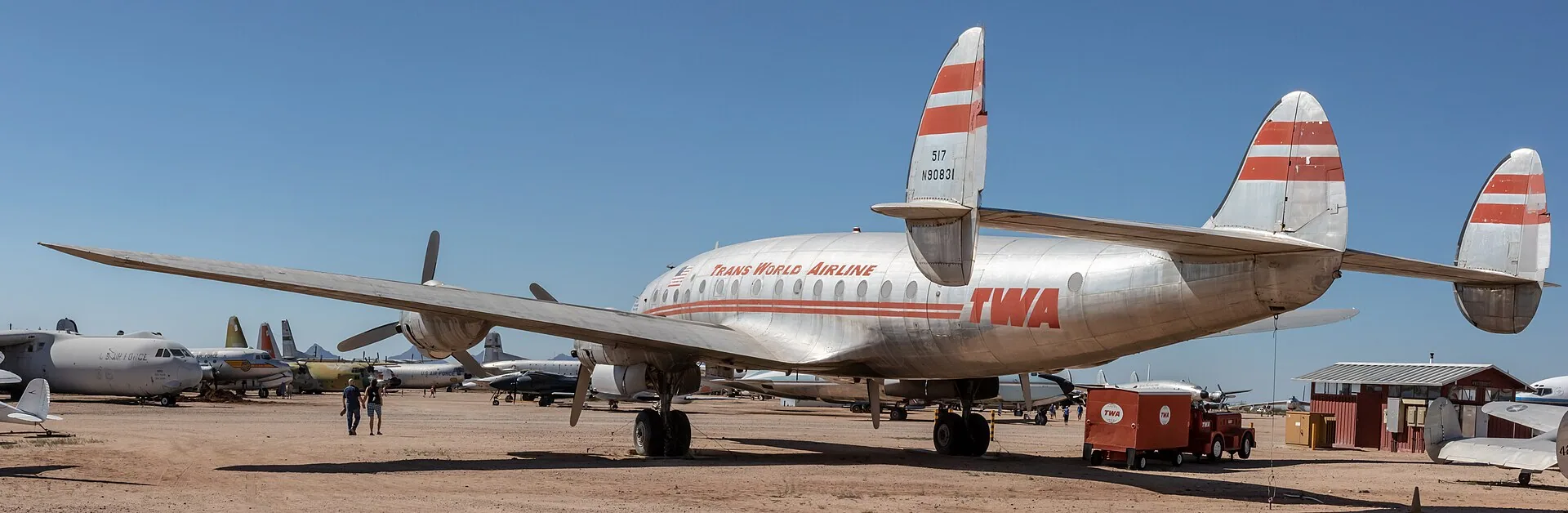
In February 1946, a TWA Constellation — the L-049 Star of Paris — opened scheduled passenger service from New York to Paris, flying from LaGuardia to Orly by way of Gander and Shannon. The Constellation, with its triple tail and dolphin fuselage, became the shape of TWA itself: the airline that had shrunk the Atlantic.
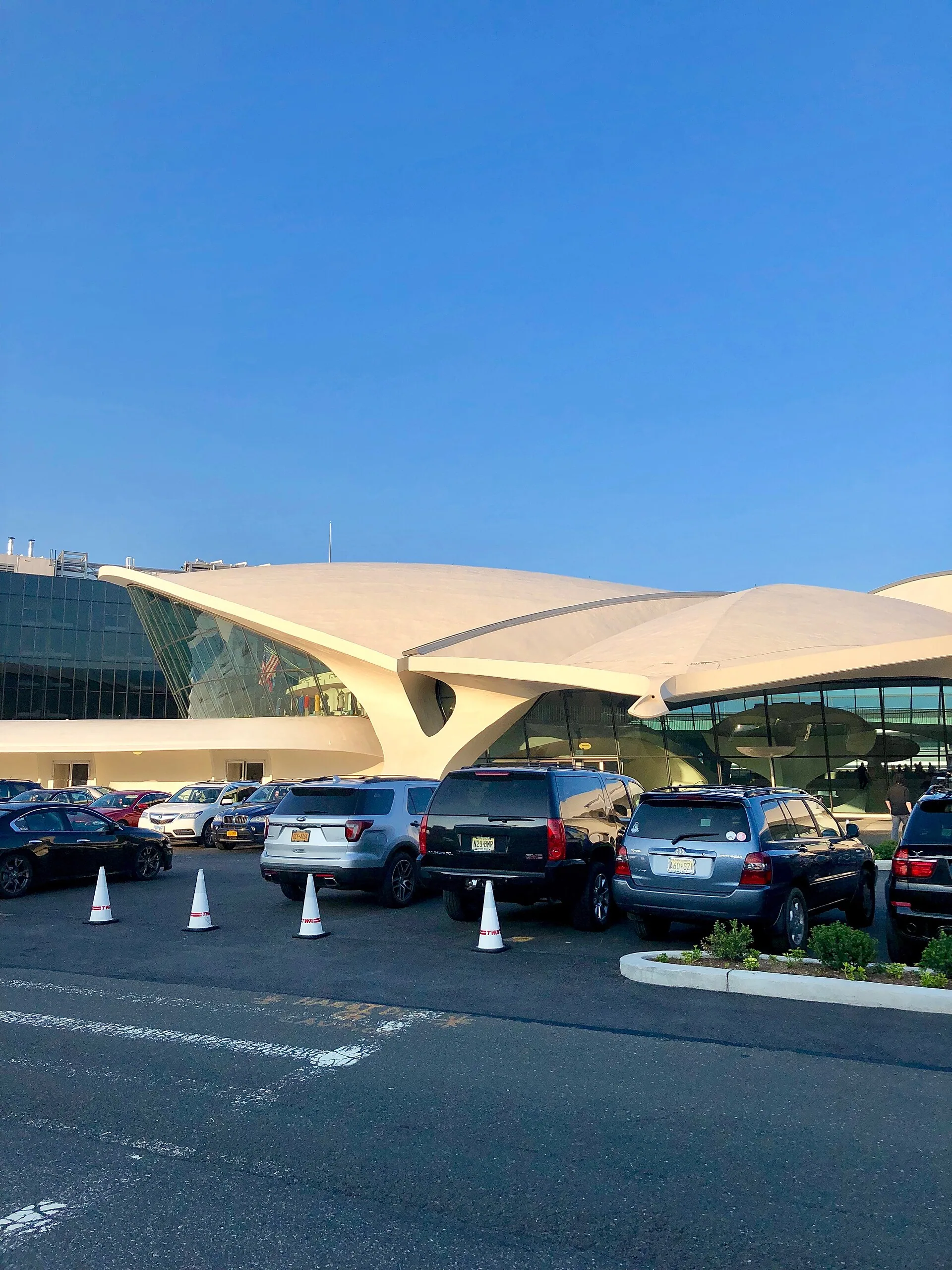
In 1962 came the building. Eero Saarinen's TWA Flight Center at New York's Idlewild Airport — now JFK — was dedicated on 28 May 1962: a thin-shell concrete head house shaped like a bird in flight, the most famous airline terminal ever built. Saarinen never saw it open. He died in 1961, the year before his bird flew.
Visual interlude
Reading section 03
The Peak
Pan Am had always been No. 1 across the Atlantic. In July 1969, for the first time, it wasn't: TWA carried more passengers across the North Atlantic than Pan Am. That is the peak this story is measured from — not a store count or a revenue line, but a single month in which the second airline became the first.
The peak looked permanent, but the man who had built the airline's legend was already gone. Hughes had lost control of TWA in 1960, and in 1966 he sold his stake, for 546.5 million dollars. The airline flew on without him — into deregulation, into the 1980s, and into the hands of a very different kind of owner.
Visual interlude
Reading section 04
The Fall of TWA
The turn came in 1985, when Carl Icahn took control — control acquired on 26 September 1985. What followed is the transaction the whole fall turns on. On 7 September 1988, Icahn took TWA private. The deal took 610.3 million dollars out of the airline; 469 million dollars of it was Icahn's personal profit, and it added about 540 million dollars in new debt to TWA itself. The profit was his. The debt was the airline's.
The assets went next. In 1991, TWA sold its London routes — six routes between the United States and London Heathrow — to American Airlines, for 445 million dollars. The airline that had beaten Pan Am across the Atlantic was now selling its place on the Atlantic to a rival, to service the debts of its own buyout.
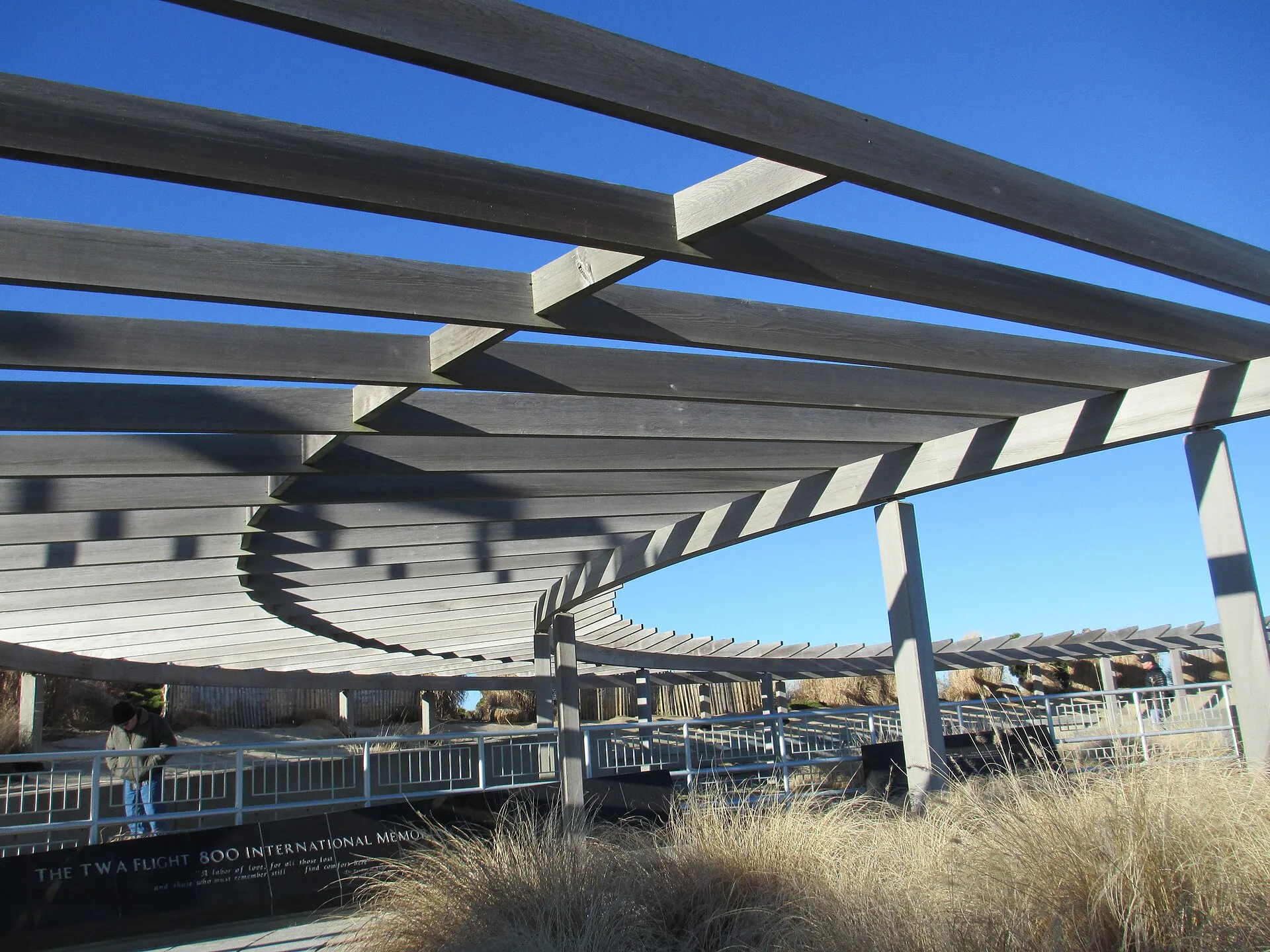
Then, grief. On 17 July 1996, TWA Flight 800 — a Boeing 747 flying from JFK to Paris — exploded off Long Island, near East Moriches, New York. All 230 people aboard died: 212 passengers and 18 crew. The NTSB's probable-cause finding was an explosion of the centre wing fuel tank. There is no photograph of that aircraft in this article, deliberately. There is a memorial instead.
Bankruptcy came three times: on 31 January 1992, again on 30 June 1995 as a prepackaged filing, and finally on 10 January 2001. The third filing was the end. On 9 April 2001, American Airlines' acquisition of TWA closed: about 742 million dollars in cash, including the 625 million dollar purchase price and acquisition costs — and American also assumed about 3.5 billion dollars of TWA's debt and liabilities.
STAT CARD #1 → 0 First across the Atlantic in 1969, Pan Am passed for the first time — and the number of TWA flights in the sky today.
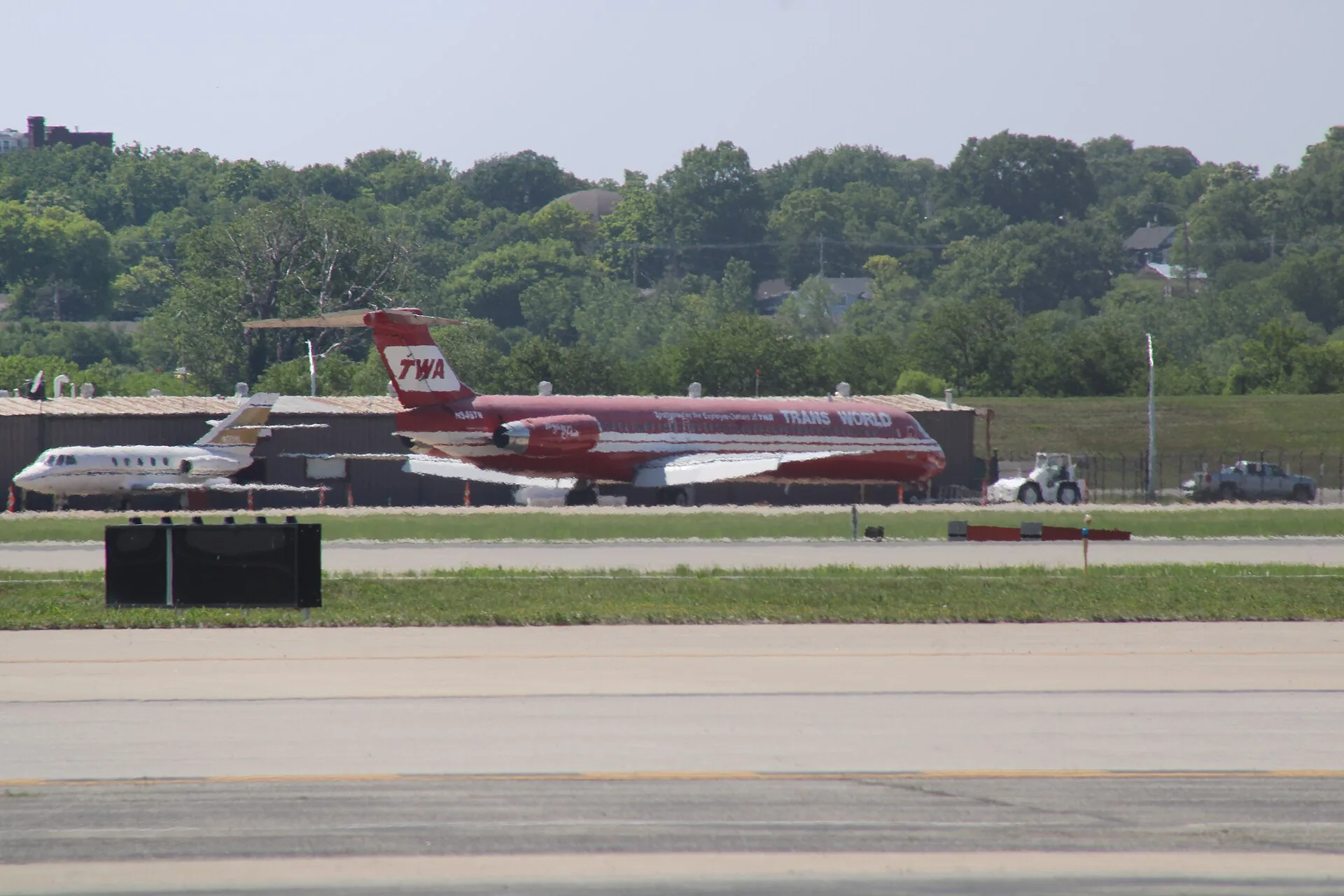
On 1 December 2001, the ceremonial final flight — Flight 220, from Kansas City to St. Louis — was flown by TWA's own chief executive, Captain Bill Compton, in the MD-83 N948TW, Wings of Pride. Other departures operated that day before the midnight changeover, but Flight 220 is the flight the record keeps: the sources' own designation, and the airline's goodbye, flown by the boss himself.
Visual interlude
Reading section 05
The Afterlife
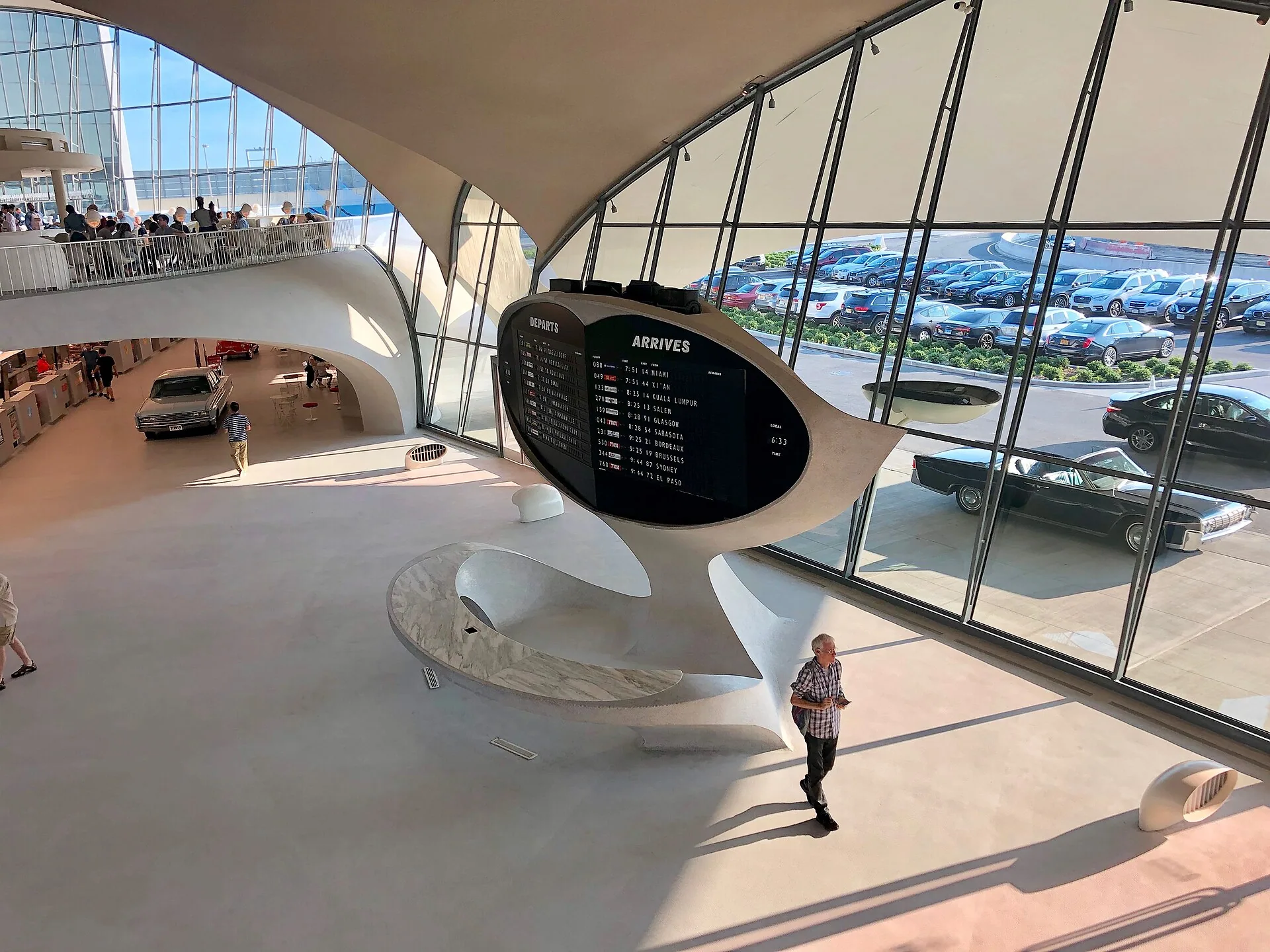
What survived was the name, and the building. On 15 May 2019, the TWA Hotel opened inside Saarinen's old Flight Center at JFK — the restored 1962 head house is the hotel's lobby, its split-flap departures board still turning above the check-in desks, with 512 rooms in the wings behind it.
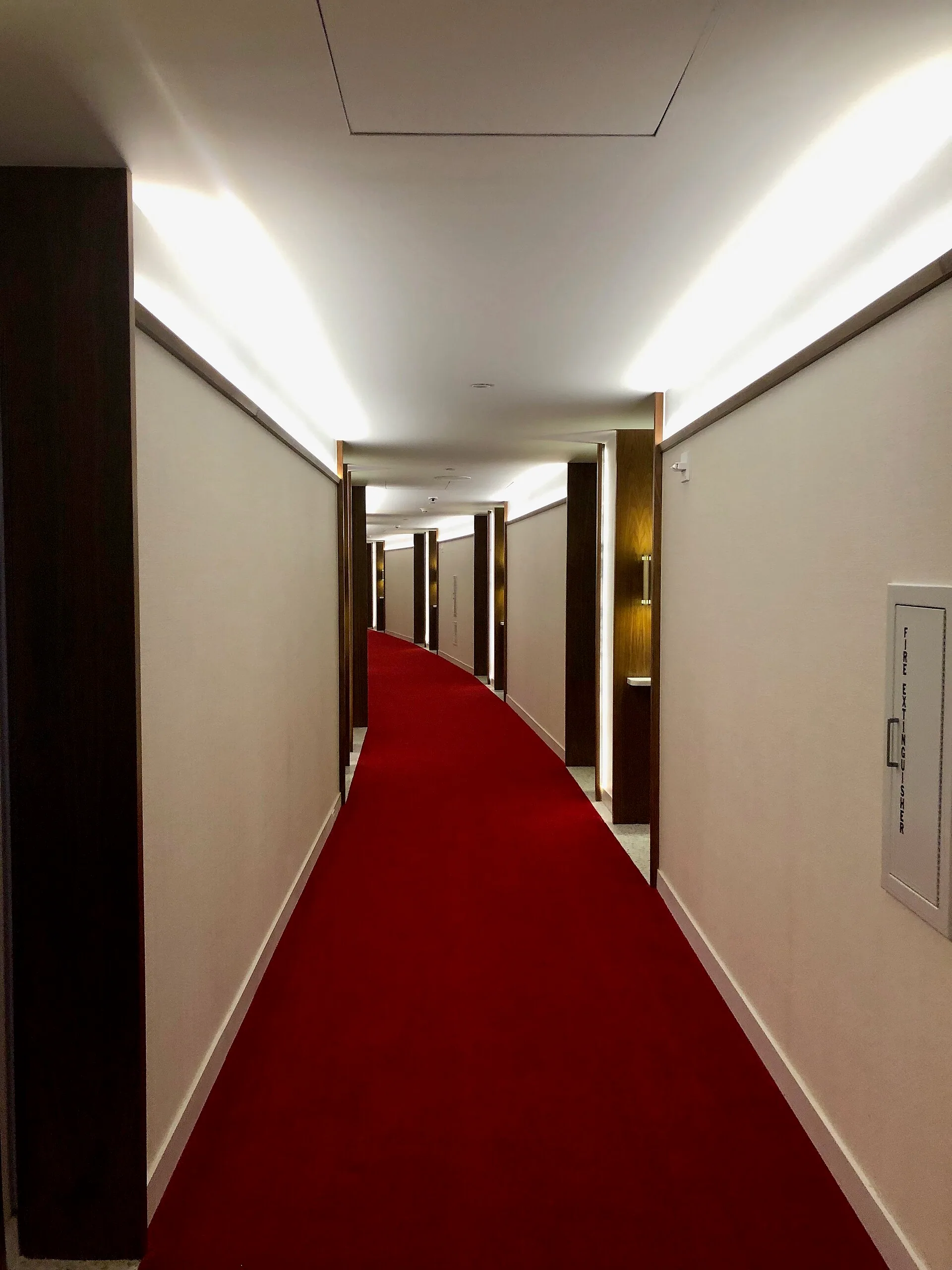
It is a survival of exactly the register's kind: name only. The airline is not coming back; no TWA route, crew or ticket exists. What you can still do is walk Saarinen's tubes, stand under the shell, and sleep in a room where the airline's red is on the carpet. The brand America grew up flying is now a place you check into.
Visual interlude
Reading section 06
The Verdict
So what actually killed TWA? The register's answer is the record's answer: the debt from the Carl Icahn years. The take-private of 1988 paid 469 million dollars out to Icahn and left about 540 million dollars of new debt on the airline — and from that point the story runs one way. The London routes, the crown jewels of the Atlantic network that had beaten Pan Am, were sold to a rival in 1991. Three bankruptcies followed across nine years. Flight 800 was a tragedy the airline suffered, not a cause of its fall — but it fell on an airline already too weak to absorb anything.
When American bought the remains in 2001, it paid about 742 million dollars in cash and took on about 3.5 billion dollars of debt and liabilities to do it. The airline Howard Hughes made glamorous, the airline that passed Pan Am in 1969, ended with its chief executive flying the last flight home himself. The terminal still stands at JFK, restored, with a hotel inside it. You can sleep in it. You just can't fly it anymore.
Visual interlude
Reading section 07
Timeline
Visual interlude
Reading section 08
From the TRI Archive
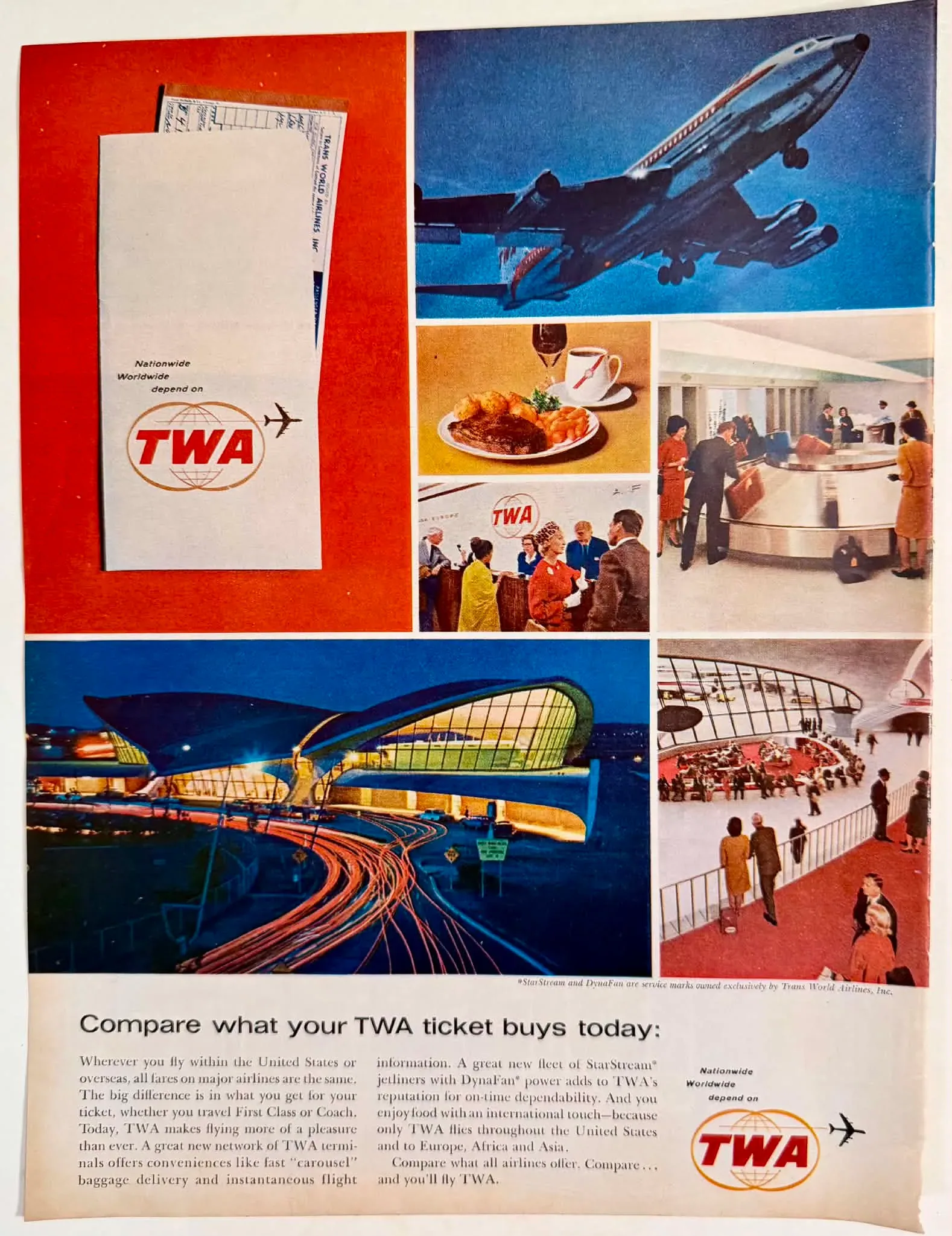
The episode closes in The Record Institute's own archive, and so does this article. Two pieces of TWA paper survive there:
The c.1962 advertisement sells the StarStream jets and Saarinen's new Flight Center — the same terminal that is now the TWA Hotel. Its fine print records that StarStream and DynaFan are service marks owned exclusively by Trans World Airlines, Inc.
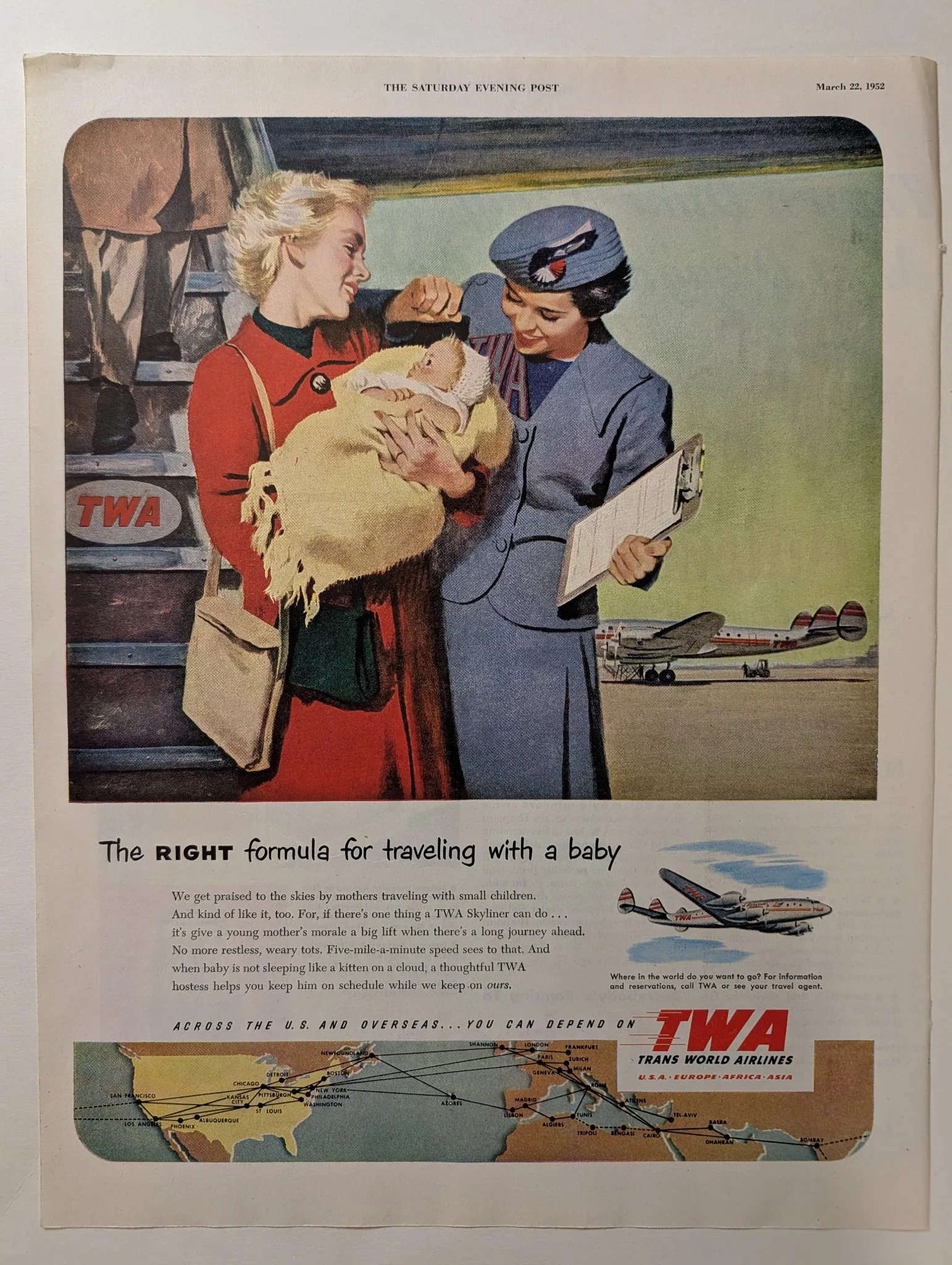
A decade earlier, this page from The Saturday Evening Post of 22 March 1952 shows TWA selling something gentler: the right formula for traveling with a baby, over a Constellation and a route map. Both pages are shown in full in the episode's closing archive section.
Visual interlude
Reading section 09
Sources & image credits
Sources. The founding merger (1930), the Hughes era and the sale to American — Encyclopaedia Britannica, "Trans World Airlines, Inc." The 1969 overtake (July 1969; passengers carried across the North Atlantic; Pan Am always No. 1 before) — U.S. Centennial of Flight Commission, TWA essay; AvGeekery, "TWA in the 1960s"; Smithsonian Magazine / National Air and Space Museum. The name adoption date (17 May 1950) and the founding-date detail — Britannica; Smithsonian Air & Space; TWA Museum, as logged in the episode's fact gate. Howard Hughes (bought in 1939; control by 1942–44; loss of control 1960; the 1966 sale at 546.5 million dollars) — Britannica; Hughes Tool Co. v. Transcontinental & Western Air, 409 U.S. 363. The 1946 Constellation service (L-049 Star of Paris; LaGuardia to Orly via Gander and Shannon; departed 5 February, arrived 6 February 1946) — This Day in Aviation; Lockheed Constellation history; TWA Museum. The Flight Center (dedicated 28 May 1962; Saarinen died 1961) — NYC Landmarks Preservation Commission, designation report LP-1915. Icahn's control (26 September 1985) — TWA Museum; CNN Fast Facts. The take-private figures (7 September 1988; 610.3 million dollars taken out of TWA in total; 469 million dollars to Icahn; 539.7 million dollars in added debt, stated in the article rounded to about 540 million) — Wikipedia, "Trans World Airlines," as confirmed in the episode's external-audit fix round; TWA Museum; CNN Fast Facts. The London-route sale (1991; six U.S.–London Heathrow routes; 445 million dollars; one AP retrospective's 495 million dollar figure treated as an error against contemporary reporting) — New York Times via Simple Flying's history of American Airlines; FundingUniverse, AMR history. Flight 800 (17 July 1996; Boeing 747-131 N93119; 212 passengers and 18 crew; the probable-cause finding) — NTSB Aircraft Accident Report AAR-00/03; FAA Lessons Learned (N93119). The three bankruptcies (31 January 1992; 30 June 1995, prepackaged; 10 January 2001) — AP history of TWA (10 January 2001); TWA Museum. The American acquisition (closed 9 April 2001; about 742 million dollars in cash including the 625 million dollar purchase price and acquisition costs; about 3.5 billion dollars in debt and liabilities assumed) — AMR / American Airlines SEC Form 10-Q (Q2 2001); AP (9 April 2001). The final flight (1 December 2001; ceremonial Flight 220, Kansas City to St. Louis; MD-83 N948TW, Wings of Pride; flown by CEO Captain William Compton) — Airways Magazine; TWA Museum; the aircraft's identity and preservation — the TWA Museum and airframe records (msn 49575), as logged in the episode's licence log. The TWA Hotel (opened 15 May 2019; the restored Flight Center head house as the lobby; 512 rooms) — TWA Hotel; Meetings Today (May 2019). The archive pieces — The Record Institute's own records: the c.1962 StarStream & Flight Center advertisement (CMS record TRI-GAL-4230001) and the owner's physical page of The Saturday Evening Post, 22 March 1952 (date verified on the page's own masthead).
Image credits (all via Wikimedia Commons unless noted; licenses as logged at download, November 2026):
Dates. Published: 2026-11-13 · Last verified: 2026-11-13 · Updated: 2026-11-13
Author: Ronin Naodhinsuk
TWA, Trans World Airlines, Pan Am, American Airlines, and all other brand names and logos mentioned in this article are trademarks of their respective owners. The Record Institute is an independent archive and is not affiliated with, endorsed by, or connected with American Airlines, the TWA Hotel, or any successor of Trans World Airlines.
Visual interlude
Related Articles
- RadioShack — What Happened to RadioShack?
- Woolworth's — What Happened to Woolworth's?
- Kmart — What Happened to Kmart?