Dead Brand Stories / Sears
What Happened to Sears?
The Amazon of 1900 invented shopping from home — then closed its own catalog, and was killed by the Amazon of 2000.
Opening statement
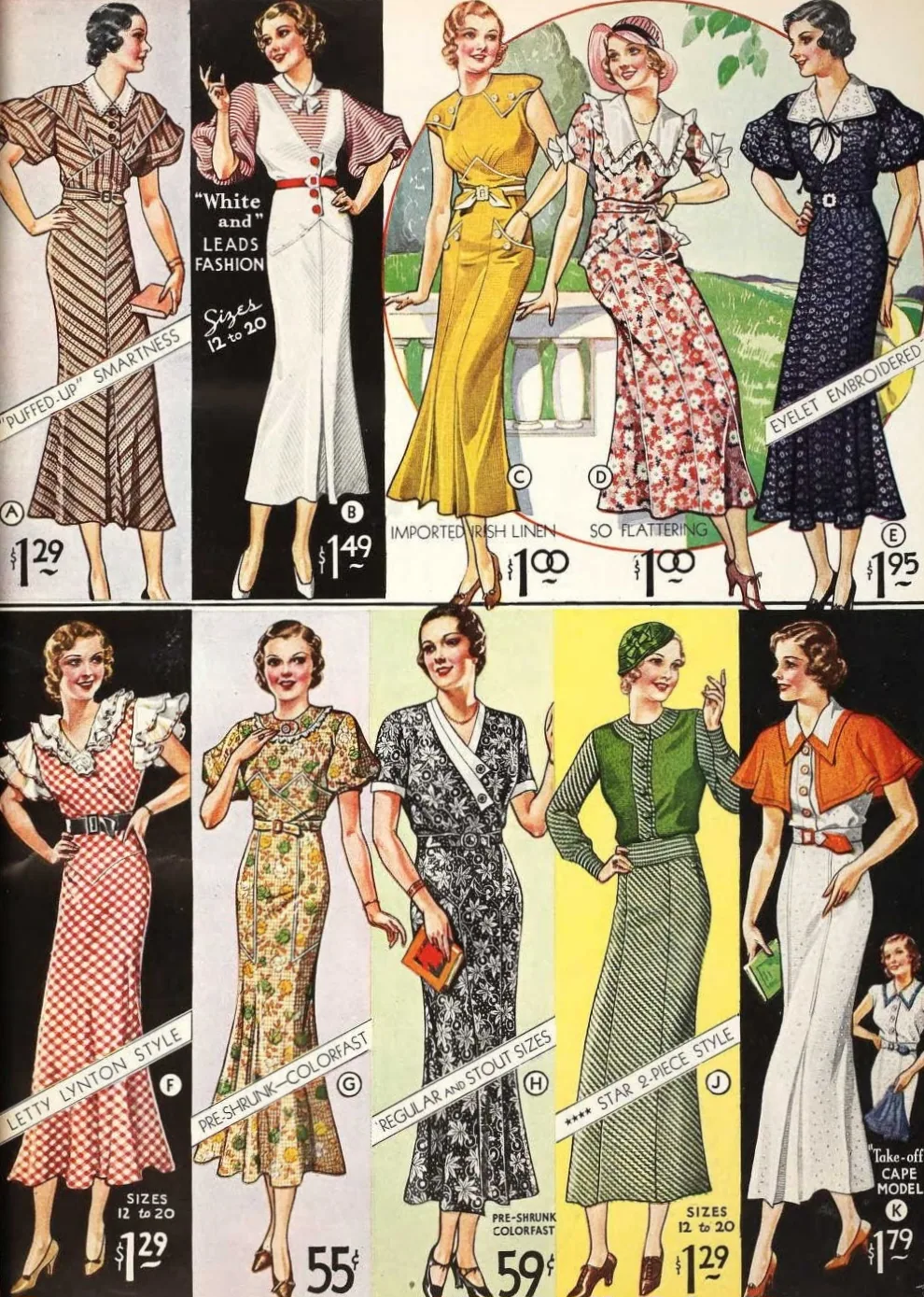
In January 1993, Sears did something that reads, three decades on, like a riddle. It killed its famous catalog — the big book that had let farm families order almost anything and have it delivered — and one year later, in 1994, Amazon was founded on the same idea: shop from home, delivered to your door. Sears had not merely anticipated that future; it had operated it for a century. From 1893 its catalog sold clothes, tools, and even whole houses shipped in kits by train — more than seventy thousand of them. For decades Sears was the largest retailer in America, and its name stood on the tallest building on Earth. Then it spent its last decades losing the suburbs to Walmart and Home Depot and the web to Amazon, while, critics say, nearly six billion dollars went to share buybacks instead of to its tired stores. In October 2018 it filed for bankruptcy. It is not quite dead: about five stores are still open. This account is drawn from the record: the Sears Archives, Smithsonian Magazine, the bankruptcy filing of October 2018, and contemporary reporting. It runs from a watch seller's advertisement in 1888 to the five stores that remain.
A structured case history
Reading section 01
Watch: Dead Brands No. 4, the short — "What Happened to Sears?"
Reading section 02
The Rise of Sears
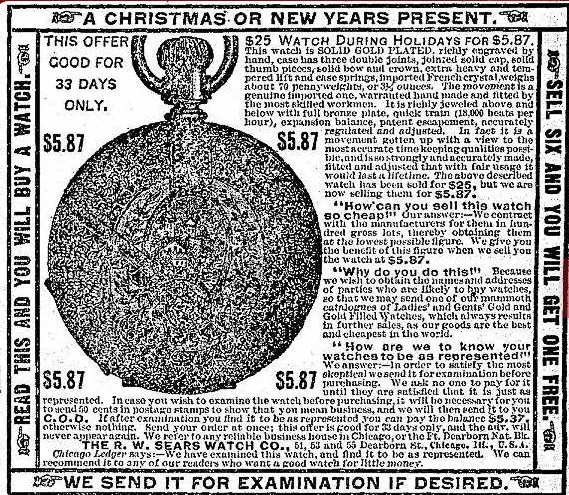
The story starts with watches. In 1886, Richard W. Sears started in watches; by January 1888 his R.W. Sears Watch Co. was advertising in the Winchester Journal, an Indiana newspaper. Watches were the perfect mail-order product — valuable, portable, and bought sight unseen — and the business outgrew its beginnings.
On 16 September 1893 the company took the name it would carry for a century — Sears, Roebuck and Co. — and the catalog began to diversify beyond watches and jewellery. The book grew fast: 322 pages by 1894, and at its height more than a thousand pages carrying over a hundred thousand items. For farm families far from any city shop, the catalog was the store: clothes, tools, equipment — everything, delivered. The ambition showed early: the cover of the 1897 Consumers Guide carried a globe and the boast that the company's trade reached the world, and in 1906 Sears built its great Chicago mail-order complex, today a National Historic Landmark.
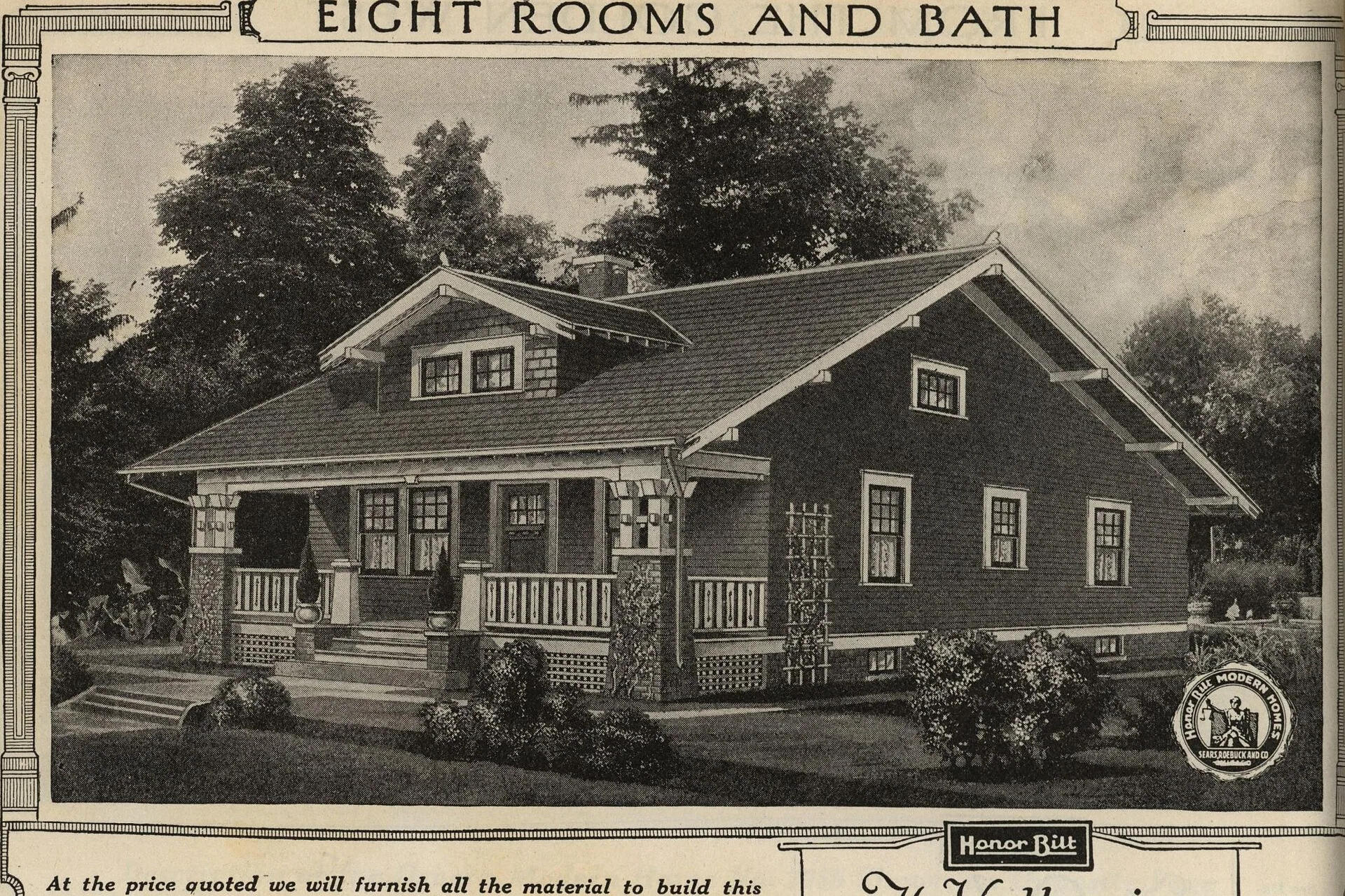
Nothing captures the catalog's reach like the houses. From 1908 to 1940, Sears sold between seventy thousand and seventy-five thousand kit houses by mail — every board, nail and fixture for a house, shipped by rail to be assembled on the buyer's land. The house brands followed Americans home: Kenmore appliances, Craftsman tools, DieHard batteries. And in 1925 the catalog company stepped onto the street, opening its first retail stores.
If you grew up with it, you remember the Christmas Wish Book, thick as a phone book, and circling what you wanted in pen. The catalog had become a fixture of American childhood — printed, posted, and present in homes no shop could reach.
Visual interlude
Reading section 03
The Peak
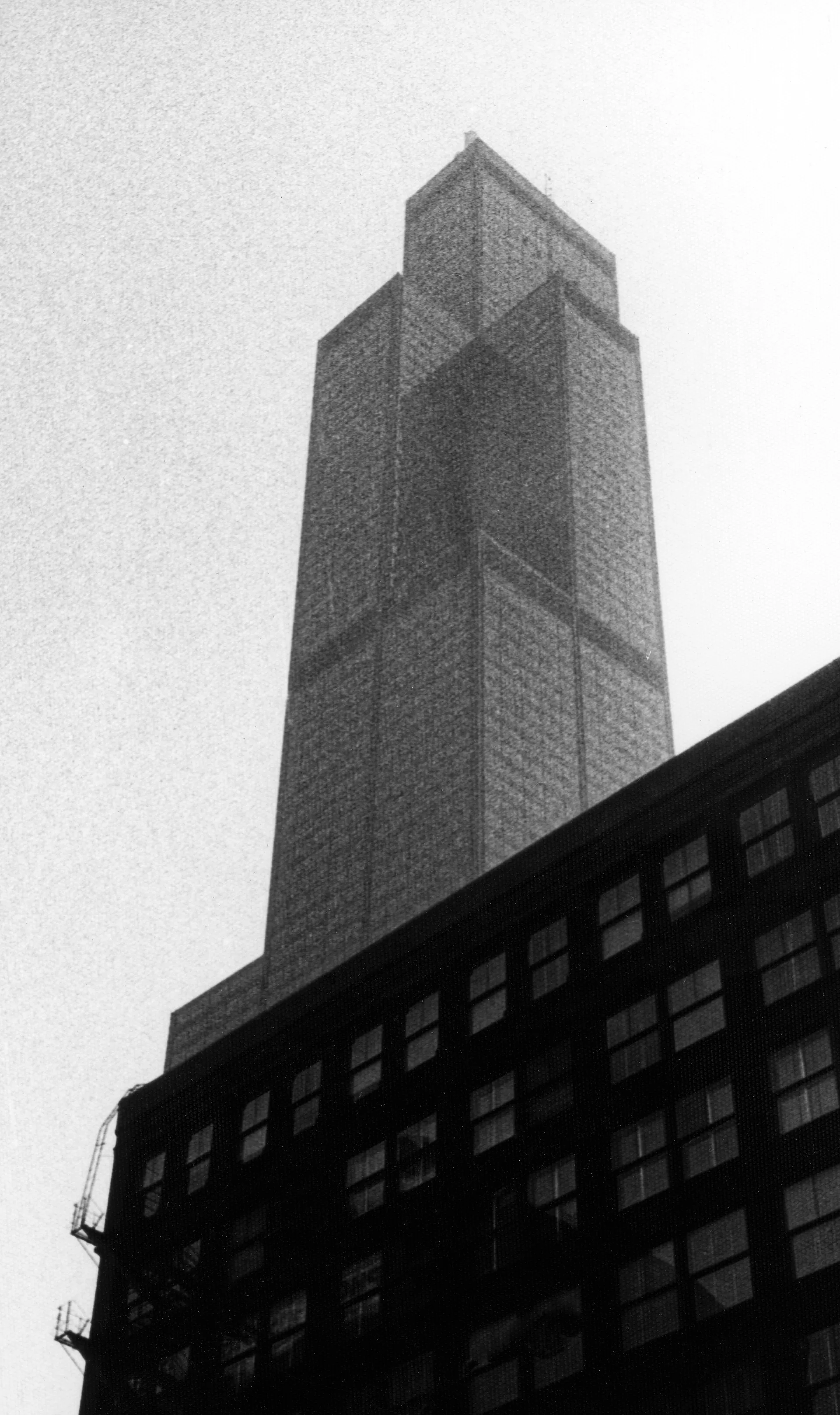
The peak, when it came, lasted a generation. A&P had been America's largest retailer until 1965; from the mid-1960s Sears took the top spot and held it for about twenty-five years. In 1973 the company completed the Sears Tower in Chicago — the tallest building in the world, a title it kept until 1998 (the tower is the Willis Tower today). The name stood, quite literally, on top of the world.
But the empire's customers were already drifting — to the malls, and to the discounters who undercut the catalog in the suburbs. Around 1990, Walmart passed Sears in American revenue. The king of retail had been beaten at retail.
Visual interlude
Reading section 04
The Fall of Sears
Then came the decision the whole story turns on. In January 1993, Sears discontinued the big general catalog; the final Big Book is dated 25 January 1993 in reporting. Specialty catalogs lived on, but the famous general book — the one that had sold everything — was finished. The economics of print had faded — but the catalog was not a format, it was the business model: shop from home, delivered to your door. One year later, Amazon was founded on exactly that model. Sears, with its warehouses, its delivery network and a century of mail-order knowledge, never built an equivalent online business from its head start.
In 2005, Kmart and Sears merged in a deal worth eleven billion dollars, creating Sears Holdings with about three thousand five hundred stores combined and roughly fifty-five billion dollars in combined annual revenue. What followed is the part the critics never forgave: between 2005 and 2011 the company spent nearly six billion dollars buying back its own shares, while famous brands were separated from the business — Lands' End spun off in 2014, and Craftsman sold to Stanley Black & Decker for about nine hundred million dollars in 2017. The stores, meanwhile, aged in public.
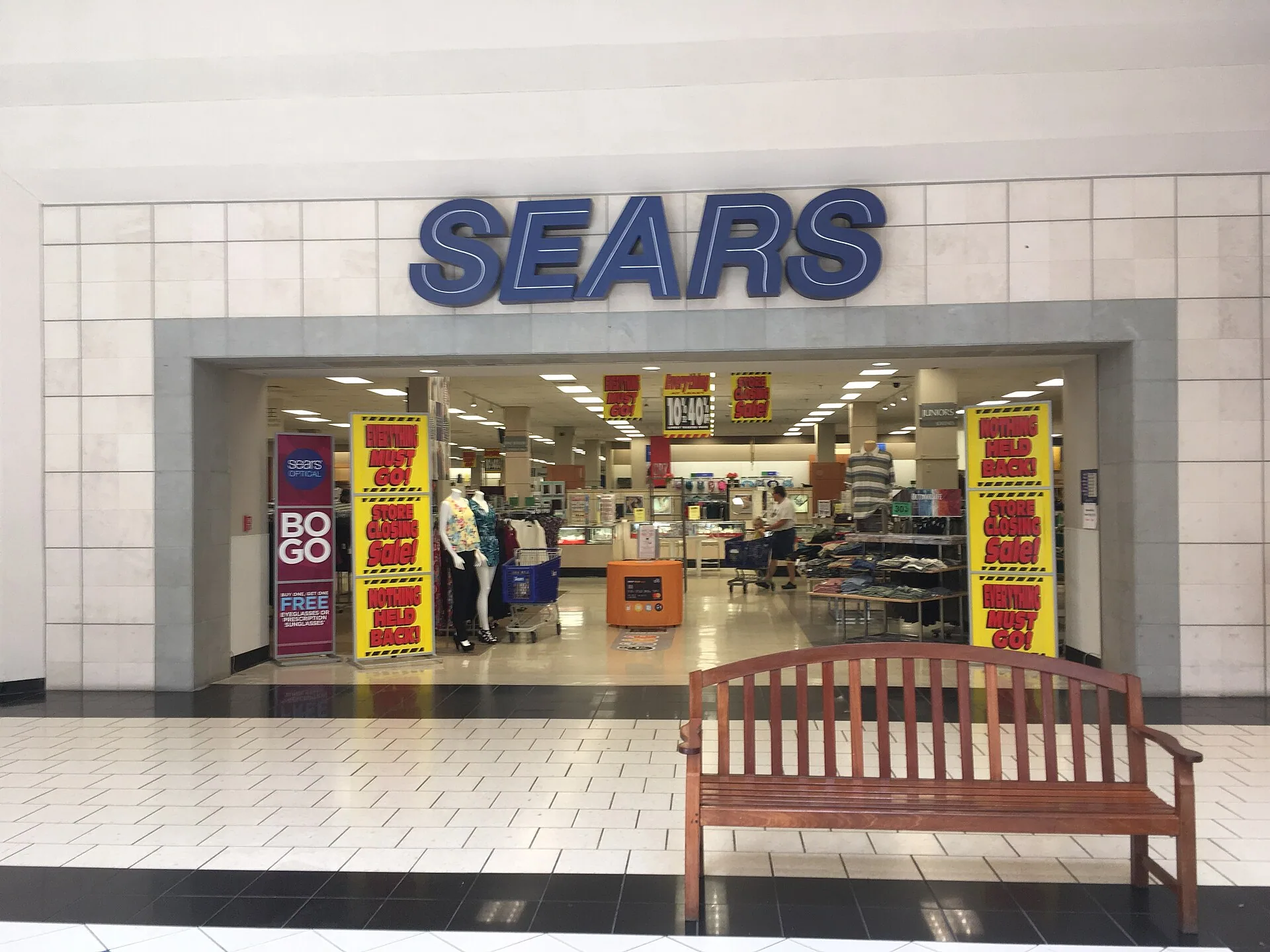
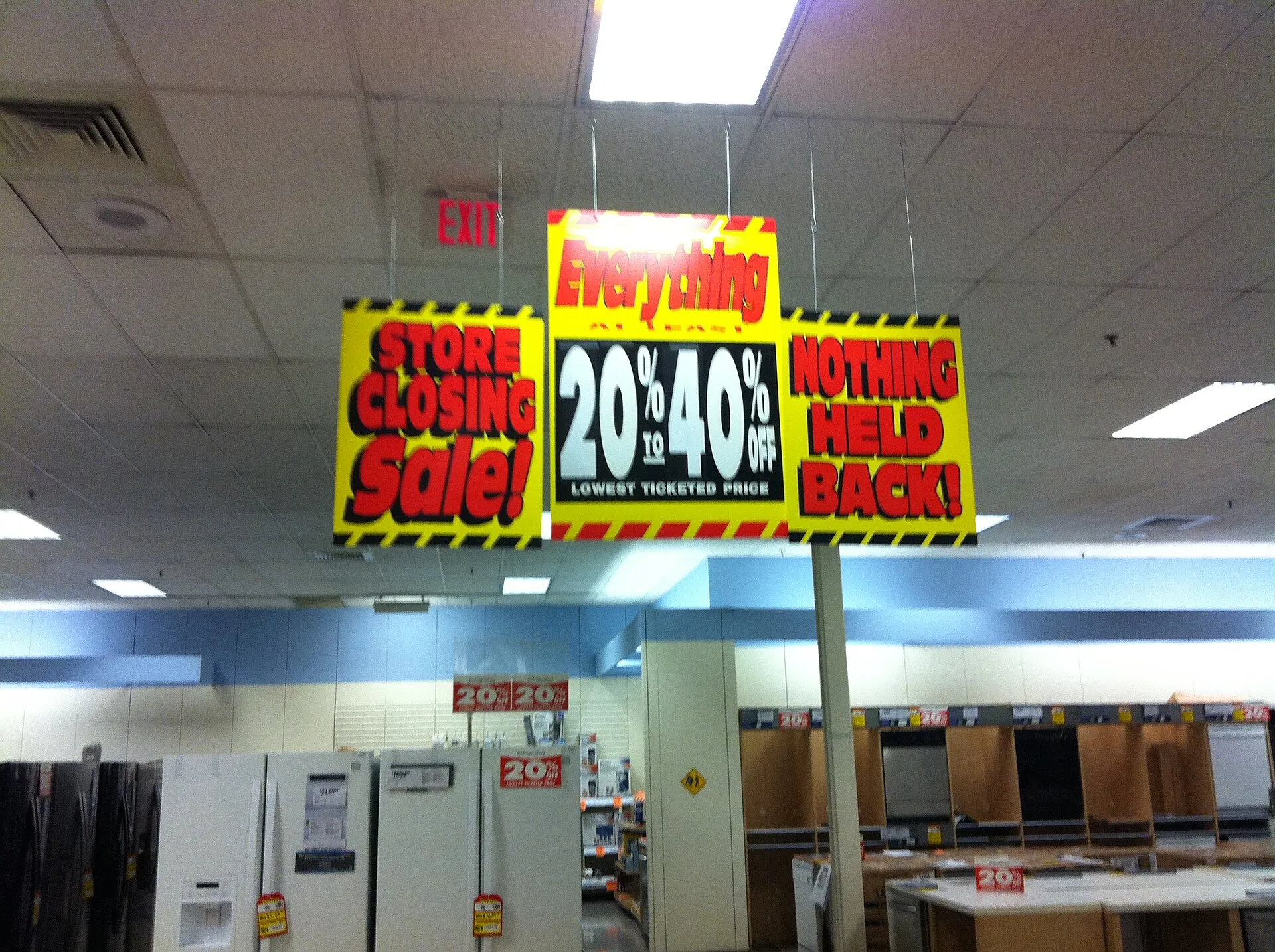
On 15 October 2018, Sears Holdings filed for Chapter 11 bankruptcy protection in New York. The filing listed six point nine billion dollars of assets against eleven point three billion dollars of liabilities. About six hundred eighty-seven stores were still operating — and a debt payment of one hundred thirty-four million dollars fell due the same day.
STAT CARD 6.9 billion dollars of assets → 11.3 billion dollars of liabilities The balance sheet Sears Holdings carried into its Chapter 11 filing on 15 October 2018.
Visual interlude
Reading section 05
The Afterlife
The story did not quite end in the bankruptcy court. On 11 February 2019, Transformco, an affiliate of ESL Investments, bought the go-forward business for about 5.2 billion dollars, taking four hundred twenty-five stores — 223 of them Sears, 202 Kmart. The bankruptcy estate's claims against the former owners were settled in August 2022 for one hundred seventy-five million dollars, with no court ruling on the claims.
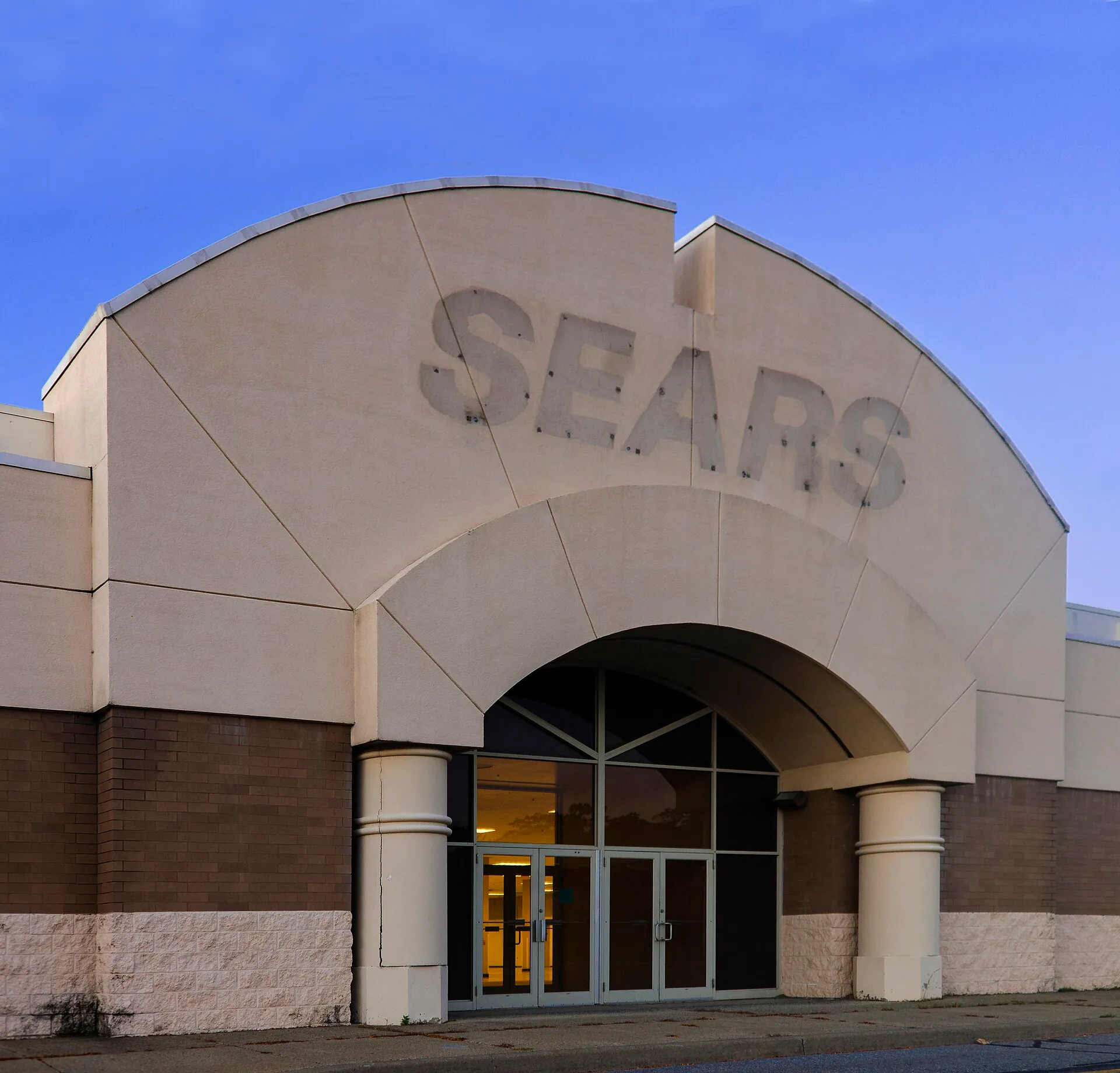
Then the closures simply continued, year after year. Eight stores remained by the middle of 2025; when the last Puerto Rico store closed on 31 August 2025, the count reached about five: Coral Gables and Orlando in Florida, Braintree in Massachusetts, Concord in California, El Paso in Texas. The brands outlived the stores — Kenmore and Craftsman live on under other owners — and the name still trades online at Sears.com. Covering the survivors in November 2025, CNN described a 132-year-old retailer entering what may be its last holiday season.
Visual interlude
Reading section 06
The Verdict
So what killed Sears? Not the internet. Sears had the internet's business model before the internet: a giant catalog, ordering from home, delivery to the door. It lost the suburbs to Walmart and Home Depot, and then the web to Amazon — but the deepest wound was self-inflicted. In 1993 it closed the future it had owned for a century, and in the years afterwards the money that might have rebuilt the business went to buybacks instead of stores.
The Amazon of 1900 was, in the end, killed by the Amazon of 2000 — but only after Sears had closed the door on itself. Sears did not lose the future. It owned the future, and closed it. Five stores are still open.
Visual interlude
Reading section 07
Timeline
Visual interlude
Reading section 08
Sources & image credits
Sources. Founding and catalog chronology (watches from 1886; first catalog 1888; the Sears, Roebuck and Co. name and diversified catalog from 16 September 1893; 322 pages by 1894) — Sears Archives catalog chronology and Sears company history, as compiled in the episode fact log. Catalog discontinuation (January 1993; final Big Book dated 25 January 1993) — Smithsonian Magazine (2023) and the Sears Archives. Catalog scale at its height (more than 1,000 pages; more than 100,000 items) — Smithsonian Magazine. Kit houses (70,000–75,000 sold 1908–1940) — HISTORY, "When the Sears Catalog Sold Everything from Homes to Hubcaps," citing the Sears Archives. House brands and the first retail stores (1925) — the episode's long-form source outline, from Sears company history. Largest-retailer chronology (A&P largest until 1965; Sears No. 1 from the mid-1960s for about 25 years) — retail histories via Wikipedia, as corrected in the episode fact log (owner audit, 2026-11-06). Sears Tower (completed 1973; world's tallest until 1998) — tower records cited in the episode fact log. Walmart passing Sears (around 1990; sources range from October 1989 to 1991 by revenue measure) — HISTORY and retail histories. Amazon's founding (1994) — Amazon company history. The 2005 merger (eleven billion dollars; about 3,500 stores combined; roughly fifty-five billion dollars combined annual revenue) — AP / CNN Money merger reporting (2004–2005) and the episode fact log. Share buybacks (about 5.8–6 billion dollars, 2005–2011) — CNN reporting on the buyback years (30 October 2018); the "critics say" attribution is the episode script's own. Brand separations — Lands' End spin-off (2014); Craftsman sale (about nine hundred million dollars, 2017), Stanley Black & Decker press release. Estate claims settlement (175 million dollars, August 2022, no court ruling) — Bloomberg Law. Chapter 11 filing (15 October 2018; 6.9 billion dollars of assets; 11.3 billion dollars of liabilities; about 687 stores; a 134 million dollar debt payment due the same day) — Sears Holdings petition, U.S. Bankruptcy Court, Southern District of New York; filing summaries via Reuters and AP. Transformco purchase (closed 11 February 2019; about 5.2 billion dollars; 425 stores — 223 Sears, 202 Kmart) — bankruptcy court reporting; CNBC. Surviving stores (eight by mid-2025; the last Puerto Rico store closed 31 August 2025; about five full-line US stores by late 2025, named in the article) — CNN Business reporting (summarised 28 November 2025); Transformco publishes no official count, so the article says "about five."
Image credits (all via Wikimedia Commons; licences as logged at download, November 2026):
Dates. Published: 2026-11-09 · Last verified: 2026-11-06 · Updated: 2026-11-09
Author: Ronin Naodhinsuk
Sears, Kmart, Transformco, Walmart, Amazon, and all other brand names and logos mentioned in this article are trademarks of their respective owners. The Record Institute is an independent archive and is not affiliated with, endorsed by, or connected with Sears, Transformco, or any successor owner of the brand.
Next episode → No. 5: What Happened to Napster?
Related Articles
- Borders — What Happened to Borders?
- Tower Records — What Happened to Tower Records?
- Compaq — What Happened to Compaq?