Dead Brand Stories / Toys "R" Us
What Happened to Toys "R" Us?
The world's greatest toy store was not killed by children, and not, in the end, by the internet — it was killed by the interest on the money borrowed to buy it.
Opening statement
There is a number that should have saved Toys "R" Us: 11.5 billion dollars. That is what the chain took in during its last full year — and its stores still earned money from their operations. The company died anyway, and the obituaries mostly blamed the obvious suspects: children who had stopped wanting toys, and the internet that sold toys cheaper. Both are wrong. The stores were not beaten. They were billed. What killed Toys "R" Us was interest: roughly 400 million dollars a year, every year for twelve years, paid on money that had been borrowed in 2005 to buy the company itself. The debt did not arrive from bad trading. It was placed on the company's books by its new owners as the price of their own purchase — and from that day forward, the first claim on every dollar the tills took in belonged to the lenders. This account is drawn from the record: the company's own filings with the SEC, the bankruptcy court file, and contemporary reporting. It runs from a five-thousand-dollar baby-furniture shop in 1948 to a liquidation that cost some 33,000 jobs in 2018 — and then, strangely, it keeps going, because the name refused to stay dead.
A structured case history
Reading section 01
Watch: Dead Brands No. 2, the short — "What Happened to Toys "R" Us?"
Reading section 02
The Rise of Toys "R" Us
The story starts in Washington, D.C., in April 1948. Charles Lazarus, twenty-four years old and just home from the Army, opened a shop called Children's Supermart, funded with five thousand dollars of savings and a bank loan. He sold baby furniture — cribs and strollers for the baby boom then arriving all at once. But his customers kept asking for toys, and within a year rattles and stuffed animals were sharing the shelves with the cribs. The toys won: by 1952 the business had become the Baby Furniture and Toy Supermarket.
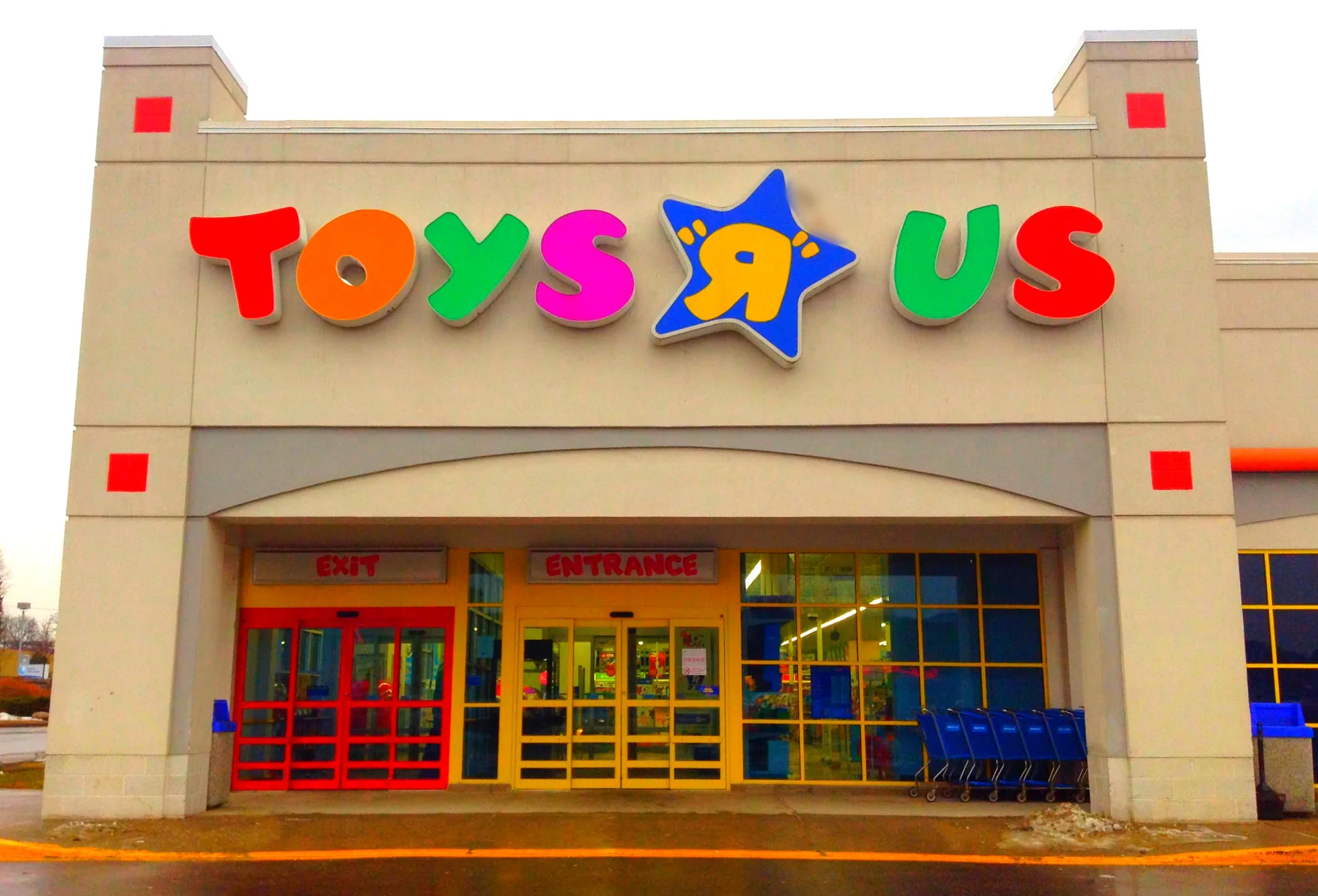
In June 1957, in Rockville, Maryland, Lazarus opened a different kind of store — a toy supermarket, the first to carry the name Toys "R" Us. Nothing like it existed: warehouse aisles of nothing but toys, at discount prices, in quantities no department store could match. The name was practical — his earlier store names would not fit on a sign — but the backwards R he designed himself became one of the most famous marks in retail.
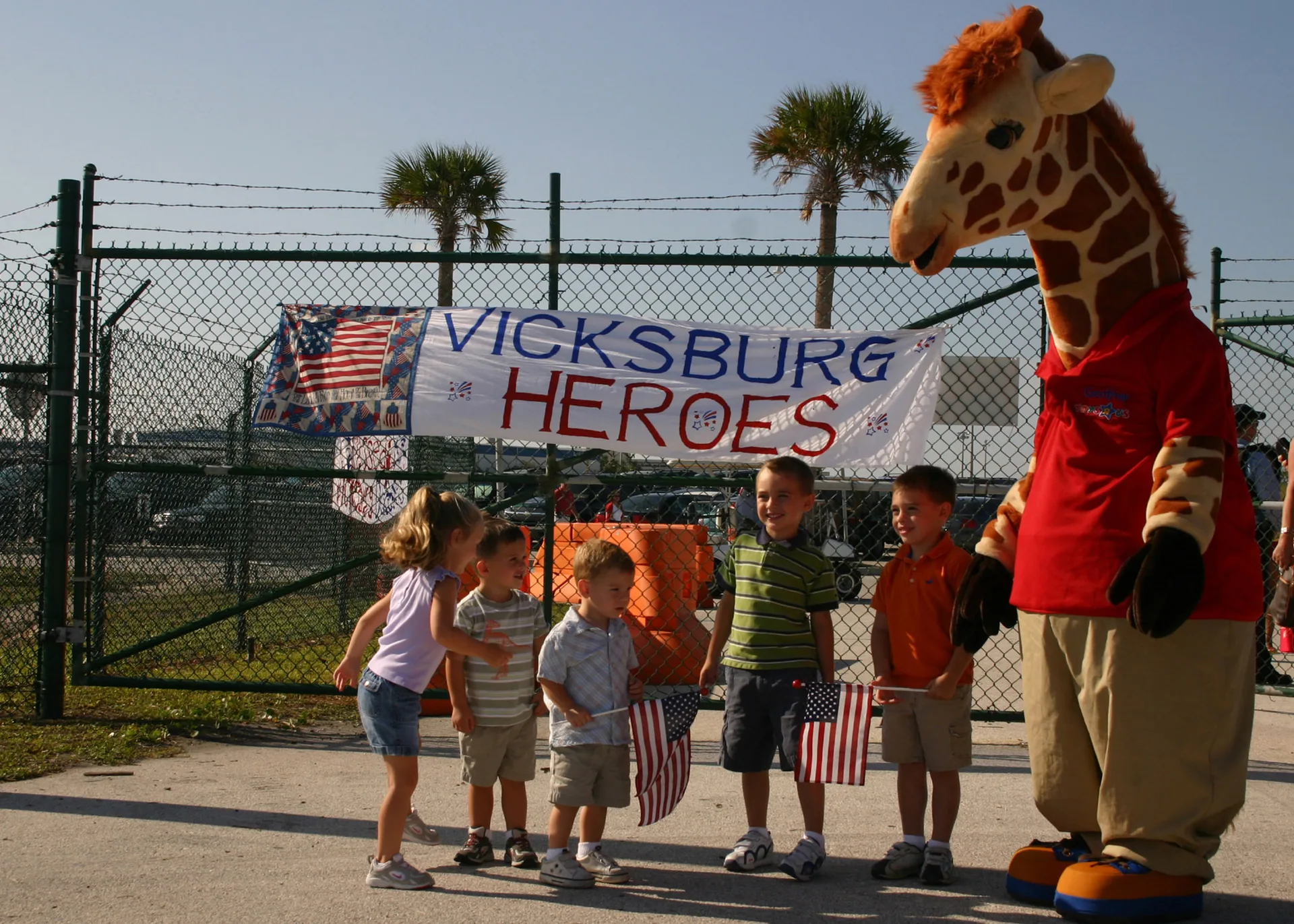
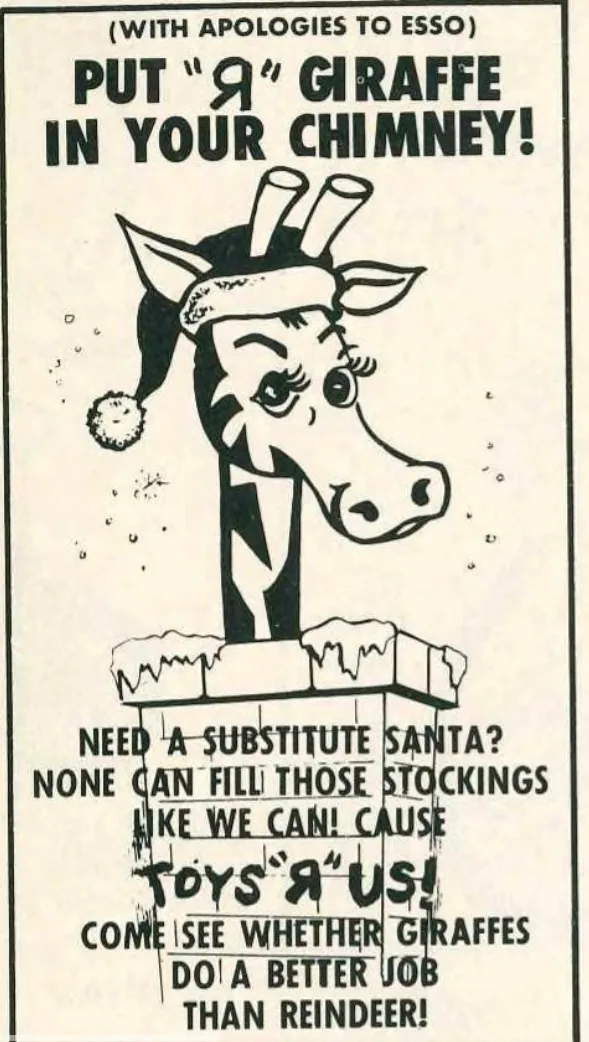
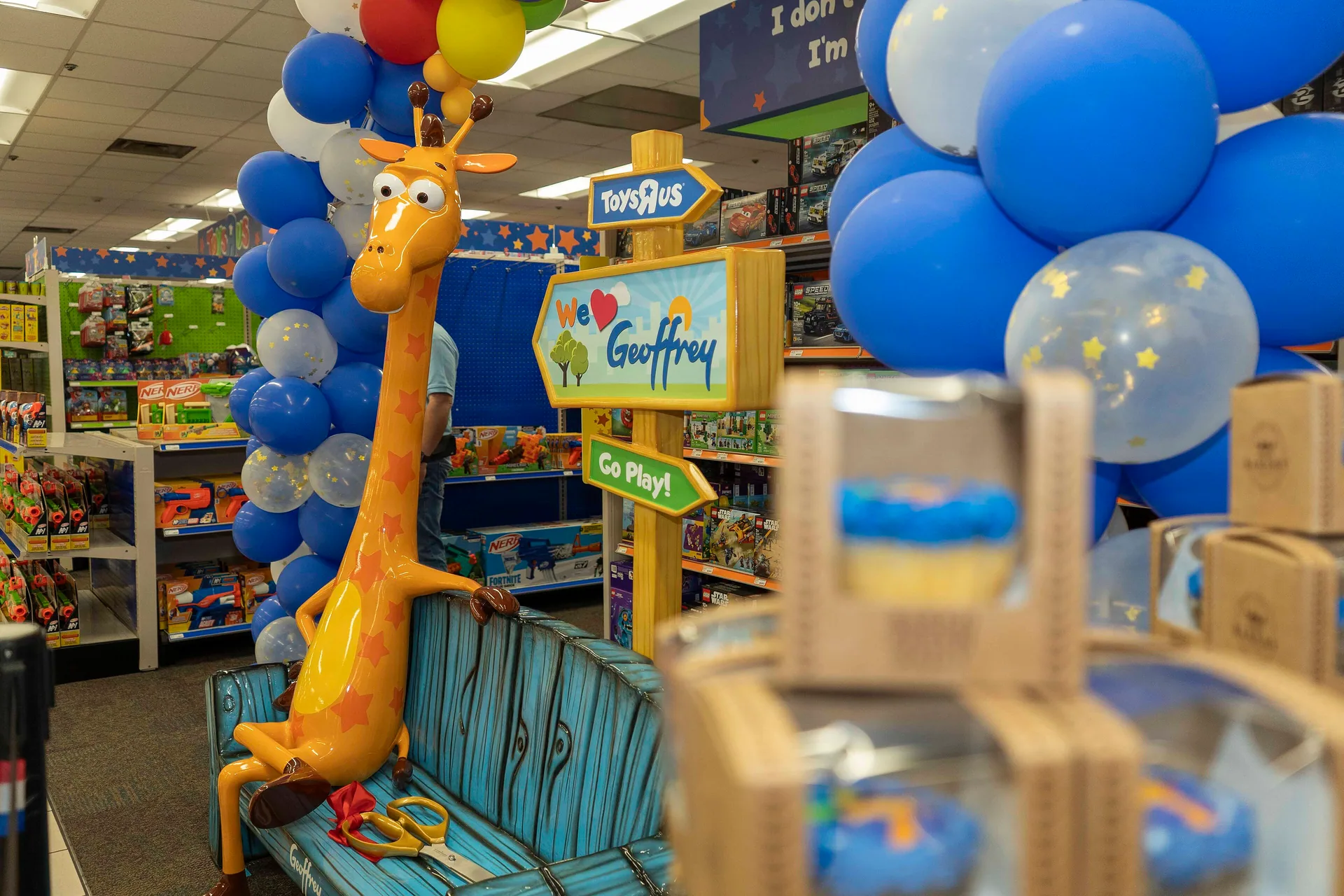
Every empire needs a face, and in 1965 this one got a giraffe. He had begun in the 1950s as Dr. G. Raffe, mascot of an earlier Lazarus store; on 17 October 1965 he was renamed Geoffrey. From 1973 Geoffrey fronted the chain's television commercials, and in 1982 came the jingle a generation would never shake off — written by copywriter Linda Kaplan Thaler with her boss, agency creative director James Patterson, years before the novels made him famous: a song built on a child's promise never to grow up. The giraffe stayed the face of the brand for more than half a century.
In 1966 Lazarus sold the chain to Interstate Department Stores for 7.5 million dollars — and stayed on to run it. It was the first time Toys "R" Us would be bought as someone else's asset; it would not be the last. Eight years later Interstate collapsed under what was then the largest pile of debt in retail history, and the toy stores were the part worth saving: in 1978 what remained emerged from bankruptcy under a new name — Toys "R" Us, Inc.
Behind the mascot stood the machine: a single store stocked as many as 18,000 different toys, more than any rival could hold — retail's original category killer: one store, one category, total domination. Across Lazarus's decades in charge, America's toy industry grew from 500 million dollars a year to 12 billion dollars, and by 1990 Toys "R" Us sold roughly one of every four toys bought in America. He stepped down as chief executive in 1994, forty-six years after opening his first shop.
Visual interlude
Reading section 03
The Peak
From the outside, the late nineties still looked like growth. In 1996 the company launched Babies "R" Us, and in fiscal 1997 sales reached 11.0 billion dollars, with 1,454 stores worldwide. But the ground had already shifted. Walmart sold toys as a sideline, at prices a specialist could not match, and in 1998 Walmart passed Toys "R" Us to become the largest toy seller in America. The king of the category had been beaten inside its own category — by a general store that treated toys as bait for grocery shoppers.
Toys "R" Us answered the future by, at first, renting it out. It opened its own website in 1998, then endured a disastrous Christmas 1999, when gifts ordered online failed to arrive by Christmas Day. So in August 2000 it signed its online store over to Amazon in a ten-year deal: the toy store of the twentieth century would run on somebody else's website. The partnership curdled — Toys "R" Us sued in 2004, a New Jersey court ruled in its favour in 2006, and Amazon paid 51 million dollars to settle in 2009. But the decade online was gone, and it could not be refunded: by the turn of the century the chain's share of the American toy market had fallen from about 25 percent to under 16 percent.
The company was still enormous, still famous, and its stores still earned money. Which is precisely what made it a target.
Visual interlude
Reading section 04
The Fall of Toys "R" Us
In March 2005, three buyers agreed to take Toys "R" Us private: Bain Capital, KKR, and the property company Vornado Realty Trust. The price was 6.6 billion dollars, and the deal closed that July. Here is the number that decided everything after: the buyers put up only a fraction of the price themselves. Around five billion dollars of the cost was borrowed — and the borrowing was placed on the books of Toys "R" Us.
That is the machine inside a leveraged buyout: borrow against the company itself — its stores, its inventory, its future takings — and leave the loans in the company's name, repaid from its own tills first. In effect, the toy store had been made to buy itself. From that day, its first job was no longer selling toys; its first job was paying interest on its own purchase. And the company paid its new owners, too: an advisory agreement signed at the closing gave the sponsors a management and advisory fee every year, rising five percent a year, plus one percent on the company's own borrowings and deals.
The interest bill ran to roughly 400 million dollars a year. Set that beside what the company could spend on its future: in fiscal 2016, about 252 million dollars went into the stores and systems — barely half the lenders' take. Year after year the pattern held: the debt was fed first, and whatever remained fed the business. So the stores aged in public. Remodels slipped. The website, won back only after years of lawsuits, never caught the leaders. The famous Times Square flagship closed at the end of 2015. The company's own chief executive acknowledged that the debt burden had limited what Toys "R" Us could invest in its stores and its website.
And yet the underlying business refused to die. In that last full year, the stores earned 460 million dollars from operations. The interest bill was 457 million dollars. The stores worked. The balance sheet did not.
STAT CARD 460 million dollars earned → 457 million dollars paid in interest In its last full year (fiscal 2016), the stores' operating earnings — and the interest bill that consumed nearly all of them.
By 2017 the calendar had become the enemy: 400 million dollars of debt came due in 2018, and 1.7 billion dollars more the year after. In early September, reports that the company had hired restructuring lawyers panicked its suppliers; some began demanding cash before they would ship — weeks before the Christmas season that made a toy store's year. On 18 September 2017, Toys "R" Us filed for Chapter 11 bankruptcy protection in Virginia, carrying roughly five billion dollars of debt.
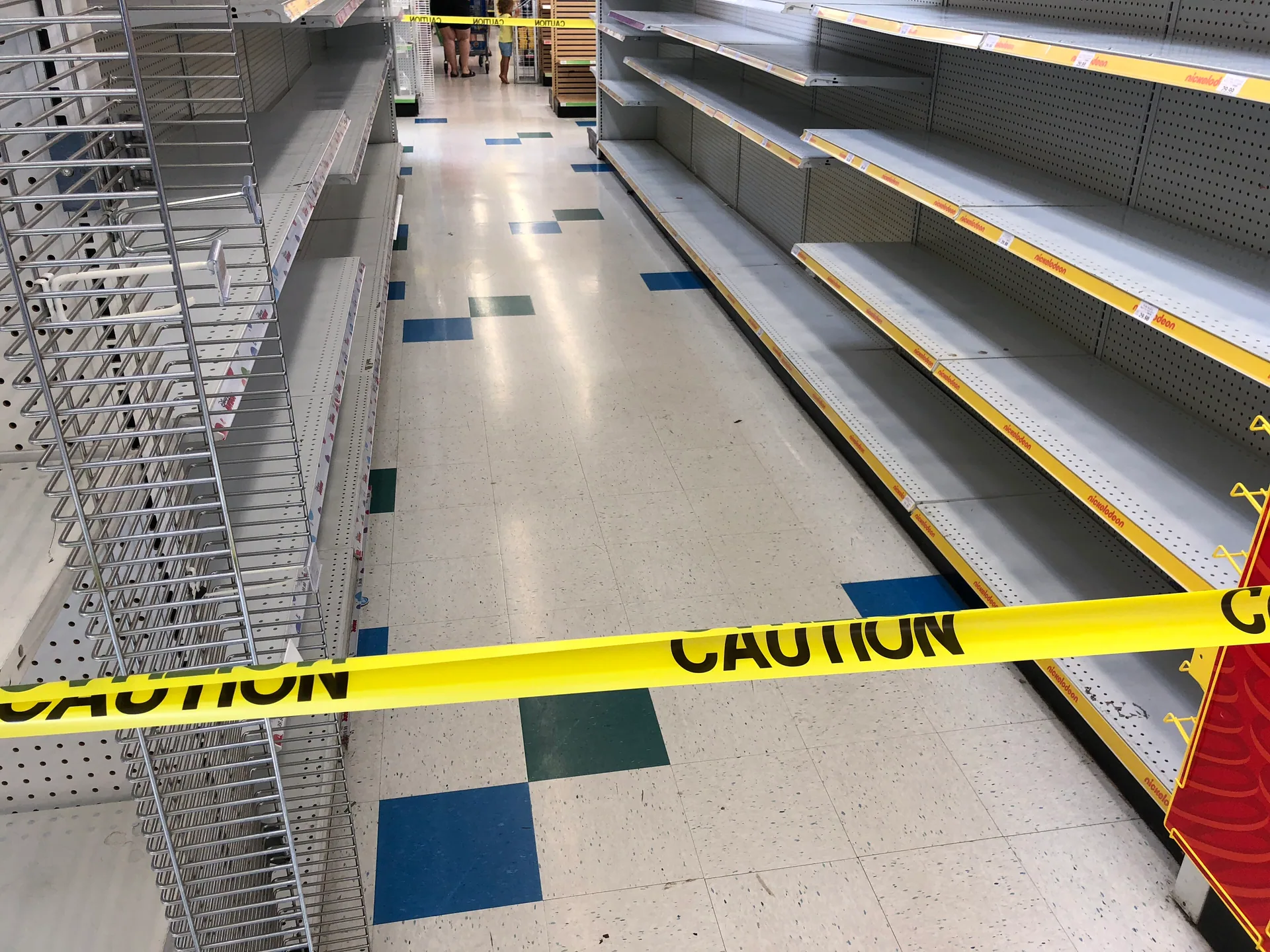
It was announced as a rescue: more than three billion dollars of emergency financing, stores open, a plan to repair the balance sheet and trade through. Then came the Christmas that decided everything. Holiday results fell about 250 million dollars short of the company's own budget, and the court filings said the cash could run out by May. In January 2018, a further 182 store closures were announced. It changed nothing. On 14 March 2018 the staff were told the American chain would be wound down: more than 700 remaining stores would run liquidation sales.
One week later, on 22 March 2018, Charles Lazarus died, aged ninety-four — seventy years after he had opened his little Washington shop. In the final days, a longtime employee at one closing store posed Geoffrey with a packed suitcase in an emptied aisle, waving goodbye; the photograph went around the world. On 29 June 2018, the last American stores locked their doors for the final time. Around 33,000 people lost their jobs — with no severance pay. Months later, after those workers campaigned for it, Bain and KKR each contributed 10 million dollars to a hardship fund: 20 million dollars, set against careers that had spanned decades.
Visual interlude
Reading section 05
The Afterlife
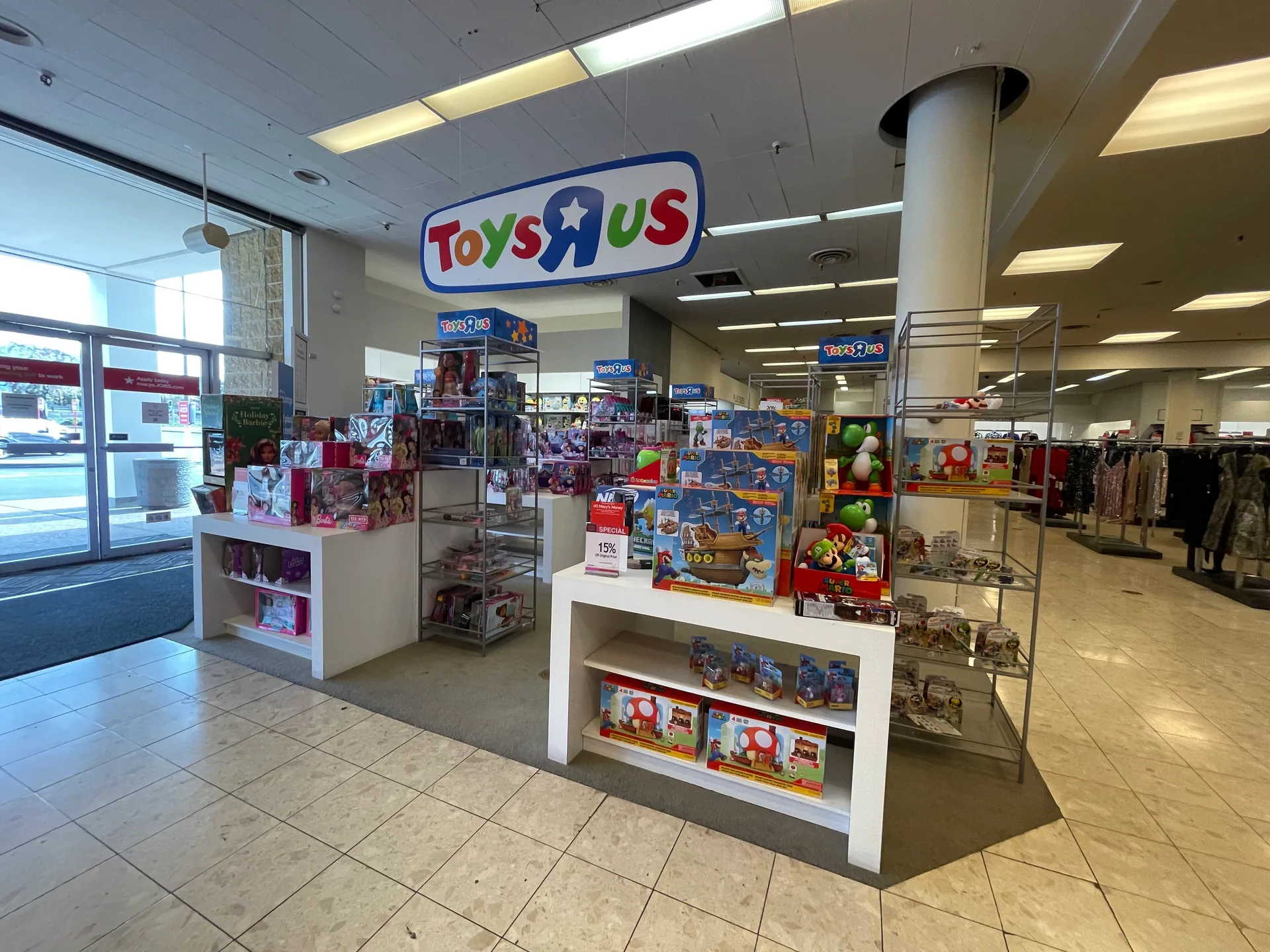
But names this valuable do not stay buried. The lenders left holding the brands cancelled a planned auction and set up Tru Kids in January 2019 to run what was left. Its two small stores, in Houston and New Jersey, closed in January 2021, in the depths of the pandemic. In March 2021, WHP Global took control of Tru Kids — and the strategy became clear: from now on, the giraffe would not need to own stores at all.
That December, a 20,000-square-foot flagship opened at the American Dream mall in New Jersey, with a two-story slide. The Macy's deal put a Toys "R" Us department inside every Macy's in America — more than 400 shops by October 2022. A second flagship followed at the Mall of America in 2023. Then the name went further: into airports, and into Navy exchanges, where a shop opened at Yokosuka, Japan, in October 2026, with a birthday cake baked for Geoffrey.
By autumn 2026, roughly forty standalone stores were trading again, and that September the owners announced 120 more for the holiday season, with a pop-up retail partner. The brand's owners say the name now generates more than two billion dollars a year in retail sales worldwide — most of it earned under licence, on other companies' shelves.
Visual interlude
Reading section 06
The Verdict
So is Toys "R" Us dead? The company Lazarus built — some 1,600 stores at its peak, the category killer — yes. It died in 2018, and no department inside a department store brings it back. What survived is the asset the 2005 buyers valued most, though not as they planned: a name, a giraffe, and seventy years of other people's childhoods, now rented out by the shelf and the season.
The stores were not beaten by children's changing tastes, and not finished off by the internet. They were starved — politely, legally, quarter by quarter — by the cost of money borrowed to buy them. The name survived. The company didn't.
Visual interlude
Reading section 07
Timeline
Visual interlude
Reading section 08
Sources & image credits
Sources. Founding and early years, name origin, 1966 Interstate sale, 1978 emergence and the 1990s — Encyclopedia.com company history (International Directory of Company Histories) and Reference for Business. Geoffrey's history — Wikipedia, "Geoffrey the Giraffe"; Advertising Week (2018). The 1982 jingle's writers — CNBC (19 March 2018) and Gannett/AP profile (13 March 2018); the jingle is referred to only in this article — no lyric or melody is reproduced. Fiscal 1997 figures (net sales 11,038 million dollars; 1,454 stores worldwide at the end of fiscal 1997) — the company's Form 10-K, U.S. Securities and Exchange Commission. Fiscal 2016 figures (net sales 11,540 million dollars; operating earnings 460 million dollars; interest expense 457 million dollars; capital spending 252 million dollars) — the company's FY2016 earnings release (SEC Form 8-K, Exhibit 99.1). Sponsor advisory agreement (fee rising 5 percent a year; 1 percent transaction fees) — the company's Form 10-Q related-party disclosure (SEC EDGAR). US market-share slide, 25 percent (1990) to 15.6 percent (1999) — Forbes (December 2017), citing NPD Group. Walmart overtaking the chain in 1998 — NPD Group figures as widely reported. Online history and the Amazon deal, lawsuit and 51 million dollar settlement — SEC-filed agreement summaries and contemporary AP/Reuters coverage. The 2005 buyout — Reuters deal reporting and SEC filings. Debt maturities (400 million dollars due 2018; 1.7 billion dollars due 2019) — CNBC (September 2017). The debt burden's effect on investment — CEO David Brandon, as reported by the Washington Post (September 2017 and March 2018). Bankruptcy and liquidation — Chapter 11 petition, U.S. Bankruptcy Court, Eastern District of Virginia (filed 18 September 2017); the wind-down motion (filed 15 March 2018) as reported by Delaware News Journal / Reuters; Reuters and CNBC coverage throughout. Charles Lazarus's death — obituaries, New York Times / Washington Post. Revival — Tru Kids and WHP Global statements and releases (PR Newswire, 15 March 2021; 17 September 2026); Macy's partnership releases (Business Wire); MediaPost (22 September 2026); U.S. Navy photographs and captions (DVIDS). Brand scale today (more than two billion dollars in global retail sales) — WHP Global company statements (2026), attributed in the text.
Image credits (all via Wikimedia Commons; licences as logged at download, November 2026):
Dates. Published: 2026-11-09 · Last verified: 2026-11-06 · Updated: 2026-11-09
Author: Ronin Naodhinsuk
Toys "R" Us, Macy's, WHP Global, and all other brand names and logos mentioned in this article are trademarks of their respective owners. The Record Institute is an independent archive and is not affiliated with, endorsed by, or connected with Toys "R" Us, Tru Kids Inc., WHP Global, or any successor owner of the brand.
Next episode → No. 3: What Happened to Pan Am?
Video Archive
Kids Didn't Kill Toys "R" Us. Interest Did.
Related Articles
- RadioShack — What Happened to RadioShack?
- TWA — What Happened to TWA?
- Woolworth's — What Happened to Woolworth's?