THE TIME TRAVELER'S DOSSIER: THE FLAVOR OF AUTHENTICITY AND THE PROPHET OF CAPITALISM — The Record Institute JournalTHE TIME TRAVELER'S DOSSIER: THE FLAVOR OF AUTHENTICITY AND THE PROPHET OF CAPITALISM — The Record Institute JournalTHE TIME TRAVELER'S DOSSIER: THE FLAVOR OF AUTHENTICITY AND THE PROPHET OF CAPITALISM — The Record Institute JournalTHE TIME TRAVELER'S DOSSIER: THE FLAVOR OF AUTHENTICITY AND THE PROPHET OF CAPITALISM — The Record Institute JournalTHE TIME TRAVELER'S DOSSIER: THE FLAVOR OF AUTHENTICITY AND THE PROPHET OF CAPITALISM — The Record Institute Journal
1 / 5

✦ 5 Photos — Click any image to view in high resolution

March 7, 2026

THE TIME TRAVELER'S DOSSIER: THE FLAVOR OF AUTHENTICITY AND THE PROPHET OF CAPITALISM

Archive Views: 34
Heritage AdvertisementsTravel & Tourism

The History

( THE HISTORY: The Search for Truth in the 70s, Psychological Warfare, and Pop-Art Architecture )

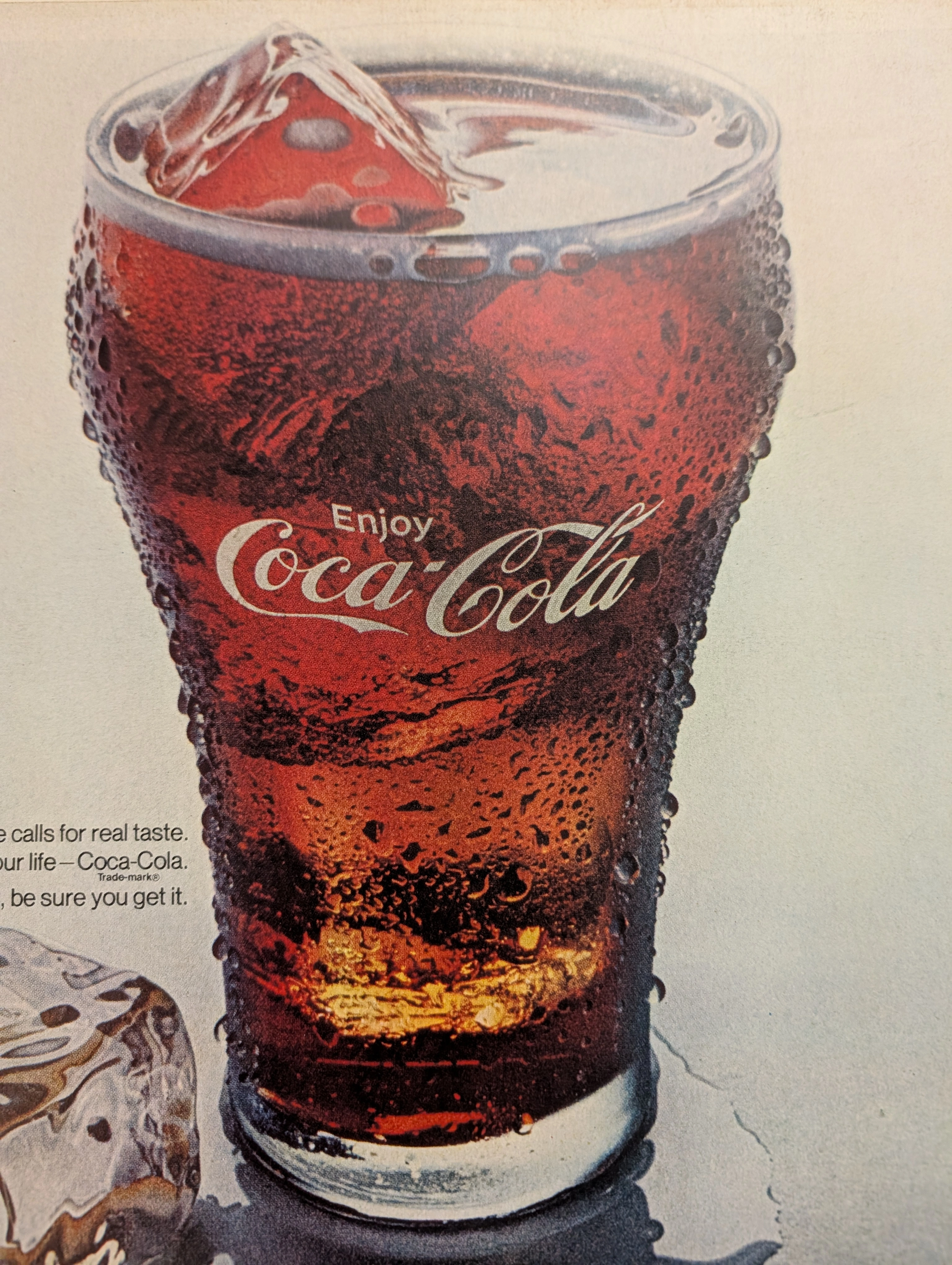
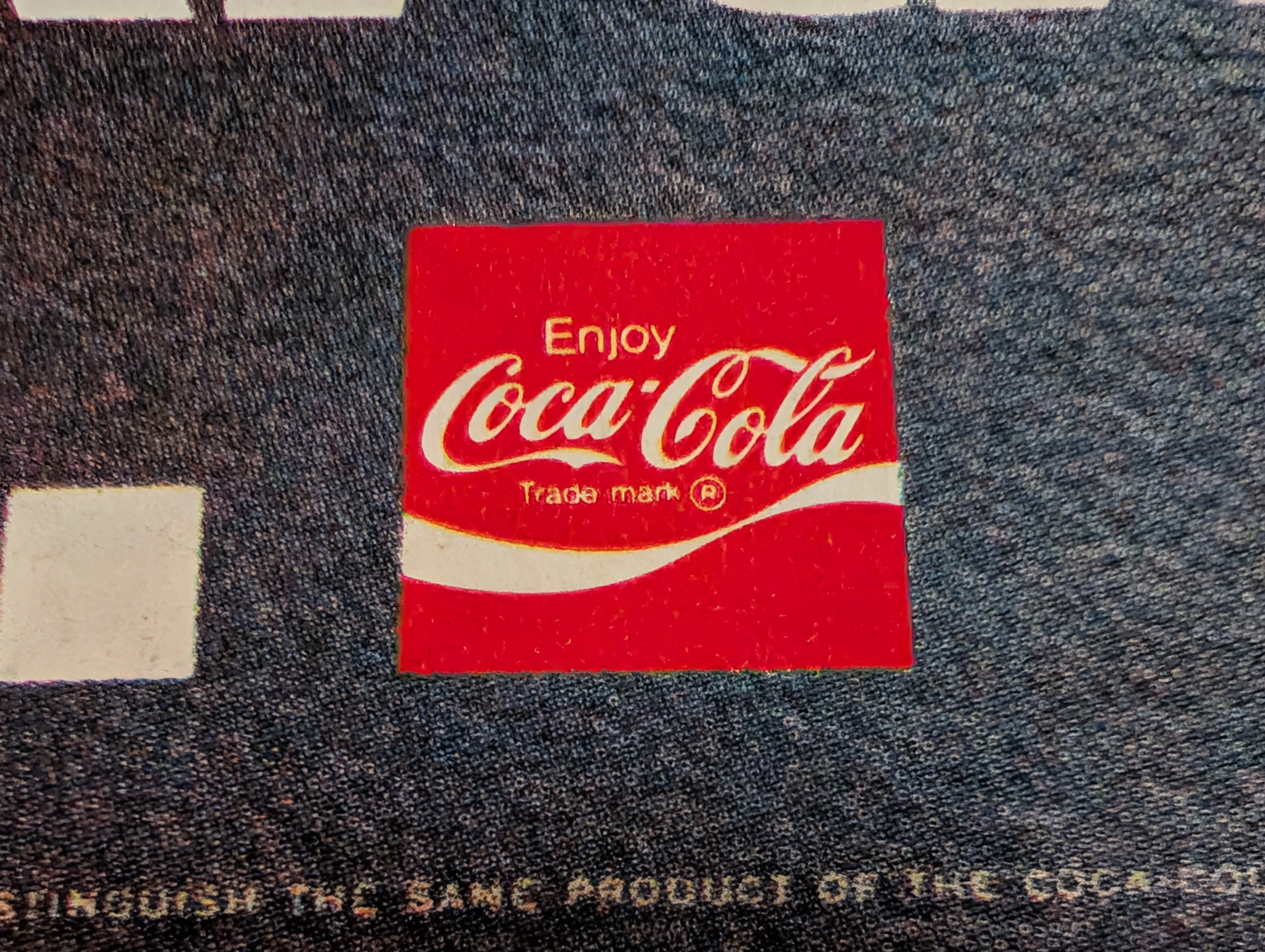
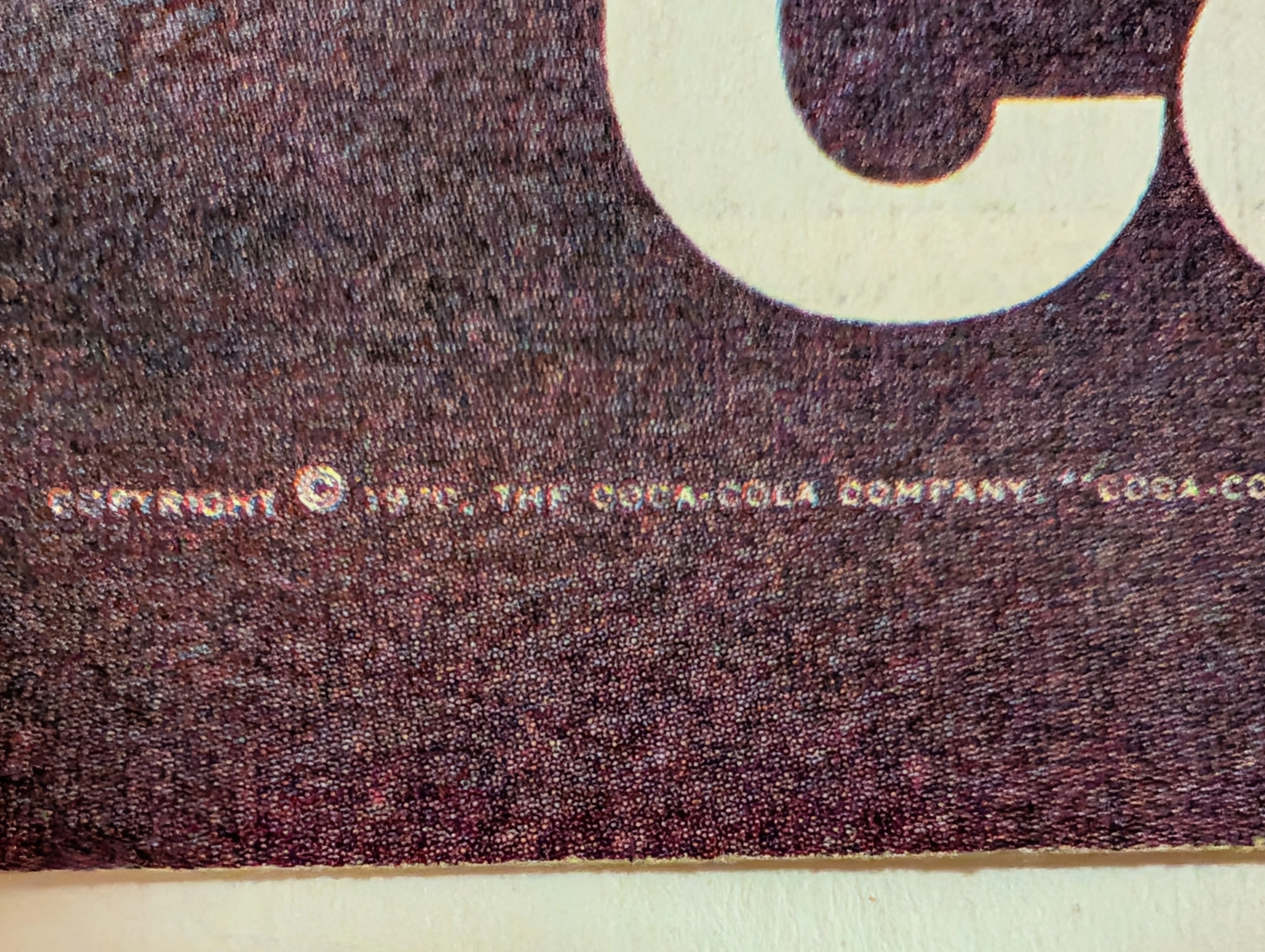
​As the Chief Curator of The Record, I welcome you to the absolute epicenter of American pop culture. The impeccably preserved Historical Relic before you is not a mere, soulless soft drink advertisement. It is a forensic "Blueprint of Consumer Psychology," specifically engineered in the culturally explosive year of 1970 (as undeniably verified by the microscopic legal text: "COPYRIGHT © 1970, THE COCA-COLA COMPANY").

​This Primary Art Document is the most formidable visual representation of arguably the greatest advertising campaign in corporate history: "It's the real thing." To decode the immense, staggering gravity of this artifact, you must first immerse yourself in the sociopolitical landscape of America at the turn of the decade. The late 1960s had fractured the American psyche. The nation was bleeding from the Vietnam War, reeling from political assassinations, and fractured by the counter-culture movement. The youth of 1970 were profoundly disillusioned. They actively questioned the "fakeness" of the government, the media, and the plastic, manufactured society they lived in. They were desperately, violently craving "Authenticity."

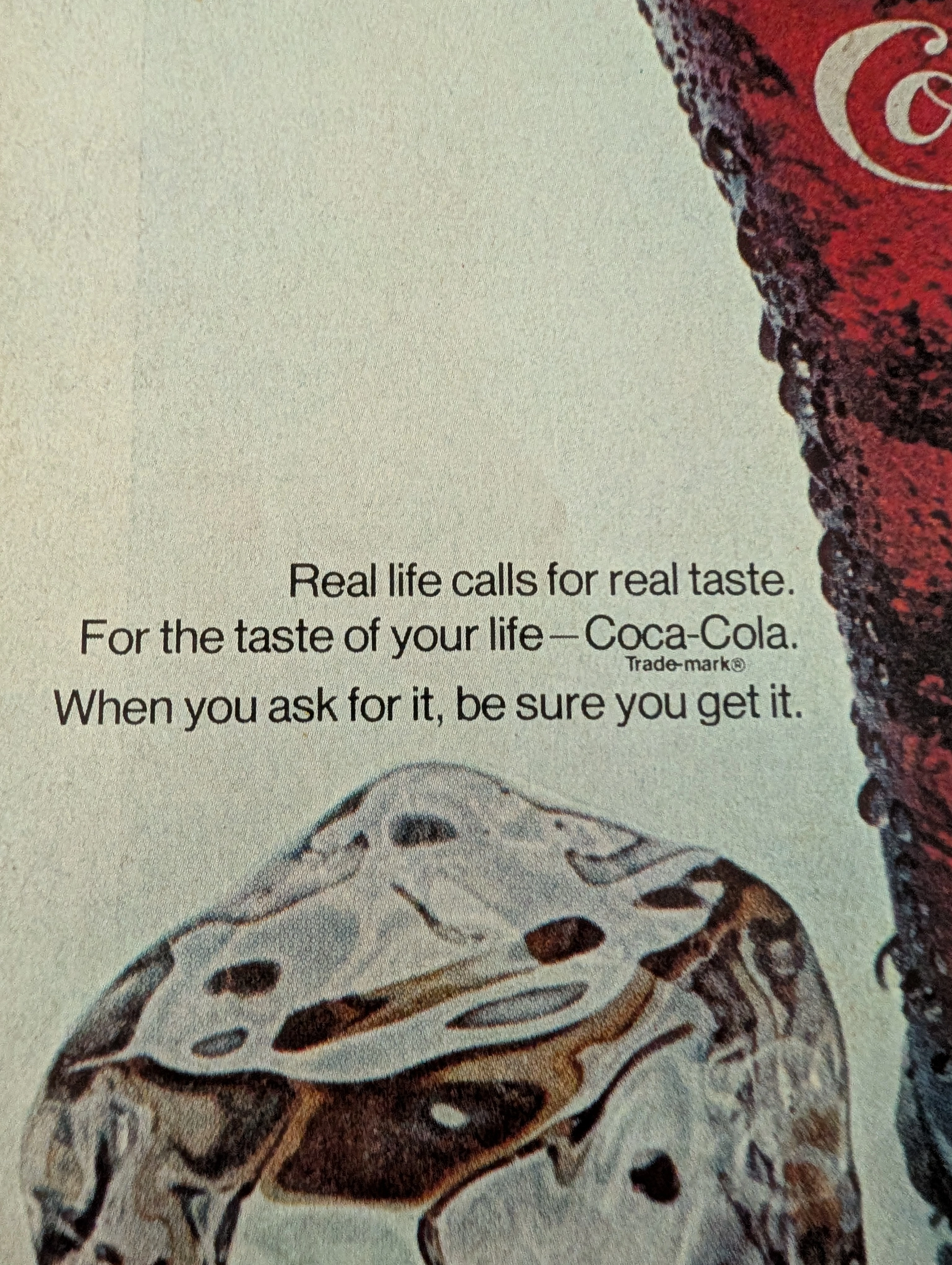
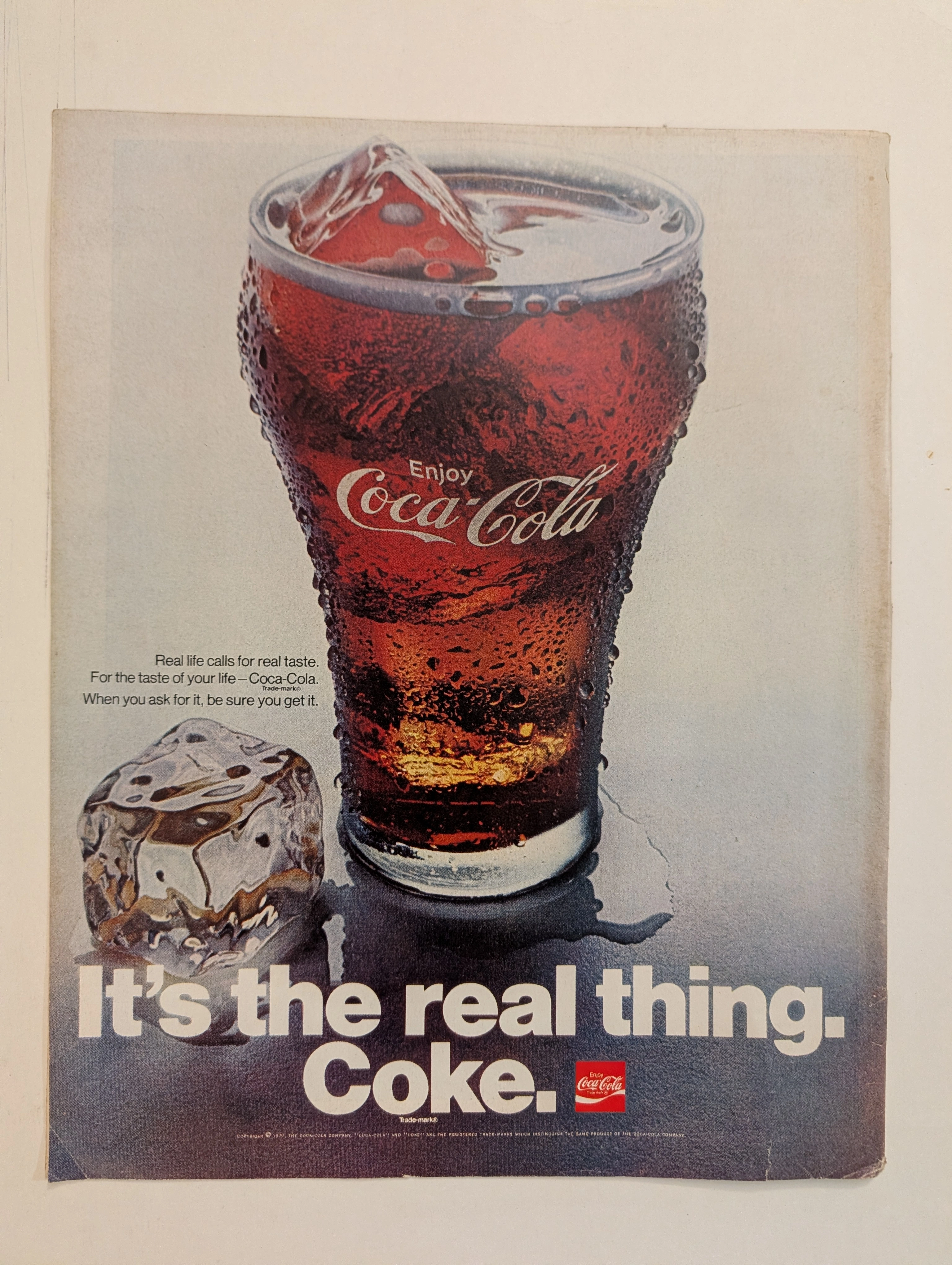
​The Coca-Cola Company identified this massive spiritual vacuum and aggressively positioned their brand as the "Prophet of Authenticity." The masterful copywriting—"Real life calls for real taste. For the taste of your life - Coca-Cola. When you ask for it, be sure you get it."—is not merely pitching carbonated sugar water. It is a profound sociological directive. Coca-Cola was whispering to a disillusioned generation: In a world full of lies and artificiality, this glass is the one thing you can absolutely trust. This is real. This exact campaign laid the indestructible foundation for the iconic 1971 "Hilltop" (I'd like to buy the world a Coke) commercial.

​In terms of Visual Architecture, this artifact is the absolute zenith of commercial Hyper-realism. The glass of Coke looms like a towering monolith. The illustration/photography is executed with microscopic, obsessive fidelity. The tactile, weeping condensation on the glass reflects light so perfectly that it triggers an immediate, visceral biological craving. The standalone, melting ice cube juxtaposed against the massive, uncompromising block typography and the classic red "Enjoy Coca-Cola" square logo elevates this from marketing to high Pop-Art. It holds the same cultural weight as an Andy Warhol piece; it is the deliberate transfiguration of a democratic commodity into a sacred Icon.

​( THE PAPER: The Aesthetics of Decay (Wabi-Sabi) — The Scars of 1970s Acidic Pulp )
​At The Record, our ultimate, uncompromising reverence is reserved for the inevitable, tragic beauty of analog destruction. This standalone Primary Art Document was meticulously rescued and preserved. Mass-market magazines in the 1970s were printed on cheap, highly acidic wood-pulp paper. They were explicitly designed for disposable consumption, harboring a chemical death sentence within their very fibers from the moment they were pressed.
​Direct your curatorial gaze to the surface of the paper. After more than half a century, ambient oxygen and ultraviolet light have waged a relentless chemical war against the paper's inherent lignin. This irreversible oxidation process has birthed a magnificent, undeniable "patina," transforming the once-sterile white background into a warm, creamy ivory and toasted amber. The vibrant reds of the logo and the deep blacks of the ink have settled permanently into the brittle, degrading fibers. This is the profound aesthetic of wabi-sabi—finding absolute perfection in impermanence. This paper is literally burning itself alive at a molecular level. No modern digital reprint can ever replicate the fragile, tactile soul, nor the distinct olfactory signature of aging 1970s pulp. Its slow, majestic death is precisely what transfigures it into immortal Primary Art.

​( THE RARITY: Class A — A Survivor of the Consumer Purges )
​To understand the valuation of this artifact, you must comprehend the brutal reality of ephemera survival. Millions of these ads were printed in 1970, but they were manufactured exclusively to be thrown away. They were discarded in waiting rooms, tossed in household garbage, or left to rot in damp attics. The statistical probability of a magazine page surviving over 50 years in such crisp, visually immaculate condition—where the micro-details of the condensation remain hyper-sharp and the paper bears no devastating creases—is staggeringly low.

​When you fuse this physical scarcity with the monumental historical presence of the "It's the real thing" campaign—a holy grail for Americana and Pop-Art collectors globally—this artifact unequivocally commands a Rarity Class A designation. It has evolved far beyond a disposable piece of commercial advertising. It is a highly coveted Historical Relic, demanding to be framed and preserved by a curator who truly understands the heavy, beautiful weight of American capitalist history.

Share This Archive

The Archive Continues

Continue the Exploration
The Time Traveller's Dossier: The Alchemy of Royal Rebellion – Drambuie "Bonnie Prince Charlie" Advertisement (Circa Mid-20th Century)

Drambuie · Beverage

The Time Traveller's Dossier: The Alchemy of Royal Rebellion – Drambuie "Bonnie Prince Charlie" Advertisement (Circa Mid-20th Century)

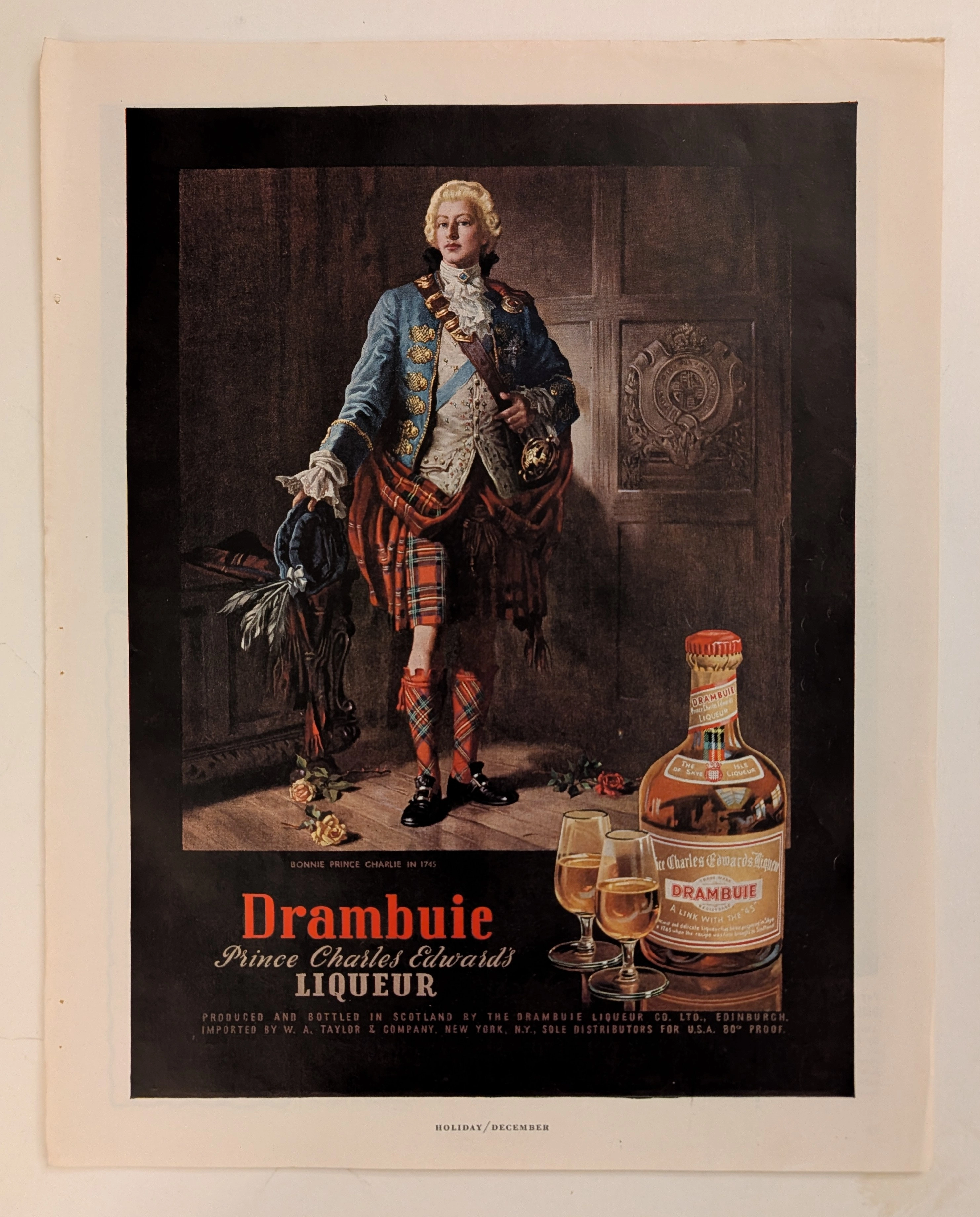
History is rarely an objective chronicle of facts; it is a malleable narrative, continually rewritten, romanticized, and ultimately weaponized by those seeking to legitimize their power or, in the modern era, their products. Long before digital algorithms could synthesize artificial heritage, the supreme manifestation of corporate alchemy was executed through the calculated precision of the four-color offset press and the appropriation of historical iconography. The artifact presented before us is not merely a vintage magazine tear sheet selling a Scottish liqueur. It is a masterclass in the commodification of myth, a visual distillation of romantic rebellion, and a foundational blueprint for what is now known as "Heritage Branding." This museum-grade, academic archival dossier presents an exhaustive, microscopic deconstruction of a mid-20th-century print advertisement for Drambuie Liqueur. Operating on a profound binary structure, this document records a calculated paradigm shift within the global spirits industry. It captures the precise historical fracture where a highly specific, geographically isolated alcoholic beverage was conceptually transmuted into a literal draught of royal rebellion and aristocratic romance. Through the highly specialized lens of late-analog commercial artistry and stringent visual forensics, this document serves as a masterclass in psychological marketing. It established the foundational archetype for linking the consumption of a physical product with the ingestion of an epic, historical fantasy—an archetype that unconditionally dictates the visual and strategic totems of the modern luxury spirits industry today.
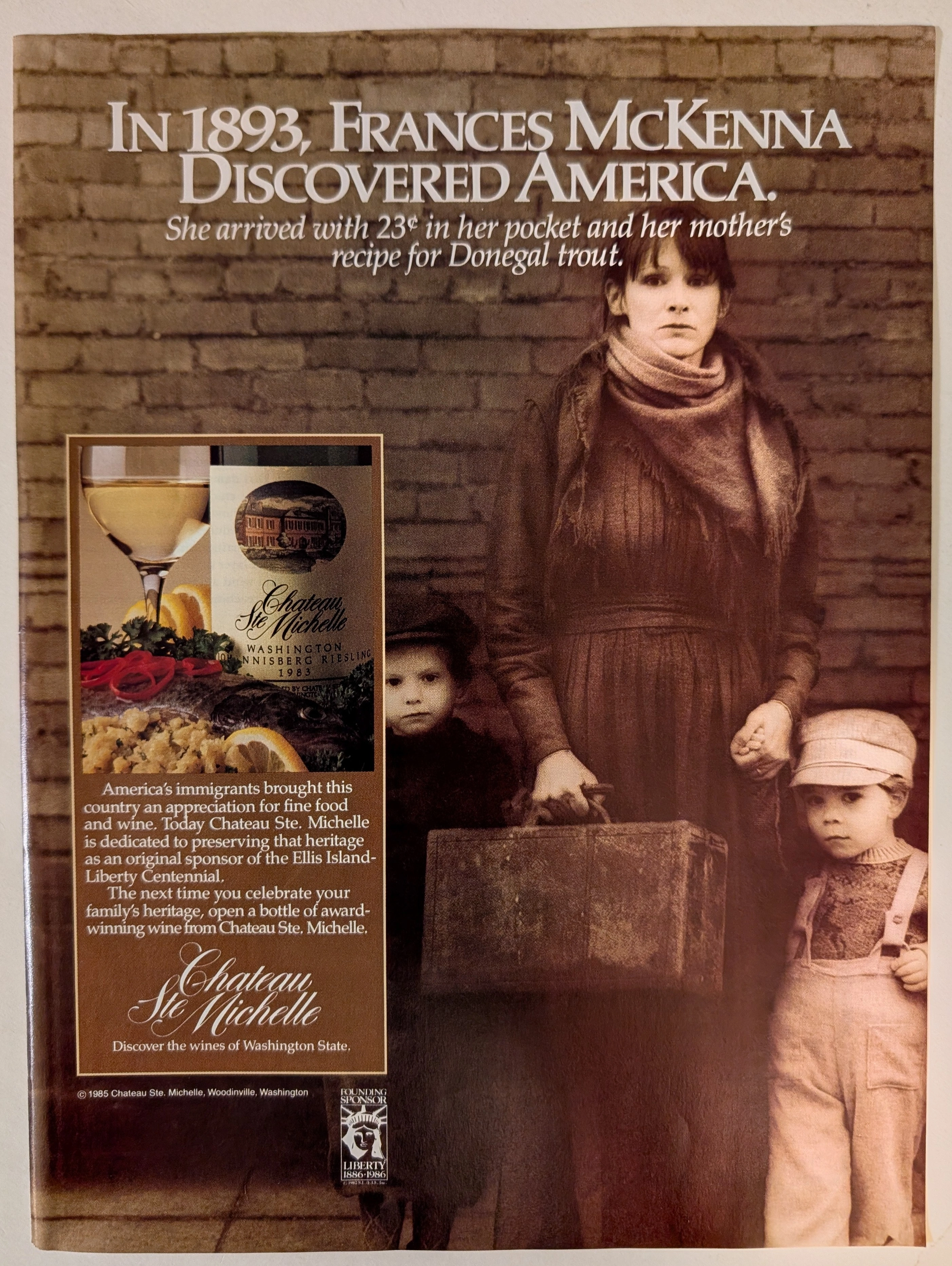
The Time Traveller’s Dossier: 1985 Chateau Ste. Michelle Johannisberg Riesling Vintage Advertisement — The Heritage of Arrival

Chateau St Michelle · Beverage

The Time Traveller’s Dossier: 1985 Chateau Ste. Michelle Johannisberg Riesling Vintage Advertisement — The Heritage of Arrival

Delve into the archives to explore this definitive 1985 Chateau Ste. Michelle vintage advertisement, a poignant tribute to American immigration and culinary heritage. Released during the ambitious lead-up to the Statue of Liberty's centennial, this piece transcends typical beverage marketing by weaving a grounded narrative around Frances McKenna, an 1893 Irish immigrant. For historians and collectors of vintage ads and old advertisements, this artifact stands as a masterful intersection of historical reverence and premium brand positioning. The campaign beautifully pairs a 1983 Washington Johannisberg Riesling with the enduring legacy of European culinary traditions brought to American shores. Unlike many classic print ads of the era that focused solely on product tasting notes or vineyard terroir, Chateau Ste. Michelle leveraged its role as a Founding Sponsor of the Ellis Island-Liberty Centennial to craft a deeply emotional and culturally resonant message. This document remains a profound testament to the power of heritage marketing in the late 20th century.
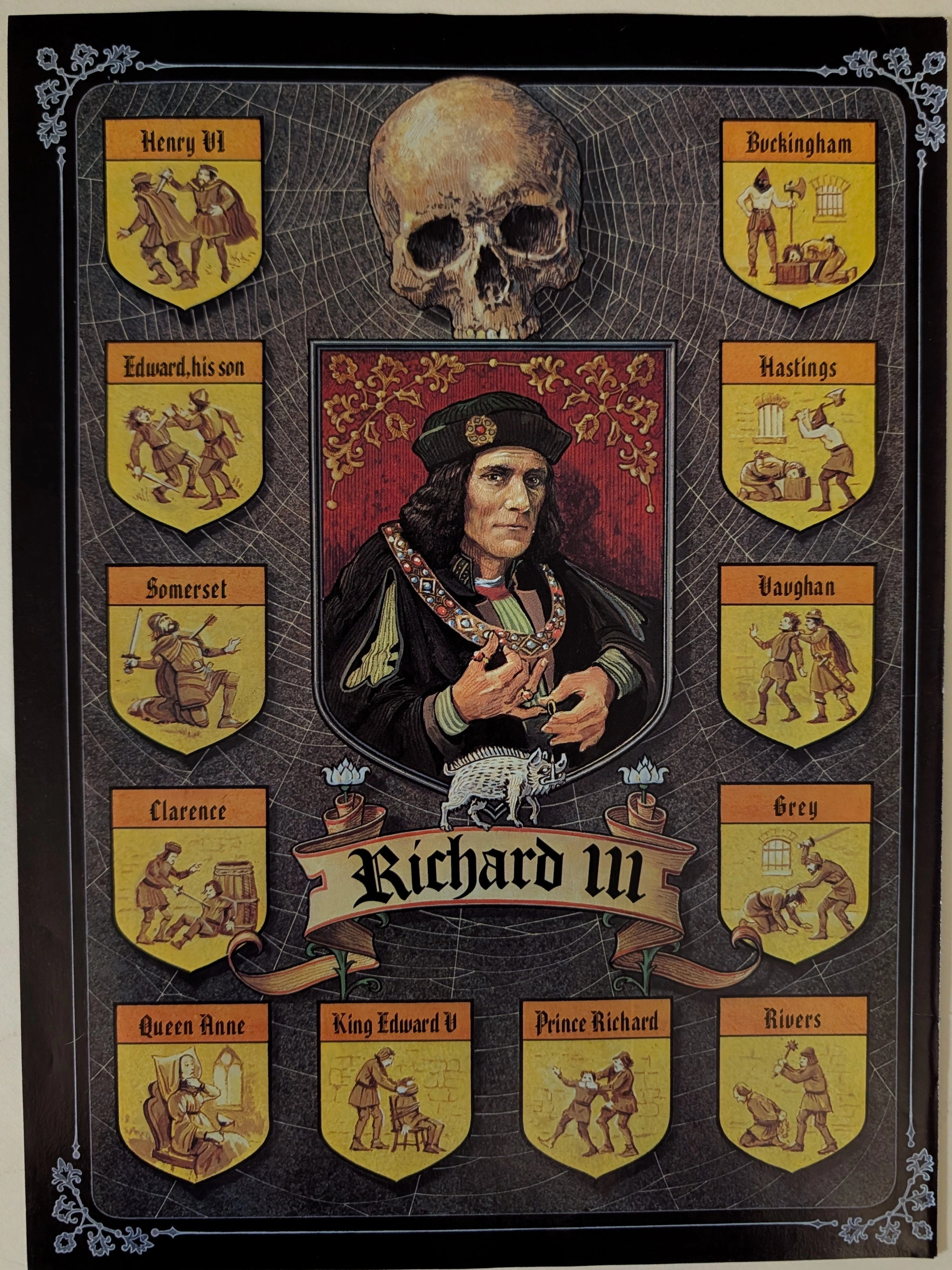
The Time Traveller’s Dossier: Circa 1970s Shakespearean Richard III Vintage Illustration — The Tudor Web of Blood

The Time Traveller’s Dossier: Circa 1970s Shakespearean Richard III Vintage Illustration — The Tudor Web of Blood

Delve into the archives to explore this definitive Circa 1970s Shakespearean Richard III vintage illustration, a profoundly dark and historically layered piece of theatrical and literary art. Likely produced as an educational broadside or promotional poster for a mid-to-late 20th-century theatrical run, this piece transcends basic historical depiction, serving instead as a macabre visual map of the corpse-paved path to the English throne as dramatized by William Shakespeare. For collectors of Gothic art, literary ephemera, and vintage ads, this artifact stands as a masterful intersection of historical reverence and narrative design. Unlike standard old advertisements or classic print ads that promote consumer goods, this illustration acts as a haunting visual codex of the "Tudor Myth." Its preservation of chilling literary iconography makes it a highly coveted piece of specialized print ephemera, capturing the visceral dread of Shakespeare's most infamous usurper.
Published by

The Record Institute

Taxonomy Match

Related Articles

THE TIME TRAVELER'S DOSSIER: THE GENESIS OF ARROGANCE — OMEGA, THE QUARTZ CRISIS, AND THE SPACE HERO — related article
Read Article

THE TIME TRAVELER'S DOSSIER: THE GENESIS OF ARROGANCE — OMEGA, THE QUARTZ CRISIS, AND THE SPACE HERO

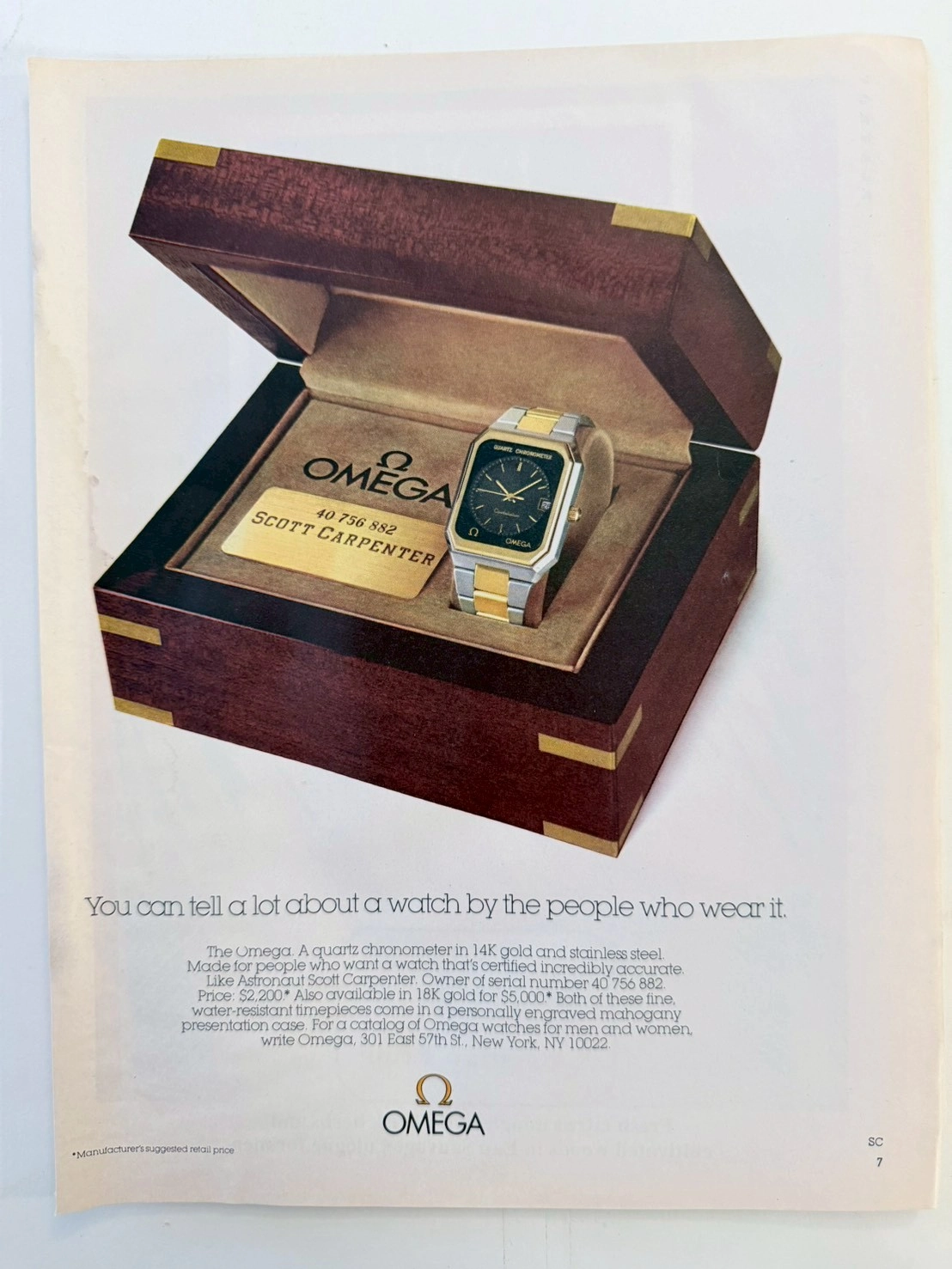
An original vintage magazine cut page featuring the OMEGA Quartz Chronometer, endorsed by NASA Mercury Seven astronaut Scott Carpenter. This standard-sized ephemera captures Omega's luxurious counter-offensive during the "Quartz Crisis," elevating battery-powered movements to haute horlogerie. The natural degradation and warm patina of the pre-2000s acidic paper transform this surviving ad into a highly collectible Class A historical artifact.

THE TIME TRAVELER'S DOSSIER: THE ARCHITECT OF CAPITALISM AND THE AESTHETICS OF RUIN — related article
Read Article

THE TIME TRAVELER'S DOSSIER: THE ARCHITECT OF CAPITALISM AND THE AESTHETICS OF RUIN

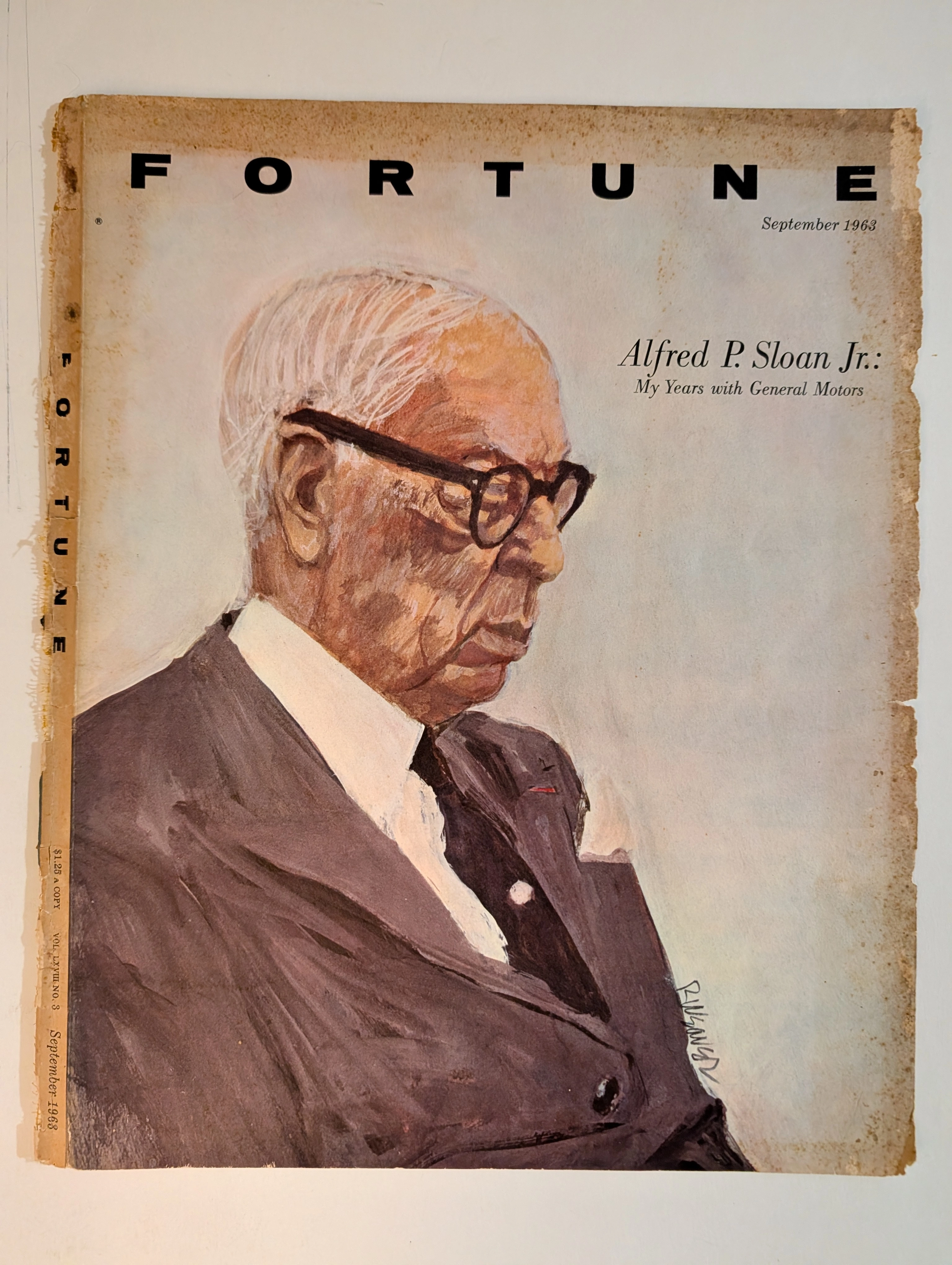
The artifact under rigorous, museum-grade analysis is a profoundly significant Historical Relic originating from the absolute zenith of American corporate ascendancy. This Primary Art Document is the front cover of FORTUNE magazine, explicitly dated September 1963. It features a majestic, expressive painted portrait of Alfred P. Sloan Jr., the legendary architect of the General Motors empire. ​Masterfully rendered by the acclaimed American illustrator Robert Weaver, whose signature is prominently visible, this artifact visually anchors the magazine's serialization of Sloan's definitive business memoir, My Years with General Motors. This text remains a foundational scripture of modern corporate management and decentralized organizational structure. ​Rescued from the ravages of time and preserved as a standalone Archival Artifact, the premium, heavy-stock analog paper of Fortune is undergoing a breathtaking process of chemical degradation. It exhibits severe edge fraying, jagged paper loss, and deep biological oxidation along its borders. This glorious decay transforms a mass-produced business periodical into an irreplaceable, ready-to-frame Primary Art Document—a testament to the fragile mortality of even the greatest capitalist empires.

THE TIME TRAVELER'S DOSSIER :THE APPARITION OF HERITAGE — THE STRIDING MAN — related article
Read Article

THE TIME TRAVELER'S DOSSIER :THE APPARITION OF HERITAGE — THE STRIDING MAN

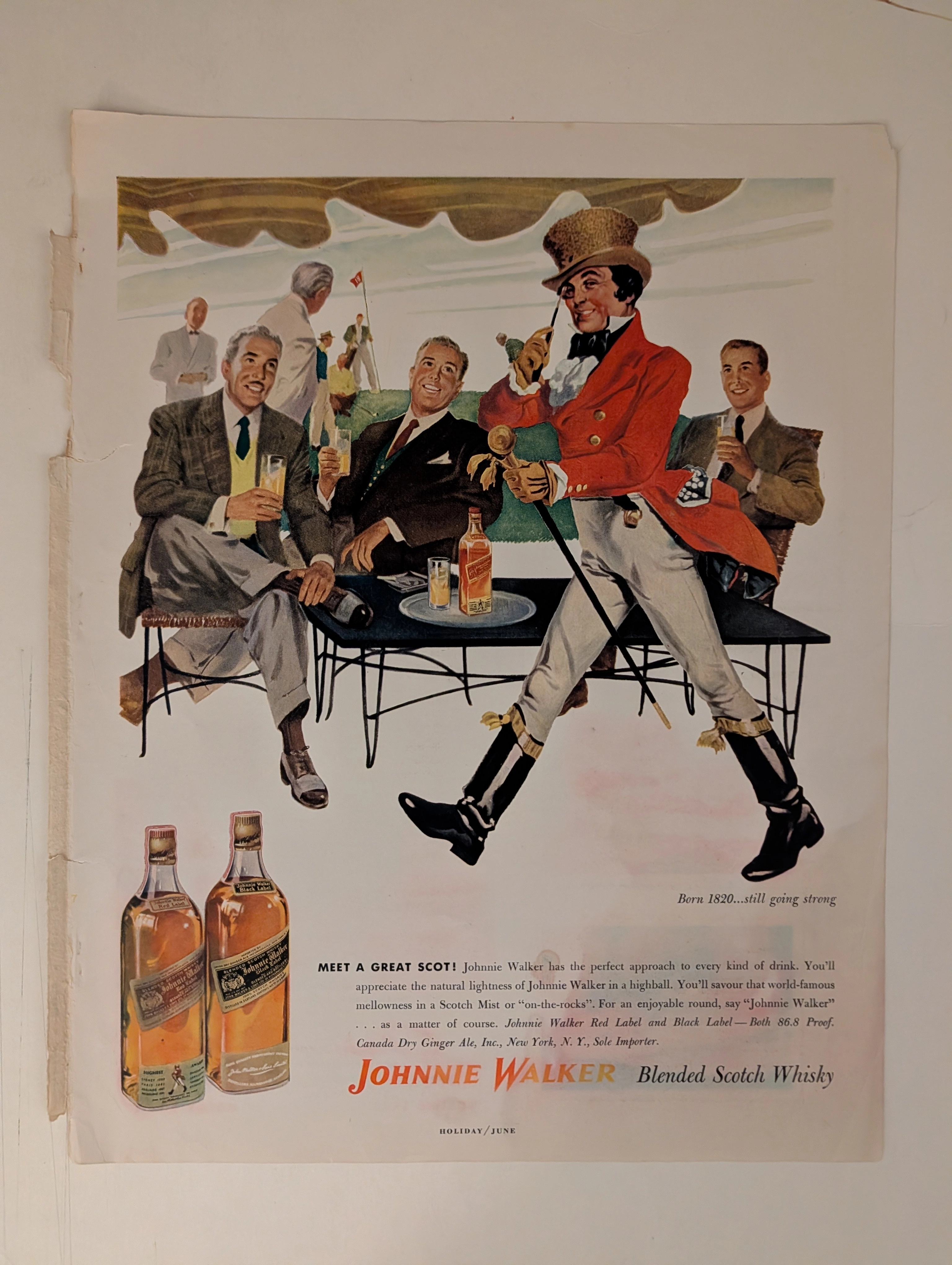
The artifact currently subjected to our uncompromising, museum-grade analysis is a profoundly preserved Historical Relic excavated from the zenith of mid-century American prosperity. This Primary Art Document is a full-page magazine advertisement for Johnnie Walker Blended Scotch Whisky. Functioning as a "Forensic Blueprint of the Transatlantic Leisure Class," the document masterfully weaponizes British aristocratic heritage (embodied by the Striding Man) to validate the newly acquired wealth of post-war American consumers. Its historical context is irrefutably anchored by the microscopic fine print identifying the importer as "Canada Dry Ginger Ale, Inc., New York, N.Y.", a specific corporate era of distribution. Grounded by extreme macro details of analog halftone lithography and the breathtaking wabi-sabi chemical degradation highlighted by its violently torn binding edge, this artifact commands an irreplaceable status, cementing its Rarity Class A designation as a masterpiece of corporate sociological engineering.

The Time Traveller’s Dossier: The Graphology of Supreme Power – A Forensic Deconstruction of the 35 Presidential Signatures — related article
Read Article

The Time Traveller’s Dossier: The Graphology of Supreme Power – A Forensic Deconstruction of the 35 Presidential Signatures

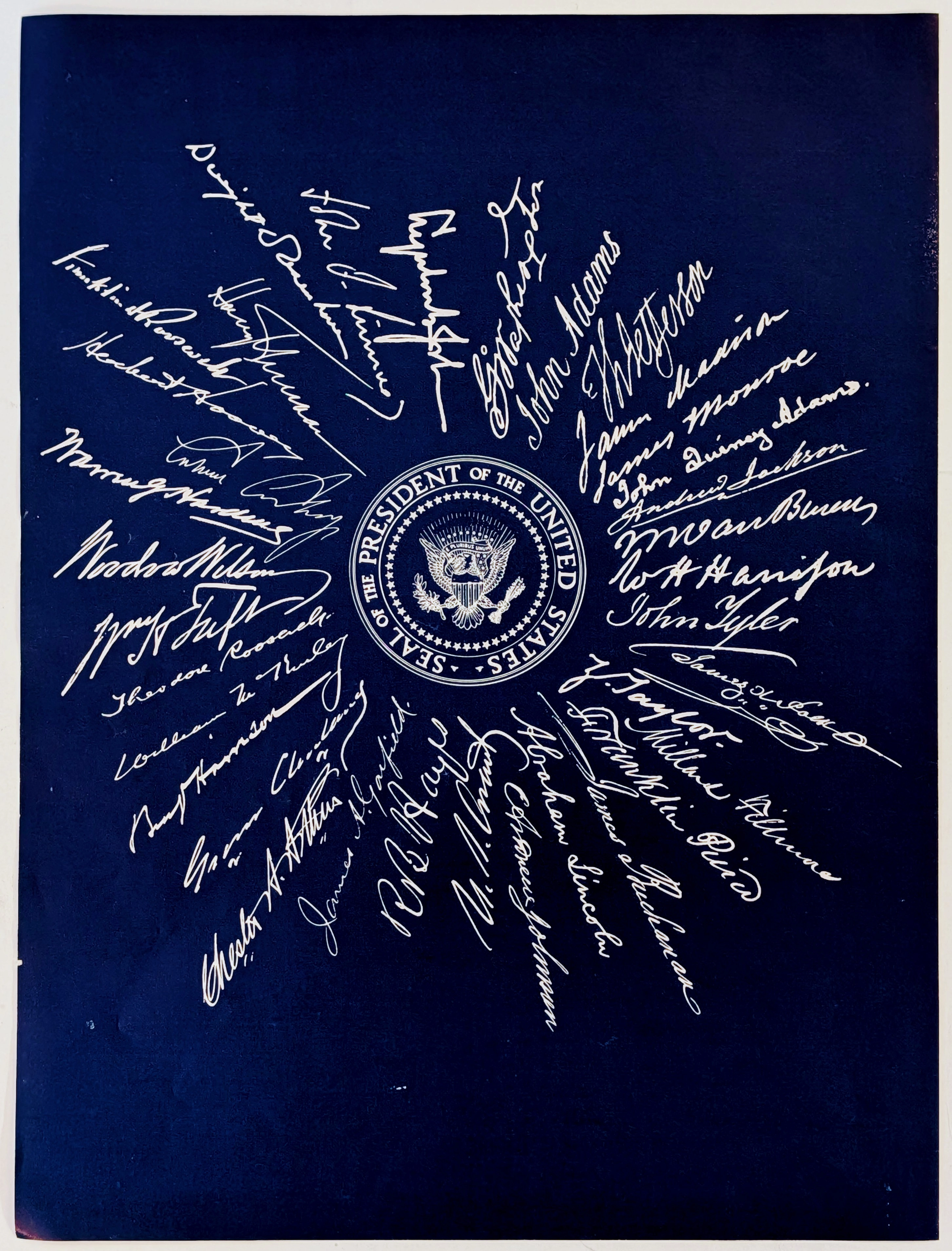
The exercise of supreme executive power is not exclusively documented through monumental architectural achievements, the mobilization of armed forces, or the grand rhetoric of inaugural addresses. Frequently, the ultimate manifestation of absolute authority is captured in a single, decisive moment of physical friction: the precise instant a quill, steel nib, or fountain pen touches paper to forge a leader's signature. A signature is the ultimate physical projection of political will; it is the legal instrument that declares wars, emancipates millions, and authorizes humanity's journey to the stars. The historical artifact presented before us today for museum-grade forensic analysis is an exceedingly rare and profound educational print. Rendered in a striking reverse lithography technique—featuring a deep, commanding navy blue background with brilliant white text—it displays the Seal of the President of the United States, completely enveloped by the radiating facsimile signatures of the first thirty-five individuals to hold the highest office in the land. This exhaustive, world-class academic archival dossier will dissect the artifact with microscopic precision. We will conduct an individual forensic breakdown of all thirty-five presidential signatures, exploring the graphological (handwriting) structures that mirror their personalities, their educational backgrounds, and their historical eras. Furthermore, we will decode the profound engineering logic behind the radial visual design and conduct a rigorous material science analysis of this reverse-printed substrate. In an analog era devoid of digital fonts and electronic authorizations, a leader's penmanship was their ultimate visual DNA. We will meticulously explore the chemical mechanics of the aging paper beneath this sea of dark ink—the elegant wabi-sabi oxidation process that serves as the primary engine driving up its market value exponentially.

The Time Traveller's Dossier: The Zenith of General Motors — related article
Read Article

The Time Traveller's Dossier: The Zenith of General Motors

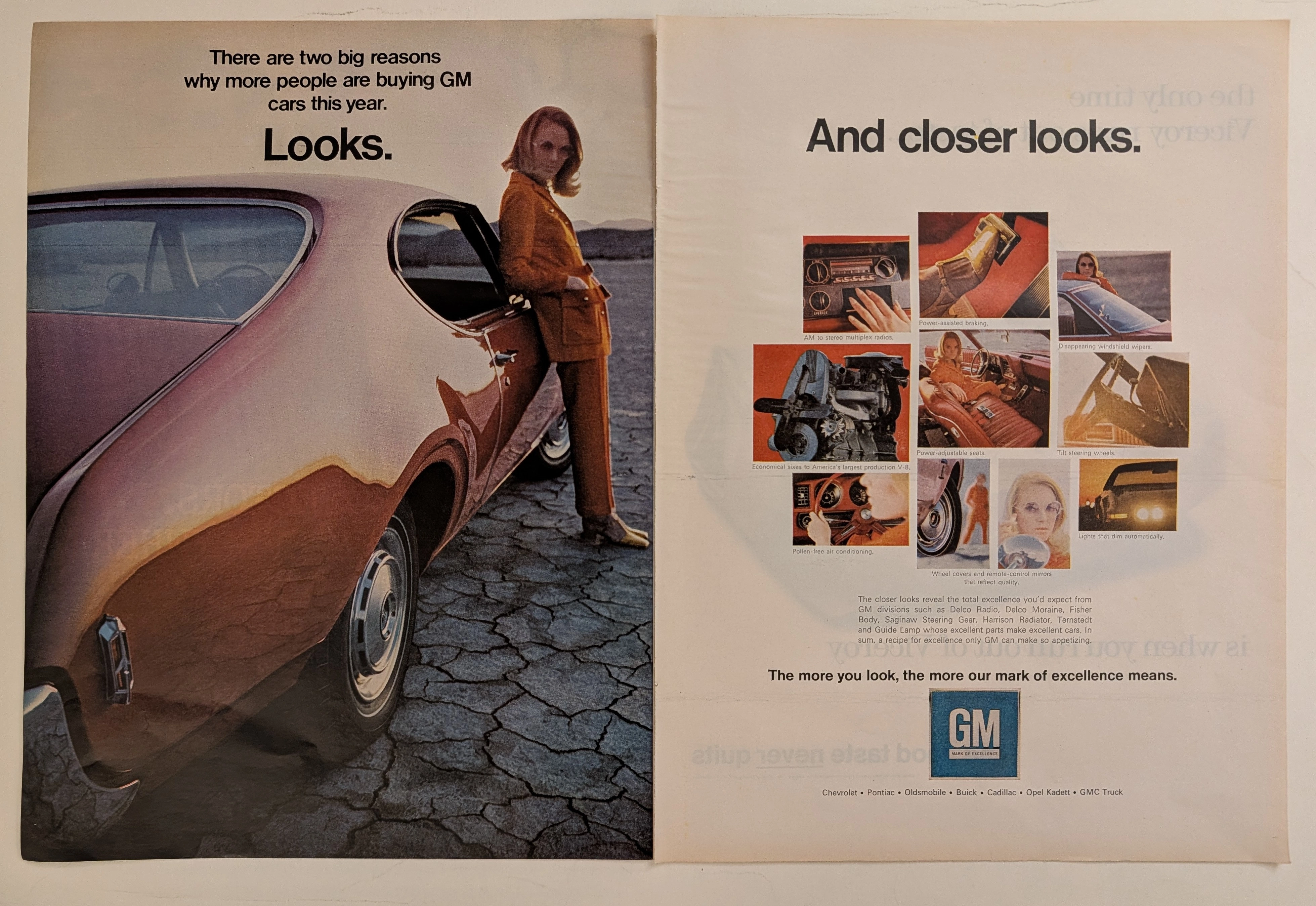
The automobile in mid-twentieth-century America was never merely a mode of transportation; it was a colossal canvas projecting industrial pride, technological advancement, and shifting consumer identities. The historical artifact elegantly and securely positioned upon the analytical table of The Record Institute today is a magnificent, large-format, two-page print advertisement for General Motors (GM), originating from the late 1960s to early 1970s. This document completely transcends the traditional boundaries of automotive catalogs. It operates as a highly sophisticated, dual-narrative cultural mirror: the left page captures the visceral, visual desire of "Looks" intertwined with a radical new era of feminine empowerment, while the right page dissects the mechanical and electronic mastery of "And closer looks," showcasing the vast ecosystem of GM's specialized manufacturing divisions. ​This world-class, comprehensive dossier conducts a meticulous, unyielding, and exceptionally deep examination of the artifact, operating under the absolute most rigorous parameters of historical, sociological, and material science evaluation. We will decode the immense industrial weight of the "Mark of Excellence" campaign, analyze the profound sociological implications of the female model's tailored pantsuit as a symbol of women's liberation, and dissect the anatomy of the nine revolutionary automotive technologies that defined modern driving. Furthermore, as we venture deeply into the chemical and physical foundations of this analog printed ephemera, we will reveal the precise mechanical fingerprints of the CMYK halftone rosettes and the graceful, natural oxidation of the paper substrate. This precise intersection of visual nostalgia, mid-century commercial artistry, and the immutable chemistry of time cultivates a serene wabi-sabi aesthetic—a natural, irreversible phenomenon that serves as the primary engine driving up its market value exponentially within the elite global spheres of Vintage Automotive Ephemera and Industrial Design collecting.

The Time Traveller's Dossier: The Architecture of Slumber – The 1967 Simmons Golden Value — related article
Read Article

The Time Traveller's Dossier: The Architecture of Slumber – The 1967 Simmons Golden Value

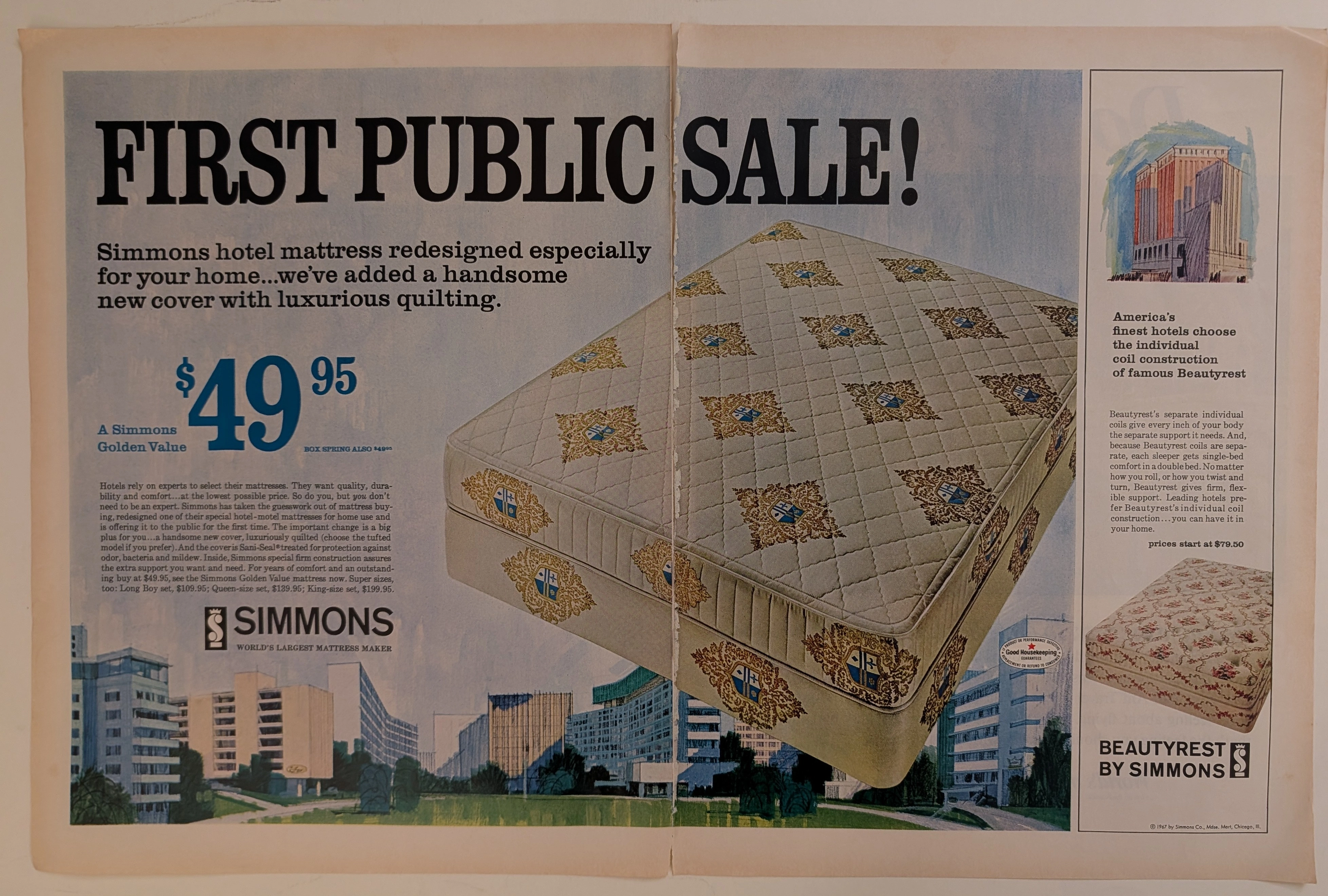
The evolution of the American domestic interior during the mid-twentieth century was heavily influenced by the golden age of travel and the rapid expansion of the luxury hospitality industry. The historical artifact elegantly secured upon the analytical table of The Record Institute today is a large-format, two-page centerfold print advertisement for the Simmons Mattress Company, copyrighted in 1967. This document transcends standard consumer goods marketing; it operates as a sophisticated sociological mirror, reflecting a highly specific moment when industrial sleep engineering and the aspirational luxury of the modern hotel were explicitly packaged and sold to the suburban American household. This world-class, comprehensive dossier conducts a meticulous, profound, and historically objective examination of the artifact, operating under the absolute most rigorous parameters of sociological and material science evaluation. We will decode the brilliant marketing psychology embedded within the "First Public Sale" messaging, analyze the iconic "Good Housekeeping" endorsement, and dissect the rich semiotics of the heraldic quilt patterns alongside the modernist architectural illustrations. Furthermore, as we venture deeply into the chemical and physical foundations of this analog printed ephemera, we will reveal the precise mechanical fingerprints of the CMYK halftone rosettes and the graceful, natural oxidation of the paper substrate. This precise intersection of visual nostalgia, mid-century commercial artistry, and the immutable chemistry of time cultivates a serene wabi-sabi aesthetic—a natural, irreversible phenomenon that serves as the primary engine driving up its market value exponentially within the elite global spheres of Vintage Commercial Ephemera and Mid-Century Lifestyle Archives collecting.