THE TIME TRAVELER'S DOSSIER: THE GOLDEN LIE AND THE PROPAGANDA OF 1936 — The Record Institute JournalTHE TIME TRAVELER'S DOSSIER: THE GOLDEN LIE AND THE PROPAGANDA OF 1936 — The Record Institute JournalTHE TIME TRAVELER'S DOSSIER: THE GOLDEN LIE AND THE PROPAGANDA OF 1936 — The Record Institute Journal
1 / 3

✦ 3 Photos — Click any image to view in high resolution

March 8, 2026

THE TIME TRAVELER'S DOSSIER: THE GOLDEN LIE AND THE PROPAGANDA OF 1936

Archive Views: 23
Heritage AdvertisementsTravel & Tourism

The History

( THE HISTORY: National Brainwashing, Medical Irony,and Sociological Engineering)

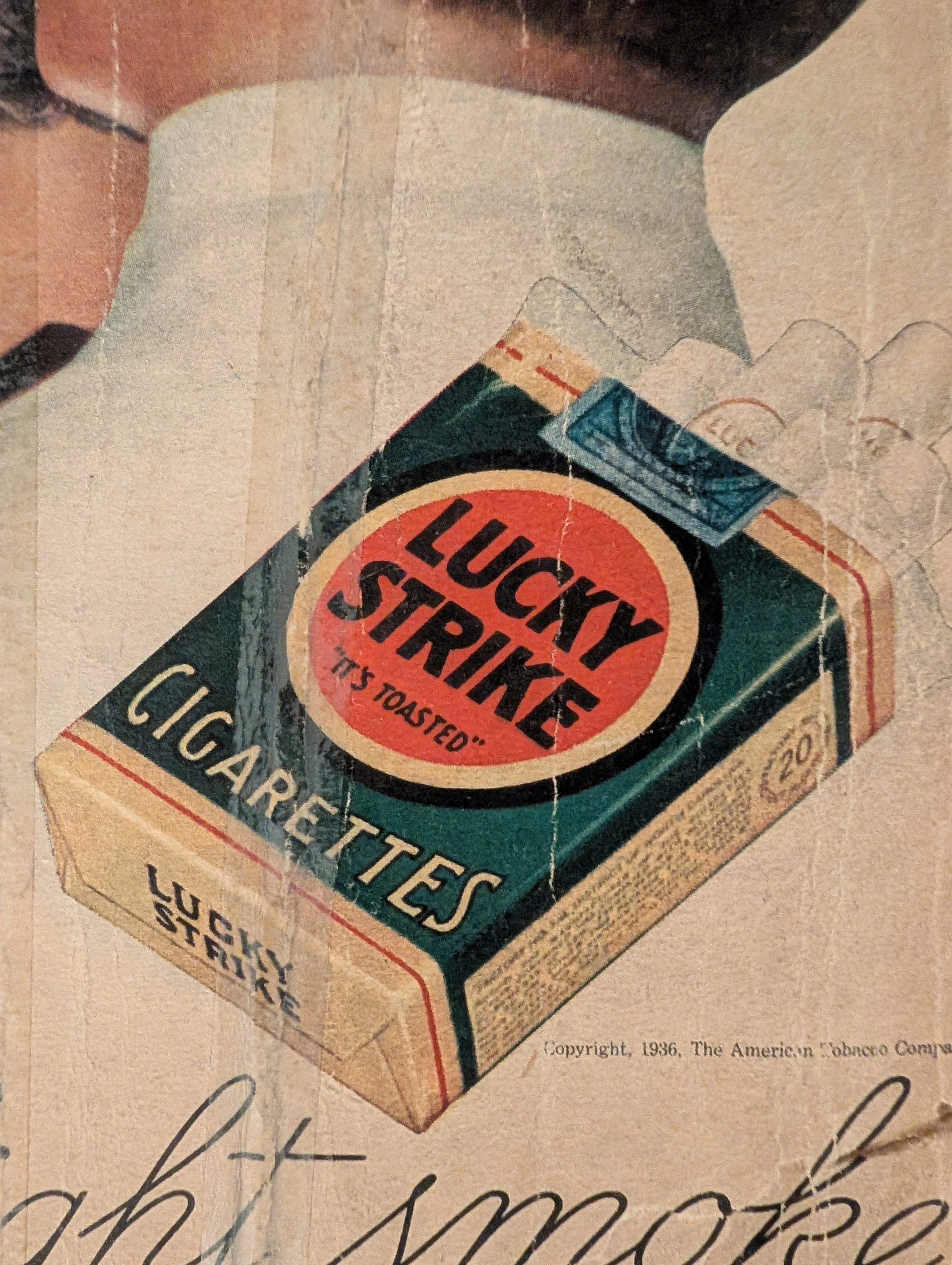
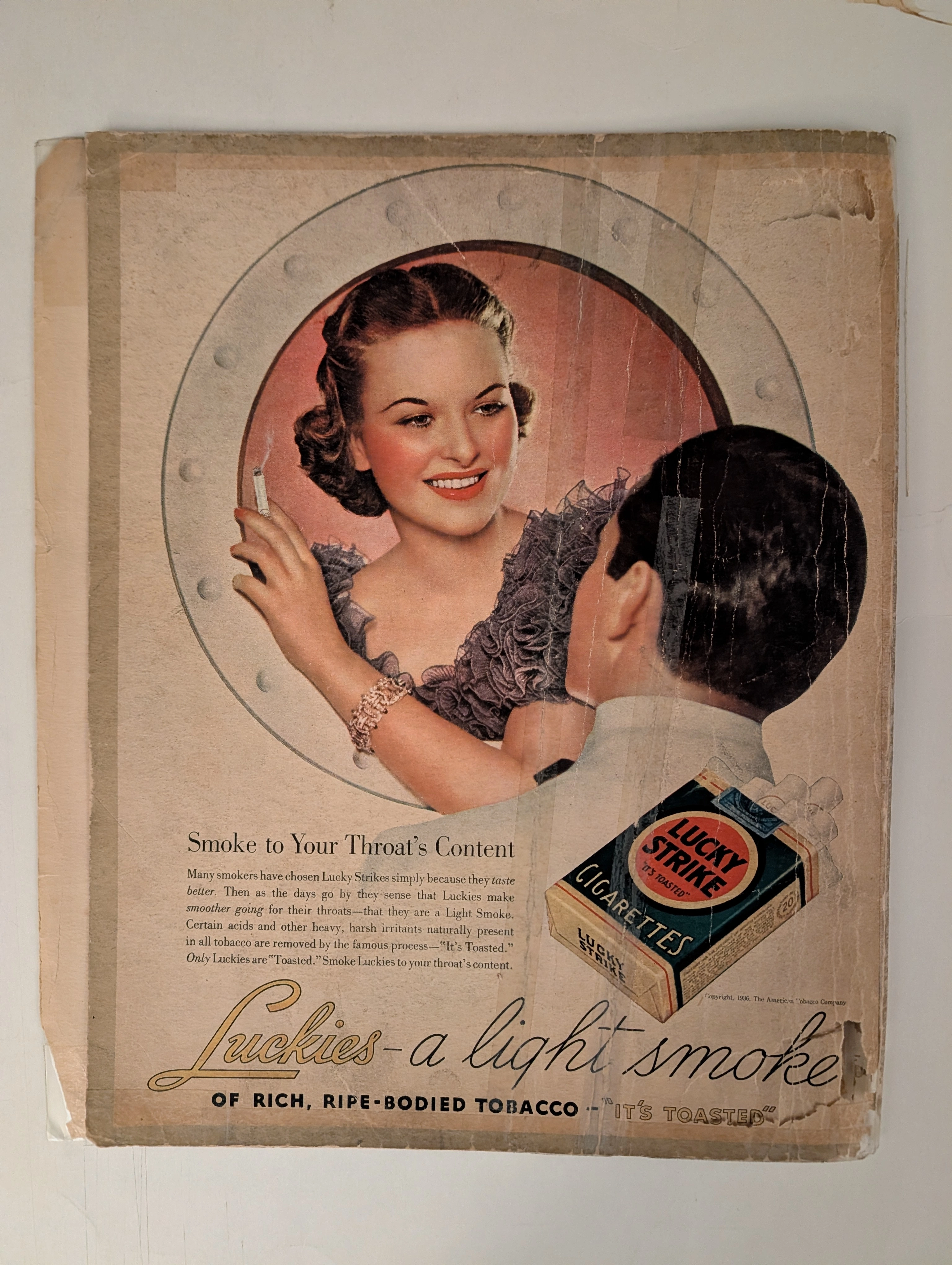
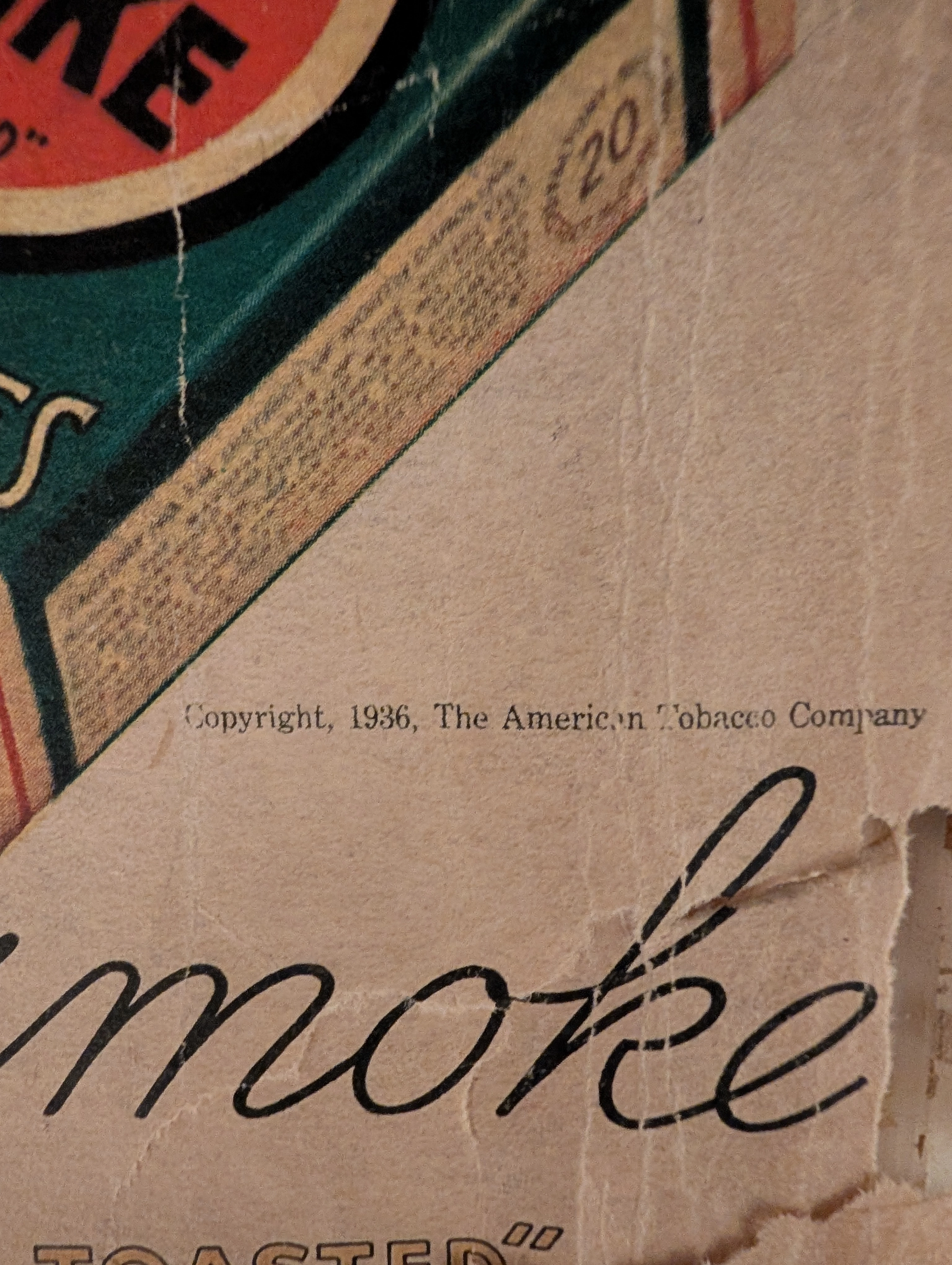
​As the Chief Curator of The Record, the uncompromising guardian of analog history, I welcome you to the darkest, most audacious, and highly deceptive epicenter of American corporate capitalism. The heavily battle-scarred Historical Relic that lies before you is not a mere, soulless vintage tobacco advertisement. It is a forensic "Blueprint of Mass Psychological Manipulation," specifically and meticulously engineered in the suffocating heart of the Great Depression. This Primary Art Document is forensically and undeniably dated to 1936 (as verified by the explicit legal text: "Copyright, 1936, The American Tobacco Company").
​The staggering, almost terrifying historical gravity of this artifact is contained within its bold, arrogant typography: "Smoke to Your Throat's Content". This single phrase perfectly encapsulates an era of absolute medical blindness and corporate audacity. In the 1930s, the tobacco industry faced growing public whispers that smoking caused throat irritation and coughs. Instead of retreating, The American Tobacco Company aggressively launched a counter-offensive, shamelessly marketing their Lucky Strike cigarettes as inherently "smooth" and beneficial to the throat. They weaponized the legendary slogan "It's Toasted", brilliantly tricking millions of consumers into believing that the standard heat-curing process of tobacco magically eradicated harmful irritants. This is widely considered one of the greatest and most dangerous marketing "spins" in human history—transforming deadly carcinogens into an exclusive health benefit.

​Furthermore, the Visual Architecture of this document reveals a profound layer of "Social Engineering." The illustration depicts a glamorous, sophisticated woman confidently holding a lit cigarette, holding the admiring gaze of a man through a nautical porthole. This is not a random artistic choice; it is the direct culmination of the tobacco industry's ruthless campaign in the 1920s and 30s to shatter gender taboos. They aggressively manufactured the narrative that women smoking was a symbol of "equality, freedom, and seduction." This advertisement is a definitive, chilling historical record of the successful transformation of toxic smoke into a mandatory high-society fashion accessory.

(THE PAPER: The Aesthetics of Decay (Wabi-Sabi) — The Scars of an 88-Year Survival )
​At The Record, our ultimate, uncompromising reverence is reserved for the inevitable, tragic, and spectacular beauty of analog destruction. This artifact is the absolute epitome of a "Battered Survivor." Mass-market magazines in 1936 were printed on incredibly cheap, highly acidic wood-pulp paper. They were explicitly designed by their publishers to be thrown into the fireplace the moment they were read.
​Direct your curatorial, analytical gaze to the physical body of this artifact. The right margin exhibits severe, violent edge trauma, deep, structural creasing, and jagged tears. You can forensically observe the ancient, calcified residue of old adhesive tape embedded deep within the fibers, indicating someone desperately tried to repair or display this page decades ago. Over the course of 88 years, ambient oxygen and ultraviolet light have waged a relentless, unstoppable chemical war against the paper's inherent lignin. This irreversible oxidation process has birthed a magnificent "patina," burning the once-white paper into a deep, toasted amber and dark brown.

​These are not flaws or trash to be discarded. These are the unforgeable "Scars of Time." This paper is quietly, literally burning itself alive at a molecular level. No modern digital reprint, no high-resolution scan can ever replicate the fragile, tactile soul, nor the distinct olfactory signature of aging 1930s pulp. Its slow, majestic, and irreversible death is precisely what transfigures it into an immortal piece of Primary Art, perfectly embodying the Japanese aesthetic of wabi-sabi.

​( THE RARITY: Class S — A Miraculous Survivor of the WWII Paper Drives )
​To understand the immense valuation of this artifact, you must comprehend the brutal reality of its era. Finding 1936 ephemera that so powerfully articulates such a heavy historical narrative is an archival miracle. During the Great Depression, paper was a resource often used for insulation or fuel. More devastatingly, as the world plunged into World War II, the American government initiated aggressive "Paper Drives," legally mandating the collection and pulping of millions of old magazines to manufacture artillery packaging and ammunition boxes.

​The fact that this Lucky Strike advertisement survived nearly 90 years, proudly wearing the physical scars of its endurance, is astounding. When you fuse this extreme physical scarcity with the monumental, terrifying historical irony of the "Smoke to Your Throat's Content" campaign and the iconic "It's Toasted" slogan, this artifact unequivocally commands the absolute highest Rarity Class S designation. It has evolved far, far beyond a disposable piece of vintage advertising. It is a highly coveted Historical Relic, demanding to be framed and fiercely protected by an alpha curator who truly understands the heavy, beautiful, and dark weight of 20th-century corporate propaganda.

Share This Archive

The Archive Continues

Continue the Exploration
The Time Traveller's Dossier: The Architecture of Unrestricted Mobility – Avis "Rent it Here - Leave it There" Advertisement (Circa 1956)

The Time Traveller's Dossier: The Architecture of Unrestricted Mobility – Avis "Rent it Here - Leave it There" Advertisement (Circa 1956)

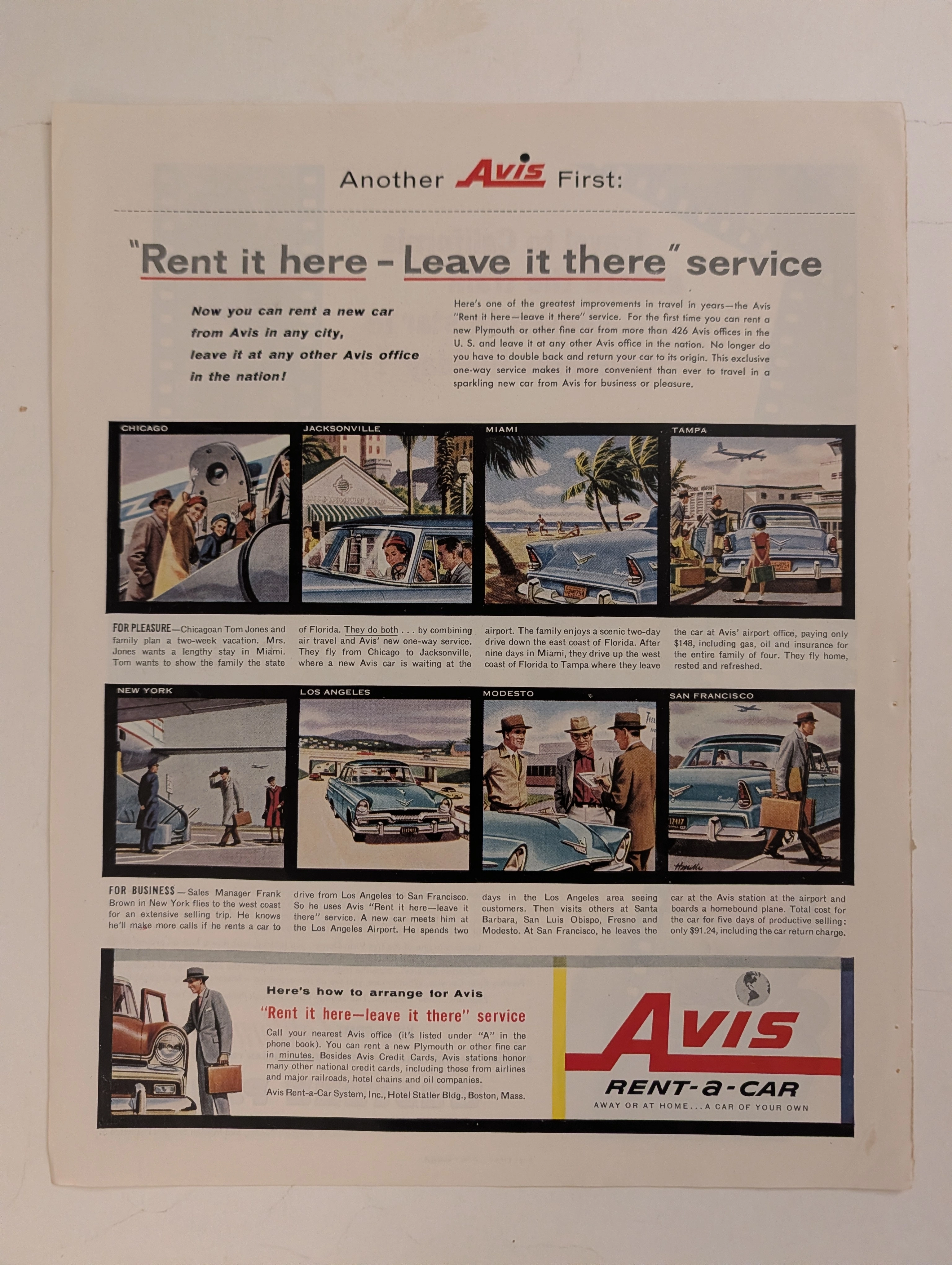
History is not merely recorded; it is engineered, paved, and conquered through the relentless expansion of commercial logistics. Long before digital networks rendered physical distances obsolete, and before the globalized travel infrastructure became a mundane background hum of modern life, the conquest of geography was executed through bold, capital-intensive logistical paradigms. The historical artifact before us is not merely a nostalgic mid-century magazine advertisement for a car rental agency. It is a perfectly weaponized blueprint of post-war American expansionism, a visual manifesto of the "fly-drive" revolution, and an unwavering testament to an era when mastering the vast North American continent was sold as the ultimate consumer luxury. ​This museum-grade, academic archival dossier presents an exhaustive deconstruction of a mid-1950s print advertisement for the Avis Rent-a-Car system, specifically introducing their groundbreaking "Rent it here - Leave it there" service. Operating on a profound, dual-narrative storyboard structure, this document records a calculated paradigm shift within the global travel and transportation industry. It captures the precise historical fracture where the American public conceptually transitioned from the localized, static constraints of pre-war rail and personal automobile travel into the hyper-mobile, fluid, and aerospace-integrated era of the 1950s. Through the highly specialized lens of late-analog commercial illustration and stringent visual forensics, this document serves as a masterclass in the psychological marketing of freedom and corporate efficiency. It established the foundational archetype for the modern, frictionless travel economy—an archetype that unconditionally dictates the logistical strategies of the global tourism and business travel sectors today.
THE TIME TRAVELER'S DOSSIER: HOLLYWOOD PROPAGANDA AND THE DAWN OF MULTIMEDIA SYNERGY

John Paul Jones · Entertainment

THE TIME TRAVELER'S DOSSIER: HOLLYWOOD PROPAGANDA AND THE DAWN OF MULTIMEDIA SYNERGY

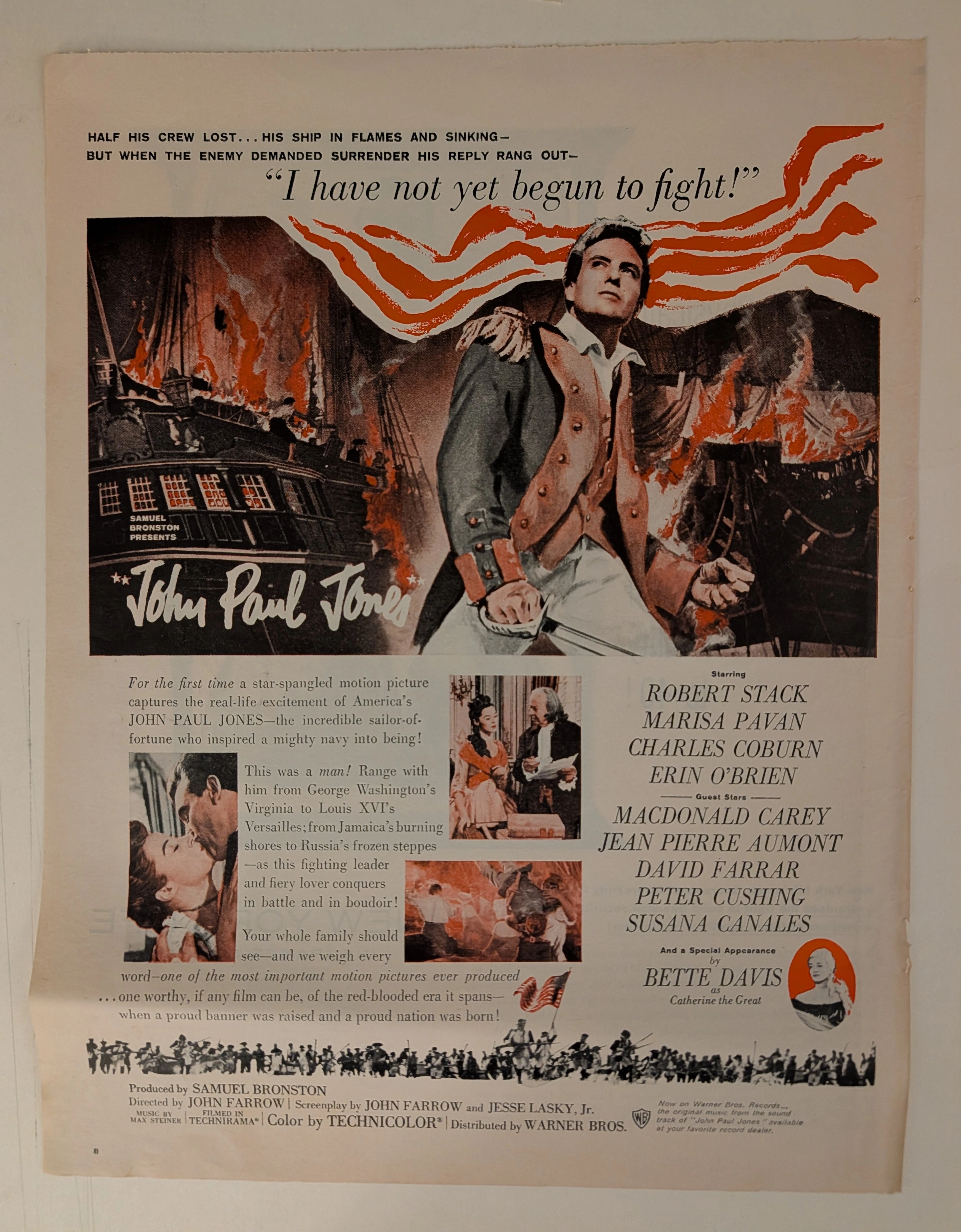
The artifact under exhaustive, uncompromising, and unprecedented museum-grade analysis is a remarkably preserved Historical Relic originating from the zenith of Hollywood's post-war epic era. This Primary Art Document is a monumental, full-page theatrical advertisement for the 1959 biographical epic "John Paul Jones", produced by the legendary independent film mogul Samuel Bronston and distributed by Warner Bros.. ​This is not merely a movie poster; it is a "Forensic Blueprint of Cold War American Nationalism and Multimedia Synergy." Released in 1959, at the height of the Cold War, the advertisement aggressively weaponizes the foundational mythos of the United States Navy. The commanding, blood-red headline, "I have not yet begun to fight!", serves as a psychological anchor, projecting unyielding American defiance to both domestic audiences and global adversaries. Visually dominated by the rugged, heroic portrait of Robert Stack, the ad expertly balances masculine wartime aggression with romantic subplots and diplomatic intrigue featuring Charles Coburn as Benjamin Franklin. Furthermore, it showcases elite Hollywood casting power by explicitly highlighting a "Special Appearance by Bette Davis as Catherine the Great" in a striking red cameo vignette. ​Crucially, this artifact documents an early, masterful execution of cross-platform corporate synergy. The bottom corner explicitly markets the original Max Steiner soundtrack on Warner Bros. Records, proving that the commercialization of the "Original Motion Picture Soundtrack" was already highly codified. ​Rescued from the inevitable oblivion of disposable entertainment media, this pre-2000s analog artifact is a breathtaking embodiment of the Japanese aesthetic of wabi-sabi. Printed on inherently acidic mid-century wood-pulp paper, it exhibits beautifully authentic edge wear and a profound, warm amber oxidation across its surface. This unstoppable molecular death transforms a mass-produced piece of Hollywood propaganda into an irreplaceable, ready-to-frame Primary Art Document of cinematic and sociological history.
The Time Traveller's Dossier: The Color Revolution – The 1968 Zenith Handcrafted Golden Jubilee and the Generational Shift in Consumer Electronics

The Time Traveller's Dossier: The Color Revolution – The 1968 Zenith Handcrafted Golden Jubilee and the Generational Shift in Consumer Electronics

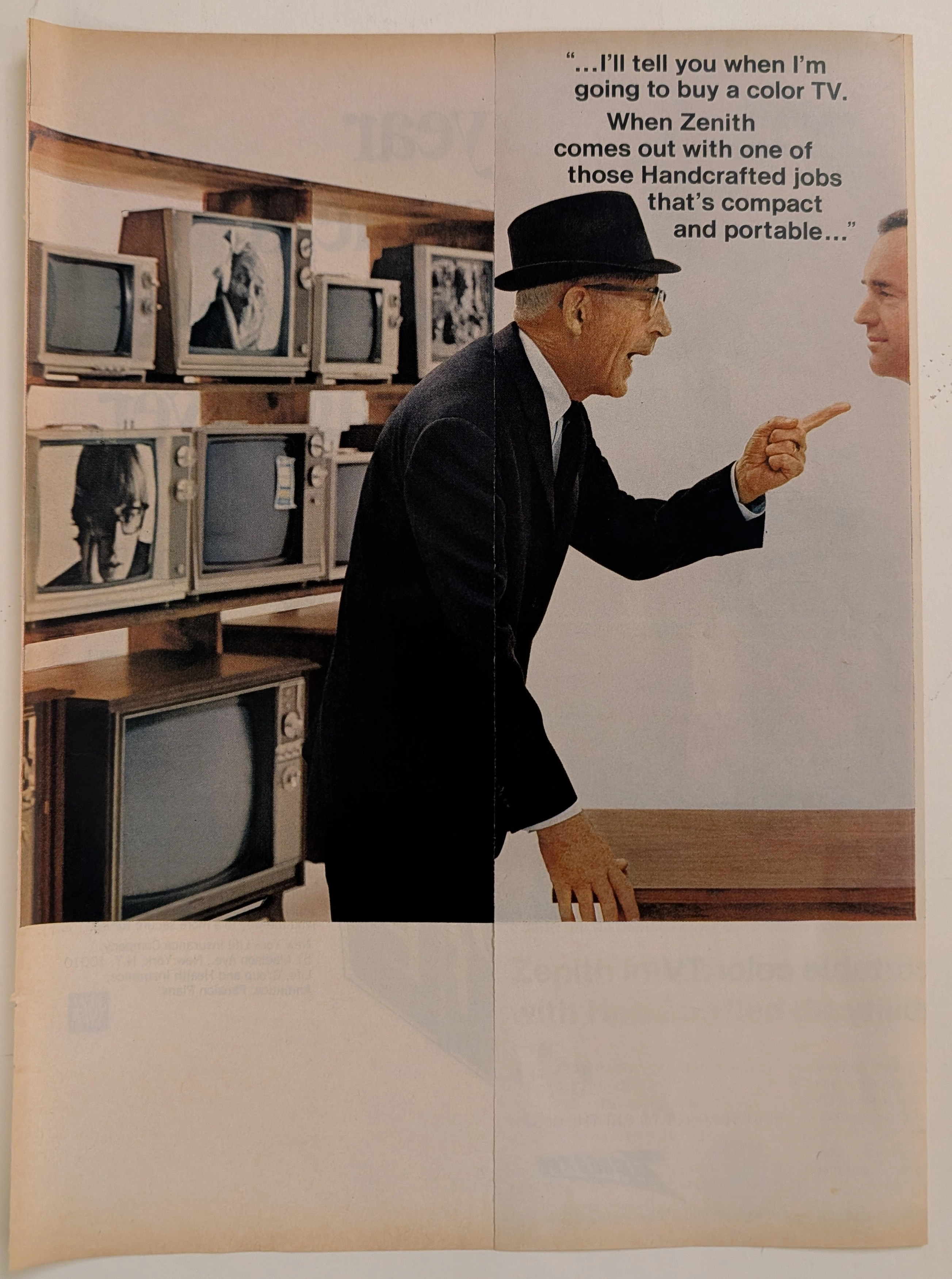
The evolution of the mid-twentieth-century American living room was fundamentally defined by the rapid, fiercely competitive technological arms race in consumer electronics. The historical artifact elegantly and securely positioned upon the analytical table of The Record Institute today is a striking, two-page centerfold print advertisement for the 1968 Zenith 14" Portable Color TV, originating from a highly transformative era in global broadcasting. This document completely transcends the standard, utilitarian boundaries of appliance marketing. It operates as a highly sophisticated, multi-layered cultural mirror, reflecting the precise era when American manufacturers had to psychologically persuade a cautious, older generation to adopt a radically new, expensive technology by anchoring it to traditional concepts of craftsmanship and reliability. This world-class, comprehensive dossier conducts a meticulous, unyielding, and exceptionally exhaustive examination of the artifact, operating under the absolute most rigorous parameters of historical, sociological, and material science evaluation. Dedicating the overwhelming majority of our analytical focus to its immense historical gravity, we will decode the brilliant marketing psychology embedded within the multi-page narrative of the "skeptical buyer," analyze the sociopolitical impact of Zenith's "Handcrafted" manufacturing philosophy during the rise of automation, and dissect the profound cultural semiotics of broadcasting the American pastime—baseball—in vivid color. Furthermore, as we venture deeply into the chemical and physical foundations of this analog printed ephemera, we will reveal the precise mechanical fingerprints of the CMYK halftone rosettes captured in the macro imagery of the television screen and corporate logos. Finally, we will assess its archival rarity, exploring how the graceful, natural oxidation of the paper substrate cultivates a serene wabi-sabi aesthetic—a natural, irreversible phenomenon that serves as the primary engine driving up its market value exponentially within the elite global spheres of Vintage Commercial Ephemera and Technology Archives.
Published by

The Record Institute

Taxonomy Match

Related Articles

The Time Traveller's Dossier: The Wide-Track Illusion – The 1968 Pontiac Grand Prix Exhibition — related article
Read Article

The Time Traveller's Dossier: The Wide-Track Illusion – The 1968 Pontiac Grand Prix Exhibition

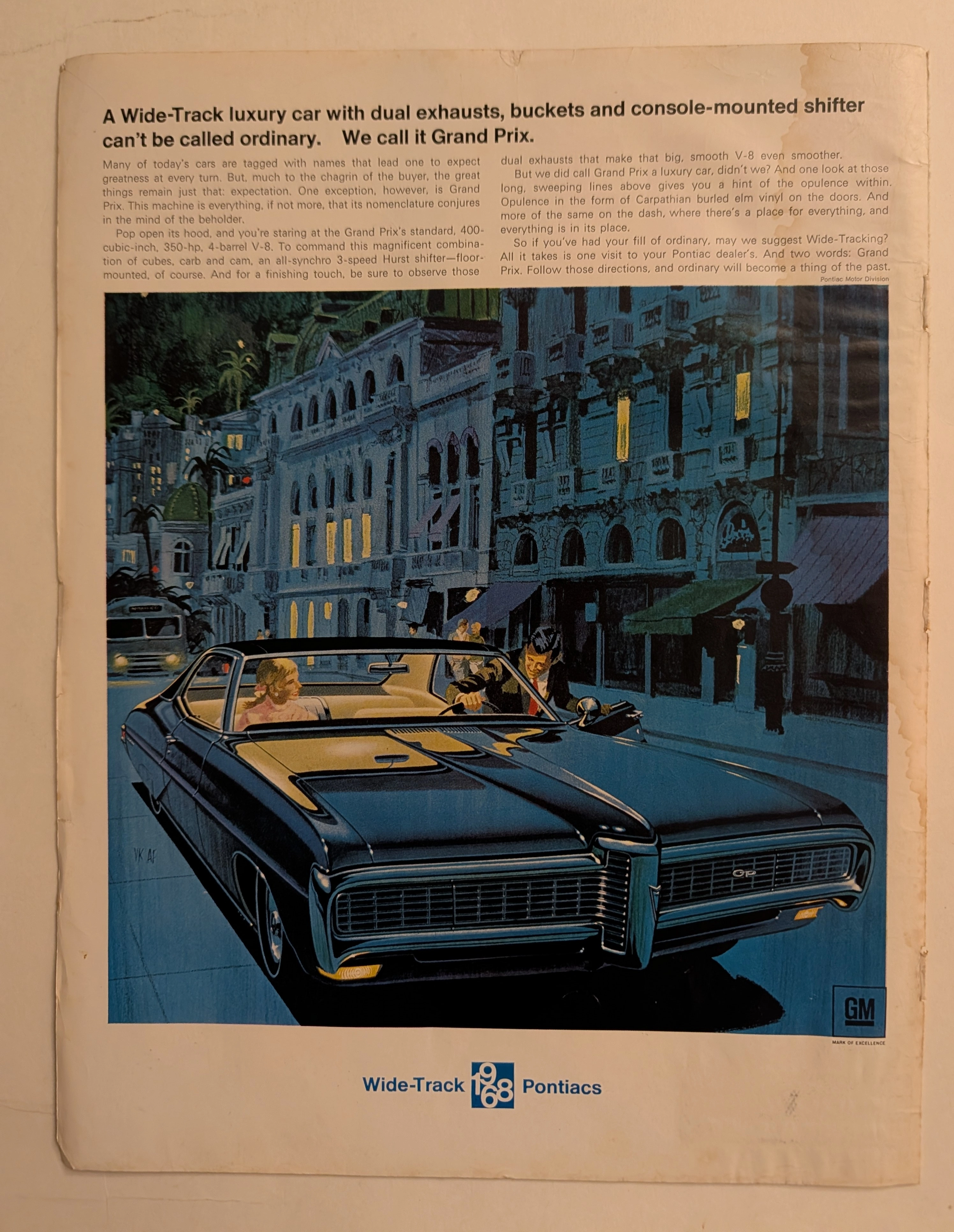
The automobile in mid-twentieth-century America was never merely a utilitarian mode of transportation; it was a profound, rolling projection of identity, aspiration, and social status. The historical artifact elegantly and securely positioned upon the analytical table of The Record Institute today is a majestic, full-page print advertisement for the 1968 Pontiac Grand Prix, originating from the golden age of American muscle and luxury. This document completely transcends the traditional boundaries of automotive marketing. It operates as a highly sophisticated cultural mirror, reflecting the exact moment when Detroit automakers successfully blended brutal mechanical horsepower with the cosmopolitan allure of the European jet set on a single printed page. This world-class, comprehensive dossier conducts a meticulous, unyielding, and exceptionally deep examination of the artifact, operating under the absolute most rigorous parameters of historical, sociological, and material science evaluation. We will decode the brilliant "Wide-Track" advertising strategy that saved the Pontiac division, analyze the legendary artistic collaboration that defined an entire era of commercial illustration, and dissect the rich, aspirational semiotics embedded within the twilight European street scene. Furthermore, as we venture deeply into the chemical and physical foundations of this analog printed ephemera, we will reveal the precise mechanical fingerprints of the CMYK halftone rosettes and the graceful, natural oxidation of the paper substrate. This precise intersection of visual nostalgia, mid-century commercial artistry, and the immutable chemistry of time cultivates a serene wabi-sabi aesthetic—a natural, irreversible phenomenon that serves as the primary engine driving up its market value exponentially within the elite global spheres of Vintage Automotive Ephemera and Commercial Art collecting.

The Time Traveller's Dossier: The Oil Baron's Chariot – 1970s "HOU$TON" Editorial Illustration — related article
Read Article

The Time Traveller's Dossier: The Oil Baron's Chariot – 1970s "HOU$TON" Editorial Illustration

History is not written; it is printed. Before digital algorithms dictated human behavior, societal engineering was executed through the calculated geometry of the four-color offset press. The historical artifact before us is not merely a magazine editorial illustration; it is a weaponized blueprint of American myth-making and a testament to the era of unchecked petro-wealth. This museum-grade archival dossier presents an academic deconstruction of a 1970s print feature on Houston, Texas, brilliantly illustrated by the legendary Eraldo Carugati. Operating on a profound binary structure, it documents a calculated paradigm shift in the global perception of wealth. It illustrates the precise historical fracture where the "Texas Oil Boom" transitioned from a regional economic event into a larger-than-life cultural archetype. Through the lens of late-analog commercial artistry and precise visual forensics, this document serves as a masterclass in psychological semiotics, establishing the visual tropes of the brash, high-rolling American Wildcatter that unconditionally dominates modern pop culture.

The Time Traveller's Dossier: The Architecture of Masculine Dominance – Pierre Cardin Editorial Illustration (Circa 1980s) — related article
Read Article

The Time Traveller's Dossier: The Architecture of Masculine Dominance – Pierre Cardin Editorial Illustration (Circa 1980s)

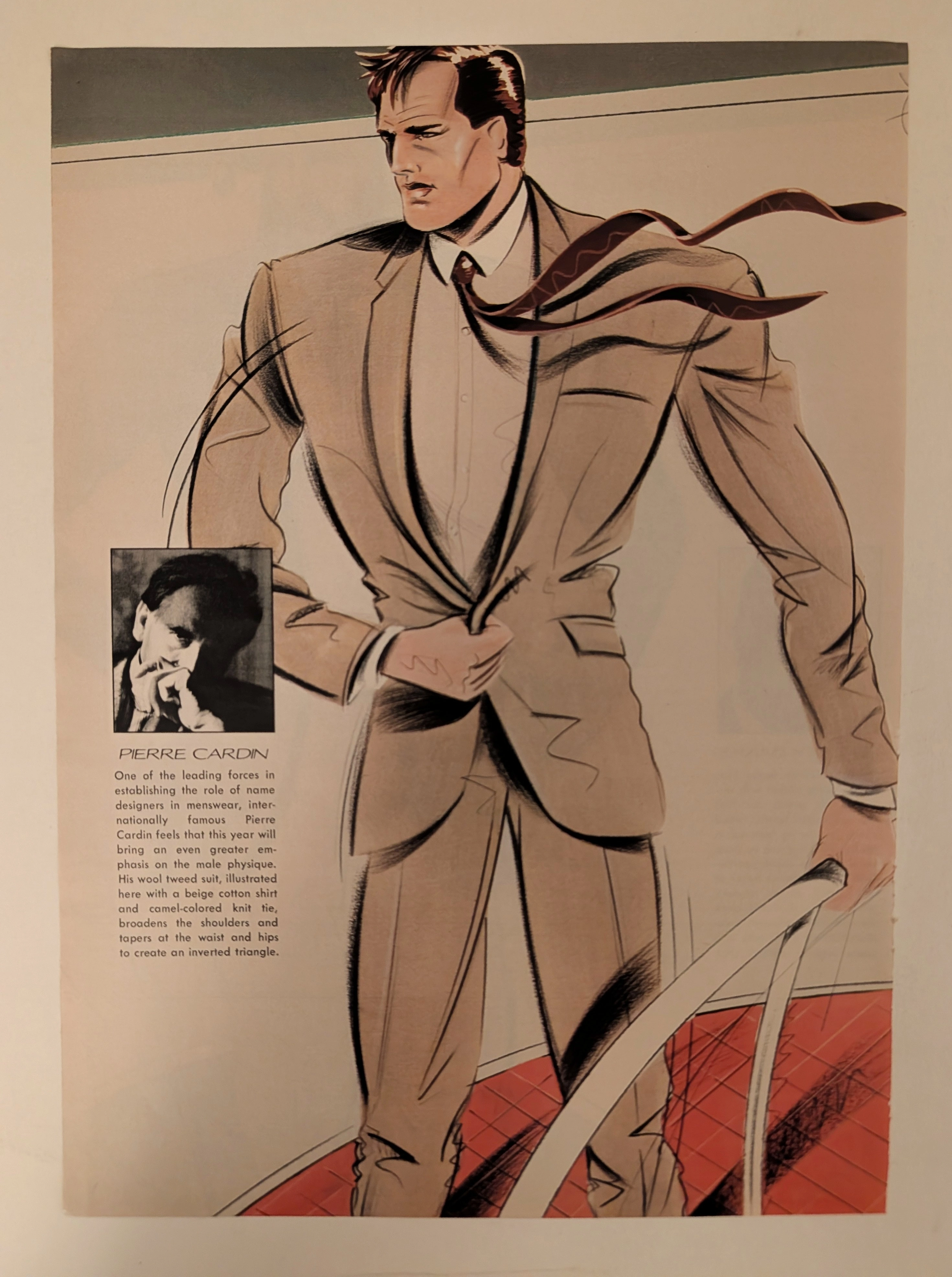
History is not merely written; it is tailored, draped, and aggressively padded at the shoulders. Long before digital algorithms dictated the sterile parameters of modern menswear, and before the casualization of the corporate wardrobe stripped the modern executive of his sartorial armor, societal engineering was executed through the calculated geometry of the designer suit. The historical artifact before us is not a mere disposable magazine tear sheet; it is a perfectly weaponized blueprint of 1980s hyper-masculinity, a visual manifesto of corporate dominance, and an unwavering testament to an era when clothing was utilized as a tool for physical and psychological intimidation. ​This museum-grade, academic archival dossier presents an exhaustive deconstruction of a late-analog editorial illustration featuring the revolutionary menswear of Pierre Cardin, dating to the pivotal "Power Suit" era of the 1980s. Operating on a profound, ruthless binary structure, this document records a calculated paradigm shift within the global fashion industry. It captures the precise historical fracture where menswear transitioned conceptually from the conservative, conformity-driven "Organization Man" of the mid-20th century into the aggressive, space-commanding "Power Broker" of the 1980s. Through the highly specialized lens of late-analog commercial artistry and stringent visual forensics, this document serves as a masterclass in the psychological marketing of gender and power. It established the foundational archetype for the modern, alpha-male aesthetic—an archetype that unconditionally dictates the visual and strategic totems of corporate dominance even today.

The Time Traveller's Dossier: The Alchemy of Royal Rebellion – Drambuie "Bonnie Prince Charlie" Advertisement (Circa Mid-20th Century) — related article
Read Article

The Time Traveller's Dossier: The Alchemy of Royal Rebellion – Drambuie "Bonnie Prince Charlie" Advertisement (Circa Mid-20th Century)

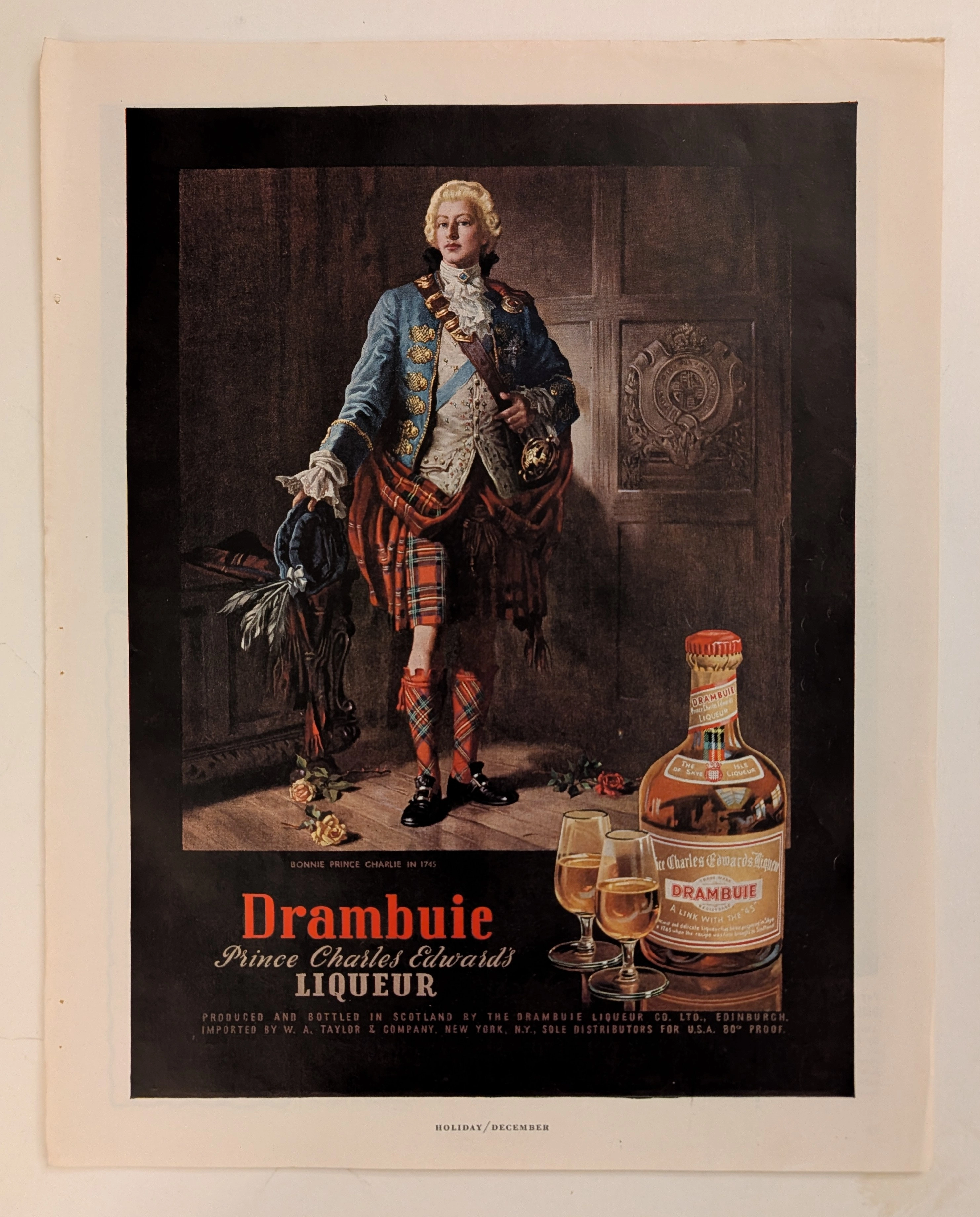
History is rarely an objective chronicle of facts; it is a malleable narrative, continually rewritten, romanticized, and ultimately weaponized by those seeking to legitimize their power or, in the modern era, their products. Long before digital algorithms could synthesize artificial heritage, the supreme manifestation of corporate alchemy was executed through the calculated precision of the four-color offset press and the appropriation of historical iconography. The artifact presented before us is not merely a vintage magazine tear sheet selling a Scottish liqueur. It is a masterclass in the commodification of myth, a visual distillation of romantic rebellion, and a foundational blueprint for what is now known as "Heritage Branding." This museum-grade, academic archival dossier presents an exhaustive, microscopic deconstruction of a mid-20th-century print advertisement for Drambuie Liqueur. Operating on a profound binary structure, this document records a calculated paradigm shift within the global spirits industry. It captures the precise historical fracture where a highly specific, geographically isolated alcoholic beverage was conceptually transmuted into a literal draught of royal rebellion and aristocratic romance. Through the highly specialized lens of late-analog commercial artistry and stringent visual forensics, this document serves as a masterclass in psychological marketing. It established the foundational archetype for linking the consumption of a physical product with the ingestion of an epic, historical fantasy—an archetype that unconditionally dictates the visual and strategic totems of the modern luxury spirits industry today.

The Time Traveller's Dossier: The Masterpiece of Architectural Anatomy – The White House Isometric Cutaway Artifact (Circa 1960s) — related article
Read Article

The Time Traveller's Dossier: The Masterpiece of Architectural Anatomy – The White House Isometric Cutaway Artifact (Circa 1960s)

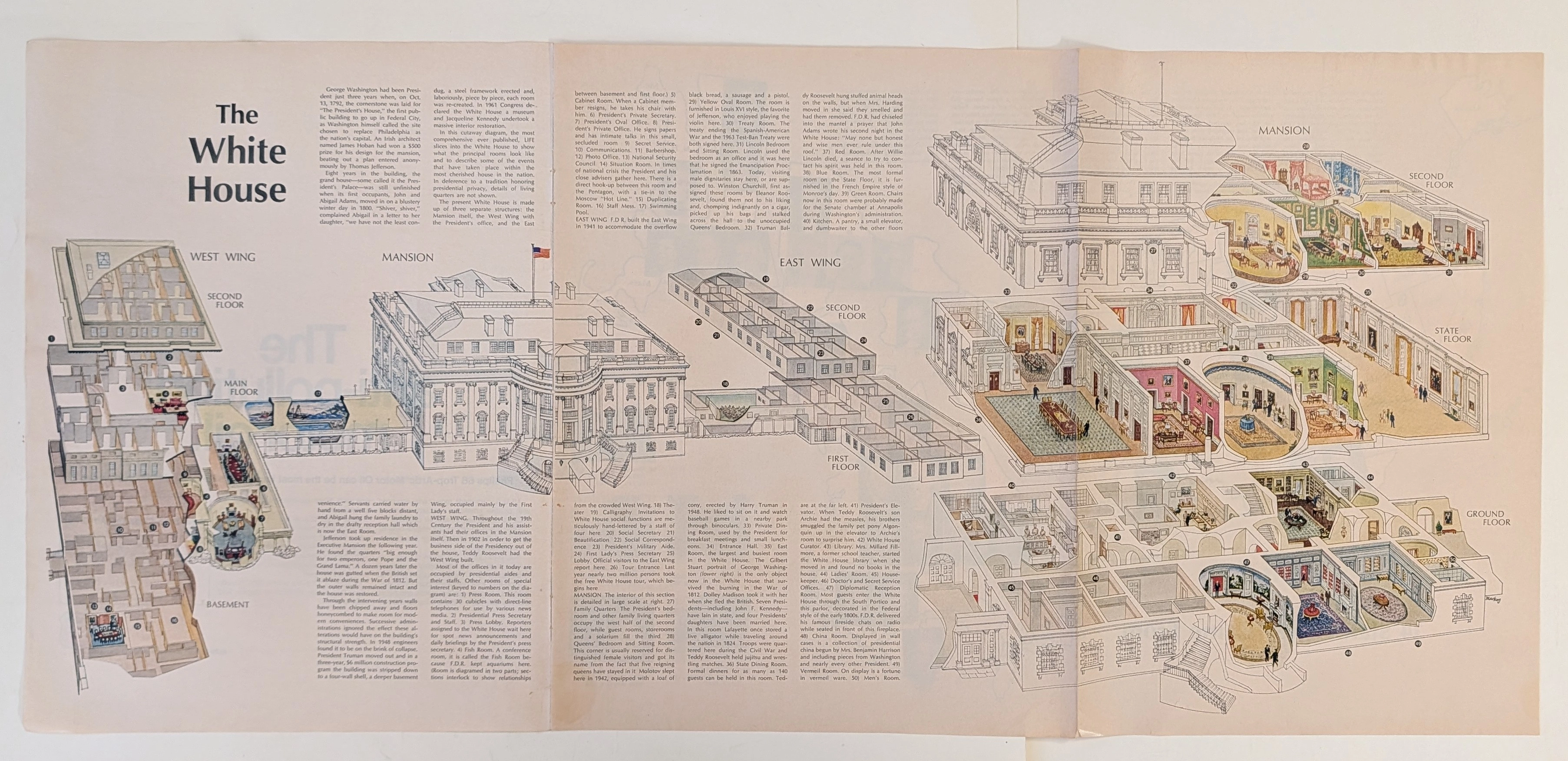
The documentation of monumental architecture represents one of the most profound intersections of art, engineering, and historical preservation. Long before the advent of digital rendering software, computer-aided design (CAD), or virtual three-dimensional modeling, the supreme manifestation of structural visualization was executed through the calculated, mathematically rigorous discipline of the isometric cross-section. The historical artifact presented before us for analysis is not merely an educational fold-out extracted from a mid-20th-century mass-market publication. It is an absolute triumph of commercial illustration and draftsmanship, offering a meticulous visual dissection of one of the most famous residential structures on the globe. This museum-grade, academic archival dossier presents an exhaustive, microscopic deconstruction of this mid-century isometric cutaway diagram. Operating on a profound structural and spatial logic, this document completely strips away the iconic neoclassical exterior facade to reveal a masterful, dollhouse-like cross-section of interior design, historical room layouts, and underlying spatial engineering. It captures a precise historical era in publishing when complex architectural topographies were translated into highly accessible, visually thrilling infographics designed for public education. Through the highly specialized lens of late-analog commercial artistry, architectural history, and stringent visual forensics, this document serves as a masterclass in spatial communication. It establishes the foundational archetype for educational diagrams—an archetype that dictates the visual standards of modern architectural encyclopedias today, executed with a level of handcrafted precision that modern digital tools strive to emulate.

The Time Traveller's Dossier: The Instant Gratification Protocol – The Polaroid Color Pack Camera Exhibitio — related article
Read Article

The Time Traveller's Dossier: The Instant Gratification Protocol – The Polaroid Color Pack Camera Exhibitio

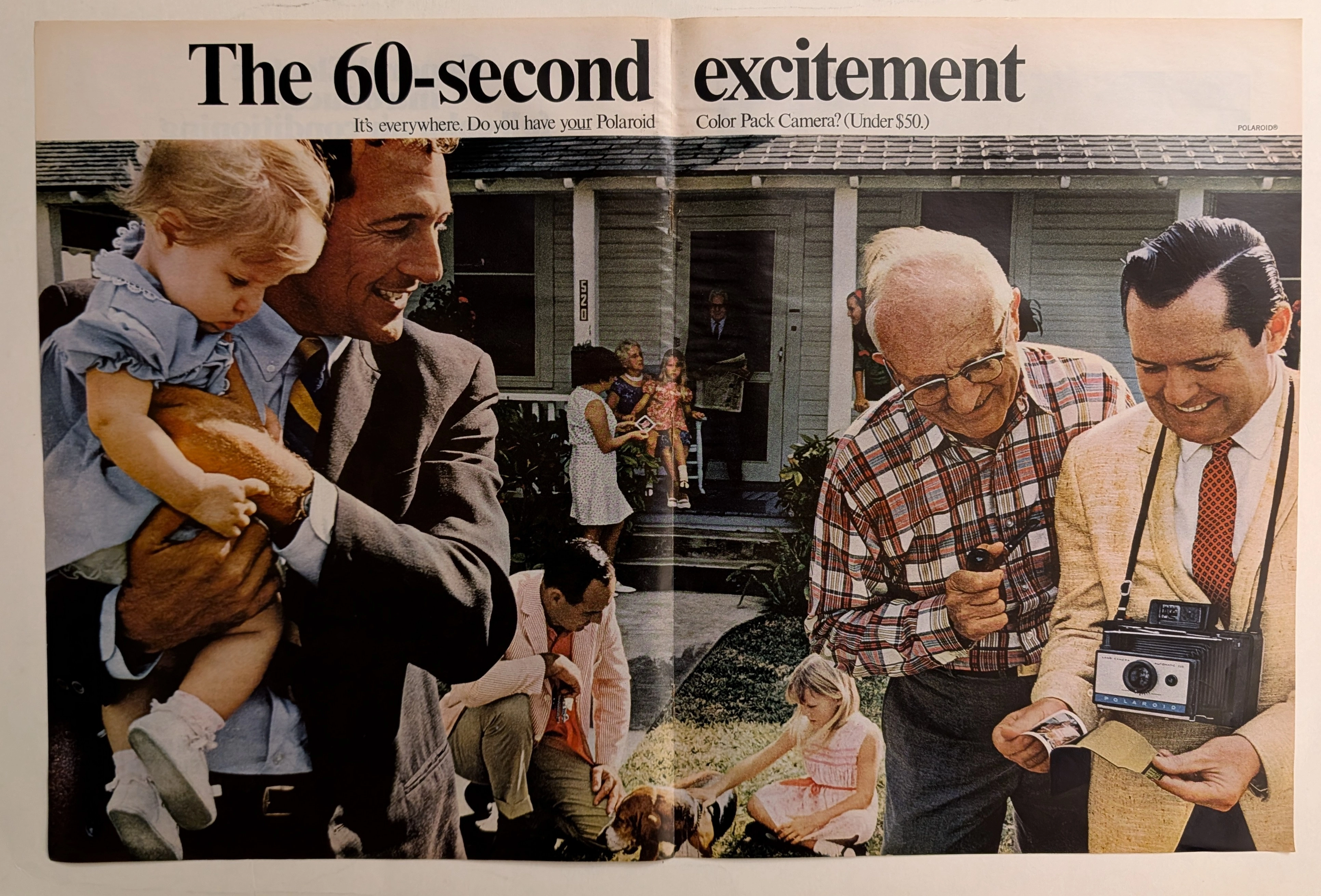
The evolution of photography from a delayed, solitary, and highly technical chemical process into an instantaneous, shared, and interactive social event stands as one of the most profound technological and sociological shifts of the twentieth century. The historical artifact securely and elegantly positioned upon the analytical table of The Record Institute today is a majestic, large-format, two-page print advertisement for the Polaroid Color Pack Camera (Automatic 210), originating from the cultural zenith of the late 1960s. This document completely transcends the traditional boundaries of camera marketing and consumer electronics promotion. It operates as a sophisticated, multi-layered declaration of how optical innovation fundamentally altered human interaction, transforming the act of taking a photograph from a mere recording of memory into an active, thrilling focal point of social gatherings and familial bonding. This world-class, comprehensive dossier conducts a meticulous, unyielding, and exceptionally deep examination of the artifact, operating under the absolute most rigorous parameters of historical, sociopolitical, and material science evaluation. We will decode the vibrant, multi-generational suburban scene that perfectly encapsulates the "60-second excitement" phenomenon, analyzing the complex historical lineage of the Polaroid Corporation and the specific cultural impact of the Automatic 210 model. Furthermore, as we venture deeply into the chemical and physical foundations of this analog printed ephemera, we will reveal the precise mechanical fingerprints of the CMYK halftone rosettes and the graceful, natural oxidation of the paper substrate. This precise intersection of visual nostalgia, mid-century commercial artistry, and the immutable chemistry of time cultivates a serene wabi-sabi aesthetic—a natural, irreversible phenomenon that serves as the primary engine driving up its market value exponentially within the elite global spheres of Vintage Photography Ephemera and Americana collecting.