Vintage PRAYBOY 1984 Cover: The Vanishing Analog Satire | The Record
The History
PRAYBOY: THE SATIRICAL MASTERPIECE
When Sanctity Met Satire in the 1980s
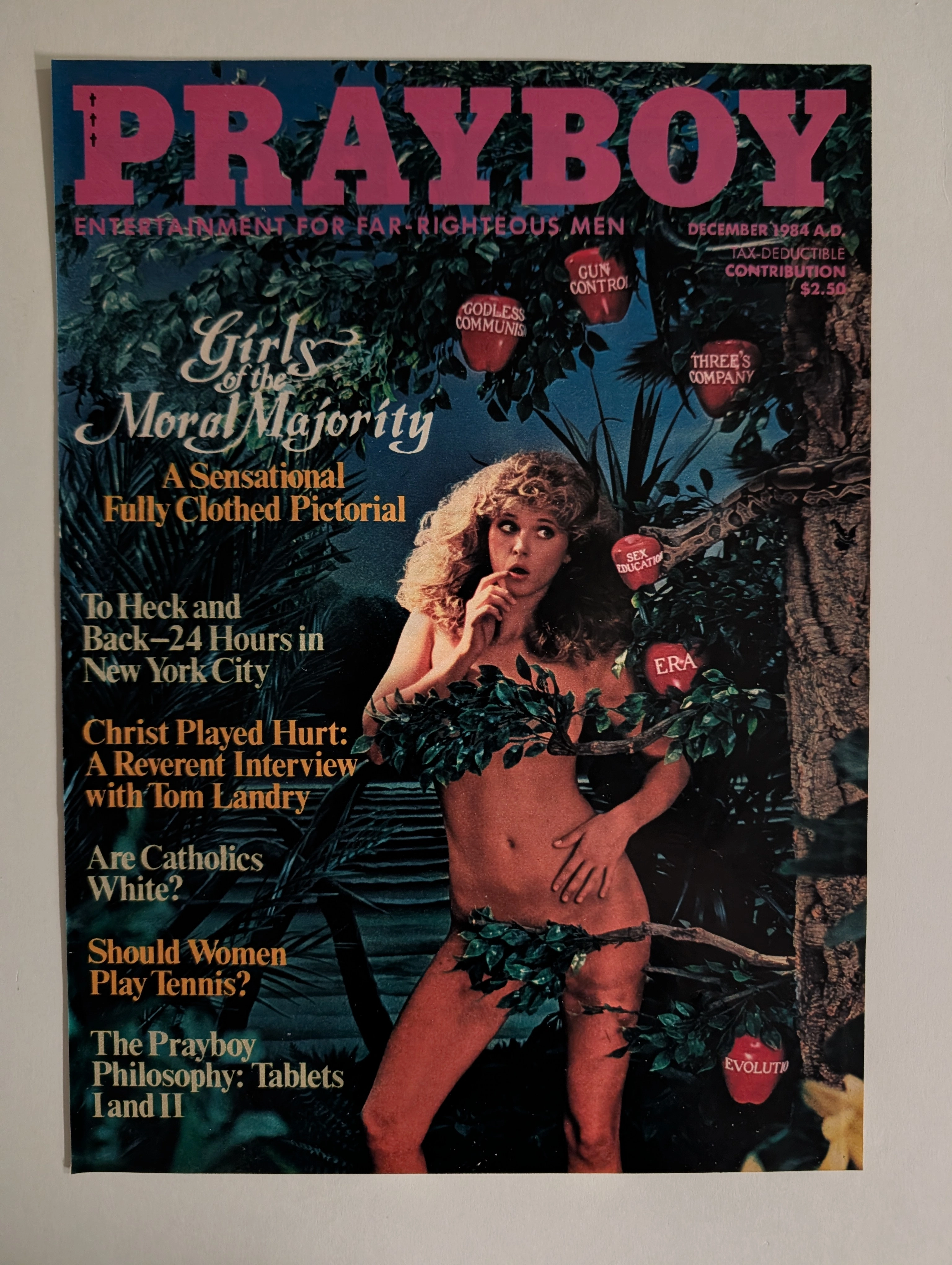
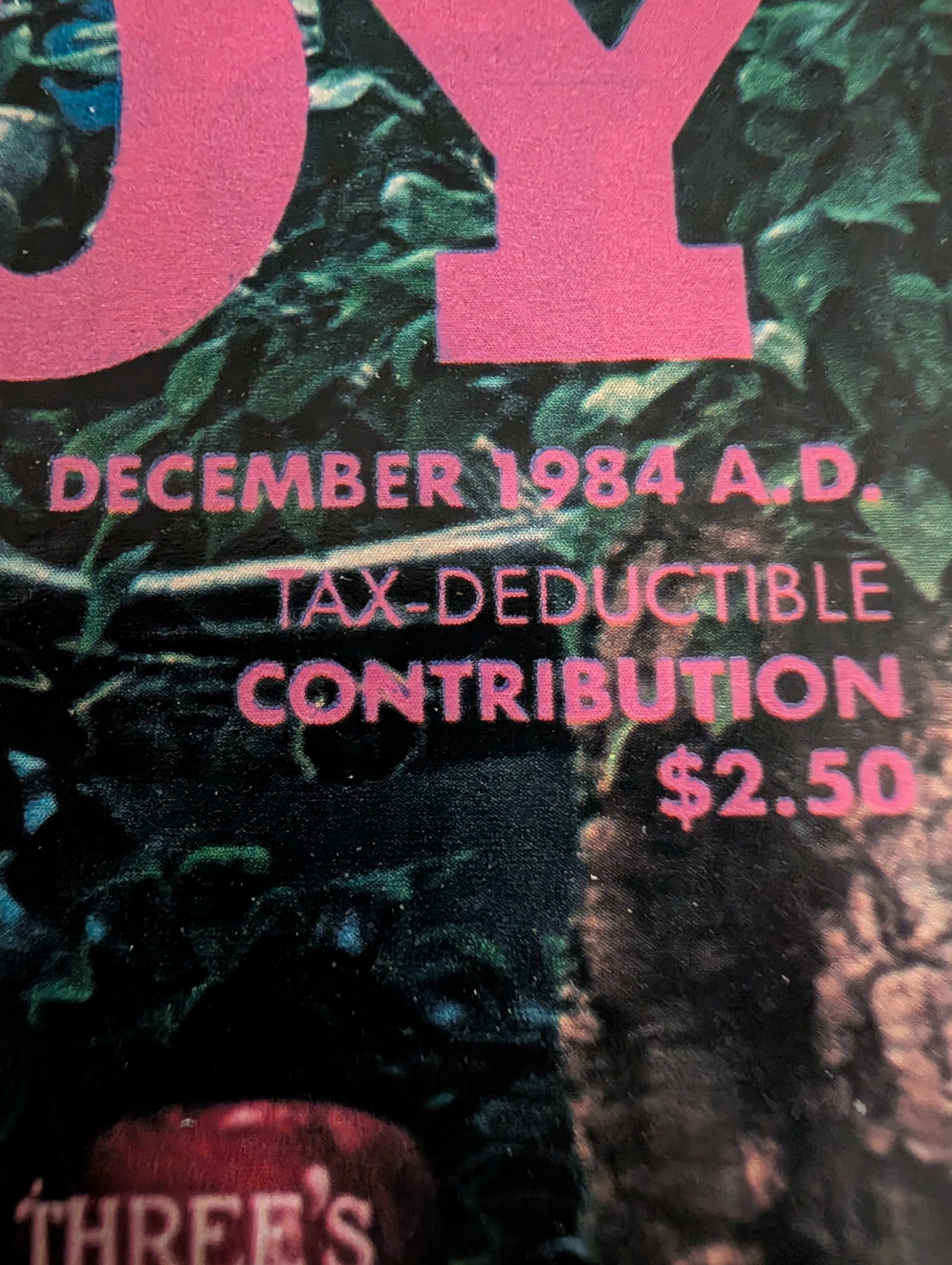
This is not a conventional magazine cover; it is a "Museum Grade Artifact" of 1980s cultural rebellion. The December 1984 issue of "PRAYBOY" (Entertainment for Far-Righteous Men) is a brilliant, biting parody of Playboy, mocking the extreme conservative "Moral Majority" of the era. This magazine-sized analog print is a fading piece of bold historical satire.
🏛️ CHAPTER I: THE HISTORY OF REBELLION & SATIRE
The Cultural Clash: In the 1980s, right-wing religious conservatism was a dominant political force in the US. This cover fearlessly parodies those ideals, featuring Eve attempting to cover herself under the headline "Girls of the Moral Majority: A Sensational Fully Clothed Pictorial." The apples of sin are labeled with the era's hot-button issues like "EVOLUTION," "GUN CONTROL," and "SEX EDUCATION."
📷 CHAPTER II: THE GOLDEN AGE OF ANALOG CRAFTSMANSHIP
Practical Set Design: Created pre-Photoshop, this required masterful studio photography and art direction. The lighting simulating moonlight, the placement of the artificial Eden, and the hand-painted typography on real apples were all physical, analog accomplishments captured on film.
⏳ CHAPTER III: THE FRAGILITY OF HISTORY & PAPER DEGRADATION
The Chemistry of Decay: Pre-2000 paper contains Lignin, which oxidizes over time. This page is literally consuming itself through acidic autocatalysis. Its survival over 40 years gives it a beautiful, natural patina that authenticates its museum-grade status.
📈 CHAPTER IV: THE ECONOMICS OF SCARCITY
Niche Scarcity: Parody publications had drastically lower print runs than mainstream media. Combined with the daily destruction of vintage paper by the elements, this magazine-sized original print has evolved into a highly scarce Alternative Asset for any sophisticated home art gallery.
The Archive Continues
Continue the Exploration
Vintage 70s Crown Royal Ad: Vanishing Analog Art | The Record
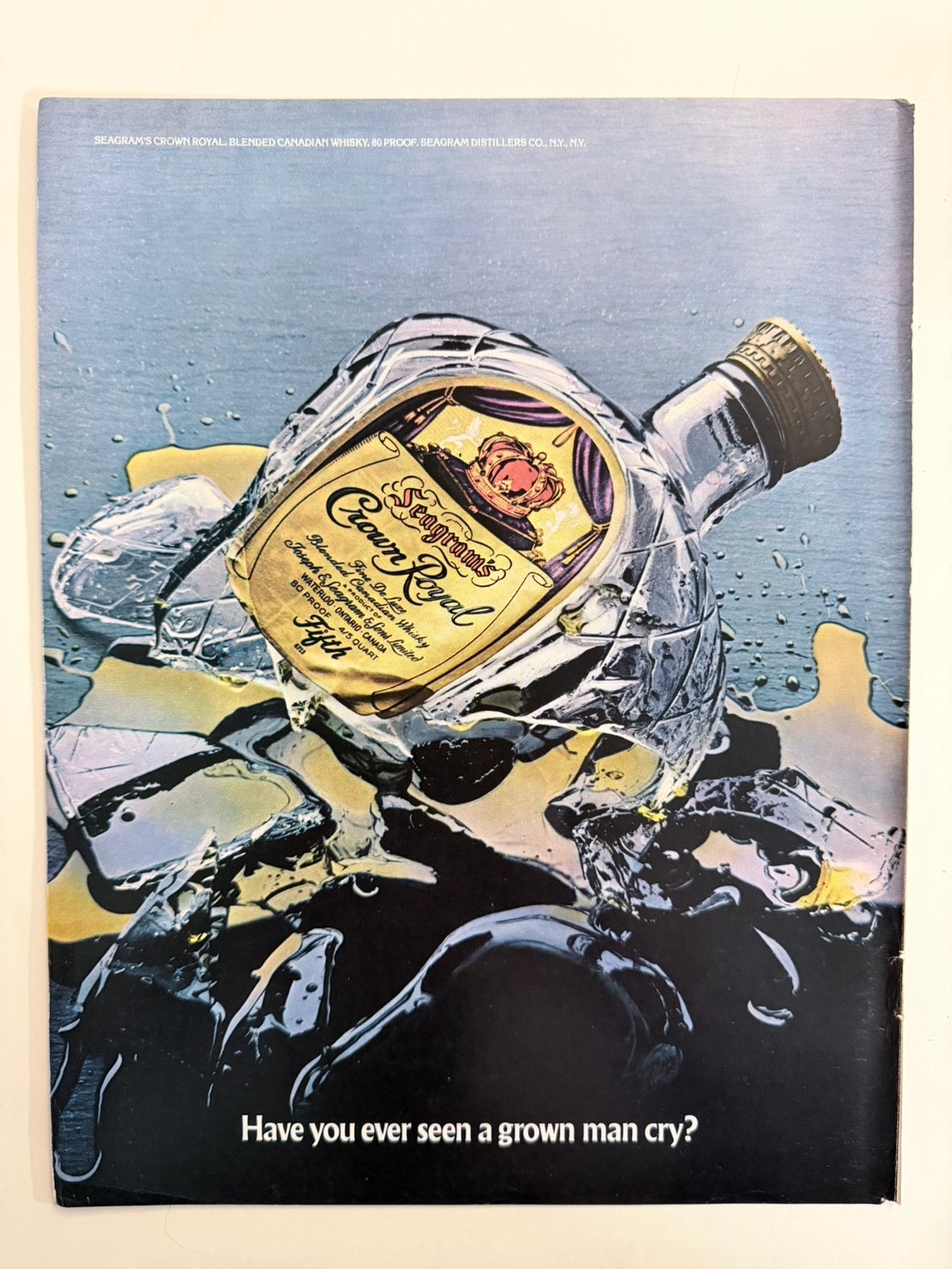
An in-depth look at the priceless 1970s Crown Royal "Have you ever seen a grown man cry?" advertisement. A masterpiece of authentic analog photography on degrading vintage paper, driving up the value of this original print as global supply inevitably shrinks.
PAN AMERICAN WORLD AIRWAYS · Travel
THE TIME TRAVELER'S DOSSIER: PAN AM - THE ARCHITECTURE OF THE AMERICAN TOURIST
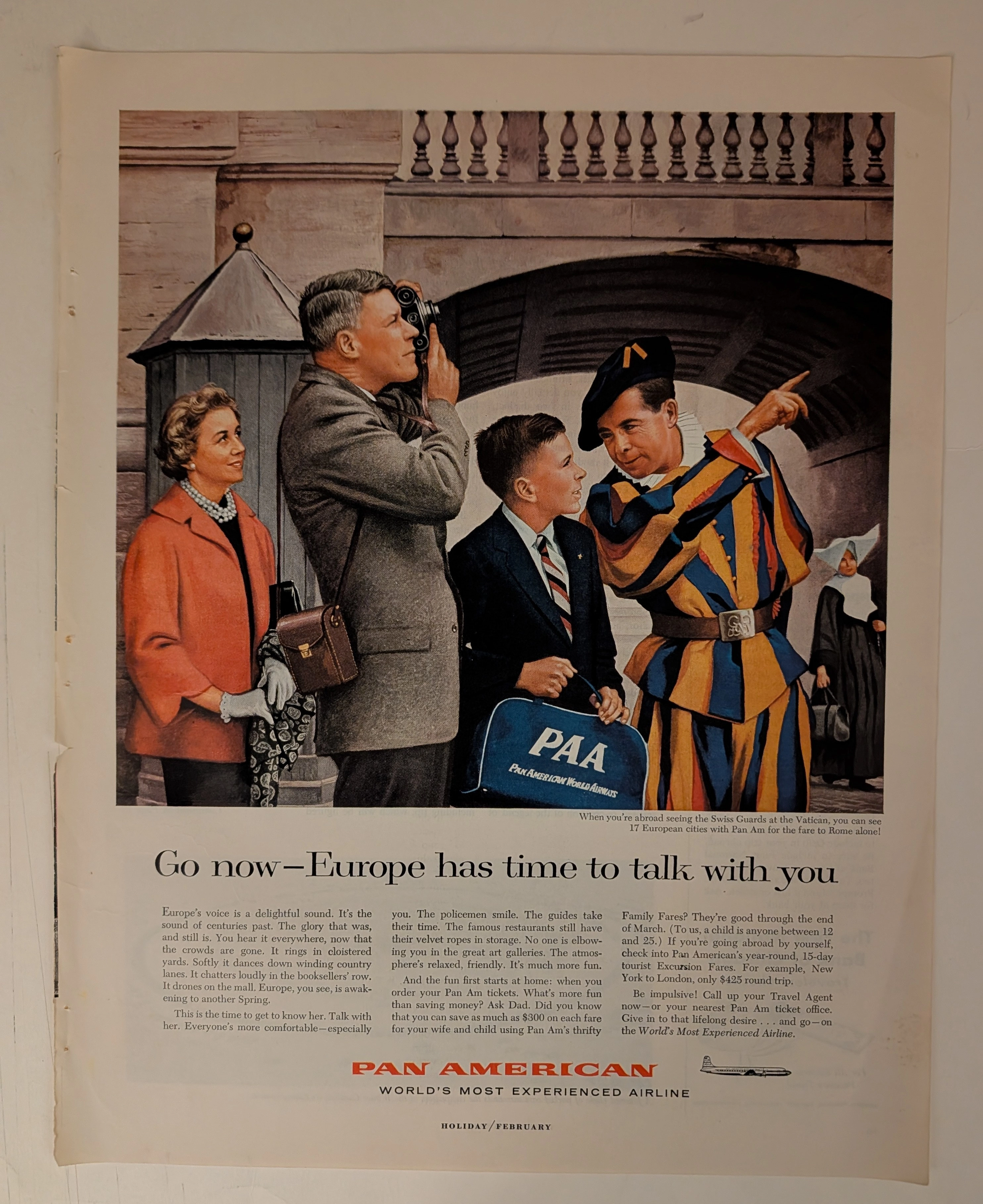
The artifact currently subjected to our uncompromising, museum-grade analysis is a profoundly preserved Historical Relic excavated from the zenith of mid-century American aviation prosperity. This Primary Art Document is a full-page magazine advertisement for Pan American World Airways. Functioning as a "Forensic Blueprint of the American Leisure Class Abroad," the document masterfully weaponizes European heritage and history to validate the affluent, off-season travel of post-war American consumers. Its historical context is irrefutably anchored by the microscopic silhouette of a Douglas DC-7B aircraft, placing this artifact squarely in the twilight of the propeller age, just before the dawn of the Boeing 707 jet era. Grounded by extreme macro details of the iconic PAA flight bag, the bold corporate typography, and the breathtaking wabi-sabi chemical degradation highlighted by its violently torn binding edge, this artifact commands an irreplaceable status, cementing its Rarity Class S designation as a masterpiece of corporate sociological engineering.
THE TIME TRAVELER'S DOSSIER: THE MAGIC OF COLOR AND THE REVOLUTION OF HUMAN MEMORY
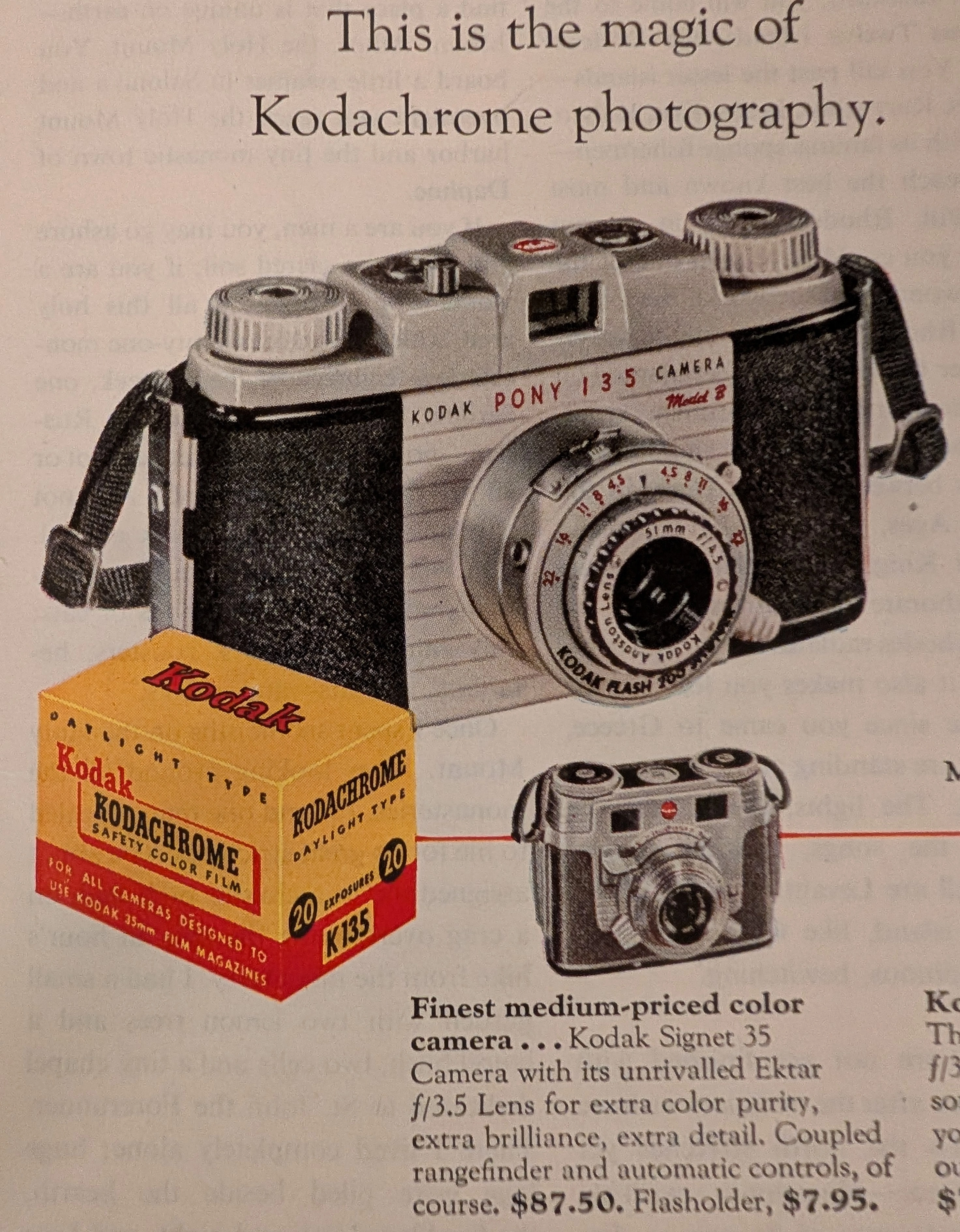
The artifact under exhaustive, uncompromising, and unprecedented museum-grade analysis is an exceptionally preserved Historical Relic originating from the absolute golden age of mid-century American consumer technology. This Primary Art Document is a monumental, full-page advertisement for Eastman Kodak Company, specifically promoting the legendary Kodachrome Film and its ecosystem of 35mm miniature cameras. Based on the featured camera models—the Kodak Pony 135 Model B, the Kodak Signet 35, and the Bantam RF—this artifact is forensically dated to the mid-1950s, specifically circa 1954–1955, extracted from a June issue of HOLIDAY magazine. This is not a mere camera advertisement; it is a profound "Sociological Blueprint of the Post-War American Dream." The headline, "This is the magic of Kodachrome Photography", encapsulates the technological democratization of color memory. Prior to this era, color photography was the exclusive domain of elite professionals. Kodachrome, with its iconic yellow and red box, transformed ordinary suburbanites into archivists of their own vibrant lives. The ad brilliantly sells not just hardware, but a deeply emotional ritual: the "home screen" slide projection. Visually anchored by the hyper-realistic red cardboard mount of the "KODACHROME TRANSPARENCY", the document is a masterclass in aspirational marketing. Rescued from the inevitable oblivion of disposable mass media, this pre-2000s analog artifact is a breathtaking embodiment of the Japanese aesthetic of wabi-sabi. Printed on inherently acidic wood-pulp paper, it exhibits a beautifully authentic jagged left binding edge, microscopic structural creasing, and a profound, warm amber oxidation across its entire surface. This unstoppable molecular death transforms a piece of mass-produced corporate propaganda into an irreplaceable, ready-to-frame Primary Art Document of photographic and sociological history.