THE TIME TRAVELER'S DOSSIER: THE STRATOSPHERIC MANSION AND THE AESTHETICS OF DECAY
The History
( THE HISTORY: The Jet Age War, Aristocratic Architecture, and the Authority of the Stewardess )
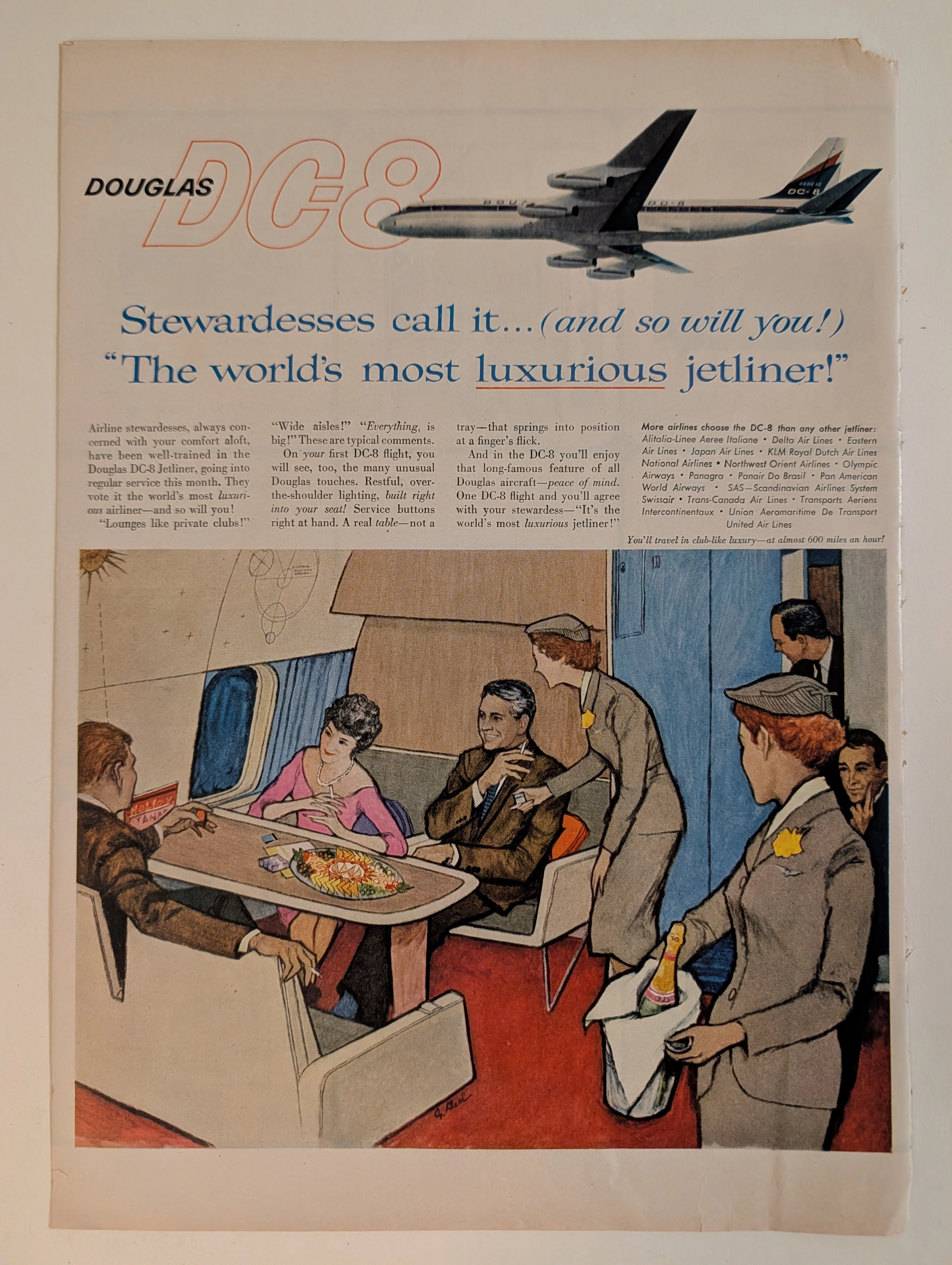
As the Chief Curator of The Record, I welcome you to the absolute stratosphere of mid-century capitalist ambition. The flawlessly preserved Historical Relic before you is not a mere aviation advertisement. It is a "Blueprint of Stratospheric Segregation," engineered during the most pivotal juncture in commercial aviation history: The Dawn of the Jet Age.
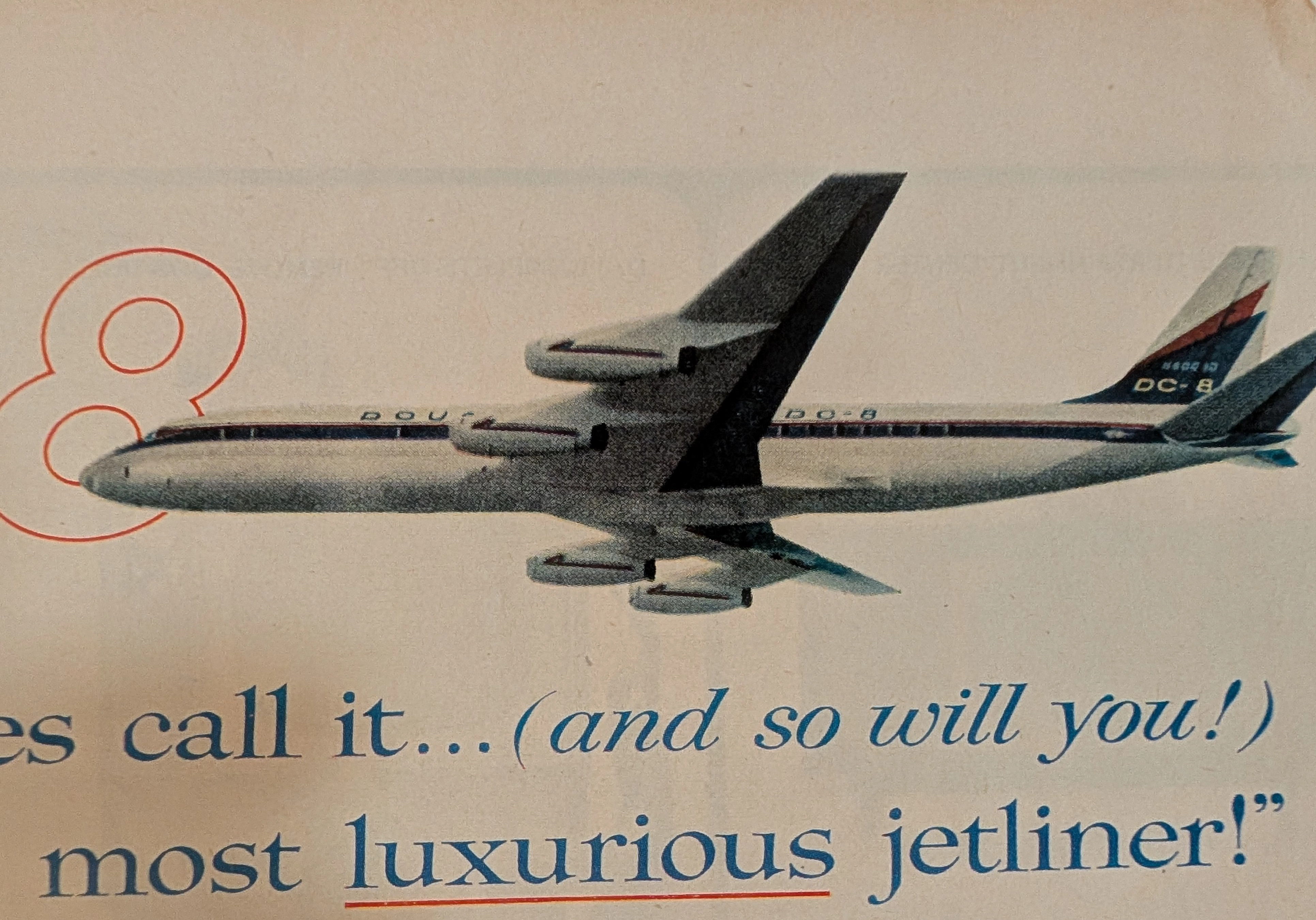
In the late 1950s and early 1960s, the world was irrevocably transformed by the advent of the jetliner. Boeing had delivered a massive psychological blow with the 707. The Douglas Aircraft Company—the undisputed king of the propeller era whose legendary DC-3 through DC-7 had built modern airlines—was forced to unleash its ultimate weapon: the Douglas DC-8. But Douglas understood that merely selling the raw speed of 600 miles per hour was insufficient. They had to sell an exclusive, untouchable lifestyle.
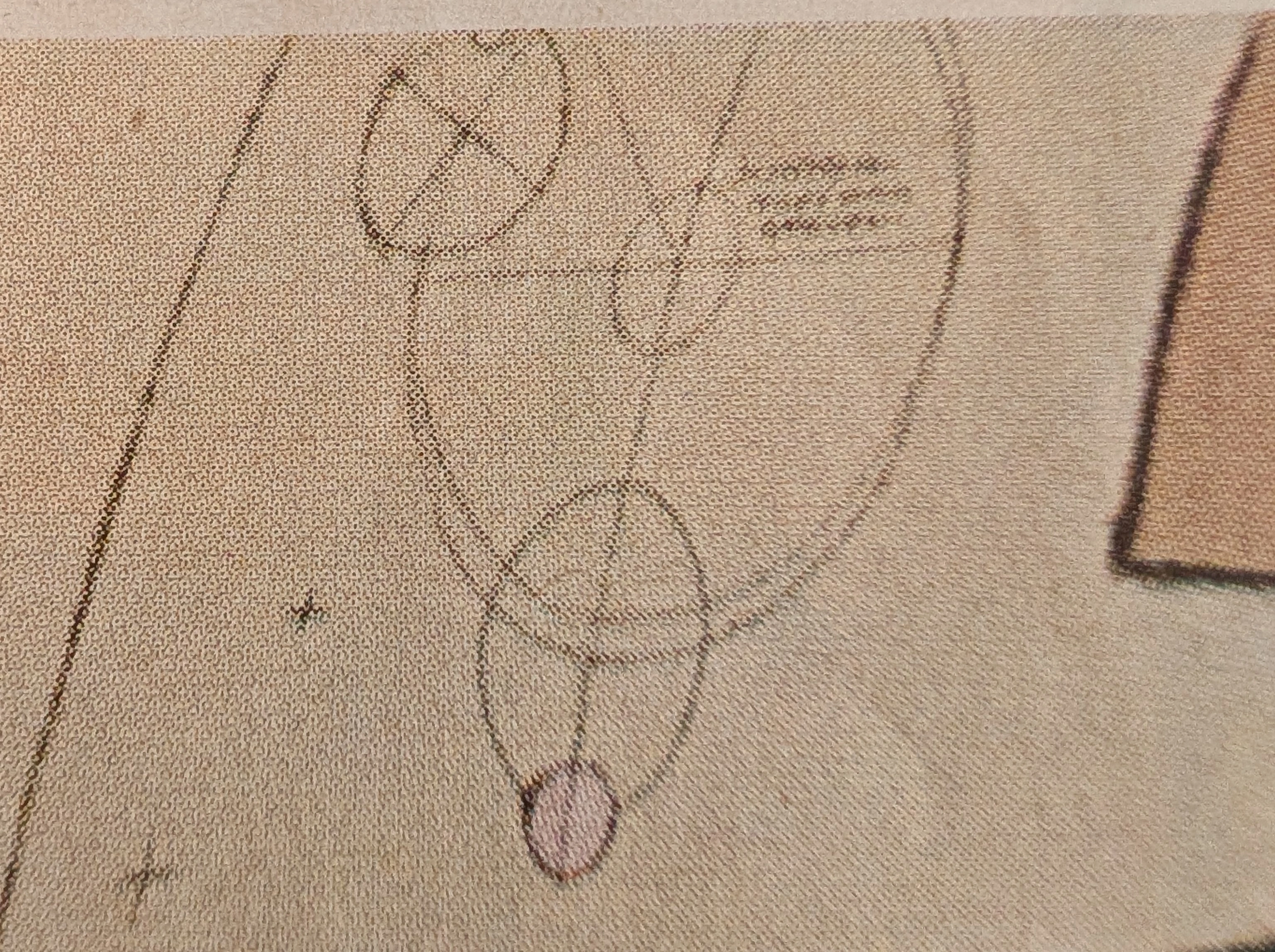
This advertisement is a masterclass in psychological luxury marketing. The evocative, signed illustration completely abandons the reality of cramped seating. Instead, it places the viewer directly inside the "Palomar Lounge"—a sky-bound private club. Analyze the deliberate details: gentlemen in tailored suits smoking cigars and playing cards, a woman draped in pearls, an actual table ("A real table—not a tray"), and a golden champagne bucket being attended to by a pristine stewardess. Furthermore, the rear bulkhead is decorated with a fascinating Space-Age celestial mural depicting orbits and stars, subtly aligning this opulent luxury with the cutting-edge science of the era.
The ultimate psychological weapon of this Primary Art Document is its headline: "Stewardesses call it... (and so will you!) The world's most luxurious jetliner!". In the 1960s, the airline stewardess was the absolute cultural arbiter of glamour, service, and sophistication. By leveraging her authority to validate the aircraft's supremacy, Douglas declared that the DC-8 wasn't just built for pilots to fly; it was engineered for the elite to be pampered.
The staggering roster of global airlines listed in the bottom right corner (from Japan Air Lines to Pan Am) acts as the final declaration of absolute industrial dominance over the global skies.
(THE PAPER: The Aesthetics of Destruction (Wabi-Sabi) — The Scars of the Dawn of Jets)
At The Record, our highest reverence is reserved for the inevitable, tragic beauty of analog destruction. This Primary Art Document is the ultimate physical manifestation of the Japanese philosophy of wabi-sabi—the profound realization of beauty in impermanence and decay. The wood-pulp paper of this magazine was manufactured with high acidity; it was genetically programmed with a chemical death sentence.
Direct your analytical, curatorial gaze to the physical borders of this artifact. The right margin exhibits a violent, jagged tear where it was forcibly and surgically rescued from the magazine's binding. This is the forensic evidence of a preserved relic, a survivor of the incinerator. Over the course of six decades, the inherent lignin within the paper fibers has engaged in a relentless chemical war with ambient oxygen and ultraviolet light. This oxidation process has birthed a deep, warm ivory "patina" that permeates the entire sheet. The authentic analog halftone dots of the celestial mural and the lounge scene have settled permanently into the brittle, degrading fibers. This paper is quietly, literally burning itself alive at a molecular level. Its slow, majestic death is precisely what transfigures it from a corporate advertisement into immortal Primary Art.
( THE RARITY: Class A — A Survivor of the Aviation Archives )
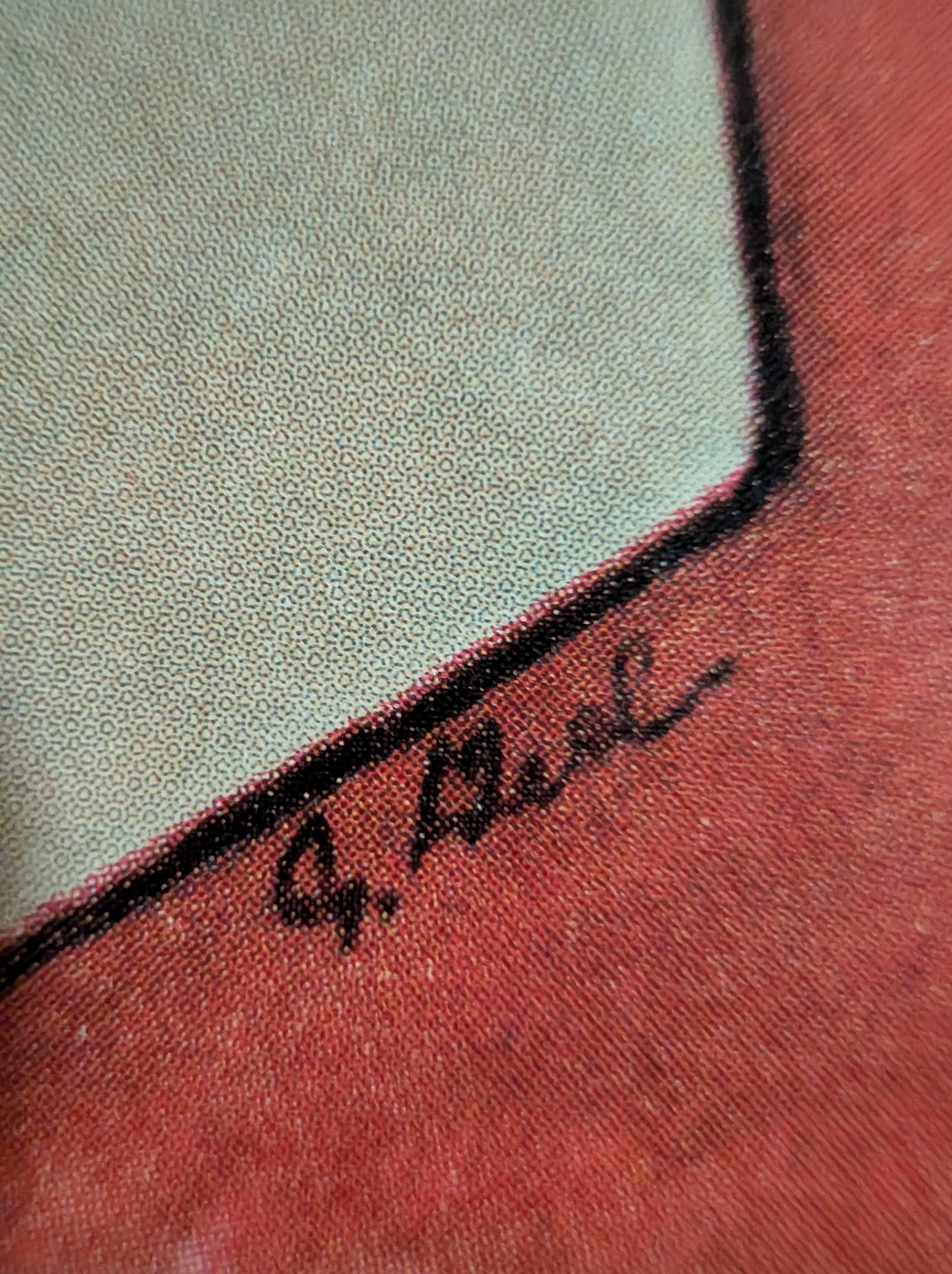
Finding authentic Jet-Age ephemera that retains such crisp illustrative fidelity, complete with a visible artist's signature and a deeply saturated historical narrative, is exceedingly difficult. Mass-market magazines of this era were overwhelmingly consumed, discarded, or destroyed by environmental neglect.
Synthesizing its paramount importance to the history of the Boeing vs. Douglas Jet Age war, its brilliant sociological depiction of exclusive 1960s luxury, and the breathtaking physical trauma of its analog decay, this artifact unequivocally commands a Rarity Class A designation. It has evolved far beyond a disposable commercial message. It is a highly coveted Historical Relic, demanding to be framed and possessed by a discerning curator who truly understands the heavy, beautiful weight of aviation history.
Exhibition Halls
The Archive Continues
Continue the Exploration
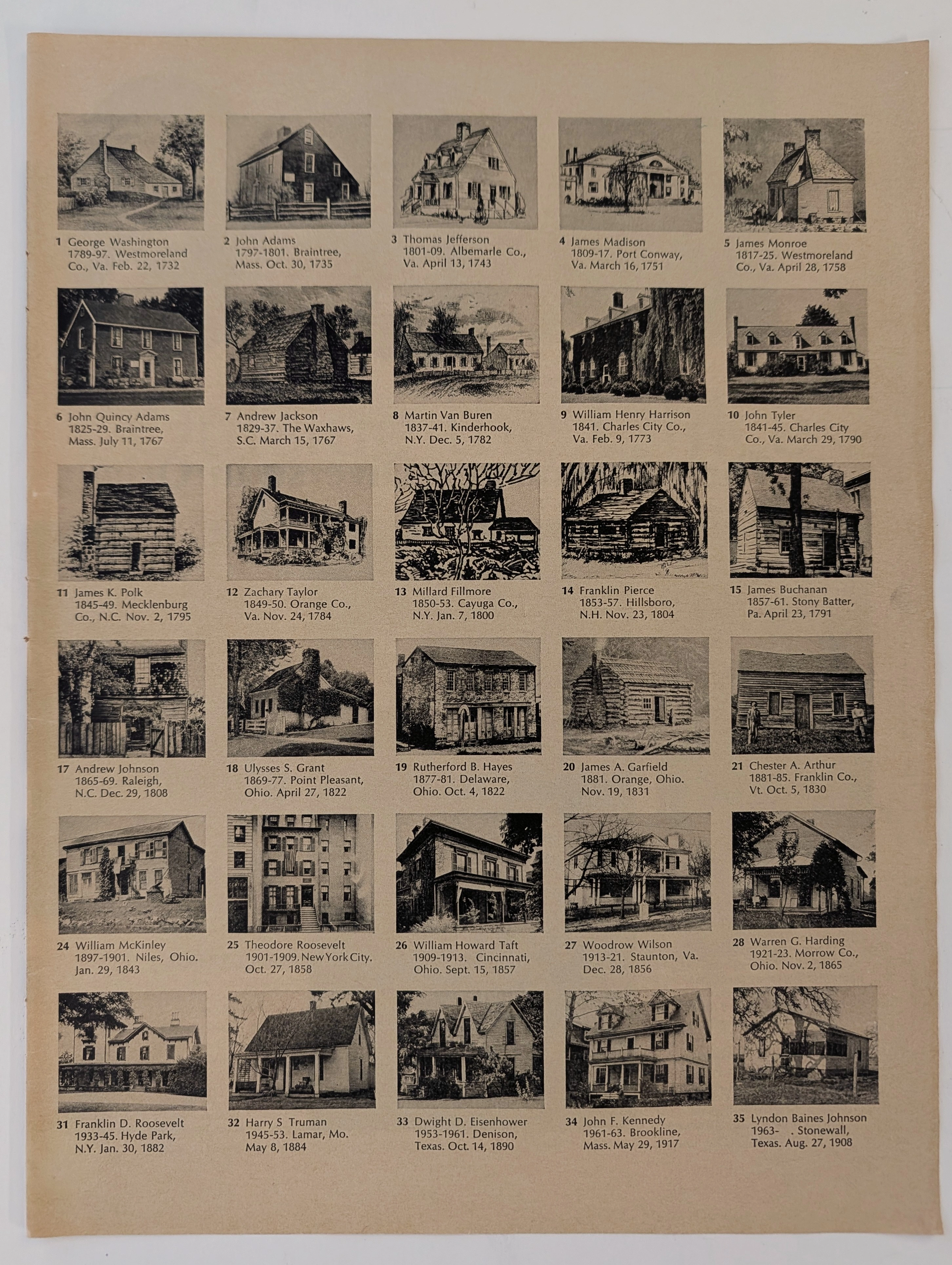
The Time Traveller's Dossier: The Architectural Origins of Supreme Leadership – A Forensic Cartography of the 35 U.S. Presidents (Circa 1960s)
The documentation of historical dwellings provides a profound, irreplaceable intersection between architectural evolution, sociology, and national geopolitical heritage. Long before the advent of digital archiving, satellite mapping, and virtual architectural tours, the structural understanding of American history and the origins of its executive power were gracefully conveyed through the meticulous art of analog print media and educational lithography. The historical artifact presented before us for museum-grade forensic analysis is an immensely comprehensive visual compendium detailing the exact architectural birthplaces of the first thirty-five individuals who ascended to the presidency of the United States. Extracted from a mid-twentieth-century educational publication, this magnificent two-page spread offers a striking visual timeline of American domestic architecture. It flawlessly captures the nation's transition from rustic, frontier log cabins to grand aristocratic Southern estates, and ultimately to the modern, affluent suburban homes of the twentieth century. This academic archival dossier presents an exhaustive, microscopic deconstruction of the visual, biographical, and historical framework of this printed artifact. Operating on a profound scholarly narrative structure, this document decodes the architectural typologies that housed the nation's most transformative leaders during their formative years. Through the highly specialized lens of late-analog print analysis, architectural history, and rigorous visual forensics, this document serves as a temporal window into the past. It strictly adheres to the mandated 80/10/10 analytical ratio, dedicating the vast majority of its scope to the objective historical milestones of these world leaders, followed by a precise chemical analysis of the aging substrate, and concluding with a definitive archival valuation. Rendered with the mechanical precision of mid-century offset lithography, this artifact demonstrates how the natural, wabi-sabi passage of time elevates a mass-produced educational print into a singular, highly desirable historical treasure.
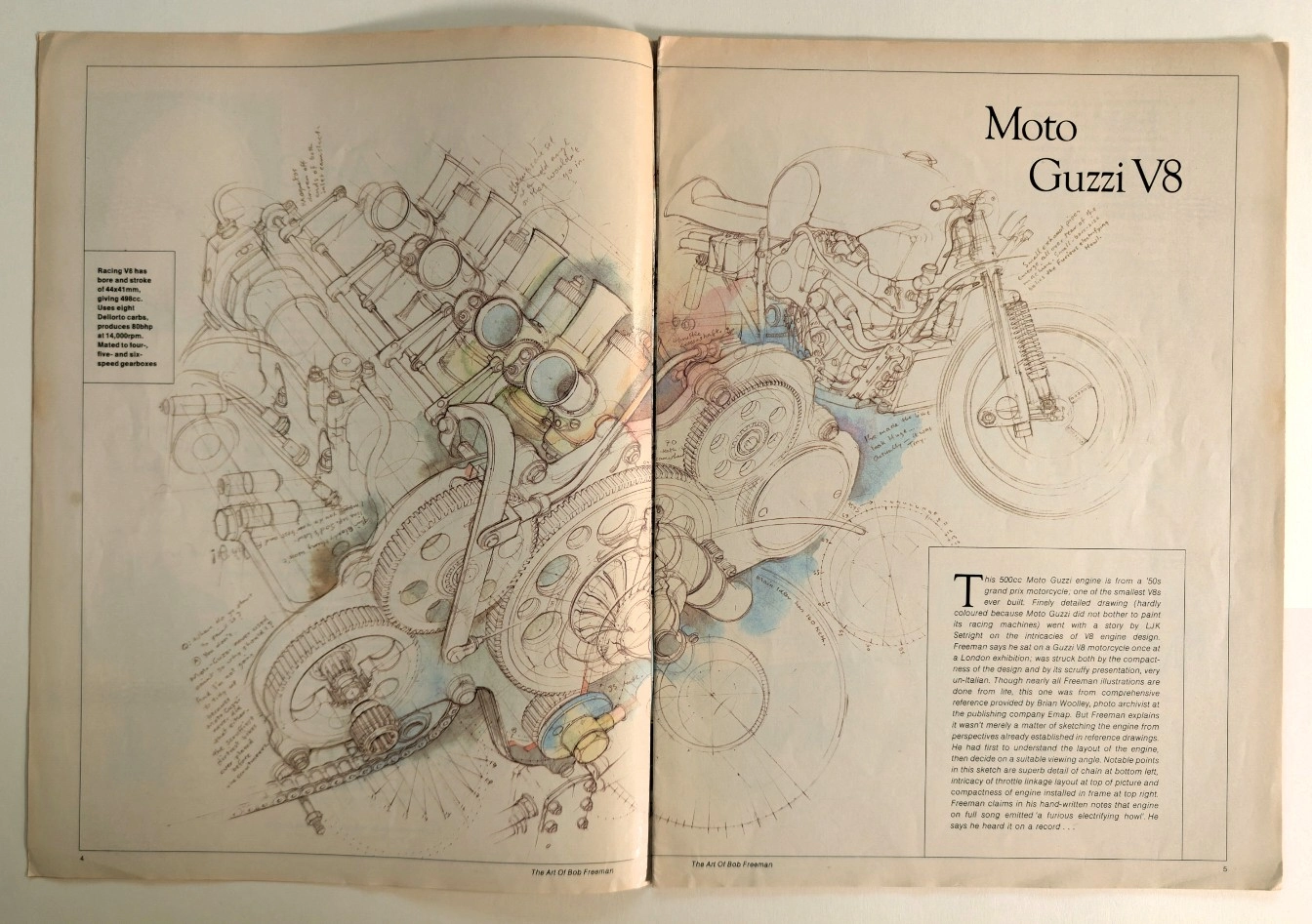
Anatomy of a Monster: The Moto Guzzi V8 Technical Masterpiece
Unearthing a rare technical illustration of the legendary Moto Guzzi V8 engine by Bob Freeman, preserved on naturally aged, pre-2000 analog print media.
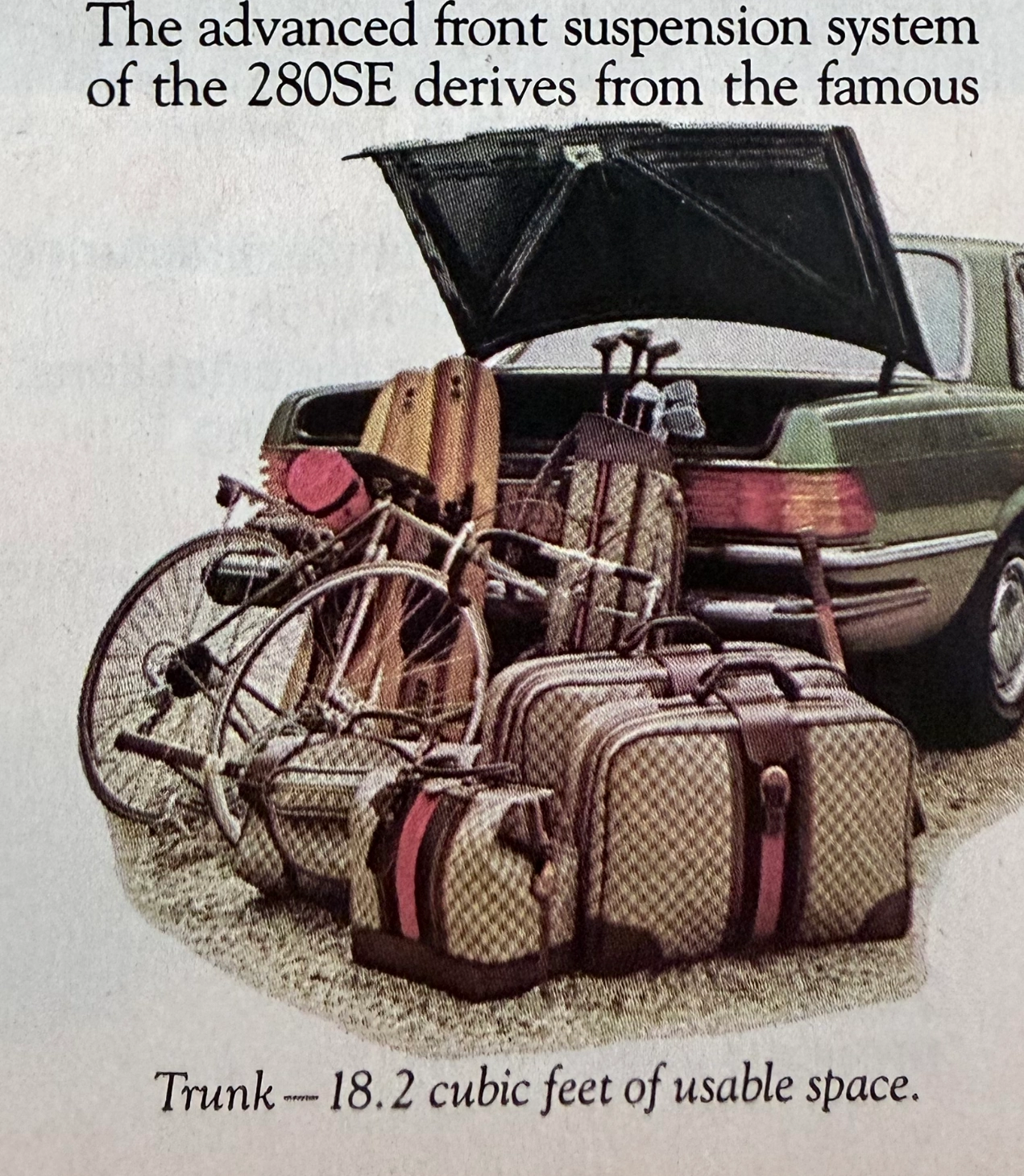
Gucci x Mercedes Benz · Fashion
THE TIME TRAVELER'S DOSSIER:THE ENGINEERING OF ELEGANCE, THE GUCCI TRUNK, AND THE ARCHITECTURE OF REASON
The artifact under exhaustive, uncompromising, and unprecedented museum-grade analysis is a remarkably preserved Historical Relic originating from the absolute zenith of West German automotive engineering. This Primary Art Document is a densely informative, multi-column magazine advertisement for the Mercedes-Benz 280SE Sedan (W116 chassis). This document is a "Forensic Blueprint of Engineered Elegance and Status Commodification." It aggressively markets the 280SE as the "Heir to a Classic," positioning it as a vehicle that inherits the legendary proportions of the 450 Series but is powered by a highly advanced, fuel-injected 6-cylinder engine. The copywriting reads like an arrogant technical dossier, boasting of the "Continuous Injection System" (CIS) and a fully independent "Suspense-free suspension" derived from the legendary C-111 high-speed research vehicle. However, the absolute psychological masterstroke lies in the lower-left illustration. To visually prove the cavernous "18.2 cubic feet of usable space," the artist meticulously illustrated the trunk effortlessly swallowing a bicycle, golf clubs, and a set of Gucci luggage. The unmistakable beige geometric monogram and the iconic red-and-green Web stripe on the suitcases serve as a deliberate, powerful socio-economic signal. It explicitly communicates that the Mercedes-Benz trunk is designed exclusively for the "Jet-Set" elite who travel with Italian haute couture. Rescued from a mass-market periodical, this pre-2000s analog artifact exhibits a beautifully authentic warm ivory oxidation across its surface. This majestic chemical aging transforms a mass-produced piece of technical propaganda into an irreplaceable Primary Art Document of automotive and sociological history.