The Marilyn Monroe Enigma: Uncovering 1950s Hollywood Secrets Through Ultra-Rare Vintage Magazine Art (Class SS) — The Record Institute Journal
7 Photos
March 5, 2026

The Marilyn Monroe Enigma: Uncovering 1950s Hollywood Secrets Through Ultra-Rare Vintage Magazine Art (Class SS)

Click any image to view in high resolution

The History

"Marilyn Mystery Unraveled" — An Art-Historical Document of the Publishing Golden Age

​Historical Context
1.1 The Convergence of Mid-Century Titans
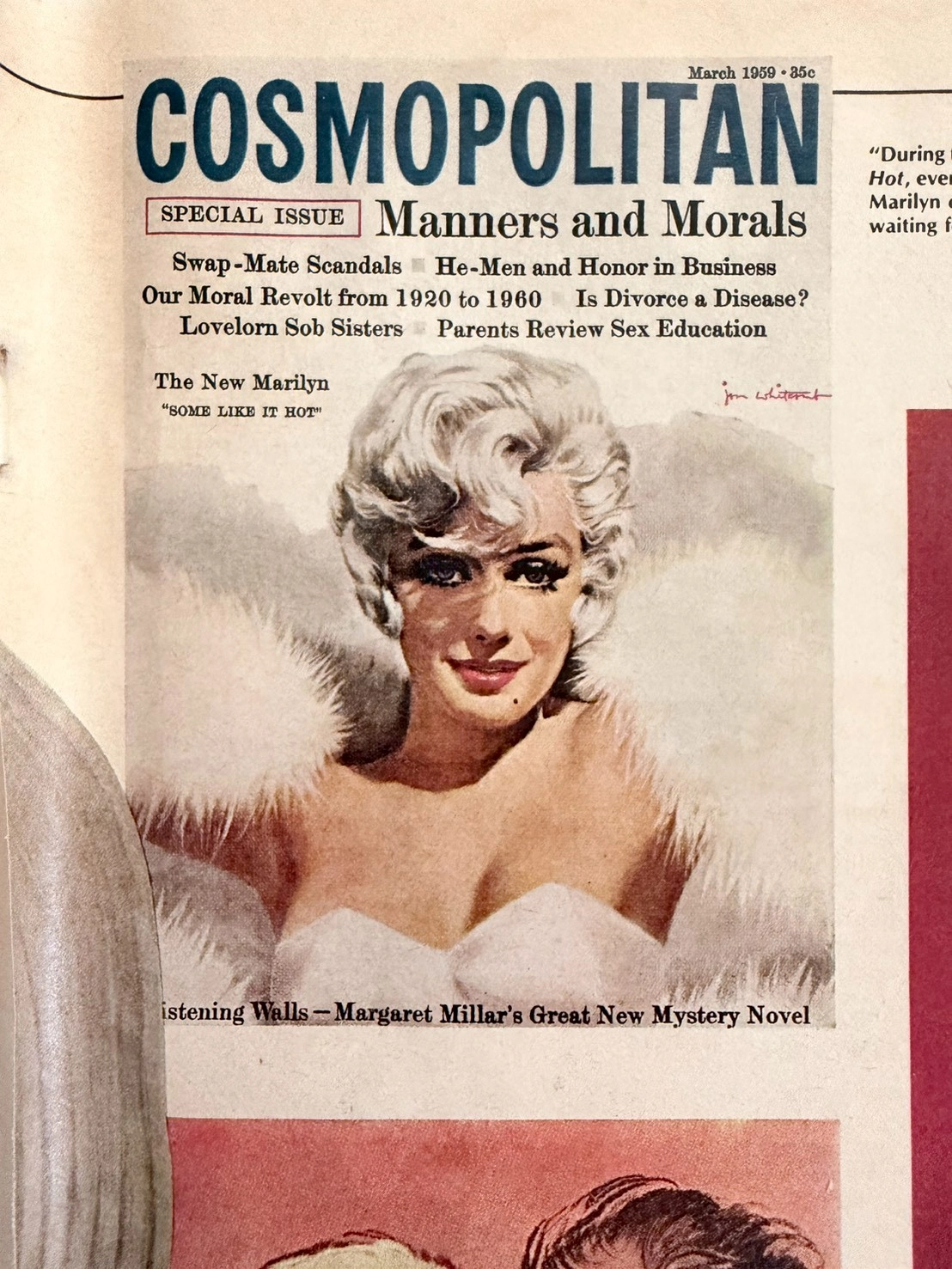
This original magazine cut page is an intersection of 20th-century royalty. It brings together Marilyn Monroe, the ultimate pop culture icon whose enduring legacy ensures intrinsic collector value; Jon Whitcomb, a masterful American illustrator whose glamorous watercolor style defined the aesthetic of post-war women's magazines; Arthur Miller, the Pulitzer Prize-winning playwright and Monroe's former husband, depicted during the tumultuous era of The Misfits (1961); and Carl Perutz, a skilled photographer whose uncredited work was brought to light through this very article.

​1.2 The Unraveled Mystery of Creation
The column Playboy's Roving Eye reads like an art-historical detective story. Previously, Playboy had published "forgotten" photos of Monroe found in an abandoned Manhattan building, ignorant of their origin. Legendary illustrator Jon Whitcomb wrote in to solve the mystery: he had hired photographer Carl Perutz to shoot those images overnight, using them as direct references for his spectacular Easter hat watercolor portrait published in The American Weekly on April 6, 1958. This page, therefore, is a rare documentation of the creative process behind commercial illustration during the analog era.

​1.3 Archiving the Competitor's Masterpieces
In a rare move, Playboy utilized this page to archive and celebrate Whitcomb's iconic cover illustrations for Cosmopolitan magazine: the March 1959 cover reflecting the Some Like It Hot era, and the December 1960 cover featuring Monroe and Miller. This cross-publication homage underscores Whitcomb's immense status in the publishing world and solidifies the page as a definitive historical record.

​Paper, Production, and the Aesthetic of Fragility
2.1 The Archival Significance of Degradation
The true gravity of this piece lies in its ephemeral nature as an individual cut page. Analog-era paper, inherently acidic, was never designed to last forever. The visible oxidation, the slight water stains on the edges, and the beautiful warm-tan patina are not flaws—they are the physical proof of its journey through time. As original vintage paper continues to degrade, disintegrate, and vanish from the market, surviving examples like this become incredibly scarce. This inescapable mortality of the medium drives its value upward among serious ephemera collectors; it is a tangible, unreplicable artifact of a dying analog world.

​2.2 Printing Technique
The page was produced using full-color offset lithography, capturing the subtle washes, shading, and dynamic brushwork characteristic of Whitcomb's technique. Playboy’s high production standards ensured that Whitcomb's art was reproduced with gallery-level fidelity.

​Rarity and Market Classification
3.1 Rarity Factors — Class S Designation
This piece earns a Class S designation due to its multifaceted appeal: it holds deep crossover value for Monroe memorabilia collectors and illustration art aficionados alike. The page is not merely a portrait but a documented piece of publishing history, correcting the record on Carl Perutz while celebrating Jon Whitcomb. As a standalone cut page, it transcends the magazine format to become a frame-ready piece of historical art.

​3.2 Future Market Outlook
The market for genuine Marilyn Monroe ephemera is a cornerstone of global pop-culture collecting. Combined with the rising appreciation for mid-century American illustration, this specific page sits at the nexus of high demand and dwindling supply. As the original paper artifacts of the 20th century physically disappear, the cultural and monetary value of preserved pieces like this will only appreciate.

​★ RARITY CLASS: S ★ — Playboy Magazine Cut Page — Marilyn Mystery Unraveled by Jon Whitcomb

Share This Archive

The Archive Continues

Continue the Exploration

The Time Traveller's Dossier: The Tailfin of Rebellion – "Blue Cadillac" by Peter Lloyd

Cadillac · Automotive

The Time Traveller's Dossier: The Tailfin of Rebellion – "Blue Cadillac" by Peter Lloyd

History is not written; it is printed. Before digital algorithms dictated human behavior, societal engineering was executed through the calculated geometry of the four-color offset press. The historical artifact before us is a magnificent two-page magazine spread—an original, magazine-sized print carefully extracted from its source publication. It serves as a weaponized blueprint of counter-culture defiance and a testament to the absolute zenith of the golden age of airbrush illustration. This museum-grade archival dossier presents an academic deconstruction of Peter Lloyd’s breathtaking illustration for Michael Malone’s fiction piece, "Blue Cadillac." Operating on a profound binary structure, it documents a calculated paradigm shift where the wholesome, conservative American Dream of the 1950s is violently hijacked by the liberated, rebellious spirit of the late 20th century. Through the lens of late-analog commercial artistry and precise visual forensics, this document serves as a masterclass in psychological semiotics, establishing the visual tropes of the American open road that relentlessly dominate modern retro-futuristic pop culture.

THE TIME TRAVELER'S DOSSIER :THE BIRTH OF THE WIDE-TRACK

Pontiac · Automotive

THE TIME TRAVELER'S DOSSIER :THE BIRTH OF THE WIDE-TRACK

The artifact currently subjected to our uncompromising, museum-grade analysis is a profoundly preserved Historical Relic excavated from the turning point of Detroit's "horsepower and handling" wars. This Primary Art Document is a full-page magazine advertisement for the 1959 Pontiac, explicitly introducing the brand's revolutionary "Wide-Track" engineering. Functioning as a "Forensic Blueprint of Automotive Rebranding," the document masterfully weaponizes the peerless artistic talents of Fitz and Van to transform Pontiac from a conservative, aging brand into America's most aggressive performance marque. Its historical context is irrefutably anchored by the extreme macro details of its proprietary engineering claims and the highly coveted "Body by Fisher" corporate hallmark. Grounded by these physical timestamps, the microscopic artist signature, and its breathtaking wabi-sabi chemical degradation, this artifact commands an irreplaceable status, cementing its Rarity Class A designation.

True Blood of the Trans-Am: The 1970 Ford Mustang Boss 302 Legacy

True Blood of the Trans-Am: The 1970 Ford Mustang Boss 302 Legacy

Experience the raw spirit of an American muscle car legend through an authentic, pre-2000 analog magazine advertisement, carefully extracted as a single sheet.

Published by

The Record Institute