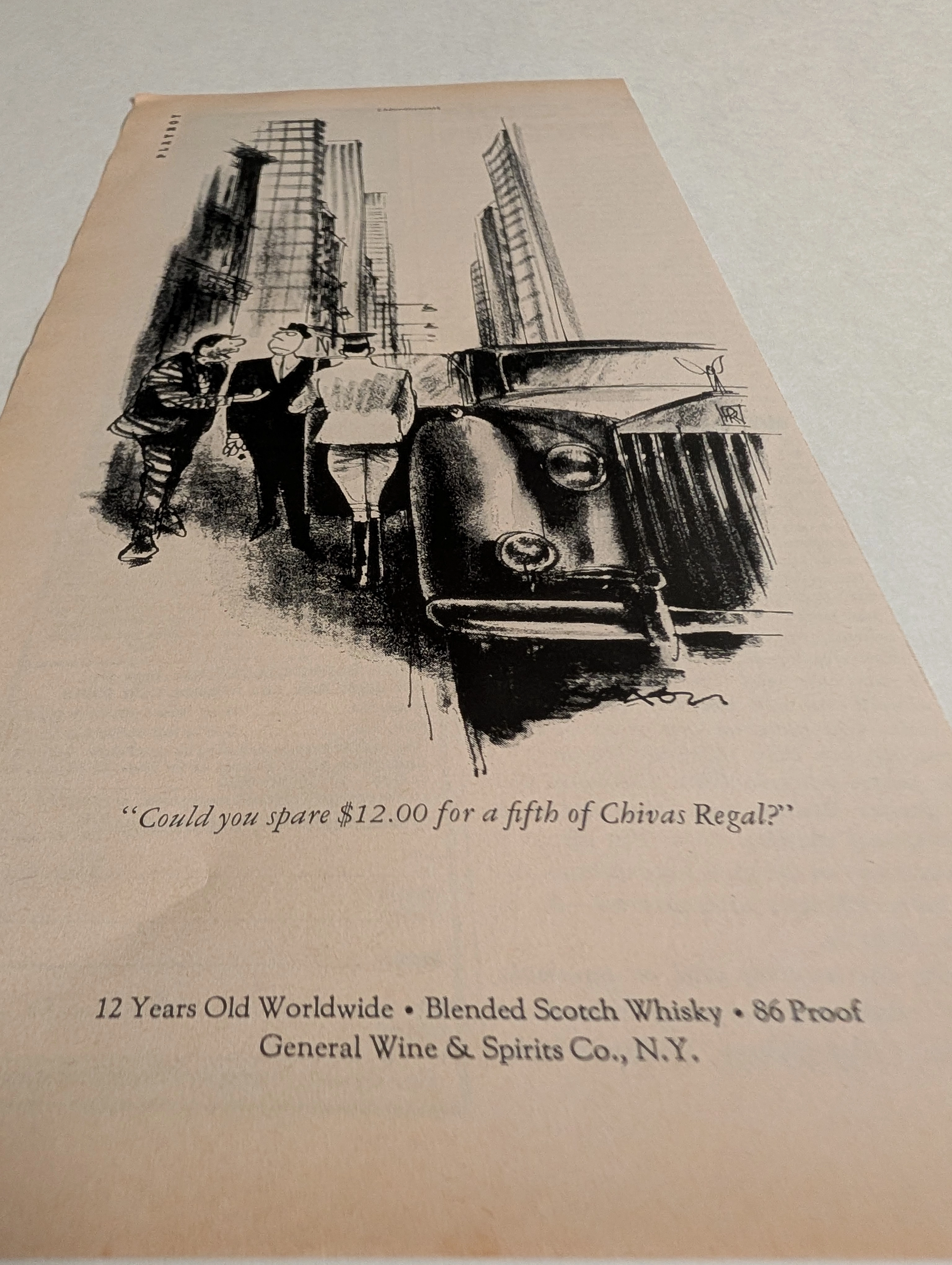
Vintage Chivas Regal x Charles Saxon Ad: The Vanishing Playboy Art | The Record
The History
THE AUDACIOUS REQUEST
The Ultimate High-Class Beggary on a Playboy Page
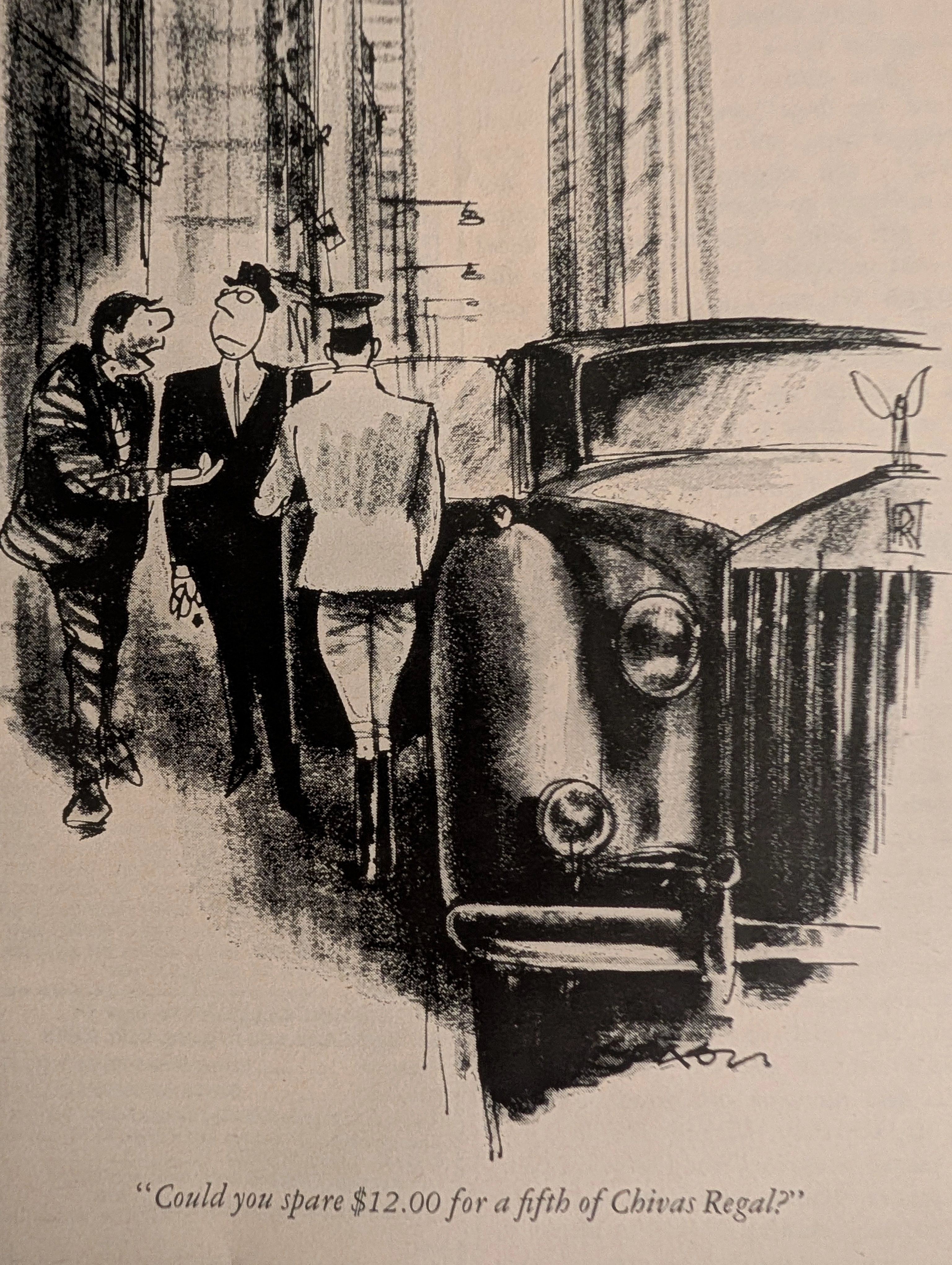
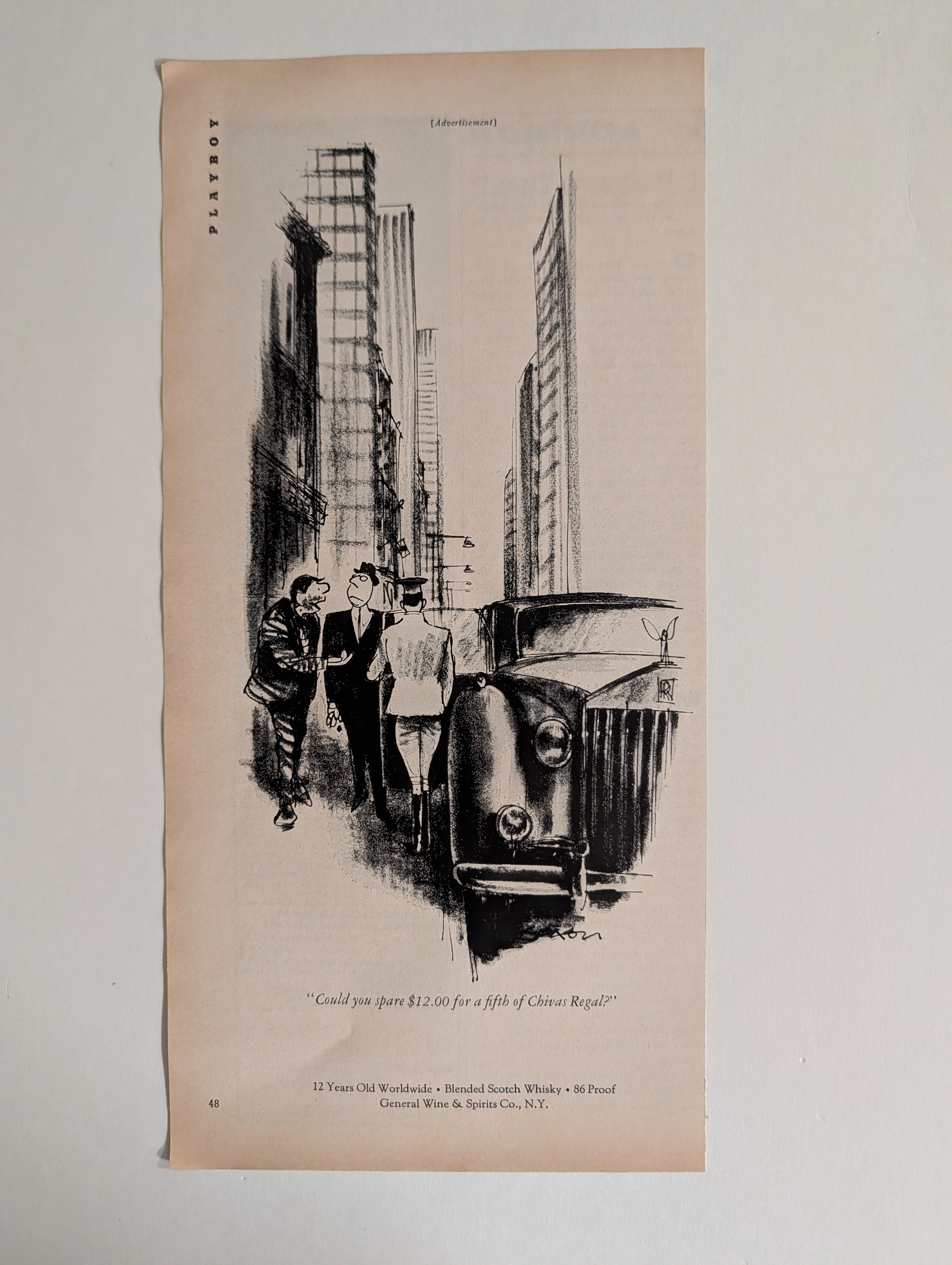
As the Chief Curator of The Record, I present a masterpiece that brilliantly merges refined humor with absolute luxury. This original Chivas Regal advertisement, salvaged from the pages of a vintage Playboy magazine, features the distinctive linework of the legendary illustrator Charles Saxon. This magazine-sized print is not just a comedic sketch; it is a "Museum Grade Artifact" documenting high-society ideals, analog illustration, and the fragile nature of decaying paper.
🏛️ CHAPTER I: THE HERITAGE OF LUXURY & THE MASTER ILLUSTRATOR
The Brand: Positioned as a premium blended Scotch whisky, Chivas Regal brilliantly uses this ad to mock everyday beggary. The beggar asks, "Could you spare $12.00 for a fifth of Chivas Regal?"—elevating the brand to an absolute necessity even for the destitute.
The Artist (Charles Saxon): The signature "Saxon" belongs to Charles Saxon, a renowned American cartoonist famous for his work in The New Yorker. His masterful ink strokes effortlessly convey the stark contrast between the wealthy gentleman and the ambitious beggar.
📷 CHAPTER II: THE CRAFT OF ANALOG ILLUSTRATION & PRINTING
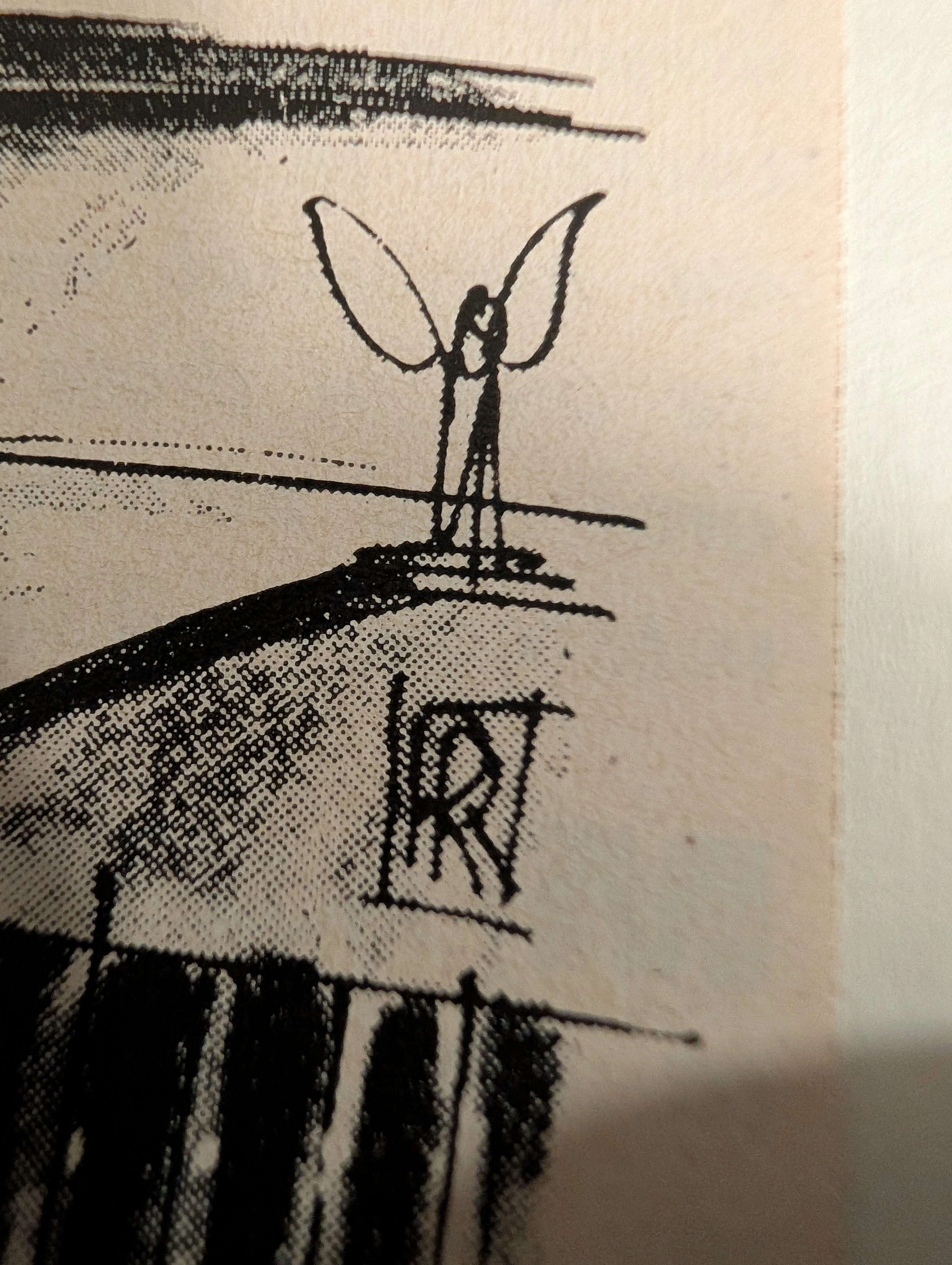
Analog Execution: Before digital tablets, Saxon crafted this using physical ink and wash techniques. Translating his hand-drawn shadows into the CMYK halftone printing of pre-2000s magazines created a unique, textured dot pattern. It is an authentic analog footprint that modern printing simply cannot replicate.
⏳ CHAPTER III: THE FRAGILITY OF HISTORY & PAPER DEGRADATION
The Chemistry of Decay: This paper contains Lignin, which oxidizes when exposed to light and air. The beautiful, warm yellowing (patina) you see is the physical manifestation of acid autocatalysis—the paper is slowly consuming itself. This page's survival over decades makes it a rare, decaying artifact of the analog age.
📈 CHAPTER IV: THE ECONOMICS OF SCARCITY
Alternative Asset: Original vintage Playboy magazines are steadily being destroyed by time and elements. As the source material vanishes, intact original prints like this transform into high-yield alternative assets. Framed perfectly, this magazine-sized piece elevates any home art gallery or luxury bar.
The Archive Continues
Continue the Exploration
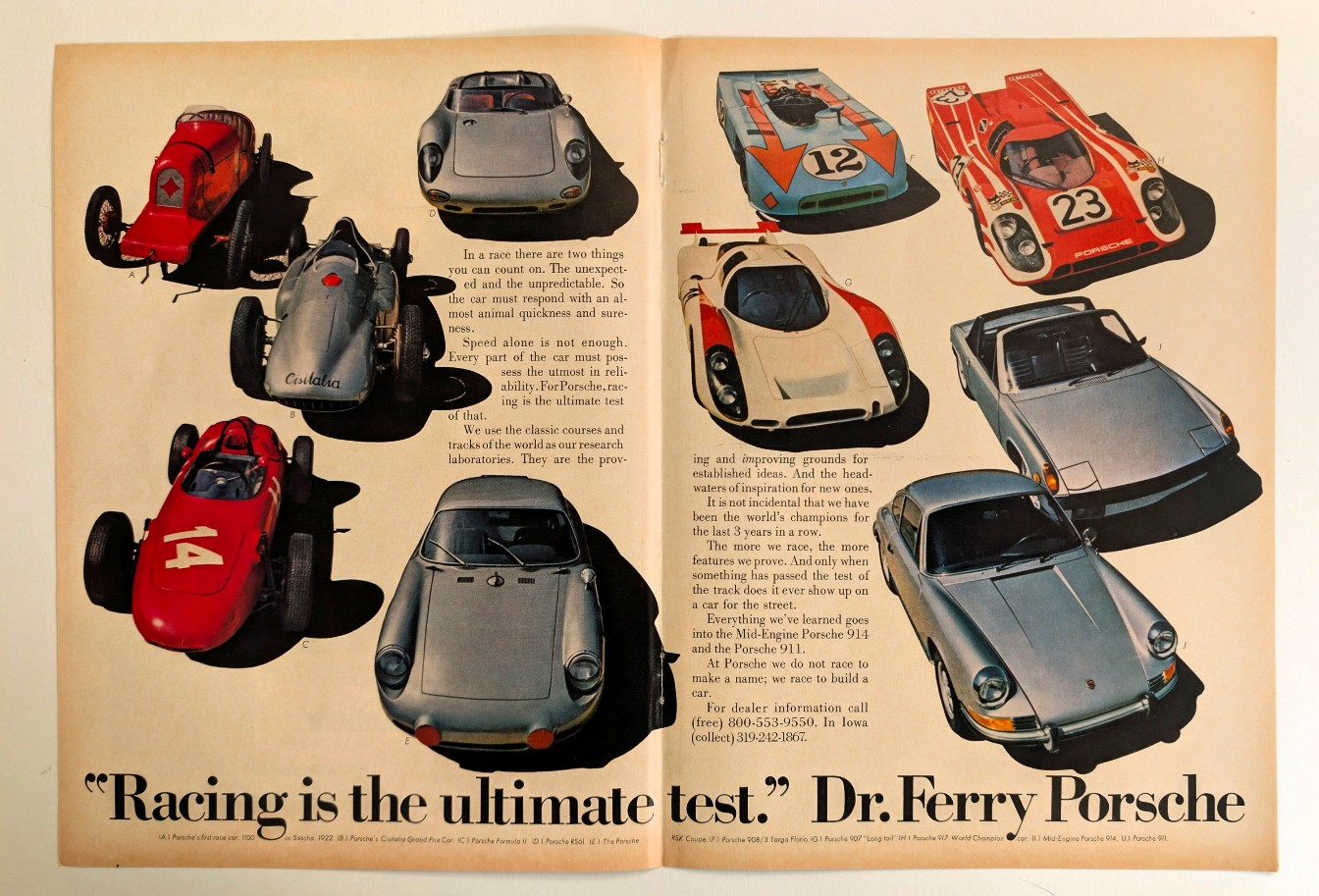
"The Bloodline of Champions: Ferry Porsche's Ultimate Test"
Uncovering the historical lineage of Porsche's motorsport dominance, from the 1922 Sascha to the legendary 917, and how track technology forged the 911.
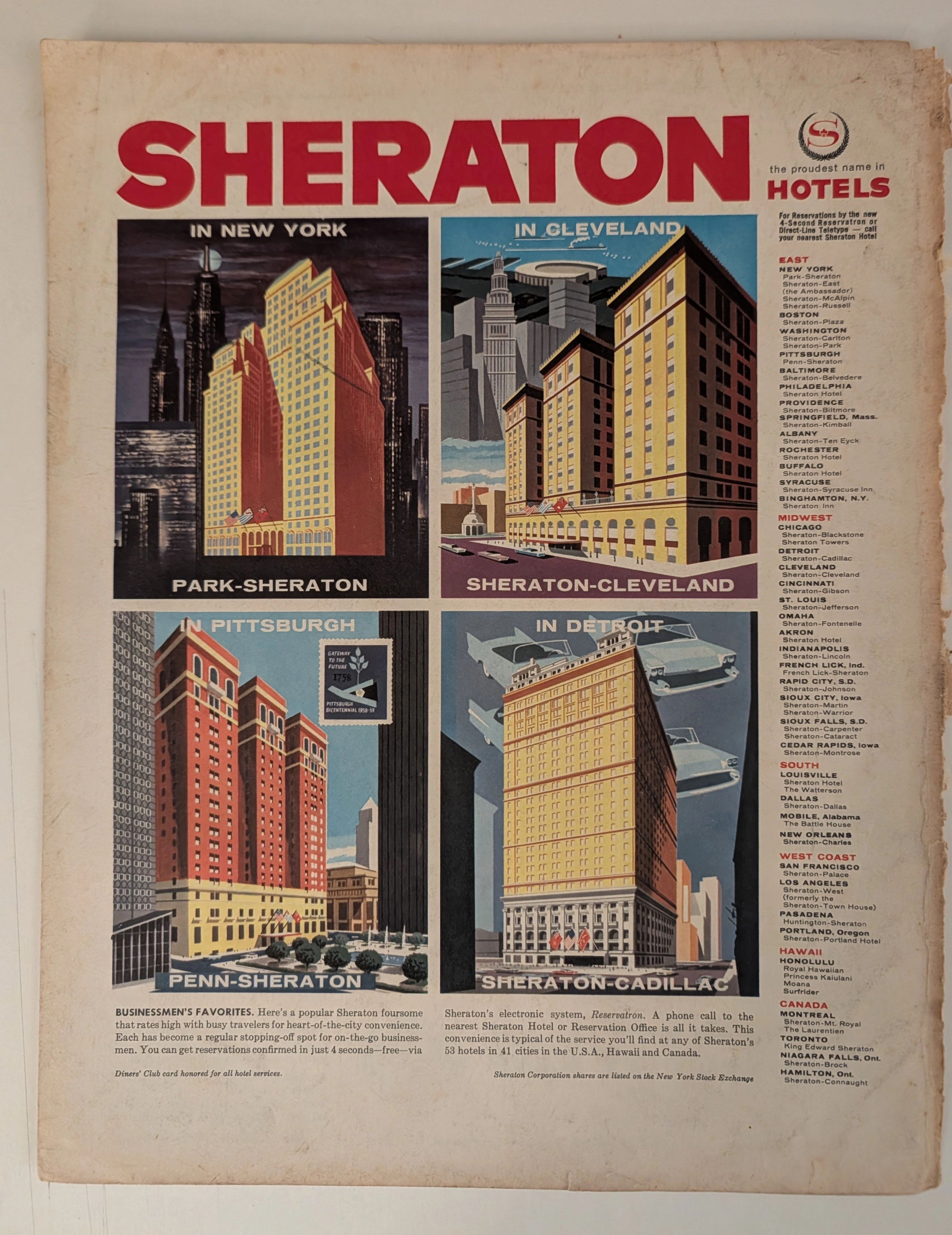
THE TIME TRAVELER'S DOSSIER: THE ARCHITECTURE OF POWER AND THE BIRTH OF THE DIGITAL WORLD IN THE 50S
The artifact under exhaustive, uncompromising museum-grade analysis is a remarkably preserved Historical Relic originating from the absolute zenith of the post-war American economic boom. This Primary Art Document is a sweeping, monumental full-page advertisement for the Sheraton Hotels empire, forensically dated to circa 1958–1959 via the explicitly illustrated Pittsburgh Bicentennial (1758-1958) stamp embedded within the artwork. This document is not merely a travel advertisement; it is a profound "Sociological Blueprint of the American Corporate Ascendancy." Visually anchored by four hyper-stylized, architectural illustrations of Sheraton's flagship properties—New York, Cleveland, Pittsburgh, and Detroit—the piece captures the era's unbridled optimism. Each panel is a masterpiece of mid-century commercial illustration, particularly the Detroit panel featuring ethereal, floating tail-fin automobiles symbolizing the Motor City's dominance. Furthermore, this artifact documents critical milestones in global business history. It proudly advertises the acceptance of the Diners' Club card, marking the revolutionary dawn of the modern credit card era. It also boasts of Sheraton's "Reservatron" electronic system—one of the earliest commercial applications of computing in the hospitality industry—and proudly declares its listing on the New York Stock Exchange. Rescued from the binding of a forgotten, heavy-stock periodical, this pre-2000s analog artifact is an unforgeable testament to the Japanese aesthetic of wabi-sabi. Printed on inherently acidic wood-pulp paper, it exhibits a beautifully violent, jagged right margin and a deep, warm amber oxidation across its surface. This majestic, unstoppable chemical degradation transforms a mass-produced corporate propaganda piece into an irreplaceable, ready-to-frame Primary Art Document of mid-century architectural and economic history.
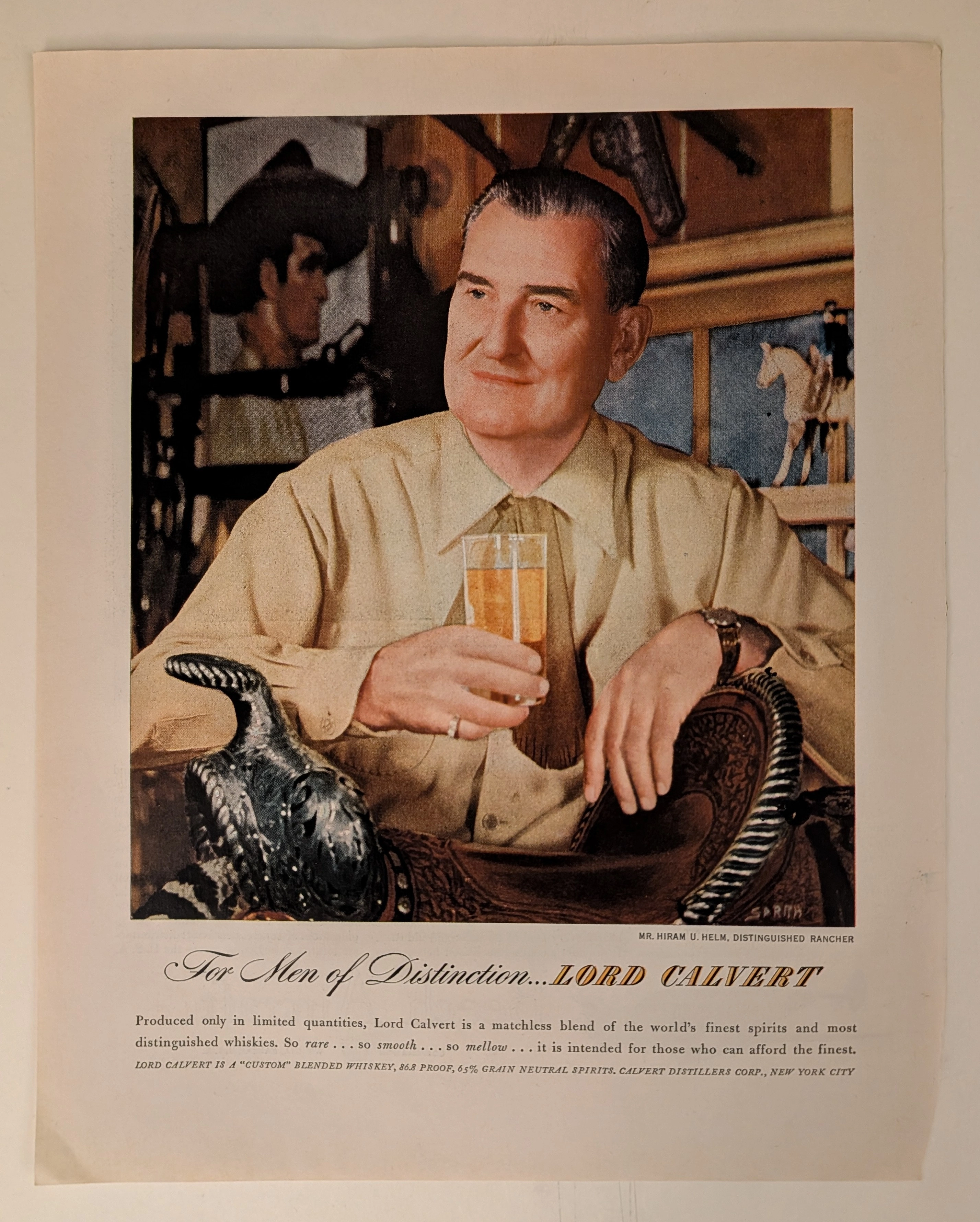
THE TIME TRAVELER'S DOSSIER: THE COMMODIFICATION OF STATUS AND THE ART OF THE ELEGANT ILLUSION
The artifact under exhaustive, uncompromising, and unprecedented museum-grade analysis is an exceptionally preserved Historical Relic originating from the absolute zenith of Madison Avenue's psychological marketing era (circa late 1940s to 1950s). This Primary Art Document is a monumental, full-page advertisement for LORD CALVERT, produced by the Calvert Distillers Corp., New York City. This piece represents the visual anchor for one of the most legendary, extensively studied, and phenomenally successful advertising campaigns in the history of American capitalism: "For Men of Distinction". It features a masterful, hyper-realistic portrait of Mr. Hiram U. Helm, Distinguished Rancher, deliberately painted/photographed to exude rugged sophistication, wealth, and aristocratic leisure. The artwork proudly bears the signature of SARRA (Valentino Sarra), a titan of mid-century commercial photography and illustration known for his cinematic lighting and profound character studies. This document is a profound "Sociological Blueprint of Aspirational Wealth." It masterfully utilized the psychology of exclusivity, marketing a blended whiskey composed of "65% Grain Neutral Spirits" as a "Custom" blend intended only "for those who can afford the finest". Rescued from the inevitable oblivion of disposable mass media, this mid-century analog artifact is a breathtaking embodiment of the Japanese aesthetic of wabi-sabi. Printed on inherently acidic wood-pulp paper, it exhibits a beautifully authentic, warm amber oxidation across its entire surface. This unstoppable molecular death transforms a piece of mass-produced corporate propaganda into an irreplaceable, ready-to-frame Primary Art Document of post-war sociological history.